Kevin Anthony 0:01
Kevin, welcome to the Love Lab podcast, the place to be for honest and real talk about relationships and sex, whether you’re a man or woman, single or couple, this is the show for you. I am your host, Kevin Anthony, and I am here to help you have the relationship of your dreams and the best sex of your life.
Kevin Anthony 0:26
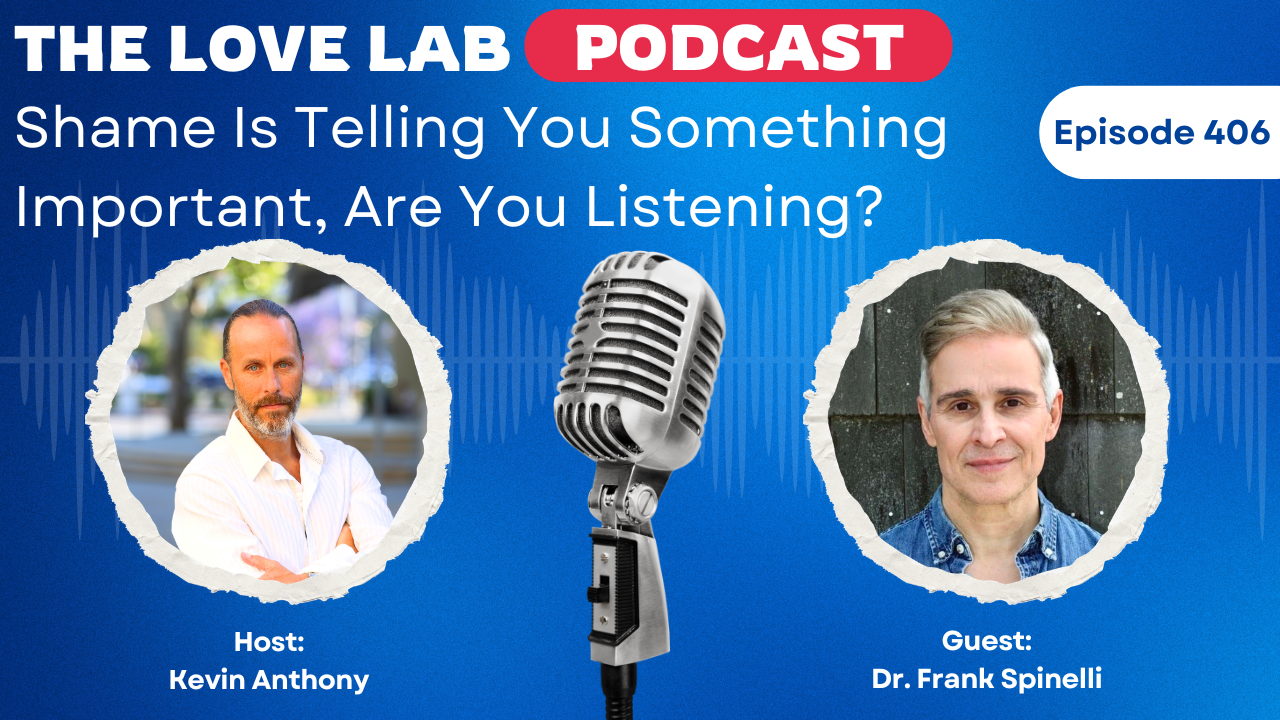
All right. Welcome back to the Love Lab podcast. This is episode 406, and it is titled Shame is telling you something important. Are you listening? So today we’re going to be talking about shame, and I’ve talked about shame here and there about different aspects of it over the course of, you know, the shows I’ve done here on the Love Lab podcast, but it keeps coming up because it’s such an important topic. It comes up over and over and over again. It comes up with almost every client that I coach. It’s all there’s always some component of it. It’s just such a big thing that so many people deal with, that I think it’s important from time to time to come back to it and talk about it again, raise awareness of it, and then talk about ways that we can potentially deal with it.
Kevin Anthony 1:17
So I have a guest today who not only through his own personal life experience, as far as like what he experienced himself, but all through also through the work that he did for so many years, has a lot of experience not only with his own shame but helping other people with shame, and so he’s got some really great insights into shame itself, you know what it is, how it happens, what we can do about it. So we’re really going to dive deep into shame today and see if we can come up with some solutions, because I know a lot of people are dealing with shame, of course.
Kevin Anthony 1:55
Before we do that, a short word from my sponsor: Are you ready to build a deeper intimacy and a more passionate relationship? Introducing Intimacy Mastery, the sex, love, and intimacy app for singles and couples. Your personal guide to mastering love, sex, and connection. Get a personalized plan tailored to your unique relationship goals. Enjoy daily lessons, real-world challenges, and guided reflections, all designed by me, Kevin Anthony, your trusted guide and coach. Track your growth, celebrate your wins, and get expert feedback every step of the way. Access exclusive resources, videos, and proven tools right at your fingertips. Whether you’re single or partnered, this app will help you create the love life you truly desire. The app is available right now at https://www.kevinanthonycoaching.com/go/app. That’s https://www.kevinanthonycoaching.com/go/app.
Kevin Anthony 2:55
Okay, today my guest is Dr. Frank Spinelli, he’s a physician, certified health coach, and one of 95,000 survivors who filed claims in the Boy Scouts of America bankruptcy case. In his new book, The Shame Compass: A Radical Framework for Trauma Healing and Self Acceptance, he argues that shame isn’t something to eradicate, but something to interpret. Shame is not evidence that you’re broken. It’s information about what matters, what’s been wounded, and where attention is needed. Welcome to the show, Dr. Spinelli.
Dr. Frank Spinelli 3:30
Oh, thank you for having me.
Kevin Anthony 3:32
All right, so I alluded in the intro that you had some experience here in this area, so I kind of want to just start with that, so people can get a feel for, you know, why a medical doctor wrote a book on shame, right? So, you are a medical doctor by training, correct? How is it that you came to write this book? Like, what are the life experiences that you’ve had that you know you’re like, man, I got to write a book on this.
Dr. Frank Spinelli 4:03
Well, it goes way back, and so just to briefly get you up to speed, I, before I became a doctor and a physician, long before that, I was a boy growing up on Staten Island, which is part of New York, and unfortunately, from the time I was 11 to 13, I was molested by my scout master, and through a process of coming out and telling my parents, and them going to the Boy Scouts, and for them to be shamed into keeping this secret, they agreed to let my scout master step down quietly, cut to many years later, many years of really good therapy with an art therapist, which, by the way, I think saved my life. I ended up going to medical school, and lo and behold, became a physician and started writing a column on health. I wrote a men’s health book, and all.
Dr. Frank Spinelli 4:59
The book tour, I came across some old friends from Staten Island, and that sparked a memory of my scout master, and I looked him up, and I discovered that the year after he stepped down quietly, and my parents were shamed into not saying anything, because this would bring humiliation onto the family, he had adopted a boy, he wrote a book, became Father of the Year, and was on the Today Show, and so I tracked him down, and I spoke with him, and of course he didn’t remember me, but what I discovered was something even more horrifying, he had adopted 15 boys over the course of the several decades, and they were all boys with special needs, and he still had some in his care. And so, cut to now, I worked with the police, I wore a wiretap, all these crazy things that I would have never thought this young man from Staten Island would have ever done. I did, and we did bring him to justice, and I worked very long and hard with another therapist, and I felt that all the guilt and shame children of trauma grow up to feel as adults.
Dr. Frank Spinelli 6:14
I thought I had put that all behind me, and I thought I had become a successful physician. I had gotten married. I was happy, but something happened. Something that happened to all of us in 2020 We all went into lockdown with the COVID 19 pandemic, and in that time period, all those pillars that were tightly mooring me together, going to work, seeing people that isolation, I saw the remergence, or the emergence of all those past traumas again, because I didn’t have all those security systems in place, and I realized that the shame I had been thinking I foolishly had gotten past was still there below the surface, and I had decided from that point on, after a period where I was abusing alcohol or misusing alcohol, that I needed to get my life back in order, and I realized that the root cause was the shame that I experienced as a child, and it didn’t surprise me, because even in all those years I had adopted ways of talking to patients about their childhood. Most healthcare providers asked a really silly question, like, ” Did you have a normal childhood?
Dr. Frank Spinelli 7:32
Well, who has had a normal childhood? We all had different degrees of traumatizing childhoods, but if you ask, ” Did anything traumatizing happen to you as a child, you get a very different answer. And after speaking to hundreds of men and women, I discovered this common theme, that if you experience childhood trauma, you are more than likely going to experience lifelong shame, and you may, in the present, want to relive those past traumas in adult relationships, because in some way you want to go back and change them, you want to wrong right that wrong, and that is a trap, it’s a myth, and so I had this very clear epiphany that what if we didn’t look at shame as indictment. What if it’s information? What if it’s pointing you in the direction that you need to lean into if you so choose? And so I created this framework based on the Compass mnemonic.
Kevin Anthony 8:35
Yeah, we’re gonna dive into all of that stuff more as we go along, but I mean, first of all, I just want to say that you and I talked in the pre-interview, and you shared a little bit of your story, of course, which is why I’m asking this question, but you went into even more detail. Right now, I didn’t know the whole second part about what happened years later, and him adopting all these children, and you bringing him to justice. I mean, that is a crazy, crazy story.
Dr. Frank Spinelli 9:03
It’s, it’s absolutely, it’s there’s no better word than crazy, because what we’ve identified during this process is the gaps in the system that they would allow a single man who is a police officer to adopt not one, but 15 boys, and had it not rested on the fact that his current boys admitted that he had molested them, that he would have gone free because of the statute of limitations involved in my case. So, could you imagine that there is a statute of limitations on filing a lawsuit or litigation against your child molester, when we know for a fact that most people don’t come to terms with their abuse until much later in life, so in a sense, children who. Those who are sexually abused or even physically abused will get re-abused and victimized by the system that is there to protect them.
Kevin Anthony 10:09
Yeah, and we could do an entire episode just on that part of it. I mean, that’s not really the goal of today’s show, but I’m glad that you brought that up, because it really is true, the system really isn’t. It’s not efficient, it’s not designed to work right in these cases, and I’m sure you would agree. We would all love to see some change and some reform there, but to sort of kind of bring us back to this idea of shame, without going too far, you know, down that other rabbit hole, you know, the point that you made about the statute of limitations is also relevant to this idea of shame, because what you shared is you’re like, I did all this work around this shame, I felt like I really had it handled. Now here comes the pandemic, and suddenly all this stuff comes up again.
Kevin Anthony 10:59
Now I’ll tell you, I see similar things like this with clients that I coach. I have spoken with clients who are like, I’ve done all this work, and when I did this, when I healed this, when I healed that, but then I listened to them tell me about their challenges, and I go, ” This isn’t healed, this isn’t healed at all. That same pattern is repeating throughout your life. You think that you’ve healed it, but you haven’t, and I think that’s an important point to make, that you know shame is not necessarily an easy thing to just deal with and move on from.
Dr. Frank Spinelli 11:33
Well, and that’s the perfect segue, is that if you think you’re going to leave your shame in the past, you are misled, you’re misled, you, that’s not going to happen. What you have to do is recognize that something happened to you, whether it’s something from childhood or whether it was a divorce or whether it was something that happened to you as an adult. There are very different ways men and women experience shame, and we can talk about that, especially for your audience, which I think would be important when we talk about intimacy and relationships. It carries over. How can you be fully and truly known to your partner if you are experiencing shame? Because shame wants you to isolate. Shame wants you to use substances or develop addictions, because it breeds in that isolation. The only way to combat shame is actually in community or in communication.
Dr. Frank Spinelli 12:35
So, it’s not surprising that many of your clients may have said, ‘Oh, I’ve got this kicked, I’ve moved on. Well, they’re, they’re misled. They believe that they have moved on, but there is no moving on. Now, that said, I don’t want everybody that’s hearing this to go, ‘Oh, great, there’s my life. It’s not, it’s learning shame literacy, so that when your boss, and I describe this in the book, says something to you condescendingly, you don’t react because of all those years of shame you experienced, where you’re bringing them to the present. You can acknowledge and say, “Wait a minute, I know why I’m being triggered here. I understand that, that’s that has something to do with me, 11-year-old Frank. I’m not 11-year-old Frank, I’m actually an adult doctor, and I can accept that and understand and process it, so it’s.. It doesn’t come overnight, but certainly it does come with the work that you can do on yourself to be better functioning with the shame, instead of believing this false notion that you’ve moved beyond it.
Kevin Anthony 13:37
Yeah, and you know, maybe to some people listening to this, it may sound a little strange, like, is shame really that big a deal, but one of the things I do want to cover is, like, the difference between shame and guilt, because I think that’s important to understand when we’re talking about this shame and how difficult it can be to deal with, if you understand the real difference between what we call shame and guilt, it makes more sense as to why this would be so difficult to deal with, right? So, explain the difference between those two.
Dr. Frank Spinelli 14:09
Well, there are three big misconceptions when we speak about shame. The first is the difference between shame and guilt, so they are not the same. Guilt says I did something wrong or I did something bad. It’s about behavior, and it’s actually helpful because you can learn from it. You can change your behavior. I did something bad to my best friend. I’m going to apologize to make up for it. James says I’m bad. It’s about identity. It’s corrosive, and we tend to believe it, but the point is you didn’t install that. Whoever traumatized you installed that notion that you are a bad person, so we have to be sure not to confuse the two. The second misconception is that shame is a sign of weakness. I don’t think it is. I think people carry shame. They have to understand that maybe, perhaps, it is protecting them from something.
Dr. Frank Spinelli 15:09
Shame is frequently a wound from someone else’s failure that got installed into us, and so that voice that we hear is likely not our own, but the person that installed it to us, whether we were a child or later on in life, and third is the misconception that you will eliminate shame, that if you do this, this, and this, you’ll be done with it. That’s not only impossible, but it’s also wrong. Shame is a human emotion; it has biological functions, so the goal is to become fluid in it to learn what it is communicating rather than spending all that energy trying to run away from it, because that’s not going to happen.
Kevin Anthony 15:49
Yeah, and the reason why I wanted to talk about, you know, the difference between shame and guilt is because, like, you accurately said, if, if you did something wrong to somebody, you can just go apologize and say, you know what, I screwed up, I’m sorry. Here’s how I’ll make it right. And generally, that’s enough to move past it. But if you truly believe that you’re a bad person, right? I mean, that’s the shame part, right? The guilt is that I did something bad. The shame part is I am bad, right? So, if you truly believe that you are a bad person, how, like, that’s not something you can just, oh, you know, I apologize for, and it’s all better, and that’s what I really, that’s the point I really wanted to make with that, I wanted people to understand that when we’re talking about shame and the difficulties with dealing with shame, you realize that you have to confront a deep rooted belief that somehow you are not a good person, like at a much deeper level than what we would consider guilt. That’s why it’s so difficult to work with.
Dr. Frank Spinelli 16:52
Yeah, I totally agree. I think you said it well, you know. But it’s funny because when you think about the way I grew up, I went to Catholic school, we had nuns, and what did they do? They shamed you all the time. It was considered a form of reprimand to shame you in front of the class and frame you in front of all your friends to curtail your behavior, but it doesn’t work. One fact everyone should know is that no one’s life has improved because they were shamed. It doesn’t work that way. It’s not constructive. It just tells you that you’re bad, and it reinforces all those voices in your head that are saying, see, this is why it happened. You’re a bad person. See, I knew you would fail because you’re just not good enough. And so it reaffirms it every time something bad happens, as opposed to guilt, where you’re like, like you said, I did something bad, you know, I feel kind of bad about it, so I’m going to just make amends and apologize, it’s very constructive, but again, it’s about the behavior, not the identity.
Kevin Anthony 17:55
Yeah, you know, you and I, so we, we grew up in a very similar part of the country at a very similar time, I don’t, I don’t know how old you are, but I’m guessing we’re probably pretty close to the same age, and I also went to Catholic school, and I know exactly what that is like. Sorry, the third-grade teacher at the school I went to, who was a nun, not all the teachers in the school were nuns, but several of them were, and the third-grade teacher was. She had a wooden paddle that hung on the wall, and if you got in trouble and she had to hit you with it, you had to write your name on it, and it would hang there for the entire year to show everybody that you screwed up.
Kevin Anthony 18:39
Worse than that, so one side of it had the names of the kids that got hit with it that year, and then every year it would get sanded off and start over for the next year. However, the other side of the paddle had a young boy’s picture and name on it, and from what I recall, I was young, of course, so I don’t remember all the details, but from what I recall, he was a young student in the school who said he didn’t believe in God, got hit with the paddle, thrown out of school, and his picture immortalized to shame him for the rest of his life.
Dr. Frank Spinelli 19:18
You pretty much encapsulated a horrifying visual of what exactly the difference is between shame and guilt. I mean, that it’s.. I’m very sorry that happened to you, but could you imagine someone’s inner dialogue saying, ‘I’m going to show them, I’m going to put his picture on this because he’ll learn from this. That’s not how it works.
Kevin Anthony 19:39
Yeah, and well, and this also speaks to something else that you mentioned when you were talking about the misconceptions, you used the word, it’s something that somebody else, like, programmed into you, and I think that’s another important point to bring up, because think about this, I mean, I don’t remember what that young boy’s name was, he was apparently. In he was in the same grade my brother was in, which was older than me, so I was, I think, hearing about this through my brother at the time, but you know, the point is, is that that little kid didn’t really know shame, but now he’s got that programmed into him based on that entire experience, not just getting in trouble, not just getting hit by a paddle, not just having your name on it, but being thrown out of school. Now, what does he think about, you know, who he is as a person as he goes on through life? That’s a good example of installing this shame deeply into somebody.
Dr. Frank Spinelli 20:34
And it’s also the perfect example that goes on with what happened to me during the pandemic. So, what happened to that boy in your school was an institutionalized version of that shame. It wasn’t just one nun; it was one nun making a decision that was going to be broadcast to the school. It’s going to be hung up. He’s now an effigy that you can see, and you know what’s really sad about that, even more so, is that he probably heard stories about your pictures on this paddle, and it’s still there, years and years later. He hears this story. When I was in lockdown with the lawsuit going on against the Boy Scouts of America, and like you said at the top, I was one of 95,000 men who came forward.
Dr. Frank Spinelli 21:21
We were asked to fill out a 47-page questionnaire, and I had to recount in graphic detail what had happened to me at 11, and it was traumatizing. So it’s not only one person who may be damaged, who is programming you, who is setting these false notions of shame into your head, and programming you that way. It is an institutionalized version of abuse that is also reaffirming that shame, so that’s why it’s so pervasive, and we don’t talk about it very much, because we’re ashamed to talk about shame, but I think what we can all come to agree, and what I’ve come by doing interviews such as this, is that it is unbelievable how many people experience some form of shame in their daily life.
Kevin Anthony 22:15
Yeah, absolutely, and it comes in many, many, many different ways, and you know, obviously this show is focused on, you know, relationships and sexuality, but those are two big places where a lot of people have shame, which is why we’re talking about it, of course, today. So, you know, you also made a statement earlier about this, this notion that when we experience shame, we don’t want to run away from it, we want to actually move towards it, and I think this is a good time to talk about why we would want to do that, because you also did just mention a moment ago that you know you had to, in you know, the lawsuit recount all this traumatic stuff, which of course brings it all up again, so you know on the one hand we’re telling people, you know, move towards it, don’t you know, push it away, and then on the other hand we’re saying, like, yeah, but that could then read traumatized. So let’s clear that up a little bit. Let’s talk about why it’s important to move towards it, and like how people could do that in a way that’s not going to potentially be re-traumatizing, right?
Dr. Frank Spinelli 23:19
Well, you know, my example is a little extreme. Not everyone is going to have to relive or re-explore their history of abuse through a very lengthy questionnaire. What it did show me was how vulnerable I was, and how I hadn’t really gone through the process of understanding and processing and being able to be fluent in the shame, and so when I created the framework and the steps, you have to understand that this is a process that you have to want to do. First of all, not everybody is prepared to do this. Some people should do this with the help of a therapist or a coach, that is ground levels, you really, this is not a one size fits all, but when I created the seven steps, which is the Compass framework, it was confronting it, which is something you have to want to do, observing it, observing it, sort of like a scientist observing an experiment, you have to have a certain degree of detachment and do it with compassion and kindness, and this isn’t just me saying that to be nice.
Dr. Frank Spinelli 24:26
There is neuroscience research that backs up self-compassion and kindness, which really helps your brain with neuroplasticity. And then the M is mapping to understand the source. In my case, it was when I was 11. This isn’t to go back and do a deep dive, but it’s very important for individuals who suffer from shame to understand what the root cause was, because oftentimes, like we just discussed, there is somebody or a perpetrator who installed the shame in us, and it’s important to know that because. For most of us as adults who experience ongoing shame, there is that inner voice, and I call it the voice that will taunt you. It’s the one that will tell you the blooper reel of everything you’ve ever done wrong in your life, and how you communicate with that voice is very important to understand who that voice is and where it comes from. So that’s the M, and then the P is processing it. There are various exercises that I lay out in the book, and then finally, A with acceptance, which means integrating the shame into your life and not eliminating it.
Dr. Frank Spinelli 25:35
You’re not going to eliminate, and most times I say to people that I’m working with, you know, the acceptance isn’t denying it. Sometimes, when we have something serious like sexual abuse, you come away saying I forgive them or I have empathy for them. That’s okay, it doesn’t discount what happened to you. Your emotions and your feelings are valid. And then, as the first s is sustaining it. How do you develop fluency so that, as I described earlier, when something happens, and you’re triggered, you could say, ” Okay, I know what this is, and you go through the framework, and then finally, the last s is optional. The last s is not for everybody, but it is for a lot of people, and it is service when we allow ourselves to speak our truth or speak our story; it helps us, but it’s also transactional. So, here I am talking to you, hopefully you’re getting something out of this, hopefully your listeners are getting something out of this, but I am getting something out of this, and in that process, we minimize the shame, because shame does not like to live in community, it wants you to be isolated, it loves to feed in the dark.
Kevin Anthony 26:53
Absolutely.
Dr. Frank Spinelli 26:53
That’s where the frame framework came from.
Kevin Anthony 26:55
Yeah, and you know, in a little bit, we’ll take a break, and when we come back, I want to really dive into that framework a little bit more, but before we get there, you know, I mentioned something earlier about this idea that relationships and sexuality – there’s those are places where shame shows up a lot, and I remember we talked a little bit about this in the pre-interview, but I’m curious, why do you think shame is so much more present when it comes to the bedroom. Why do we see so much shame around sexuality, and you know how we relate in the bedroom?
Dr. Frank Spinelli 27:31
Well, I thought that was, you know, I think that’s a very good question, and you, I find that for myself as a physician working with people that you can find out almost immediately whether or not they’ve had any kind of past trauma or they feel shame based on their adult relationships in the present, so you know, you know this when we are with somebody and we’re being intimate or even having sexual intimacy, or emotional intimacy, or physical intimacy, there is a part of you that has to lower those walls to expose yourself, and in doing so, that can bring up a tremendous amount of shame. So, when we think about men and women, women experience three main forms of shame.
Dr. Frank Spinelli 28:27
One very obvious body image, so of course, if you’re not feeling good in your own body, that would bring on a certain degree of shame that will manifest itself in feeling a little standoffish with your partner, and if you don’t communicate that, what happens? Your partner then interprets that as maybe they’re just not into me. Then there is the second one, which is desire and appetite. Perhaps a woman wanting too much sex is perceived as being slutty in her mind, maybe because of a childhood trauma, or somebody who told her that, like a parent or a church or a school, and so that may bring on feelings of not wanting to deny their sexual hunger, and then certainly their sexual history, feeling shameful about the number of partners, past mistakes, whether or not they had unwanted pregnancies.
Dr. Frank Spinelli 29:20
When you think about men, it’s the number one shame for men in as far as relationships is their performance or the size or their erection capabilities, basically how they are in the bedroom, but the second one that is really interesting is vulnerability and their emotional needs, wanting closeness or tenderness, and being concerned that that might be misconstrued as being not so manly, and so many men feel shame about that. Also, the third one is the desire to submit to fantasies, or even admitting that they may have an attraction to. Men, even though they’re extensively straight, it’s just feeling shameful about even fantasies and not being able to share those with their partner. So, when you think about the way shame plays out in a relationship, I mean, it just shows up almost in every facet, whether it is physical, emotional, or sexual.
Kevin Anthony 30:22
Yeah, that is, that is really true, and I love how you broke that down between the differences in how women, you know, where the shame comes from, and where the shame comes from for men, because I think you’re right on with that assessment. Now, granted, we can’t cover every possible way, and there’s overlap and all of that, so don’t anybody start screaming about, well, I’m a woman, and I, you know, had a performance like, yes, we get that, because I know I’ll hear it in the comments later.
Dr. Frank Spinelli 30:48
Top three, there are more, there are more, and there’s more shades of gray, but you know, outside of that intimacy, most that women have a whole nother shame, which is their ability to be mothers or their inability to mother a child, and men, one of the most that’s outside the realm of the intimate relationship, is just being the man of the house, feeling shame about not being the breadwinner, because these, of all, what are these again? These are voices that have been installed in us as children, whether they’re with our parents, our church, our school, or on TV that told us this, or magazines, we pick up these messages, and then, as adults, we feel a tremendous amount of strain when we can’t measure up.
Kevin Anthony 31:36
Yeah, absolutely true. So I think we did a pretty good job of explaining the difference between say guilt and shame, what shame is, where it comes from, why it’s so difficult to deal with, how it shows up differently for women versus men, and why it shows up so frequently in the bedroom. I think we have a pretty good grasp on that. So, what I want to do when we come back is I want to talk about solutions for this, and you’ve started to go into some of them, so I want to dive a little deeper into your Compass framework. I know you’ve got something called the 4p’s as well. I want to dive into that a little bit. So, we’ll do that all on the other side of this break.
Kevin Anthony 32:19
All right, sex is a skill nobody expects you to be born knowing how to play the piano, so why do we expect people to be naturally good in bed? In today’s episode, we’re talking about shame, and there are a few places where shame shows up more than in the bedroom, and many times that shame is around knowing what to do, performance stuff. I’ve never tried this before. My partner wants to do this, and I don’t know about that. So, there are a lot of ways in which shame shows up when it comes to our sexuality, and I always think that one of the best ways that you can move through shame when it comes to sexuality is to learn about sexuality, learn all the things that you were never taught, right? Just like you weren’t taught how to play the piano, you want to learn those things, and Beducated is the place that you can do that, you know? Interestingly enough, we usually focus when we do these commercials for Beducated on the content about sexual skills and stuff, and that’s great, and they’ve got tons of stuff on sexual skills, but did you also know that they have courses on things like boundaries, de-stigmatizing STDs, right, sexual healing, de-armoring – these are all things around that you know, theme where shame can come in. So, there’s a lot that you can learn on Beducated.
Kevin Anthony 33:56
So stop treating intimacy like it’s something you do on autopilot. It is a skill, and just like any skill, you can learn it from the best, and practice makes perfect. Beducated offers 150-plus expert-led courses on everything from G-Spot orgasms to mind-boggling oral techniques that’ll make your partner go, yeah, it’s backed by experts, it’s educational, and most importantly, it’s hot, and it really is. Actually, if you get into some of those courses, you’re like, wow, this, this is pretty awesome. I’ve been impressed with the quality of the courses inside the Beducated platform, and that’s coming from somebody who has made his own courses in the past. So, I do think that what they have created is pretty amazing, and the library keeps growing every time I look in there; there’s more. More stuff, so what are you waiting for?
Kevin Anthony 35:03
Join Beducated today. Click on the link in the show notes to take the quiz to unlock your personalized roadmap to sexual fulfillment. When you take that quiz, it will ask you some questions, and it will basically tailor your experience inside the educated program to exactly what it is that you are looking for, so it’s really pretty amazing. I highly suggest that you check it out again. The link is in the description, and there’s no need to wait. Go take the quiz right now for your personalized roadmap to sexual fulfillment.
Kevin Anthony 35:44
All right, so like I said before the break, we dove pretty deeply into shame and what it is and where it comes from and why it’s so difficult to deal with, and I really want to focus the rest of this episode on how we can deal with it, so you mentioned earlier that you created this compass framework, and you kind of gave us a brief description of each one of them. I want to go a little bit deeper into each one, so the sea of compass is confronted. This could be a really challenging piece for some people, like imagine this shame has been deeply buried. It’s coming up to the surface, and now you’re telling somebody they have to confront it. Talk a little bit about how somebody might be able to do that in a way that is maybe not re-traumatizing.
Dr. Frank Spinelli 36:34
Well, for most of us, we are world-class shame avoiders. We would want to avoid this, so really the first letter, the C, is to confront, which is really stop running, start noticing. Again, this is not therapy; this is just making mental notes of observing. So the C is confronting, you know, for many of us, we stay busy, we’re overachievers, we’re people pleasers. We may resort to substances or even sex, anything to avoid what is below the surface. So it’s important for us to say, okay, with confronting it doesn’t mean I’m going to attack it, it means I’m going to stop moving long enough to notice it’s there, and you mentioned the four Ps earlier.
Dr. Frank Spinelli 37:28
One of the things I think is most important is that with any situation, and even outside of shame, let’s just say what I tell a lot of my clients nowadays is when I see them moving or trying to do things at the field time and really understand themselves, they, and they don’t realize that they can’t, they have to stop moving. I say, anchor yourself in the 4p’s So it really came at the same time when I was developing the framework, but the 4p are to pause and to stay present in yourself, not future trip about what’s going to happen, not catastrophize, pause, stay present under the situation that you’re in, and only then will you be able to see the possibility, so that’s just an easy technique that you can practice in your own life, and you should practice it, you know, at a time when you’re not being triggered.
Dr. Frank Spinelli 38:25
So, for example, when you’re on a phone call with your friend, when they stop talking, don’t answer right away, count to three. Okay, I heard you, and then respond. It tells them you’re listening, and it actually allows you a moment to collect your thoughts instead of jumping onto something, so that later on in another conversation, if you’re feeling activated, you’ll remember. Okay. Pausing, so that happened at the same time when I was developing the framework, when I was thinking about confrontation, in or confronting what the shame was, it doesn’t mean jumping on it and attacking it. It means understanding that I am going to go through these steps and really acknowledge the source of the shame, and so that’s where the first C came from.
Kevin Anthony 39:15
Yeah, and I love the way that you describe that, because I think it makes it easier for people to understand what the task is at hand. It’s not, I gotta go battle this thing immediately, and you know, re-traumatize myself. That’s good. I also want to mention, since you did go into the poor, the 4p at that moment, I do want to mention that, no, that can be used for any difficult situation, right? This idea that you pause for a moment, right, you be present, you ponder, right, then see the possibilities there, that just that alone can help you in almost any difficult situation that you are having in your relationship.
Dr. Frank Spinelli 39:57
So it’s shaped my life a couple of times, I. Because it prevented me from saying something I was going to regret, so you know, pause, that few seconds means nothing, it’s actually nothing, and in that pause, live in the silence of it, let it be charged, it’s okay, don’t fill silence with chatter, use it to your advantage, it really carries a tremendous amount of weight in conversations.
Kevin Anthony 40:25
Yeah, you know, this is reminding me of last night at like 10 something pm, I see my phone light up, I’m sitting there reading a book, and, and I see my phone light up, which doesn’t usually happen late in the evening, and I saw who it was from, and I went, uh, oh, something is not good here, and I don’t, I don’t generally like to necessarily be the coach for personal friends of mine, just because I like to try to keep those sort of boundaries really clear, but I do have a few friends who have, they like, only want to work with me, so I have been their coach. This happened to be one of those friends who is also a client of mine. And when I saw that phone light up, I went, uh, oh, they are in a bad place. And sure enough, they were in a bad place, and I had to kind of talk them through that in that moment. The reason why I’m thinking about that now is that had they had the 4p and been practiced in the 4p’s, they wouldn’t have needed to call me.
Dr. Frank Spinelli 41:34
Oh, well, so there’s a teaching moment there.
Kevin Anthony 41:36
Exactly, exactly. So I just, I want to say that, you know, that whole process of the four-piece can be extremely valuable, and I think it’s one that people should, you know, like rewind when we, when you just, you know, shared exactly how that worked, listen to it again, because it really could be helpful for you.
Dr. Frank Spinelli 41:53
Yeah, it helped me, especially with someone who I felt was very triggering because of the way the tone of their voice, it just brought something out of me, and I just realized now, just pause, just stay quiet for about two to three seconds, it’s not really that much time.
Kevin Anthony 42:11
No, it’s not, although in a heated situation it feels like it, but it’s not.
Dr. Frank Spinelli 42:15
Feels like eternity.
Kevin Anthony 42:16
Okay, so we covered the C. Let’s talk about the O. So observe.
Dr. Frank Spinelli 42:24
So, as I said earlier, you want to observe the shame when it is present. So the next step is to observe it and immediately believe it, but not fight it. And there is neuroscience, like I said, that is very useful. Say, shame has a physical signature. Most people, you can tell when they feel shame. They drop their gaze, they may hunch their shoulders, they may get red in the face. You can see it, it’s physical. When you notice those physical cues in your body, it’s important for you to say, What is shame saying to me? What is the belief underneath it, and where did I first learn this, observing it almost in a clinical sense, and that’s all you need to do is just be conscious, I’m feeling shame. What is this?
Dr. Frank Spinelli 43:14
Observing it and not being judgmental when it comes to this feeling, or certainly when we’re feeling those physical cues, because they can feel very unsettling, you’re like, oh, everybody can see the shame, it’s like I got a big red A on my chest, you know what I mean? You feel it, and you feel everybody’s noticing you, but if you could just not be judgmental about it, and just accept it, and say, okay, I’m getting what’s happening here, and be observing it as if you were a scientist observing a specimen.
Kevin Anthony 43:44
Yeah, it’s basically you need to bring it into your awareness, right? You need to be aware that this is actually here, and that’s such a huge part of so many of the things that you know I’m teaching when I’m coaching people, is you can’t solve something that you’re not aware of, right? And so people have said, well, what do I do about it? I go, well, the first step is you have to bring it into your awareness, you have to understand that this is actually here, right? So observing this shame is going, oh, I realize I’ve got some shame here that maybe I thought I got rid of, or I didn’t even know I had, whatever it is, okay, now it’s here, but of course, that that very accurately leads to the next one, which is map it back to source, right? Because now we go, oh, it’s in my awareness, I realize there’s some shame here. Where did this come from? Talk a little bit about mapping it back to the source.
Dr. Frank Spinelli 44:34
Well, that was perfect for pick-up, so you’re observing it clinically. Okay, I know what this is. I’m going to be mindful of it. And then say, okay, now I’m a detective, and ask yourself, where did this come from? You know, what was the origin? And again, it’s not about doing a deep dive, you know. And if you want to, you can work with a therapist, but we’re just asking you to do this exercise. So, what was this, maybe? Was a teacher, a coach, whatever it was, just name it, understand it, map it, and when we trace it back to the origin, where we were in our lives, how old we were, what were the circumstances, it provides context for something much deeper and much more profound that you can use in the present, so that’s mapping.
Kevin Anthony 45:21
Yeah. I always find it really important to try to get to the source of the challenges, you know, whether it’s, you know, sexual dysfunction, or whether it’s shame, or whether it’s, you know, relationship patterns that are playing out, unlike maybe some therapists. I don’t like to spend a ton of time on the source, you know, like, in other words, I don’t want to spend the next year with the person talking about every detail of their childhood and how that maps back to the thing, but I do find that it’s really important, not 100% necessary, because sometimes clients are like, I really don’t know, like they really can’t figure out where it maps back to, and then they get frustrated, and I say that’s okay, we can still work with it, we can still move past it, even if we don’t know that, but I do find that it is generally a lot easier to deal with these things if you can figure out where the source came from, so just to like take yours for an example, let’s say that you were unaware of where your shame came from, and then at some point you realized, oh my god, I think I have this memory that when I was 11 I was molested, like once you have that realization, right?
Kevin Anthony 46:35
So now you’re going to observe, and you’re doing the compass, you’re confronting and observing. Once you’re able to do that, suddenly you can start to take it a little further and realize it’s actually not my fault. I didn’t have any control over that. I was 11 years old, right? So I think it just makes it easier for people to deal with, because without that awareness, right, you’re thinking you really are just a bad person right now. You have that awareness, and you realize I’m not a bad person, but somebody did something bad to me, and that’s not my fault. I think that goes a long way towards helping people deal with a lot of these things, and that’s why I think at least, at least, figuring out what that source is can be so helpful.
Dr. Frank Spinelli 47:22
I agree. I think it also goes back to, oh, I know what happened. This happened to me, and when you can make that connection, you can then go further through this process by saying that happened to me. I didn’t deserve that. I didn’t ask for that. That happened, so once you make that distinction, it sort of alleviates a little bit of the well, I’m a bad person, and that’s why it happened, that’s not it at all, but that’s what was installed in us, and so then that’s perfectly leads us to P, which is the processing, which is about what I call in the, in the book, the three bodies, which is the physical body, where is the shame sword is somatically, where is it showing up? Is it showing up in my face when it’s burning red, or is it showing up in my nervous system, where I’m shaking, understanding the physical implications of that shame?
Dr. Frank Spinelli 48:19
And then, of course, what that story is, what’s that inner voice saying to you, the script that you may be hearing over and over, that you just learn to believe over time, and not ever questioning, and while we’re on the point of that, the story part, you know, we, we recycle so many thoughts a day, we really do, and when we’re having those negative thoughts or those intrusive thoughts, where somebody’s saying, “Well, you messed up, and I knew you would, because you’re no good. It’s important for us in that time, in that pause, to say, “Wait a minute, wait a minute, wait a minute. Those are thoughts, they’re not necessarily facts, so what are the facts? If you could talk to yourself like you would to your best friend, what would you say? Okay, you know what? I remember last night very clearly; I was not drunk. I remember that conversation.
Dr. Frank Spinelli 49:17
No, you were not a fool; you were having a good time, and everybody was laughing. I don’t know what all the shame is about, but it certainly wasn’t about last night. If you can just do that to yourself instead of listening to the loop, you can break the cycle. And then the third part of that three-body exercise is understanding the relational body, which is how shame plays out in connections with others, and this is very important for the sake of this conversation, because we will build walls to distance ourselves, especially with intimacy, and this is sabotaging intimacy. Walls are not boundaries. Boundaries are where I end, and you begin. It’s when I put a wall up between us, and to say I’m not talking about that, I’m not looking, I don’t want to know about that, and that’s really at the detriment of what Shane can do to relationships.
Kevin Anthony 50:13
Yeah, absolutely. And I love that distinction between boundaries and walls; they are very different things. Actually, spend a fair amount of time trying to help people understand the difference between those, because people will very often put walls up and think they’re setting boundaries, like, no, no, that’s not a boundary, it’s a wall.
Dr. Frank Spinelli 50:34
And you know, we’re not taught to set boundaries, I know we were. What are some of the things that you hear as children, oh, we don’t want to make trouble, don’t ruffle any feathers, just it’s no big deal, that’s all, letting everything just be porous, and so what happens when you have trauma, fight, flight, or freeze, or fawning, people pleasing, I’m going to make everything okay, okay, that doesn’t do you any good, but certainly the walls that come up are no good as well. It’s learning to just have healthy boundaries, you know, and learning to ask for what you want and being assertive is very difficult, but it’s another conversation.
Kevin Anthony 51:13
Yeah, it can be difficult, and it’s also essential.
Dr. Frank Spinelli 51:18
Essential.
Kevin Anthony 51:19
And it ties so well into, you know, the topic of shame, because if you’re able to actually set good boundaries and keep those boundaries, you’ll have potentially at least a lot less shame. You’ll also have less guilt. I mean, we explained the difference between guilt and shame, but, like, a lot of times, people feel guilty for the fact that I should have done this. I should have done that, because they weren’t able to set that healthy boundary.
Dr. Frank Spinelli 51:44
Right exactly.
Kevin Anthony 51:47
Okay, so we’re getting very close to the end of the show. There is still a process to it, accept it, sustain it, and then service. You did earlier explain what each one was a little bit, but maybe we could just go through each one a little bit faster, so yeah, maybe just give us the high overview.
Dr. Frank Spinelli 52:10
The top line is just accept is what I mentioned earlier, it’s not eliminating it, it’s just realizing, and here’s my one sentence for you, it’s realizing that when you begin the process of integration, that shame no longer is making the decisions for you, that it doesn’t have veto power, and that’s really important, because you want to feel like the decisions are coming from you. And then the first test is that living with shame literacy, you know, we talk about resilience a lot. Resilience isn’t the absence of being knocked down; it’s understanding that when you’ve been knocked down, you can get back up, and that’s what learning shame literacy is truly about. And then the last asset, which I mentioned earlier, is the service, which I think is very important, but not for everybody. It’s being able to share your story in service of others, but also in service of yourself to dismantle shame, you know, don’t give it so much power, allow yourself to say there’s no shame in my game. I mean, when I was saying that, I realized that’s actually very true. There is no shame in my game in talking about shame, because I think once we do that, we dispel those myths and we make it part of a conversation that’s actually really important.
Kevin Anthony 53:24
Yeah, I do agree with that. You know, a lot of the feedback I’ve gotten about this show over the years is because I talk so openly and freely about things, you know, of a sexual nature that are generally very difficult for people to talk about. People always say, ” Man, you talk about it so easily, like I feel like it gives me permission to talk about, I go, yes, that’s the whole point of having these conversations, right?
Kevin Anthony 53:48
I also want to commend you for being so public and vocal about what you went through, because there could be a lot of shame around having been through that process, and the fact that you can come on here, you wrote a book about it, talk so openly about it, right? I think it does the same thing; it gives people permission to do the same, and I think that’s tremendously valuable.
Dr. Frank Spinelli 54:13
Yeah, I agree. I think what you’re doing here is very important. We are very ashamed about sexuality because we’re taught to do that, we’re taught to cover up, we don’t talk freely, so what you do on this show is very relevant and very important to so many people.
Kevin Anthony 54:30
Well, thank you, I appreciate that. So, as we’re at the end of the show, I do want to give you an opportunity. Please tell the listeners where they can find more about you and your book, if they want to dive deeper into the Compass framework, and I’m sure there is so much more in the book than we could cover in today’s show. Where can they find that?
Dr. Frank Spinelli 54:49
Well, you can find it anywhere books are sold, whether it’s on Amazon or Barnes and Noble, anywhere, or in bookstores. If you want to learn more, you can follow me on social media. Or you can go to my website, which is very easy, it’s frankspinelli.com, and yeah, I’d love to hear your feedback as we gear up for this book launch and have people reading it for the first time. I’d really love to hear what people think.
Kevin Anthony 55:15
Awesome. Well, that link will be in the description to Frank spinelli.com and of course you can find them on social media, and I definitely encourage you, if you are dealing in any way with shame, which most people are to some extent, definitely pick up the book and give it a read, because if it even helps you just a little bit, it was well worth the price of picking up the book.
Dr. Frank Spinelli 55:40
Thank you. I appreciate it.
Kevin Anthony 55:42
Dr. Spinelli, I want to thank you for coming on the show, and, like I said, talking so openly and freely about your own experience and providing tools that could really help people.
Dr. Frank Spinelli 55:51
Well, thank you for inviting me. I was really, really honored to be on this show.
Kevin Anthony 55:56
You are very welcome. All right, everybody, that’s all the time I have for this episode, and I’ll see you next week. I hope you like this episode of The Love Lab Podcast. If you enjoy this show, subscribe, leave me a review, and share it with your friends. And for more free exclusive content, join me in The Passion Vault at https://www.kevinanthonycoaching.com/vault/. That’s https://www.kevinanthonycoaching.com/vault/. Thanks for listening, and remember, as Celine used to say, you’re amazing!
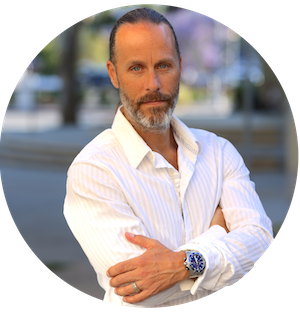
Kevin Anthony is a Certified Sexologist, Tantra Counselor, NLP Practitioner and a Sex, Love & Relationship coach. For over 10 years he has worked with men, women, and couples to have the relationships of their dreams, and the best sex of their lives! He is also the host of “The Love Lab Podcast”, creator of the popular YouTube channel Kevin Anthony Coaching, and creator of the popular online course series “Power and Mastery” as well as other online courses for both men and women.









Leave A Comment