Kevin Anthony 0:01
Kevin, welcome to the Love Lab podcast, the place to be for honest and real talk about relationships and sex. Whether you’re a man or woman, single or couple, this is the show for you. I am your host, Kevin Anthony, and I am here to help you have the relationship of your dreams and the best sex of your life.
Kevin Anthony 0:26
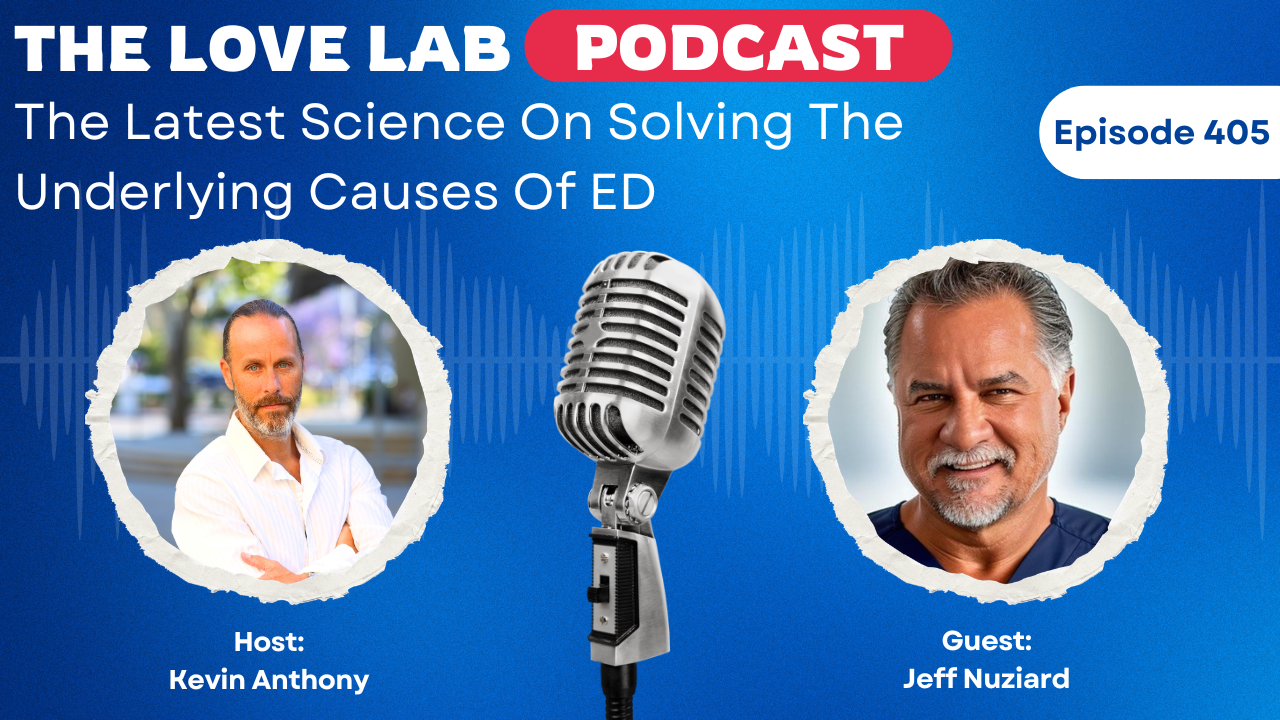
All right, welcome back to the Love Lab podcast. This is episode 405, and it is titled The Latest Science on Solving the Underlying Causes of ED. Now, I have done a lot of content on erectile dysfunction throughout my career here, not only on the podcast, but on the YouTube channel, and you know, in everything I’ve done in this work, it’s been such a huge part of what I have been doing for so many years. And why are we approaching this subject again? Well, because things don’t stay static, right? So science keeps evolving, we’ve got new ideas, new technologies, and new potential ways of treating this age-old problem. So I want to make sure that you, as listeners, if you’re experiencing ED, or if your partner is experiencing ED, you have the latest information, you know everything that we know up to date so far, about how to deal with this underlying condition.
Kevin Anthony 1:25
And that, of course, brings me to something we’re going to talk about a lot in the show, which is there are underlying conditions for ED, and a lot of what you see out there are not treating the underlying conditions, they’re just kind of band aids on top of the problem, so we’re going to break that down today, and we’re going to show you which ones are actually addressing root causes, which ones are really just band aids on the top, and how some of them are lacking in some areas, and all of that. And, of course, my guest today has put together a pretty incredible protocol using some of the latest technologies, and we’re going to talk about that as well.
Kevin Anthony 2:03
So, before we dive into all of that, a short word from my sponsor: Are you ready to build deeper intimacy and a more passionate relationship? I hope so. Introducing Intimacy Mastery, the sex, love, and intimacy app for singles and couples, your personal guide to mastering love, sex, and connection, get a personalized plan tailored to your unique relationship goals. Enjoy daily lessons, real-world challenges, and guided reflections, all designed by me, Kevin Anthony, your trusted guide and coach. Track your growth, celebrate your wins, and get expert feedback every step of the way. Access exclusive resources, videos, and proven tools right at your fingertips. Whether you’re single or partnered, this app will help you create the love life you truly desire. The app is available right now at https://www.kevinanthonycoaching.com/go/app. That’s https://www.kevinanthonycoaching.com/go/app. And of course, that link is in the description.
Kevin Anthony 3:03
Okay, my guest today is Jeff Nusiard, and he is the founder of Sexual Wellness Centers of America and the innovator of Regen Max, the only patented protocol proven to cure and prevent erectile and vaginal dysfunction. More than 3000 patients have completed the program with outcomes that consistently reflect the remarkable 97.2% success rate first demonstrated in his clinical trials, and we’re going to learn all about that today. So, welcome to the show, Jeff.
Jeff Nuziard 3:32
Thank you. Thank you so much for having me.
Kevin Anthony 3:35
Well, you know, I think what you’re doing is pretty interesting and unique, and like I said in the intro, I’ve been talking about this subject for a long time, because you know, doing work in the coaching space around sexuality, and especially in the early part of my career, focusing mainly on men and men’s sexuality, Ed is a huge thing, right, especially nowadays, so having talked about it for so much, and having dove into so many of the different technologies over the years, when I saw what you were doing come my way, I thought I need to know more about what’s going on here, and of course, we had a pre-interview call, and I get my listeners know that I do that with my guests, and I got to learn more about it, and then I became even more fascinated in it, and how it works.
Kevin Anthony 4:22
So yeah, I really, I really am excited to talk about this topic and bring this information to the listeners. Before we dive into all of that, though, you have an interesting personal story that goes along with this as well, and it’s something that you know in the materials that you know the publicist sent over wasn’t necessarily part of it, was focusing mainly on the protocol, but when I got to talk to you, I got to learn about this part of you, and I just think it makes for a really compelling story. In other words, you know, it’s one thing to say I developed a program and here’s I read the latest science, it’s another thing to. A personal story behind it, and I would love for you to share that with the audience.
Jeff Nuziard 5:04
I’d be happy to, and again, I’m very thankful and appreciative that you had me on the show today. So, yeah, when I was 40 years old, I was living my life happy as can be, except I went through a really bad divorce at that time, and then it was like, well, what the heck, you know? I don’t know, there’s such a thing as a good divorce, but it was a divorce. Started thinking, well, maybe that’s the problem, and I started thinking, well, that’s probably why she laughed. A little bit more time went on, and my mind was sexual, my body was not. My body would not cooperate, no matter what, so I did what everybody else did. I went and got on the pills, the pills, they worked, you know, they worked pretty good.
Jeff Nuziard 5:47
So, you know, I thought, okay, I’m fine on a whim, and just, just started researching and looking into this stuff. I thought, let me get my hormones checked, you know, because I’ve been reading about hormone replacement quite a bit. I wasn’t a doctor at this point, I had a pretty good financial planning career going on, and so next thing I knew, my testosterone at 27 years old was a big fat 1185 solid as can be. Now, at 40, my testosterone dropped all the way down to 305, so that was pretty devastating in itself to hear that, and to actually see that on paper, and without the pills, I just wasn’t working, and then the pills started fading away and not working real well. It was kind of hit or miss, so I started really diving in deep and started researching, and I make it sound in the story like it was just, you know, I just found this, figured this out, but it was time, you know, 18 years of digging deep, researching and developing, and trial and error, trial and error, and more error, and more error, and more error, and next thing I know, I had it figured out, and I think I got this, and what it came from, though, is I had to realize number one, it was extremely emotionally taxing on me.
Jeff Nuziard 7:03
I mean, when you’re 40 years old and you cannot perform sexually, you feel like you are not qualified to be a man anymore. You are just cashing in your man card; you’re done, it’s over. So, yeah, it was pretty heavy on my heart, my head, emotionally, mentally, all of that, and I just kept working diligently, trying to figure it out, because I’m not a pills guy, I don’t like pills, I don’t like taking pills at all, I don’t like surgeries, I don’t want that either, and so I was able to figure out, well, shoot, the root cause of erectile dysfunction is not blood flow, and that’s what everybody’s been teaching for years, hundreds of years, you know, nitric oxide for this, or take this pill, dilate vascularity, and it works, and you know, to prove that point, is those pills worked really good for me for a while until they didn’t, and I hear that from patients all the time in our clinic, you know, I’ve been on Cialis five years and it’s worked really well, and now it don’t work at all, and it’s not that the pills quit working, or that we get resistant to them.
Jeff Nuziard 8:08
They work very well. They dilate vascularity, for sure. The problem is, we don’t have a sponge capable of absorbing the blood, and every white paper that I got my hands on to read was all mentioning it, dancing around the problem, but everybody kept going back to blood flow. So I just started digging deeper into the anatomy, and literally cadavers and pigs and all kinds of different things later, and dissecting everything I could. I realized, my goodness, this is the problem, and so once I found the problem, I’ve got quite an extensive background in lasers.
Jeff Nuziard 8:47
I was able to; I know how to solve that problem, so you know, it’s got to figure out the settings and the right amount of heat and the right amount of time to perform the laser duration-wise, all that, so it took a long time of trial and error, but I was able to figure out and treat the root cause of the problem. Long story short, I’m now 60, and I have zero issues. My wife and I have an amazing sex life, and we have no issues at all.
Kevin Anthony 9:16
Yeah, and that’s why I love for you to start with that story, because this is something that was born out of your own challenges, your own struggles, and your own desires to want to solve the problem, and I think that a lot of times that’s really where the best inventions come from, somebody who wants to truly solve something for themselves, right? So I think you know that’s just a great way to start, because as we start to talk about what the protocol is and how it works, and all that kind of stuff, you know, just keep in the back of your mind, listeners, that you know this was 18 years of personal, you know, research to solve a problem, not just something that you know came out of nowhere. Now you mentioned several things in that. Story that I definitely want to come back to.
Kevin Anthony 10:03
The first one is, you know, you were saying at 40 years old when you were experiencing, you know, erectile dysfunction, and you were thinking maybe this is what, why my wife left, and why I ended up divorced, and all of that, and you’re like, I feel like I want to turn in my man card. This is an important point that we need to reiterate, because a lot of times when we have the conversation about ED, it’s always around just how can we have more sex, how can we have more sex, oh men always just want more sex, it’s just all about them and wanting more sex, right? Whereas what you mentioned is okay, yes, that’s part of it, right, we all want to be able to enjoy sex, but the psychological toll that it takes on men when they can’t achieve an erection is real. As you said, I don’t feel like a man. I want to turn in my man card, right? Like that is something that I think isn’t really talked about enough, and I think a big reason why it’s important to address this issue.
Jeff Nuziard 11:00
Well, I’ll tell you, it’s the number three cause of suicide in men today. So, erectile dysfunction is a real issue, and it is incredibly emotionally taxing. I don’t know how to relate that to a female perspective. I’m not a female, I don’t know, I wouldn’t know how to even put something in there. What I have heard, the closest thing I could, I guess, relate that to is, how do you still feel like a woman if you’ve had a double mastectomy? I don’t know. Again, I’ve had some women say, I know, prom, I just had surgery and have it fixed. I know for a man, when you don’t have that testosterone level of your youth and that drive and that vigor and that energy, the focus, the get up and go, and then on top of that, not able to perform sexually, that is absolutely devastating to the male psyche. Period. End of statement.
Jeff Nuziard 11:58
Anybody who says otherwise they don’t know what they’re talking about, or if they say, “Well, that’s just shallow thinking. You really don’t know what you’re talking about. I mean, we are wired, men are wired that way, and that’s how we’re created, that’s how we’re born, and that’s the way it is. We are sexual beings, and when we cannot perform, it would almost be the same slam if you couldn’t provide it’s a slam against your masculinity, and you know a lot of women say, “Oh, I understand, I understand, I don’t expect you to understand it’s that big of a male deal, and every man hearing this right now, you know exactly what I’m talking about.
Kevin Anthony 12:42
Yeah, absolutely. And I think that’s why it’s so important to have the conversation, right? And because I imagine there are probably a significant number of men out there feeling this way, but then also thinking they’re not supposed to be feeling this way, right? Like, oh, I shouldn’t feel like this, I shouldn’t feel like less of a man, I shouldn’t do this or that, right? And now they’re just heaping guilt on top of the shame that they already have, because they’re not feeling like a man, and that’s honestly of just a very dangerous combination of things. So important to treat the issue, regardless of, you know, how much sex you’re going to be having, because I think it is also good for, you know, your psychological well-being. So the other thing that you mentioned, and you started to get into the root cause that you were finding in these white papers that people were sort of talking about, but kind of dancing around and not really getting to the point. Now is the perfect time to discuss what this cause is. How did you find this, and why aren’t more people talking about it?
Jeff Nuziard 13:52
So, let’s, I’ll use a couple of analogies to make it really simple to understand, but the reason why treatments, ED treatments per se, out there, and there’s quite a few of them out there, don’t work, or they’re temporary, is because they treat one thing, and most human organs, and the penis is one of those, is a complex organ, and there’s a lot of moving parts there that we have to fix, but most importantly, what happens is your brain gets triggered by some kind of stimuli, sends out some chemicals. Those chemicals communicate to the penis and say, “Relax, we’re sending blood in. The blood starts coming in, and you have two tubes called the corpus cavernosum and another part called the spongiosum, and the job is to absorb all that blood, absorb, absorb, absorb, and when it’s full enough, it triggers a muscle called the bulbospongiosus that locks down, and it holds the blood in until orgasm. Then that muscle relaxes, and the blood flows back out.
Jeff Nuziard 15:03
If the sponge and the corpus don’t get full enough to activate that sponge, then the blood will keep filling up, but it will be slowly leaking out at first, and then that’s called the venous leak, and then that just gets worse and worse and worse over time, over a degenerative time. The reason why that happens, the best thing I can, the best way I can explain it, is to think of your body like you have an electrical panel, like you do at home, you have a panel in your body full of breakers, and when you’re young, your testosterone is great and amazing, and we’re just going to use rig, just round numbers here, and say that your testosterone level and your prime was 1000 and in our 20s we stopped producing testosterone by about 2% a year, that’s average, it could be more for some, less for some. So got a patient sitting in front of me, 65 years old, let’s just use easy math, and say at 25 he started to stop producing testosterone 2% a year. Well, now we’re 40 years down the road, 80% of his testosterone production gone, never to return.
Jeff Nuziard 16:16
So, when that testosterone level is coming down from 1000 on down, and it hits that 500 mark, or a magical level number mark in your body that’s unique to you. It opens the door to your electric panel, and then your body starts turning breakers off one at a time until the final breakers are turned off, and we expire, and that is the aging process. That’s how the aging process works. So, point number one, I was able to find out that Western medicine has been teaching for hundreds of years that we age and lose testosterone. No, we lose testosterone, and that is what activates the aging process. Period. This is why we have so many med spas and stuff around, worried about how we look, because we’re aging younger. Why are we aging younger?
Jeff Nuziard 17:06
Because testosterone counts are dropping quicker and quicker. I’m getting patients in their 20s with testosterone levels of 400, it’s extremely low, should not be that low. 20-four year old, 405 shouldn’t be that low, so the first breaker that gets turned off in that electric panel is your production of collagen. Women notice it before men because women are in the mirror every day, and they say, I didn’t have that line before, I didn’t have that wrinkle, where did that come from? This is why they’re flocking to med spas, getting Botox and fillers at such young ages, because that degeneration of collagen is happening, so it’s happening to men too, but we don’t realize it, because we don’t care about lines and wrinkles.
Jeff Nuziard 17:51
But what happens is that the sponge and that tissue in the penis are held together by collagen. Think, if you dwell, of the kitchen sponge at home, when you use it and use it and use it, it begins to shrink up, dry out, and become unabsorbent. You throw it away, you open up a new one. Well, we don’t get that option with the human body, so we have to figure out a way to stop that. So the sponge is where it starts. The sponge quits absorbing enough blood to activate that muscle, then what happens? The veins respond accordingly.
Jeff Nuziard 18:26
Our bodies are great at overcompensating for themselves, for injuries and things like that. So, the sponge isn’t absorbing all the blood that’s being sent in; it’s leaking back out. So, the veins that will help you out get a little bit of atrophy and shrink up and send less volume of blood in, so your first symptom of erectile dysfunction is I can get erect but not maintain the erection. Okay, then the next stage is now I’m only getting about a 75% erection, and I’m not able to maintain it, and it just snowballs down here from there to where I have patients coming in, who have not had any kind of response in 10 years, 15 years, so you have to go back to the cause, that sponge is bad. Let’s fix the sponge, then let’s fix the veins. When we do that, now we’re back in business, but what started it was our hormones were off, so let’s get those back optimized and get those back to the right level, so it’s a multi-modality approach.
Jeff Nuziard 19:26
It’s not just one thing; everybody has the same tool bag out there to fix or treat ED, if they want to call it treated. Most of which are just Cialis and Viagra. Okay, what do we do when those stop working well? And then some people are trying a shock wave. Well, that does great for blood flow, doesn’t do so well for collagen, and doesn’t remodel collagen at all. Some people are trying mechanical pumps that doesn’t do really anything on its own, so you can most everything out there is going to have. 50 to 60% success rate. When I was going through the research project process and figuring out how to do this, what I realized was that if I take one piece out, I have a 40 to 50% success rate. When I do all four points, I have a 97% success rate.
Kevin Anthony 20:19
Yeah, and we definitely want to dive into two things you just said, you mentioned a couple of the current technologies, and you know how they work or don’t, and then your four step protocol, and I want to dive into both of those a little bit more, but first I just want to come back to this idea that the thing that you discovered that people maybe were writing about in white papers, but then for some reason, not really doing anything about was this idea that the collagen starts to break down, and that the spongy part of your penis that absorbs and holds blood is primarily made out of collagen, and so when the collagen in your whole body breaks down, that is breaking down as well, and that is something that I haven’t really heard anybody else talking about.
Jeff Nuziard 21:04
Nobody’s talking about it, but here’s, you know, like one white paper says there’s a noticeable decline in collagen content in the corpus cavernosum in relation to the testosterone deficiency. Well, there you go, I mean, they’re, I mean, it’s pretty point blank. I read that in a couple of papers. I read that in a couple of papers. The collagen content of the corpus cavernosum in all ED patients is noticeably lower. Okay, so why aren’t we dealing with that? You know, and everybody, you know, it’s one of those things. It’s so easy every time I speak. I was at a conference last weekend in Las Vegas, speaking, and I had so many doctors going to me to say it’s almost too easy, like we just tripped over it, or we just jumped across it, and just forgot about it. And it really is easy. It’s just one of those things.
Jeff Nuziard 22:01
Okay, go one step further than the bad blood flow, because blood flow is a result of erectile dysfunction. It’s not the cause, so if that’s a result, but that’s what we’re focused on. Everybody’s pushing pills and lotions and potions and all kinds of things to get more blood in, but if you don’t have anything to absorb it, what good is it? So, let’s go back to that, and that’s what everybody was missing, and for some strange reason, I laser-focused right in on that when I saw it so many times written, but nobody was addressing it. It was part of their summation, it was part of the thesis, and in the proof of this is what’s going on, but nobody would address it, so I’m like, well, you know, the common denominator here amongst all these papers is collagen content in the sponge. So, how about we look at that?
Kevin Anthony 22:52
Yeah, and I find that fascinating, and you know, kudos to you for being able to recognize that pattern. You know, for those listening who might be thinking, oh, that’s kind of interesting. I’m not so sure about that idea, you know. I pay a lot of attention to, you know, what’s happening in, like, the fitness and nutrition world. I always have my whole life, and in recent years, this idea of collagen breakdown in the body has gotten huge attention outside of the erectile dysfunction space, so I’m seeing articles all the time, the number of supplements out there, you know, collagen supplements out there has just exploded, so there’s a lot of science on that side of it, but as far as I know, nobody’s actually equated it yet to erectile dysfunction and the collagen in the penis, which I think is fascinating.
Jeff Nuziard 23:43
Nobody has.
Kevin Anthony 23:44
Let’s talk a little bit about some of the other treatments. I have a list of them, actually. There are six of them on the list here. We don’t have to go in depth in each one, but I want to just talk about each one a little bit. What it actually does and what it doesn’t do. So, let’s start with Cialis and Viagra. What is that actually doing, and why does that sometimes not work?
Jeff Nuziard 24:05
Those are called PDE five drugs, and they’re basically basal dilators, and when you take those drugs, your body will dilate your vascular systems in the body. I know a lot of physicians who actually, in high-stress jobs, give that prescription off-label to the two men who say, “Look, you’re having a stressful day, take 20 milligrams of Cialis, and it would be fine. And when you know the veins dilate, next thing you know, the blood gets more blood flow going. So, again, blood will work, you know, when people say, well, they don’t work for me anymore. Well, it’s because your sponge got too bad, but I’ll ask them. Well, let me ask you this: when you take the, when you take Cialis, does any response happen at all? Well, yeah, I’ll get a little firmer, but nothing penetrable or any kind of erection, it’s just firmer, you. Because you have blood flowing in, they work, blood’s flowing in, but there’s nothing to absorb it, so the blood’s flowing right back out.
Kevin Anthony 25:07
Yeah, so again, one of the things I want to point out as we go through this list is if we understand what the particular treatment is targeting, right, and we understand what it’s supposed to do, and also what it doesn’t do, it’ll make more sense to people, like when they go, ‘Oh, I get, okay, now I understand why you know those pills aren’t working for me anymore, right? Right. So I just.. I think that’s really interesting. So you’ve got two things: if the if the you’re creating blood flow by taking the pills, but if the sponge isn’t able to absorb, and if the muscle isn’t able to lock off and hold it in there, then all that extra blood flow isn’t really going to do you a lot of good. That’s the main point, right?
Jeff Nuziard 25:47
Correct.
Kevin Anthony 25:49
What about this is another big one that is newer? I would say a lot of people still don’t actually even know this is out there, but this Gains Wave technology, how is that working?
Jeff Nuziard 26:01
Gains Wave came out in 2016 2015 and Gains Wave is basically a marketing company. They don’t have any patented anything, but it’s using a device called an acoustic shockwave, and there are two different kinds of shockwave devices out there, is a radial shockwave and a focused shockwave. The focused shockwave goes very deep, and it does great for muscles, ligaments, and things like that, and that’s what all shock waves were developed for. And a doctor named Dr. Gaines decided he wanted to try it on the penis to see if that would stimulate more blood flow. Well, it didn’t stimulate more blood flow, but what it did do is repair those atrophic veins that shrank up and sent less blood in. So you could, in theory, by doing the gains wave treatments, you know, you’re rebuilding the veins, getting your body.
Jeff Nuziard 27:04
It’s a common thing that our bodies do. It’s called angiogenesis, where our bodies will build new blood vessels when we break them. If you walk 10,000 steps a day, you’re breaking blood vessels in your legs, guarantee it, and your body will regenerate new blood vessels. That’s just how it works, so that’s what the shock wave will do. It will also go a little bit further and put micro tears in the tissues and smooth muscle cells and in the sponge itself. However, it doesn’t remodel collagen to the degree we need it to remodel collagen; it takes injury, and there are two kinds of injuries that happen to our body, mechanical injuries and thermal injuries. Mechanical injuries are where we actually break tissue, break skin. If you cut yourself, that’s a mechanical injury. If I burn myself, that’s a thermal injury. Your body doesn’t know the difference.
Jeff Nuziard 28:03
An injury is an injury to your body, and it’s got to repair it, so your body gets busy regenerating at that point when you injure it. The problem is you’re dealing with one thing, and the biggest problem with shockwave therapy today is that people aren’t selling it properly. Go to med spas to get your penis shock waved, and they’re selling you six treatments for $2,000 or something like that, 2500 bucks. It takes a minimum of six weeks for a cell to split. So, why are you treating it six times and stopping it doesn’t do any good. The truth matters. You need about 12 to 20 treatments to achieve that 50 to 60% success rate, and again, 50 to 60%, so you’ve got 40% chance at best that you’re going to spend this money and not get any results, so going back to my point, one modality doesn’t do it; you’ve got to do it all.
Kevin Anthony 29:10
Yeah, and then when we get to talking about your protocol, I think it’ll make more sense when we say it takes a bunch of them, because we’re gonna, we’re gonna lay out how each sort of phase complements the other phase, and I think that’ll make more sense, but it’s good for people to understand, you know. Okay, what is Gains Wave? What’s it doing? How is it working? I was just talking with a friend this past weekend, who was telling me that they had acoustic shock wave treatment on their ankle for an injury that they had.
Jeff Nuziard 29:39
It’s very common for muscles and ligaments, it’s very common.
Kevin Anthony 29:42
Yeah, so of course that got us into a whole discussion about how people are using it on their penises too, which she was like, Really?
Jeff Nuziard 29:49
Of course they did,
Kevin Anthony 29:51
Of course they do. Exactly. Okay, a couple more real quick. Penis pumps, talk about those a little bit.
Jeff Nuziard 30:00
Okay, so penis pump. First of all, the cheap ones you get online, or something, you really, if you’re going to use one, you need a medical-grade one. It’s got a gauge on it, and that you can control, and you pump it up to seven to nine pounds, and you get above that, you’re going to hurt yourself, you’re going to, you could create blood clots, even if it mechanically pulls more blood into your penis than you could ever do on your best day ever. It really does pull in a lot of blood. The problem is it’s not regenerating anything. What it can do is help to reverse some of the atrophy, maybe from the muscles, and allow that expansion in our 20s.
Jeff Nuziard 30:43
In our 20s, we averaged about 20 erections in a 24-hour period. People think that’s impossible. No, it’s not. It’s true. And it happened. Most of those are when you’re asleep, but because that’s your most relaxed state. But that’s a lot of expansion and contraction going on, a lot of exercise going on there, so that’s what the pump mimics, is the expansion and contraction process, so it is good for that response, and that you know, and it’s a good exercise, it doesn’t repair the damaged tissue, however,
Kevin Anthony 31:17
Yeah, this is this is a big conversation I have had so many times over the years, and people want to argue with me about it all the time, because a lot of guys are using penis pumps to basically enhance their size, and so they’ll tell me, they’ll tell me, oh, I’ve grown x amount, you know, blah blah blah, and it’s all because of this protocol, and blah blah blah, to which I’m always pushing back on them and saying, you’re not actually growing your penis, you’re just maximizing what you were already born with, and it’s exactly what you just said. As we stop having as many expansion and contraction cycles through spontaneous orgasms, orgasms, erections, especially when we’re sleeping, right, then it’s actually it’s kind of that whole, you know, use it or lose it sort of idea. Your body’s not using it, and so it shrinks, and then you use a penis pump, and it kind of brings it back to where it was supposed to be.
Kevin Anthony 32:09
But if you think you’re going to grow an extra inch or two by using your pump, not going to happen. Interestingly enough, you also mentioned that if you’re not careful, you can hurt yourself with it too, and I think this idea, and we’re going to talk about this more a little bit further on in the show, but this idea of creating micro tears and then healing them, the same process that we use to build muscles and stuff. If you were to attempt to do that with a penis pump, you would most likely end up damaging yourself. So, I do not suggest that people pump themselves up to the point of creating these micro tears through massive expansion, and then thinking that’s going to grow it, that is dangerous. You’re likely to hurt your penis.
Jeff Nuziard 32:52
Absolutely, you could break it. And I know that sounds like a joke, but you could break it. Yeah, it’s happened many times.
Kevin Anthony 32:59
Yep, for sure. Okay, what about pee shots? That’s another one that’s out there.
Jeff Nuziard 33:06
And Dr. Reynolds from Fair Hope, Alabama, invented the P shot. I don’t know, 3040 years ago. It’s been a while. I don’t remember the exact date, but it’s been around for a while, and it has been proven to be very regenerative. Because you’re taking out your blood, spinning it down, pulling out the platelets, and it’s called platelet-rich plasma, and that’s injected back in. It’s done very well for torn muscles, pulled muscles, things like that. It is a regenerative biologic. The problem is this: you come to my office. If I walked in my office as a patient, I’m 60 years old, halfway to 61. My exosomes and my platelets are 61 years old, 60 years old. That’s not very regenerative, right? I mean, it’s they’re old, so you know, I would like to have some 20 year old, but I’m not going to take somebody’s blood from somebody else’s blood and put that in my body, so the P shot and the O shot, you know, have when I started this, that’s what I used in my research, because that’s all we knew, the reason why I got away from it was when I started realizing, you know, the older you get, it’s not as regenerative.
Jeff Nuziard 34:29
There are a couple things going on. It’s not as regenerative the older you get. Number one, number two, the same thing with the gains, way people don’t sell it properly because they’re afraid to sell expensive things. To do the piece shot properly, you need to do it three times, two weeks apart. So that’s $4,500 from most places. People don’t want to spend $4,500, and again, using older exosomes isn’t going to do a job, especially since the job of exosomes is to migrate to injuries and at. Cellular level regenerates at that level. If there are no injuries in your penis, it’s just going to migrate right back out to some other injury in your body. The other part of it is that it’s a lot of volume to do the piece shot properly. It takes five and a half ml of platelets injected back in the penis, and four injection spots on the penis; that’s a lot of volume to put inside that, and for a woman, it’s two ml on the clitoris; that’s a whole lot of volume in a clitoris. So it’s very uncomfortable, not the shot, the shot doesn’t hurt at all. There’s hardly any feeling in the shot; people freak out, you’re putting a needle there. There’s really no nerves inside of that in the corpus tissue, but the PRP is not have any injuries to heal, so it migrates right back out. It’s temporary; whatever it’s doing is very temporary.
Kevin Anthony 35:58
That’s kind of fascinating, right? And again, when we talk about the protocol in a moment, when you understand how you are scientifically and very specifically introducing a form of injury, and then doing that, like how that works, but yeah, when you, when you think about it, if it doesn’t, if there’s, if there’s nothing there for it to heal, it’s just going to pass right on by.
Jeff Nuziard 36:23
That’s right.
Kevin Anthony 36:23
So, that’s interesting. Two more I had on here before we take a break. TRT, we kind of talked about already, because you talked about that early on, about how that affects the aging process, and how that breaks down. But you know, if there’s anything you want to add about why it’s not the solution in and of itself.
Jeff Nuziard 36:41
I do. I will just add one thing, and that’s hormone replacement. Does not fix erectile dysfunction, temporary or permanent, it does not. It, it will fix your drive, it’ll fix your energy, it’ll fix just your overall general health and well-being, and how good you feel. The science is very clear that if your hormones are at their optimal level, which is that of your prime. All your organs, your vital organs, work at their optimal level. Your heart, lungs, brain, kidneys, and everything works at their optimal level. So, hormone replacement, although very, very, very important, and is very needed, and underrated, and underplayed in today’s society, is not going to fix erectile dysfunction.
Kevin Anthony 37:23
Yeah, and that’s an important point to make, which is that you know if you think just getting on hormone replacement therapy is going to solve all the problems, it’s not likely it’ll, it’ll make you feel better, but it’s not necessarily going to solve the problem. All right, last one on the list is implants, and I actually, I’ve worked with some people who’ve had implants done before, and you know, I don’t, I don’t want to judge their choices, but, man, when I hear what they’ve gone through, I’m just like, wow.
Jeff Nuziard 37:53
Yeah. Well, obviously, a penile implant will work because now you have a mechanical mechanism in there that you pump up, and it will work. It will be an erection. I’ve talked to a lot of women, a lot of wives of husbands who’ve had it done, and their response to me is being blunt, as I feel like I’m having sex with them with a soft direction. By that, there’s no blood flow. The glands, which everybody calls the head, is not going to fill up with blood. The tissue around it, all the parts that fill up with blood, have been removed, and bladders have been put in, and those fill up, and so you have something hard inside of something soft.
Jeff Nuziard 38:42
There are some people that say I love it, because I pump it up, and we have sex all night. Yeah, okay, great. Not much feeling to it. Yes, you can still have an orgasm with it. Absolutely, it’s very painful. I got a friend down south of Waco, a friend of mine, who had it done, had to have it redone three times because it broke, and three different times he had to go under surgery for that, and it was extremely painful for him to recover. Extremely, took him a good three to four months for him to get back into where he can have sex without hurting and not having the issues.
Kevin Anthony 39:22
Yeah, I’ve heard similar stories of people who had to have them replaced, either due to breaking it or infection or other complications as a result of that. I just think, man, surgery is never fun, regardless of what area of your body you’re having surgery on, but having to do surgery on my penis three times, man. If there were another way, if there were any other ways to opt out of that, I would do it. It turns out there is.
Jeff Nuziard 39:52
There is a way now.
Kevin Anthony 39:55
Okay, so I think we did a pretty good job of covering what’s out there. And you know the areas in which they sort of fall short. I’m going to take a break now. When we come back, I really want to focus on how you’ve put together a bunch of these pieces in a protocol to address all of the areas, and yeah, we want to dive in deep to exactly what that is and how that works.
Jeff Nuziard 40:19
Let’s do it all.
Kevin Anthony 40:21
Right. Quick break. If your relationship feels disconnected, if your sex life has lost its spark, or if you just know something needs to change, then relationship and intimacy coaching can help. I have created transformational coaching programs for men, women, and couples, all designed to help you create deeper intimacy, better communication, and the kind of passionate relationship you actually want, whether you’re struggling with intimacy, confidence, desire, emotional connection, or recurring relationship challenges. You don’t have to figure it out alone. The best place to start is with a free strategy call, where we’ll talk through your challenges, get clarity on what’s really going on, and create a personalized plan for moving forward. Go to https://www.kevinanthonycoaching.com today to book your free strategy call with me, that is https://www.kevinanthonycoaching.com, and that link is in the description.
Kevin Anthony 41:16
Okay, so we talked about what the real underlying cause of ED is. We talked about the current treatments that are out there, and what they address and what they don’t address. Let’s talk about this four-step program that you’ve created, this protocol, and how it addresses all of the different areas. Start by talking about what the protocol is, and then we’ll talk about each one of the steps.
Jeff Nuziard 41:50
So, Regen Max is a four step, four pillar protocol that encompasses the entire organ to fix all parts of it, blood flow, sponge absorption rate, feeling sensitivity, all the above. So, the number one question I get asked is, does it make me bigger? You know, there’s really no such thing as real male enhancement, unless you go in for surgery and cut a ligament in there, and yeah, you’ll get about another two inches. It’s not going to help the girth. You have to do a cosmetic procedure for that, where they put fat transfer in there, or they do a filler in there, some kind of hyaluronic acid type filler in there, and those things you can get more girth. There’s really no such thing as male enhancement. A few patients I’ve had that have come in having done that thing, they have in common that they regret doing it. It was a problem, but it will make you realize what you don’t realize is just like that kitchen sponge at home on the sink that shrinks up over time; you have slowly been shrinking, so what this will do is take you back to where you once were.
Jeff Nuziard 43:05
So, yes, it will make you bigger than you are today, but it will not make you bigger than you once were. Wanna make sure that’s clear. So, the four steps to this number one, yes, shock wave, very important, that creates angiogenesis. Most importantly, it creates micro tears in the smooth muscle cells and in the corpus cavernosum to regenerate that tissue. Just like lifting weights, when you lift weights, you get micro tears in your muscle, or you tear your muscle at the cellular level. Your body responds and rebuilds that at the cellular level. It uses your body’s natural stem cells to do that. Stem cells create cells, so it’s important to do that, you know, when you’re lifting weights. So we use shockwave to do that, and we will create the micro damage inside the tissue. Then the next thing is we have to remodel the collagen and fix that collagen content that is so much lacking now in the penile tissue. The only way to remodel collagen is through injury. Your body doesn’t know the difference between mechanical and thermal injury. Thermal injury remodels collagen much thicker, much faster, and much better than a mechanical injury does.
Jeff Nuziard 44:24
So, this is why you have laser treatments for women at med spas. They get their face, their faces resurfaced, or laser tightening. There’s a company out there called the Fotona facelift, and it’s a laser procedure. It’s all collagen based, it’s all heat based, so we use a there’s only two machines in the world that will do this treatment, by the way, only two, and if you try any other one, you’re probably going to burn that penis, because these are specifically made and designed for treating the penis, and it’s pulse duration, and it’s. Not my company, they’re not my companies. I have nothing to do with them. I just negotiated better pricing for our licensees who take the license, but we put heat in the tissue over a certain period of time, and that remodels the collagen and thickens it back up. So now we have new veins, create angiogenesis, we’ve got smooth muscle cell tears, sponge tears, so we’re getting new tissue, we remodel the collagen and get that healthy and thick back, so now all that tissue is good. Now to do it in a timely fashion, again, I’m 61 years old, almost 61 years old.
Jeff Nuziard 45:37
To go back to my analogy of the breaker box, the second breaker that gets turned off in our body is our stem cell production. We have lots of different kinds of stem cells: mesenchymal, adipose-like stem cells, and narrow crest stem cells. We have lots of different kinds of stem cells in our body, and they’re designed to repair. Stem cells are designed for recovery. Back when I was 20, I could lift weights, I could work out, I could go to work all day, go party with my friends, sleep four hours, get him, do it again. I was fine because I had so many stem cells flowing through my body. My body recovered quickly.
Jeff Nuziard 46:12
The pee shot wasn’t – I wasn’t a big fan of the pee shot, using that kind of stuff, because it took so much volume, it was painful, and it wasn’t getting the results that I wanted to get. I developed a new biologic that is, we call it, and it’s patented, and it’s called TRF, tissue regenerative fluid, and we inject just one milliliter of that fluid, and it’s extremely, extremely regenerative, and it’s derived from a one-day-old live birth placenta. There are two parts of the placenta: the chorion layer and the amniotic layer. The chorion layer is the part that actually builds the baby. The amniotic layer is the general health and protection and well-being of the baby while it’s being developed, so I said, well, that’s the most. If it’s going to make a baby, it surely could help me make new tissue in my penis.
Jeff Nuziard 47:08
So we took that from the chorion layer, extracted those stem cells from the stem cells, we extracted the exosomes, and we were able to put those in the tissue. Exosomes protect as well as regenerate, so we use the Corian layer, put that in an amniotic fluid, and then infuse it with some different highly concentrated growth factors, cytokines, some hyaluronic acid, and some collagen type one and type three collagen. It’s very, very regenerative, and we inject that into the tissue, so now we’re getting all that new regeneration in a very quick, timely fashion, instead of waiting forever for my 60-year-old stem cells to fix things. It can be done in a few weeks, few months for sure, if you’re really bad, but a few weeks for most people. And then the last component is what started the whole thing in the first place. We’ve got to get your hormones back optimized, so we do hormone replacement therapy and get you at your optimal rate, not your normal rate.
Jeff Nuziard 48:09
There’s no such thing as normal. What’s normal for you is not normal for me. Everybody’s got a different level of testosterone than they had in their prime, and that’s what we want to get you to by doing those four steps. We were able to consistently have a 97% success rate with a 250-patient clinical study, and now over 3200 patients have gone through the program. We’ve maintained that 97% success rate. And let me add this, because there are a lot of people who like to throw the BS flag on the 97% success rate. We have a lot of proof of it, but it’s really not that hard to comprehend. And here’s why: all we’re doing is regenerating tissue. Kevin, if I were to ask you, have you ever cut your stuff before shaving, or cut your hand, or cut your arm? Have you ever cut your thumb?
Kevin Anthony 49:00
Of course,
Jeff Nuziard 49:00
What was the percentage chance that that cut would totally heal and be gone?
Kevin Anthony 49:07
Pretty darn good,
Jeff Nuziard 49:10
Over 97%, right? Probably 100% of the time, if you cut yourself, it heals. So, what happened there? Your body regenerated new epithelial cells to mend that gap and to close down that cut, and mend the skin back together again. It’s called regeneration at the cellular level. All I’m doing is the same thing, making micro tears in the tissue, remodeling collagen. The only reason I don’t have 100% success rate is that there are some ailments out there in the human body that prevent you from healing, and diabetes, severe uncontrolled diabetes is one, severe obesity is another. The seven out of 250 that didn’t get the results we were looking for fell into those categories. Smoking is another way that keeps your body from healing. So there are a lot of things like that that come into factor that I have no control over, so it’s not difficult to understand a 97% success rate when you plug in the way our bodies regenerate, it’s very simple.
Kevin Anthony 50:13
Yeah, so I like the way that you’re addressing this is, and I’m just going to summarize it a little bit for myself and for the listeners, so the shock wave therapy is actually basically doing physical damage, as you mentioned, in helping blood flow. The laser is doing the heat damage, which is helping to remodel the collagen. Then you’ve got the stem cells, which are going to then basically, sort of hyper heal those traumas that have been introduced, and then, of course, optimizing the hormones to keep everything working. That’s the basic protocol in a nutshell.
Jeff Nuziard 50:53
That’s correct. And the hormone optimization will also keep the work we do from recidivism. You’re not going backwards anytime soon. Most people that we treated years ago, even in the research process, are doing great today, no issues whatsoever. So, I know for me, I’m doing great. I mean, again, 20 years later, I’m doing great. So, the hormones are very, very, very, very important for your general health and well-being. So, yeah, you’re absolutely correct.
Kevin Anthony 51:24
You know, this is a little bit of a side question, but it’s related to the hormones. So, you mentioned, and this is a conversation I have with people all the time about hormone replacement therapy and numbers. I say, well, if you don’t really know if you didn’t have your, your testosterone tested when you were in your 20s, then you don’t actually know what your baseline is, right? And so you don’t know how to interpret that against the results that the doctor gives you. So that’s a conversation I have to have with a lot of men, because, oh my god, that’s the number is this, and I go, okay, but we don’t necessarily know what that means, unless of course it’s really cratered. I’m curious, you mentioned we need to get it optimal for what you are. How do you determine what is optimal for a patient?
Jeff Nuziard 52:06
So, through research we have, we know for a fact it’s not debatable. We know for a fact that in our prime, we were anywhere between 912 and 100 men in their prime. Now that’s changing because these kids today live a much more sedentary lifestyle than I did. My generation, you know, we didn’t have computers, phones, and sit around. If we wanted to see our friends, we had to get up our butt and ride our bikes over to their house, call them on the phone, say that type of thing, and we were constantly moving, constantly doing things, and so that’s what produces testosterone. Being very sedentary, sitting around makes your body start shutting down and not producing testosterone, because you don’t need it.
Jeff Nuziard 52:53
So we’re starting to see that change, but we know 900 to 1200 was a really good optimal level, and so we strive to get men back to that level, between, and I have some, and I say that, but I have some men at 800 that feel absolutely amazing, and that’s where we keep them, right in the 800 area. So it’s nothing etched in stone that you have to be 900. I will just tell you that 95% of doctors out there will draw your blood to say, oh, your testosterone is normal, it’s 500, that’s not normal. And what is normal? Normal for what an 80-year-old, I mean, normal for one person is not normal for another. So anytime a doctor says, ” Oh, you’re good, you’re normal, get another opinion. First of all, that doctor doesn’t know a clue what he’s doing with hormone replacement, so I wouldn’t trust him with it anyway. And is can very well get too much testosterone in you, or not enough, and you’re wasting your money and your time.
Kevin Anthony 53:55
Yeah, I’ve had numerous doctors on the show talking about hormone replacement therapy, and they’re all there. At least the ones I’ve spoken to have been in line with exactly what you’re saying. So I was just curious, what’s your opinion?
Jeff Nuziard 54:08
A few of us out there that believe that, you know, and there are, and but there’s a whole lot, and I know, because I have patients that come to me and say, I’ve been going to my doctor for years, getting testosterone done, and I draw their blood, it’s like, oh my gosh, it’s all over the charts, you know. And well, he says it’s normal. There’s that word again.
Kevin Anthony 54:27
Yeah, I’ve heard that a lot from a lot of people, saying that, you know, they get a test result back and they feel like it’s, it’s not adequate, right? So, like, you know, one of the things I will often give to, you know, clients of mine, is the assessment called the Atom. You’re probably familiar with it. It’s just a questionnaire, stands for what it is, andropause in adult males, or something like that. Is the andropause in adult aging males, something like that? Anyway, the idea is that it’s asking you about. How you actually feel versus a number, so if you are experiencing erectile dysfunction, or if you have a lack of libido, or if you have a lack of energy, like it’s based more on symptom type stuff, and so I often give that to clients, because they’ll come to me and they’ll say, ‘My doctor says my testosterone is fine and it’s totally normal, and I said, but how do you feel right?
Jeff Nuziard 55:22
Horrible.
Kevin Anthony 55:23
Yeah, right, exactly. That’s the point. If you don’t feel good, if you don’t have a libido, if you can’t get an erection, it’s probably not normal. So that’s just an interesting aside. Two more things that I want to cover regarding your protocol that I think are important for people to know, and one is, are there any side effects to this particular treatment?
Jeff Nuziard 55:47
Great question. No, they’re not. Again, it’s simple regeneration 101. We have not run into any contraindications or side effects of any kind. I will tell you, we have a lot of patients who had complete prostatectomies from prostate cancer, their prostates removed, no erectile response at all, and we’ve been able to get them all back in the game. Your body was designed to regenerate. Period. And I used to say everything in our body is regenerative, except hearing and eyesight, and now I have to take that back, because now there’s new science that’s been out the last couple years that they’re regenerating the cochlea in the ears, and people are hearing again, hearing aids going away because they’re using a stem cell protocol to regenerate that, so now hearing is even regenerative, our bodies were designed to regenerate, or we would be injured constantly. We would be cut constantly. That’s what our bodies do, regenerate. So, there are no side effects to this at all.
Kevin Anthony 56:54
Yeah, I love this, that we’re finally, from a medical perspective, starting to get into how do we take advantage of the body’s natural functions, right, rather than always introducing something external and foreign, right? So this whole idea around regenerative medicine that is really starting to explode, I think, is fascinating. How do we support the body’s natural mechanisms in regeneration? I think that’s really a great way to go.
Jeff Nuziard 57:22
There are two problems with it, though. In society’s eyes, is it takes too long. Number one, because we have this microwave mentality of we got to hurry and get everything done quickly, and the other problem is, well, it’s the same thing, the lack of patience to be able to walk out your whatever treatment you’re needing, whether it’s supplements, whether it’s nutritional, whether people give up on it, and too soon our bodies are designed, we have to just give it the trigger responses that our bodies need, but they will regenerate, they absolutely will.
Kevin Anthony 57:59
Yeah, I think I think we’re what we really need, and I think this episode and this show attempt to do this is really changing the mindset, getting away from the quick pill that fixes everything, because that has never been true ever, right?
Jeff Nuziard 58:16
Prescriptions have never fixed one thing. They just cover symptoms.
Kevin Anthony 58:17
Yeah, exactly, so yeah, there are no shortcuts, you’ve got to get into the gym, you’ve got to eat right, you’ve got to sleep enough, you’ve got to drink enough water, like, you’ve got those, that’s just how you have to do it right. So I think we just really need to try to help people shift that mindset around a little bit, and I think if we can do that, we can get a whole lot more people on board with doing these types of treatments. Last question, and you’ve sort of touched on this already, but I just want to make sure that we really cover it, and that is, somebody goes through this whole protocol of yours. How long does this last?
Jeff Nuziard 58:58
That’s my number one question, and honestly, it depends on you as the patient, because it all comes down to, will you be willing just to take general good care of yourself? Do your 10,000 steps a day, eat balanced, and cut the refined sugar and processed sugars out. We don’t need pressure. There are enough natural sugars, and everything that’s good to eat. We don’t need processed sugar. It’s horrible for your body. It’s the number one toxic thing Americans put in their body, and it’s in darn near everything. Pull a can of peas off the shelf, pull a can of green beans off the shelf. There’s sugar in it. No need for it. Sugar is the number one destroyer of collagen. Period. Above sun and above smoking, sugar number one. So, if you take general good care of yourself, it will last longer than you, basically, because you’re starting over. We’ve regenerated the tissue completely back to your prime. You’re going to be solid. Again, everything will be fine now. Take care of it.
Kevin Anthony 1:00:05
Yeah, and that’s, I think, it’s getting easier to put that message out there, but you know, in the earlier years of my coaching work, people will come to me because, you know, sex wasn’t good, and one of the first things we would do is take a look at what’s your lifestyle like, right? Like, I have all these handouts on the supplements they should be taking, the workouts they should be doing, all this stuff, and nobody wanted to hear any of it. They just said, ‘No, no, just teach me how to have better sex. I’m like, ‘You don’t get it, it’s all part of the same whole system.
Kevin Anthony 1:00:38
But I think, yeah, I think people are coming around to it now, and you know, one of the things that I really appreciated when I spoke to you the first time was that that was part of your approach and perspective as well. So, it’s not just a quick fix. So, I created this protocol that’s just gonna pump you up for a little while, but then, you know, whatever, like it is more of a holistic approach. It’s regenerative medicine tied to lifestyle in order to keep it going in the long term, and I think that’s really, I think that’s the best that we can do, really regenerate and then do our best to maintain it.
Jeff Nuziard 1:01:16
It is, and keep your body in regenerative mode, and by the way, the more you use it, the better it gets, you know. Doctor, a friend of mine in Bentonville, Arkansas, had prostate cancer. He started out as a patient; now he’s got a license to do this in his clinic, and he’s doing well with it. He had it done, he finished his program a year ago, and he said, “Jeff, I swear to you, it’s gotten better over the second year. Two reasons. Number one, we’ve got your body in the regenerative mode, so the body is continuously regenerating. Number two, he’s using it, he’s having a lot of sex with his wife, and it’s great, and so it will continue to get better over time, as long as we keep active, as long as we keep using it, it just. It’s just so important, you know.
Jeff Nuziard 1:02:08
We sit around, and in some kind of lethargic bill and expect everything to be handed to us, instant orgasms, instant erections, instant this, instant that’s like, get over the instant stuff, that’s not reality, you know. And I want to clarify, and also qualify this, this whole podcast by saying I am not advocating that I’m going to fix this, and you’re going to walk around and have, you know, erections like spur the moment the wind blows, like when you were 16 years old. No, it takes intimacy, it takes stimulation, it takes, you know, it’s not this big process, but you got to be able to engage, you got to be able to have a relationship with your spouse and be able to get into that intimate moment, and your body will respond, but I have a lot of guys saying, yeah, well, you know, I wake up with erections, but like during the day, like I’m sitting around, I don’t get one, okay, I mean, why do you want one? Why are you at work, and why do you need to get an erection just to make sure it’s working? It’s working well.
Kevin Anthony 1:03:11
The true measure is when you need it to work, does it work right?
Jeff Nuziard 1:03:17
Exactly right.
Kevin Anthony 1:03:18
But you know, as a little bit of a testimony to, you know, the whole lifestyle portion of it. I mean, I just turned 52, I get random erections in the middle of the day. I can get an erection anytime I want. Like, it’s possible if you stay healthy, if you do all the things that you’re talking about right now. Your protocol is like, okay, you haven’t done all those things your whole life, now you’re in a state of, you know, sort of degradation, right? So now you’re going to help them regenerate that, and then you know, obviously the lifestyle stuff keeps it going, but you know, just as a, as a little bit of a testimony to the lifestyle side of it, just maintaining, you know, my whole life an active, healthy lifestyle. I have no problems in my 50s, right? So it’s possible. So when you hear people saying, well, that’s just what happens when you get older.
Jeff Nuziard 1:04:13
No, so tired of that all the time. Well, that’s just what.. and when I was 40, that’s what people were telling me. Well, you know, you’re over 40 now, and that’s kind of what happens as you get older. I’m like, I’m not old, 40 is not old.
Kevin Anthony 1:04:28
It shouldn’t be old.
Jeff Nuziard 1:04:30
No.
Kevin Anthony 1:04:31
Unfortunately for most people, it is these days, it is.
Jeff Nuziard 1:04:35
It really is sad.
Kevin Anthony 1:04:37
Well, Jeff, I want to thank you for coming on the show and sharing about this research, this protocol that you’ve created, and please tell people if they’re interested in getting treatment, or you didn’t really specifically say this, but you alluded to it, you are licensing this out to practitioners, so that other practitioners can set up practices to make this more available to people, tell. Tell either patients or possible practitioners how they can find out more about this.
Jeff Nuziard 1:05:05
Like, I’m on with you, I’m on a lot of podcasts, and as soon as this airs, I’ll get 15 or 20 phone calls at the office saying, Can I come get treated? Where are you located? I’m in Texas. Oh, that’s too far. Where do you live? I live in Boise, Idaho. I live in, where is there a doctor? Yes, we have about 18 licensed physicians right now, and that’s where we’re moving towards, and that’s what I’m spending my time doing now, is trying to get as many doctors on board to obtain a license to use this patent in their practice. We totally train you, we walk with you, hold your hand, we get you there, you get everything. It’s a, it’s a business in a box, basically.
Jeff Nuziard 1:05:46
And it’s not a franchise, it’s a license to perform the protocol, and it’s very important. We have lists of not quite 1000s, but several 100 patients around the country asking for clinics to do this, so I need more physicians around the country willing to step up and let’s do this and treat it instead of throwing pills at everything in our lives. Let’s treat the cause, so you can go to Regenmax.com. There is a patient page, a button, and a provider button. If you’re a provider, click that, and it’ll send me the information. We will have a call with you, a Zoom call, go over everything, and try to get you licensed to do this and train. If you want to be a patient, if you’re local in the Dallas-Fort Worth area, you can go to our clinical site, SWC of USA, SWC of usa.com and give us a call. We’d love to hear from you.
Jeff Nuziard 1:06:49
And good, bad, or ugly, give us a call. I want to help people, that’s what I’m about. I don’t want anybody living like I did when I was 40. So that’s my cry right now, is I want as many physicians as possible, and again, if you’re a patient, we have patients that fly in from California, from Florida, we have patients that fly in from New Jersey, Maryland, they fly in every other week for treatments, because it’s that important to them. So we’re here, we want to help, whether it’s the physician side or the patient side, we want to help you.
Kevin Anthony 1:07:20
Well, I think that’s amazing. You know, I think a lot of people would probably want to just fill up their own schedule and, you know, build up their whole clinic, but the idea that you’re trying to get this out and distributed, you know, to as many places as possible, I think it’s great, because ultimately it sounds from from what you say, that your goal is really the same as mine with the work I do, and it’s just to help as many people as we can, and absolutely, whatever is the best way to do that. And, of course, hey, I’m a capitalist too, so you’ve created this, you deserve to be rewarded for it. So, there’s nothing wrong with licensing it out to people.
Jeff Nuziard 1:07:58
I agree, I’m not embarrassed to say I want to get paid for what I do, but I absolutely want to help people. When I read that suicide, erectile dysfunctions, and number three causes suicide amongst men, it floored me, because I mean, I get it. I was, I wasn’t suicidal, but I was there. I mean, I was in that depressed state. I understand. I totally understand, so it’s not shallow thinking.
Kevin Anthony 1:08:26
No, I don’t, I don’t think so at all. And I hope that people really understand that, and I think, I think we did a pretty good job of covering that in the beginning. So, all right, Jeff, thanks again for coming on the show. I really appreciate you sharing what you’ve been up to for the last almost 20 years now, and you know, I think this is pretty much the cutting edge of science when it comes to regenerative medicine in this particular area.
Jeff Nuziard 1:08:53
Well, thank you so much for having me. I am very grateful, and I hope I hear from people. But thank you.
Kevin Anthony 1:08:59
All right, everybody, that’s all the time I have for this episode, and I will see you next week.
Kevin Anthony 1:09:10
I hope you liked this episode of The Love Lab Podcast. If you enjoy this show, subscribe, leave me a review, and share it with your friends. And for more free exclusive content, join me in the Passion Vault at https://www.kevinanthonycoaching.com/vault/. That’s https://www.kevinanthonycoaching.com/vault/. Thanks for listening. And remember, as Celine used to say, you’re amazing!
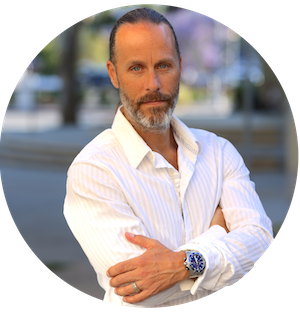
Kevin Anthony is a Certified Sexologist, Tantra Counselor, NLP Practitioner and a Sex, Love & Relationship coach. For over 10 years he has worked with men, women, and couples to have the relationships of their dreams, and the best sex of their lives! He is also the host of “The Love Lab Podcast”, creator of the popular YouTube channel Kevin Anthony Coaching, and creator of the popular online course series “Power and Mastery” as well as other online courses for both men and women.