Kevin Anthony 0:05
Welcome to the Love Lab podcast, the place to be for honest and real talk about relationships and sex. Whether you’re a man or woman, single or couple, this is the show for you. I am your host, Kevin Anthony, and I am here to help you have the relationship of your dreams and the best sex of your life.
Kevin Anthony 0:26
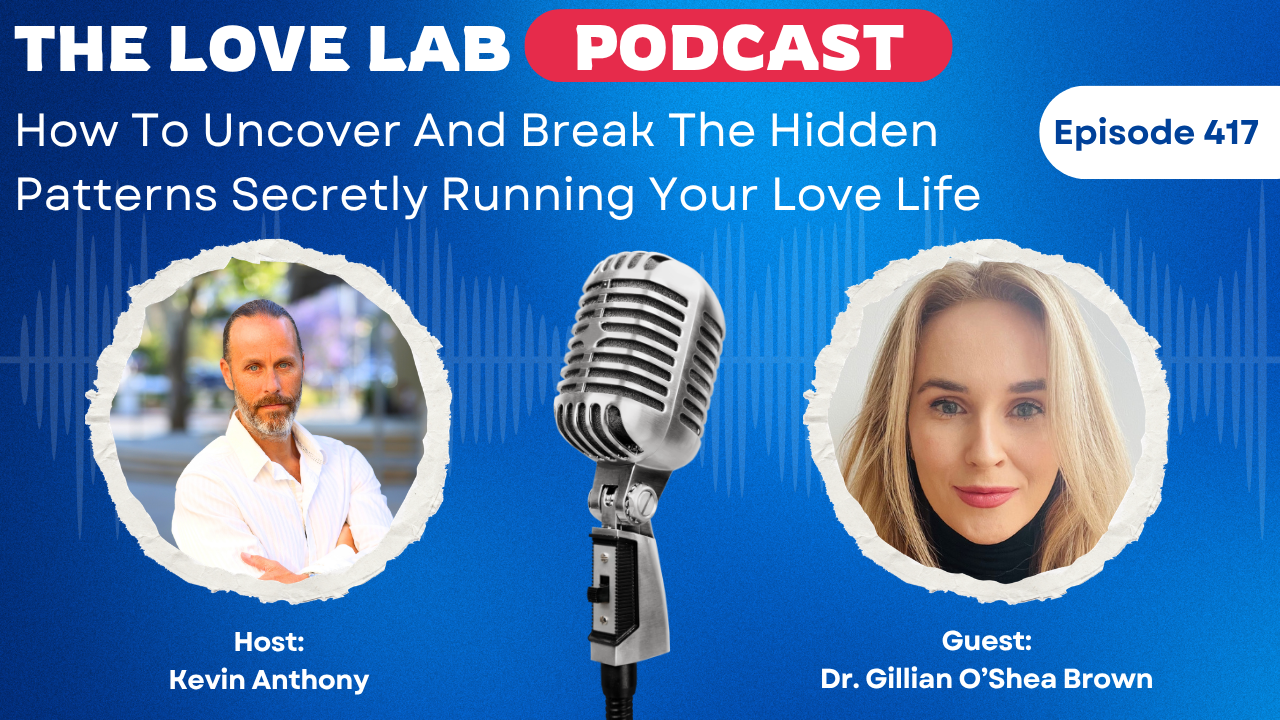
All right, welcome back to the Love Lab podcast. This is episode 417, and it is titled “How to Uncover and Break the Hidden Patterns Secretly Running Your Love Life. This, I think, is going to be a great conversation today, and I love this topic because, you know, in the coaching work that I do, so much of it is really about uncovering these patterns and trying to figure out how to get rid of the old patterns that aren’t serving you and instill some new, healthier patterns that will serve you. So it’s a huge part of the work that I do, and anytime I get to speak to, you know, a professional who has a deep background in this, I really enjoy doing it.
Kevin Anthony 1:10
So I hope that you, as the audience, will appreciate this as much as I personally will as the host, because we’re going to be talking today about where these patterns come from and why it’s important to uncover these patterns, and how you can start to go about uncovering the patterns. We’re going to talk about some specific patterns. So later on in the show, you might hear a pattern. You’re like, yeah, that sounds like me. Damn it. So we’re going to cover some of those and a whole lot more. So I have a really wonderful guest today who’s going to help us dive into these patterns, which we will do in just a moment.
Kevin Anthony 1:51
First, a word from my sponsor: Are you ready to build deeper intimacy and a more passionate relationship? I hope so. Introducing Intimacy Mastery, the sex, love, and intimacy app for singles and couples. Your personal guide to mastering love, sex, and connection. Get a personalized plan tailored to your unique relationship goals. Enjoy daily lessons, real-world challenges, and guided reflections. All designed by me, Kevin Anthony, your trusted guide and coach. Track your growth, celebrate your wins, and get expert feedback every step of the way. Access exclusive resources, videos, and proven tools right at your fingertips. Whether you’re single or partnered, this app will help you create the love life you truly desire. The app is available right now at kevinanthanycoaching.com/go/app. That is kevinanthanycoaching.com/go/app. Look, you know you’re already asking ChatGPT for relationship questions. Why not ask my app instead? Because it is specifically trained on all of my content. You will get better answers. I promise you.
Kevin Anthony 2:59
All right, my guest today is Dr. Jillian O’Shea Brown. Originally from Ireland, she is a New York-based psychotherapist, adjunct assistant professor at NYU, and EMDRIA-approved consultant, passionate about whole living for all people. Her work on the treatment and healing of complex trauma has been featured internationally. She uses an integrative blend of trauma-informed, evidence-based modalities, including EMDR, IFS, DBT, TF-CBT, and somatic techniques, to treat her clients. That’s a whole lot of modalities and also a lot of great experience. So, welcome to the show, Jillian.
Dr. Gillian O’Shea Brown 3:41
Thank you so much for having me. I’m really excited to be here, and I love this topic of pattern recognition and relationships. I think it’s so important.
Kevin Anthony 3:52
I agree. I love the idea of pattern recognition. It’s interesting because it seems to be. We were talking in the pre-interview call about how I never really intended to get into coaching, but people just kept asking me to coach them. And at a certain point, I was kind of like, “Okay, I guess I, I ought to do this. But part of that whole process was the idea or the fact that I was just really good at pattern recognition, and that was one of the things that my wife, when she was alive, used to say to me all the time. She’s like, “You’re just really good at seeing the patterns that run underneath, you know. And one day I was like, “Yeah, I guess you’re kind of right.
Kevin Anthony 4:33
So that I just I’ve always been good at it, and because of that, it’s always been a topic that has fascinated me. Like, how can I learn how to do it even better? So I think we’re both on the same page with that. And then let’s just dive right in when we’re talking about patterns, right? We’re talking about patterns that play out in people’s lives, things that they may not necessarily be aware of, right? Things that are running in the background. Can you describe a little bit when you talk about patterns? What exactly do you mean? Let’s start with that.
Dr. Gillian O’Shea Brown 5:09
Well, I’ve worked with survivors of relationship-based trauma, relational trauma, for in one way or another over the past 15 years, and when people come to therapy, it’s very much like you’re reading a book or watching a movie, and through the eyes of the hero, you watch the story unfold. And as you listen to the story, you know first they’ll give you a version that they’re comfortable with. Sometimes you’ll know more than they do in the theater; that’s dramatic irony. Sometimes they know more than you, but in the end, all is kind of revealed. And you’re often listening for the I am beliefs, and everybody has core negative beliefs. This could be: I’m not good enough. I’m too much. I’m not lovable. I’m not in control. And we don’t come out of the womb with these beliefs; we learn these beliefs from painful life experiences.
Dr. Gillian O’Shea Brown 6:04
And what happens over time is when you observe a person’s life story from afar as the compassionate witness, is that you notice that there is often the bite that fits the wound, the same kind of pain that they’re reliving over and over again, and one of the most deepest wounds or enduring hurts in a person’s life is relational trauma, their experiences in close relationships, and sometimes they encounter the same person in different faces, making them feel the same way again. Or we as humans have a propensity to pine for the love or the approval of the caregiver whose acceptance we pined for the most; we crave it, and we unconsciously reenact that relational trauma, and it often seeps into our romantic partnerships.
Kevin Anthony 7:02
Yeah, I mean, so much of what you said is is look like, you just said it with such a soft voice, and it all sounded so simple and easy. But it’s really not, right? Like it’s really complex. You shared a lot of stuff in there that, like, I really want people to realize, you know, that this is deep work, that these are deep patterns. So, and we’ll come back to, of course, all of that in a moment. Let’s move a little bit towards where these patterns come from. So, you mentioned what the patterns were. Now, let’s talk about how they got there. Where do they come from?
Dr. Gillian O’Shea Brown 7:44
Well, that’s a really great question. And first off, you know, nobody likes to go into the painful past, but the unexamined history is doomed to repetition. And Carl Jung has a quote that I love: “Until you make the unconscious conscious, it continues to rule your life, and you call it fate. So, I created an exercise that I call the erotic emotional map, and it’s modeled off of the exam, the psychology test. That’s the gold standard, the adult attachment interview, with a little bit of a twist, and I had to give it a more kind of jazzy title because these tests have such boring titles, and I wish people put more imagination into how they name them. So I called it the erotic emotional map.
Dr. Gillian O’Shea Brown 8:34
But basically, there’s a very simple question, which is, you know, per the adult attachment interview, if you look at the relationship you had with each of your caregivers between the age of five to 12, and you describe three to five adjectives you had to to describe the relationship, you can start to see that people are a complicated blend of vices and virtues, darkness and light, and the optimal relationship would be stable, predictable, reliable, and trustworthy. But a more realistic relationship is one that can be good. You know, it can be complicated and nuanced. And I take it a little step further, where I ask people to describe other relationships if there’s another kind of involved adult during that period of their life, and then we go into crushes and romantic relationships-not every person you kissed on a dance for, but people that left real footprints in your heart-and then we look at archetypal echoes.
Dr. Gillian O’Shea Brown 9:35
And often, when people do this erotic emotional map exercise, and this is actually something you could begin to do today while you’re listening, as kind of a soft journaling exercise. People notice archetypal echoes that they are unconsciously reenacting their old wound, and this goes back to a theory that Freud created over 100 years ago, called repetition. Compulsion, and basically the simplest way that I can describe repetition compulsion is that we as humans are neurobiologically adapted to go towards the devil that we know and not the devil we don’t. So if we were all in a circle and we all chewed problems in the middle of the circle and we could pick any problems once again, we would probably choose our own because it’s a pain we know how to tolerate. We know how it goes, and we have an unconscious, deep desire for a reparation fantasy. If we can overcome the old pain and hurt, we will deem all of the earlier wounding null and void.
Dr. Gillian O’Shea Brown 10:38
And this craving of a repetition, a reparation fantasy. This repetition compulsion is what is behind a lot of these toxic and unhealthy relational patterns. And I like to give two examples of repetition compulsion because I personally feel like it is one of the most interesting theories in psychology. And one is I have I have two daughters, but one of them is four years old, and she was in my room, and she caught her finger in the drawer, and she cried, and she went to me for comfort, and because I’m a therapist, I knew exactly what she was going to do. She was going to go back to the drawer, put her hand in slowly, and repeat it from the point of power so that she could understand the overwhelming experience. That’s a benign example. This is also in the forensic dark side of psychology, where the victim can become the perpetrator and reenact things from the point of power later on.
Dr. Gillian O’Shea Brown 11:37
Anyone that’s into forensic psychology or docu series will be well aware of this. However, the prolog of the story gives you all that you should know. However, early on we look at what you pined for, what you needed, and sometimes it was an overwhelmed family system where you had to learn to be needless and wantless in order to maintain proximity to an overwhelmed caregiver, or perhaps you felt that the more you were needed, the less likely you were to be abandoned. So, in adult relationships, you tend to parentify your partner and then later de-eroticize them because those are different sides of the brain.
Dr. Gillian O’Shea Brown 12:20
Because you don’t want them to leave you, but then by mothering them or fathering them, you end up de-eroticizing them, or perhaps you perpetually seek out emotionally unavailable individuals, but really you just crave time with yourself. And if someone was stable, predictable, reliable, and trustworthy, that would be overwhelming. So there’s always a pattern. There’s always the prolog of your story that tells you all that you could ever need to know about your erotic emotional map.
Kevin Anthony 12:53
There’s so much there I want to dive into. Okay,
Dr. Gillian O’Shea Brown 12:57
Sorry for the lecture. No, it was interviewing myself.
Kevin Anthony 13:00
It was great. It was great. I really hope people paid close attention because you shared a lot of really good stuff there. I want to just kind of pick it apart a little bit and talk about some specific parts. So the first thing, if we go back to the beginning, one of the things that you mentioned was, you know, has to do with primary caregivers, right? And then you also expanded out and said, then we might look at other prominent adult figures in your life. Then we might look at other, you know, prominent relationships. Maybe not everybody you kissed on a dance floor, but you know, other prominent people who left a mark, and that’s exactly the way that I approach it when I’m working with clients too. I always start back with the parents, and I’m just digging, like.
Kevin Anthony 13:44
And I tell my clients that in the first session we’re just going on an exploration, right? We’re going to dig around and see what we can find. Always start with the parents, see if we can find patterns there, and most of the time we do, but sometimes we don’t. So then we start going a little further. Okay, well, you know, I don’t. The addition that you mentioned that I like is other prominent adults when they were little. That’s something I’m going to add in there that I don’t normally do. But I usually start going after the parents. I will go into significant relationships, boyfriends, girlfriends, you know, even friends potentially, like things like that that happen throughout their life, and if we go through enough of those, we will always find the pattern in there somewhere.
Dr. Gillian O’Shea Brown 14:30
I agree. I would also add that your first sexual experience gets incorporated into a roussel template, and your arousal template is an interesting mix of your attachment style, childhood trauma or unmet needs, and if early in life, let’s say your first sexual experiences were around an unavailable object of your desire or an infatuation type of love, somebody that was like a carrot under your nose. This can become a very familiar pining-seeking energy. So even if it’s not a boyfriend, girlfriend, or person that you had a romantic relationship with, I often include these early crushes because I feel like they’re significant, and the pining for the love you never received, it can actually mirror the parent wound as well. You know that pining for something that’s out of reach is very familiar, and it’s a pain that you know how it goes.
Dr. Gillian O’Shea Brown 15:34
And if you can just capture the heart of the unavailable individual, then maybe you’ll deem the earlier pain I’ll avoid. And when somebody turns around, and they’re like, “I’m going to love you in a stable, predictable, reliable, trustworthy way, that feels like too much. Fear of engulfment. Take it all back. I would much rather pine for this unavailable type of love. So, I think there’s another area there which is unrequited loves, crushes, early experiences like that.
Kevin Anthony 16:01
And I think the point there is that it’s complicated. It’s not always simple and easy to figure out where these things come from because like something like that can be subtle. I could very easily see working with a client and asking them a lot of these types of questions, and then having them never even think to mention the person they had a crush on because they never had a relationship with them. I could see how they wouldn’t even consider that, but yet that might be the root cause.
Dr. Gillian O’Shea Brown 16:31
Well, I wanted to transform it into a simple 10-minute exercise that anyone can do on their own with themselves, demystify it, make it very straightforward, and I think that if you have the time to do this exercise wholeheartedly, it’s quite simple. But it is very information is power, and you see archetypal echoes in your life, and you can see that there are certain people in your life who can be a rendition of the past or a beacon of something new, and noticing the archetypal echoes and where it all began from, it gives you the power and the discernment in the now. Am I making decisions in alignment with the future I want to create for myself, or am I unconsciously reenacting the relational trauma of the past?
Kevin Anthony 17:16
Yeah, absolutely. I want to go back to, because you’ve mentioned it a few times, the archetypal patterns that are happening there. Can you explain to the listeners a little bit more about what you mean by archetypal patterns? Like, where do those come from? What are they exactly?
Dr. Gillian O’Shea Brown 17:33
Yeah. So, like, if we go back to, let’s say, the two parent figures, and let’s say you had one parent that actually was stable, predictable, reliable, and trustworthy. But maybe there was another one that was withdrawn and unavailable and inconsistent. Unfortunately, we tend to pine for the love of the parent whose approval we needed the most, and we almost in life we tend to value the things that we work hardest for, and we tend to take comfort for granted, unfortunately.
Dr. Gillian O’Shea Brown 18:06
And this parent whose approval you sought the most, that archetypal energy can echo in your life to friendships, or work environments, or romance, where you’re gravitating towards people that are not prioritizing you or treating you well, because you’re unconsciously seeking a reparation fantasy with that one parent, and just going back to the roots, it can help you to see the wood from the trees in your day-to-day life, and why you’re choosing particular people, why some people are able to put you under this potent love spell, but actually, it’s not even about them. It’s just about the way they make you feel. And really, this whole exercise is just very classic. You know, behind every behavior is a feeling, and behind every feeling is a need. And understanding that deeper need gives you a window into the life that you want to create for yourself.
Kevin Anthony 19:02
Yes, that is huge, huge, huge. I think we should come back to that later. This whole idea that behind every feeling is a need, right? That is really important to understand. What you’re really trying to get at is: what is it that you’re really seeking? And you know, that kind of reminds me too of you. You were talking about I forget the exact term that you used. Now it was another idea in psychology. It was kind of the last thing that you talked about. I can’t remember what the……
Dr. Gillian O’Shea Brown 19:40
Reparation fantasy.
Kevin Anthony 19:42
No, it wasn’t reparation fantasy.
Dr. Gillian O’Shea Brown 19:44
Compulsion.
Kevin Anthony 19:45
Yes, it was the compulsion one. So what?
Dr. Gillian O’Shea Brown 19:48
Okay, yeah,
Kevin Anthony 19:48
What I was thinking about in that moment was that I would venture a guess and say that most people are completely unaware that it’s happening. Would you say that’s correct?
Dr. Gillian O’Shea Brown 20:01
I, you know, it’s interesting. I think you and I, when people knock on our door, and they want to engage in self-study, or they’re listening to a podcast like this, and they are curious, and they want to hear informative, nourishing things, and look at their life, observe it rather than absorb it. I feel like they’re already there with, let’s say, that Carol Young quote: “Until you make the unconscious conscious, it continues to rule your life, and you call it fate. When somebody is actively engaged in their self-study through reading or podcasts or coaching or therapy, they’re already saying, “I’m sick and tired of being sick and tired, there’s already an element of accountability. There’s already, I have ventured into the devil that I know, and I’m ready to go into the unfamiliar. I’m ready to try something different, and that begins with immense accountability.
Dr. Gillian O’Shea Brown 20:54
And you can’t shame yourself into wellness, but you can definitely compassionately witness yourself, and forgive yourself, and ask yourself what the deeper feeling is that I really needed. And I do think a lot of people, you know, especially people that are creeping these damn butterflies, you know, I want these romantic butterflies. If you’re still feeling butterflies, like 369, months in, it is probably not wild chemistry. It is probably your adrenaline and cortisol unconsciously reenacting some kind of childhood trauma of coercive control or pining, and unfortunately, if you’re really used to the butterflies and you only want butterflies, a stable, predictable, reliable, psychologically safe relationship that gives you the wings to fly and a safe space to land feels bland and boring.
Kevin Anthony 21:50
Oh yes, you know, a lot of people are not going to want to hear that, but it’s largely true what you just said, and this is interesting. Yeah, you know I’ve I’ve spent a lot of time because it’s just a popular thing here in Southern California. I spent a lot of time around the polyamorous communities, and one of the things that I learned from that is yes, there are a few people who I would consider naturally polyamorous, like they don’t actually experience jealousy, and it works for them, but they’re the minority, and a lot of what I see in the polyamorous community is people who are literally-I use the term-addicted to that chemistry, and it’s exactly what you describe. The reason why they want to have multiple relationships with people is that they’re always seeking that new. What they call-they even have a term for it. They call it NRE, new relationship energy, right?
Dr. Gillian O’Shea Brown 22:46
I did not know that. That is very interesting.
Kevin Anthony 22:48
Yeah, which is just, you know, a slightly fancy term to explain what you were just talking about with feeling the butterflies and the chemistry, and that’s what excites them. And when they’re in long-term stable relationships, it feels kind of dull and bland, and so they’re always seeking that. Now I know, I know anybody listening to this who’s like Polly, you’re going to be pissed at me for saying that right now. But that may not be the case for you personally, but I can tell you, having observed a lot of Polly people, that is the case for a significant portion of them, so I just think that’s really interesting what you’re sharing as far as that goes.
Dr. Gillian O’Shea Brown 23:26
I agree, and just to echo your sentiment, NRE, the new relationship energy. Let’s say in couples therapy, you know, in a monogamous partnership where there’s an infidelity, it’s never about falling out of love with your partner. It’s about reconnecting with the lost part of yourself, and, you know, the very common thing is going back to old chapters, old past partners, or people from high school or college, whatever. And you’re trying to reconnect with a lost part of yourself. And I feel like the new relationship energy. What’s so intoxicating about that is the projection of how that other person may be viewing you through appreciative eyes, and you’re just using them as a vehicle to love yourself. But love is an inside job, and relying on others for your love is a cruel, unreliable, and fickle measure, and that approval that you’re seeking can only come from within, and it comes with the deeper work of understanding your shadow, getting to know the wounded part of you that got stuck in the painful past, and doing the deeper work. And otherwise, if you don’t do the inside work, you can only outwardly accept the love that you inwardly believe you deserve.
Kevin Anthony 24:47
I mean, that is so huge what you just said. And slight aside from that, so I know you’re a professor at NYU. Do you actually teach? Things like what you just said to your students.
Dr. Gillian O’Shea Brown 25:03
Yes, I do. I actually, I have been given a lot of freedom. I’m an adjunct assistant professor, so I’m low in the ranking, let’s say. But they have allowed me to create my own curriculum. The last class I taught at NYU, and I love this. And you’re aware that I have a book coming out with HarperCollins, Psyche’s Awakening: A Guide to Emotional and Somatic Healing through the Wisdom of Greek Myth. I had all of my doctoral candidates dressed up as a Greek mythical archetype and related to a psychological theory. So there were togas, and there was glitter, and we got to bring the psychological theories to life in a beautiful way, and I feel like you have to talk about psychological theory in a way that’s applicable to life because psychology is life. It’s our experiences and close relationships, and it’s our experiences with ourselves.
Kevin Anthony 26:00
Yeah, and the reason I ask that question is that what you shared was such a profound truth about life itself, right? Man, I wish somebody would have shared that with me when I was in college. Granted, I may have been too young, and you know, immature to really fully understand it at that time, but I’m telling you, you know, I went to college in the early ’90s, and trust me, nobody ever shared anything like that when I was. You know,
Dr. Gillian O’Shea Brown 26:29
I I politely, I’m actually going to politely disagree with you because we as humans we have this neurobiological value tagging, where we can only take in so much information at once, and we edit out a lot of the things that we don’t want to see, and sometimes you have to hear or see things many times before you actually take it in and see it as being real or true. And then with love and romance, the French have this thing called deux: the delusion shared by two. In love and romance, you’re much more likely to airbrush the parts of a person, amplify the parts you want to see, airbrush out the parts you don’t want to see, and just have this hypnotic state of idealization, and that has helped us to procreate and survive as a human race.
Dr. Gillian O’Shea Brown 27:12
And I feel like people hear things when they’re ready. People change not when they’re comfortable, but when they’re very uncomfortable, and pain is a circuit breaker. You know, pain is the elixir the soul drinks to evolve. And sometimes in life, we have to go through the pain, the loss, the heartbreak, to unbecome all the versions of ourselves that were masks, and to actually come home to ourselves. And sometimes that scenic route is the necessary route in life.
Kevin Anthony 27:45
I absolutely agree with everything that you shared, and I will say this: part of it’s probably because I didn’t go to school for psychology. I went to school for business, but nobody ever shared those kinds of, like, real-life lessons. The only thing I remember, and you know, I agree. There could be some selectivity there, but I do clearly remember I had one class where the professor made us read “Men Are from Mars, Women Are from Venus.
Dr. Gillian O’Shea Brown 28:11
Yes, John Gray, great book.
Kevin Anthony 28:13
Yes, and I read that when I was probably 19 or so, and that stuck with me my whole life. This is one of the. In fact, from that class, the only thing I remember from that class was reading that book.
Dr. Gillian O’Shea Brown 28:28
I mean, you won’t like what I’m going to say. I also love that book. Read it as well as a teenager, and there is a lot of interesting psychological theory shared in business school, so I’m sure you are. You did learn a lot there, and you’ve the practical wisdom of all of the clients you’ve shepherded throughout the years, and what you’ve observed. But the book itself, I think it was a very ’90s thing to categorize men and women in two different camps, and that women indiscriminately secrete oxytocin during sexual intercourse, and men only secrete it when they’re already in love. Women involuntarily secrete it, and so it’s very hard for a woman to casually be intimate and not catch feelings because she’s biologically wired to bond. Other than that, I feel like the psychology of men and women is quite similar, actually. And I don’t like to categorize them the way John Gray did, but I did like his book.
Kevin Anthony 29:34
Yeah, well, this was not meant to be a critique of John Gray’s book. Although I, you know, I had John Gray on my show. He was a delightful person to talk to. Okay, yeah, he was. That must have
Dr. Gillian O’Shea Brown 29:43
been a full circle moment for you to interview the person on your podcast who was one of the first people to open your mind to psychology and relationships. Absolutely,
Kevin Anthony 29:54
Yeah, and I told him that too. I told him the story about that about, you know, reading that book when I was in college. But you know, my point in sharing that in this particular episode was just to say that, you know, I agree. There’s probably lots of things that were shared with me that I missed because I wasn’t ready for them. But there were some things when it comes to relationships that really did stick with me that I, like, somehow landed. You know, so I wasn’t totally oblivious to all the relationship stuff when I was younger.
Dr. Gillian O’Shea Brown 30:24
Can I ask you to share some of the pearls of wisdom that did stay, without heartbreak, without pain, but just if you’re able to actually hear wisdom and apply it without having to go through the painful lesson? That’s such a special thing in life.
Kevin Anthony 30:41
Make sure I understand the question. You want me to share some things that stuck with me from when I was back in college?
Dr. Gillian O’Shea Brown 30:49
Yeah, yeah, yeah.
Kevin Anthony 30:52
I mean, in regards to you know what we’re talking about as far as John’s book and having read that book at an early age, that was really the first time that, you know, I I read something and I felt like it described a lot of the experiences that I had had with trying to have relationships with, with you know young young girls at the time. We were all young, right?
Speaker 1 31:16
Yeah, yeah.
Kevin Anthony 31:16
And it got me to look at it differently. Now, was I able to really internalize everything that was in that book and utilize stretch? No, of course not. But like, it’s just you use the proper term, which was it opened my eyes to think about it differently, and it probably, unbeknownst to me at the time, it probably is one of the things that that made me more open to pursuing that type of stuff as I got older because you know when I my story and my listeners kind of know this how I got to do what I’m currently doing was such a roundabout weird way to end up here, but a big part of it was the fact that I was always either reading books or going to workshops or doing things just for my own knowledge and learning?
Kevin Anthony 32:09
I never intended to teach it to anybody, and I had a lot of access here in Southern California. I knew people who were always having authors of books like that come and sit in their living room and give a talk. You know, I don’t know if you’ve ever read the book *Sex at Dawn* but like I sat on a couch next to that guy for like four hours, and we just talked about his ideas and how he came to that, and like I just had a lot of access to stuff like that, and that was my idea of like something fun to do on a Saturday, like. So I think you know those early experiences probably led to more of that kind of stuff.
Dr. Gillian O’Shea Brown 32:46
Well, I think you’re a living testament to obsession breeds brilliance, and if you can find what you do for fun and try to make it your calling, your career, your unceasing curiosity and desire to be a perpetual student will mean that it doesn’t feel like work. You have even more energy because you’re in alignment. And I think one of the benefits to bring it full circle is that if you leave these very psychologically unsafe, adrenaline-fueled relationships, which I compare to a roller coaster because you get on them and there are ups and downs. But when you get off the relationship, when you leave the relationship, you’re exactly where you started, and your life has not moved on.
Dr. Gillian O’Shea Brown 33:32
And the safe relationship, the psychologically safe, stable, predictable, reliable, trustworthy relationship, it allows you to engage in wise risk-taking to balance the duty of care with the dignity of risk and invest in yourself and take risks because you’re not continuously chasing the carrot in front of your nose or the adrenaline-fueled relationships. You’re able to be in your own frame, and I think that’s so important. And a lot of these sirens, these distracting relationships and echoes of the past, they take you away from yourself. They cause you to self-abandon, and there’s nothing more intoxicating than the idea that you could reclaim something that was taken from you, and that is why people gravitate towards these relationships. You know these archetypal echoes that are intoxicating, but also retraumatizing.
Kevin Anthony 34:30
Yeah, I really like the way that you explained the difference between those two types of relationships and where they sort of keep you stuck, and then sort of where they allow you to experiment more. Yeah, because it is absolutely true in my experience. You know, when I was younger, having had, you know, several of the more tumultuous relationships, as many of us had, you know, I really got to the place where I would say, like, I. I don’t want a relationship that’s full of drama. Like, I had one partner I used to explain our relationship. Like the highs were super high and amazing, but then the lows were super low and terrible, right?
Kevin Anthony 35:11
And it would just keep going, boom, boom, boom. Every couple of months, it would do this, and it was exhausting to me. And I was like, I cannot be in a relationship like this. I absolutely can’t deal, and so I was really seeking out and trying to find that stable relationship that you were just describing. So I see a lot of people stuck in those. We call it the relationship roller coaster, right? Where they’re up, and then they’re down, and then they’re up, and then they’re down, and they’re addicted to the drama that’s happening within the relationship that never worked for me, and I really try my best to show people the negative impact that being in that sort of relationship is actually having on them.
Dr. Gillian O’Shea Brown 35:55
Well, it’s very fulfilling work because I feel like it’s frustrating to see a friend, a loved one, be in that emotional riptide of the bite that fits the wound and reenacting old painful relational patterns. But you know, when a person is at their lowest, and they think that they’re coming apart, this can actually be the point of power. You know, the point of power is in the present moment. This can be their renaissance, their rebirth. And as a therapist, my philosophy has always been kind of similar to Michelangelo, who carved the David, and he said the angel was always in the marble until I carved and set until I carved and set it free, and I believe that beneath a person’s defense mechanisms, emotional calluses, painful memories, traumas, their authentic self is there under the surface, waiting to be unveiled.
Dr. Gillian O’Shea Brown 36:55
And sometimes, you know, doing that work of peeling back the layers-it’s not pretty. It’s uncomfortable. They have a kind of a more fluid sense of self. They have an identity dissolution, an ego death. But actually, this is the beginning of them coming home to themselves, and it is a very powerful moment. And it’s a very-you’ll agree with this from the work you do. It’s a very sacred experience to witness a person, you know, unmasking themselves and coming home to themselves and letting go of, you know, the delicate dance of protection versus connection, letting go of all of the defense mechanisms they learned throughout the way along the way.
Kevin Anthony 37:38
Yeah, for sure. You know, a big piece of doing this work, which I’m sure you understand as well, is creating that safe container that allows somebody to be able to take those masks off and show who they really are and be vulnerable. It’s a huge part of the work for sure.
Dr. Gillian O’Shea Brown 37:53
Absolutely, and I like to think of defense. You know, defense mechanisms are a bit like inflammation when you’re injured; your body will, you know, become inflamed to promote blood flow to decrease the risk of infection, and this is actually very good for healing. But we all know that prolonged inflammation is very bad for every organ in your body, and defense mechanisms are similar in this delicate dance of, you know, connection versus self-protection; your early defense mechanisms were the most sophisticated adaptive way that you learned to survive. Maybe you learned to suppress your needs. Maybe you learned to be a caregiver. Maybe you learned to give and not receive. Maybe you learned to overlook a lot of a lot of side digs and negative comments, and this allowed you to attach because we’re hardwired to attach.
Dr. Gillian O’Shea Brown 38:49
But just like inflammation, prolonged defense mechanisms can go against you. And what we call our personality in adulthood is often the defense mechanisms of how we learn to survive in childhood, and if we leave the script to go on and on and on without examination, the very things that help to keep us safe early on can go against us in adulthood.
Kevin Anthony 39:11
Yeah, for sure. That’s super important, you know, for people to understand is that these are coping mechanisms, right? These are strategies that people developed when they were very young, usually unconsciously developed. Like they didn’t sit there and go, “Okay, let me see if I can create a strategy to figure out how to manage this. Right? They just figured out, “Hey, this works. Right, and then they started doing it, and it does work until it doesn’t. In other words, as they get older, those patterns, those defenses, those strategies that they came up with are not helping them anymore. They’re actually hurting them anymore, but they’re not realizing that, and the pattern is so deeply ingrained that it’s really hard for them to change it.
Dr. Gillian O’Shea Brown 39:52
Absolutely, and that’s where we have these heartbreaks and these losses that come in, and they kind of whisper to us, you know. Repeat or evolve, and the way that you evolve is, you know, accountability. And I wanted to, you know, create a way in this book for people to understand their patterns and understand, you know, the bite that fits the wound, so they could rewrite their soul story. Because it’s not your destiny to keep being hurt and to keep feeling abandoned, betrayed, alone-all the power you could ever want is within you if you’re willing to look at that wound one more time before you let it go and to choose differently.
Kevin Anthony 40:33
Whoo! Yeah, narrowing lies the work, huh? That’s the challenging part. Okay, I got to take a quick break. We’re actually about 10 minutes past when I would normally take a break, but we were right in the middle of something really interesting, so I didn’t want to stop that. So I’m going to take a break. When we come back, I want to talk about some specific patterns, maybe that people might recognize, and then I also want to talk about how people can start to identify and maybe change some of those patterns. So you already talked a little bit about identifying them, which was the model that you created in.
Kevin Anthony 41:11
But I also want to go a little bit further with that when we come back. Okay, if your relationship feels disconnected, if your sex life has lost its spark, or if you just know something needs to change, then relationship and intimacy coaching can help. I have created transformational coaching programs for men, women, and couples, all designed to help you create deeper intimacy, better communication, and the kind of passionate relationship you actually want. Whether you’re struggling with intimacy, confidence, desire, emotional connection, or recurring relationship challenges-you don’t have to figure it out alone. The best place to start is with a free strategy call, where we’ll talk through your challenges, get clarity on what’s really going on, and create a personalized plan for moving forward. Go to kevinanthanycoaching.com today to book your free strategy call with me. That is kevinanthanycoaching.com. The link is in the description.
Kevin Anthony 42:08
Okay, so we’ve spent a lot of time talking about where the patterns come from, what the patterns are. We delved a little bit into how to recognize some of the patterns. We’ve covered a lot of ground as far as that goes. Let’s talk now about some specific patterns that we tend to see frequently, and maybe where those might come from, so we can maybe help people identify some of these a little bit. So, I got a couple here that I’d like to talk about, and then if you have any, you can throw them out as well. One of them is always choosing the wrong partner, right? So, in other words, somebody keeps choosing somebody who is absolutely incompatible and not the right person. But if you look through their past relationships, you see the pattern of always picking this particular person who doesn’t seem to be compatible with them, yet they keep doing it anyway. What would you say to somebody who has that pattern?
Dr. Gillian O’Shea Brown 43:12
Well, that’s a very broad pattern because we’re not able to see the value clash, or, you know, why they’re incompatible, or maybe they want different things in their life. But again, I think that tracing back to the archetypal echo is very important. Also, we might see that a person is very fearful of having a cleansing period of individuation of being with themselves, and they frantically fill the void by grabbing a partner from a place of fear rather than discernment, and they’re looking to partner very very quickly, and if you don’t feel good in yourself, and you’re at risk of engaging in a rapid merging phase with a new partner where you haven’t really fully gotten to know them, and in the book, I used the myth of narcissism echo to describe this dynamic of over ego versus under ego. If you have a poor sense of self and you’re trying to fill that void with another person, sometimes you attach to people and places very, very quickly, because it’s hard for you to believe that you can be whole and complete in and of yourself.
Dr. Gillian O’Shea Brown 44:28
But when you look for love on the outside rather than the inside, you tend to meet people that are out of alignment. They’re going to exacerbate the old wounds. The other very interesting, almost eerie thing I’ve noticed in, you know, 15 years of listening to people’s life stories is that we tend to unconsciously drift towards people that are at the same level of our unresolved childhood wounds, and your most repeated pattern in your life is the soul lesson. You need to learn in terms of your own evolution and growth, and people are so afraid of you know self love. They think if they love themselves too much, they’ll be a narcissist, and that’s not true. Narcissists are socially and emotionally very immature. They feel a cavernous void on the inside. They cannot be filled unless they’re feeding the narcissistic supply. And unfortunately, a lot of people who are afraid to be on their own, who want to give, give, give, who are willing to self-sacrifice and self-abandon. These are empathic beings, and they are often attracting the narcissistic individual, like moths to a flame. This narcissist-empath codependent dynamic seems to happen again and again. But really, going within and being with yourself is, I think, the ultimate first step in terms of breaking the pattern of choosing partners that are incompatible, unhealthy, or just not right for you.
Kevin Anthony 46:09
Yeah, I understand. I gave you a difficult question because you’re right. There are a lot of different reasons why somebody would do that. But the reason I chose to word it that way is that, you know, I’ve coached a lot of women, and specifically women, they’re the ones that use that exact language. They will show up, and they will go, “I don’t know what’s wrong with me. I keep choosing the wrong partner. Or they’ll say, “Can you help me understand why I keep choosing the wrong partner? So it’s just a common phrase that I hear a lot, and I’ve heard it from men too, but I tend to hear it a lot more from women, and so you know, obviously having done this work for a while, I know there’s a bunch of different reasons for that. But I was just curious what your take was on it.
Dr. Gillian O’Shea Brown 46:51
Well, I guess we’d subcategorize it into what is happening again and again. There’s a bite that fits the wound. It sounds like they are once again reliving the same kind of pain, but the person has a new face, same relational wound, but a new face and a new name, and within that most repeated pattern is the sole lesson, the deeper work that they need to complete in order to move on to the next level in life.
Kevin Anthony 47:19
Yeah, so I got another one that’s going to be another broad sort of difficult one, but you know, having done this work for a long time, one of the things that I often see is a pattern where people will self-sabotage the relationship. In other words, the relationship could be going great, and they will find a way to throw a wrench into the gears and make it not go great. So this idea of, you know, subconsciously self-sabotaging your relationship. What do you think might be behind that?
Dr. Gillian O’Shea Brown 47:55
I think that’s a wonderful question, and I would also give an homage to Freud’s repetition compulsion here because we as humans are so tied to what is familiar, and when something is unfamiliar, or to quote Joe Dispenza, your personality becomes your personal reality. Love becomes unfamiliar for your container of love because you can only outwardly accept the love that you inwardly believe you deserve. Then self-sabotage can give you a way of predicting the future. And even though that pain hurts and you know how it goes, and you know how to tolerate it, we’re very wired to go towards the devil we know versus the devil we don’t. And the sub-sabotage is what we call in psychology a psychoanalytic secondary gain or secret payoff.
And there’s always a secret payoff. And I’ll give you a kind of benign example. If you know someone that’s always 10 or 20 minutes late all the time, and you know they leave late, and then their heartbeat goes up, and they’re sweating, and they’re running, and they’re rushing, and then they heroically make it in, and they skulk into the end of the room, and then they exhale, and they did it. There’s a drama or a theater or an adrenaline spike that goes with that, and arriving 10 to 20 minutes late would simply feel kind of boring, and psychoanalytic secondary gains could also be applied to self-sabotaging partnerships. Like, you know, she was perfectly nice, and I was attracted to her, and I enjoyed her company, and she’s so sweet and so nice, and I just found myself doing A, B, and C, and I don’t know why I did it, but I just found a way of breaking this partnership. You’re trying. You’re unconsciously seeking out the familiar, and again, I will say that the unexamined history is doomed to repetition. You’re weaving your way back into a familiar setting, and because the version of love that person was offering, it was outside of your container of what you felt ready to accept or invite into your life. It was out of alignment with your identity.
Kevin Anthony 50:11
Yeah, we just described the premise of most of the episodes of Seinfeld over the years. Right, constantly finding some reason why whoever you know Jerry Seinfeld was dating just simply wouldn’t work out, which was the sabotage. Absolutely,
Dr. Gillian O’Shea Brown 50:29
yeah. And sometimes when we see it on the screen, or we see it in a book, we can observe it rather than absorb it, and we can put words to an experience, and that’s why these characters are so powerful.
Kevin Anthony 50:42
Indeed. So we are getting close to the end of this show. Are there any common patterns that you see that you think it would be helpful to share that people might go, “Oh yeah, I kind of see that in myself.
Dr. Gillian O’Shea Brown 51:00
I think I’d like to speak to the people who slowly over time, but then all at once feel like they tend to self-abandon, and there’s a shiny new version of them that comes into the relationship, and they want it to work, and they put their heart on a platter, and they love with integrity, and they don’t realize over time that this person is diminishing them. And there’s an exercise in the book called the social pruning technique, and I like to give this to people when they’re dating, or if they have, you know, reduced contact or let go of some unhealthy partnerships in their life. It’s an inventory that you do, whether you spend 30 minutes with someone, two hours, or four hours.
Dr. Gillian O’Shea Brown 51:57
When you walk away from that dynamic, you take the note section of your phone, and you write down three I am beliefs, and you know if a person always makes you feel like a meek, apologetic, insecure version of yourself, it could be very subtle, very hidden, very nefarious, but they could be using all of these double-handed comments to undermine you. There are other people with whom you feel light, airy, and expansive, and psychologically safe and playful because you can only be playful when you feel psychologically safe when you talk to them. And if you can do this inventory over the course of a week or two weeks of your life, ultimately the longest relationship you’ll have in your life is the relationship you have at yourself, so you have to make sure it’s a good one.
Dr. Gillian O’Shea Brown 52:45
And I’d like your listeners to look at their relationships, the whole constellation of relationships around them, through this lens, so that they can make discerning choices around people that are healthy, people that are loving, relationships that are reciprocal, that have respect of you know, giving and receiving, and it can be very hidden. You know, this person that maybe comes in first and love bombs you and builds you up, and then over time they withdraw and they criticize, and they play these mind games, but this inventory of the three I am beliefs, I think it’s a wonderful marker of psychological safety. And if you’re dating someone new, or you know, if you’ve the time to even do a week or six weeks, I think it can give you a lot of information.
Kevin Anthony 53:40
Yeah, that’s wonderful. So, wrapping this up, a lot of what we’ve talked about today you’ve encapsulated into this new book that you’ve written. Can you tell the audience a little bit about the book? Anything you want to share about it, and you know how they might be able to find it.
Dr. Gillian O’Shea Brown 54:03
So the book is called “Psyche’s Awakening: A Guide to Emotional and Somatic Healing Through the Wisdom of Greek Myth, and it comes out later this month with HarperCollins. It’s available everywhere. It’s a world release, and in the book, I wanted to give people a guide to self healing, and there’s 11 Greek myths and then 11 core psychological principles that I believe mirror the therapeutic journey, and so many of the Greek myths, whether it’s Narcissus and Echo, or Phobos and Icarus were the inspiration around modern diagnosis, so I just wanted to find a simple way of people having a manual to find their way home to themselves. And for anyone that orders the book, they automatically get the erotic emotional math mini course. So. It’s a little bonus.
Kevin Anthony 55:01
Excellent. Well, if anybody listening, you know, sort of resonated with your message and the way that you look at these patterns, then I highly suggest that you get the book and also try the exercise that Dr. Gillian gave us right at the beginning of this episode, which is a way to go back and assess where those patterns are. So, Dr. Gillian, I just want to thank you for coming on the show, sharing your knowledge and wisdom, and I also want to wish you great success with your book launch.
Dr. Gillian O’Shea Brown 55:42
Thank you so much for having me, and thank you for creating such a wonderful space for people. I just love what you do, and I really enjoyed this chat.
Kevin Anthony 55:52
Well, thank you. I really appreciated what you shared as well. I think that your level of knowledge and the clarity with which you’re able to explain what are actually some complicated ideas and concepts was really great. So I really hope that people listening to this got value out of it. I know I sure did, and looking forward to the release of the book.
Dr. Gillian O’Shea Brown 56:15
Thank you.
Kevin Anthony 56:16
All right, everybody, that’s all the time I have for this episode, and I will see you next week. I hope you liked this episode of the Love Lab podcast. If you enjoy this show, subscribe, leave me a review, and share it with your friends. And for more free exclusive content, join me in the Passion Vault at kevinanthonycoaching.com/vault. That’s kevinanthonycoaching.com/vault. Thanks for listening, and remember, as Celine used to say, you’re amazing!
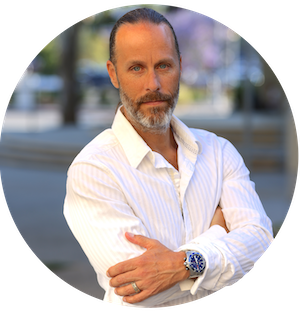
Kevin Anthony is a Certified Sexologist, Tantra Counselor, NLP Practitioner and a Sex, Love & Relationship coach. For over 10 years he has worked with men, women, and couples to have the relationships of their dreams, and the best sex of their lives! He is also the host of “The Love Lab Podcast”, creator of the popular YouTube channel Kevin Anthony Coaching, and creator of the popular online course series “Power and Mastery” as well as other online courses for both men and women.