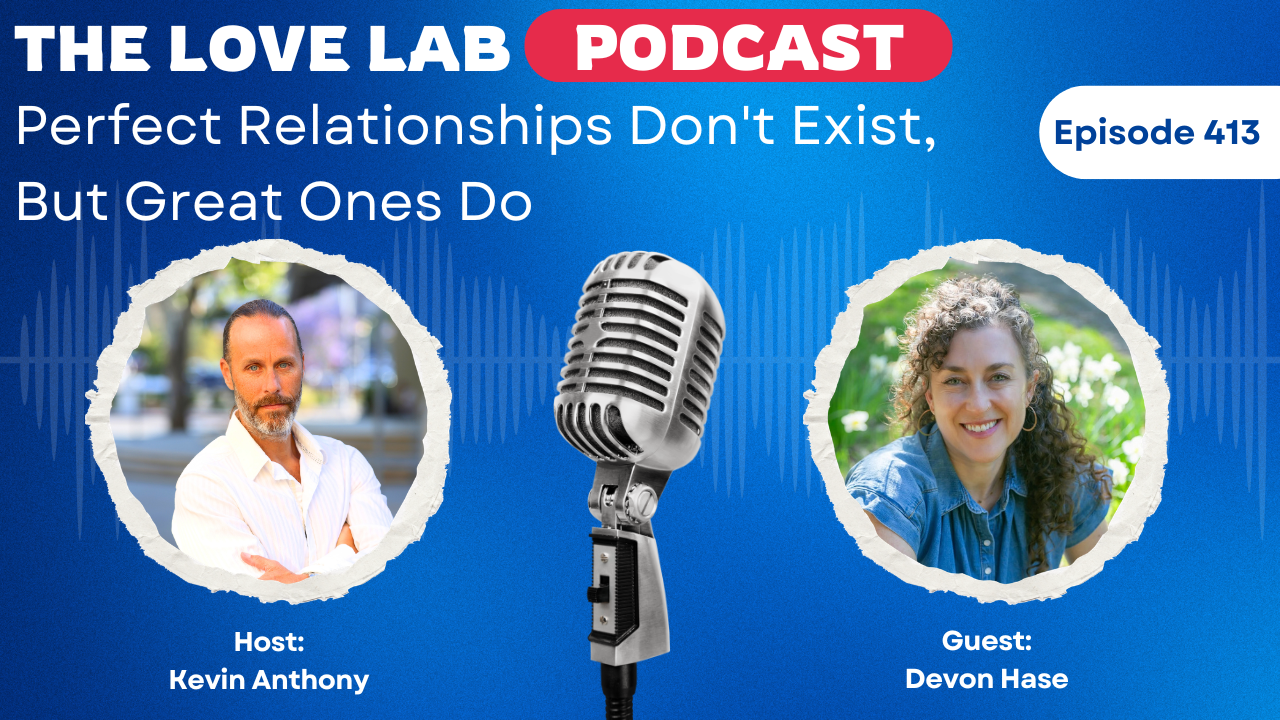
Kevin Anthony 0:05
Welcome to the Love Lab podcast, the place to be for honest and real talk about relationships and sex. Whether you’re a man or woman, single or couple, this is the show for you. I am your host, Kevin Anthony, and I am here to help you have the relationship of your dreams and the best sex of your life.
Kevin Anthony 0:27
All right, welcome back to the Love Lab podcast. This is episode 413, and it is titled “Perfect Relationships Don’t Exist, But Great Ones Do. You know, recently I was doing some research for, and I’m not even sure what I’m going to turn it into yet. I started doing it because I was doing a live stream, and then I thought, man, I got so much here. Maybe I’ll make it a podcast, or maybe I’ll make it a YouTube video. I don’t know, but it had to do with dating. And one of the things that came through that research was I’ve had a lot of people asking me lately about dating because they’re struggling in the dating world, and so I was putting together some information because I wanted to do this live stream about the challenges of modern dating.
Kevin Anthony 1:10
And one of the things that came through in that research was some articles where people were saying, “Well, one of the big problems is is that we have so many choices that we don’t really commit to making one of them work, and I thought about that when I was thinking about you know doing the intro for this episode today because the title is perfect relationships don’t exist but great ones do, and I think part of the problem that a lot of people are facing today is that they they’re constantly looking for this mythical perfect person, perfect relationship, and they’re not willing to stick with it and do the work to make the relationship with the person who is actually right there in front of them.
Kevin Anthony 1:57
So I think that’s interesting. We’re going to be talking a lot about that, I got a bunch of interesting questions for my guest today, and my guest, who I’ll introduce in just a moment, you know, has spent a lifetime doing spiritual practices and really honing her ability to control her own emotions and to communicate well and all of that stuff, and yet she still shares about the real world challenges in her relationship. And so I think that’s just such a great example of, you know, what we were just or what I was just talking about, like sticking with it and working through the challenges and utilizing the tools and not being perfect and all of that. So I think it’s going to be a great conversation.
Kevin Anthony 2:41
But as always, before we get there, a short word from my sponsor. Are you ready to build deeper intimacy and a more passionate relationship? I hope so. Introducing Intimacy Mastery, the sex, love, and intimacy app for singles and couples. Your personal guide to mastering love, sex, and connection. Get a personalized plan tailored to your unique relationship goals. Enjoy daily lessons, real-world challenges, and guided reflections, all designed by me, Kevin Anthony, your trusted guide and coach. Track your growth, celebrate your wins, and get expert feedback every step of the way. Access exclusive resources, videos, and proven tools right at your fingertips. Whether you’re single or partnered, this app will help you create the love life you truly desire. The app is available right now at https://www.kevinanthonycoaching.com/go/app. That’s https://www.kevinanthonycoaching.com/go/app.
Kevin Anthony 3:39
Okay, my guest today is Devin Hasse. I think I got that right. She has practiced intensively in the Insight and Vajrayana traditions since discovering meditation in 2000. After a decade of bringing mindfulness to high school and college classrooms, she entered several years of silent, solitary retreat in the mountains of Oregon. She now teaches at the Insight Meditation Society, Spirit Rock Meditation Center, and the Forest Refuge, and serves as co-guiding teacher of the online Dharma Community Refuge of Belonging. Devon supports practitioners in both long and short retreats, as well as through personal mentoring, with an emphasis on relational practice and connection to the natural world. And I just want to add to your bio, Devon.
Kevin Anthony 4:28
Before I welcome you to the show, Devon is also married to a partner named Nico, who is also a meditation teacher. And that’s going to be really important to understand as we go through. This isn’t somebody who’s just spent a lifetime, you know, studying meditation and has never had a real relationship and is just telling you how to operate. Like she’s going to explain how all of this practice shows up in her real life relationship. So Devon. Welcome to the show.
Devon Hase 5:01
Thank you so much, Kevin. I’m just delighted to be here.
Kevin Anthony 5:05
All right. So I obviously, in your bio, read a little bit about your background, but just so listeners have a deeper understanding of, you know, your background and what it is you’ve been doing for all these years, please tell them a little bit, a little bit more about it.
Devon Hase 5:23
Sure. Yeah, it’s interesting to reflect on the past 25 years because, as a young person, I was always really interested in the spiritual path, and I remember being young and thinking, you know, what is a meaningful life? Like, how do we take what’s offered here, this whole kind of human situation, which is often pretty chaotic, confusing, very relational, also kind of relational beings, and make it meaningful? You know, really make the most of this precious time that we have. And so, early on in college, I learned to meditate from a philosophy professor, and at that moment, I remember being an undergrad and just thinking, I just want to meditate. I want to make this my life, not just for going away in the cave and attaining enlightenment, but because at that time in the early 2000s, there was just the beginning of neuroscience research starting to show the benefits of meditation.
Devon Hase 6:22
So I did my undergrad thesis in psychology, looking at the potential benefits of meditation for young people with ADHD, and then went on, met Nico, who was also deep in the meditation world at that time. He was living in his end monastery. We traveled in Asia some. We did a lot of long retreat, and ended up here in Madison, Wisconsin, working with Dr. Richard Davidson, who is a wonderful neuroscientist and really a lead, kind of the cutting at the cutting edge with his Center for Healthy Minds here in Madison, doing all of this research on the benefits of meditation and how we really can bring this into our everyday lives, and so I see a lot of our trajectory. Both Nico and I, as teachers, we teach long meditation retreats, but we also work with people on a daily basis, really working to bring some of these ancient traditions into the difficult conversations we might have with our partners in the dating world.
Devon Hase 7:24
How do we bring mindfulness and compassion into a very stressful potential situation? How do we talk to our kids? You know, how do we do this with our colleagues? So, in fact, there are a lot of wonderful meditation techniques that can be applied through mindfulness right in the moment of conflict or stress or confusion, and so we’re really building a lot of those bridges around what the benefits of meditation can be. Really, for our just brass tacks, nuts and bolts, day-to-day, the messiness and the gorgeousness of it all.
Kevin Anthony 7:58
So I’m curious, you know, I mean, I’ve lived for the past 25 years in Southern California. I lived right up the street from the Self Realization Fellowship Center for many years. Meditation is not something that is new to me, but you know, I have a, you know, very diverse listenership here, and I am aware that outside of, you know certain spiritual circles, meditation still is looked at a little bit strangely, and you know this obviously because of what you do, the idea of meditation is going to weave through our entire conversation today. But it’s not really the main focus. Like we’re not here to convince people you need to meditate. We’re here to show them, you know, some tools that could potentially help them, and then, of course, what we’ve learned from these tools that they can take away and use in the relationship.
Kevin Anthony 8:53
But what I’m curious about in this moment is for somebody who has no experience whatsoever with meditation, or maybe somebody who thinks that meditation is incompatible with their spiritual belief system. Just to nip that in the bud right now, so that we can get it out of the way and people can let go of that, and then really listen to what we’re going to say. What would you tell those types of people?
Devon Hase 9:21
Yeah, this is really important to get from the start. One of the most interesting pieces of research being done now at the Center for Healthy Minds is what’s been in the neuroscience research over the last decade. There’s been this idea that mindfulness is healthy, right? Mindfulness meditation will lower your blood pressure. It’s gonna decrease your stress load, increase your compassion. So there are very real-world benefits to mindfulness, and yet, like you’re saying, I’m not here to sell it to anybody because what they’re seeing is even more transforming and beneficial. Isn’t hours spent meditating a day? It’s perspective. So a lot of what we’re doing in the book, of course, we have certain meditations and short practices that we suggest, but we’re also offering a framework, which I think is a lot of what you do, that’s going to be helpful and supportive for people in any kind of relationship.
Devon Hase 10:16
And one of those I’d like to offer just from the get-go is it’s related to the title of this episode. Is that when we try to optimize our relationships, and we do live in this kind of wellness-oriented optimization kind of world, where we’re like, just give me the nutrition plan and the exercise and the right partner, you know, and the right formula for skillful communication, and then we’re going to be perfect, and we’re going to be good happily ever after. But the framework that we’re offering, which is interesting, I mean, meditation is adjacent to the optimization world, to wellness culture, but it also has a very different framework.
Devon Hase 10:54
And so, what we offer as a perspective shift is that there is no such thing as a perfect relationship. You’re not ever going to get it exactly right. That’s not a failure, not a personal failure. That actually, when we accept this, is basic mindfulness: that being a human being means we’re out of control a lot of the time. We’re in an unreliable situation that’s constantly shifting and changing under our feet, that most of the time when we you said you know I’ve done a lot of meditation I’m good at controlling emotions, really in our book it’s like all these examples of ways we didn’t control our emotions, but when we can pause and get real about what I’m feeling, anger, grief, anxiety, that actually is the behavior shift because when we can really sit with that with a lot of compassion and curiosity and bring that realness and authenticity to our partner or our colleague, whoever’s in front of us, that shift from optimizing to being real and honest offers a bunch more agency. Then, so the great relationships that we’re talking about is this rests on a foundation of not getting it perfectly right all the time, allowing ourselves to have messy emotions, to not be perfect at our communication, to make mistakes.
Devon Hase 12:16
But when we’re deeply listening internally to ourselves, we’re listening to others. There’s a lot of learning that can come around how we want to be skillful the next time around, right? So it is helpful. It is transforming. We are becoming more skillful in relationship, but when we take the onus off of perfectionism, that’s when there’s all the world, like so much room opens up, worlds of possibility for intimacy, for deeper waking up together, for really understanding more about ourselves and others.
Kevin Anthony 12:50
Yeah. So a few things I’d like to mention about that. I mean, so the first one is you pretty heavily equated the meditation with mindfulness, right? And so I really want people to hear that. That when we’re talking about this, we’re not necessarily talking about, you know, praying to some deity somewhere or something like that. We’re really talking about cultivating a deeper level of mindfulness. You can use some other words for that too. Awareness, maybe consciousness. Right. We’re really attempting to, you know, and you brought in sort of the biohacking stuff. We’re attempting to optimize, you know, our own function. So that’s one point I think people, you know, should understand.
Kevin Anthony 13:35
And then the other is because I’ve heard this. I have I’ve heard this from people where they look at some of these, you know, Eastern traditions, and they’re like, “That’s the devil coming in, you know, like. And I’ve had people say stuff like that. I’m just like, it’s just about mindfulness. And if you think about it, let’s say you’re, you know, really deep into, you know, the Christian religion. What do you think you’re doing when you’re praying? It’s a form of mindfulness. It’s a form of meditation, right? Yeah. So I just want- I don’t want people to tune out because they think, oh, this isn’t for me because of my belief system or this that or the other thing. I want them to understand what we’re really talking about and how this could benefit anybody and that it doesn’t conflict with, you know, any other beliefs that you might have.
Kevin Anthony 14:26
So I just want to make sure people truly understood that part of the conversation, and then, you know, of course that brings us to some of the other things that you were saying, and so I want to dive into like, you know, you’ve been teaching meditation for all of these years now, you’ve been working on cultivating your own mindfulness. You mentioned that you share in the book that there are plenty of examples of times where you weren’t necessarily so mindful. What are some of the big takeaways that you have learned about relationships as a result of? All of this time spent learning and teaching and navigating your own relationships.
Devon Hase 15:05
Yeah, this is great, and I really love your emphasis on mindfulness as a practice, and really not a religion. So one of the basic kind of mainstream definitions coming from Jon Kabat-Zinn, who created mindfulness-based stress reduction, is that mindfulness is simply a present moment awareness, paying attention on purpose to the present moment with kindness and curiosity. So that’s all we’re talking about. We’re talking about this capacity that we all have to bring our attention in a deliberate way to what’s happening right now. And this, in its very simple form, is the game changer. It’s like this is the biohack for relationships. This is what I’ve learned, and it can get very complicated. We can talk about all the ins and outs and the more skillful ways to communicate through that.
Devon Hase 15:57
But we could almost say mindfulness is a kind of deep listening. It’s that deliberate listening in the present moment to what’s happening in my heart, what’s happening in my body, and that kind of deep listening goes a long way when we bring that to relationship, doesn’t it? It’s like already there’s a kind of attunement, alignment, and honesty that I can say for myself when somebody’s sharing in that way with me; I already feel more connected. So that deep listening can happen internally. The other frame we offer in the book is that it’s the same thing externally. We can be mindful of those around us, and if we use this language of deep listening, isn’t that really what we want in the end? Is people who are really listening to us, who are asking, “How’s your heart right now? How’s your body? How are you in this moment? What do you need? Right?
Devon Hase 16:54
So it feels very simple, but in my experience of practicing and teaching this, is that this really can have amazing benefit in relationships that feel stuck in new encounters with people. So this deep listening internally, externally, and then the other offering we make in the book, which feels maybe a little more refined in terms of this present moment awareness, is understanding there’s a kind of third space, our relational space, that itself deserves our listening. So, if we use Nico and me as an example- I’ve been married for 20 years, so if you use us as an example, our relationship has gone through all this transformation too, and there are different phases. We were long-distance for a while. We were in graduate school for a while. We lived in different places. We’ve been in transition. We’ve lived in our van, which we share about in the book.
Devon Hase 17:52
So, tuning to that, the state of the relationship itself, kind of like the state of the union. How are we? That is also a kind of mindfulness that really helps us then understand. Oh, we’re in conflict maybe because we just moved and I can’t find my toothbrush and we’re tired, you know, or we’re caregiving for an elderly parent or we have another stressful thing happening at work. So these kinds of three listenings: internal, external, and then both internally and externally listening to the relationship itself is really one of these applications that we can make where we’re mindful, and then it really changes how we show up for each other. So that’s one thing. The other thing I would say in all of my own study and practice is really recognizing that for all of its kind of introversion, right?
Devon Hase 18:42
All these tropes of meditation. It’s like we have these images of people off alone, silent in their own space. But actually, we’re very relational beings. I feel like sometimes all I am is my relationships, is my family, my upbringing, my parents, my wider circle of friends and connection and colleagues, and and if I’m bringing the same kind of intention and the same kind of care that I would maybe to my own well being, it’s like all of those relationships when they’re healthy, I’m healthy, and it’s why I really admire the work that you do because I just think if we’re really giving ourselves to these connections, all kinds of different ones, colleagues, whatever they are, strangers, even neighbors, it changes our well-being. It changes our sense of belonging. It changes even our identity. You know how we see ourselves in the world. So very, very deep. Actually, this work can be very deep.
Kevin Anthony 19:44
Yeah, I like how you made the distinction between sort of the internal mindfulness and the external mindfulness. Because I think a lot of times when you know you talk about mindfulness in meditation, people think about, oh, well, I’m going internal, right? Which. That is definitely a part of it, right? You want to bring awareness to yourself, your behaviors, your actions, your emotions-all these things that you may or may not be aware of. But the other part is also being aware of that with your partner and, you know, the larger world around you. It’s actually one of my biggest pet peeves in this world is just how little mindfulness everybody else has for the people around them. You see it everywhere you go. You see the way they drive like there’s nobody else behind them. Like they’re just completely oblivious that there’s a line of cars half a mile up the road because of the way they’re driving or the way they’ll stand in the middle of an aisle in a store and block both directions, and there’s people waiting on both sides, and they are completely clueless that they’re holding up an entire aisle, right?
Kevin Anthony 20:52
Like, and you can just create you know example after example after example, and and that is really a lack of mindfulness or awareness about what is happening in the world around you and how your actions are actually affecting the world around you, and so I just I love that distinction because I think we need so much more mindfulness not only when it comes to ourselves but also how our actions affect others, and there’s no better example of that, then of course in our intimate relationships and how our how our actions affect our partner. So some of the things that you know, when we talked in the pre-interview, some of the things that you mentioned, and and I and I see them, you know, as I’m reading through your book as well. Here I have a copy of the book, which we’ll talk about soon. There are some specific things that you’ve also learned from this as well. So, for instance, you have an entire chapter called “Relationships Are Rough. What exactly does that mean? Explain to the listeners what you mean by relationships are rough.
Devon Hase 22:00
Yeah, I love this. It’s our first chapter, actually. Chapter one: relationships are rough, and this seems so obvious, but it actually was a hard-earned insight that both Nico and I have had, and I love it because I think it again dismantles this kind of perfectionism or optimization. You know, from the outside, we look like we’re perfect to some of our students, and this came up in one of the first stories we tell. Actually, it’s like we’re getting ready to take pictures for our website and for Instagram, and it’s like this beautiful sunny day in Vermont, and it’s the autumn season, so leaves are at peak, and we’re there with friends. And I’m so grumpy and tired. And Nico doesn’t like taking pictures either. And we have this big altercation. We take these like shining pictures, and then our friends are like, “Wow, you guys look so happy on Instagram.
Devon Hase 22:54
And you know, I feel even intimidated to bring our problems to you because you always look so perfect. And then we had to say to this person, like, just 20 minutes earlier, we were having this big argument because we were so tired and grumpy. So there’s a sense of we start from getting real, and that’s that sense of we’re not going to ever get it perfect. And there is a lot of pressure, I think, from social media, from capitalism, from the world of like you can have the perfect relationship. Just gotta find your person, get on the right app, whatever it is. And yet here we are, still very honest and pretty messy in our day-to-day. And often that’s when we listen to the relational space. It’s like, because we’re tired, because we’re working too much, or because other basic needs aren’t getting met, at that point we’re living in a tiny van. You know, like not a lot of personal space. So when we start from square one in that way, whether we’re like married for 40 years, or we’re still dating, or we’re happily single, I think when we recognize, yeah, relationships really are rough. It’s a feature, not a bug. That’s not actually a problem. That relationships are hard. Even the most healthy ones have conflict. They have healthy conflict. That’s the way we grow.
Devon Hase 24:13
So I think that’s the perspective shift. That at least for me, it offers such grace and a lot of forgiveness for my own personal mistakes or failings, like yeah, okay, I’m gonna be grumpy some mornings if I haven’t slept well, or I’m you know overscheduled, and then that bringing that kind of awareness and that allowance really allows us then to develop this greatness that we’re talking about, right? It doesn’t mean we’re never in conflict. It means when we are in conflict, we embrace it, we meet each other in it, and we learn, right? When we’re bringing this kind of mindfulness or this deep listening, there’s all this room for growth, and I think that’s what, I mean, who knows? Nico and I might not be together forever. Our wedding vows were about being partners. Awakening, you know, and whatever that means in terms of supporting each other on our own paths. But for me, this is the potential for the depth and the intimacy and relationship that we’re growing, and we can grow a lot better when we don’t superimpose these frameworks of how we should be, as you know, good people or perfect partners; then we just really brass tacks, like get down to the basics. Sometimes things are rough, and that’s okay. It’s workable.
Kevin Anthony 25:31
I’ve interviewed a lot of psychologists over the years on this show, and one of the themes that emerges from mostly all of them is they will say that conflict is normal, and this is another thing too. You know, you mentioned social media. This was another thing that came up in my research that I spoke about earlier in the show when I was researching. You know, why modern dating is so rough, and part of that is because all anybody ever sees is your highlight reel, right? They see your social media highlight reel where everything looks amazing, and everything’s perfect, and you’re just living the most amazing life. It’s like a fairy tale when the reality is completely different, right? Totally. And so, conflict, according to every expert I’ve interviewed, is normal. Now, having said that, you do want to look at how much conflict there is. If you’re in constant chaos and conflict, I would not say that that’s healthy.
Kevin Anthony 26:27
But some conflict in a relationship is normal, and it’s going to happen. And so, when we’re talking about relationships being rough, this is one of the things that we’re talking about: that they’re not always going to be the highlight reel you see on social media; that there are going to be conflicts that come up. There are going to be situations that need to be resolved. There are going to be difficult things that you need to talk about, and that’s called being in a relationship. And again, I think too many people get into a relationship, and it starts to get difficult, right? The honeymoon period starts wearing off, and the chemicals start dying down, and things get real. And now you have to deal with real-world situations, and they just go, “This is too hard. I’m out of here. Like they’re not willing, I think, a lot of the time to really stick with it and do the work.
Kevin Anthony 27:15
And I personally think this is one of the biggest things that shifted over the last few generations: there’s this. You can tell me your thoughts on this. I’ve mentioned this on the show before as well, but you know, there’s a tendency to look back at previous generations, like, you know, maybe the boomers, but even more so the greatest generation, the ones before that, my grandparents, and say, well, the only reason why they stayed together so long was that they had to. Because once they got married, they had no choice, and they were just miserable all the time. And I go, okay, maybe in some instances that was true, but I think the real difference as to why they stayed together so long is because back then they were willing to stick with it, whether it was for religious purposes or societal purposes, whatever their guiding framework was, they decided I can’t just cut and run, so I have to figure out how to make it work.
Kevin Anthony 28:09
And I think then the biggest problems with the younger generations is they don’t have guiding frameworks like that, and they just go, “This is too hard. I’m out. I’m going to go back to the dating apps or social media and find the one, which is the next thing I want to talk about after you comment on this.
Devon Hase 28:25
Oh, I’m so in agreement with that. I really think it’s true. And even in the meditation world, there’s this word we talk about that can mean a kind of commitment or determination or kind of resolve. That’s very important. You know, if we start to meditate, we have to have this kind of discipline. Like I’m going to sit for 20 minutes, and I find that same resolve with partnership too. It’s like, yeah, I’ve made a commitment to stay through this difficult conversation, or you know, depending on whether we’re married or not, there is a kind of bedrock sense of I’m here for it. You know, even when it gets difficult, when we get sick, when our loved ones get sick, there is that commitment. Now it’s tricky because we’re also, I think, in mainstream society, we’re really conditioned to push beyond our limits, and so the downside of all that is like we stay maybe too long, and we’re just like driven by this commitment, and we stay in an unhealthy situation.
Devon Hase 29:23
So, in our deep listening practices, we often teach it’s both, and it’s like this stick-to-itiveness that you’re naming that really can take us a long way, especially in a committed partnership. Like, this is what I committed to. I’m here for it, thick or thin. Like, I’m here to learn. And with that, when we have that commitment as a bedrock, there can be a lot of grace around what that looks like. That might look like stepping back for a minute, and we do this a lot. Nico and I in conflict is like, I’m just going to pause, right? I’m going to take a walk around the block, or I’m going to take some space, and so understand. That that commitment, that resolve, can actually look a lot like compassion. Like, oh, what do I need right now? I need to take care of myself, or I need to actually reexamine my values and intentions. And that, I think, paired with this, like, I can do hard things. I’m willing to do hard things, is a perfect combination for a healthy relationship, so that that person has that kind of secure attachment. Like I’m not just going to cut and run, like you’re saying, but the way that I’m going to be able to stay steady is by taking care of myself too, and of course our connection.
Devon Hase 30:35
So there’s a kind of attunement and a listening moment to moment of what my commitment looks like, what it needs, and there’s also this trusting. Like I’m not just gonna, you know, leave when things get rough. There’s a kind of stick-to-it-iveness that it’s like we’re in it for the marathon, not the sprint. And I think one reason why people do cut out early is because of that optimization. This sort of promise, well, your perfect person is out there, you just haven’t found them yet. And so again, I think if we come back to relationships are rough, it’s not your failure. It’s just a feature, not a bug. Then maybe we have found our perfect person, and we’re in conflict with them right now. But there’s the conditions are here for learning, right? We’re both willing to stay together long enough to kind of work this out, so that’s where that deep listening, I think, can really support what you’re talking about. Like, how do we commit long term while we keep listening? Right, we keep listening to ourselves and to the other person and to the situation.
Kevin Anthony 31:33
Yeah, we’re gonna have to take a break in a moment, but when we come back, I want to get into this this idea of you know searching for the right one and this idea of the perfect partner because we need to dive into that a little bit more because you’re right I see that a lot people always like they’re looking for that one and you hear that narrative spoken about a lot so on the other side of the break we’re going to come back and we’re going to talk about that a little bit all right if your relationship feels disconnected, if your sex life has lost its spark, or if you just know something needs to change, then relationship and intimacy coaching can help. I have crafted transformational coaching programs for men, women, and couples, all designed to help you create deeper intimacy, better communication, and the kind of passionate relationship you actually want. Whether you’re struggling with intimacy, confidence, desire, emotional connection, or recurring relationship challenges, you don’t have to figure it out alone.
Kevin Anthony 32:31
The best place to start is with a free strategy call, where we’ll talk through your challenges, get clarity on what’s really going on, and create a personalized plan for moving forward. Go to kevinanthanycoaching.com today to book your free strategy call with me. That’s kevinanthonycoaching.com to book your free strategy call. Okay, so we were talking about how relationships are rough, and we were talking about this idea of kind of sticking with it, you know, to work through the challenges. We talked about how I personally feel that some of the younger generations, when things get tough, decide to just, you know, run. This obviously isn’t the right one for me. They’re not the one. So let’s talk a little bit about that idea of finding the right one. Why is that potentially a problem?
Devon Hase 33:22
Here’s this optimization again. You know this perfection ideal. If it’s just about finding the person that is your match, then you’re never going to struggle. You know. And originally, our working title for the book was “After the Happily Ever After, and you named it already. It’s like we all have honeymoon periods where we really do feel like we found the one. It’s the perfect version for me. But a lot of those ideas are projections. They’re fantasies. They’re ways we want reality to be, rather than actually how reality is. And I think often after the honeymoon wears off, it’s like we actually really get to know the person that we’re with. You know, that takes time, and that takes a kind of revealing of our projections, and then what’s actually real, right? Who’s really here in front of me? And I think this is part of relationships are rough. Humans are human, and we all have our failings. We do. We have our weaknesses, our shortcomings. We also have a lot of strength, but this is where that deep listening comes in again.
Devon Hase 34:24
It’s like if we’re really aligned with our own values, who we are, what we’re looking for, we’re going to be showing up in a way that acknowledges. Okay, I might have some projection or some hope here, right? Some idealizing here that’s getting in the way of really seeing this person fully, and then allowing-I think this is also part of, like, the maturity that comes through really looking at deep listening. Is like getting to know a person intimately takes some time. It really takes some time, and that might be a throwback to, you know, earlier generations. It’s like things moved slower. There was. This kind of instant demand to like know and have all this information at our fingertips. It’s more like no, let’s really move at the pace of trust here, and so I think that’s part of getting to know somebody really well is not being too eager or urgent about you need to be my perfect person, and so I’m just going to try to fit you into my categorical box, rather than really being open and curious, like who are you really? You know, moment by moment, actually, because things are changing.
Devon Hase 35:30
So, one of my favorite teachers and writers, Joanna Macy, she talks about. I think she was married for 65 years, a long, long time to her husband, and she says the secret to their success was always seeing him as a mystery, like she never actually quite knew who he was, even after 65 years or however long they were married. And I think there’s that element too. It’s like, don’t be too eager to kind of, you know, make a cookie cutter out of your person, because we’re never gonna fit that perfectly. And thank goodness, because our needs are changing, the other person’s needs are changing. And I think that’s part of what happens when we deeply listen: is we acknowledge there’s room here for transformation, and the relationship itself will grow if we’re listening deeply and we’re willing for things to not always move the way we might have planned or we might not have expected, but that leaves them to be even more beautiful, right? More spontaneous.
Kevin Anthony 36:31
Yeah, you know, in my experience, like even if there is a one for you, which there’s, you know, there isn’t just one one. Let’s just state that up front. But even if there is a one for you, without the skills to be able to navigate that relationship, it’s not going to be healthy. It’s not going to be good. So this idea that you know, if I could just find the one, everything would be easy and just work. It’s just simply untrue. I’ve been doing this work for over 15 years. I can tell you that is just not true. I can even give you some examples. I knew a couple who absolutely swore that they were soulmates. That they, you know, absolutely were meant for each other. They would never, ever, even consider not being together, and they had the most dysfunctional relationship that I had seen in a long time. Just constant, constant drama, and just ah, I remember, you know, when my wife was alive. I remember the two of us would sit there and look at that from afar and just go, “This thing is a disaster. Like these people do not belong together, right?
Kevin Anthony 37:53
But from their point of view, they’d swear they were soulmates, right? You know, and even my wife and I, you know, when she was alive, people, you know, and I bring her up because you know my listeners know her per se because you know she was part of this podcast for 223 episodes, right? So you know people would look at us, you know, from what they could see from, you know, the public persona, and they would say like, well, you guys are just the perfect couple. Like you guys were meant for each other. You’re just perfect together, and while that was largely true, both of us would openly admit that if it wasn’t for all of the years of work we had done to get to where we, you know, were, that it wouldn’t have been like that. I remember early on sitting down having conversations with her, where she would just openly admit all the bad behaviors that she did in previous relationships and how they negatively affected them. Right?
Kevin Anthony 38:48
She was absolutely aware of what she had done previously, and she. I remember her saying one time, you know, because she was married before her and I were married, and you know, she openly admitted that she used to criticize a lot, like the classic, you know, one of the classic behaviors of constantly criticizing your partner. And she realized the negative effect and how that drove the two of them apart. And she said that she looked in the mirror one day and said, “I don’t want to be that person. And she changed, right? And so, like again, like as as amazing as we were, as you know, compatible as we are, what made that relationship so successful was the fact that we, for many years, I mean, we, you know, we also got together late in life, so we had a lot of years to get things together before we met each other, but but that’s the point. It was all of the work leading up to that that made it successful.
Kevin Anthony 39:48
Now, granted, because we were compatible, it made it easier maybe than some other people, but it still could have very easily ended up like the first example I gave, you know, because they didn’t have. The skills to be able to navigate that, and so I think that’s just such an important point for people to understand that it doesn’t matter even if there is a one. It doesn’t matter even if this person that you found is the actual one, if there even is such a thing. Without the skills to be able to navigate managing a relationship with another human being day in and day out, it’s not going to go well.
Devon Hase 40:26
Yeah, absolutely, absolutely. And I think, you know, talking to my friends who have done a lot of dating, you know, use the apps and all the ways. I think there’s this ratio that happens with compatibility and skill. It’s like we need both, right? We need enough of just that natural compatibility. That’s you click right away, and you vibe together, and you share worldviews and values. So there’s that. It’s important, of course. But then I think the other piece that we maybe undervalue is the willingness to change, to communicate, to look in the mirror and say, “Oh, I’m actually willing to shift this; I see this pattern. I’m going to change it. So I think in some ways we can use that as a measure. It’s like, yeah. So there’s some basic compatibility.
Devon Hase 41:10
That’s important. We need that. But maybe just as important is that, like, willingness to listen, to have the skills to relate ongoingly. So that could be a good kind of barometer too to check in. Okay, there’s like the immediate, like, connection, the chemistry, but then there’s also, like, how are you showing up when things hit the fan? You know, like when it’s difficult, when you don’t actually feel perfectly compatible, is there willingness to work with it? So I think that’s just as important as you’re saying.
Kevin Anthony 41:40
Yeah, and by the way, you know, I highlighted a pattern that you know she mentioned and was aware of, and I just want all the listeners to know. Believe me, I had my own patterns that I used to share with her too, but but that one really stuck out to me because I just remember the first time that we had that conversation where she was just like, “Hey, look, here’s where I’ve been, and here’s what I’ve learned, and here’s what I decided in life, and just the awareness around that, and the way that she shared it with me had a really big impact on me. This is why it’s the one that I always think about when I talk about that. But we all bring our own patterns into every relationship.
Devon Hase 42:15
We do, we do.
Kevin Anthony 42:17
So, as we’re getting close to the end of the show, I don’t want to leave everybody with like, hey, relationships are just rough. Deal with it. Like, that’s not really the point of the conversation. So I know that one of the things you say is that despite the fact that relationships are rough, you also say that we can still be happy in love. And I’m wondering if you can talk a little bit about that, like how do we look at these obstacles and make them become opportunities? How do we see the positive side of, you know, the differences and the challenges?
Devon Hase 42:52
And again, I think this is a perspective change. You know, sometimes we’re fed these happily ever after narratives. We really-I grew up on fairy tales, so that’s a strong idea that we just have to find the get get the right conditions, find the right person. But real happiness- I find true intimacy doesn’t come through everything lining up all the time. It comes through adversity, and so when we are able to navigate those rough spots, lean into challenge and conflict in a healthy way, and we have a whole section on healthy conflict. We draw from the research of John and Julie Gottman and these different conflict styles. So a lot of that is sort of self-knowledge, understanding how we engage in conflict and doing it skillfully when we’re deeply listening. When we’re aware of this kind of balance that happens, I think we talk about the balance. Lots of different balancing acts. I think in long in long term relationship, we’re balancing autonomy and connection. We’re balancing self-care, self-indulgence with self-denial. Right?
Devon Hase 43:55
Sometimes we make sacrifices. Sometimes we get what we want. So there’s all of these tools and skills; when we apply those to our partnership or other relationships, the potential for happiness and well-being goes way, way up. But it’s not what we imagine it to be, and that’s again, we want to keep emphasizing this perspective shift. It’s not like things will just then be easy peasy, smooth sailing. It’s actually like you said. The obstacles become the opportunities, and that’s beautiful because we’re never going to have a life without obstacles. I mean, kind of the contract when we’re born is like, if we’re lucky, we’re going to age and get older, and maybe fall ill, and then we’re eventually going to die, right?
Devon Hase 44:40
Everyone we love will pass away, and again, this might sound like a downer, but when we really hold that perspective as true, what I find is that my curiosity, my presence, there’s a sense of aliveness and joy in Nico or in my loved ones that goes way, way up, because I don’t know how long I have with them. I imagine maybe this is personal to you. Is like, wow, the impermanence, the fleeting nature. I really want to take full advantage of each moment I have with these precious beings because time is passing. And then it’s like, with that perspective, the petty arguments about how we’re washing the dishes or who’s cooking tonight really put that in perspective. Like, yeah, we’re gonna hopefully get to grow old together if we’re lucky. If we’re lucky, we’re gonna navigate aging parents and caregiving, and we don’t have kids, but we’ll help our friends raise them.
Devon Hase 45:38
You know, it’s like all those obstacles really become the material from which we can really be intimate. We start to understand each other, ourselves, in a totally different way when we’re really real and honest about these adversities. So rather than trying to navigate so that we never have them, it’s like embracing those and seeing the opportunity for growth and connection because everything we do matters, right? Really matters, and there’s a sense of joy in that.
Kevin Anthony 46:06
Yeah, it’s a really big point that you bring up. You know, in Western culture, we, you know, unless we’re watching movies where people are dying left and right, for the most part, we pretty much just avoid and deny talking about death or thinking about death and doing everything we can to pretend it doesn’t exist, and the problem with that is we never really come to terms with it, and that can cause some some real challenges in our life. And you know, from you know having studied Buddhist traditions myself quite a bit when I was younger, it’s one of the beautiful things about that practice is the way that it views death. If you’ve never read the Tibetan Book of Living and Dying, it’s it’s it will shift your perspective on that. The way that they see it is radically different than the way the West looks at it, right?
Kevin Anthony 46:58
And it’s, you know, I mean to sum it up, it’s kind of what you already said. It’s like death is inevitable. We’re all going to die at some point, you know. And if you stop avoiding that and you really understand that, it does shift the way that you show up now. Because exactly what you said, you realize that you know you should be grateful for whatever time you do have, so that that is a huge perspective shift. And I think if more people could make that shift, they’d be in a better place.
Kevin Anthony 47:30
You know, I have a close friend who’s been really, really struggling with all that’s been going on in the world. You know, and I try to help him for a long time to you know maybe see how some of those things aren’t necessarily the way he perceived them to be or you know try to point out some of the good things that were happening along with the bad things but nothing ever really landed and then one day I realized why because he finally let it slip that what was really going on was a massive fear of death, and that was something that I did not understand was underneath what was driving all his fear about all these things that were happening in the world.
Kevin Anthony 48:14
And once I understood that, it completely shifted the conversation, because that’s a very different fear than just oh you know this government thing or that thing or whatever you know, so yeah it’s just it’s such a good point that you brought up which you know then you you also mentioned the fact that we can cultivate joy in our lives so that is actually the next thing I wanted to talk about is like how can couples or even individuals how do they cultivate more joy in their relationships?
Devon Hase 48:50
Yeah, I love that we’re here now because it’s true. We talk about how things are rough, and conflict is essential, and we’ve got to lean into adversity, and that’s all true. But just as intentionally, we can be cultivating joy in a deliberate way. So this has become kind of a cliché, but I have to say it really works. Is if we’re grateful every day, right? People have I know people who have gratitude journals just for their partner, and you’re just listing, you know, in the morning, first thing, three things I’m so grateful for about my partner, and then you share them, like intentionally, deliberately, and of course we all have our different love languages.
Devon Hase 49:27
But for Nico, I know that he really responds well to verbal support and appreciation, so I can do that. I remember just this morning, three times I’ve said thank you so much for cooking, thank you for cleaning and doing the laundry; that goes a long way. Just this appreciation of them, and then even further is taking joy in them. So gratitude and appreciation, which then can lead on to this deeper sense of, and this is a meditation we offer in the book. It’s like really taking in the fullness. Of the person that we’ve chosen, you know, this partner that we’ve chosen to be with, that we’ve committed to, and seeing them as the fullness of the human. We know their shortcomings, but we also know their strengths. And can we really celebrate?
Devon Hase 50:13
Like, oh, this person- I can say for Nico, he’s a super loyal friend. You know, he’s had a friend for 30 years, and I really love that about him. He’ll call his friend Matt on Sundays, you know. And he’s a really good writer. Like we write these books together. I really enjoy collaborating with him as an artist. You know, he spent all morning writing an article. Right now, he’s supporting people in phone calls. We both have a kind of private mentoring practice, a little bit like you, private coaching, and he’s good at it, and I appreciate that. You know, so if I can take joy in him as a person, and then name some of those frequently, there’s a real sense of uplift, right? I’m practicing joy inside. I get happier. He gets to receive that feedback. He feels appreciated and understood and seen.
Devon Hase 51:00
So we can do that kind of deliberately, regularly, pretty simple. And then the other thing we recommend, which can get a little more complicated if we’re busy people and work and with kids and parents, but I think taking time deliberately to do something fun, and this could also be simple. It could be a walk in the park on the weekend. It could be going to the movies, going out on date night, you know. And this one in particular, we’ve gotten pushback on because a lot of our friends are so busy, and you know, listeners and readers, they’re like, “But we have young children; we just don’t have the time.
Devon Hase 51:34
But we kind of want to challenge that, you know. It’s like we have time for a whole bunch of other things in our lives, and if we really look honestly at how are we allocating, you know, how much time are we spending on social media, or whatever else we’re choosing to do, can we just even carve out 1020, minutes where we put our phones down and really just direct our full-blown attention and and appreciate the other person, you know, take joy in our lives together, and that means deliberate fun. So that’s a practice ongoingly for us. But more and more, we’re like, yeah, we actually need to have fun. We went dancing on Friday. That is rare for us, but we did that, and that was like cultivating joy. So I really think there’s a practice we can all do as well.
Kevin Anthony 52:19
Well, longtime listeners of this show will know that all of those things that you just shared are things that I also share all the time, and you know I point that out not to say, well, I, you know I already know that. That’s not the point. What I want people to hear when I say that is like, when you hear similar things from all these different experts, from different walks of life, from different backgrounds, from different perspectives, and they’re all coming to similar conclusions. That’s something to pay attention to, right? Like your background is very different than my background, and yet through all of this meditation work and, you know, 20 years of marriage, you’ve come to the conclusion that a couple of things are really important to cultivate joy, like, you know, appreciate each other.
Kevin Anthony 53:06
I have something I teach called the appreciation game. It’s one of the main things I teach couples. Right, date nights. At the beginning of this episode, I did an ad for my app that I created recently. In that, I literally have a date night tracking component to that app that will help you schedule your date nights and track them to make sure you’re actually making time for them. You know, you have a place to journal about the highs and lows, about, you know, how did date night go? Like these are tried and true things that couples need to do in order for them to have successful relationships. So I love the fact that you shared all of those things because I am totally on board with all of those practices.
Kevin Anthony 53:51
I would actually even add one more thing, which you said earlier in the show, and I’m going to link it back here to what we were just talking about, which is you know, taking the time to meditate for yourself. I will also say, because you know, you just said, you know, people tell us all the time they’re so busy and we got kids, and we can’t find time and this and that. One, you have to make time, and you know, I always tell my couples, you think that by giving 100% of your time to your kids, you’re doing the right thing because you know I gotta give my kids attention because that’s how they’ll grow up being healthy, adjusted kids.
Kevin Anthony 54:26
But if you do so at the expense of yourself and your relationship, right? It’s like you were saying with the whole story of the pictures, how you were depleted, you were tired, you hadn’t had enough sleep, and boom, what did that do to the relationship? Cause conflict. Same thing’s going to happen with your kids. Your kids are going to watch you do it with your partner. Why? Because you’re not taking the time. And so that other piece that I wanted to bring in is yes, you need to set aside your date night times. You need to make it a priority that you will show up better for your children if you do that, and you will show up better for your relationship and your children if you. Find at least a little bit of time to take care of yourself, right?
Devon Hase 55:04
Totally.
Kevin Anthony 55:04
Multitask if you have to. You can meditate while in the bath or whatever. Like find some time to do that because that is going to have a positive ripple effect across all your relationships.
Devon Hase 55:17
100% We’re so on board with that, and we’ve got all kinds of little practices in the book about how to do it, which is one is meditating in the bath. So I love that you named that.
Kevin Anthony 55:25
Absolutely, I hadn’t even gotten to that part of the book yet, so that’s cool. Well, that’s awesome. You know, I always like to leave people who are listening to the show with some practical stuff that they can do, and I think we gave them a few ideas, and as you mentioned, you have a lot more in the book. So I mean, I’m about a quarter of the way through it so far, and what I’ve seen is that pretty much towards the end of every chapter, there’s a meditation practice and some other practices that people can actually take and incorporate into their lives. So it’s not just theoretical; there’s actual practice stuff in here too. So now would be the best time to tell the listeners where they can find more about your work, your work maybe with Nico, and of course your new book here.
Devon Hase 56:12
Absolutely, yeah. Thank you. Really, our website has all of our information around what we do. Nico and I teach all over the country. So, as you mentioned in our bio, we’re often at the Insight Meditation Society, which is in Massachusetts, or Spirit Rock, which is in California. But we also do a lot online. So you’ll find information on our website about our different talks and gatherings. We have community events. We have day-long retreats. We each do coaching as well for meditation, mindfulness, and for partnership. So, if you go to our website, you’ll see that schedule. You’ll see how to get our book. A lot of podcasts and other things are available. We are on Instagram. You can find us at devinandnicohase.com.
Devon Hase 56:56
So, yeah, just so thrilled to be talking with you today. It’s really been such a delight. I appreciate all these questions, and I appreciate also the parallels. As you said, when you start to talk across the board with all different backgrounds and different experiences in relationships, and you find these parallels, there’s like valid and reliable, you know, experience about how to make these relationships healthy. So that’s been one of the most exciting things about this book is connecting and being like, oh yeah, you too, yeah, take joy. Like, there’s actual things that help. So it’s also validating.
Kevin Anthony 57:30
Yeah, I imagine that you do find it validating for your work, and you know, for me, it’s like, man, we got to get this message out there, right? Like, we need more people to know this stuff, especially given the, well, quite honestly, horrendous state of relationships these days. They’re struggling more so than they ever have, and I think this information is more needed than it has ever been. So we’ve got to get it out there, and the more voices from the more different angles and the more different backgrounds that we can possibly get out there, I think, the better. So, thank you for coming on and sharing your knowledge and what you’ve learned from your own unique perspective.
Devon Hase 58:11
It’s been such a joy. And again, our book is called “This Messy, Gorgeous Love. It’s got all kinds of personal stories and practices. So, I do hope that you enjoy it and find it useful.
Kevin Anthony 58:23
Well, I have been enjoying it. It’s an easy read. It’s fun. It’s practical. It’s not too heady. You don’t have to worry about, like, oh my God, am I going to be like in some sort of deep esoteric spiritual thing? It’s totally accessible to everybody. I’ve been enjoying it, so please check that out. Of course, the link for their website devinandnikohasse.com will be in the notes, in the descriptions, and all the places where you might see this episode. Well, Devin, thank you one last time for coming on the show and sharing your expertise.
Devon Hase 58:58
Thank you again. It’s been a delight.
Kevin Anthony 59:00
All right, everybody. That’s all the time I have for this episode, and I will see you next week. I hope you liked this episode of the Love Lab podcast. If you enjoy this show, subscribe, leave me a review, and share it with your friends. And for more free exclusive content, join me in the Passion Vault at https://www.kevinanthonycoaching.com/vault/. That’s https://www.kevinanthonycoaching.com/vault/. Thanks for listening, and remember, as Celine used to say, you’re amazing!
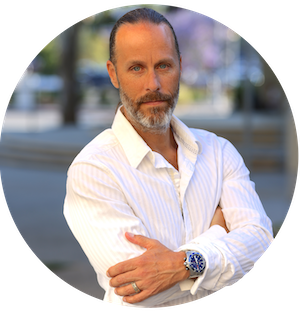
Kevin Anthony is a Certified Sexologist, Tantra Counselor, NLP Practitioner and a Sex, Love & Relationship coach. For over 10 years he has worked with men, women, and couples to have the relationships of their dreams, and the best sex of their lives! He is also the host of “The Love Lab Podcast”, creator of the popular YouTube channel Kevin Anthony Coaching, and creator of the popular online course series “Power and Mastery” as well as other online courses for both men and women.