Kevin Anthony 0:05
Welcome to the Love Lab podcast, the place to be for honest and real talk about relationships and sex, whether you’re a man or woman, single or a couple, this is the show for you. I am your host, Kevin Anthony, and I am here to help you have the relationship of your dreams and the best sex of your life.
Kevin Anthony 0:27
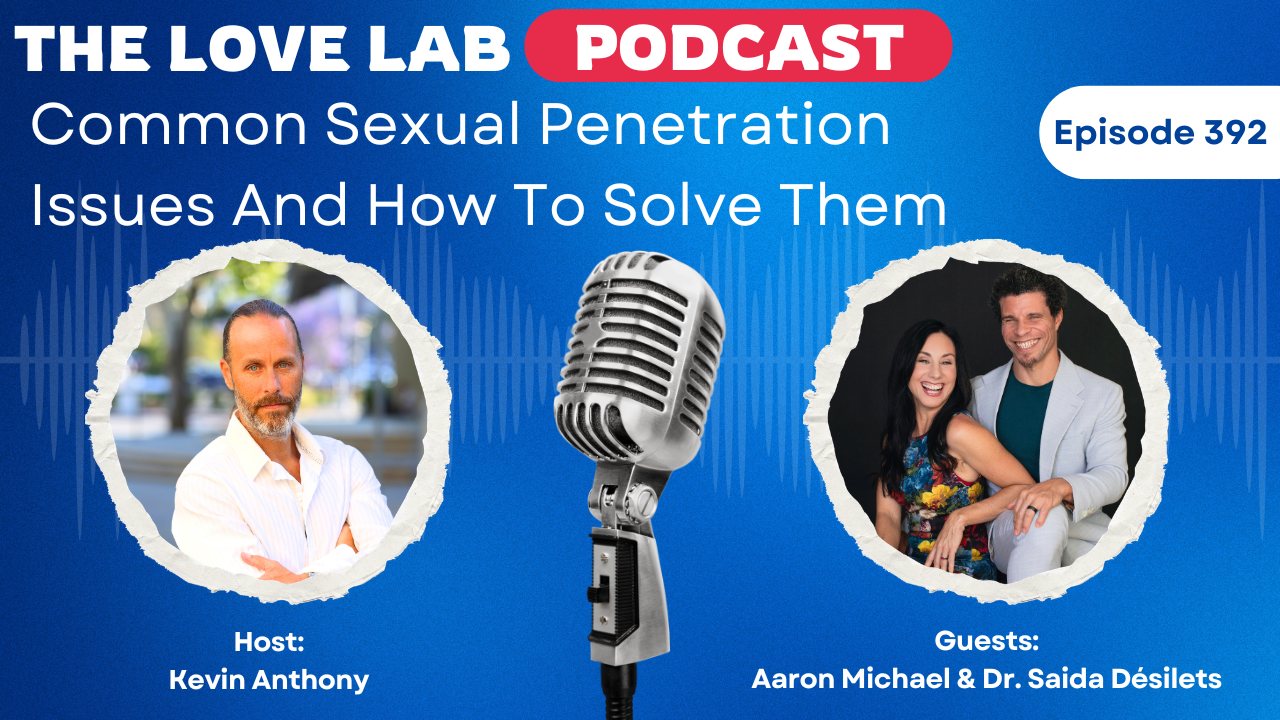
All right, welcome back to the Love Lab podcast. This is episode 392, and it is titled, Common Sexual Penetration Issues and How to Solve Them. It was interesting. I have some guests, so if you’re watching this on YouTube, you can see them. They’re patiently waiting for me to get through the intro here. And during that pre-interview call, we were talking about sexual penetration issues, and my guest made it really clear that those weren’t just penis-in-vagina issues. And so I kind of want to state that up front. We’re going to be talking about common sexual penetration issues, and they may revolve around all sorts of different things. Anytime you put something into something else, when it comes to sex, there could potentially be issues.
Kevin Anthony 1:12
And you know, having done this work for quite some time, you know, as a coach in the field, I definitely see my share of penetration issues. What I tend to see most often in the work that I do is that, as people are aging, they tend to have issues. But that’s not the only time that these things can pop up, and so we’re going to dive into that today. We’re going to get a little geeky as well, because my guests have actually done a formal scientific study on this, and they’re going to share the results of that with us today. So I’m really excited to have this conversation. I’m excited to have the guest today who I’ll introduce to you in a moment, and I’ll tell you one of the reasons why I’m excited to have them. But before we do that, we’ve got to pay the bills. I’ve got a couple of ads, as you know, to read. So let’s just get through those so that we can get started with the juicy stuff.
Kevin Anthony 2:04
Ladies, did you know that the overwhelming majority of men consider receiving oral sex a must in their relationships? Well, of course you did, because men have been asking you for it your whole life. But do you feel confident in your ability to give great oral sex if you tend to avoid it because you don’t feel like you’re good at it, or if you feel that you are pretty good at it, but want to get even better, then my new blow job mastery course is for you. I have teamed up with the amazing coach, Ry Duong of Eternal Love, to bring you a practical and easy-to-follow course that is guaranteed to increase your confidence and skill when giving oral sex to your man. In this course, you will get all the secrets to mastering the art of oral sex with step-by-step instructions and multiple live demos go to https://www.sacredfemininearts.com/bjmastery. That is https://www.sacredfemininearts.com/bjmastery. And as I’ve said many times on the show, I never thought I would make a course about giving bullets. There’s not that. Is there anything wrong with that? I just didn’t think that was something that was part of my mission here in this work that I do, until my video on what men consider a good blow job went viral, and all these women started commenting about I had no idea that’s what men wanted, and I didn’t know that’s what men liked, and I didn’t know that’s what I was supposed to be doing. And I went, oh shit. Okay, I guess, I guess we need to put this information out there into the world. So go check that out.
Kevin Anthony 3:20
And then, of course, lastly, power and mastery, 3.0, that is the latest version of the popular men’s sexual mastery course. So if you’re struggling with erectile dysfunction, premature ejaculation, or simply want to increase your skills in the bedroom, then power and mastery is for you. Join the exclusive club of men who have taken their sexual performance into their own hands and become sexual masters. Mastering your sexuality is a key component to becoming the man she has always dreamt of and craves. Don’t leave your sexual performance up to chance or the throw of the dice. Become a sexual master today by going to https://www.powerandmastery.com/sexual-mastery. That’s https://www.powerandmastery.com/sexual-mastery. That, of course, is my Men’s online sexual mastery course, that’s where we get to teach the men all the skills they need to show up as the best version of themselves for their woman and for themselves, too, of course. Okay, enough of that.
Kevin Anthony 4:13
My guests today have created Embodied Love University, which is a global platform dedicated to making intimacy simple. Founded by Aaron Michael and Dr. Saida Desilet, their 40-plus years of experience, combined with their scientifically proven methodologies, is revolutionizing intimacy, relationship, and sex coaching for both individuals and couples. With three published books, two scientific papers, over 20 online courses, bespoke programs, and the Embodied Love Lounge podcast, they are changing how the world makes love and helping people live connected. Welcome to the show. Saida and Aaron.
Dr. Saida Desilet 4:53
So great to be here.
Kevin Anthony 4:54
So I mentioned in the intro that I was. Excited to have you both on. Obviously, I’m excited because I think this is a great topic, and I want to share it with the world. But for those of my listeners who are still here after 392 episodes, you know that Thank you. You would have listened to about 223 of them with Celine and me, and Celine was a big fan of Saida’s. In fact, Saida mentioned in the pre interview that she is watching some of my videos, and she could see that her book is on the shelf right about there ish, so yeah, I’m really excited to have that conversation, because I almost feel like I know you a little bit because of Celine, so I’m excited to have this conversation and to have you both here. Absolutely Okay, so the topic of today’s episode is penetration issues, and I know that you guys did a big study on this, and I mentioned in the intro that it wasn’t just about the penis and vagina. So I’m wondering if we could start by talking about how you’ve been doing this work for a long time. What types of issues regarding penetration were you seeing on a regular basis that prompted you to say, we need to do a study on this. We need to figure out what’s going on here and how to solve this.
Dr. Saida Desilet 6:23
Well, I’ll start from my perspective, working with a lot of women of all ages, when suddenly a woman will say, it always hurts. I don’t know how you know, but does the sex just always hurt? And these kinds of questions, and like, No, it’s not meant to always hurt. So from the female side, there can be a lot going on with the female genitals. It’s not always on the partner’s end. You know where the problem is. It could be with the vulva, but there are ways that a woman and a man or partners can learn how to move together, breathe together, to solve that. So a lot of the solo work I was doing with women, and still do now, is to support women to get so familiar with their tissues, with their body, that they can feel more confident in a penetrative situation.
Kevin Anthony 7:14
You know, that brings up a follow-up question. I’m sorry, I’ll give you a moment here. But, and I know this will happen, this is one of the things that I love. Like I kind of write some questions, and then as I hear you speak, new ones pop in, and what you were just sharing was something I’ve talked about a lot in the show that I wanted to hear your perspective on, which is you just mentioned that one of the things that you’re doing is helping women become really familiar with their parts and how they work. And you know, my listeners have heard me say this a lot, and this is why I like to get different opinions on it. But, you know, early on in my work, I used to be somewhat dumbfounded by the fact that a lot of women just weren’t aware whatsoever of their own genitalia. And because I was looking at it through the point of view of a man, right, which is, we know every millimeter of our genitals. We’ve looked at it every which way, upside down, backwards, forwards. You’re like, we know all about it. And yet women, a lot of times, don’t. Now, obviously, since you know doing this for many years, having a lot of experts on I it makes sense to me now, but I’d love to hear your opinion as to why there’s such a difference there.
Dr. Saida Desilet 8:28
Absolutely, it has a lot to do with conditioning. That’s one, one thing we are not openly taught to explore yourself. Also, our genitals are tucked in, so you have to be really, really curious to like, kind of bend over and try to figure out where things are. And for a lot of people, they don’t think of using even a mirror. So when that suggested, they’re like, Oh, why did I never think of that? And they don’t also look at anatomy books very often, so they’re not that familiar with what other women look like. So yeah, there’s just culturally not a lot of encouragement.
Dr. Saida Desilet 9:03
I think now that’s changing, but at least for a lot of the women who are in midlife and older, it was not culturally part of you’re going to look at your vulva, you’re going to find out where your clitoris is and your labia, and then this and the that to this day, I’m always shocked when a woman has no idea where her clitoris is, and she’s been married for a couple of decades, so that’s always shocking to me, and yet, at the same time, there’s religious reasons, there’s cultural reasons, and also kind of keep the girls safe reasons where you don’t want to sexualize a girl child at all in her developmental stages, and so then you don’t want to talk about it. And if she is exploring, you’re like, Hey, you can’t do that, not, I think, intentionally to shame, but to protect. But it lands as shame in the body. And then that shame is something that needs to be overcome in order to then get curious enough to explore.
Kevin Anthony 9:57
Yeah, and I think you hit on pretty much all of the main. Your reasons why that is, and I always like to hear, you know, different perspectives on that and the real the real reason is, I just want the audience to keep hearing it over and over again, because what you just said is you’re still shocked by the fact that a lot of women still don’t even know, like, where their clitoris is. It’s 2026 in the developed Western world, and some women still don’t know where their clitoris is. And that’s why I like to reiterate this message so often, because it’s not just about I don’t know, but it’s about why you don’t know, and how can you get past that? So when you start to talk about things like, well, there’s shame, and there’s religious conditioning, and there’s, you know, it’s inside. And how many people are really looking at, you know, anatomical diagrams of stuff like that? Like, I want people to know that it’s okay, that they should be doing it, that they should have an understanding of, you know, what their own bodies are like and how they work, and like, that’s a good thing. So I just wanted to reiterate that point again.
Aaron Michael 11:01
I want to add one thing to it as well, that there is, I mean, just even if you’re looking at, like, the medical books, and then from which, then even the talk therapy is going to derive a lot of their materials, you’ll get some new stuff with masters and Johnson’s emphasizing the clitoris. But essentially, though, we are taught about anatomy as a system of reproduction. And one of the pieces that we really wanted to bring forward in this study, as well as in all the work that we do, is understanding sexual anatomy as a system of pleasure, because then it removes it from the strictly visual, and there’s just not, quote, unquote, some people think not as much to see from the outside, which I would definitely argue against, but there is an entire internal world that primarily gets explored by touch and by feeling and by being connected to oneself, and that’s where we find there is a big lack of information. How do we actually begin to feel ourselves, feel our partners, and be connected from a place of sensation, as opposed to strictly visual stimuli?
Kevin Anthony 12:05
This is another, yeah, this is another great point that you’re bringing up. This, this idea about recognizing the pleasure capacity of the body, because I personally think this is not an accident. This isn’t just something that sort of happened, like it’s designed this way, on purpose. Whatever you believe, whether you believe God did it or evolution did it, whatever your belief system is, it’s there for a reason. It’s there on purpose. And you know, here’s a sad thing that I recognized early on when we were doing this work, when I first met Celine, my wife, and she already had her coaching business. She was originally trying to market that through the lens of pleasure, like, how do we increase pleasure? And I’ve seen a few other professionals in the business do this as well.
Kevin Anthony 12:55
But what she noticed was that it was really hard to get traction marketing just for Hey, you should increase pleasure. When you flipped it around and said, you know, okay, I can help you solve your problems. Then suddenly, you know, it changed significantly. And I think that’s a really sad commentary, honestly, on society and where we’re at. Because, yes, we all want to solve our problems. We all want to deal with things that aren’t working correctly and make them work correctly, but there’s absolutely nothing wrong with investing time, energy, money, even in learning how to maximize pleasure like there’s nothing wrong with that. Why is it? The only time we do something about a problem or our sex life in general is when it’s a major problem.
Dr. Saida Desilet 13:44
Oh, there’s a funny saying. I think most people don’t think about living well until seven days before they die. And so there is a strange collective thing where, when there is a problem, it’s a loud noise, and you want to kind of squish it down. You’re like, I don’t like this. This is very noisy. But when things are working, well, you’re not really aware. You’re not paying as much attention. You’re focused on work or whatever you’re doing, taking care of the kids. And so when there is a problem, though, you really are like, wow, how do we turn that noise off? So it is a bit of a cultural thing where the human brain will pay attention to the negative much more strongly than the positive. However, I do agree with you that we can start conditioning ourselves for enjoying enjoyment, that at least 80% of our experience is delightful, and there’s ease and there’s beauty in our life, but that’s not yet in quite the collective you know, it’s not cool yet to actually be a person that feels good. It’s a lot more when you’re not feeling great. So we’ll have to become a little bit unpopular. I think you. In choosing pleasure, in choosing exploration. And I think it’s a great thing to disrupt.
Aaron Michael 15:06
But there is some hope, though, because right now, the whole movement, even with like functional wellness, or functional doctors in terms of like medicine, they’re looking at optimization. We see people now, you know, not just trying to get by, but being able to walk somewhere. They’re investing and working out. They’re investing in having a better diet. And so people want to have more. And the science, finally, is also starting to look a little bit at like, well, could there actually be benefits to pleasure? And it’s a resounding yes. It’s not just a matter of feeling good. I mean, just in terms of, like, lowered heart rate variability, faster time getting to sleep, lowered heart rate, there are lots of different indicators.
Dr. Saida Desilet 15:50
I mean, like, Hormonal Health is better. Everything better.
Kevin Anthony 15:53
You know, it’s funny, as I was listening to you, you answered that question right before you answered what I was thinking. In my mind, thankfully, we’re seeing this rise in biohacking, and how that has the potential to bleed over into our field as well. And then, of course, you came in and said exactly that, right? There is a much more increased focus on what we would call functional medicine. We’re also seeing a big increase in, you know, what we call biohacking. We got Gary Breck out there in the world talking about optimization all day long. It’s across, I see it every single day, across all social media. It’s just everywhere now. And I’m also starting to see some people in our industry bridge that gap. So I’m starting to see some people in the field of, you know, sexology, start to show up talking to some of these biohackers about sexuality and maximizing that. So you’re right, it is changing, and I think that’s really a wonderful thing. I also think we still have a ways to go to get that into the general collective.
Dr. Saida Desilet 17:00
That’s why I’m very excited for us to be talking to you today, because the results of our study were quite spectacular in the direction of pleasure and what it actually does to improve so many factors in people’s lives. And what was amazing and impressive for me was that we studied, it was 4244 couples. And what was amazing is it was over an eight-week program, and so all the markers were taken in each week. But what was incredible to me is that they were only doing a practice, sometimes once, and having exponential results. So why I’m saying that at this point in the conversation is not to discourage any of the listeners, to get them excited that the solutions are not complex, the solutions are available, and the solutions usually have fairly quick results, positive results, and impact if a person’s interested in exploring them.
Aaron Michael 17:59
And if you want to stick around longer, some more pleasure might be a good thing. Well, this is a biohacking combo.
Kevin Anthony 18:08
Yeah, this is a perfect segue into my next question, which literally was, could you describe your study? Tell us what the study is, how it was conducted, and then, of course, we’ll get into sort of the results and what you’ve learned. But let’s start with what the study was. What was the goal of it? What were you trying to learn from this?
Aaron Michael 18:28
Well, essentially, we were looking at what it is that we could do to advance sexual education in a way that is as hands-off and empowers the individual, meaning that they don’t necessarily need to go to a coach. Is that even possible? I mean, you can’t believe the amount of stuff that we went through, just in terms of, is this an ethical thing to do, to actually, like, teach sex? Should we actually focus on something such as penetration, as opposed to, you know, all the foreplay or conversations beforehand or the conversations after, and also to to really create that next bridge since sensate therapy with masters and Johnson’s, where they’re looking at like how to engage and touch and do pretty much everything but penetration, to have a better penetrative experience. And we’re like, Well, what about penetration? Because that is where so many people struggle. This is where you have the orgasm gap. This is where you have all the different performance anxieties. This is where you have just so much, tremendous amounts of pain and routine, and a lot of just like falling apart of the relationship can start to happen when making love no longer is truly making love, and instead is about keeping the peace.
Dr. Saida Desilet 19:44
We also see, because we’re here talking to you from South Africa, where gender based violence has now been announced as a national catastrophe. So they’re at that level, and when we talk to the people who really know what’s going on, sexual dysfunction. Is one of the main factors that causes intimate partner violence. And so it’s really important that we learn some basic skills on how to connect well and where both people feel good, and both bodies feel good. And so that’s why we chose to focus our attention on penetration. And I come from many different lineages, and those lineages, although they’re really lovely for creating, like, altered states and connection, were never very explicit on what exactly happens when you stick something in something. It just told you to do it and count to nine or breathe this way. But it didn’t really explain what was going on, which is in the method that we teach is very clear what’s going on. There are no hidden factors. And so that’s what we wanted to show. Can anyone learn it? Any age, any kind of relationship, dynamic, etc. So yeah, that was why we chose to do it.
Kevin Anthony 21:00
Well again, you hit on something important, and it’s something I talk about all the time on this show, which is the importance of having a fulfilling and healthy sex life as far as the health of your overall relationship. And the studies have been really clear that couples who have healthy, fulfilling, and satisfying sex lives tend to have longer, happier, healthier relationships, in general, we know it’s a key component to having that great relationship. And you know, we’ve all seen them. You know, you’re out and about, or maybe, you know some of them, this couple that’s like, you know, 75 or 80 years old, and they’re still chasing each other around the house, grabbing each other’s butts. And like you know, we’ve seen them, we know they exist, and one of the reasons they’re still so happy and chasing each other around and grabbing each other’s butts is because they’ve continued to nurture that throughout their entire relationship.
Kevin Anthony 21:53
So we know that’s a must if you want to have one of those, if you want to be one of those people who are just cohabitating with someone that irritates you and you don’t really like all that much, but you’re too old to make a change. Now, okay, maybe it’s not for you, but for the rest of us, we know that that’s an important part. So you also talked about they never none of these systems, these lineages, that you’ve studied in the past told you what to do after you put something into something. And so the study, obviously, was like, what happens when you do that? So tell us a little bit about what actually happens when you stick something in something.
Aaron Michael 22:32
Well, first of all, the whole understanding of the concept of penetration and sticking something in something is very one-directional. So the reason why a lot of this goes off in terms of the body mechanics, we don’t really have words for bringing something into the other half of penetrative sex, where penetration itself is one-directional. So getting a good understanding of how a person on the giving side and the receiving side can start to join their bodies together and actually give the power to the person on the receiving side to become active, to actively bring somebody in, and the person who’s on the giving side to be able to be adaptive to the other person. And I know they talk about the orgasm gap being a heterosexual problem, but we’ve coached all sexualities, and it’s a penetrative problem.
Kevin Anthony 23:23
Yeah, this, this part of the receiver is a huge part of the equation that is often left out. It’s talked about maybe a little bit more in some of the more esoteric, you know, fields, but still probably not as much as it should be. But I know for sure. You know, when I’m coaching women, one of the big things that I’m often working with them on, and this is, honestly, I think a lot of this is a byproduct of our current society where, you know, women have become overly masculinized because they’re they realize that it’s a certain point that the only way they could compete was to just get in their masculine and like, compete in the male dominated masculine world out there. And so they’ve taken on all this masculine energy.
Kevin Anthony 24:07
And so a big part of what I’m often helping them with is, how do you relax more into your feminine, and a big piece of that is exactly what you were just talking about, which is, how do you open to receive, right? Because that’s one of the big parts of what it means to be feminist, to be able to open and receive. And I agree with you that a big part of that conversation isn’t really had very often. It’s more like, all right, how do you generate enough lubrication, and how do you get hard enough and then you know what position is best for penetration. But very rarely do you hear people talking about, well, hold on, wait a minute, how does she receive this penetration? So, yeah, I totally agree with you. That’s a big part that’s left out. So what did you learn about that?
Aaron Michael 24:57
You want me to take that one?
Dr. Saida Desilet 24:59
Oh, yeah. Well, he’s the nerdy fact guy.
Aaron Michael 25:04
One of the most interesting pieces was when people were getting to the whole part on sexual anatomy. I mean, this is an eight-week process that they’re going through. So they are clearing out different ways to actually, first of all, regulate themselves, to know what the type of fantasies that they have? What are the things that they where they typically struggle with their partner just to even journal and get that conversation going? So these type of things helps the psyche start to surrender, which is what you’ll hear a lot of times. You know, some more advice around, okay, well, a woman needs to be able to go into surrender. She needs to be able to go into her feminine well, just kind of knowing the lay of the land in terms of the psyche is one part of it.
Aaron Michael 25:47
But where we get very specific, and where no one ever goes, is around specifically the sexual anatomy. And so most will know, if they know anything about how their pelvic floor works. They’re taught something like kegels. And so we think of like, okay, well, we’re going to squeeze to bring something in, but if you were to put something in your mouth, you don’t squeeze your mouth. You open it, and then you bring in the food. It doesn’t get crammed in, hopefully exactly so, actually training the pelvic floor, and it happens very quickly. It’s like learning to ride a bicycle. In fact, we find the people that have learned the most in other ways, have to unlearn the most, and that is simply to be able to actually open up the vagina, or, frankly, any orifice gay couples, it’s the anus, or if it’s vagina, and a strap on a dildo, a finger, that’s how we did the protocol for anything going in anywhere, the ability to actually use those pelvic floor muscles to open up the orifice and then be able to bring in the other person’s body And the other one, being able to manage their weight and being able to allow themselves to be brought in.
Aaron Michael 27:06
This does a tremendous amount of things. It does something with the biomechanics, in terms of just the physical abilities. It does create further amounts of engorgement, because our genitals don’t get engorged by squeezing. It’s actually the valves that relax. Blood flows in oxygen comes in. Oxygen fires to the nerves, pleasure gets registered, and it starts a nice cycle, and then from there, being able to start to move at a rhythm that has people where they’ve calibrated with each other. And there’s such a thing called biological synchronicity, which we didn’t get to go that far in this study, but they will start to notice that heartbeats begin to match, and it’s quite incredible, because that also then correlates with higher levels of sexual satisfaction, higher levels of chances of orgasm. A lot of different things begin to happen that are quite amazing, but just that first part of penetration is so crucial and important. And yes, you can talk about all the things that need to happen before that, but even if you have all the conversations, you have all the rapport in the world, if this part here goes off, you’ve already started in a place that leads, typically to either pain or the biggest plague that we’ve found with most couples is some level of numbness, which shows up psychologically as boredom.
Kevin Anthony 28:29
Yeah, I like that point that you make about opening or relaxing. So when I’m teaching men, you know how to last longer. There’s a common, you know, they call some people male Kegels, but basically it’s pelvic floor exercises, right? So whether you’re a man or a woman, you know, one of the keys to having a healthy, functioning genitalia sexual system is to work on the pelvic floor muscles to strengthen them. But one of the things I’m always really careful to teach them, which I think is really important, is everybody focuses, again, like you were saying, on the contraction phase, right? It’s a contraction phase. We’re gonna, we’re gonna make those muscles strong, you know, but the relaxation phase is equally as important.
Kevin Anthony 29:16
Now, on the on the men’s side, and you can tell me if it’s the same, on the on the women’s side, but on the men’s side, if they’re always focusing on contraction and they’re not focusing enough on the relaxation phase, they build way too much tension, and then those muscles get tight and contracted, right? And that’s a problem. So when teaching that, we always have to make a very strong point that, yes, squeeze, do your hold. But then you also have to focus on really relaxing it and that. And for guys, they’re always focusing on, like, it’s got to be the contraction, it’s got to be the contraction, yeah, got to do the rest, and like, yes, and you got to put the same energy into the relaxation phase of that. Meaning you have to focus on it just as much. Because otherwise you’re going to build tension, tension, tension, tension, tension. You’re going to have pelvic floor muscles that are as hard as a rock, and then that’s going to be a problem that’s actually going to impede your sexual performance later on. So I’m wondering, is that kind of similar to what you were seeing when it comes to whether it’s the female vagina or the anus or anything else like that’s what’s happening there?
Dr. Saida Desilet 30:21
The main issue with too many contractions, like you said, and like not using the breath properly, meaning like you’re, you know, shorter breaths and lots of contractions, and not taking those longer breaths and really softening and opening, is that there’s not enough engorgement that’s going to happen, especially in the female body. So the use of vibrators, the use of a lot of cagling in the female body over time, can create a pattern where you’re actually inhibiting the full engorgement of what’s possible. And that’s, I don’t care who the woman is, how much training she has, once we get to know her a little bit, and we teach her a slightly different way of being aware of her breath and how she’s utilizing her muscles. Suddenly, there’s so much more access to engorgement. Engorgement is a big one, because a lot of the method is based on creating suction between the genitals, and suction won’t happen if there’s not enough engorgement in the pelvic area.
Aaron Michael 31:26
Also, just want to say too that there’s this squeeze, there’s the relaxation, but the part that’s actually missing is the ability to expand the pelvic floor. So this would be similar to a gentle push. Now, most people might say, Oh, it’s like a reverse cable, just like push down. Or you might even see some people go, Oh, then you’re bearing down, and that can create problems we’re not talking about. What we’re actually speaking about is if you were to create a gentle push, such as if you’re increasing your urinary stream, but then using your breath to actually guide that. So while you inhale, feeling that expansion and breathing all the way not just into your lower belly, but expanding your pelvic floor out, it actually opens the vagina. Or, for the male, it helps him, if he’s like, getting ready to peek, you know, to go over the edge and have an orgasm. It is going to actually allow him, like a gear shift, to shift gears down, while at the same time, spreading sensation.
Aaron Michael 32:30
So it’s not so localized to the genitals. And this leads towards all sorts of amazing things for the women. It allows for the cervix to come down, allows for a spot, G spot, the whole CV complex comes forward towards the entrance. The male anatomy, the prostate actually ends up moving forward. The penis starts to energetically feel different to the woman, and it’s registered on this sensorial level as well. And so then, when you get a relaxation after that opening, then you get this that happens, and that creates a sense of suction. You reorient around, creating the sensation of suction, as opposed to friction, which is based on the idea that going harder, faster, and bigger is better. And now you literally have the two bodies start to adapt to each other, and it doesn’t really matter if you have a small or a large penis.
Aaron Michael 33:25
So this takes a lot of anxiety out of the guy mentality about how big I am or having to last long enough. It also allows, then, for the female side of this, or just anyone on the receiving side, to actually be met on the arousal levels from the other person, and then they build up naturally, with breath being the pace between them. And this might sound like a lot out there, but it actually ends up becoming extremely natural, like riding a bicycle. And you kind of go, what was I ever doing before? Or why was I watching? Why does this thing on porn even look interesting anymore? Doesn’t look like there’s any real connection that happens. And it’s the beautiful thing when these bodies start to coordinate this way.
Dr. Saida Desilet 34:10
I just wanted to add from the female side, breathing this way, and be able to move this way, and feel active in your receptivity. Receptivity is never meant to be passive. You’re meant to be very present in it, in an active way, and following your pleasure. And through that, you’re guiding the giver to like, take you to new spaces. But it’s an active thing. It’s not like passing out or just lying there, not moving. So in that activity, it’s not just physical outside; there’s activity inside, and through that beautiful engagement, lubrication issues get solved. For so many women, that’s a big, big issue with the tissue and being able to breathe. We’ve seen this in all ages, especially post menopause.
Dr. Saida Desilet 34:59
Like with sexually active couples, there’s been a problem where they’re like, We just can’t enjoy penetrative sex as we used to when they learn to move this way together. And she really takes her power back in the sense of, I’m not broken. Things are still juicy, and I can create my own juiciness by the way I move and breathe. It’s a form of liberation and a whole new level of falling in love at that point and getting horny, because it’s like, oh, wait, I can have sex, and it won’t hurt me for days after, yes, you can have sex today, later today, tomorrow morning, and there’s no residual pain and discomfort. So that was the exciting part. Was actually demonstrating that with the study, but we already knew the study would be successful, because we’ve done this work for so long, we just needed to formalize it.
Dr. Saida Desilet 35:48
And it felt actually really kind of fun, a little bit scary, like, what will the results actually be when you have scientists, you know, measuring and looking and stating, so it was actually very encouraging. And I think for people who might need, well, where is this coming from? Is it even valid? Or like, yes, it’s very valid. It’s been looked at. Here’s, you know, the results, but our greatest results are really what we’ve seen with our clients.
Kevin Anthony 36:15
Yeah, well, that’s an interesting point that you bring up as well, because, you know, there are things that we as practitioners who are doing this work day in and day out, we know we see it every single day. The pattern is just too obvious for it to be anything else. But I can see how you might have a little concern when studying because there are some things that in our field are very difficult to measure. And you know, here you are, you’re like, I know this is happening, but if I actually do the study, will it prove my experience over all these years or not? So I can see how there’d be a little hesitance there. You know, we also know that science can’t measure everything accurately. And if we want to also go down the realm of once you start to measure something, the observer effect comes into play, right?
Kevin Anthony 37:08
And now the observer is influencing the thing that’s being observed. And so it can get a little tricky, but you know what? I applaud you both for taking on the challenge and doing it, and I’m happy that you got the results that you were looking for, because let’s face it, there are plenty of people out there that are happy to dive into the Woo, woo, and don’t need the scientific proof, but there are a lot of people out there that really just won’t go there unless somebody did a study on it and wrote a white paper on it. And here’s the proof, right? And if you want to get through to as many people as you can, which is, I think, what your goal, and my goal is, we’ve got to provide stuff for everybody. So for the woo people, they don’t need it, but you know, the hardcore scientist people, they want to see that. So I’m glad that you’ve actually done this work.
Aaron Michael 37:59
Ultimately, we want therapists and doctors and pelvic floor therapists who are a bit handcuffed by, you know, their their own certifications, to be able to advise on pleasure, to be able to be able to prescribe these exercises as protocols, because it’s not just a technique or whatever that’s happening there’s, there’s an actual system here that we are teaching, and all the little ingredients are important, and it’s just hard to find where all these things are put together in place, and kind of to go along with what you’re saying is we had to be kind of tricky on well, how do we measure these results? Because most people are going to say our sex life is a four out of five, a five out of five. And so based on how you show improvement off of that, you can’t because then you’ll say, Well, what’s so we literally had to then add a new scale that said, well, zero is wherever it was that you started, whether it was 01345, wherever. And then go up plus seven or negative seven off of that to be able to calibrate, like, Well, where was the improvement? So that way we could start to understand it. Most ways that statistics are things that are done in terms of medicine are to measure dysfunction, and we actually knew that we were going to be heading into optimization.
Dr. Saida Desilet 39:21
Yes, and that’s a very difficult thing. If you look at pleasure research, if people don’t want to talk about pleasure, as you said at the start of the podcast, there’s, yeah, there’s people are afraid of it, clinically afraid of it, and they shouldn’t be, because pleasure is a marker of a healthy tissue, healthy person. And so we should be able to have, as scientists, as doctors, as therapists, as practitioners, a way to feel comfortable in the conversation of pleasure. And so that’s a little bit also why we’re bringing this work, not only to everyone, but also trying to get it in. On the sciencey side, just to be able to normalize and start to educate those types of people who have a huge influence. Because if you are a doctor, you’re seeing maybe 100,000 patients in your career, whatever it is that’s a lot of people to absorb. Yeah, well, I’m embarrassed to talk about pleasure. It’s not a nice thing to give to somebody that pleasure is uncomfortable. What if that practitioner could just be relaxed and help a person go from suffering to even just being curious with a simple conversation?
Aaron Michael 40:31
The reason is that most of them are struggling themselves.
Kevin Anthony 40:34
Oh, they are. They are, for sure. But you know, I think this is an amazing goal that you have. I also think you have a lot of work ahead of you in order to make this happen. Just to give one example, literally just this past week in the US, they announced that they were finally going to require more than four hours of education on nutrition for doctors in medical school. Nutrition, you know, like was, I think it was Hippocrates, Let food be thy medicine, right? Like we’ve known since the beginning of time, how important food is. Yet in the modern Western medical system, your average doctor gets about four hours, like they got an afternoon with a couple of quick things. Here’s the food pyramid.
Dr. Saida Desilet 41:15
And probably sleeping through it.
Aaron Michael 41:19
So it took about 16 times more than they get on the pleasure.
Kevin Anthony 41:22
Well, that’s exactly my point. Is, like, if it took that long and it was that hard just to get nutrition entered into the conversation, I think you have a bit of work ahead of you. However, I really hope that you are successful in getting this entered in as part of the conversation, because I do……..
Dr. Saida Desilet 41:41
There are definitely early adopters. The work I’ve done with Dr. Wickman. She’s a renowned OB-GYN, an incredible lady. We’ve done a lot of research with her as well. And she’s one of those doctors who people fly from around the world to look at how she does surgeries, because she will think about it based on keeping the pleasure nerves intact and not cutting through them, and just she does a lot of incredible things, and so she is one of the rare ones, but it is growing who really understands the vital importance of knowing what pleasure, the impact of pleasure, what is going on with pleasure, and how to support the bodies so that there is more pleasure and less complications, especially if there’s surgeries involved.
Kevin Anthony 42:25
Every new great idea has to start somewhere, and there will always be some pioneers who you know will do all the legwork and maybe not get as much credit as they deserve. But I’m glad that you guys are doing this. Okay. I’m actually almost 15 minutes past when I was supposed to take a break; the conversation was too good. I didn’t want to stop it. So let me take a short break to read an ad, and when we come back, I want to talk a little bit more about what we’ve kind of talked about the study and what you were hoping to learn and all that. And I want to kind of bring it a bit more into the practical realm, and start talking about what people can actually do and how they can start to incorporate this new knowledge into their lives to make their sex life better. So that’s what I want to talk about when we come back.
Kevin Anthony 43:16
All right, are you a couple? Are your relationship and sex life where you want them to be. Are there changes you would like to make? But just don’t know how, maybe you think there is nothing that can be done if you’re not 100% happy with where your relationship or sex life is, and then get help today and change your life. Go to https://www.kevinanthonycoaching.com/couples/ and schedule a strategy. Call with me today so we can map out a strategy to get you what you want to be, so you can have it all your way. That is https://www.kevinanthonycoaching.com/couples/ and yes, pleasure. Pleasure is definitely a piece of that. Yes, I can help you solve whatever challenges and issues you have, but it doesn’t have to be that. It’s like we were talking about earlier. You don’t have to just reach out to somebody like me or like Aaron and Saida, just because there’s a problem, you could say, I’m curious to know, how much better could my sex life actually be?
Kevin Anthony 44:10
I guarantee you that we are all speaking of all of us on this call and this show today, we all have tools that we can help you with to have more pleasure. And as I always say, too. You hear me say this every time I read these, these ads, when I have somebody on the show that I think is doing a good work, I go, Hey, if you resonate with them, go reach out to them. They’ll have an opportunity to tell you how to reach out to them at the end of the show. If you resonate with me, reach out to me. There is more than enough work for all of us to go around. Believe me, I’ve been doing this long enough to know that most people need help in this area, and I’m only one person, so find the person that you resonate with and go work with them, and if that happens to be me, https://www.kevinanthonycoaching.com/couples/.
Kevin Anthony 44:54
All right, so we’ve been talking about the study. What you. Learned in the study, let’s, let’s bring it to, you know, a place that people can then, you know, walk away and go, Oh, well, I just learned something that I can actually use. So, from what you’ve learned in this study, how can people take this knowledge, like right away, and start to work with it and improve their sex life?
Dr. Saida Desilet 45:23
Well, I think the first thing I would say is the opening of the whole front of your body through breath. So we could do that right now. We can just all be sitting on our chairs, and as we inhale, we just slightly lift the chins up, and we rock our butts back and let our bellies poof out a little, and then just come back to our normal body as we exhale. So that stretching of the front body is crucial. It does many, many things. For one, we’re walking around very protected, stressed, so a lot of the front body gets contracted. So if we want to have even more sensation, just to even be present and feel another person by stretching open this front line, it actually gets the part of the vagal nerve that’s socially engagement that side of it, it starts to activate when we stretch that front body and then the breath, which is Something that Aaron talks a lot about in his method suction. Sex is continuous all the way down into the genitals. So we can do that again. So as you inhale, you can lift your chin slightly, let your belly come out, and then feel like there’s a gentle pressure down in the genitals, and then come back as you exhale.
Dr. Saida Desilet 46:40
And I let you describe it a little more, but that super basic thing as a receiver, say I’m on my back as a woman, and I want to have more sensation. I want to have more trust. I want to feel safe. I want to feel connected. I want to melt open. I need to then actually open. I need to open my arms, open my belly, open everything. And so a suggested practice I do a lot as a solo practice for women is, yes, self pleasure, but then lie there and open your legs and open your arms and arch and be in this arched open and just breathe, soft breaths, and it’s extremely vulnerable, it will bring up a lot of stuff. But if you can do that, just like titrating it a little bit every day, over a period of time, you’re going to start to feel more comfortable with how powerful it is to actually open and to feel and to be able to partake even more fully in what’s happening in a sensual andor sexual experience.
Kevin Anthony 47:48
Did you want to add anything to that, Aaron?
Aaron Michael 47:51
Yeah. I mean, if you think about that, you’re literally reconditioning yourself. I mean, how do most people masturbate? Which is kind of what most people are sexually active with each other in terms of frequency. If they’re in front of a computer screen, they’re hunched over, or if they’re trying to reach and grab down, they typically have this sort of posture when you then start to open up here. I mean, when you take that yawn, you literally start to feel sensation throughout your whole body. And as simple as what it was that she says, this does fly in the face of how we are taught that orgasm happens, especially in the female body, which is that the cervix pulls up and away. It’s Sherry Winston’s book, The Anatomy of sexual pleasure, Arousal, and Sexual Arousal. Yes, thank you. And page 123, I remember things like that, but it literally says that, you know, the cervix pulls away from the battering penis, forms a sperm receptacle, and this is then when orgasm happens. You have contractions.
Aaron Michael 48:52
Well, that is one of the ways that orgasm happens. There’s actually the way that then the cervix comes down, it joins, meets the head of the penis, it also then will bring all of that erectile tissue, the urethral sponge, from the anterior fornix, which is typically called the a spot, to the so called G spot, or the around the skin’s glands, areas that like then get the pressure towards that pubic bone. And so as everything starts to get brought forward, the penis engages with this in a dynamic way. Also. Now you have these other types of internal orgasms, which some will argue are just everything’s a clitoral orgasm, but the sensations that people have become very different. In fact, when we first did this protocol, it was brought to us saying, Could you provide the agnostic part of a sexual penetration protocol, because we want to pair it up with either MDMA, psilocybin, cannabis or ketamine. And by the time people went through this, they said, You know what?
Aaron Michael 49:56
Well, the FDA wanted to approve it, but then they said, You know what? We don’t need that. People started to naturally go into psychedelic trance-like states, just by the sacred joining of each other’s bodies and the engagement all these deeper structures. And it was incredible. I mean, guys, this isn’t just for her as well. They also started to feel more full body sensation lasting times. Naturally jumped by three female frequency of orgasm went up. There was better communication during before and after. I mean, it’s all of a sudden….
Dr. Saida Desilet 50:34
Closeness really decreased feelings of shame. It was beautiful.
Aaron Michael 50:40
And what happened is, is that you start to notice that the male and the female body, or the receiver and the giver body, as opposed to being, you know, from Mars and Venus, or having to go through turn taking and each body is pleased differently, is that they actually complement each other, and they supplement each other into higher states than what they would even encounter just on their own. And this is then where you start to see that there’s something really special that begins to happen through penetration, as opposed to, again, a lot of advice in our industry is that, well, section one, of course, is not the only kind of sex, so let’s not focus everything there. Women only get pleasured. In this direction, we’re finding out that no the two bodies can truly find mutual pleasure, and that we’re designed for each other, which also simply makes a tremendous amount of sex sense, a tremendous amount of sex, sex as well as sense.
Kevin Anthony 51:39
Yes, I absolutely love that message, because I 100% agree with it. I often use, you know, when I’m trying to help somebody sort of understand what I mean by that, I bring up the, you know, the ancient Chinese symbol of the Yin Yang. I’m like, this is the way we are designed, right? We’re designed as a whole, but two pieces of that whole were designed to work together like that. I completely agree with you, as opposed to the, well, she’s just different, and he’s just different, and, you know, do what he needs and then do what she needs. No, it’s this coming together. That’s what makes sex great. I did an episode on this show a while back, and I don’t remember what number it was, but it was titled, This is what sex could be. Are you missing out?
Kevin Anthony 52:24
And the whole purpose of that show was to attempt to describe in words what you just said, as far as that, you know, not needing psilocybin, or that those, those places that you can go when two people come together in that way. It’s, you know, I actually found it kind of difficult to put it into words. You know, it’s using the best language that that I could to describe that, but it is one of those things that if you’ve never experienced, if you’ve never had that kind of sex before, and you’ve never gone to those altered states of consciousness through sex, I don’t think there’s any way that you can truly understand what it is until you’ve been there, but the fact that you know you were just saying you can get there and you don’t need substances is absolutely true, and it’s something I’ve been trying to get through people’s heads for years now.
Dr. Saida Desilet 53:19
Yeah, yeah, amazing. And the beauty too, is when we talk to our clients and we ask them, you know, what you know their goals are, and and then we we journey with them, so it’s over a period of time, and when they get to this place that we’re all just talking about now, that expanded, ultra connected, delicious place, they’re like, I don’t think I could have verbalized that this is what I wanted, but now that I’m experiencing it, I’m really happy that I’m here. So it isn’t in the collective vernacular, even to understand, we see it a little bit in trippy movies or this or that, but but as an understanding the way the this vessel, the body, is created for really, supremely incredible sensation and beauty and ecstatic states without the support of a lot of things, just by using breath, movement, connection. And I think that is a beautifully untapped gift that everyone of us has.
Aaron Michael 54:21
There’s this interesting shift that happens as well. You’ll literally see, and we’re talking about couples that have been together for over 20 years. They finish each other’s sentences, sometimes out of irritation, other times not, and there’s, I mean, that was one of the things that the study found, too, is that the routine was broken. They broke their routines and discovered novelty and curiosity. And you’ll see, we see this all the time. The couples that you know, maybe they’re sitting like this, or they’re farther away, all of a sudden, they get back into that teenage puppy dog. I mean, like, sometimes we’re coaching couples, and they’re just like, Okay, time to leave the room. Like, get out. Go. Now we’re like, all right, mission accomplished. And the thing, though, that happens too is in their nervous system, as opposed to being negatively conditioned to avoid the things that they don’t want, like the arguments that they’re having, or any of the painful discussions from the past.
Aaron Michael 55:18
Now, all of a sudden, with pleasure, they start to become positively conditioned towards the things they want. And that truly is actually more scary than all the trauma work, all the pain. And so the work that you will typically hear a lot of times in industry, too, is that you have to do the work, the hard thing, and have the hard discussions. Yes, you don’t bypass that. But then the hard work starts to become, how much pleasure can I actually generate with my partner? How much can we dream into the future and make it a reality? And so the sex coaching, part of intimacy and relationship coaching, is that it becomes the fuel that fires everything else up, that allows for the smoother communication, that allows for the repatterning of all the negative attachment patterns, and starts to align them in such a beautiful way. And it’s, it’s quite incredible when work starts to become on that side of the coin.
Kevin Anthony 56:10
Oh yeah, that’s when it starts to get really, really fun. And everybody can get there. You know, it’s interesting. You’re talking a little bit about this idea that we’re sort of Wired towards the negative, and psychology has demonstrated that it was a survival mechanism we have. We have evolved to always try to keep an eye out for all the things that could go wrong that way. We don’t die. I mean, that’s basically, you know, the explanation that psychology gives us from it, but we don’t have to get stuck there. Like to use an analogy, right? And you guys are in the field too. So most people think that ejaculation and orgasm are the same thing in a male, but we know as professionals that they’re two separate things that tend to happen at the same time, right?
Kevin Anthony 56:58
But we know that we can learn to separate them out. In other words, the way we evolved, evolution said, okay, the fastest way to, you know, procreate is to make sure that you ejaculate and orgasm at the same time. This is our way of pushing you into procreation, right? But we don’t have to be locked into that; we can change it, and I am using that as an analogy to talk about this idea between being wired for negativity versus being wired for pleasure. We may have evolved to be wired towards negativity, but that doesn’t mean we have to get stuck there and locked into it. We can reprogram ourselves to focus more on the positive, and I think that’s a big part of the message that you’re sharing here today.
Dr. Saida Desilet 57:46
Absolutely, it’s a huge part of it. And what I love to see is when people I always talk about our field, or any therapeutic field, we usually take someone from an experience that wasn’t great to like stabilizing them, and then we label them something, a victim of this or that, or whatever, and then we say they’re a survivor of something, but we don’t look at the other half. So we’re only half-cooked at that point. We need the other half, and the other half is moving into possibility, what? Who am I beyond just this experience? What else is there for me for the rest of my life?
Dr. Saida Desilet 58:19
And so when that discussion starts to happen between couples, the curiosity, the possibility, the leaning forward. It’s rather extraordinary, because now you’re entering a very co-created experience of delight, of ease, of pleasure, and then, without forcing it, you’re attending to what would make your day more delightful? What would bring ease, what would turn you on? You’re wanting, you’re getting so curious instead of what’s in it for me, and I never get what I need. And I need these things. I call it the beggar’s bowl. The Gourmet plate is where you’ve taken the time to really fill yourself. You discover these things. You’re like, you offer it, but not as a bargaining chip. You offer it as a gift. If they don’t want you’re like, that’s fine. I’m very happy with my gourmet plate here. And so this creates to what I don’t see a lot yet, and I think it will come more and more, which is the maturation process, not only of Eros, of the erotic, but also the emotion.
Dr. Saida Desilet 59:24
And when the erotic and the emotion dance together, and they grow together, now you actually have the meeting of some very powerful, potent energies, and then you’re harnessing one another’s genius. And so sex becomes something between people that can fuel your most spectacular offering also in the world, and that’s what they call, you know, power couples or whatever. But every couple can start to, instead of degrading each other, like really, start to uplift each other and create that upward momentum. The theme of possibility, curiosity, and it is a tough thing to overcome, but there are beautiful people who are willing to help. And there’s the it’s a repetition of choosing, choosing to lean, to be curious, choosing to investigate what’s possible for your own body, the number of limitations that we believe about our own body is absolutely incredible.
Dr. Saida Desilet 1:00:24
So we love debunking those limitations and really letting people discover that actually the best sex that they’re going to have isn’t in their younger days, it’s in the later generations. And so that’s exciting news if there are younger audience members here, just like no, you have a whole lifetime of extraordinary, beautiful experiences available to you. And those who are in these generations, it’s not over, it’s just really, truly now you have access to this amazing asset that’s your erotic.
Kevin Anthony 1:00:54
I mean, that is a huge misconception, that you know, as you get older, the sex is going to get worse. Your sex life is going to get worse. And you hear this, these things parroted all the time. Once you get married, there go. Once you have kids, or once you’re over 40, or, you know, all these different things, it gets worse and worse and worse. That is a possibility if you allow that to happen. But I mean, I’m in my 50s now, and I can tell you, it keeps getting better. And I know lots of other people who say the exact same thing. I hear, you know, women out in the mainstream saying, oh, you know, once you hit menopause, that’s it, sex is over. But I have personal friends who are like, I’m, you know, past men, like, I’m officially menopause, and I’m having the best sex I’ve ever had in my life, right? So it is absolutely possible, and I’m glad that there are other people out there sharing that message and teaching people how to do it, because it’s important.
Aaron Michael 1:01:55
One of the shifts that said it talks a lot about and mentioned is this idea of relaxed arousal, and this is one of the pieces that we speak about. So you have a different understanding of the concept of sex. It’s bi-directional, different body mechanics, different understanding of the anatomy, but then also in terms of the physiology, how the nervous system works. We typically are, and you mentioned it earlier, that there’s this race to climax, and sometimes the two couples are racing against each other, who can come first? You know, because once one does, then it’s over, and then the other one has to, like, kind of finish themselves off, or do whatever it might be. But this understanding of relaxed arousal, would you speak a little bit about that?
Dr. Saida Desilet 1:02:38
Sure, it’s actually really something that it came to me a long time ago, trying to understand the felt state that I was experiencing, first for me, and then witnessing it in my students. And then I think it was, is it, Nicole Prouse? Nicole Prouse, yes, she was saying the best part of sex, the things where you had the most health benefits, is not the moment of orgasm. It’s actually that time before, and I said, Oh, she’s describing relaxed arousal. So if you can enter a state where we are aroused, we’re awake, we’re turned on, we’re lit up, but there’s equally an ease. Relaxation can be a little far-fetched for some people, but imagine ease, where you can take some deep breaths, take some pauses, enter a state where the turn on isn’t peakish, so you’re not like, Oh, it’s too much like, hurry up and get it over with.
Dr. Saida Desilet 1:03:36
But it’s more of an undulating, rising experience, that state of relaxed arousal, we can take ourselves in alone. We can share it with the person. But what it does to the nervous system is it starts to help modulation, and that’s what creates resiliency. And we need really resilient nervous systems to deal with all the stuff out in the world. And if relaxed arousal is one of the main ways to entrain your nervous system to be more resilient, why would we not then want to practice that more?
Kevin Anthony 1:04:09
Yeah, there are so many more things I would love to talk to you about. I would love to dive deeper into that, in training your nervous system with that relaxed arousal, that would be great. I would love to talk more about this idea that, as a woman, receiving is not passive. This is another huge thing I talk about all the time. It’s like, you know, there’s so much talk these days about masculine and feminine, and when we have the conversation about what it means to be feminine, we use certain terms, because those are the words that we have, but they get interpreted to mean passive, right? Which, which is not at all, what, at least not at all what I’m trying to teach when I’m talking about those types of things, so lots of other juicy things that we could talk about. Unfortunately, we are over time.
Aaron Michael 1:04:58
It wasn’t a quickie today. It was a longie.
Kevin Anthony 1:05:00
It is definitely a longie today. But you know what? Longies are my favorites. Yeah. Well, before we wrap up, please take a moment to tell people how they can find out more about you and the work that you’re doing, if they’re interested in working with you or finding out more about your study or anything else.
Dr. Saida Desilet 1:05:20
So, embodiedloveuniversity.com is where you can find us. There, you just need an email, and you’ll have access. We have, like, free foundational we’re thinking, What are the five things that people would need that we can uplift the bedroom, IQ of humanity. So that’s all available for free. And there are many other things there, but that’s a good starting point for getting to know us. And on there, there’s access to our podcast and many other tools, but that would be where I would start embodiedloveuniversity.com.
Aaron Michael 1:05:52
And if you want to do personal coaching, you can also then contact us there as well, and then we do bespoke either online as well as in person.
Kevin Anthony 1:06:03
And of course, that link is in the description. So if you want to find out more, go check that out. I think you know, if you want to work with, you know, a male-female couple, you have a really amazing opportunity to work with them. And I know, you know, we had this conversation in our pre-interview call. That was one of the things that I really, really loved when Celine was alive, was the ability for us to come and bring both sides of that to the work. And I just don’t think there are that many people out there doing that. And so I think what you guys have is really unique and special. And so I encourage people, if that’s what they’re looking for, by all means, go check out your website and, you know, reach out to you.
Dr. Saida Desilet 1:06:48
Thank you so much, Kevin. It’s been such an honor to be here. It was so beautiful to meet you in the pre-call and just feel your heart, feel your passion, and I’m just delighted that you’re doing amazing work in the world. So thank you for you.
Aaron Michael 1:07:01
And to feel your partner here to actually bring us together, because she’s spoken to so fondly of saying that in the past.
Kevin Anthony 1:07:07
Absolutely, well, again, thank you both for being here. I really appreciate what you are doing in the world. Also, I had no idea what I meant. I saw your name, and I knew that Celine was a fan of yours, but I had no idea that we’d have so much resonance in common. You know, when it came to the work that we do? So that was a really pleasant surprise for me. So I’m happy to promote you guys, because I know that what you’re doing is good stuff. Thank you so much. All right, everybody. That’s all the time I have from this episode, and I will see you next week.
Kevin Anthony 1:07:50
I hope you liked this episode of the Love Lab podcast. If you enjoy this show, subscribe, leave me a review, and share it with your friends. For more free exclusive content, join me in the passion vault at https://www.kevinanthonycoaching.com/vault/. That’s https://www.kevinanthonycoaching.com/vault/. Thanks for listening, and remember, as Celine used to say, you’re amazing!
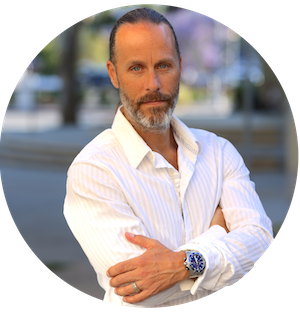
Kevin Anthony is a Certified Sexologist, Tantra Counselor, NLP Practitioner and a Sex, Love & Relationship coach. For over 10 years he has worked with men, women, and couples to have the relationships of their dreams, and the best sex of their lives! He is also the host of “The Love Lab Podcast”, creator of the popular YouTube channel Kevin Anthony Coaching, and creator of the popular online course series “Power and Mastery” as well as other online courses for both men and women.

Leave A Comment