Kevin Anthony 0:00
Welcome to the Love Lab podcast, the place to be for honest and real talk about relationships and sex, whether you’re a man or woman, single or a couple, this is the show for you. I am your host, Kevin Anthony, and I am here to help you have the relationship of your dreams and the best sex of your life.
Kevin Anthony 0:27
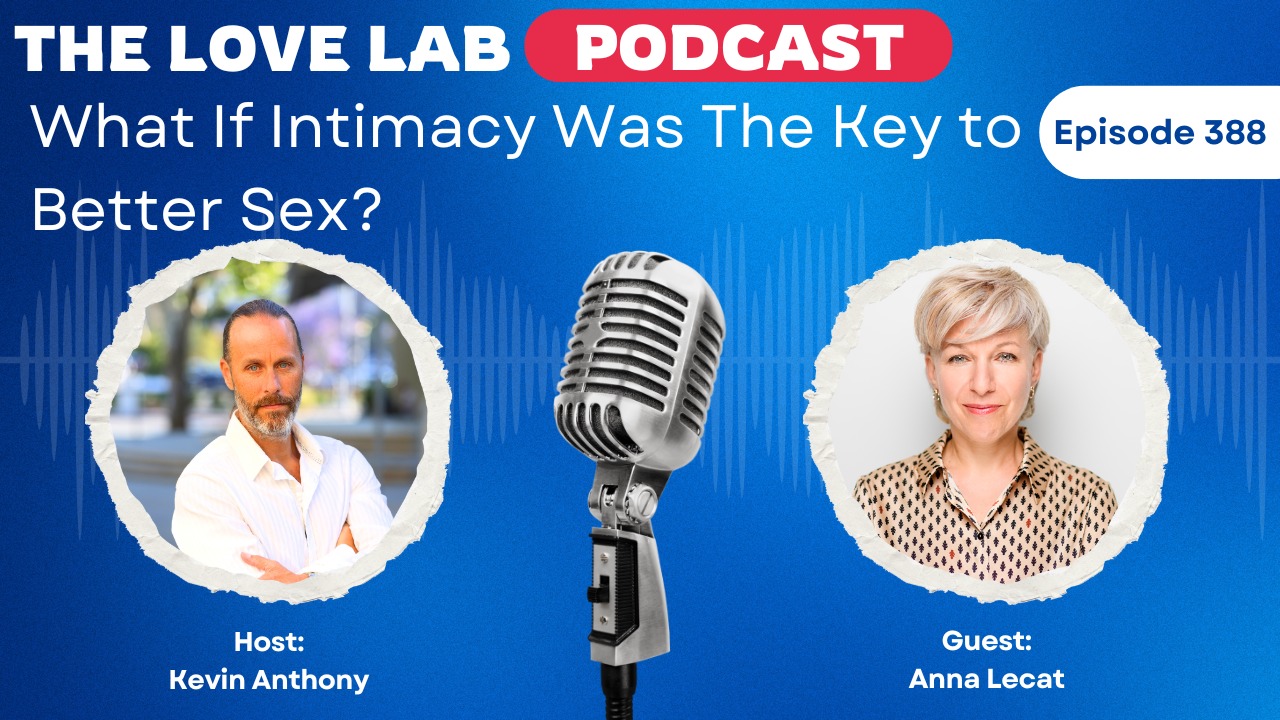
All right, welcome back to the Love Lab podcast. This is episode 388, and it is titled, What if intimacy was the key to better sex? Now some of you are listening to that title, and you’re thinking, Wait a minute, that doesn’t make sense. I don’t understand. Intimacy is sex. Sex is intimacy. Well, you probably only think that because we have so much censorship around the word sex, that over the years, everybody in the industry that wants to do anything with selling you anything around sex has used the word intimacy instead of sex, because that’s the word that they’re allowed to use. So somebody wants to sell you a lubricant, they talk about intimacy when what they really mean is sex. And that’s actually created a lot of confusion around what intimacy actually is versus sex.
Kevin Anthony 1:23
And so what we’re going to talk about in today’s show, and I have a guest, if you’re watching on YouTube, you can see my guest already, who I’ll introduce in a moment. We’re really going to be talking about what is intimacy. We want to separate it out from, you know, the sort of generic term of, oh, it’s just a placeholder for the word sex that we’re not allowed to use. What is intimacy? Why is it important? How do we create it? What kinds of benefits might we see if we can do a better job with intimacy in our relationships? And so yes, the things you’re going to learn in this episode are going to help you have better sex, and it’s also going to help you have a better relationship. And we all know that the better your relationship is, the better your sex life is. So those are the things that we’re going to talk about on today’s show. I think it’s going to be interesting. So please stick around and learn something today before we do that. Of course, I have a couple of words from my sponsors.
Kevin Anthony 2:25
Ladies, did you know that the overwhelming majority of men consider receiving oral sex a must in their relationships? Well, of course you did, because men have been asking you for it your whole life. But do you feel confident in your ability to give great oral sex if you tend to avoid it because you don’t feel like you’re good at it, or if you feel that you are pretty good at it, but want to get even better, then my new blow job mastery course is for you. I have teamed up with the amazing coach, Ry Duong of Eternal Love, to bring you a practical and easy-to-follow course that is guaranteed to increase your confidence and skill when giving oral sex to your man. In this course, you will get all the secrets to mastering the art of oral sex with step-by-step instructions and multiple live demos. Go to https://www.sacredfemininearts.com/bjmastery. That is https://www.sacredfemininearts.com/bjmastery. And of course, guys, if you’re listening to this, she’s not going to want to do that for you if you haven’t already established a level of intimacy.
Kevin Anthony 3:20
Which brings me to power and mastery, 3.0, right? Power and Mastery is the latest version of the popular men’s sexual mastery course. If you’re struggling with erectile dysfunction, premature ejaculation, or simply want to increase your skills in the bedroom, that’s where the intimacy part comes in. Then power and mastery is for you join the exclusive club of men who have taken their sexual performance into their own hands and become sexual masters. Mastering your sexuality is a key component to becoming the man she has always dreamt of and craves. Don’t leave your sexual performance up to chance or the throw of the dice. Become a sexual master today by going to https://www.powerandmastery.com/sexual-mastery. It’s https://www.powerandmastery.com/sexual-mastery. In the sexual mastery course, there are several videos on how to create intimacy before you get into the bedroom, how to create intimacy in the bedroom, and then intimacy after the bedroom, right? Those are key components, and it will make so much more sense after we have today’s conversation about why there’s such a heavy focus on creating intimacy in the power and mastery courses, but go check those out. Both of the links to those are in the description.
Kevin Anthony 4:33
Okay. My guest today is Anna Lecat, and she is an intimacy and conflict consultant who helps people transform hard conversations into moments of truth, tenderness and real connection. A triple immigrant and former global CEO, she works with couples and communities to navigate tension without abandoning themselves or each other, turning everyday conflict into a practice of intimacy. Her up. Coming. Book “Loving Conflict, creating collaboration, where others see division”, invites us to treat the way we fight as part of the way we love. Welcome to the show.
Anna Lecat 5:10
Anna, thank you so much for having me.
Kevin Anthony 5:15
Okay, so you heard the intro. Let’s start by defining what intimacy is for the audience, because I know that there’s confusion around this term. So, tell the audience, from your perspective, what does it really mean that word intimacy?
Anna Lecat 5:36
So intimacy comes from Latin intimos, which means innermost, and to me, that means closeness. It’s it means the courage to see the other person just the way they are, and to be fully seen, to love somebody just the way they are, and to allow them to love ourselves. And in order to do that, we need to be able to love ourselves, to accept ourselves, and to be courageous, courageous enough to see the other person fully.
Kevin Anthony 6:16
That is a beautiful definition of intimacy. And if you’re listening, did you to notice there wasn’t anything about sex in there, right? And that’s why I think it’s so important to have this discussion. Is because, you know, when I’m out there trying to teach people about, you know, how do you have better relationships, and how do you have better sex? And we talk about things like, hey, you need to learn how to create more intimacy. The first place everybody goes is great. I want to learn how to be better at sex. I’m like, no, no, no, no, that’s not where we’re starting, and it’s sometimes hard to get people to wrap their minds around that.
Kevin Anthony 6:53
So I really appreciated your definition of intimacy, and that actually leads me to a question that is not on my list at all, but I think it’s really important to talk about, as you mentioned this idea of knowing yourself, right? And this is something, again, that I don’t think people really think about when they are thinking about intimacy, they think about how can I, you know, if they’re thinking outside of the realm of sex, they’re only thinking about how can I create more connection between my partner? But you just said that that actually starts within. Talk a little bit more about that. Why is it so important to know more about yourself and be more in touch with yourself when it comes to creating intimacy?
Anna Lecat 7:38
It’s a great question, and I love that you brought it up because, you know, so I teach intimacy through metapropeth tango. I’m a tango dancer, and I dance both roles, lead and follow. And in tango, you know how people say it takes two to tango? And we assume that it takes, it means it takes two people to tango. The same in sexuality, right? Well, actually, it takes two to tango. Means connection to yourself and connection to the other person, to your partner. And we in dance, and we focus a lot about where is my access is, where am I grounded? Do I feel my body? How are my muscles? Where’s the tension in my body? How am I breathing? How am I hearing the music? How am I interacting with my environment outside of me? And so I’m taking that into intimacy and sexuality, and I say, Well, first I need to know myself fully.
Anna Lecat 8:35
So what I’m How am I emotionally regulating? What are my triggers? How do I self-soothe? Do I have body awareness? Do I value my body? Am I in love with my body? Do I actually want to have sex with myself? Do I get up in the morning, look at myself in the mirror, and say, Oh, my God, yes, hot. I would love to have sex with that person. Right then, do I know my attachment styles? Do I know my erotic blueprints, love languages? What are the generational patterns that I’ve inherited? Right and do I how do I break them? What are my desire types like? What is my personal mission? What are my flow states and that kind of research into ourselves is necessary to then give a blueprint of ourselves to our partner, so that they don’t have to read our minds, they don’t have to guess and make many mistakes until they get to find that spot that feels good, or If they they don’t need to keep trying and then do something that triggers us. We can tell us. We can tell them all that so that we can start from I know myself. This is who I am, let me tell you, and now we can start building a relationship with that.
Kevin Anthony 9:57
I love that it is so beautiful, and it’s one of the things. Things I talk about a lot when it comes to coaching people, because so many times when somebody comes to me, and they’re seeking coaching for either their relationship or their sex life, the complaints that you hear are things like, well, she never or he doesn’t do this or, you know, it’s almost always external stuff, right? It’s always what the other person is doing or not doing, right? And how can you help me fix this? What they’re really saying is, how can you help me fix them right? And one of the things that I tell them all the time is, no, no, that’s not how it works. You’ve got to start with you right now. I’m not saying that the other person doesn’t have some bad behaviors. I’m not saying that some of the things they do might not be ideal or right, but the point is, is it starts with you, and so, you know, that’s basically what you’re saying here. Is like we got to look at ourselves first. We’ve got to figure all of that out. Because how can we possibly, you know, go to a deeply intimate place with somebody else if we don’t know any of that stuff about ourselves, right?
Anna Lecat 11:07
And I don’t think that we need to wait to have a relationship until we figure all of that out. We can totally do it together with our partner together. And it’s helpful, because they can mirror back to us what’s going on, right? They can, they can show to us how our communication is working. And it’s actually great to do that together, as long as both partners are in this research mode, and they are delighted and surprised and curious about themselves while they engage in I’ll give you an example. Yesterday, I was having dinner with a friend here in California, in San Francisco, and she was talking to her partner, and she was upset about something, and she kept going on about her upset, and then she stopped herself, and she looked at him and said, Why is it upsetting me so much? And I just, I just hugged her. I was so grateful to her, because it was not all of a sudden. It was no more, nothing external anymore. It was when she noticed that something triggered her, and now she was there in a scientist kind of researcher mode, curious about herself. The focus went back on her, and we were all able to engage in this vulnerable conversation, which is intimacy.
Kevin Anthony 12:17
Yeah, I love how you brought up the point that you don’t have to wait to be in a relationship to figure this out. This is another big point that I make with clients, because, you know, this is a common thing that comes up, you know, somebody reaches out to me. We get on a call to talk about, you know, what their problems or needs are and how I might be able to help them. And inevitably, at some point in the conversation, one of them says, well, maybe I should just wait until I’m in a relationship and and then, yeah, then, then, then we can figure this out, to which I always go, no, no, don’t wait until. Then. Don’t wait until you’re in a relationship and you’ve already messed it up. Learn how to be the best version of yourself now, so that not only will you not mess up the relationship, but you’ll actually attract a healthier person and have a better relationship from the start.
Kevin Anthony 13:09
So yeah, I love that idea. You don’t have to wait for that. You can work on it on your own. And of course, if you have a partner, you can work on it with your partner as well. I’m curious. This kind of leads me into some other questions around common mistakes or complaints, right? So I mentioned that, you know, one of the common things I hear is, Well, I’ll just wait until I’m in a relationship, right? But what are some of the other common complaints you hear from men and women when it comes to intimacy?
Anna Lecat 13:42
I work with many long-term couples, people who have been together for 3040, years, and I hear in these couples, there is always a complaint that men are not getting enough sex, and women are on the opposite of that, saying that the men are asking for too much. In general, that’s the complaint. Men are asking too much from them. They’ve given it all to the family, to the kids, to the couple, and it’s enough.
Kevin Anthony 14:14
Yeah, that common one for men, of course. You know, they want more sex, right? That’s probably the number one complaint. What would you say? Okay, so the women say they’re asking too much. But what would you say would be maybe one of the top things that women are actually looking for? What are they wanting out of the relationship? Like, if they’re if you were to ask them, what’s your biggest complaint about something you’re not getting in the relationship? What do you think they would say?
Anna Lecat 14:39
I would say they want intimacy, which is not necessarily sexuality.
Kevin Anthony 14:45
If I had this, the show sound effects that I used to use, I would have been hitting the truth bomb on that one. That’s exactly what I was hoping you would say, that what they’re seeking is they want more intimacy. They want more connection. They want. More depth that is like Soul Food for women. And the thing is, men, when your woman is sitting there, when you’re sitting there complaining that you’re not getting enough sex, it’s probably because your woman isn’t getting those essential nutrients that she needs that make her want to have sex with you. And so, you know, men, too often, are looking at this from the point of view of, like, you know, how can I get her horny? How can I get her turned on? How can I get her, you know, to want to have sex, you know, more often? And it’s like, it’s not about the sex, it’s actually about the intimacy first, before you ever get to the sex. And I just don’t know how many times or how hard I can drive that point home, guys, if you want more sex, you have to nurture your relationship and your connection with your partner. That’s what she’s looking for, right?
Anna Lecat 15:53
And I think that it’s great that you are teaching this, and I really appreciate that you’re carrying this message. And I think that it’s also important to understand that men haven’t been socialized to provide intimacy or to be comfortable with intimacy. They are not having that intimacy with their friends. They have not been taught how to do it, how to interact, and on that level of authenticity and truth and vulnerability that men, most of the time, are socialized not to cry, right, to stay strong, to not express their emotions, while most of the time in traditional environments, women are right. Women have friends that they cry with, and then they express their emotions, and it’s okay. And so when we tell men, create intimacy at home. I think it’s very important, and I know you do that really well, to give them the skills, the practices, the homework, right, how to actually do it, because it’s not their fault that they don’t know how, that they haven’t been shown the way.
Kevin Anthony 16:55
I mean, you’re absolutely right. In our current society, we do not teach men how to do this, although, I will say, in recent years, there’s been a little bit more focus on that, which is a good thing. However, one of the things that I notice is that some of that teaching that’s out there that’s trying to help men be more open, be more vulnerable, recognize and share their feelings a bit more. Some of it, not all of it, because some of it’s really great, but some of it is being done in a way that doesn’t speak to men. In other words, well, it attempts to make men like women, rather than realizing that men are men, and they’re gonna, they’re going to have a different approach to this. So, for instance, as you said, well, we don’t, we don’t act that way, you know, around our male friends, and that’s generally true. You know, we might have one, maybe two, close guy friends, we’ll open up to a little bit more, but in general, we don’t have that same level of depth and vulnerability. But that’s okay. That’s fine. It’s all about appropriateness, right?
Kevin Anthony 18:04
So if I’m a man, the way I’m going to treat my buddies is, of course, going to be different than the way I’m going to treat my partner right now, granted, there’ll be some ways that are the same, right? I’m going to be kind to them, I’m going to show up for them, and things like that, but there’s a level of depth and intimacy that I’m willing to go to with my partner that’s different than what I would do with my male friends. And so when I see people out there teaching men how to be intimate, it’s like for most men, it’s not going to land. If you teach them, they have to go, you know, with their buddies and go cry together in a circle. Like that’s just not going to speak to most men, right? But what you can teach them is, okay, you know, maybe that, maybe that’s not what you do when you get together with your guy friends, but that doesn’t mean that you still can’t learn how to be open and vulnerable in a different situation.
Kevin Anthony 18:56
So I think sometimes, when we’re teaching men how to be open and vulnerable and how to have, you know, more intimacy. I think we have to approach it in a way that, as men, as male masculine, primarily testosterone driven, you know, beings that we are, that will speak to us right, so that we just, you know, we’ll actually hear it. We’ll actually do it, rather than going, Ah, that’s a bunch of wishy washy, New Age BS kind of stuff. So I just thought that was kind of an important point. If you have anything you want to share about that or an opinion on that, feel free.
Anna Lecat 19:28
So I absolutely agree with you that we shouldn’t tell that. Telling most men, okay, behave this way, and it’s going to work for you if they haven’t practiced this, and this doesn’t feel good, interesting to them is useless. However, I do work with many men’s groups that do get in a circle and have an amazing time together and create communities to where they support each other and are there for each other. So I do think that it’s a path that’s meaningful and possible, and comfort can be comfortable for most men. What I see working the best for me in my work is talking about having fun, rather than saying you need to sit there and cry. I am asking, Okay, what’s your flow state outside of your relationships? When are you having fun and you forget that the time has passed, that you forgot how you were performing, that you were totally in the right? You were in it.
Anna Lecat 20:33
And then can you bring those moments to your couple, to your relationship? Can you include your partner in those moments where it’s you are totally, completely delighted? Because, in my experience, what women are looking for is that is the emotion being shown on your face, in your breathing, where you’re playing, where you’re creating art with your body, with your mind. So are you singing? Are you playing? Are you doing sports? Are you playing with your dogs? Where is it? Is it skiing like? What is it that? Where you forget how you look?
Kevin Anthony 21:14
Yeah, I love that. So I didn’t mean to necessarily bash men’s circles there, but I’ve been to a fair share of them myself, and some of them have been great, and some of them have just been complete disasters. Because what I’ve observed is that some of them, you know, some of these male facilitators tend to be more in their feminine energy, and that’s fine. There’s nothing wrong with that. But they’ve gone, and they’ve trained with women who lead women’s circles, and they try to recreate the same thing for the men, and it just doesn’t land, right? Whereas men who approach that men’s circle from a more masculine point of view, I think that tends to speak to more men.
Kevin Anthony 21:53
So that’s kind of the point I was trying to make. It’s like, if we want men to change, we have to speak to them in a language they’re going to understand, and not try to make them something that they aren’t. We’re never going to turn a masculine man into, you know, an emotional woman, like that’s just not going to happen, right? But what we can do is teach him how to be more in touch with his emotions, how to communicate better, how to, you know, create more intimacy intentionally, right? So anyway, that was just the point I was trying to make on that one, there was a second point, too, based on what you just shared. It wasn’t just about the men’s circles. It was the piece you shared after, and it’s totally left my mind. I was talking about playfulness, yes, yes, the flow state, exactly. Thank you for reminding me that what I was thinking when you were sharing that is, that’s basically so, you know, I’m trained in neuro linguistic programming, and that’s a technique that we often use, which is to take something that’s working in another area of your life and feel that state, right?
Kevin Anthony 22:55
We call it a state in neuro-linguistic programming. It’s like the state of, like, if I want somebody more confident in the bedroom. I say, find an area in your life where you’re really confident already, right? And then sit there before you’re about to, you know, go into the bedroom and feel that state that you feel when you’re doing that other thing, and then bring that into this new thing. So, yeah, I love that. That’s a really great way to do it. And of course, look, anytime we’re trying to teach somebody something new or change a behavior, the more fun we can make it, the more people are going to be willing to do it. If we make it like it’s a ton of work and it’s hard, you know, they might stick with it for a little while, and then they’ll probably just bail on it later on. So, yeah, I love both of those suggestions. Make it fun. You know, find other areas of your life where you’re in flow states, and try to bring that into this fantastic advice.
Anna Lecat 23:48
And Kevin, you know, there’s something else that you probably also have with people you work with. So I love working with archetypes, and I find that it’s such a fast way to get into a certain state, especially if we practice them beforehand, before the actual scene, that actual moment when we’re engaging with our partner. And so, for example, there is an archetype of a lover, right? Or an archetype of a kin or a wild man, right? So we can, we can. We can talk about different archetypes, masculine archetypes, and how would this person in be in the archetype of a king, right? Let’s say, and then it’s once we practice, once we know that place in us. How do we behave as a king? Or how do I need to dress to be a wild man, or how do I talk, and how do I touch, and how do I speak when I’m a lover, and then bringing that to your partner, it breaks through the barriers. It breaks through the habits, because I’m still me, because I believe that we are in us, in one person. We can be everything. We can play all this differently, differently in many different ways. And so having that, okay, how am I as a trickster, for example, right? Oh, well, that’s how I’m fun, I joke, I play, right? Or if I’m a lover, I’m gentle, and I look you in the eyes, and I hold your hands.
Kevin Anthony 25:22
Yeah, I love archetypes. They’re a great way to help, like, the way you put it is really good, which is, it’s a quick way. In other words, if you ask somebody, how can you embody more playfulness as you right? And then this is a person, maybe, who’s not typically very playful. I don’t know, but if you were to say to them, okay, what would the archetype of the Trickster be like? And they say, Oh, well, he would be like this, and he would do that, and he would do this, right? So yeah, I think it’s a great way to help people sort of identify the qualities that they want to personify in a way that’s maybe a little easier than asking them to just stare at a blank wall and try to figure it out exactly.
Anna Lecat 26:08
And when we do that, we usually, I usually work with one archetype in a week, and we go very deeply into it. So, how do you dres?s What music are you playing? Like? What’s your soundtrack? Right? Like? Like in the movies, an actor appears, and there is going to be a soundtrack of, right, like, so that it creates that, that emotion in us, right? So, what is your music when you are a warrior, for example, what’s your music? Right? And do you need something on you? Do you need, I don’t know, the boots or the hat or some kind of something that will help you go into that archetype right away, and they find that that’s really like, what are the colors, what is the food, what is the tone of voice? So there is something that symbolizes it, and this is what sends you into that mood right away, and then you cannot that’s so playful, because you can look at your partner and see, where are they at, what are they wanting? If their partner can express that like, I would love something rough today, right? Or I would love some I would love you to be strong and I don’t pin me to the wall, right? Something like that. It’s difficult to go into that energy right away. But then you go into, okay, well, if I’m a wild man or I’m a warrior, all of a sudden there is that behavior comes in.
Kevin Anthony 27:24
Yeah, I love that idea. This is, again, you know, very similar to some of the things we do in neuro linguistic programming, but by taking that music or that thing you said, you know, do I need to wear the hat or just to have the boots on or whatever it is, yeah, those things can really help you step into those roles, and the more obviously that you step into them, the more they become integrated into who you are, which is ultimately the goal. So those things, of course, are helpful and can be playful and fun as well, and then eventually you don’t need them anymore. You can just get into that state without it. But I love that. You know, it’s interesting. I was listening to you share about that, and I was thinking to myself, wow, you know, I haven’t actually, when working with clients, used that idea of bringing music in, and I thought I just wanted to, like, face palm myself, because I’m, like, I’m a musician. I use music all the time, and it never occurred to me to bring that aspect into it. So that’s a great little tip. If you don’t mind, I’m gonna borrow that from you.
Anna Lecat 28:27
I love that, and I’m honored that you borrow something. You know, we create playlists for each archetype, and so I ask my clients to do that, and then send the playlist to me, and then we listen together and explain. And then I and then there is, if we are in person, I asked them to move to the plate to this music, because when we dance, and we especially, I mean, these are songs that they love, so it’s easier for them to embody the songs, the music, right? And in that movement, they find the behavior that is going to be helpful for the architect.
Kevin Anthony 29:01
Yeah, that’s great. That’s really fun. You know? It also makes, when you’re working with people, it just makes it more fun, right? Like, so they’re having fun while they’re also doing it. Like, wow, my homework from coaching today is to go find, you know, three songs that make me feel powerful, or whatever it is, you know, like, that’s fun. That’s great stuff. Okay, we’re just about halfway through the show. I wanted to sort of wrap up, because we’ve been talking primarily so far about men, right? And so, like, kind of where men go wrong, and what they can do better. And I just kind of want to wrap up the section on men by talking about, and you’ve mentioned some of them already, but just giving the men who are listening to this a couple of strategies that they can use to be able to increase the intimacy in their relationship. So basically, like, what can men do better?
Anna Lecat 29:56
All right, one thing that I am begging men to do around me is to breathe so that the other person can hear them breathing. This is the feeling, it’s so enjoyable to know that the man is breathing, that there is that because it means he’s embodied. He’s in his body. It means that there is somebody who has emotions, who has sensations next to you. It’s really highly erotic. It’s a simple thing. But then, if I ask you to breathe like now, if you go and breathe deeper so that I can hear you, thank you. I’m pleased. I’m sure the listeners are also.
Kevin Anthony 30:55
I love it. I feel calmer already. I did one breath.
Anna Lecat 30:59
So you are calmer, and so then I feel it, because we co-regulate, right? And so this is, I think it’s such a gift to regulate your partner, because women who feel calmer, they feel safer, and when they feel safer, they’re more ready to engage, to be intimate, to be sexual. So, remembering co-regulation means first you regulate yourself, and then you are visibly regulating your partner. And that’s just one of the quick ways. Is to breathe loudly so that she can hear you.
Kevin Anthony 31:36
Yeah, breath is hugely important, and especially, you know, I did that ad at the beginning of the show for the power and mastery series, and there are several breathwork practices in there. And you know, sometimes men are hippie breath work stuff, but it’s because they don’t truly understand just how powerful those practices are. So thank you for sharing that as something because your explanation was, it’s not just about you, right? But it’s about how it co-regulates between the two of you, which is, you know, critically important.
Anna Lecat 32:07
Any other quick, yes, and there is another quick one. So when we work with the archetypes, there are 12 that I work with. There is not one of them that is a teacher, and that’s what I am asking men to do. Do not go home and teach your partner any of this information. No, like if there are listeners here that are men, that then their partner is not listening to this podcast, it’s not that if you’ve learned something for her here, you cannot go home and say, I watch this podcast, or I listen to this podcast, and this is what these two teachers told you to do. This is forbidden. A teacher is not a sexy archetype. There are maybe some people who are into teachers, but it’s like, it’s a regular kink. So do not teach your woman. She will find her way. Change your ways, change your behavior, change your breathing, your ground and work on yourself. Do not work on your woman, because the mansplaining, you know, the the, let me tell you what you are supposed to do, is really a turn off.
Kevin Anthony 33:26
Yeah, it’s a huge turn-off. And especially, you know, in our current environment, the idea of feeling like, whether it’s true or not, feeling like you’re being mansplained to just doesn’t work at all. But the other thing is, is it can? It’s the same thing. You know, when we’re working with women, we tell women all the time, don’t mother him, right? Don’t be his mother. Don’t get into that mother-son dynamic, because it actually is terrible for the dynamic of the relationship. It’s terrible for your sex life. And this is basically the same thing, but in on the other side, right? If he’s coming in as the teacher, right? You’re setting up this sort of uneven, sort of power dynamic. I’m above you. I’m the teacher. I’m going to show you, kind of thing, whereas we all know that any truly intimate relationship is a co-creation. So I hope that the men listening to this don’t hear that is, don’t share things with your partner. That’s not what she’s saying. She’s saying, Don’t be the mansplaining teacher. But if you both approach it from the point of view that we’re both students in this process together, that is a whole other way of approaching.
Anna Lecat 34:34
I would say it like this. I would say, if you want to share this podcast, for example, or a book with the with your partner, you say, there is a podcast I’ve learned something amazing about me, for us, or not even for us, about me. Can I share it with you? Because it opened my eyes or changed my behavior. I got something. I had an aha moment in this podcast for me. I. Can I share with you? Because it was so amazing, and that’s it. It’s not about her, it’s not about anything else, but about you. Then you’re not teaching. And it’s interesting that you said that about the mother. I actually have a mother archetype that we work on on the feminine archetypes list, because I actually think nurturing is sexy. Nurturing is great. Yes, a mother is different than a teacher, and I think that the nurturing foot massage, like this, this energy of, I’ll cook for you, I’ll take care of you, I’ll hold you when you’re tired. I will please you now, because I want to nurture you, is very sexy, is very sexy, but it’s not criticizing, and it’s interesting.
Anna Lecat 35:49
It just depends on how our mothers were right, like, what we associate with the mother, and so with women, and I’m sure you were going to ask me later, but you brought it up with women and with men. I just ask one thing, no criticizing, just this criticism should not be in a relationship. We can give feedback with I statements, we can make requests, but it’s never critiques. And some of us had mothers who critiqued. I didn’t. So I buy myself, my mother feeds, right? But many mothers criticize, and that’s something that’s really not sexy.
Kevin Anthony 36:30
So after we take a short break here in a moment, then, yes, we’re going to dive into the women’s side of it. So I would like to go into more of that. And you’re absolutely right. Do not criticize. It’s one of what my wife used to call the four deadly C’s: criticize, complain, control, compete, all these things you shouldn’t be doing with your man. So we’ll talk a little bit more about that. And I do appreciate the distinction with the mother archetype, because I agree with you that there are qualities of the mother archetype that are very good to bring in, and that’s that nurturing, that caring aspect of the feminine mother. When I said, Don’t be his mother, I’ve seen this dynamic so many times in relationships where she’s basically doing all four of those Cs: complaining, controlling, competing, criticizing, and she’s basically treating him like the problem child, right? Like the son who’s always getting in trouble. You don’t do that, and you know, so that’s the version of the mother. When I say, don’t be like that in your relationship. But yes, absolutely. Be nurturing, be caring, be kind, be all of those other aspects.
Kevin Anthony 37:38
Okay, short break. Then when we come back, I want to talk a little bit more about the women’s side, because the reality is, is that it takes two to create true intimacy in your relationship. And if we’re talking primarily here about heterosexual relationships, because that’s the majority of my audience and where I speak mostly from, yes, the man has to learn some new things and learn how to create intimacy. But, you know, women need to do that too. They’re typically considered much better at this than men, and I would say they are typically better at it than men, because it’s a little bit more of their nature. However, I’ve really seen things shift a lot in the last, you know, generation or so, and I see women struggling with this a lot, too. So we’ll talk about that when we get back from the other side of this break.
Kevin Anthony 38:26
Are you a couple? Are your relationship and sex life where you want them to be? Are there changes you would like to make, but just don’t know how? Maybe you think there is nothing that can be done if you are not 100% happy with where your relationship or sex life is, then get help today and change your life. Go to Kevin Anthony coaching.com forward slash couples and schedule the strategy. Call with me today so we can map out a strategy to get you where you want to be, so you can have it all your way. That is https://www.kevinanthonycoaching.com/couples/, and that is my couples coaching program. I have worked with quite a few couples over the years, and, you know, I just love the transformations and the shifts that I see in their relationships are just truly amazing. It’s one of the things that makes me love what I do. And I just know that if you’re a couple and you’re struggling, it really could be the thing that shifts it all and turns it around. Of course, you’ve got to do the work, so there’s no miracles out there. But you know, as it says in there, if things aren’t exactly how you want them to be, then consider getting some help. Go to https://www.kevinanthonycoaching.com/couples/.
Kevin Anthony 39:34
And of course, you know, you’re listening to Anna talk here. She’s got amazing advice. I’m really appreciating everything that she’s sharing, and at the end of this, I will give her an opportunity to share with you where you can find her work. So if you want to work with her, go for it. I say this pretty much every time I have somebody on the show. I don’t necessarily care who you work with. I just want you to get the help that you need. I want you to have that i. It’s not just a tagline, like when I tell you, I want you to have the relationship of your dreams and the best sex of your life. I mean it. I really mean it. So do whatever you got to do to get there. Okay, so let’s talk now.
Anna Lecat 40:15
Can I ask you a question? Why is it so important to you? What’s like? What’s your why? Why do you want people to have amazing relationships?
Kevin Anthony 40:24
That is a great question. And the reason is, the better relationships we have, the more intimacy we have with our partner, the more harmonious our home relationships are, the more stable our families will be, and the more stable society as a whole will be. So we have to realize that, you know, who we are as a being, who we are as a sexual being, how we show up in our relationship, what kinds of relationships we have. These are not separate from the outside world. It’s not just something that happens behind our closed doors, because when we’re not happy, when we’re struggling, when we’re pissed off about what’s happening, we’re not getting enough sex, our partners bitching at us or cheating on us, or whatever it is, then we go out into the outside world, and we take that out on everybody else and everything else, and then we make decisions in life based on that anger and that frustration and all of that. So it is, in a small way, a way of contributing to the overall consciousness of the planet. That’s how I see, and that’s that’s really, you know, when my wife and I sat down and decided that we were going to do this work together because she had a coaching program, as did I, prior to us getting together, and when we got together and decided, like, Okay, we’re going to do this together, like we sat down and like, why? What’s our mission here? And that was it. That’s always been it.
Anna Lecat 41:59
It’s beautiful. Thank you for sharing, thank you for asking. I just see your passion and your tenacity, and so I was sure there was something deep underneath all that work.
Kevin Anthony 42:09
You know, I really appreciate you asking, because it’s not something I share very often on the show that deeper level mission behind what I do. But there it is. Okay, let’s talk about the women’s side. So we talked about, you know, men and some of the challenges they have, you know, let’s start maybe with, I already asked, you know, what are some of the common complaints? So let’s just talk about what are some of the challenges women have when it comes to intimacy.
Anna Lecat 42:46
So first of all, I would like to say that I do not think men want more sex than women. I agree, and so it’s just we’ve been socialized to not as women, to not admit that we want sex, that we want intimacy, that we want Cuddles, and we want orgasms and pleasure is just it hasn’t been cool to say that and to be a sexual woman for many, many centuries, and it’s changing, But very, very slowly, too slow to my taste. And so for me, when I meet women who loudly and proudly say that I am a sexual being and I love pleasure, you know, I say it from the stages that I’ve learned from Midori, who is my sex teacher from San Francisco, she says, ask yourself every moment, what’s pleasing me, what’s pleasing you now, what’s pleasing you now. And so I create my life. Every decision that I make comes from that question: What is pleasing me now?
Anna Lecat 43:52
So I’m speaking to you because it’s pleasing me. It’s the only reason. And I’m drinking this tea because it’s pleasing me, and it’s, it’s just, it’s something that at the beginning was difficult for me to admit in front of people, because there is shame, there is stigma. Women are supposed to be nurturing. They need to care for their families and for rthe ight, for everybody around first. We need to give first before we give to ourselves. And to me, this is something that needs to be deconstructed slowly in ourselves and in society in general. If we if I’m pleased, I’m a better mother, I’m a better lover, better wife, partner, all that teacher and so that’s the I think that’s my work with women, is to find and keep giving ourselves the desires, the pleasures that we know we want, so that we are full every time we are engaging with other people. So the and. That out of that work of recognizing what we want, what we need comes the skill of making requests.
Kevin Anthony 45:08
Yeah, I completely agree with you that a woman being a fully expressed and powerful sexual being is something that has been suppressed pretty much since the beginning of recorded history in most cultures, and that is something that I think women are still dealing with, still grappling with, and trying to figure out how to be more expressed in a way that’s healthy. So that’s definitely part of it. And I will say also I completely agree with you. I don’t think that men want more sex than women. And I agree with you that one of the reasons why it appears that way is that they don’t speak up for it because of all that stuff. And I will also add that the other reason why it appears that way is because most women, unfortunately and sadly, are not getting the kind of sex that they want.
Kevin Anthony 46:00
And this is something that sometimes men have a difficulty grasping, which is, like, from a man’s point of view, like, any sex is better than no sex, like, even if their partner’s really bad at it, if that’s their only, you know, opportunity for sex, well, whatever, at least I’m getting some sex right. But that’s not the way it is for women. And so when women don’t feel, you know, safe, when they don’t trust you, when they don’t feel connected to you, when the intimacy is not there, when you know you’re only concerned with, you know your your own, you know ejaculation slash orgasm, and you’re not concerned with pleasuring her, and the amount of time that that might take, right when you’re not taking her concerns into account when it comes to sex, you know, when she walks away from the encounter feeling used or unsatisfied, all of those things are going to demotivate her to want more sex.
Kevin Anthony 46:54
But it’s not because she doesn’t like sex and doesn’t want sex, it’s because of all of that. And so when you see a woman who’s in a relationship where she has all of that stuff, she wants sex all the time, and that’s what that’s exactly what I’m trying to tell men all the time. It’s not. How can I convince her to have more sex? It’s, How can I make her want it herself? And the way you do that is by giving her all of those essential nutrients that she needs to go, yeah, all right. Now we can do this.
Anna Lecat 47:26
That’s right. That’s right. You do important work. Kevin, keep doing this. It’s very interesting. I really wonder how you navigate that. Because when I’m working with couples, and the man comes, a man comes to me and says, I’m not good enough in sex, and to get to that message, well, it’s just not good enough. It hasn’t been good enough for her, and your connection hasn’t been good enough for her to want it. And so you think it’s okay. There is no school. We don’t teach the skills enough, right? They’re not enough. Kevin’s in the world, and so it’s okay, you can learn, but the understanding that I find it difficult at the very beginning to say it and to explain it, and so I would love to know how you break the news to the guys.
Kevin Anthony 48:14
Well, you’re right, it is difficult. It’s what I call a hard sell, right? Because it’s not something that men want to hear. But as a man speaking to a man, I basically tell men, I go, look, look, I’m just going to tell you how it is. The reason she doesn’t want more sex is that you’re not good enough at it, and she’s not getting the kind of sex that she wants. And until you can admit that you’re never going to get the sex that you want, like I just have to, I kind of, I kind of give them the tough male love thing, like, you know, I’m your bro here. I’m gonna slap you upside the head and tell you, you know, without sugar coating it, because that seems to be, you know, the only way that it really gets through. But then I follow that up, and I say, look, you cannot believe me. Like, okay, don’t, don’t, don’t trust me. Don’t believe me. Think that it’s some other reason, but you’ve paid to be here, right? You’ve paid to hear my advice. Humor me and try it out, and then come back and tell me what you think, right?
Kevin Anthony 49:15
And then, of course, if they actually do it, they always come back and go, Whoa, you were. Right? Yeah, I know. And I don’t mean that to be, like, egotistical or anything. I’ve just worked with so many women. I’ve talked to so many women. I’ve heard over and over and over again what it is that they want. I’m not just making this stuff up, like, you know, for the last two and a half years, I’ve spent doing weekly calls with a women’s group. They tell me every single week what they’re looking for, what they want, and what they need. So I’m just trying to be the translator, right? I’m like, Guys, here’s what the women are telling me they need, right? So, like, it’s not just me telling you.
Anna Lecat 49:58
That’s right. Well, I’m. Really happy that you are doing that work.
Kevin Anthony 50:02
So thank you. First of all, and to continue on with where we were at, we talked about, you know, obviously, one of the challenges that women have around intimacy, and like we did with the men, we talked about what the challenges were, and then we talked about how they could do better. So what is some advice you have for women who may be, you know, struggling with stepping into their full, you know, sexual power struggle with, you know, the intimacy that they’re looking for, you know, like on their own end. Because obviously, as we said, it’s a co-creation. What can they do better?
Anna Lecat 50:39
So in my own experience, what helped me the most is being with other women, learning from other women, and doing this work. I think a lot of it is women’s work before or separately from work in a couple of ideally, I don’t like to quote work ever. So we can have fun separately. So what I’ve done in my life personally, so I have three kids, and after having had three kids, I became more disconnected from my body, like my body was not a sexual vessel anymore. It was, it was a body that that burst children and took care of children, and so to get back into eroticism and sexuality and sensuality, I actually joined a pole dancing school in San Francisco called S Factor. It’s actually from the founder, is from LA shella Kelly, and being in this group of women. It’s a great studio where there are dark lights and no mirrors, and we dance for ourselves and for our group of women. So there is no male gaze, there is no performance. We dance and look for our erotic creatures, for our expression of our erotic power and our sexuality.
Anna Lecat 52:03
And so me sitting there watching other women being sensual on the dance floor and loving their bodies slowly taught me that I can fall in love with my body again. And so once I understood that, I started seeking out groups of women who were more sexually expressive than I was, and learning from them. So I found another teacher in San Francisco, Sarah, who was at that point, 80 years old and had an amazing sex life as an 80 year old woman, and she created workshops for younger women, where she invited several women of her age to be there with younger women and show to us that everything is going to be okay as we age, that that our body transforms, changes, and it’s still going to be sexual if we want it to be. And it’s also been such a healing experience for me, because I realized, okay, I was, at that point, 4045, and then here this eight year old ladies who are so sexy, so beautiful, and so embodied.
Anna Lecat 53:14
And so they taught us how to do it, how to age gracefully and stay very sexual, and so it’s surrounding ourselves with women who are more sexually expressed and being just that, it rubs off, right? It’s like, you know, the saying that we are the sum of five people who are closest, the closest to us. So who are your girlfriends? Who are you hanging out with? What are you talking about and having those conversations with your girlfriends? Or how is your sex life? Can you teach me something so that having it in the open, and if the girlfriends are on the same level as you, okay, find somebody else, reach out and learn from other women.
Kevin Anthony 53:57
Yeah, I really love that idea of women’s work. It was something that my wife was doing a lot of you know, when she was alive, she started out working primarily with men. Her journey was really interesting, but she always had this dream of working with women primarily. And as she started working, all the people that were being drawn into her world were primarily men. And so she was working with men for a long time, and then at a certain point, that started to shift completely back in the other direction. And she started doing a lot of work with women around exactly what you’re talking about, how they could be more embodied, how they can embrace their femininity and their feminine sexual power. And it was really beautiful to see that transition.
Kevin Anthony 54:45
And you know, I wasn’t in sessions with her when she was working with women, but I got to hear about the types of work and things that would happen in those sessions. And from what she would tell me, I mean, they were, they were really profound. Mean, I remember, and I’ve said this on the show many times, you know, I remember a time when, like, you know, she would tell me she would do one of those classic exercises where she would have the women look at their genitals in a mirror, right? Like, this is a classic one, and it always used to blow my mind, because I used to think to myself, I just, I didn’t get it at one point in my life, I’m like, as a guy, we know every millimeter of our genitals. We’ve looked at it in the mirror from every angle we know, every little wrinkle, like everything about it. And it always kind of blew my mind that, like, there were women that were in their 60s who’ve never looked at their own genitals before, and, you know, obviously having talked to a lot of women about it over the years, and of course, with my wife, I have since learned I understand, and a lot of it is what you shared earlier about that stigma around it and the shame and all that kind of stuff.
Kevin Anthony 55:52
So once I understood that, it made more sense, but I share that just to say that those practices can just be so profound for so many women, this is still a big healing space, I think, for women, so learning how to be sexy, how to embody your femininity in healthy ways. And I love you know, how you shared like it’s not about the male gaze or there aren’t even mirrors in there, right? So it’s really just about you learning to embody your own femininity, I think, is absolutely beautiful. And you know, we I mentioned earlier too, that there’s a lot of, you know, sort of pressure in society that is trying to make men women, but there’s also a lot of pressure in society that are trying to make women men, right? And so some women, because of that, have really lost that connection to their femininity. And so anything that can help, you, know, bring them back to their nature of who they are as a feminine I think, is amazing and beautiful, right?
Anna Lecat 56:50
And I think that then, then there is the next step. Is the skill of making requests for women. I think it’s, it’s, it’s a skill that we, again, do not learn, because we do not learn. We do not grow up knowing that people out there will provide for us if we ask it clearly. And it took me a long time, and I’m still learning to make a clear request when it’s about me, when there is no criticizing, when there is no you didn’t, you don’t do this, when there is no threat, there is no barter. It’s just a clear request. This is what I would like, and it’s okay if it’s a no. I just want to express that this is my desire, and then, being very precise, because, in my experience, men want to please us. They want to serve us.
Kevin Anthony 57:37
Thank you for saying that. I say that all the time, and I gotta get people who roll their eyes. I have, you know, there’s a lot of unfortunately, and I get it, but there’s a lot of women out there who have been hurt by, you know, asshole men. And when I say things like, you know, generally speaking, most men, and I’m speaking about, you know, the good ones, they really do, want to please you I get the eye roll. So thank you for sharing that, because I do believe that’s true.
Anna Lecat 58:05
And they don’t read our minds. And it’s like we don’t read other people’s minds. So let’s stop punishing men for not reading our minds, and instead, just spell it out. We really spell it out without I work with women who say, Well, I expect, I hope, he will give me for my birthday what I want. And I’m always very scared of that, because how does he know what he wants? And then I know that her husband is petrified.
Kevin Anthony 58:38
I was just gonna say, We’re scared of it too. We’re like, oh shit, what if I screw this up?
Anna Lecat 58:46
Yeah, what? How do I know? What am I missing, right? And, of course, there is attention, are you listening? There are connection beads, right? So, so it is all that is not canceled. We need to still pay attention to each other, and remember when somebody expresses the desire, right? And because we’re talking about women, it is our responsibility to nicely spell out what we want without an upset that you haven’t received it with trust that you will have it.
Kevin Anthony 59:19
Yes, you know, thank you so much for sharing that, because this is another conversation that I have frequently, and I have it, you know, with women a lot. You know, they’ll, they’ll be complaining about something their man did or didn’t do. And then, of course, I’ll say, Well, you know, did you tell him that? Well, no, but you know, he should know or, well, no, but I, you know, I kind of sort of did in this way. And I’d say, no, no, it went right over his head, like he didn’t get that at all. Like, just tell him what you need, tell him what you want. And I get a lot of pushback from women. There’s like, I shouldn’t have to do. I don’t want to do that. And I’m like, do you want to get what you want? Do you want to get what you need? Do you want your needs met or not?
Anna Lecat 1:00:10
That’s right, and there is something else in this. So find your desires. Start with small desires, because you can see the big desire until you like, have that ice cream that you want, or you eat exactly what you want. Right once you know your desire, you learn how to make the right requests clear I statements without punishing, without criticizing for the past lack of, and then as soon as he does it, reward, reward over reward, so that that behavior establishes itself, so that he now knows that this is what pleases you, and He will keep doing that. Yeah, right, and so and that, and that’s it, and that’s how we train each other to give us what is it that we’re looking for?
Kevin Anthony 1:00:53
Yeah, absolutely, unfortunately, I think a lot of women take the approach. You know, there are two main approaches to education, right? There’s, there’s the threat of, you know, some sort of punishment, and then there’s reward. And unfortunately, I think a lot of women tend to use the punishment version rather than the reward version. And they’ve done studies on these two versions, you know, when it comes to just comes to just schools like, you know, they’ve studied it, and they found that, you know, the the punishment version works up to a point, and then it ceases to work, whereas the the the other version, reinforcement, yeah, the positive reinforcement tends to work significantly better and significantly longer.
Kevin Anthony 1:01:42
So, yeah, I think that’s an important piece of that that you’re sharing, which is that, yeah, make your request, do it clearly, and then reinforce that behavior when he does it with something positive. All right, so we are at the end of the show, I want to give you an opportunity to share two things. The first one is, if there’s anything else that you feel the listeners should know or need to know about intimacy, and then after that, where they can find more about you and your work.
Anna Lecat 1:02:23
Well, intimacy is my favorite subject, so I could talk about it for hours and hours, which I do. One thing that I want to share is that I work a lot, a lot with conflict, right? So I’m an intimacy and conflict consultant, and I think that they’re absolutely connected, because when we have a difficult conversation, and we are courageous enough to go through it, to have that conversation, we are skilled enough to do it kindly. So fighting kindly, we learn so much about ourselves and about each other, and we get to intimacy. So it’s impossible to get the intimacy, avoiding the difficult conversation. Yes, I totally deepest requests that we have are hard to say, and they can lead to conflicts, and there is a good reason why we’re not saying them, because probably in the past, they led to major conflicts, and so we’re afraid to say it again, right? And so learning how to do it skillfully, and still doing that, I think, is a is very important skill for relationships, and it does lead to better sex.
Kevin Anthony 1:03:37
Yes, it does. We didn’t mention sex a whole lot in this, but if you’re listening, hopefully you’ve picked up on, you know, kind of what I shared at the very beginning, which is that if you can really, if you can really master these things, if you can improve your relationships and improve the quality of the intimacy, it will lead to more sex, just as we discussed when we were talking specifically about women and why they don’t want or appear to not want sex as much as you do, absolutely.
Anna Lecat 1:04:06
And so better sex means more sex. Yes, right? Because if it’s better, we want to do it more often. Better sex means we are more skilled. The more skilled we are at something, the more we want to do it. So that’s why starts with the right skills, more of it better. It gets better, and then we can have more of it. So that’s, that’s, that’s my share. That’s, I think, is what’s most on my mind right now. And my book is coming out March 31 it’s called Love and conflict is all about that, how do we fight kindly and how do we love conflict? How do we learn the skills of conflict so that we can have better intimacy, better relationships?
Kevin Anthony 1:04:59
Awesome, and so where can they find that when it comes out?
Anna Lecat 1:05:02
My website is annalekat.com and all the information is going to be there, all right.
Kevin Anthony 1:05:06
And that link, of course, will be in the description. So if you want to find more about Anna’s work or her book, or anything else that she’s up to, go to Anna lacat.com, as I said, that link is in the description, and I would love to thank you for coming on the show. I really appreciated what you shared today, and I really resonated a lot with the message and the things that you were sharing, so I appreciate it.
Anna Lecat 1:05:31
Thank you so much for having me.
Kevin Anthony 1:05:33
All right, everybody, that’s all the time I have for this episode, and I will see you next week. I hope you like this episode of the Love Lab podcast. If you enjoy this show, subscribe, leave me a review, and share it with your friends, and for more free exclusive content, join me in the passion vault at https://www.kevinanthonycoaching.com/vault/. That’s https://www.kevinanthonycoaching.com/vault/. Thanks for listening, and remember, as Celine used to say, you’re amazing!
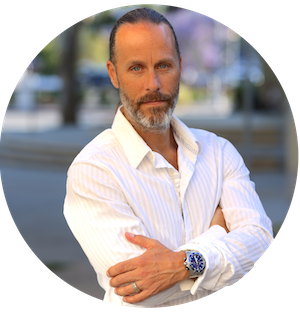
Kevin Anthony is a Certified Sexologist, Tantra Counselor, NLP Practitioner and a Sex, Love & Relationship coach. For over 10 years he has worked with men, women, and couples to have the relationships of their dreams, and the best sex of their lives! He is also the host of “The Love Lab Podcast”, creator of the popular YouTube channel Kevin Anthony Coaching, and creator of the popular online course series “Power and Mastery” as well as other online courses for both men and women.