Kevin Anthony 0:00
Welcome to the Love Lab podcast, the place to be for honest and real talk about relationships and sex, whether you’re a man or woman, single or a couple, this is the show for you. I am your host, Kevin Anthony, and I am here to help you have the relationship of your dreams and the best sex of your life.
Kevin Anthony 0:26
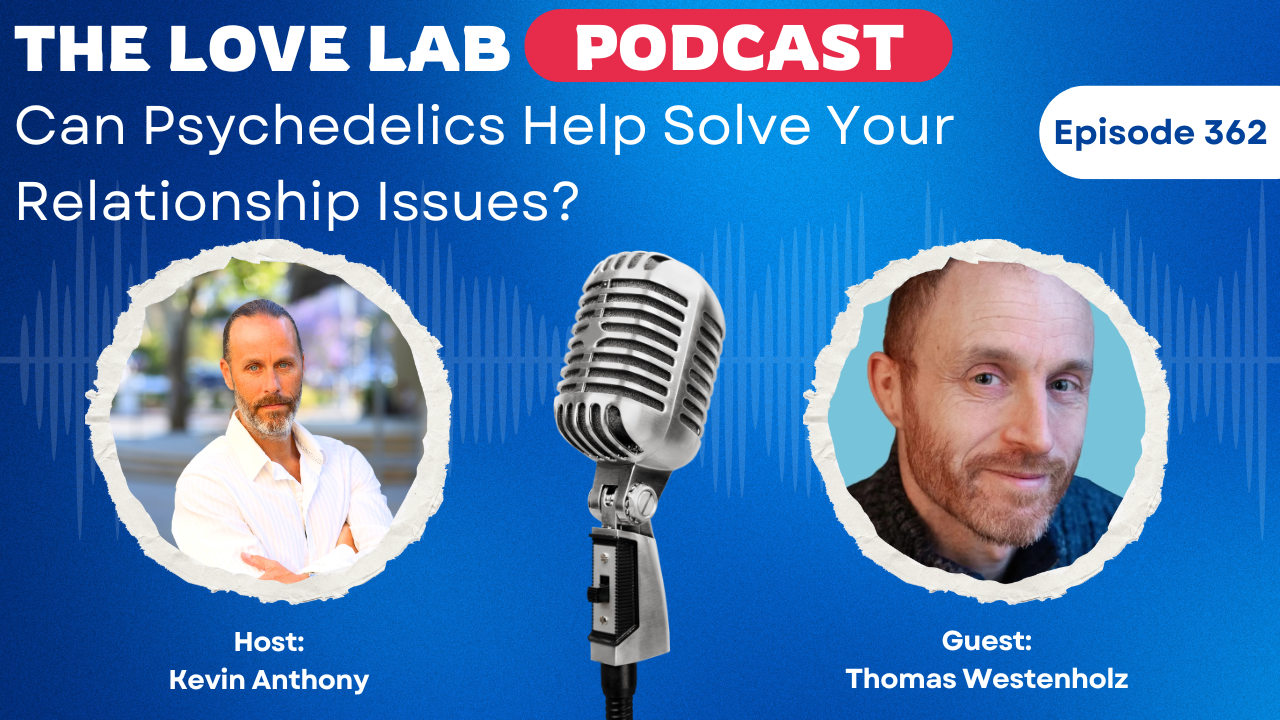
All right, welcome back to the Love Lab podcast. This is episode 362, and it is titled, Can psychedelics help solve your relationship issues? I think the title pretty much tells you what we’re going to talk about today. We’re going to be talking about the use of psychedelics in helping you with relationship challenges. We’re going to talk about what spec, what psychedelics specifically, because there are a lot of them, and they’re not all used in this manner. We’re going to talk about how to use them properly and what types of issues they might be helpful for. So I think it’s going to be a really fascinating conversation. I really enjoyed the pre-interview conversation I had with my guest today, and I really thought it was quite interesting, and I wanted to dive deeper, but I was like, no, no, we got to save it for the show. So, that’s what we’re going to talk about today. I have, of course, my own personal experiences with psychedelics, not necessarily in the same sense that we’ll be talking about today, but it does give me a little bit of insight into how they work, and that has led me to create some specific questions around potential pitfalls as well. So that’s what we’re going to talk about today.
Kevin Anthony 1:44
But before we get there, a word from my sponsors, ladies, did you know that the overwhelming majority of men consider receiving oral sex a must in their relationship? Well, of course you did, because men have been asking you for it your entire life. But do you feel confident in your ability to give great oral sex if you tend to avoid it because you don’t feel like you’re good at it, or if you feel that you are pretty good at it, but want to get even better, then my new blow job mastery course is for you. I have teamed up with the amazing coach, Reid Duong of Eterna Love, to bring you a practical and easy-to-follow course that is guaranteed to increase your confidence and skill when giving oral sex to your man. In this course, you will get all the secrets to mastering the art of oral sex with step-by-step instruction and multiple live demos. Go to https://www.sacredfemininearts.com/bjmastery. That is https://www.sacredfemininearts.com/bjmastery. There are some other programs for women at Sacred Feminine Arts, calm as well. By the way, some things that my wife Celine created. So those of you who’ve been listening for a long time and are familiar with Celine’s work, some of her women’s women-only programs are at that new website as well.
Kevin Anthony 2:59
And then lastly, Power and Mastery 3.0, which is the latest version of the popular men’s sexual mastery course. If you’re struggling with erectile dysfunction, premature ejaculation, or simply want to increase your skills in the bedroom, then power and mastery is for you join the exclusive club of men who have taken their sexual performance into their own hands and become sexual masters. Mastering your sexuality is a key component to becoming the man she has always dreamt of and craves. Don’t leave your sexual performance up to chance or the throw of the dice. Become a sexual master today by going to https://www.powerandmastery.com/. Now, with that program, I really recommend the sexual Mastery program. So there are three courses. There’s Power Up Your Erections, Master your ejaculation, and Sexual Mastery. If you purchase Sexual Mastery, you get the other two for free. So you get the whole bundle. So that is at https://www.powerandmastery.com/sexual-mastery. So go check that out.
Kevin Anthony 3:54
Okay, enough of the commercials already. Let’s get to the content. My guest today is Thomas Westenholz, and he is a couples therapist, ecstatic dance facilitator, and founder of Canova, a charity focused on well-being through movement, nature, and community. His work blends emotional depth with embodied practices to help people reconnect with themselves and others. Thomas also co-hosts the couples in focus podcast, sharing grounded insights on love, connection and emotional growth. Welcome to the show. Thomas.
Thomas Westenholz 4:29
Thank you, Kevin. It’s great to be here, and I’m excited about the conversations today.
Kevin Anthony 4:33
Awesome. Me too. All right, we’ve got to just dive right in, because when we say psychedelics, that could mean a lot of different things, and there are a lot of recreational psychedelics that could be included in that. I want to make sure that we’re really clear about what we’re talking about today. I don’t want people to walk away and think that all they have to do is go take some psychedelics on their own, and everything’s all going to be okay, right? Okay, so when we’re talking about psychedelics, used in this sense, right, used in conjunction with therapy, what psychedelics are we talking about? Which ones are primarily used?
Thomas Westenholz 5:12
So this is a really good question. I’m happy you bring it out, because there is a lot of misunderstanding in this field, both how they’re used, but also the different compounds, and certainly a mixture of certain compounds can be harmful, and also psychologically, people can cause harm if they don’t know what they’re doing. So today we are primarily talking about a compound called psilocybin, which is found in what most people refer to as magic mushrooms. And it’s something that interact with primarily, are serotonin receptors, which also, of course, is something that has been highly discussed in regards to depression, etc.
Thomas Westenholz 5:48
And then we’ll be talking a little bit about MDMA, which is slightly different, but also actually the main focus when we are talking about couples therapy. So those are the two will mainly focus on today. Of course, there’s other compounds that fall into the category of psychedelics. We have DMT, etc, but that’s not what we’ll be focused on, because something like DMT creates way too intense and powerful experiences to be something that really can be processed in there in a couple sessions, etc. So that’s not something that’s been a focus of research or use in this particular content.
Kevin Anthony 6:26
Great. I think that made it pretty clear for people listening which ones we’re going to be talking about. And of course, we’re going to dive into a little bit more specifically. So, for instance, why is MDMA used over some of the others? Why is that?
Thomas Westenholz 6:42
Yeah, so I think MDMA has quite a few unique properties. And of course, this was more known as ecstasy, a party drug that people would take, because when they went out, they would take it, and they would feel this enormous sense of love and affection, right? And a lot of their normal inhibition would go away, so it would feel really good, and it tells us also why it has some great potentials in a setting of couples therapy, or couples work, because primarily what it does is it lower the threshold of your amygdala, which is part of the fear response, and part of what makes it difficult, or what really makes it difficult to engage with another human being is when our threat detection system, meaning our fear, is online, and for whatever reason, what we’re interpreting is happening is a potential threat, so we mobilize and go into fight or flight or collapse or appeasement, right?
Thomas Westenholz 7:35
That people call one of these four behaviors, and in that it’s no longer possible to relate, because what happens is, when fear is online, empathy goes offline. Because empathy was not useful. If the bear was about to eat your children, you don’t need to feel empathy for the bear. You need to stab it with a spear. But that also means that biologically, we are designed in a way where they are not online at the same time, and to be able to relate intimately to another human being. We need empathy to be online. That means we need fear to be calm and more at rest. And MDMA does exactly that. And what it does at the same time is calming down fear, which is why people tend to feel this overall sense of awe and love towards everything around them, is basically means the disengagement of fear. Then, naturally, we start feeling that kind of sensation and those emotions.
Thomas Westenholz 8:24
And together with that, unlike many other psychedelics, it doesn’t take you into an alternate reality where you can no longer really fully relate and converse with the person that is there with you. And that’s quite essential if we’re talking about doing it in a relational way. A lot of psychedelics are taken in a way where the person goes on their own unique journey, their own unique trip, right? And often they’re just in their own world, and they’re not able to really converse or even have a meaningful shared reality, right? Because they might be seeing angels, they might be feeling connected to the trees, and the other person might be in their own visual imagery that doesn’t allow for a shared world, while MDMA still allow us to be here, cognitively online, have normal conversations, and be able to create a shared world, meaning it have great potential for for relational work, right in that capacity?
Kevin Anthony 9:20
Yeah, it’s really fascinating. And I love the way that you explained that really clear. I really liked the way that you articulated that, which is basically, it’s shutting down the fear response, so it’s taking you out of fight, flight, or freeze. And if anybody has ever tried to have a conversation with somebody that’s really in that space, really in fight, flight, or freeze, you know, there’s no logic, there’s no reasoning, right? That fear response is completely taken over. So, people will get that way in, you know, situations involving their relationship, in situations like, say, infidelity is a big one that will trigger people, right? Especially if they have past trauma from other relationships, and it will trigger that fight, flight, or freeze response. And so when you realize, if you’re trying to make any sort of real progress in moving through this situation, you’re not going to be able to do it if you’re always stuck in that fight, flight or freeze. Now sometimes, when it comes to, you know, therapy work, or, you know, just say, I’m coaching a, you know, couple, and they tend to have arguments like that.
Kevin Anthony 10:30
And one of these, you know, one of the, if not both, goes into that response. That’s where we’ll often say, like, take a time out. Right? Go, go, do you know, go meditate. Go do some breath work. Do something to calm your nervous system back down, so that you can then come together and have this discussion. However, for some people, and we’ll talk about this a little further on in the show, but for some people, that kind of stuff doesn’t cut it right, and so it takes a little something else. So I think that was really interesting. The fact that it shuts you, shuts down the fear response. The other thing that you shared that I think is really interesting and worth just pointing out again for the audience is that it doesn’t put you in a state where you’re so far out of reality that you can’t be present in the moment and still have a conversation. That is a pretty, I think, amazing combination that this substance can do, the fact that it can get you out of that, but still keep you present enough to have a conversation. That’s pretty amazing.
Thomas Westenholz 11:36
It is, and I think one part of the element is being able to still have a conversation. And I think that the other part is this, that it’s still possible to create a shared world, right? Because that’s a key component in us to people being able to relate. If we cannot have a shared world, then we’re no longer able to relate. And I always say to couples who come into couple therapy that a lot of what we’re actually trying to do, and I’m not going to go into attachment theory. I know you had plenty of that on the show, but essentially, what we are trying to do is to uncover each other’s maps, because internally, we have all created a map of the world based on different experiences that we had, of how we interpret different stimulation, and these maps are never going to be the same. And where we get into trouble is when we make presumptions based on our own map, or try to force our own map onto our partner, right?
Thomas Westenholz 12:27
That’s when we get into trouble and get into these cycles and patterns that attachment theory describes. So part of what this is really about, and psychedelics just speed up this journey, but the journey is essentially still the same, is to start understanding each other’s internal map at any point in time, right? Because it’s like if we’re driving, but I actually don’t really know where you’re driving, but we’re trying to get to the same destination. It’s going to be really messy, right? But if we somehow understand, Oh, you’re over here, you got stuck in the slum, and actually, you need me to come and pick you up right, and suddenly I’m able to relate again, because now we have a shared world. So that’s part of what it kind of allows us to do as well, which cannot disengage with most other psychedelics. And of course, we mentioned also psilocybin. And psilocybin is not so much being studied in couples therapy, but I have still seen how it can be very, very useful for the couples therapy, when the people individually go away and maybe do some therapeutic work with psilocybin. So we can, of course, touch on that later if you want.
Kevin Anthony 13:32
Yeah, well, we mentioned psilocybin early on, so let’s just talk about that a little bit now. So there is a pretty good difference between the two, and you’ve already sort of alluded to it, but talk a little bit more about it, because basically what you said is that MDMA is used when the couple is together, but psilocybin could be potentially useful for doing some work on your own. So talk a little bit about that. Why on your own, and how could it be helpful?
Thomas Westenholz 13:59
Yes, so I think psilocybin has been done in the right context. I just want to say this again, because we talked about it’s not the end and be. Also, maybe I should just start by kind of describing what the psychedelics actually do, and especially something like psilocybin and LSD, which is very similar to psilocybin, and how it impacts your brain. And essentially what it does is is what we call a neurological enhancer. And the reason I say that there’s been this false narrative that taking psychedelics is going to heal me, and that’s simply not true. What it does it’s create an amazing capacity for what we call neuroplasticity and neurogenesis, which means suddenly, the brain can much faster than a normal state, create new cells in the brain, and it can also create new connections. It basically means, imagine going back to a state of a child. This is why a child is so easily influenced by what happened. Is also why we protect them much more from different stimulation, right, than we do as an adult. Because the brain is very plastic. It absorbs things far, far more right, and forms these new connections much, much quicker.
Thomas Westenholz 15:06
And I think this is important to kind of say, because it also means that when we work with these components, we have to understand that all it does is it makes you be able to be much more influenced from what is going to happen, yeah, far, far more than you would in a normal state of mind. But it’s also why preparation and the setting, doing and being with people that you have a lot of trust and care with when you do it right, and choosing that environment carefully, and then making sure what happens afterwards, you don’t go straight back into your normal, stressful day to day activities, because then your brain will absorb that in a very high state of plasticity, right? Which is why you really need to plan the pre- doing and after. And then you kind of ask, what is it that psilocybin does that’s so unique? One of the incredible features of psilocybin, and as I said, LSD, very much does the similar and attached to the same receptors in the brain, is the fact that it allows something called a default mode network to shut down. And a default mode network is basically all the input and experiences that the brain has filtered into a construct of self in psychological terms. They would call it the ego, but essentially, it’s how you filter everything you say. Oh, I’m this attractive to other people, because that’s all the input my brain has had throughout life.
Thomas Westenholz 16:26
So you form a construct of self. The problem is that while this can help us navigate the world and make it easier to make decisions, it also doesn’t have flexibility, and it’s very difficult to change. And often what happened when people get stuck, whether it’s their relationship or individually, they feel stuck, then often, that’s because the default mode network is keeping them stuck in this narrative of who they are, what they’re meant to do, how other people perceive them, and what psilocybin can do, especially at higher doses, is we actually see it shuts down that part of the brain, and that suddenly allow other parts of the brain that were never allowed to speak to each other to suddenly communicate. And that means you can now form completely new perceptions, both of the world around you, but also yourself, which of course, can be hugely beneficial in any kind of therapeutic process, right? Essentially, what we are trying to do in therapy is to expand the flexibility of the mind. Right? They come in with some kind of dysfunction that doesn’t have flexibility, and there’s stock there, and we are trying to expand, and there’s nothing really that can do that quicker than a compound like LSD or psilocybin, as we discussed.
Kevin Anthony 17:43
Yeah. And why is it important, you know, that this be used, maybe doing solo work rather than together? What’s the difference between that and the use of MDMA?
Thomas Westenholz 17:53
Yeah, I think the big difference is, for anybody who has experienced it and taken psilocybin, or magic mushrooms, as most people would call it is the fact that you often, at higher doses, disengage into your own inner world. So it’s very much an internal experience. It’s not an outer, relatable experience in the moment when you’re having it. And often, what it will do is it will also increase and enhance emotional meaning if you had a lot of emotion suppressed throughout your life, psilocybin will make you feel more, unlike antidepressants that numb all emotion. Hence why people say I feel a bit less pain, but I often also just feel more numb.
Thomas Westenholz 18:32
Psilocybin makes you feel a lot more right, but it means it’s often an internal experience where you have to be fully present with yourself, and you’re not able to relate in that moment to another human being. And that means it can be beneficial afterwards, through the new flexibility and expansion of your sense of self that you’ve created, which I’ve seen in couples therapy, when people do this and then come back, how we can really often shortcut, you know, six months of work just from people having done that, but purely because they’re not able to be in a relational space. It’s not helpful to do in a couple sessions. I think it’s a psychedelic journey.
Kevin Anthony 19:14
I completely agree with that. This is where I’ll talk. This has nothing to do with therapy whatsoever, but just my own personal experience with substances like this. There are many times when I was younger where people would be like, let’s take some mushrooms and go to this whatever, go to the concert, or go to this club or and I’m like, I don’t understand how you do that, because if I take that stuff, I just want to go lay down in a corner by myself. And I don’t want to function around other people on those things. So I always found it strange that people were like, Let’s take some mushrooms and go do whatever. I’m like, I’m gonna just go lie down over there and stare up at the sky in the trees for the next four hours.
Thomas Westenholz 19:57
And you know you’re saying something important, because. The majority of people who get psychological harm through taking a psychedelic substance is because they did it in an unsafe environment, a perfect example of what you said. Pretty much everyone I’ve ever met who had some kind of disruptive experience where they suddenly had emotional or different issues afterwards, psychological issues was because they’d done it in an unsafe environment, like a festival at a party, or with random, you know, 10 random people at a house party, and suddenly their nervous system got overwhelmed and scared, right? And because they were again, in an environment where they weren’t that safe, attachment, it became very disruptive, because, again, we have to remember it’s not a healing component in itself. It’s an expansive component that will allow you to feel more of anything, and it also means that if suddenly you feel unsafe, you’re going to feel that a lot, lot more intensely. Hence, again, why the preparation is so important, and not just to do it at random with strangers at a concert or a party or whatever it is.
Kevin Anthony 21:04
Yeah, and that makes total sense the way you explain that. So, you know, I am not an expert on psychedelics at all. I know a little bit here. I’ve had my personal experiences, but I’ve never really taken the time to sit down and, like, study how they work. But when I listen to you explain how they work, I go that makes total sense. That is exactly what I have personally experienced in my life. And the way you explain the fact that when you’re on something like psilocybin, you know, it makes all those inputs like more intense. So yeah, of course, if you’re on that and you’re out in a club or a festival or something, and something happens, you’re going to feel that so much more intensely, right? And you’re potentially, you can tell me if you agree with this or not, but it seems to me that you might be potentially, sort of implanting that negative experience deeper into your psyche as a result, and that could be really harmful.
Thomas Westenholz 22:04
And you absolutely are, because in that moment, the brain is exploding with new connections. And even if you scan the brain, you will see the enormous system of firing. When a brain on LSD or psilocybin is scanned, you will see there’s one part, the default mode network shut down, but the other parts just flower up and explode into activity. And it’s almost like taking something like psilocybin creates a hyperconnectivity. It’s almost like we know we have all these defenses, right, where we are brains filter out things. We detect threats. We have all these ways to engage and filter out the world, right? And all the things that’re happening now, you’re basically turning up the dial of connectivity all the way up to 10, right to max, which is why you have to be so careful what you are around in that moment. Right?
Thomas Westenholz 22:56
It’s very, very unwise to be in an environment where you don’t know the variables where somebody might suddenly go crazy and start screaming, or you suddenly might perceiving hostility, because you’re going to feel that instead of at a normal two, when your brain was filtering out all this, you’re going to feel that at a 10. And as you said, it’s going to be integrated even more, right? So this is why I always say to people who come and say, Oh, I’m thinking about doing this. I said, that’s great. If you want to do this, don’t rush it. Please take the time to sit down and plan. Be aware. What is it I want to do with this? What do I want to achieve? Maybe journal a bit beforehand, right? Plan. What’s the environment I’m going to be in? Or maybe I could be in a place for nature where I can get calm if suddenly I get stressed, right? Who do I want to be there to support me? Somebody I really trust would be a very good idea, right? Somebody who knows how to calm me down. What do I do if I get too stressed? There are ways I know I can bring myself down by putting my hands in cold water or whatever it might be.
Thomas Westenholz 23:59
And what am I gonna do afterwards, when I know my brain had this experience and it’s highly impacted by maybe watching less news, maybe doing less of the things that bring you anxiety. Maybe spend less time with people that tend to bring you stress, right and make sure you do a lot of the things that you know tend to nurture you spend more time with the people that feels really safe, because anything you input into your system in the weeks or months after will, as you said, be integrated far more significantly, or almost. You can almost compare it for two weeks to two months as having a brain that’s back in the state of a child, meaning, act the same way you would if you’re dealing with a child. Make sure you really control the input, and you don’t overstimulate it with anxious input.
Kevin Anthony 24:50
This is such a huge point, you know, as a coach, and I’m sure as a, you know, a therapist, it’s the same. It’s like when we’re working with somebody, the last thing we want to do is trigger them deeper or make their issue worse, right? And so I don’t specifically deal with clients who are experiencing trauma, like that’s not my area of specialty. But you can’t be a coach and work with people around sexuality and relationships without, inevitably, from time to time, running into people who have some pretty deep-seated trauma. There are things, of course, that we can do to work on that. And my biggest concern always is, no matter what we do, we can’t re-trigger it and make it worse, right? That’s always a concern, always making sure that we’re not re-triggering it and making it worse. And so I just want, I want to kind of say that, because it’s so important for people to understand, if they’re listening to this and they’re going, Oh, this might be a good idea, please make sure that you do it properly, because the last thing you want to do is make your situation worse, right?
Thomas Westenholz 26:01
Yes. And you know, I think, as you’re saying this, what kind of popped into my mind, and I know I don’t want to stray too far away from the psychedelic topic, but at the core of human existence, and also at the core of well being, but also dysfunction, is actually a really, really simple concept, which is what I call our internal compass, and the way our brain is structured, you can say we have three different ways of processing what’s coming in. One is the one we’re all very familiar with, because it’s very focused on in our society, cognition, thought, logic, right? And that’s what’s cultivated, that’s what’s valued. So most of us are quite familiar with that, and it’s what we tend to go to as our comfort, right?
Thomas Westenholz 26:44
And men, more so often than women, go to their logic, right? We want to problem-solve. That’s where we feel comfortable. That’s where we’ve been valued our whole life. And then we have the emotional system. And often you hear people talk about, oh, there’s good emotions and there’s bad emotions. There are these ones I want to feel. And these ones I don’t want to, yeah, I want to avoid them, whether it’s grief or anger. But actually, I think if we start understanding biologically why we have emotions, we relate to it differently, because emotions is a compass, and they were all biologically developed to bring you back on course. So let’s take anger as an example. Anger was biologically developed for you to stop something that’s harmful for your organism, and anger is a mobilizing energy that would allow you to stop that, yeah, to put a force in to push against. So that means ignoring your anger is actually very harmful, because the longer you do that, the more you stay off course, right? Sensation is the same. If you’re cold, put on a jacket or go indoors; if you ignore that, you’re gonna start shaking, eventually, you get sick, right?
Thomas Westenholz 27:47
So we have these free systems, sensations, emotions, and logic. And actually, this is a beautiful, amazing biological organism designed to constantly bring you back on course as your ships start to drift, of course. Oh, the problem is, when we have learned, for various reasons, to ignore this system, right? And that’s what we call trauma. Trauma is essentially learned that we have to ignore this internal compass. Maybe we had to care, take our parents. Maybe we had two people, please. Maybe we had to suppress it because it felt too overwhelming as a child for different reasons, we learn to ignore this compass, and that’s pretty much all dysfunction, anxiety, and depression. It all comes back to the people are no longer listening, and eventually the organism has to turn up the signal so loud that you have to listen, even if it has to make you physically sick and collapse, right?
Thomas Westenholz 28:42
And again, this is where psilocybin, or psychedelics, come in as very useful. Which is why I mentioned this compass? Because often it forces you to come back and notice these signals again, that you have found all these different strategies to avoid, whether it’s smoking, drinking, being on Netflix, whatever it is, right? We have all these strategies to ignore the compass when we don’t think it feels nice, and psilocybin or psychedelics forces us back to listen to that compass, which is actually what we need to come back and balance again.
Kevin Anthony 29:19
I love that you brought up the compass, you know, my partner also does coaching work, and she works with, you know, but people are calling these days, you know, HSPs, highly sensitive people. So this, this is a topic of conversation that comes up with us a lot, because a lot of what she does is really helping people get that sense of the term that we often use is attunement, right? Like they get that sense of attunement back, which is exactly what you’re saying, which is learning how to listen to and trust that inner compass. So yeah, absolutely relevant to the discussion. And I like the way that you describe that, because I think it was really clear for people to understand how that sort of works. Works and how the two work together. So we’re about halfway through the show. I’m going to pause for a break, and when we come back, I want to talk about what types of issues, when it comes specifically to relationships that this might be beneficial for. I want to talk about, you know, you’ve mentioned a few pieces here and there, but I want to talk a little bit more about the proper part. The proper planning and the aftercare and some of the details, around you know how to really do this properly. So we’ll do that just on the other side of this short break.
Kevin Anthony 30:33
Are you a couple? Are your relationship and sex life where you want them to be? Are there changes you would like to make, but just don’t know how? Maybe you think there is nothing that can be done if you are not 100% happy with where your relationship or sex life is, then get help today and change your life. Go to https://www.kevinanthonycoaching.com/couples/ and schedule a strategy. Call with me today so we can map out a strategy to get you where you want to be, so you can have it all your way. Go to https://www.kevinanthonycoaching.com/couples/ and book your strategy call today. There is so, so much that we can do to get your relationship and sex life back on track. And I have a huge range of tools available at my disposal, not only that I personally use, but also that I can recommend to you things like we are talking about today. While I don’t personally do that, I can have resources such as Thomas to recommend to you. So there’s a lot that we can do. So check that out. https://www.kevinanthonycoaching.com/couples/.
Kevin Anthony 31:36
Okay, so we’ve been talking a lot about the substances, how they work with your brain and all of it. I mean, it’s fascinating, by the way, and I think you did an amazing job of really making it easy to understand for people. Let’s, let’s start to sort of land the ship a little bit. In other words, let’s bring it a little bit closer to the topic of relationships. What types of issues that people are experiencing in their relationships might this therapy be good for?
Thomas Westenholz 32:09
Yeah, I think that’s a really good question, and I don’t want to touch too much on that attachment, but I can’t fully avoid it. So I think what we tend to see is that the places where it can be really helpful is when people have got to a place of stuckness. And stuckness basically means that there’s no longer, let’s call it emotional capital. So you know how we have a bank account where we put money in and we take money out, but so do we also in a relationship have an emotional capital. Let’s call it an emotional bank account. And every time we have an experience together that is bonding, we are kind of making an emotional deposit, right? And every time we have fractures, conflict, tensions, we are drawing out.
Thomas Westenholz 32:54
And what we tend to see is when people have it’s not so much what the issue is. It’s more when they have gone with it for so long that they have been drawing out and drawing out much, much more than they have been making capital investments, emotional investments. We are an overdraft, and at some point, we get in so many overdrafts that we can’t even pay the emotional interest anymore. And that means we get stuck, because there’s nothing to get the car moving again. We’re just stuck in the middle of nowhere, right? And it’s out of petrol, and there’s nowhere to move. So that means we can’t really get it back in motion, because there isn’t the capital, the goodwill, or whatever we choose to call it, to get it back in motion. That’s one place where it can be very, very beneficial. Another place where I would say it could be really beneficial is when we have got to a stage where both people’s threat detection systems are pretty much online every time they interact. And what that means is that pretty much every time they have an interaction, they are already they have. We call it a predictive model. So whenever something occurs, our brains start trying to understand predictable models, right?
Thomas Westenholz 34:02
That’s how we can understand and feel safer in the world. But it also means that we have got a predictable model. Let’s say, every time I ask my partner for affection, I’m gonna get rejected. That means, even before I ask, the amygdala, the fear response is already going to be online, right? Anticipating a fight, A fearful, you know, a painful response, and that means now engagement becomes almost impossible when both people are constantly in fearful anticipation of the other. And it’s actually relevant, what the issue is about? It could be about childcare, it could be about sex, it could be about anything. The point is that they’re both stuck in a fearful anticipation, and their prediction is that I’m gonna get harmed. Yeah, and from that place, it becomes pretty much impossible to get any kind of engagement, and really difficult, even with attachment theory and traditional couples therapy, right, because you will see that part of you know. So what a good EFT or attachment therapist will do is to try and recreate responsiveness where there’s anticipation. When I open myself up and I’m open, authentic, and vulnerable, I can get a positive response, and that starts building a positive anticipation.
Thomas Westenholz 35:15
But if we can’t even get there because both people are anticipating hostility or rejection all the time, then we can’t restart that new cycle, right? That start creating a new positive anticipation from my partner, and that’s where, again, it can be really helpful, because what happened again with MDMA is we shut down that anticipation of hostility, of hurt, at least for a little while, and in that moment, it allows us to re engage with the expectation of positive outcome that sometimes become impossible to do in a normal state of mind, because the brain has become what we call hyper vigilant. It’s a bit like in trauma, right? If you have a soldier with PTSD and they hear a bang, they go, Ah, that’s a nervous system that has become hyper vigilant to fret. But that can also happen in a relationship where the second the husband comes home, the wife already anticipates he’s going to go away and not be there, right?
Thomas Westenholz 36:11
So she’s already having adrenaline and pumped up and ready to shout at him and criticize him. He’s already anticipating, oh, I’m going to come home and be criticized and shouted at, right? So he is already, I’m not going to engage, because this is a hostile environment. I’m going to run to my room. And so they get stuck in this same cycle, right? And because they have a hostile anticipation or a fear of rejection, right, we can’t re-engage. And this is where, as I said, shutting down that fear response suddenly allows the brain to possibly anticipate something else, maybe even a positive or loving or kind response, right? Which makes it possible to then reconstruct these moments we’re trying to create of asking for something and getting a response to it. That’s That’s attunement, like like we talked about before, that’s attuned and responsive, and that tells the nervous system, ah, this felt safe. And all we really do need to do is give them a few of these experiences, and then the nervous system startsto trust. Maybe this is possible. Maybe I can take a risk to actually not criticize him, but say, hey, I really need a hug when you come home from work. And maybe he can take the risk to say, actually, it’s not that I don’t want to be with you, but it’s that your criticism is so devastating for me that I have to run away, and then we start changing the dynamic into a new cycle.
Kevin Anthony 37:32
Yeah, that’s amazing. I’m working with some clients right now. They’re a couple, and the woman in the couple has had some pretty deep trauma. She’s experienced some pretty difficult things, but she’s done a lot of work on it, and she’s really come a long way. But one of the things that’s come up in the work that we’ve been doing is this idea that there’s something still there that’s stuck. And that’s the word that made me think about this particular client that you were describing, when you just get stuck in a place, there is something about a particular traumatic experience that is just stuck, and it’s just no matter what she’s done so far, she can’t get it to move. So what we worked on recently was I basically was giving her a list of alternative therapies and things that might be able to help her get unstuck. You know, somatic therapy was one of them, but psychedelic-assisted therapy was another one. And what’s amazing is, you know, to me, sometimes it seems kind of simple, like, what did I really do for you?
Kevin Anthony 38:34
All I really did for you today was give you some possibilities, some opportunities. But when you realize that a lot of people are not even aware that these things are possibilities, that they exist, or that they could be used in this fashion. It was like a big light bulb went off for her, and she was like, oh, you know what? Somebody else actually mentioned that to me once before, and that might actually be the thing. So she hasn’t embarked on that journey yet, but just the idea that now she’s got resources, and I really hope that if she does do it, she comes back and tells me the results, because I would love to know how that actually worked out for but the main point simply being, is that stuckness, right, like that, is something that could help you when you get to that place, when you’ve done all the therapy, when you’ve done all the other things in the coaching and all that, and you’re still stuck in that place. This is something that might be able to help you. That’s it. There’s another piece that you brought up that I really want to talk about also. I forgot the exact words that you said, but basically, you said something along the lines of, you know it, it turns that off at least temporarily, right?
Kevin Anthony 39:48
And allows you to see that there are other possibilities. This is something that has been sort of a big pet peeve of mine when it comes to psychedelic use for a long time. So you. I really want us to talk about it for just a moment. And that is what I have seen, you know, I live in Southern California. There’s like a shaman in town every other week. You know, there was a point in time, a few years back, where I was getting invited to an Ayahuasca ceremony or San Pedro ceremony or something, literally every weekend. Like, if I wanted to, I could go sit in one every weekend, like that’s how many invitations were coming in to go to such things. But what I had noticed is that there were a lot of people who literally were going every single weekend, over and over and over again. And my point of view on that always was, first of all, you don’t have time to integrate any of what you’re learning with that. And then I used to use this analogy. I used to say, you know these substances, my analogy was, they like, kick the door open, allow you to see what’s behind the door, but then when you’re done, the door closes again, and that’s when the real work starts, because that’s why you have to figure out, how do I get back there on my own without the need of the substance all the time? And I’m wondering what your take on that is.
Thomas Westenholz 41:09
Well, I think you’re spot on. And actually, I think what you’re describing essentially, there’s people going back again and again to do another and another and another retreat, yeah, is a perfect example of the complete lack of proper preparation, of proper setting, and proper integration, yeah. And this is why again, and I cannot say it enough as psychedelics, on its own, is only a neurological enhancer. It does not automatically heal. So, just going back and again and again, taking psychedelics isn’t suddenly going to make all your issues go away. It’s the fact that it allows a possibility that with the right input, we can rewire your brain in an exceptional, fast way and in a way we simply can’t do without psychedelics. And this is why doing it in this way, and this is what all the research have found, that the key component, yes, the psychedelics allow change to happen much, much faster, and especially this Default Node, where network, the sense of identity shutting down, allow change and flexibility and new possibilities in a way that we can’t do in other ways, right, but it still only works with the right preparation, with the right setting and with the right integration.
Thomas Westenholz 42:33
And you know, a good example, I can mention this guy that I knew, who did this in a way where it worked really, really well. And he can be a good example of why it worked really well, because he had been an alcoholic for 20 years. He has lived with anxiety disorder since he was a small, young child. And I worked with him in therapy on this, right? And what he kind of did is he said, Hey, I want to try and do this right. And I said, well, at least then do it safely, right, prepare properly. So we talked a lot about what these attachment wounds that had happened were, right? How was it to have had an alcoholic mother who threatened to take her own life, right? And how that had brought on this enormous sense of anxiety of never knowing, is mom suddenly going to be dead, and feeling the guilt and shame, is it my fault, right, and having to live with that terror. So if he had a good understanding of what my attachment trauma was, then you can start planning for, okay, how do we engage with that during the experience? Right?
Thomas Westenholz 43:31
And the way you could do that was he could look at all the pictures of his mom that would reignite that. Of course, that can also be very, very difficult and bring up very difficult emotions. So we have also talked about, what were some safe places that you have, and then we found pictures of safe memories and safe people that he also that we could also look at to try and calm down again. We’ve talked about, you know, what was needed for a safe person to be there? He said, I really want my wife there. Yes, he’s also a therapist, and she’s really well trained, and she understands psychedelics, so she could be there too, and in the moment of distress, when he was curled up, when it was painful for him and he was so overwhelming, he could have a re experiencing of a new attachment that felt to him like the Embrace he always wanted from his mother, when his wife came in and lay in bed and just held him, and it gave the opportunity of what we call reenactment, a re experiencing, but now in a completely different context, and where you actually get the response and nervous system always craved but never got.
Thomas Westenholz 44:37
But this takes a lot of planning, and it means everybody needs to know what to do at what moment, right it needs the support cast to be briefed and planned, etc, etc. So it’s not something that can just happen by you going, and especially not on a retreat where people don’t know this, and they’re also not going to be with you afterwards. So it’s important that people who are there doing the experience are also there. You in the journey afterwards as part of the integration, because we know that the key component in change is a felt sense of safety. So that means we also know there have to be safety in the relationship for any change to actually happen. And there isn’t, if you go to some random shaman somewhere that you’ve never met before, right? And you also don’t have them there afterwards, so there’s no new attachment being formed. But if we can do that, like this guy did while the brain is firing at full speed and integrating that fully into the whole organism, bodily, somatically, emotionally, but also logically, right?
Thomas Westenholz 45:37
And the logic we often do afterwards, but in the moment, they get the emotional and embodied experience of this, which is actually the key component to long-term change. It’s not logical. It’s felt experience that we know that changes people long term, and few things will be stronger felt experience than a psilocybin or psychedelic experience, right? And then afterwards, you then again, in this example, he had integrative therapy right with me, and he obviously had his wife still there, who was part of the journey to support. They would do daily practices. He didn’t do any work. And after two sessions, he hasn’t touched alcohol again, and this is several years ago, and he came into my therapy office, and he cried. And I said, What are your tears about? And he said, This is how you experience a world. As he was looking around, he said, I don’t feel the fear anymore. There was always fear. And he said, It’s not I feel calm when I look around. And of course, it was quite overwhelming for him, not having had that sensation in 30-plus years, right?
Thomas Westenholz 46:44
And this is an example, but I give this example to say the reason that it worked was not the compound in itself. It was all the preparation. It was knowing his triggers. It was knowing his comfort points that would calm him down. It would knowing what people he trusted and make sure they were there doing and after, it was making sure that there were not stress factors in his life afterwards, but that instead, he was surrounded by nurturing events, people that would constantly continue to reintegrate this new thing in his nervous system, right that we have about two weeks to two months approximately, of repeating and really wiring in a way that we just can’t do in any other way. And it’s a good example of how it goes when it’s done right. He didn’t want to do any more psilocybin. He had no interest in doing it again, and when done right, people don’t have any interest. You will also find in the research that’s being done at different universities around the world, their participants have no interest in doing it again. Actually, a lot of them said, No, thank you. I don’t need to do that again for quite a while, if ever, because that was quite intense, right? And they have kind of got the realization they needed and the right integration.
Kevin Anthony 47:59
Yeah, that was always my experience with it, you know. Like I mentioned earlier, I was getting invitations all the time. And in the thing that I would always say to people is, you know, I’m good, like I don’t feel a need to do that again, you know. And my advice to people always was, and still is, you know, whether you, I of course, recommend that you go see a skilled practitioner such as yourself. But even if you’re gonna go, do you know, with a local shaman, or whatever, my advice was always, You have to feel the calling right, like you have to feel like this is something I need to do now, not I should do it because somebody told me so, or because it’s here in town, or whatever. So it’s that idea of when you know that this is when you’re sort of subconscious, feels that this is something you need to do, you know, and otherwise, like, once you’ve accomplished what you need to accomplish with it, you won’t get that feeling right. And if you have at least a decent attunement, you’ll be able to hear that and listen to it.
Thomas Westenholz 49:05
Absolutely, and you know, I think even when you mentioned people going back again and again and again, that in itself is a trauma response, because you can, even I can compare it somehow to somebody who’s doing self-harm. Somebody doing self-harm rarely does it because they want to kill themselves. They often do it because they feel so out of their body, and they just want to feel something and cutting themselves at least temporarily. It doesn’t solve the trauma, but allows them to feel back in their body for a little bit, to feel something, right? And that’s often a very misunderstood concept, but actually, you can say to some extent, there’s similarities here in the person who go back again and again, because it’s I just need a moment where I can feel something, but I’m not actually making constant fundamental changes, hence why I have to go back again and again. It’s like just another way of trying to feel something for a little bit, but nothing actually. Heals just like it doesn’t through cutting yourself right, it doesn’t heal. It just allows you for a little moment to feel some of those things that are so shot away that you can’t really feel right, but it doesn’t fundamentally change a heel unless you do it properly.
Kevin Anthony 50:15
Yeah, I completely agree with you. I think you are right on about both of those scenarios, about, you know, people, either, you know, just wanting to feel something, either through the medicine, or through, you know, bodily harm. I think that is completely right on, and I think that’s a point that a lot of people miss, especially when it comes to the psychedelics, because I think they get tell me what you think about this, but I think they often get lumped in with other things like other drugs or other alcohol, whose intent is to really numb out, right? And so people will, oh, they’re going because they just want to numb out, but, but what you’re suggesting here is actually quite the opposite. It’s that they want to actually finally feel something, rather than be numb all the time.
Thomas Westenholz 50:59
Yes, right? And, you know, you’re spot on. And you can say, pretty much, most of our strategies when our nervous system is overwhelmed is numbing out. Whether it’s going on social media all the time, it’s numbing out. I don’t have to sense what’s happening internally, as long as I’m scrolling right. Whether it’s alcohol, whether it’s a drug, whether it’s excessive psychedelics, it doesn’t matter. It’s essentially the same concept. It’s trying, as you say, to numb out and not have to feel too much of this discomfort, right? And what we’re saying is actually part of what it is to actually come back to a more balanced place, and actually working with the trauma is to feel it and allow to feel it, but in a safe environment. I’m not saying do this on your own. If it’s something that’s overwhelming, hence why we say, have a therapist, have a partner, have other people that can co-support your nervous system.
Thomas Westenholz 51:51
Because the reason we don’t look at the trauma is that our organism already knows. I don’t have the nervous system capacity to hold this. So this is why you can say it’s wise that we suppress it and numb it out, because the organism already knows I don’t have the capacity myself, meaning, if I open up that box, I’m gonna get go into overwhelm, right? We call it outside the window of tolerance. But this is exactly why, when you do it with other people, you have multiple nervous systems to tap on. You have people who can help you co-regulate, especially if they’re close to you and know what works well for you. And that means in the period of time, of course, not all the time, but in the period of time when you’re doing the psychedelic journey, you can borrow from their nervous system additional resources that allow you to have far more capacity, so you can actually face this.
Thomas Westenholz 52:40
But this is also why, again, going to the shaman of these random 10 people you’re lying with that you’ve never met before, you’re playing a huge risk. Yeah, it might be beneficial, and I know people who had beneficial journeys in that way, but it could also be really harmful. You’re playing Russian Roulette here, right? While if you do it in a safe environment, we know that there’s a huge, huge percentage that have had positive outcomes, and the percentage that end up having difficult experiences afterwards are extremely, extremely low.
Kevin Anthony 53:11
Yeah, so we’ve only got a few minutes left here. I want to talk just a little bit more about the importance of the aftercare. Yeah, you’ve touched on it a little bit already, but let’s dive a little bit deeper. What are some of the reasons why aftercare is so important, and what types of aftercare should people be doing?
Thomas Westenholz 53:37
So a great question. So the aftercare is so important because we have this neuroplasticity we talked about, where it’s firing and creating new connections, meaning whatever we do will impact the nervous system much more and long term, right? And that means if we go back to a stressful environment with lots of stress factors, with all the fractured attachment we might have, then what is eventually going to happen is that is going to be integrated, so part of the aftercare, I think I have a few different components I would look at, right? So I think there is nature so often, what psilocybin and psychedelics do is connect us more to our roots, our ground, which is, we are a product of nature, right?
Thomas Westenholz 54:22
Even though we are very disconnected in the world we live in from nature, behind these walls, staring at these screens, we are a product of nature. And there’s a lot of evidence and research that nature in itself is calming and healing, right? In Japan, they prescribe forest bathing for people with antidepressants or who have depression, as an antidepressant treatment, and it’s really, really effective, right? So there’s something inherent in calming about being in nature. Go lie on the grass, go for a hike, go wherever, hug a tree. I think people do that a lot in California, and that’s actually very beneficial in so many ways, right? And research. Validate this. So spending time in nature is a really key component, right? It can be really beneficial to start journaling down some of these things that have happened, to be able to not just have it internally, but externalize it, right?
Thomas Westenholz 55:13
And then you can kind of view it from a distance. I would say social contacts is a key component. So really, really plan who you spend time with. Ask yourself, who are the people who make me feel calm and nurtured? Those are the people you want to spend time with. Who are the people who make me feel quite stressed and dysregulated? Those are the people you don’t want to spend time with, at least in the following months afterwards, reduce contact with them. That’s a social contact piece, right? So we have natural social contact. Then look at Touch. Touch is a key component, also to create safety. If you think about a newborn baby, what is the very first way they learn to feel safe in this world? They’re being held, it’s through touch. They don’t have any logic, they have no language, right? The very first way our nervous system learn to regulate and feel safe is through touch. So it’s so ingrained. And of course, I realize some people with trauma have learned that touch is dangerous, right?
Thomas Westenholz 56:14
But this is again why I say do this with safe people, people that you trust, people that don’t feel dangerous, and then we can start having a new integration of touch. And if you feel safe with touch, it’s still very calming and soothing. So get a lot of touch from people that you trust that feel safe, because that will also integrate into your nervous system and tell the body, this is safe. It’s safe to be in this body, right? It’s safe to be here. The world feels safe. So, and the last part, I would say, is exercise. Make sure you move. Make sure you get a lot of movement in there. And whether it’s hiking, running, or swimming, it doesn’t matter. But integrate movement, right? Because it’s one of the best regulators of stress that we have available to us. And the reason we have a body and not just the head sitting on a stick is that we were meant to move. We often forget this, because we sit on these chairs there the screen, then we go to the sofa. We forgot that the reason, biologically, we got this body is that it was meant to move right.
Thomas Westenholz 57:14
And so part of any reintegration is really having movement. What I would do when I did my own journey was go on a lot of hikes, exercise in nature, nature element. And then I would sit and journal or paint out my experience, to have some creative outlet for what I had experienced. And then I would make sure to have a lot of social contact and also get a lot of touch. And these elements together made sure that there was a really smooth integration and at the same time blocking out all things. I know there was big stress factors for me, and that allowed a really safe integration. That meant that, and I’ve only had two experiences myself, but they were both so profound and long-lasting that I have no need, you know, to go out and have more because I did it in this way.
Kevin Anthony 58:02
Yeah, yeah, absolutely. What are maybe some things you shouldn’t do in the aftercare, because you gave us all the things you should do, which is great, and I’m glad that you started with that. But are there any things people should really make sure they avoid in the aftercare phase?
Thomas Westenholz 58:18
Yeah, absolutely. So of course, taking further psychedelics, also taking drugs, and taking alcohol. Avoid spending time on social media, because social media primes your dopamine system and addiction system by constantly giving you a small boost of dopamine, which makes the brain have less attention, right? Hence, the attention-deficit disorder that most people are being diagnosed with today, which is very much a created condition, right? For what we do? So try to not do this. Try to spend more time in stillness, in slowness, and to not use any other compounds that kind of a stimulants, right? Whether it’s coffee, alcohol, whatever it might be, any of these stimulating compounds that we tend to use, I will try and at least numb down to the bare minimum and just be again, aware that anything you do impacts yourself more. We should not spend time, as I said, in a stressful environment.
Thomas Westenholz 59:15
So be really mindful, especially not being around people that are very stressful for you, right? Just say to them, Hey, for a couple of months, I’m going to be away, so I won’t be in contact very much, and just take a time out. If work is really stressful, see if you can reduce it a bit, right? Or maybe get a little bit of leave for a couple of weeks. It can also be really, really beneficial. So take away all the things that make that knot in your belly calm, right? Or that tension in your chest or your throat, everything that creates a stress response in your body, right? And it’s good beforehand to write that down, get rid of all those, at least for a while.
Kevin Anthony 59:54
Yeah, I remember. You’re just reminding me of a funny story. I remember doing an iOS. A journey years ago, and I was still working in corporate, and I had this big, really highly stressful corporate job. And I did, I came over on a Friday or Saturday, but I took the Monday off, at least I was smart enough to do that. But I remember, it’s now, you know, two or three days later, and I remember sitting there at my desk in my office, going, what the fuck am I doing here? I’m like, I can’t do this. I had to figure out a way to make it happen. But I was just like, oh my god, I should not be here, right?
Thomas Westenholz 1:00:36
Yeah, but what a beautiful realization, right? Because that’s you listening to yourself and kind of realizing, and I would say one, one last thing you said, what not to do. Don’t make any major life decisions in at least. I would say three months after having done this, because you need to come back and stabilize first. And often, what we can see is that people go off and do some journey, maybe on their own, and they have this big experience where they feel they are whatever, an angel or a different being, and they are called to go live in nature. And that’s fine if you still feel that way after six months, but don’t come straight back and next week, break up with your partner, leave the kids to go live in the forest, because that’s what you experience. Wait until things have calmed, the neuroplasticity has come down, and you had a chance to integrate, then you’ll have more clarity about what it actually is that you want long-term. So don’t make any major life decisions right after taking a psychedelic.
Kevin Anthony 1:01:34
That might be the most important advice you’ve just given. I have literally watched people do those exact things that you said, another thing, and we talked about this in the pre-interview that I’ve seen, too, is outside of the clinical setting that you’re describing. When I’ve watched people go and do these out in ceremonies and stuff. They’re single, and then they meet somebody, right? And they’re in this huge, open heart space, and they’re the most amazing person ever, and they dive in fast and deep, right? And then, you know, three months, six months, whatever it is down the road, when that starts shifting, all of a sudden, they end up in a really dysfunctional relationship
Thomas Westenholz 1:02:14
That is spot on. And that’s why I would even say, while often, the setting I’m talking about often, is more individual, right? With a therapist, but if people do it in these settings where there’s other people, then again, you’re spot on. Be mindful that what you’re feeling in that moment doesn’t necessarily have anything to do with that person, even if it’s very, very intense emotions, right, it’s you having an internal process which is very easy to project onto some other person that is there, right? And feel that they are now the one who is this big love and gonna make you feel great. So again, it comes back to what we said, don’t make any big even if you meet someone who’s amazing, you know what? If they’re that amazing, and your life partner, your soul mate, whatever, they’re still going to be that in three months. Yeah, so chill out, slow down. Don’t make a decision. And if this is a person that you are meant to be with, they’re still going to be there in three months. You don’t have to rush it.
Kevin Anthony 1:03:11
Absolutely. Great advice, all right, Thomas, we are slightly over time, and that’s perfectly fine, but I do want to make sure that I give you an opportunity to tell the audience about your work and where they can find out more about you.
Thomas Westenholz 1:03:26
Yeah, of course. Thank you, Kevin, so they can obviously find more on https://coupletherapy.earth/, which is my website, and also the podcast Couples In Focus is on there. So I primarily work with couples. I’m creating an online course for couples to help them how to implement attachment theory. And, of course, I work with people online and in person to try and break these different cycles they get stuck in and how to create a new cycle where they have what we talk the positive anticipation of each other, again, right? Predictive model. So that’s primarily what I do. And if people want, I would recommend, you know, go listen to the podcast and hear if, if that’s something for you that resonates. So yeah, thank you. It was great to be on the podcast, and the great questions that you asked today.
Kevin Anthony 1:04:12
Well, thank you, and I want to thank you for coming on the show. I thought you did a great job of really explaining the substances and the way they’re used in therapy, you know, the things you should do, the things you shouldn’t do, in a way that was just really clear and really easy to understand. Because I know that this is a topic that can be confusing to people. There’s so much really misinformation out there because it’s been blended in with the recreational use and all that. So for you to come on and be able to really deliver in a clear and concise way and say, here’s the possible benefits, here’s where you should apply it, here’s where you shouldn’t, here’s how you should do it, I think has been very, very valuable, and I appreciate that.
Thomas Westenholz 1:04:54
Oh, it’s been my pleasure, Kevin, and I hope people took something from it so they can, at least if they engage with these sites. Sensors do it in a safe way where they actually benefit long-term.
Kevin Anthony 1:05:03
Yes, and the links that Thomas mentioned, of course, will be in the show notes, so if you are interested in working with him, go check that out one last time. I want to thank you for coming on the show.
Thomas Westenholz 1:05:16
Yeah, thank you, Kevin, and look forward to hearing your next episode on the podcast.
Kevin Anthony 1:05:21
All right, everybody, that’s all the time I have for this episode, and I will see you next week.
Kevin Anthony 1:05:31
I hope you like this episode of the Love Lab podcast. If you enjoy this show, subscribe, leave me a review, and share it with your friends, and for more free exclusive content. Join me in the passion vault at https://www.kevinanthonycoaching.com/vault/. That’s https://www.kevinanthonycoaching.com/vault/. Thanks for listening, and remember, as Celine used to say, you’re amazing!
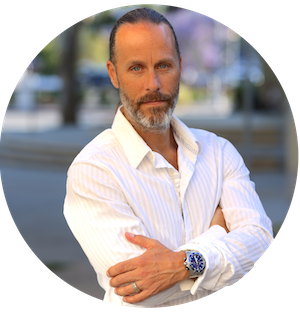
Kevin Anthony is a Certified Sexologist, Tantra Counselor, NLP Practitioner and a Sex, Love & Relationship coach. For over 10 years he has worked with men, women, and couples to have the relationships of their dreams, and the best sex of their lives! He is also the host of “The Love Lab Podcast”, creator of the popular YouTube channel Kevin Anthony Coaching, and creator of the popular online course series “Power and Mastery” as well as other online courses for both men and women.