Last Updated on March 29, 2021
What You’ll Learn In Episode 133:
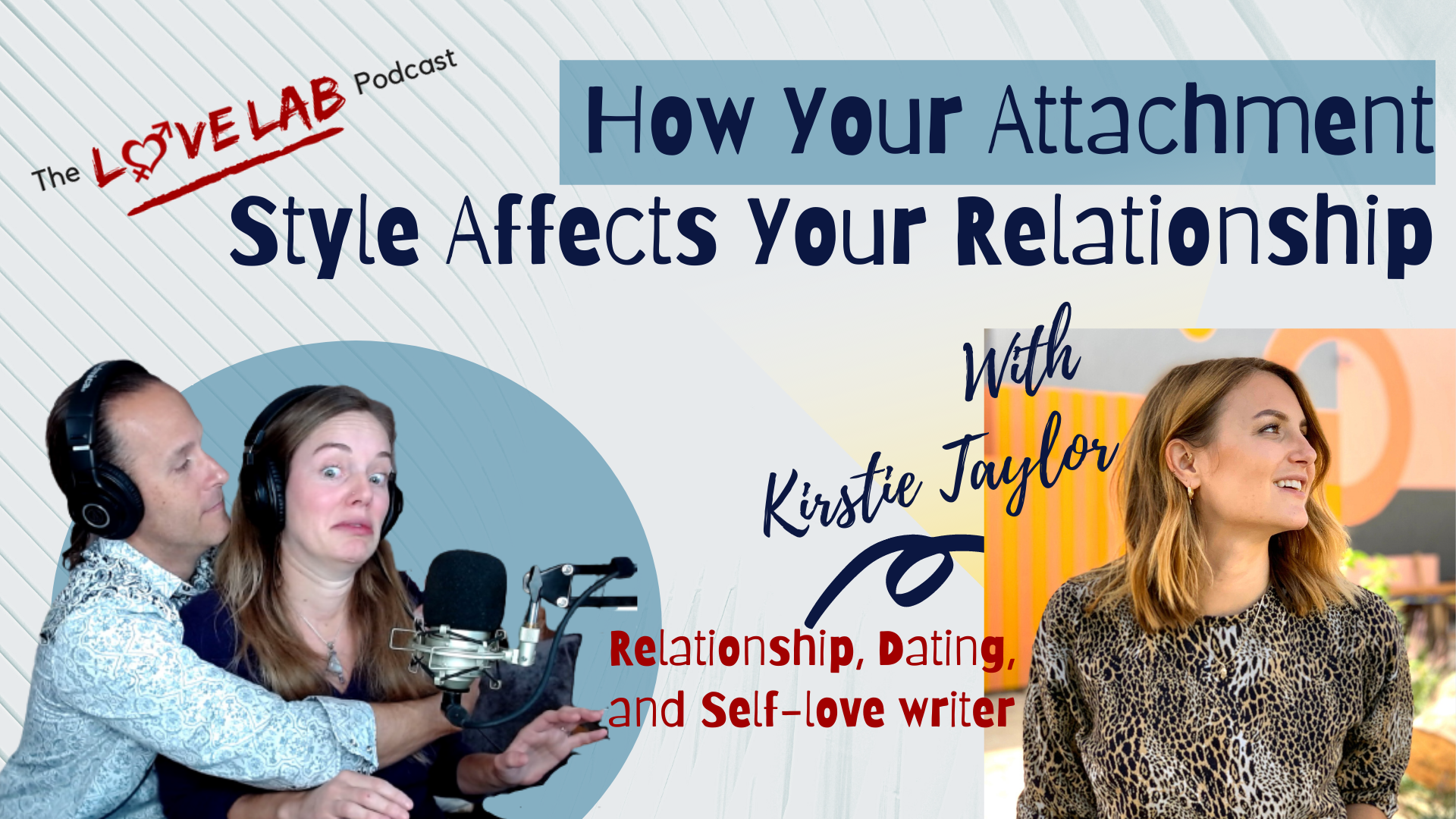
Have you heard of Attachment Styles? Do you know which one you are? Your partner? In this episode, Kevin & Céline talk with author and expert Kirstie Taylor on attachment styles and how understanding them can help you improve yourself, your relationships, and your sex life. We found this explained a lot of our past relationships and you might also!
Links From Today’s Show:

Kirstie Taylor is a dating and relationship writer who found a loyal internet following through her candid essays. Her work has been featured in Cosmopolitan Magazine, Well + Good, and The Washington Post’s, The Lily. She currently lives in Los Angeles where she continues to write words that help people with their biggest struggles in love.
To get Kirstie’s free guide on Boundaries, click here.
And to find more about Kirstie and to order her new book “What I Wish I Knew About Love”, go here:
Kevin Anthony 0:11
Welcome to the love lab podcast a safe place to get real about sex. Whether you’re a man, woman, single, or a couple, this is the show for you. We are
Céline Remy 0:20
your hosts, Kevin Anthony and Celine Remy. And we are here to guide you to go from good to amazing in the bedroom and beyond.
Kevin Anthony 0:27
Alright, welcome back to the love lab podcast. This is Episode 133. And it’s titled, how your attachment style affects your relationship. Okay, you know, I almost can’t believe we haven’t done an attachment style episode. So far at 133 episodes, we’re just now getting to it. But one of the reasons why I say that is because we hear about attachment styles.
Kevin Anthony 0:52
So frequently, we have multiple friends and even clients who are really big into attachment styles. And you can’t have a conversation about their current relationship without them going. Well, you see, because of my attachment style, right? Obviously, it’s something that people are paying attention to. And I think it’d be really good to have a great discussion about what they are, what it means for your relationship, how does it affect your sex life, and all that kind of stuff.
Kevin Anthony 1:19
So we have an expert on attachment styles today on the show, and we’re gonna dive deep into all of this. So if you’re one of our friends who’s constantly talking about attachment styles, do not turn the show-off.
Céline Remy 1:32
You might learn a thing or two. So before we introduce today’s guest, let’s give a big shout out to our sponsor power and mastery. So if you want to join the secret club of men who are great in bed, then check out power and mastery at power and mastery.com. It is the most complete sexual mastery training for men.
Céline Remy 1:49
Whether you want to have harder erections and lasts longer or increase your sexual skills. There is something for you at power and mastery.com. Today we have Kirstie Taylor. She is a dating and relationship writer who found a loyal internet following through her candidate essays. Her work has been featured in Cosmopolitan magazine. Well, let’s go ahead and The Washington Post and Lily.
Céline Remy 2:12
She currently lives in LA where she continues to write words that help with their biggest struggles in love. Okay, awesome. Thank you so much, Kirstie for being here today. We’re excited.
Kirstie Taylor 2:26
Yeah, thank you for having me. I’m excited. This is gonna be so fun to talk about.
Céline Remy 2:31
So I want to start at the beginning because some people might be wondering what our attachment styles, what are they talking about? So why don’t you give our listeners a little bit of an overview of what attachment styles are?
Kirstie Taylor 2:47
Totally. So attachment styles are an adult relationship theory that’s based on how we were raised as children. So it started in the 1950s with a guy named john Bowlby and a woman named Mary Ainsworth and they studied the way that parents raise their child affects their ability to have relationships as adults, and their intimate how they’re able to experience intimacy. Since the 1950s, when it start Lino started to become a thing and a theory.
Kirstie Taylor 3:23
There’s just been so many studies and different aspects of attachment theory and how it affects your relationships, or sexual your sex life, your family, relationships, everything. But essentially what it is like to break it down is that everyone has either one of four main attachment styles. And those are secure, anxious, dismissive, avoidant, and fearful-avoidant. A really great way to explain it is that they, it wasn’t john Bowlby was just another researcher did a test and they called it the strange situation test.
Kirstie Taylor 4:05
Essentially, like, these kids would be placed in this room. And they would have their mom there and a researcher there and the researcher would prompt the mom to leave. They would study how the child reacts, reacted. So secure baby would be like, Oh, my mom left Oh, no, where’d she go, but they could regulate their emotion, they calm down, and then they start playing with toys.
Kirstie Taylor 4:28
An anxious baby would be like, Oh my God, my mom left and start breaking down and would not be able to self regulate and would just not be okay until the mom came back and said, and then the two avoidance would just kind of be like, oh, it is what it is. And like, just keep playing and the mom would come back and they’d be like, oh, what’s up like not really fazed. And so that’s kind of how that’s like a very basic way of explaining the attachment styles and in the sense To like how we were when we were kids.
Kirstie Taylor 5:02
And therefore, because of things like how our parents raised us how they were able to give us attention when we were babies like if we cried, did they coddle us? Or did they? Were they not around? Did they let us cry for longer than another baby?
Kirstie Taylor 5:17
Or were they really good? And were they really attentive parents. But what’s interesting about attachment style is that more recently, they’ve realized that your attachment style can 100% change throughout your life, once your parental relationship is replaced with romantic relationships.
Kirstie Taylor 5:37
Now, you can have your attachment style change, because of a romantic partner, say you have someone who was really mean and emotionally abusive, all of a sudden, you can go from secure to anxious, or you go from anxious to avoid it. And so, yeah,
Kirstie Taylor 5:55
that was long-winded.
Kevin Anthony 5:56
No, that’s, that’s great. That gives people a good foundation. I’m curious, just about one thing that you just said there at the end that it can change. Is there any data or research? Like, how frequently does it change?
Kevin Anthony 6:06
Because I know that for most patterns and things that get ingrained in us from about zero to six, those things are extremely hard to change. They’re like, hardwired into the system. Right? So we’re talking kind of about a similar thing. And I’m just curious, how often does it really change for people? Oh,
Kirstie Taylor 6:23
so yeah, it doesn’t, it’s not often that it changes, it has to either be really traumatic like I said, a very horrible relationship that was that really rocked your world, or that you put a lot of work into yourself to try and change it. But it’s definitely not like your flow. And in between all the time, it’s usually something that’s really big that happens, but not as you bringing this up. Because a lot of people define themselves by, they do a test, or they figure out, oh,
Céline Remy 6:52
I’m in this attachment style. So, therefore, my whole life now is going to go this way, you know, or like they, they read their horoscope. And this is that, you know, well, I believe that these are trends, or they can show you what you have to deal with your cards. But then you still choose how you want to play with the cards you have. And you can pick new cards, and as you said, it does require work.
Céline Remy 7:16
But I have, in my personal experience, change different things about my personality, things about myself that I wasn’t so happy about. And it took some awareness and dedication, but I know it’s possible. So I love that from the start from the get-go you are you’re putting the frame, but you’re not defined by that style. It can show you where you are maybe where there needs to be some growth.
Céline Remy 7:44
And then we’ll talk about strategies later. But this is fantastic. So, Kevin, you have one more thing to add. Yeah,
Kevin Anthony 7:52
I just wanted to make a joke I said talking about this is reminding me of the Meet the Fockers movie. Don’t infantilize him Fokker. We’re Ferber. If anyone listening remembers that movie, right? It’s the second
Céline Remy 8:07
Learning to self-soothe.
Kevin Anthony 8:08
Yeah, there they were doing this method where they were basically ignoring the kid No matter how much you cried no matter what he did. So think about the destruction happening there later in life.
Kirstie Taylor 8:21
Truly, and that kid probably came became a very avoiding kid.
Céline Remy 8:26
So why is it important for people to know about these attachment styles?
Kirstie Taylor 8:32
Yeah, so honestly, like what you just said earlier is that is the big one. Like once you kind of learning for me. So personally, for me, when I first learned about attachment styles and realized I had this anxious attachment, I was like, wow, this makes so much sense. It kind of puts towards everything that I’m feeling. And now that I kind of understand why I am the way that I am. I can change it because it’s not fun being super anxiously attached. It’s not fun being super avoidantly attached.
Kirstie Taylor 9:03
And what’s even worse is that there are very, there’s a lot of studies and like psychology that goes by that. But when you’re an anxious person, and you’re an avoidant person, you tend to date each other. And that relationship is literally just like the worst relationships you could possibly be in. And it’s basically like my entire dating life in a nutshell, up until recently. So yeah, like understanding it gives you the power to just become healthier and relationships. Yeah,
Kevin Anthony 9:34
I love that point. And this is something that we talked about whether you know, you’re talking about astrology or human design or gene keys or any of these things. I think it’s really important for people to understand that. They will tell you your predisposition, they will tell you maybe how you’re wired, but that you can do work, you can do things to change that and you don’t have to suffer with Whatever style that’s not working for you.
Kevin Anthony 10:03
And then the next thing, the next question that I wanted to ask is, this is a great segue, which is, you mentioned if you have two different, you know, avoidant and anxious and they tend to gravitate towards each other, and they’re terrible relationships. I don’t want to necessarily talk specifically about just that style. The question really is, well, what happens if your partner is a different style? And maybe you can give us some examples of, you know, different styles and how they work and how they don’t work?
Kirstie Taylor 10:28
Yeah, totally. Um, so your partner most likely will be a different style than you It’s not often that like, the only thing that is off that you see often in relationships is a secure person dating a secure person, that’s us. But like an avoidant person, and an avoidant person will never form a deep relationship because they’re both avoiding the intimacy an anxious person will just make another anxious person more anxious and they probably won’t be very happy.
Kirstie Taylor 10:58
Not that they’d be happy and anxious and avoidant, but it’s just messier. But the question about like, how, I guess, should I go first into how to tell if your partner or you have a certain style and kind of like describe them each?
Céline Remy 11:13
Yeah, I think that’d be a good way to get into the styles. Go for it.
Kirstie Taylor 11:19
Yeah. Okay, so I like to explain that like avoidant of will, I’ll break it down into dismissive, avoidant, and fearful-avoidant, so dismissive-avoidant is the like, just uninterrupted and deep relationships uninterested in getting close, not necessarily commitment-phobes because that’s more fearful-avoidant, but dismissive. avoidant is just, they, when someone starts to become close to them, they just want to keep their distance, because intimacy just feels uncomfortable, they just essentially don’t really, they feel like they don’t want it.
Kirstie Taylor 11:57
So they’re very independent people. They’re very, they are, they’re not good at expressing their emotions, they don’t want to express their emotions. And then fearful-avoidant, people want to be intimate, but it scares the shit out of them. Like, they’re like, we this, us sharing our feelings is scary, I can’t do this or like, I see us getting close, and you’re gonna hurt me, you’re gonna break up with me like, this is scary, they push you away. Anxious of people like me, I’m just slightly anxious because I work on it all the time. Obviously.
Kirstie Taylor 12:34
Anxious people are the people that tend to be you know, the cleaners that tend to be the ones that are labeled as crazy because we try to not be anxious at first and show that side of us. But then we get in deep relationships, and all of a sudden, we’re needy, and like, people will be like, oh, wow, that person is crazy. We’re very, we want to be close, we overthink relationships. I’m sorry, I made a list. So I made sure like, hit every point I wanted to Oh, and we have a very stark fear of rejection.
Kirstie Taylor 13:07
So that’s another thing that that’s usually a very guiding factor for anxiously attached people is that they are scared that they’ll be rejected. So they do all the things that people-pleasing, like pleasing their partner over their needs, that’s very common of anxiously attached people. And then securely attached people like you to and like everyone hopes to be, is that you know, emotion, like they might not necessarily be great at expressing their emotions, but they don’t fear it, they are okay was talking about their emotions.
Kirstie Taylor 13:39
You know, they, they don’t rush into relationships, but they also don’t avoid them, they are able to respect boundaries. And boundaries are really another big way to determine someone’s attachment style, whether or not they can respect them or have zero lack of them. And, but secure touch people are respectful boundaries and have their own and can set them.
Kirstie Taylor 14:01
So that’s like the way to be able to tell if you have a what style you have what Sally your partner has. And then once you determine that, there’s like a whole slew of ways that you can be a better partner, depending on your attachment style.
Kevin Anthony 14:17
Yeah, so that that was great. I really appreciated that because that really makes it easier for people to understand, you know, what, what attachment style, am I versus my partner? And then the question we come back to is, you know, what happens if your partner is different? So, you know, give us just a couple of maybe examples from that slew.
Kirstie Taylor 14:36
Yeah, totally. Um, so if you’re partners and anxiously attached person, really what they’re, you know, I think it’s really important to say that like, obviously, if someone struggles really hard with attachment style, the work needs to come from them to like, you know, you can’t create make someone change themselves like that person needs to want to change themselves. But as far as Like if you’re dating an anxiously attached person doing things like having open communication with them, do it like weekly check-ins with them.
Kirstie Taylor 15:10
Just understanding more this like driving, driving like overthinking anxiety that they have in relationships and being a bit more patient will be really helpful. And then with if your partner is avoidantly attached you that may need things to be taken more slowly.
Kirstie Taylor 15:31
And they’ll probably need more communication but in the sense of like, understanding and helping them guide helping guide them to understanding their feelings because avoidance tends to just not want to be talked about it and therefore aren’t as in touch with their feelings. So really, if you’re if you realize that there are two different attachment styles, there are definitely ways to mediate them.
Kirstie Taylor 15:59
But I’m going to go back to like the avoidant and anxious it’s actually known as like the avoidant anxious trap. It is very hard to be in a relationship with someone if you have an anxious attachment style, and they have an avoidant one. Because it tends to be like the anxious person will like, want to cling to the relationship more. And that clinging Enos makes the avoidant person want to pull away.
Kirstie Taylor 16:22
And that pulling away makes the person that’s anxious want to click More. And then it’s just like a vicious cycle of never really meeting each other’s needs. So that one’s hard with a lot of communication and personal work to work on each attachment style. Personally, it could change, but it is very hard.
Céline Remy 16:45
So I find this fascinating. Obviously, it’s just so funny, it’s not really funny, but like to see how to search, opposites are drawn to each other how you choose people that will just push the exact button that you need to heal and grow from basically. And that’s really what this is bringing. And it’s reminding me of something from my personal experience in a previous relationship where I think I’ve always been secure.
Céline Remy 17:16
But I definitely still had things around, really feeling accepted for who I was or who I am. And in that relationship, it was really showing up that I wanted moments where I was allowed to be what I call to be the baby, where I would just kind of sit on his lap, and he would just like stroked my hair, or just hold me and I could like allow myself to be in baby energy, which is absolutely not sexy when you’re thinking about it for your relationship.
Céline Remy 17:45
But we created this, this term “Can I be the baby” like, I would literally ask for it. I could have like a 5-10 minutes window where I could get into this. He would hold me and just kind of like, let me be in there never like judging me or anything. Then it was over. At the beginning of the relationship, I think I was doing it fairly often. I believe that it might have taken maybe a year or so. And then that’s something that I basically never had to do again.
Céline Remy 18:16
And then by the time I got into the relationship with Kevin, I never did this with you never had to do that. But what I’m realizing is the ability to be in touch with your needs. And to be willing to express them and then find strategies is really, I guess how you can move past that. And I’m sure we’ll talk more about strategies in a bit.
Céline Remy 18:42
But I thought that it was a good story to illustrate because honestly, having to admit that you want to be the baby and that I mean, it’s not a very again like it’s very vulnerable. It’s kind of embarrassing, but ever, so healing, and to have a partner who was willing to play along and hold that energy for me for those few minutes. And then we could move on was really a big transformation.
Kirstie Taylor 19:05
That’s so interesting. I think that goes back to you know, the, we moved from our parents to romantic relationships. And you know, maybe there’s somewhere you felt like that, that need wasn’t met to the full extent that you needed it to with your parents, and then you replace that with your romantic partner. And yeah, I mean, it can Yeah, it might sound weird, or whatever.
Kirstie Taylor 19:26
But like it’s a need you needed. And now you don’t. That’s so interesting because you were able to fulfill it in a romantic relationship. I guess as you said, it takes a partner who’s willing to and open to it and not nonjudgmental.
Kevin Anthony 19:40
Yeah, it’s a beautiful example. And I would also caution people to not get stuck in those areas, right, because the whole point of that was really to heal that aspect of you. That place where you know, maybe your parents were constantly forcing you to always be the grown-up adult one and never allowing you to really just be a kid. You know, that might come from there.
Kevin Anthony 20:02
And but once you were able to do that, then you can let it go. And I think maybe that’s an important point to make is that try not when you’re working on these things to get stuck in those patterns, right?
Kirstie Taylor 20:16
Yeah, I see that a lot with the anxiously attached community because they, you know, flock to me with the content that I put out into the internet is that some of them just don’t realize that things can be different, right? Like, they overthink, they worry, they’re super jealous.
Kirstie Taylor 20:36
And they don’t realize that putting in the work, they can change it, you know, they’re not a victim, you’re not a victim, you’re never going to be a victim, you can work on yourself, and it can change. And yeah, that we’ve, we talked about it before, but it’s just like playing into the victim card. Like you can’t just be like, Oh, I have an anxious attachment style, Woe is me, this is my life. Like, you can change things. Yeah.
Kevin Anthony 20:58
So strategies are great to help us when we need them. And ultimately, what we want to do is try to move past try to heal whatever that thing is, you know, so we use the strategies one while we need them. And then we try to move past it, I think is the most important point for people when they’re really struggling with something like that is to not like you said, not get stuck in the victim and just be there forever. So we’re
Céline Remy 21:20
going to talk more about sexuality and attachment style, and how it affects all of that and dive more into this. But before that, we want to do a little sponsor break here and thank Onnit for sponsoring today’s show. And if you know about those times where he got you like, so focused on what you’re doing, you close that big deal, you win that game, you make love for hours, and everything is effortless, and it just flows, you have just now been in touch with what’s called the flow state.
Céline Remy 21:56
And flow state is the optimal level of consciousness where you can perform at your best. Now sometimes it can happen on its own, or you can help yourself get to a flow state. And that’s when on it and alpha brain comes into focus. Alpha brain helps you achieve a flow state and support other aspects of cognitive function for better memory, focus, and mental processing.
Céline Remy 22:18
So if you want to give Alpha brain a try, and really get into that zone state, go to onnit.com. And use our coupon code love lab to save 10% off your purchase. So go to onnit.com and use coupon code and love lab at the checkout.
Kevin Anthony 22:40
You know, I would love to tell our artist I’ve never actually said this. But the way that you really support this show is by buying the products from the sponsors. If you really want to support what we’re doing, if there’s something that appeals to you, like you’re like, wow, yeah, I could use some flow state and some alpha brand like you got to actually buy it. That’s how you support the program
Céline Remy 22:59
and giving you free content. Exactly. So Kirstie, how does attachment style affect your sex life? Because we are in the love lab podcast, we’d love to get into that. So tell us more.
Kirstie Taylor 23:13
Yeah, it’s actually so interesting. It’s definitely interesting. I mean, it applies so directly, um, you know, the different attachment cells are able to communicate their needs or meet someone’s needs in different ways. You know, secure people tend to have actually studies show that secure people have the best sex lives you know,
Céline Remy 23:33
yeah. That’s true.
Kirstie Taylor 23:40
Yeah, secure people are able to speak their needs, they’re able to communicate with their partner and, you know, meet the partner’s needs. avoidant people, I mean, we all go into weight at first, avoidant people tend to just kind of focus on themselves and so they see sex as like a very primal, like, just get it in and get it done. And like they don’t want that intimacy necessarily so you know, things like cuddling and stuff like afterward are not their type of thing.
Kirstie Taylor 24:12
They might be a little bit more selfish but not necessarily maliciously like they’re not trying to be but it just natural to them like they don’t see sex as this like, connecting thing. It’s just let’s feel good. Let’s get this over with like, sex is great, but like, That’s all it is. And then anxious people and I found this to be true in my sex life is that I always had you know, issues speaking up for I always say like advocating for my orgasm, like speaking up for my needs communicating.
Kirstie Taylor 24:46
Studies also show that anxious people are more likely to have painful sex, they’re more likely to have to orgasm less they’re more likely to have their needs met. They just feel more awkward about speaking because they see Sex as this like we are, they see it as so much more of the emotional aspect and the physical aspect. They want validation. So they have sex with people, they want to be close with someone, so they have sex, they want the idea like we are together.
Kirstie Taylor 25:17
And I know this because we are having sex. So they don’t care necessarily if they’re having good sex, they don’t care if it hurts, they just want their partner to be pleasured. Um, and so yeah, it’s wild. But yeah, it is it applies directly to like the sex life. Yeah.
Céline Remy 25:34
Is there a correlation between gender and particular attachment styles? Because in a sense, when you’re describing the avoidance, and I’m making a generalization, this describes some of the behavior that people attribute to the masculine, while the anxious, describes some of the, like negative descriptions of the feminine and I, was curious if you if there’s any study or research that shows that one gender tends to go towards one or the other more than others?
Kirstie Taylor 26:10
You’re a great question. I don’t think I’ve ever really looked deep into that. But if I had to guess I would 100% agree with what you just said in the sense that men aren’t. Men are coddled as much as children as women are because we’re, you know, men are taught like, you need to be you need or emotions are good, like, shut that down. Like that’s, like, suppress that.
Kirstie Taylor 26:33
And women are taught to be the caregivers and loving and be able to show their needs and their emotions and everything. So I can see that 100% correlating to men tend to be the more avoidant of scared to talk about their emotions just more shut off. And women tend to be wanting more affections. That’s what we’re taught is often in life, and just how we’re raised and everything.
Céline Remy 26:59
And I’m sure that it flips around too, because I know several women that would fit into the avoidant and I’ve met plenty of men who were in the anxious and needy category two, we’re just making a generalization. But I was just being curious at that moment about that.
Kevin Anthony 27:13
Yeah. But you know that that is actually a fascinating observation, because, because Kirsty, as you pointed out, parents do tend to treat boys differently from girls. And so you know, what we’re talking about here is how your parents raised you how they treated you is what is creating these types of attachment styles.
Kevin Anthony 27:31
So it totally makes sense. I have a feeling after this show, this might be a new article that Kirstie will be writing. When you do share it with us?
Kirstie Taylor 27:44
That’s a great question. I’m sure there are studies out there. It’s wild, how many studies are out there on attachment cell, and when it just came out in like the 50s. But I’m sure it’s out there.
Kevin Anthony 27:55
I don’t think there’s one other thing that that I kind of want to sort of stress that we were just talking about, which is that when people talk about attachment styles, they’re usually talking about how to have a relationship, like how do you have a relationship, but what you were sharing about how it affects your sex life is extremely important as well. And I don’t really hear people talking about attachment styles in relation to how they actually have sex in the bedroom.
Kevin Anthony 28:23
Like, why maybe they’re not interested in going deeper in sex, why maybe all they want is just the physical, why they might want more of the cuddling, and you know, that kind of stuff. And I think that’s really fascinating. I think, you know, a lot of times people are feeling frustrated in their sexual relationship, because all he ever wants to do is just, you know, hurry up and get it over with or all she ever wants to do, you know, like, wow, imagine taking this framework now.
Kevin Anthony 28:50
And putting it around that experience and going, Oh, wait a minute, maybe that’s because of this. Right? So that’s fascinating. I just, I don’t really hear people talking about attachment styles very often, when it comes to sex, it’s always about, well, are we in the right relationship? Are we compatible? How do we, you know, get along that kind of stuff. So that was
Kirstie Taylor 29:10
great. There’s so much research out there on that correlation, sexuality and sexual satisfaction, and attachment style. But you’re right, people don’t talk about it that much. And there was even when I was researching it when I first came across it, there was something that I came across as that anxious people tend to nitpick, we tend to nitpick, we tend to be the ones that are like this can be improved upon like, always like the anxious anxiety ones.
Kirstie Taylor 29:37
And, you know, or they relate their relationship satisfaction to ideas that they have about relationships, like, we need to be having sex like five times a week, girls were not happy, even if that’s personally not what would make them happy. And I’ve done that before. I’ve been like, you know, we’re not having sex enough, even though I’m like, I don’t have a super high sex drive.
Kirstie Taylor 29:59
Anyways, so I’m just like, but I’m like, we need to be having sex all the time. Or that means that we’re not in a good relationship. So it is really fascinating. And it’s crazy that people aren’t talking about it that much right now.
Céline Remy 30:11
So what are the things that can help you be a better partner? So now we know about this attachment style, we know that they can get in the way, but then how do you become a better partner, you’ve, you’ve figured out your attachment style. Now what?
Kirstie Taylor 30:27
Now, this is a great one, I love talking about this. So if you have an anxious attachment style, and overthinking and worrying, and all that is something that really affects your love life, something that can be really great as having a set, weekly check-in or even bi-weekly check-in. So it’s something that you can look forward to you know, that there is always going to be you know, it’s great to have open communication, I’m not saying harbor are all of your feelings.
Kirstie Taylor 30:54
But since we do tend to nitpick and tend to like overthink things, maybe having that once a week time where you can inventory take inventory of their relationship as a whole is going to help you relax a little bit and be like, Alright, we always have this time, even if it’s bi-weekly, to check-in and like talk about things as a whole, I can be really done. In general, just like journaling, your thoughts.
Kirstie Taylor 31:22
So your thoughts are always just going to control your mind until you stop letting them if you are an over-thinker, and you’re constantly worried about like your boyfriend texts you and you’re like, what does this text mean? And you’re like, suddenly, like, thinking about it for hours, write it down, that thought will have so much less power when you write it down. Write down what you think the worst-case scenario is, which is probably that they’re they left you forever, write down with the most normal like probable case scenario is because they’re busy at work.
Kirstie Taylor 31:54
And then like reason with yourself and be like, Alright, it’s probably the probable one, my thoughts are just running away with me. And on that note, once you’re once your thought is proved wrong, like your partner texts you and they’re like, oh, I’m just busy at work, sorry. Remember that take write it down, go back, when you’re feeling really anxious, and look at all the times that your thoughts were wrong, and you’ll slowly start to change them.
Kirstie Taylor 32:18
And on that note with changing them, you know, when you say like, Oh, my partner hates me, they’re mad at me change that thought. But my partner is a human and he’s taking time to himself because he wants to just relax and that’s okay. Like, just actively change those thoughts. And if you have an anxious or avoidant attachment style, what can really help you think differently about things is changing your mindset from like, this AI? mindset, like, it’s me against you when we fight.
Kirstie Taylor 32:52
My needs are, or what, how this relationship will be the happiest, like, I need to look out for myself to we mindset. Like when you’re in a relationship with your team, right? So says and so when you get into arguments instead of being like you’re being too needy be like, how can we come to a solution where you feel comfortable and I feel comfortable? What does that look like?
Kirstie Taylor 33:18
Going from that is that our mindset is really helpful. And then another thing actually that’s really interesting with avoidant people is that it tends to stem from a lack of self-confidence, which is really interesting because that’s the same for anxious people, but they tend to feel very insecure and so they push people away again because I don’t want to get hurt. So doing anything, in general, that will help with your self-concept confidence is going to help with your relationship.
Kirstie Taylor 33:45
So that’s working through like any, you know, insecurities or traumas that you have, which can be really deep and you know, baby therapy needs to be involved but doing things like we’re doing things that really make you happy pursuing hobbies, starting a new hobby, keeping in contact with your friends, or even doing something with your partner that makes you feel very self-confident.
Kirstie Taylor 34:09
Starting a new hobby together and you foster that intimacy along with that pride and self-confidence and then you know secure people are pretty a-okay with really should just keep doing what you’re doing. Have great communication and everything. Yeah, man can get into some more. I don’t know if that was that was thorough, but that was a fantastic
Kevin Anthony 34:33
Well, yeah, you know, if people are really interested, there’s so much more that they can dive into. I don’t know if you work one on one with people, but they can work with you as far as getting deeper into that, but I think that was a really good sort of overall like, here are some basic tips, some basic things that you can do to try to help if you are one of these particular styles. So yeah, I think that was great.
Céline Remy 34:56
And even as a secure person, everything that goes digital laid out, like, do all of this. I mean, we do all of these things already. And sometimes it always makes me wonder, I mean, which one comes first? The chicken the egg, you know, are we secure? Because we know how to do these things? Or, like, Which way did they come first? You know, so
Kevin Anthony 35:18
And honestly, you know, if we were to probably sit back and think about, you know, relationships from you know, 1020, you know, 2530 my case years ago, we might see that we acted very, very differently back then, then we do now. So it’s likely that we’ve changed our styles. Yeah,
Kirstie Taylor 35:41
I mean, relationship, I always say like, healthy relationships don’t just happen. They happen with intention. And that goes for anyone anxious, avoidant, secure. And then also, Kevin, you made such a good point. If you’re interested in this stuff. There are books out there a really great book that everyone would recommend in the relationship world is attached by Amir Levine.
Kirstie Taylor 36:02
He puts all this really well into an amazing book. But if it is something that we really struggle with, just do more research, Yeah, you can. You can talk to me, you can DM me, we can talk but if it is significantly affecting your life, which it does for a lot of people, just doing more research on the subject and reading books on it is going to help significantly. Whoo. So
Céline Remy 36:27
we have one more question for you here. Kirstie before you can tell a Latin listener where they can find you. And so we are curious, what is your best sexual talent?
Kirstie Taylor 36:37
Oh, God. Oh, right. Like specifics?
Céline Remy 36:43
Oh, yes.
Kirstie Taylor 36:47
Oh, let’s see. That’s a great question was my best sexual talent. I mean, I,
Kirstie Taylor 36:56
I feel like I’m gonna say this and a lot of girls have said this, but I always get a lot of compliments on my blow job giving skills. Um, I think also like, I’ve always been really communicative and again with like, the anxious attachment style maybe I’m like, always like, what can I do better?
Kirstie Taylor 37:12
So I’ve just always asked guys to believe what feels really good. Like, what is the best way to do this? Like, what do you like? And so I like to think my job giving skills or my best talent, it’s
Kevin Anthony 37:24
a great skill to have
Céline Remy 37:26
We applaud. Kirstie, can you tell our listeners where they can find more of you? And also, I know you have a special gift for our listeners as well?
Kirstie Taylor 37:38
Yeah, totally. So you can find me on Instagram which is words with Kirsty. I’m also on TikTok. And I know it’s a newer platform, but I honestly have so many videos out there. So videos are your thing, that’s a great place to find me, which is just Kirsty Taylor, but Taylor has two R at the end.
Kirstie Taylor 37:59
And then I have a free boundaries guide for everyone that’s listening, which is essential, if you don’t know what boundaries are and teaching, the teachers you have boundaries are asked you questions to help you get more, more aligned with what your authentic boundaries are, and teaches you how to be able to stand up for yourself and maintain them and your relationships.
Kirstie Taylor 38:20
And there’s like some journaling sections and everything. So you can find that in the show notes.
Kevin Anthony 38:26
Yes, link to it in the show notes. It could be a whole show in and of itself. Most people are terrible at setting and keeping boundaries. So that guide, I highly recommend
Céline Remy 38:38
clicking the link in the description and grab it.
Kirstie Taylor 38:42
Totally. Also, the same thing, I also wrote a book that is currently out for pre-orders. You can find that in all the links in my BIOS. The same thing I always say like if you buy the book, let me know and I’ll give you the boundaries guide. But regardless, if you can’t for some reason, find the boundaries guide. DM me, and I will send you the link.
Kevin Anthony 39:02
And what’s the title of your book,
Kirstie Taylor 39:04
I’m sorry about it that I’m like the worst at promoting it. The book is called what I wish I knew about love. So essentially, since I’m a dating and relationship writer, I really wanted all of the lessons and the research and everything that I’ve culminated to be put into one book along with really great, juicy stories and everything, and to help guide people through everything from breakups to self-love dating and creating a thriving relationship. So it’s all that into one book, and it’s called what I wish I knew about love.
Kevin Anthony 39:36
That sounds fantastic. Exactly.
Céline Remy 39:38
Yes. So check that one out, too. Jesse, thank you so much for the great work you’re doing and helping people with it was a pleasure having you on today’s show.
Kirstie Taylor 39:48
Yeah, thank you both. This is a lot of fun.
Kevin Anthony 39:51
All right, everybody. That’s all the time we have for this episode, and we will see you next week.
Kevin Anthony 40:01
We hope you like this episode of the love lab podcast. If you enjoy this show, subscribe, leave us a review and share it with your friends.
Céline Remy 40:09
And for more free exclusive content. Join us in the passion vault at kevinanthonycoaching.com/vault.
Kevin Anthony 40:23
Thanks for listening,
Céline Remy 40:24
and remember, you’re amazing.
We hope you liked this episode of The Love Lab Podcast. If you enjoyed this show, leave a comment and share it with your friends.
RATE & REVIEW THE LOVE LAB PODCAST
—> LEAVE A 5-STAR REVIEW ON APPLE PODCAST
ASK A QUESTION FOR THE NEXT EPISODE
—> Click here to leave a message directly to Kevin and Céline to be answered on the air.
Thanks for listening and remember you are amazing.
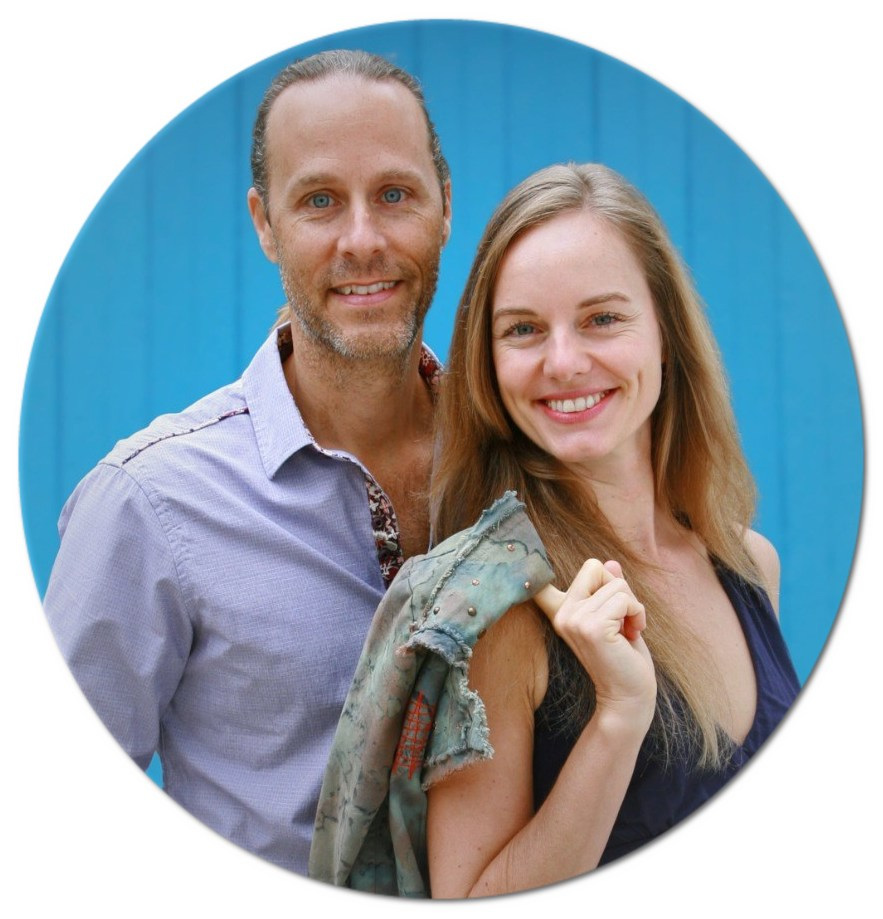
Kevin Anthony and Céline Remy are an international husband and wife team who joined forces to create a worldwide movement of true sexual empowerment. Kevin, “The Truth Warrior,” is a Men’s Coach, Tantra Counselor, and Couples Relationship Coach. Céline, “The Intimacy Angel,” is a Holistic Sexologist, Certified Sexological Bodyworker, Relationship, and Intimacy Coach for men, women, and couples. Together, they are truly the ‘Power Couple.’ They host ‘The Love Lab Podcast,’ and are co-creators of ‘Power and Mastery,’ an online educational training system that teaches the exact process to any man who desires to bring his ‘A’ game consistently to the bedroom. They guide couples and men on how to go from ‘good’ to ‘AMAZING’ in the bedroom and beyond.