Last Updated on November 18, 2024
What You’ll Learn In Episode 265:
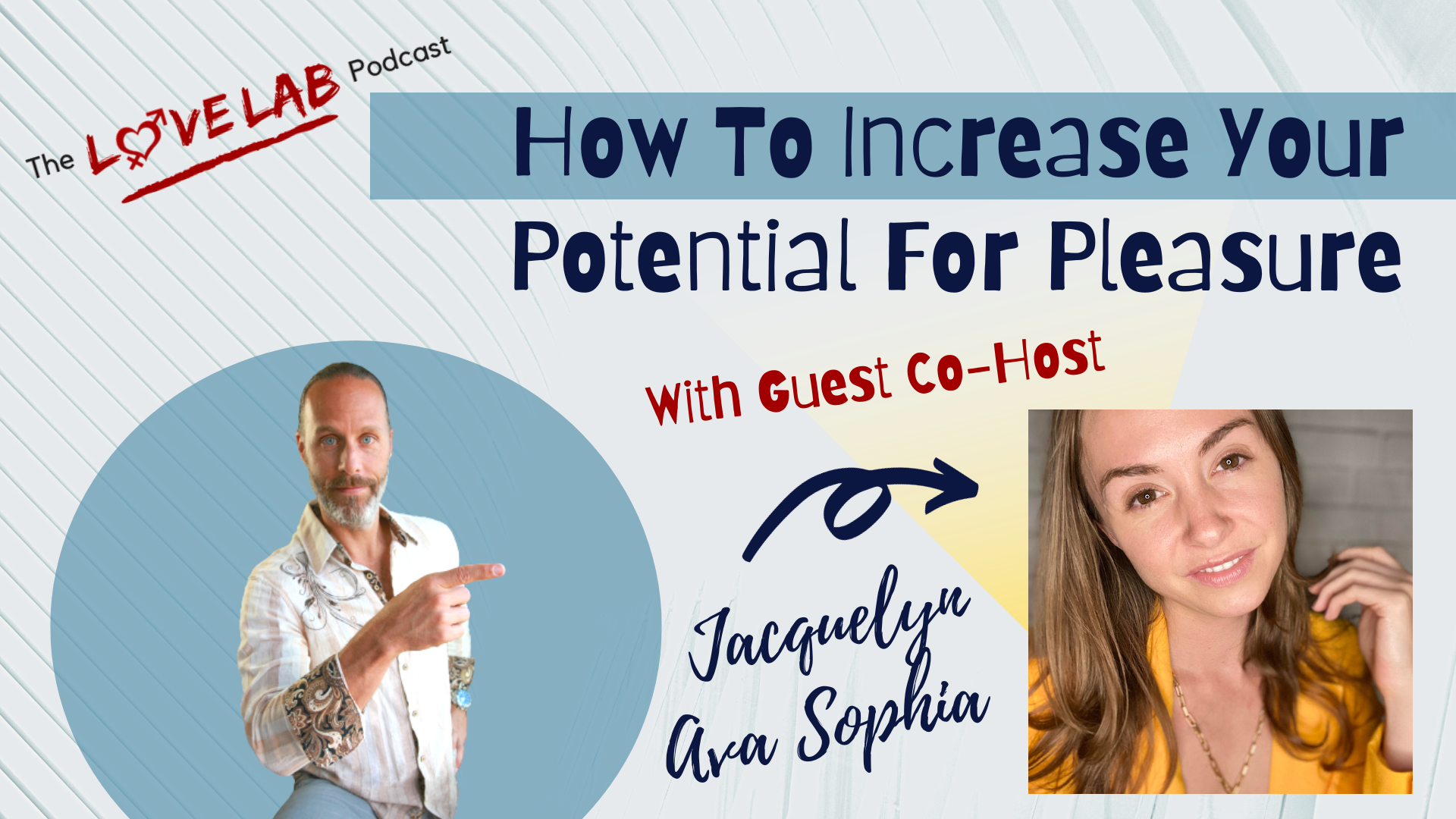
Do you like to experience pleasure? Is it possible that you could be experiencing more pleasure than you currently are? Have you unconsciously set a limit on your pleasure? In this episode, Kevin Anthony and guest co-host Jacquelyn Ava Sophia talk about what pleasure really is, why you may want to increase it, the common blocks that prevent people from experiencing more pleasure, and specific techniques you can use right now to blast past your pleasure ceiling and soar to new heights of pleasure.
Links From Today’s Show:
To Find More From Jacquelyn, Click The Link Below:
https://www.avasophia.love/coaching
🔥 POWER & MASTERY 3.0 IS HERE!
The most complete men’s Sexual Mastery Course is now even better. To find out more go to https://www.powerandmastery.com
❤️ FREE EXCLUSIVE CONTENT
The Passion Vault → https://www.kevinanthonycoaching.com/vault
💪 MEN’S SEXUALITY & MASCULINITY COACHING WITH KEVIN ANTHONY
If you are ready to make big changes and finally become the man you have always wanted to be, then Unleash Your Inner Warrior Program is for you → https://www.kevinanthonycoaching.com/go/warrior
👉🏼 COUPLES COACHING WITH KEVIN ANTHONY
https://www.kevinanthonycoaching.com/sex-coaching-couples/
👉🏼 OUR HAND-PICKED PRODUCTS FOR YOU
We have hand-selected some great products to help support your Health, Sex Life, and Relationship! Purchasing products from us and/or our affiliates helps support the work that we do and ensures we can continue to help as many people and couples as possible! → https://www.kevinanthonycoaching.com/products/
Kevin Anthony 0:11
Welcome to the Love Lab podcast a safe place to get real about sex. Whether you’re a man or woman single or a couple, this is the show for you.
Céline Remy 0:20
We are your hosts, Kevin Anthony and Céline Remy and we are here to guide you to go from good to amazing in the bedroom and beyond.
Kevin Anthony 0:14
All right. Welcome back to the Love Lab podcast. This is episode 265. And it is titled How To Increase your Potential for Pleasure. And I have a guest host with me today who I will be introducing in just a moment. So how do we increase your potential for pleasure? It’s kind of an interesting subject, right? Because most people think, What do you mean? Like I can either feel pleasure and joy, pleasure or not, I don’t understand, but there actually is a difference. And we’re going to really get to get into this, we’re really going to talk about how a lot of people limit themselves, limit their capacity for pleasure, because they either don’t know they can experience more, or they have something holding them back that is preventing them from experiencing more. And so they don’t often realize just how much more pleasure they could be experiencing if they could remove some of those blocks and open up to it. So that’s what we’re going to talk about today. There’s actually quite a bit to cover. And I would suggest that even if you think that you are really open to pleasure, and you’re like, Hey, I got lots of pleasure in my life, I would suggest that you hang in there and you listen to this because there is a possibility that you could go even further even deeper into your pleasure than you think that you can.
Okay, but before we do that, a short word from our sponsor, Power and Mastery. 3.0 is here. The men’s sexual Mastery program you’ve heard about on the show for a long time is now even better. I have personally reviewed every module lesson video, audio, and PDF to see if there was anything new that could be added to the already amazing power and mastery. As a result, I have added 10 New videos one new audio eight new PDFs, and dozens of links to handpick products to help support your journey to mastery. In addition, there’s also a brand new user interface that makes it easier to navigate the course and find your course materials. So if you’re ready to become the sexual Master, you have always wanted to be then go to power and mastery.com. This is only been out for a few weeks, but I’m already starting to get feedback from people thanking me for version 3.0 Which makes me very happy because it took a lot of work to make that happen. So if you have been on the fence, you’ve been struggling with problems related to your sexuality or your relationships. Now is the time to get on Power and Mastery 3.0 at powerandmastery.com.
Okay, so today I have a guest host with me. Her name is Jacqueline Ava Sophia, and we’re going to welcome her to the show and Jacqueline. Please tell everybody who you are and why you are joining me today.
Jacquelyn Ava Sophia 3:12
Thank you, Kevin. I am so excited to be talking about increasing the potential for pleasure. Today. I am a sex and empowerment coach and I offer women a safe space to be fully themselves on their journey of self-discovery. I’m a certified master Neuro Linguistic Programming practitioner with a background in multiple relationship coaching modalities, including the Gottman method, and also extensive training in Tantra and sacred sexuality. I’ve created a system for coaching that focuses on releasing shame boosting self-worth and nurturing self-love. That’s me, so excited to dive into this topic today.
Kevin Anthony 3:56
All right, well, those are some excellent qualifications. Okay, so we’re gonna dive right into it because there’s actually a lot to cover here. So I hope that we can jam it all into an hour in a way that delivers the content and makes sense to people. So I, you know, when I start to create these outlines, and you help me with this, we worked on this together. So I don’t want to make it sound like I did the whole thing. But when I start to create these, I always like to step through them in sort of a logical way, like, what’s the beginning? And then how do we get to the end? And so here starting at the beginning, I think it’s important to define, for the listeners, what we’re talking about when we say pleasure, and so we’ve got a list of things here to help describe that. You want to start with the first one.
Jacquelyn Ava Sophia 4:44
Yeah, absolutely. This one is my favorite. It’s so key for me. It’s what we mean when we say pleasure, it’s the sensations in our bodies that produce good feelings, but it’s not only that, it’s also the sensations in our bodies that go along with emotions that were welcoming. So even if it’s anger or sadness, there can still be pleasure along with it, if there are these qualities of expansion instead of contraction, in order to really allow and move it through. So this is kind of a different definition of pleasure of really just welcoming everything that is there.
Kevin Anthony 5:24
Yeah. And I think that’s why it’s so important to define it, right? Because maybe a lot of people wouldn’t have thought of it that way, they would tend to think of pleasure only as sexual pleasure or, you know, the pleasure from eating something really good or that type of pleasure, as opposed to the fact that, you know, there could be pleasure in a range of different emotions. So that’s kind of similar to the next one on the list, which is, it can be in the context of sex. But it doesn’t have to be. And it can be it, can it literally include any area or aspect of your life?
Jacquelyn Ava Sophia 5:57
Yeah, exactly. So it’s increasing this potential for pleasure, which is also called orgasmic potential, and it’s in sex and life. And I know, it can sound disappointing in a podcast about pleasure, but it doesn’t mean everything is good, or everything is happy and joy, but it’s, it’s about, yeah, it’s really about expansion and allowing those things to move through. So the stance of welcoming the feelings is really behind this ticket into more pleasure.
Kevin Anthony 6:32
Yeah, and I’m gonna deviate from the list here for a moment, because as a woman, hopefully, you can speak to this. But, you know, when you’re having really deep, connected, love-making over a period of time, not your standard, you know, five to seven to ten-minute long sex, but like, you know, 30 to 40 to 50 to an hour, two hours, whatever kind of sex and you’re deeply connected. I know, because I’ve personally experienced this many times that women can go through a range of emotions during that period, especially if it’s a newer partner, and they’re touching them in a way, either internally or externally, that is different. It might stir some emotions, it might move things. And so when we’re talking about pleasure, it’s important to understand that all of those emotions moving during the lovemaking could potentially be a form of pleasure. And to not just think of it as the orgasm, it’s all about the orgasm. It could be that full range of things moving through you.
Jacquelyn Ava Sophia 7:41
Yeah, exactly. I know that experience. Well, and this is something that I come across so often in my coaching, too, and particularly around women saying, like, oh, my gosh, like Tears are coming up, I don’t want to cry. And I’m like, no, like, that’s allowing those tears to flow is so much of the tenderness and the vulnerability that really allowing what is there, and yeah, it might not obviously feel like pleasure, but sometimes crying or sounding or even screaming can feel really good because it feels like a release. So it really is just being present in that journey. And the next step in our list we have, yeah, the motivation of moving away from pain, as opposed to moving towards pleasure. And I think that moving towards pleasure, and that stance of really being open to what comes up in lovemaking is really key. Do you have more to say on that?
Kevin Anthony 8:47
Yeah, you know, the reason why I wanted to put this one on the list is because I felt like we needed to have a little discussion on this. Because, especially if you get into, like social sciences or anything like that, where they’re studying humans and why humans do what they do, you will often hear that humans’ primary motivation is to avoid pain. And I’m not denying that that’s true. There is a huge motivation to avoid pain. This is why and I don’t think it’s the best way. But this is why, discipline in learning tends to work to, to a certain extent, right, which is that I better do what I need to do because I don’t want to get yelled at because getting yelled at is the pain part. Right? That’s the discipline part. And so therefore, I’m motivated to do what I need to do because I want to avoid that. And so there is something to be said about that.
However, I think that when it comes to your relationship and your sexual relationship, you shouldn’t be viewing it as I’m trying to avoid pain. I’m not doing this in my relationship for my partner because I just want to avoid getting yelled at, right? That’s not what we’re going And we’re going for here, what we’re going for is we’re doing these things, because if I do this for her, she will genuinely appreciate it. And she will experience that as gratitude or love or whatever, right? So the idea is, we’re doing it specifically to create more pleasure because who doesn’t want more pleasure, because sex is better with more pleasure, because our relationships are better when we experience more pleasure, as opposed to the idea of, I’m just doing it to avoid the pain. And because that concept of always trying to avoid pain is just so prominent in psychology. I felt like we really needed to address that here, like, do these things, because you specifically want to increase the joy and the pleasure in your love life and in your relationship, not just because you want to try to avoid the pain.
Jacquelyn Ava Sophia 10:52
Yeah, exactly. And of course, the pain is there. But really, it’s like, it’s, it creates restrictions, right? It’s a small way of relating, moving away from pain. And the idea of moving towards pleasure in sex and relationships in life. It’s just so much more expansive, so much more elevated, so much more juicy, there’s just more potential in that space.
Kevin Anthony 11:17
So you know, to use a silly example of what I’m talking about here. And what we’re talking about here is one of my favorite all-time comedy movies is a movie called office space. I don’t know if you’ve seen it, Jacqueline. This may make by the same guy, I think that did Beavis and Butthead and a bunch of other things like that. So it’s a very sarcastic kind of humor. But there’s a scene in it where this company brings in these consultants, and they’re, they’re interviewing all the people because they’re going to make some changes around the company. And so one of the main characters is talking to the consultants. And he says, you know, what, Bob? I got eight different bosses, right? And they’re like, what, eight bosses? And he’s like, Yeah, and he’s like, You know what that means? Every time I make a mistake, I got to hear about it eight times, right? Because so you know, what that does, is that makes me work hard enough, just to avoid knocking just to avoid getting yelled at. Right. And that’s the idea, right? If your main motivation is only to avoid pain, you’re going to do just enough, just enough to avoid the pain. Whereas if your motivation is to move more towards pleasure and expansion, you’re then probably going to do a whole lot more, because you like, hey, let’s see how much further I can take this. Let’s see how much more pleasure I can experience. Let’s see how much better this can get, as opposed to just narrowly avoiding the pain?
Jacquelyn Ava Sophia 12:41
Yeah, and that’s what you want. If you’re getting yelled at in your relationship, definitely go talk to a coach or a therapist.
Kevin Anthony 12:48
Or you’ll be surprised how many people deal with that on a regular basis. But it’s not even just, you know, it’s not even just getting yelled at. It’s all it’s a range of things. That’s the most obvious one, right? But yeah, it could be doing just enough to not get the cold shoulder, you know, doing just enough to get her to at least be open to allowing you to have sex with her as opposed to her showing up and craving the sex with you. Right? There’s a range of different things that could potentially be considered avoiding pain, you know, we use the term pain, but it could be basically avoiding anything that you consider to be a negative doesn’t necessarily have absolutely,
Jacquelyn Ava Sophia 13:28
Yeah, it can be much more subtle. And that we all experience in one way or another.
Kevin Anthony 13:33
Exactly. Okay, so I think we’ve done a pretty good job of explaining to people what we’re talking about when we say pleasure, right? So I think y’all got it. Now. It’s not just about the orgasm. It’s much, much bigger than that. So I mean, that’s what we mean, when we say pleasure. And we’ve kind of already hinted on this, as we were talking about that, but let’s talk now about why we would want to increase it What are the benefits to doing this?
Jacquelyn Ava Sophia 14:05
Because it’s good.
Kevin Anthony 14:08
Oh, yes, it is.
Jacquelyn Ava Sophia 14:11
One of the obvious benefits here is better sex, and better relationships, which we talked about prior when we were defining it.
Kevin Anthony 14:21
Yeah. So better sex, obviously, not a whole lot. We need to say their sex is supposed to be pleasurable. So the more pleasure you have, the better that sex is going to be for you. I don’t think we need to talk too much on that one. But better relationships maybe could use a little bit more defining Well, what do we mean by better relationships? Well, let’s start with you know, when your partner is happy in the relationship because they are routinely experiencing pleasure, and that pleasure could be, you know, experiencing, you know, gratitude from their partner. A full range of things that obviously sexual status, satisfaction, just general life satisfaction. So you know, when your partner is experiencing more pleasure, you will see that sort of ripple out through the relationship. So if you are giving, say your partner appreciation on a regular basis, right, they’re experiencing those appreciations in a way that’s pleasurable. It’s like, oh, wow, that feels really good to be seen to be appreciated, right? And so they’re going to then give that back to you in various different ways. And so as you expand that pleasure potential, you’re going to see your entire relationship get better in a myriad of ways.
Jacquelyn Ava Sophia 15:45
Yeah, absolutely. What you give is what you get. And, yeah, the next step, the next point we have here is having an easier time navigating through life’s ups and downs. And this goes back to when I was mentioning this openness to allow the full spectrum of emotion to move through you. And the reason why that’s easier is that when the movement is part of the potential for pleasure because when things get stuck, is when they start to feel really bad. So this is something that, you know, it helps insects that helps in relationships, but also anything that’s hard in life, just having that embodiment and allowing the feelings to move through really create an easier time navigating through life’s ups and downs.
Kevin Anthony 16:38
Yeah, you know, and I would add to that and say that, you know, the downs are easier to navigate when you’ve got some significant ups, right? So in other words, if you’re stuck in the downs all the time, every new down that comes along, it’s just like, it’s like, it’s like one more punch in the face, right? And how many of them can you take before you just don’t get up again? So, you know, if you are experiencing high levels of pleasure in areas of your life when those downs do come, you can be like, Okay, I’m gonna down, this isn’t a great experience or thing that I need to deal with or go through. But I’ll get through it. And on the other side, I know there’ll be more pleasure, right?
Jacquelyn Ava Sophia 17:20
Yeah, really having that capacity for pleasure. And our next point is more enjoyment of life, which, yeah, we all want pleasure. We all want to enjoy, we want to be joyful. And that really does help us get through the hard times when we have our cup full. And when we know that we can get it refilled and contribute to filling other people’s cups too.
Kevin Anthony 17:42
Many years ago, when I used to work in tech, for corporate America tech. I had, I worked at this company, and there was an office manager who ran the office. And you know, she was a tall blonde, very curvaceous, big boobs, the whole thing. But she was a bitch to everybody in that office. I mean, just sometimes she would walk into the room and everybody is like, cool. You know, like, turn in their head, don’t look at her, she might yell at you. You know. And one day, you know, I worked in a secure lab with all the other tech geeks. So you had to have a card key access to get in there. It was only the geeks in there, the rest of the company was outside it where they had windows and like normal offices. But she had access, she could come and go as she pleases, and one day, she comes into our room. And she’s just, like, lit up. She’s happy. She’s nice to everybody. She walks out of the room and I turned to my boss and I went, somebody got laid last night. We all laughed about it. And we thought it was a funny joke. And we did find out later on that she was indeed seeing somebody new and you could see the way it rippled out through the rest of her life. So there she was, in a relationship that was nourishing her and satisfying her in a myriad of ways, I assume, I don’t know, honestly. But it changed the way that she showed up in her job. And you’ll see that it’ll change the way you show up with your children and, you know, with your friends and all the different areas. So yeah, more enjoyment in life.
Jacquelyn Ava Sophia 19:26
Yeah, and it’s true. We all know that you know, somebody has a glow in a new relationship or after getting laid and, you know, we all know that to be true. And it really does have a positive effect on our lives. And our next point is your happiness is contagious. The world is a better place when more people are happy and you know when you’re happy when you’re filling up your cup and going for more pleasure. It’s not a selfish endeavor. It really does. It’s contagious and it helps other people around you become happier too.
Kevin Anthony 20:01
Absolutely, yeah, that’s a huge piece. You know? Sometimes people tend to see the work that I do in sex, love, and relationship as only related to sex, love, and religion. Oh, great. Okay, yeah, you help people with their sex, love, and relationship. I said, Yes, I do that. And I help make the world a better place. Because when people are happy in their relationships when people are fulfilled in their sex lives, it ripples out into everything else. So the world literally is a better place when people are happy and fulfilled in their sex, love, and relationships. All right, next one on the list, until you break through your ceiling, you don’t know what the potential for happiness and pleasure really is. And I have in parentheses there, you don’t know what you don’t know, I had to put this on the list because I have run into this with so many clients, but also friends as well. And I want to tell just a quick story here, about some friends of mine.
So years ago, Céline, and I had a few friends over for dinner, it was two other couples that came over for dinner. And, of course, as we always did, the subject of sex came up and we started talking about, you know, sex and, and we started describing the type of sex that we would have these like, long, you know, hour-long sessions with these multiple waves of orgasm, and just, you know, all the beauty that our sex life was. And I remember one of the guys sitting there across from the table, just he had that deer in headlights look, and he was just staring at me. And when finally, when I was done, like explaining this and saying how great it was, you know, to be able to master your jack Ulation and be able to ride the waves and experience all this pleasure. He just looks at me and he goes, Why would you want to do that? Now and suddenly, I’m the deer in headlights because he does not compute. What do you mean why would you want to do this?
And I really thought about it a lot after that moment, because the response that I got for him just didn’t make sense to me. And I realized that he had never experienced what I was talking about. And therefore he really had no concept of what I was trying to explain to him. And that’s you don’t know what you don’t know the part, which is, you know, he had what he considered to be a good sex life. Now, because Céline was personal friends with his girlfriend now wife, I know the intimate details of their sex life. And I can tell you as good as they thought it was, it’s barely scratching the surface of what the potential is, at least back then I would like to think that they’ve made progress since then. But I know it was only scratching the surface. And that’s when I started to understand his response. I was like, oh, okay, he just doesn’t know what’s possible. He thinks that he’s already reached the limits of where this could go. Right. And of course, being where I am. I’m like, what’s the limit you’re not even at the starting line yet. There’s so much more that you could potentially be experiencing. And so yeah, until you can kind of breakthrough that. Right. So I use the term ceiling. And I’m gonna tell one more story, and then I’ll let you share this. So forgive me for dominating the conversation on this one.
But when Céline and I first got together, you know, I had, I had a couple of relationships before that, that didn’t work really well and caused a significant amount of stress in my life. And when Céline and I first got together, it was just so amazing that I remember one time we were sitting on the beach, and she was looking at me and she was like, what’s wrong? Because she could tell something was sort of wrong. And that wasn’t really wrong. But anyway, she could feel something was off. I don’t even remember what my response was. But she figured it out almost instantly. And she was like, Oh, I get it. She’s like, you’re not used to being this happy, are you? And I was like, No, I’m actually not as sad as it is to say no. And I realized that at that point, I was bumping up against my ceiling. And of course, since then I was able to blow past the head and reach significantly higher levels. But that’s the thing is you don’t realize you have a ceiling until you bump up against it. Right. And that’s the whole you don’t know what you don’t know. So the person in the story I was just telling a moment ago, hadn’t come anywhere near his ceiling yet. So he had no every word I was trying to tell him was just like right over his head like I have. I can’t I have no concept of what you’re trying to explain to me. Right. And so that’s the idea of sort of breaking through your ceiling. So I would I would encourage people like that even if you think you don’t have a ceiling, you probably do and see if you can see if you can go past it.
Jacquelyn Ava Sophia 25:14
Yeah, absolutely. You know, there’s the same that ignorance is bliss. I would argue bliss is bliss. So get there. Um, I love those stories. And yeah, when you mentioned that moment with Celine, I can really picture her saying that with like, a little mischievous, twinkle in her eye.
Kevin Anthony 25:39
And for those that don’t know Jacqueline knew Celine personally.
Jacquelyn Ava Sophia 25:43
Yeah, she was a friend. And yeah, just, you know, thinking of that, that ceiling that we don’t know, is there. What I find that happens with the ceiling is if I’m hitting the pleasure ceiling or the ceiling of potential in any area, it feels like, it feels kind of bad. Like there’s something to breathe through in that moment. Because there’s some subconscious part that wants things to remain the same. And going beyond that is going into the unknown. So there’s some kind of program running sometimes that’s like, oh, things are getting too good, like, better make something bad here, like some negative emotions arising or maybe starting a fight or, you know, something will arise. That kind of like, keeps us there. So there are some techniques to really get past that and expand into this plusher potential.
Kevin Anthony 26:47
Yeah. And that’s exactly what she was noticing at that moment. That’s why I said, it seems like something was wrong, but there wasn’t really anything wrong. But yeah, there’s and so but we’re going to talk about that in just a moment. I’m going to break for our mid-roll ad here in a second. But we’re going to talk about what typically holds people back from experiencing that pleasure because you just started to touch on it with your last comment. And we need to go into that a whole lot deeper. Before we get into what people can do to expand and break through their own ceilings. First, though, short ad.
Hey, guys, do you know what makes a man great, you know, the kind of masculine man that women are irresistibly attracted to? And want Is it money job title, his physical body being great in bed, a big penis, great pickup lines. But what if you don’t have those are only some of them, what if you’ve had a string of failed relationships are embarrassed by your bedroom skills, doubt whether you can rise to the occasion, worry about lasting long enough are always stuck in the friend zone, I can help you if you are ready to make big changes and finally become the man you have always wanted to be, then this is the program for you to find out more, please go to KevinandCéline.com/go/warrior. The link is in the description. This is my men’s sexual mastery coaching program. It is amazing, in my opinion, and many of my clients as well. So if you are struggling with any of those things that I just mentioned, please go to KevinandCéline.com/go/warrior.
All right. So we’ve talked about what it means to experience pleasure, we’ve talked about the benefits, and why somebody would want to increase the pleasure. Let’s talk now about what typically holds people back. Because I find that a lot of people do not realize that they are actually holding themselves back. And so if we go through some of these things, we might, we might turn a few light bulbs on where people go, oh, oh, I realized I’m doing that exact thing. Dammit, I didn’t even realize it. So what’s the first one on the list there that holds people back?
Jacquelyn Ava Sophia 29:05
Sure. This one is the fear of being too happy, or that it’s all going to end badly. And this sounds kind of funny, because why would we be afraid of being too happy? Or that it’s all going to end badly? And there are some deeper subconscious things going on? that are at play. And we’ll get into those. But do you have anything more to say on that one, Kevin?
Kevin Anthony 29:32
Yeah, I mean, what I would say about it is it’s really common. It’s really common. Like it’s amazing to me how many people are afraid to actually allow themselves to be happy. And the reason that is is that they’re afraid that if they really embrace the happiness that suddenly it’s all going to turn bad, right? And you’ll hear people say, No, I’m going to jinx it. I can’t be too happy about being happier, I’m gonna jinx it, it’s all gonna go away, right? And so people will often hold themselves back simply because of that fear. Now, I will say that we do live in a world, in a reality of duality, right? So everything in the middle, the entire construct of the multiverse that we live in is based on duality. So when there’s happiness, yes, there is sadness. But don’t let that fool you into thinking that just because I’ve experienced some level of happiness or some length of time of happiness, then I’m going to get the equal or worse result on the other end. That’s just not true. But that’s what people’s fear is all the time. I can’t be too happy, because that means there’s going to be something really bad down the road. Right? And that’s just that’s not well, it’s not an empowering belief. But it’s also not true. Unless, of course, you make it true in your own head. So
Jacquelyn Ava Sophia 30:59
Yeah, or even what if I can’t handle it being bad after it’s this good? Yeah, like, fear of the capacity going away? So there’s a lot that can kind of get stuck in that category.
Kevin Anthony 31:12
Yeah. Yeah. You know, interestingly enough, sometimes, and I don’t even think it’s on the list here. No, no, it’s not so. But it’s, you just said, What if I can’t handle the bad side of it? But sometimes you actually hear people say, What if I can’t handle the good side of it? What if it’s too much for me? And I’ve had people say that too, like, I can’t handle this, it’s too much. And that’s, that’s when they’re hitting that ceiling?
Jacquelyn Ava Sophia 31:39
Exactly. Yeah, that feeling that if you just get through it, there’s so much pleasure on the other side.
Kevin Anthony 31:49
Alright, what’s the next big reason that people hold back?
Jacquelyn Ava Sophia 31:53
The next one here is about sex. And this is shame around sex that holds one back from experiencing all that sex can be. And this could come in from so many different angles. Some of it is thinking your desires are taboo, or not wanting other people to know them, or even just a feeling of shame coming up in the body around sex. And it can really get in the way of experiencing the full range of pleasure. In my experience, having so many conversations with different people around sex, what you think is taboo or something you can’t do is probably a totally okay, practice as long as it’s consensual and safe. And, yeah, and also, you can keep your sex life as private as you want it to be, or be as open as you want to be about it. But those feelings of shame that just come up in the body, they are real. And there’s a way to work through them and experience more pleasure.
Kevin Anthony 33:04
Yeah, shame is a big one. Shame is one that we see a lot. And interestingly enough, what I see when it comes to shame around sex when working with clients is a lot of my clients would never actually say that they have shame around sex, they wouldn’t describe it as shame. Like if I said, do you feel shame around your sexual habits or likes or dislikes? And they’ll say, no, no, I’m okay with it. But if you start drilling down a little deeper and asking more questions, you’ll find out that there is often a layer of shame underneath it. Their conscious mind is saying I’m perfectly fine with this thing that I like to do sexually. But their subconscious mind is basically sabotaging them and saying this is wrong. Remember what your mother said, you know, or whatever, you know, society says. So there’s often that undercurrent of shame that’s beneath that can hold people back that they’re often unaware of Now, sometimes I work with clients who are like, yeah, I totally have shame. And they get it and they understand it. But I would say the majority of the time, they’re not even aware that shame is the thing that’s getting in their way.
Jacquelyn Ava Sophia 34:16
Hmm, absolutely. And related to shame, but different is guilt of I shouldn’t experience this much pleasure. And this can go back to the same things with like, what my parents said about pleasure or good feelings, or what society says is like, Am I really allowed to feel this much pleasure? And, yeah, I would say that a lot of people aren’t really in touch with that being guilt. It just manifests in the form of like, closed off or stuck or not knowing what’s in the way.
Kevin Anthony 34:56
Yeah, you’re absolutely right. A lot of times people would not say I feel guilty about it. But underneath it, that’s really what’s happening, they’re feeling guilty about it. And guilt generally comes down to self-worth issues. Now, if you really did something wrong, like, you know, you broke like a major law, like you murdered somebody or something like that, you know, you have guilt about it, that’s one thing, but in the context of sex, love, and relationship, where you haven’t actually physically harmed anybody in any way. You know, the guilt is usually a self-worth issue. Like, I’m not worthy of experiencing this much pleasure, I, you know, for whatever reason, and you will see that a lot. You’ll see it in both men and women. Unfortunately, however, I tend to see that one more with women, you know, the more like, I shouldn’t be experiencing this much pleasure. I’m not worthy of it, you know, sort of thing. I don’t know what your experiences on that is, maybe you could talk a little bit more about that.
Jacquelyn Ava Sophia 35:59
Yeah, I would say the same that it shows up more in women than in men. And something just came to mind that I really love as a tool, when this guilt comes up like, I shouldn’t experience this much pleasure. Usually, there’s some kind of voice in your head. And it feels like it’s something from what I heard in my childhood, or like society says this, and just taking a moment to pause and check in and be like, is anybody else here? It’s like, oh, no, this is going on in my head. So when you say it’s a self-worth and a self-love thing, it really is happening inside of yourself. It definitely may be influenced by things you saw and heard in the past, but that stance of empowerment of like, I can change this, and I can shift this belief into one that’s more self-loving, and, you know, encompassing of all that one is, is, is really, really a hack to get into the Get out of the guilt. So yeah. Do you want to jump into the next one here?
Kevin Anthony 37:05
Yes. All right. The next one is worried about what others will think. And that’s an interesting one, too. I mean, this, the shame, the guilt, and the worry are all somewhat related, but they are all different flavors, right? There. They are, sort of slightly different motivations. And so you’ll see this a lot to where people are, like, I don’t really want to talk about how amazing my new relationship is, or how great the sex I’m having is because other people are gonna judge me for it.
Jacquelyn Ava Sophia 37:38
Yep, yeah. Or other people might get jealous or in some way, it’s gonna take away something else in my life. Yeah, that’s common. That’s a common one. You know.
Kevin Anthony 37:51
I get this, you know, there are some people that don’t like to brag, I don’t want to brag, right? Okay, that’s fine. And there are other people who are worried about being judged or worried about, you know, their friends being jealous. I’m not saying you need to go rub it in their faces and like, look how great I am. Haha, you suck. That’s not where we’re going with this. But what I want to tell people is, first of all, other people’s opinions are none of your business. I’m sure you’ve all heard that before. Right? So what other people think of your business, but if you’re genuinely experiencing, you know, pleasure and a beautiful relationship and great sex, tell people about it in a way that’s not bragging. So that you can open other people’s minds to the possibilities and the potential that are there. Wouldn’t it be great if by sharing, oh my God, I’ve met this amazing man and this amazing woman, and this is the type of relationship we have? And the sex is like this. It’s amazing. It’s mind-blowing. If you share that with people in a way that’s not about look at me, I’m so much better than you. You’re going to inspire others to pursue the same thing and to try to create the same thing in their own life in their own relationships.
Jacquelyn Ava Sophia 39:05
Exactly that being a source of inspiration is a huge one. And this goes down to having better relationships because so often we can connect over what we’re what sucks what we want to complain about, and how much better would it be if we could connect more over how much pleasure we’re experiencing and how amazing things are and really, you know, be that source of inspiration and be celebrated celebrate each other and just have those elevated connections?
Kevin Anthony 39:35
Yeah, I say screw misery loves company and let’s do pleasure loves company. All right. Next on the list. Oh, yes. Suffering obligations of love attempts to belong to our family of origin ancestral line. Oh, yeah, I know. This is one that you put on the list. So I want you to speak to that in like what your mindset was when you were writing that?
Jacquelyn Ava Sophia 40:02
Absolutely, yeah, this comes from my NLP background. So this is some of the deeper subconscious stuff that’s going on around. When we’re talking about this pleasure ceiling. It’s like, Well, why do we have it there anyways? What’s going on underneath? And the suffering obligations of love are basically like our mind thinking in some way. Well, you know, my parents only had this good, or people in my family only had this good. So in order to maintain my status of belonging, I’m only going to have it that good too. It’s like our way to try to not betray our family, or like, assuage our guilt at having escaped their fate. And when you say it out loud, it sounds so silly. Like, of course, though, your parents are probably rooting for you to have an experience that was better than theirs. But our psychology does something that tries to really like connect with them based on that suffering. And it’s really unwinding that like, Misery loves company, and going to the pleasure loves company. And, you know, even if it’s different, just knowing that like, you belong, your DNA is your families. And, you know, you can expand into who you are the things you want to experience, and break out of that data. That thing that so many of us subconsciously do.
Kevin Anthony 41:31
Yeah, and you’re absolutely right, a lot of people do do this, they will often only aspire to whatever level, their parents or, you know, family in general have aspire to this is, this is why you tend to see people stay in whatever class that they were born into. Because one, they don’t know the potential for doing something other than that. But also, yeah, because they might potentially have a fear of expanding past, you know, their, their parents or their family. But what’s interesting about that, is that, and as a parent, I imagine that you can also agree with this, every parent does everything they can for their children, to make sure that their children have a better life than they had every parent that their primary goal is, how do I give you a life better than the one that I had? Now, yeah, maybe if somebody was raised a billionaire and had everything in the world, maybe that’s not their motivation, but for every other regular person, that’s how it’s always been, I didn’t get the opportunity to go to college, I want to make sure my kids get the opportunity to go to college, I had to work a manual labor job and were out my body by the time I was 40, right? I want to make sure my kids don’t do that, that they have an easier job, that they make more money that they don’t go through the struggles and trials that I went through, right, that’s what most parents want to do. So if you’re over there thinking, Oh, I don’t want to expand past them. Because, you know, somehow that’s wrong. Keep in mind, that’s exactly what your parents want. They want you to expand past them, they want you to have a bigger, better, easier, more fulfilling life than they had.
They don’t want you to go through this suffering that they went through.
Jacquelyn Ava Sophia 43:20
Yeah, yeah, as long as your parents are, you know, like, basically healthy, good people, that’s probably their intention. So that’s a that’s a big thing to keep in mind. And some of it too, is that you don’t know what you don’t know. So talking to somebody else, you know, whether it’s a supportive friend, or a coach or therapist can be really helpful and just unlocking like, yes, the thing that you want is totally valid and possible, can really, you know, allow that expansion to happen.
Kevin Anthony 43:50
Yes. Okay, the next one on the list is concerns about loss of a relationship or financial stability or opportunity or freedom, basically, the idea that, hey, if I allow myself to really experience this much pleasure, somehow my partner is not going to like that they’re gonna get jealous they might want to leave or sometimes it can be the opposite way around, which is if my partner experiences this much pleasure may be outside of the confines of our relationship that he or she is going to want to leave because of that.
Jacquelyn Ava Sophia 44:29
Yeah, it can be so many different things and it really all falls into this irrational fear category. But it’s a real experience happening right this like, you know, it’s worried about what other people will think what they’ll experience like, it comes down to self-trust, trust of others. There’s a lot that can be going on in these and they’re all worth unpacking.
Kevin Anthony 44:58
Yeah, and you know, I would just say Like, rather than sitting there worried about it, you just got to have discussions about these things, you’ve got to have open and clear communication. And then you got to say, Hey, I noticed that you’ve been experiencing a lot of pleasure when you go out with your girlfriends, I just want to make sure that, you know, all this good here and you know, how can I support that? How can you support me, those kinds of conversations can go a long way towards sort of soothing any of those fears that come up around, you know, either I’m experiencing too much pleasure, or he or she is experiencing too much pleasure. So as is often the case, on this show, it comes down to good communication.
Jacquelyn Ava Sophia 45:39
Good communication, and also having balance, and, yeah, it’s not like pleasure needs to take over your whole life. But you know, communication, good relationships, discipline, like all of those things being integrated into it, all of the things that are important to you are a part of pleasure. Yeah. Keeping lifestyle. And the next one here is, oh, we’ve said this in other ways, but they don’t know what’s possible and settle for less.
Kevin Anthony 46:15
Yes, yes. Yes, that is a big one. I kind of put it on the end of the list for reasons not just because we talked about it earlier. But because it is one of the more common ones that I often see is people like the story I told earlier, they just don’t have any idea of what’s possible. And so they just stick in their little comfort zone of yeah, this is pretty good. This is okay. When you could be experiencing so much, so much more. And the other thing is, if you’re, if you’re not sure, whether or not there’s anything past where you are, well, one, the only way you’re going to know is if you go search it out and see. But what’s the worst case scenario, you expand, you go out there and you go, you know, what, where I was, was perfectly fine. Like, I’ve been there, it’s not for me, or there wasn’t any better than what I already have. Okay, so what, there’s really no downside to at least attempting to see how much further you could go with it.
Jacquelyn Ava Sophia 47:25
Definitely, you can go back to the way things were before.
Kevin Anthony 47:28
You probably won’t want to but you could.
Jacquelyn Ava Sophia 47:34
It’s a good disclaimer.
Kevin Anthony 47:38
Yes, you can, you can go back anytime you want. Hahaha. They’re never going back. All right. So those are some of the typical things that, you know, we see that hold people back from really wanting to expand and experience more pleasure. So we’ve talked about what is pleasure, we’ve talked about what the benefits are, we’ve talked about the things that people normally do to hold themselves back, and let’s get into probably what most people really want to talk about, which is how do I increase my pleasure? How do I break past that ceiling? How do I expand and open more? How do they do it? Well, we’ve got a list.
Jacquelyn Ava Sophia 48:25
Yes, this is the good stuff, we’re there. So the first one we have on the list is to be open to the possibility that there is more pleasure to be experienced. And our beliefs around pleasure are really so core to how much pleasure we can experience. So being open to the possibility that there is more pleasure to be experienced, I hope. If you’ve listened so far that you’ve gotten a little glimmer, that there may be more, it’s a big case.
Kevin Anthony 48:56
We have done our best I think on this show is to pique people’s interest and get them to at least to be open to the possibility but that really is the first step. If you’re not open to it. If you think that wherever you are, is the end all be all, then you’re never going to go further than that. So you got to at least be open to the possibility. And as we just talked about before, what’s the worst that can happen? You expand past where you are and you go, not for me, so then you go back.
Jacquelyn Ava Sophia 49:26
Thank you. Yeah, you can go back if you want. All right. Yes, go ahead. Oh, yeah. The second one here is to work on removing your shame, fear, and guilt. And as we mentioned before, these things may not be obvious. You may not know right off the bat, you’re experiencing shame, fear, or guilt. So some of the things to do that are to practice mindfulness. Some of it is doing the inner work of complete During the painful experiences of the past, so we’re not just in that kind of trauma cycle of recreating the painful experiences that happen so that we can find completion. But rather, going back on purpose, doing the work, and saying like the past is in the past that is complete. And doing those things with the help of a coach or a therapist is super supportive.
Kevin Anthony 50:23
Yeah, and so, you know, obviously, we can tell you to just, yeah, just remove your shame, fear, and guilt, that’s probably not going to do you a whole lot of good unless we give you a few, at least a few tools on how to do that as we did. So the mindfulness, doing the inner work and the inner, the inner work could be a lot of different tools, you know, you could be doing Family Constellation therapy, or you could be doing standard therapy, or you could be doing some sort of body-based work, right, where we’re, you know, you’re, you’re receiving this is a lot of what, like Céline used to do, like hands-on body-based work that can help remove stock trauma and things. So there are a ton of tools that you could potentially use, personally, just listening to this show should help you get over at least some of the shame and the guilt stuff.
Because one of the one of the biggest pieces of feedback that we’ve gotten consistently on the show over the years is like, I can’t believe you guys talk about all that stuff. And you talk about it. Like, it’s so easy. That’s a thing that a lot of people say whether it’s YouTube comments or emails that we get, it’s like, how is it so easy for you guys to just talk about some of these sexual-related topics where because, you know, a lot of people, they, they can’t even get the words out of their mouth with their significant other. No, talk about it on a podcast, put it all over YouTube. So simply listening to this show and getting used to talking about these things, it’s already a big step in overcoming your shame.
Jacquelyn Ava Sophia 51:54
So exactly. That’s huge, just normalizing the topic. And, you know, one of my favorite ways, especially around the shame pieces around sex is we all came from sex. So it really is normal. It’s part of who we are as full human beings. So hopefully, hopefully, that shifts some things. And in the category of mindfulness, I just want to share one of my favorite ways to meditate, especially when the shame fear, and guilt are coming up, is to just kind of like imagine oneself slightly above like looking at yourself and your body, experiencing the shame, fear and guilt and just being present with that. Just that presence with emotion can be really powerful.
Kevin Anthony 52:47
Yeah, absolutely. I mean, the mindfulness piece is, is huge. And it’s, it’s something that I pretty much work with every client on no matter what their problem is, because it’s always in there in the mix of what’s in the way in, to some extent, might not always be the biggest thing in the way. But it’s always there that, basically, lack of mindfulness. So yeah, that’s a really big piece.
Jacquelyn Ava Sophia 53:18
Well, going into the embodiment practices, just what I want to say here is such a huge piece of this pleasure potential is getting out of your head and into your body to actually feel with sensation, the pleasure, it’s not something that you think about, or that goes on in your head, it’s not a narrative happening in the head. So the narratives can be shame, fear, and guilt. And getting into those embodiment practices, just out of the head is so it’s, it’s vital, you got to do it.
Kevin Anthony 53:55
Yeah, embodiment is huge. So this definitely shows up for both men and women. But it shows up in kind of two different ways. For both. So what I see with women, when it comes to being stuck in the mind, is when they are making love a lot of the times, their minds are like, especially that they got kids, they’re thinking about, you know, are the kids okay? Or are they going to walk in or, you know, I gotta take care of this, I gotta make sure their lunches are ready for tomorrow, right? That they’ve just got a gazillion things running around through their heads. And so, therefore, they’re not really present in their physical body, and that really severely limits their potential for pleasure in that sexual encounter. So that’s the way I tend to see it a lot with women is they just, they’re stuck in their head spinning around with all the tasks and things they have to do in life.
And therefore, they’re not really being present in their physical body, where they could be focusing on the sensations they’re feeling or, you know, their partner or whatever. They’re just stuck spinning around in their heads. I gotta do this. I got so many things to do and blah, blah, blah. Whereas with the men, what I tend to see is performance anxiety, which is again being stuck in the head. So they’re like, am I going to be able to get, oh, we’re getting a little steamy in here and might move towards sex, what if I can’t get interaction, right? That’s been around in their heads, or, or oh, I wasn’t, I didn’t think it was gonna go to sex. And I didn’t do my masturbation practice or whatever, what if I can’t last long enough, and that’s spinning around in their head, right? So there’s all this like performance anxiety, stuff that tends to get in the way for guys, both of those things will really impact your ability to experience pleasure in the moment. So if you can figure out a way to get into your body, and out of your head, you will have a much, much better experience. And you know, there are lots of ways to do that.
When it comes to embodiment practices, I mean, outside the bedroom, there are a ton of things that you could do that get you into your physical body. You know, you could do dance can get you into your physical body, martial arts, that’s a big one that I like to recommend to the men, but it’s not just for men, women, it’s great for women to men just tend to be a little bit more attracted towards that as a path. But anything that really gets you focusing on your physical body, like, you know, I mean, listeners of the show, know, that practiced traditional Japanese sword arts for many, many years. And, you know, when you’re in a small confined space, with like, eight or 10 other people, and at least half of you are at a level where you’ve got real live swords that can cut human bodies in half, and you’re all spinning and twirling, and, you know, swords are flying everywhere. Nothing will make you more present at that moment than the fact that if I let my mind wander even a little bit, somebody could die, literally. Right. So anything that gets you out of the distracted, what we call monkey mind, and brings you into your physical body is a good practice. Because if you do that regularly, on a regular basis, all the time, when it comes time to oh, I’m connecting with my partner, oh, we’re making love now, you’ll be able to tap into that a whole lot easier than if you don’t have some other practice for getting into your body. So, you know, there are tons of ways to do that, just find one that works well for you.
Jacquelyn Ava Sophia 57:28
Yeah, absolutely. And that’s why they’re called practices because the more we practice them, the better we get at them. And then we can tap in and access those states when we want to. So they’re, like you said, so many different embodiment practices, and anything that gets you into the body. And when you mentioned, the piece about women thinking about all of the things that there is to do it felt really valuable to say, you know, when you are going into a sexual experience, just taking a moment to really set the space. And you know, if there are things running in your mind your to-do list to write it down. If you have kids, like lock the door, like set up your bedroom or your space in a way that you really have, you know, a sacred container to experience the fullness of what you are.
Kevin Anthony 58:19
And you know, one of the things that I always teach the men as well is if you really want her to be able to let go of all that stuff. You got to help her out a little bit right in other words, if you want her to really let go of all the things that need to be done in the house so that she can actually be present with you. Maybe you need to help her out with some of it you know, like make sure you do the dishes take the trash out take a few of those things off of her mind so that she doesn’t have to spin them around over and over again. It’s a great way to help.
Jacquelyn Ava Sophia 58:49
Yeah, that is super hot. And you know if you take the trash out do the dishes and you go light some candles and lock the doors even better.
Kevin Anthony 58:58
And then if you fuck her into oblivion, you are God. God not in the literal sense for the people who are religious listening. Oh my God. Look what he just said.
Jacquelyn Ava Sophia 59:14
Oh, yeah, no, not that. Not that.
Kevin Anthony 59:22
All right. So we are ready. up against the end of the show, we’re coming up to the one-hour limit here. But we do have a few more things that we want to cover. So let’s get into those. Next on the list is to use mindful conscious sex to raise your pleasure ceiling. So there are ways that you can use sex itself. Right as a way to increase your pleasure ceiling. So like one of the things I have on the list here is the extended orgasm practice, which is similar to what most people know as oming. Right. But it is its own thing. We actually had Alicia in Episode 211, you can go listen to that and figure out what the extended orgasm practice is. But that is a tool that you can use to use sex and sexual energy as a way to increase your pleasure ceiling. There are others, of course, one is giving without return. Right?
So this idea of I’m going to give to you for as long as I feel good about it, and as long as you feel good about it, and I’m not expecting anything in return. So why is that a way to increase the pleasure ceiling? Well, because a lot of times, and Jacqueline, you can also talk about this, here’s something that I hear from women, a lot of the time, a guy’s going to go down on her and, you know, rather than sitting there and enjoying it, like she’ll enjoy it for a while. But then she starts thinking, Oh, what if I’m taking too long to have an orgasm? And what if he’s uncomfortable? And what if he’s getting tired? And what if he doesn’t want to do it anymore? Right? And all that stuff’s going around in her head, which is preventing her from seeing how much pleasure can I actually experience in this scenario.
Whereas if you say, Okay, here’s what we’re going to do. I’m going to your, I’m going to make it comfortable for you. And your only job is to relax and receive. And don’t worry about anything else, don’t worry about me, I got my own taken care of, and I’m gonna go for as long as it works for me, and you don’t have to worry about it at all. So you’re taking the pressure off of, you know, oh, you know, if I do if I allow him to do this act to me for 30 minutes, then I’m going to have to do it to him for 30 minutes. And I don’t want to do it to him for 30 minutes. So I better end this right now. Right? There are all these things that get in the way that prevent us from really being able to experience more pleasure. So one of the ways to mitigate that is to simply take that off the table and say, No, we’re not going to do that I’m just going to give to you and your only job is to receive and experience as much pleasure as you possibly can.
Jacquelyn Ava Sophia 1:02:49
Yes, to this. And what could there be a more fun mindfulness or embodiment practice? I don’t think so.
Kevin Anthony 1:02:56
I don’t think so either.
Jacquelyn Ava Sophia 1:03:00
I really love this, because this really touches on a piece of trust. And it moves relationships from being transactional to being relational. And what I mean by that is, if you and your partner agree, somebody’s going to give and somebody’s going to receive, then it’s trusting their word for it, trusting the agreement, trusting that what they say is what they mean. And just really allowing to let go of all that monkey mind or like, what might this mean, and instead having direct communication, so not only is it a mindfulness and embodiment practice, to increase pleasure, but really, really helps to increase trust and authenticity in the relationship, too. I really love that one.
Kevin Anthony 1:03:51
Yeah, and then the last one on that is to make love for at least an hour or longer if you can. And the idea is, you know, how are we going to raise our pleasure ceiling, you got to get to the ceiling, you got to get there, which means you got to go long enough to be able to get up to that ceiling. If you can’t even get to the ceiling, you’re not going to be able to move past it. So that’s the idea behind that. And, you know, for some people, it might not take an hour to get to the ceiling, but for many, it probably will.
Jacquelyn Ava Sophia 1:04:21
Yeah, I mean, I think you can always expand into more. I don’t know if anyone’s ever reached the ceiling of all ceilings.
Kevin Anthony 1:04:30
No, and especially if you’re a woman you are I say this all the time, and most of the time women agree with me but you are limited in your ability to receive and experience pleasure. You can have orgasm after orgasm after orgasm. The only thing that could possibly get in your way you might get dehydrated and need a snack like low blood sugar. Otherwise, you’re unlimited in your ability so why not see how far you can go now I have never seen a woman actually hit the final ceiling. But I have heard women say, I don’t think I can take anymore. And then you go past it, and they can. And then and then it blows their mind because they’re like, I didn’t even think I had the capacity for more than that. But somehow I do.
Jacquelyn Ava Sophia 1:05:23
Exactly. And this goes into the next point of allowing any emotions that come up when you’re experiencing pleasure to move through you and not get stuck. And so often, this can be really sneaky. It can manifest as just like, I’m done. I’m complete. I’m tired. I’ve had enough. And staying with it just a little bit longer. There can be a lot more pleasure on the other side of those things.
Kevin Anthony 1:05:49
Yes, yes, yes. And, you know, this is another big point I talk about, with guys all the time which is that, you know, if you’re doing a good job, emotions will come up with your woman from time to time. And that’s a good thing. It’s not a bad thing. And too many guys go to they freak out and she’s crying. There’s something happening, what’s wrong, let me try to fix it. Because that’s what we do, right? The worst thing that you can possibly do is just that exactly. Just hold space for her and allow those emotions to flow. Women are emotional beings, if emotions are moving in them, that’s a good thing. If you’re with a woman, and she doesn’t show any emotion, that’s a red flag. Because most, most likely, she’s repressing it all and it’s going to explode out some other time.
Jacquelyn Ava Sophia 1:06:35
So exactly. And sometimes that you know, before getting to that other, that new level of pleasure, there are some tears, or there are some unusual sounds or some screaming or some kind of flailing that needs to come out. And that holding space, it’s nothing fancy. It’s just kind of like holding a comfortable stance around those things happening. So you don’t need to fix it. Don’t need to change it. Don’t need to ask what’s wrong, just being there being present, again, that mindfulness?
Kevin Anthony 1:07:08
Absolutely. Okay, the last one on the list is pretty simple. Practice, practice, and practice some more, if you really want to figure out how you can expand into more pleasure. You just got to practice and you know, it’s just like you said before, Jacqueline, I can’t think of a better, more fun thing to practice. experiencing more pleasure.
Jacquelyn Ava Sophia 1:07:34
Yeah, practice your pleasure. That’s the homework. Practice, practice.
Kevin Anthony 1:07:41
And if you don’t do your homework, Jacqueline’s gonna discipline you.
Jacquelyn Ava Sophia 1:07:47
Don’t put that on me.
Kevin Anthony 1:07:52
I’m just teasing. All right, well, there you go everybody, that is how to increase your potential for pleasure. I hope that you found that interesting. I highly encourage you to see just how much more pleasure you can create in your life, not just in the bedroom, but in your relationships and in every other area of your life. So, Jacqueline, I want to give you an opportunity, obviously, to say any last words that you want to say and then also tell everybody how they can find out more about you and what you do.
Jacquelyn Ava Sophia 1:08:31
I hope you enjoyed this and find your way to more pleasure. And I want to speak to an offering I have for women. So hey, ladies, are you ready to amp up your life’s pleasure quotient? Have you ever wondered how some women just own it? You know, the ones who rock fearless confidence, embrace their sexuality, and seem to attract every man? Is it all about a beautiful body? An ideal career saying the right thing or having a perfect relationship? What if you don’t fit the mold? Are you dealing with relationship bumps, unsure about your wants are battling self-doubt? I can help you. If you’re ready to rise, speak up, and claim your pleasure-filled life then doing this work is for you. And to find out more go to AvaSophia.love/coaching.
Kevin Anthony 1:09:27
And the link for that will be in the description in case you don’t know how to spell Ava Sophia.
Jacquelyn Ava Sophia 1:09:33
Wonderful, thank you. Well, this was a lot of fun.
Kevin Anthony 1:09:39
Thank you so much for coming on the show. I think. I think we did a good job of opening people to the potential that they could be experiencing more pleasure. So thank you for helping everybody do that.
Jacquelyn Ava Sophia 1:09:52
Fabulous. Thank you, Kevin Anthony.
Kevin Anthony 1:09:55
All right, everybody. That’s all the time that we have for this episode and I will see you Next week.
We hope you liked this episode of the Love Lab podcast. If you enjoy this show, subscribe. Leave us a review and share it with your friends.
Céline Remy 1:10:59
And for more free exclusive content. Join us in the passion vault at kevinanthonycoaching.com/vault. That’s kevinanthonycoaching.com/vault.
Kevin Anthony 1:11:14
Thanks for listening.
Céline Remy 1:11:36
And remember, you’re amazing!
We hope you liked this episode of The Love Lab Podcast. If you enjoyed this show, leave a comment and share it with your friends.
RATE & REVIEW THE LOVE LAB PODCAST
—> LEAVE A 5-STAR REVIEW ON APPLE PODCAST
ASK A QUESTION FOR THE NEXT EPISODE
—> Click here to leave a message directly to Kevin and Céline to be answered on the air.
Thanks for listening and remember you are amazing.

Kevin Anthony is a Certified Sexologist, Tantra Counselor, NLP Practitioner and a Sex, Love & Relationship coach. For over 10 years he has worked with men, women, and couples to have the relationships of their dreams, and the best sex of their lives! He is also the host of “The Love Lab Podcast”, creator of the popular YouTube channel Kevin Anthony Coaching, and creator of the popular online course series “Power and Mastery” as well as other online courses for both men and women.