Last Updated on November 18, 2024
What You’ll Learn In Episode 266:
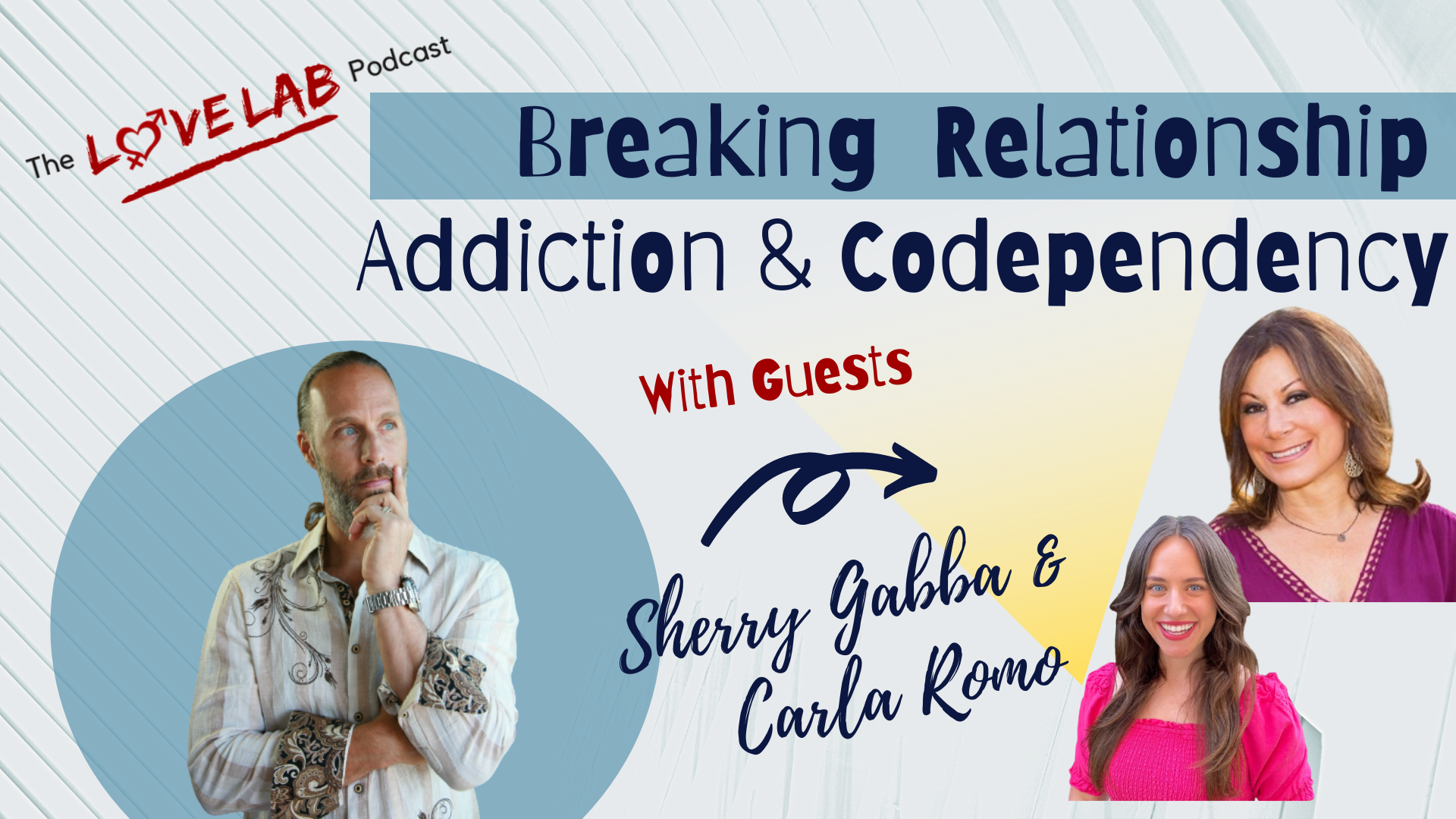
Are you addicted to being in a relationship? Is your relationship codependent? How do you even know if you are addicted or codependent? In this episode, Kevin Anthony talks with Carla Romo certified Life and Dating & Relationship Coach, and Sherry Gaba, LCSW and coach about what relationship addiction and codependency really are, how they are related to each other, how trauma factors in, how you can recognize these patterns, and what you can do about them. This is essential listening if you think you may be experiencing any of these.
Links From Today’s Show:
To Find More From Sherry and Carla, Click The Link Below:
🔥 POWER & MASTERY 3.0 IS HERE!
The most complete men’s Sexual Mastery Course is now even better. To find out more go to https://www.powerandmastery.com
❤️ FREE EXCLUSIVE CONTENT
The Passion Vault → https://www.kevinanthonycoaching.com/vault
💪 MEN’S SEXUALITY & MASCULINITY COACHING WITH KEVIN ANTHONY
If you are ready to make big changes and finally become the man you have always wanted to be, then Unleash Your Inner Warrior Program is for you → https://www.kevinanthonycoaching.com/go/warrior
👉🏼 COUPLES COACHING WITH KEVIN ANTHONY
https://www.kevinanthonycoaching.com/sex-coaching-couples/
👉🏼 OUR HAND-PICKED PRODUCTS FOR YOU
We have hand-selected some great products to help support your Health, Sex Life, and Relationship! Purchasing products from us and/or our affiliates helps support the work that we do and ensures we can continue to help as many people and couples as possible! → https://www.kevinanthonycoaching.com/products/
Kevin Anthony 0:11
Welcome to the Love Lab podcast a safe place to get real about sex whether you’re a man or woman single or a couple This is the show for you.
Céline Remy 0:20
We are your hosts Kevin Anthony and Céline Remy and we are here to guide you to go from good to amazing in the bedroom and beyond.
Kevin Anthony 0:28
Alright, welcome back to the Love Lab podcast this is episode 266 and it is titled breaking relationship addiction and codependency dependency. This is a big topic. I think on the show we’ve talked about these topics a little bit here and there but we haven’t really done a deep dive into certainly not the addiction side of it and I don’t think we’ve covered too deeply the codependency side so I’m excited to talk about those things today. I have some expert guests with me to help us figure this out. Anytime you are talking about addiction and or codependency it gets a little sticky and a little tricky so I’m glad to have some people here to help sort out these details. I will say not only in my own life but also in the work that I do I have seen so much codependency less on the relationship addiction side of these what I would particularly call addiction, but the codependency side is rampant everywhere. So I think this is something that a lot of people as we get into the details of it will really relate to and then they’ll go oh, crap. Yeah, that’s exactly what I do. So even if you don’t think you’re codependent, or addicted, listen to the show, because you might find out that you are you. And if you are you want to know now.
All right. Before we do that, though, quick word from our sponsor, power and mastery. 3.0 is here the men’s sexual Mastery program you have heard about on the show for a long time is now even better. I’ve personally reviewed every module lesson video, audio, and PDF to see if there’s anything else that could be added to make these courses even better. As a result, I’ve added 10 New videos one new audio eight PDFs, and dozens of links to handpick products to help support your journey to mastery. In addition, there’s also a brand new user interface that makes it easier to navigate the course and find your course materials. So if you’re ready to become the sexual Master, you have always wanted to be then go to powerandmastery.com That is powerandmastery.com. The initial feedback on the 3.0 version so far is great. And that of course makes me happy. So go check it out if you need help in becoming a sexual master.
Okay, so I have two guests with me today. I’m going to read their bio Carla Romo certified life and dating and relationship coach and Sherry GABA LCSW. And Coach, they say love doesn’t have to suck. They know this from overcoming their own dating and relationship horror stories, which led them to become experts in healing from codependency dating and toxic relationships. Their 30-year age difference brings you an array of perspectives at any stage in life. If you’re dating in a relationship or divorced, they’ve got your back as hosts of the podcast, The Love Fix, they’ve got the latest tools on how to navigate dating and how to thrive in a successful relationship. Sounds like the perfect people to talk about this subject. So welcome, Carla and Sherry. Thank you. All right. Well, we’re just gonna dive in here. And I want to kind of start by talking about some definitions here. So people understand what we’re talking about. And the first question I have is, what exactly is relationship addiction? What are we talking about? When we say somebody’s suffering from relationship addiction? What do we actually mean?
Sherry Gaba 3:56
So I’ll get into that one Carla probably gets more into the codependency piece, we kind of have our wheelhouses, but we both do both, of course, specialize in both. But it’s a process addiction. It’s any kind of addiction, even like gaming or shopping or daddy, it’s a mood-altering activity, like drug addiction is only it’s not a drug or a substance. It’s actually a lifestyle addiction, or some people call it a soft addiction, and you still get those euphoric states. To that love. You’re sort of in love with the idea of love. Relationship. Addiction is maybe a modified version of love addiction, you’re addicted to being in relationships, and it becomes your whole identity. And just like a drug addict who needs their fix when the heroin or the alcohol is gone, a love addict will have withdrawal symptoms as well. If a breakup occurs or somebody pulls back if somebody discards you, let’s say, someone who’s been with a narcissist or any sort of relationship or someone who’s suddenly you know, pulled back you’re going to feel that saying law longing that needs to, to connect, you feel very empty, feel like you’re sort of in the nothingness in the ethers of nothingness when you aren’t in that relationship. And because of the need to settle for less, you often don’t have a lot of boundaries. If you’re a love addict or a relationship addict, because you want to be with someone, no matter what you settle for less often, you’re often trying to change others, which is very similar to codependency. You need others to feel whole, usually have abandonment issues, separation, and anxiety issues. Usually, you have an anxious attachment style. Not always, you can also be an avoidant, but mostly an anxious attachment style that needs to connect no matter what.
Kevin Anthony 5:45
That was fantastic. You brought in actually quite a few elements, because, you know, a lot of times if you ask somebody, okay, what’s the definition of whatever, they’ll give you kind of the standard definition, but I love that you brought in a bunch of extra pieces in there, because those, those are all really valuable pieces. And I didn’t have to pull them out of you piece by piece throughout this interview. So thank you, because, honestly, that was a really clear explanation of what relationship addiction is. And I want to make a point to I really, like how you started that off by saying it was like any other addiction because now I do not specialize. There are a couple of things I don’t specialize in, in the work that I do with clients. One is addiction, and the other is trauma. So generally, if somebody’s got serious addiction problems or serious trauma stuff, I want to refer them off to experts, because there are people like yourselves who really that’s what they do. However, when I do have clients and I start to see those addictive patterns, one of the things that I often tell them is that this is no different than any other addiction. Right? And that’s sometimes hard for them to wrap their minds around it because they’re like, Well, no, no, this is this sex or its relationship. It’s different from my other addictions. So one of the things I’m trying to help them do often is see that they’re not different that they’re they stem from the same route. So I appreciate that you brought that piece up.
Sherry Gaba 7:03
Right, the opposite of addiction is needing connection or connection. So you’re right, anybody that has a substance abuse issue, they’re lacking some sort of connection, and so they’re escaping with something outside themselves, instead of going inward. You know, it’s yeah, they’re just they’re expecting something on the outside to make them feel good on the inside. Yeah.
Kevin Anthony 7:24
So of course this brings us then to the second question I have it’s perfect segue, which is how is that different from codependency?
Carla Romo 7:33
Uh, hi. All right. So I will go into maybe not as much of a comprehensive definition of codependency but as I like to define codependency is losing your sense of self to somebody else, due to having low self-esteem. So really, this can look like people pleasing lack of boundaries. Like you always want to say yes to people, you don’t want to say no to manipulation. codependents are very manipulative. And this is something that you have to digest in this world of, you know, narcissists are manipulators. And if you’re only a narcissist manipulate no codependents manipulate from a place of, I’m not okay, unless you’re okay, so I’m going to do everything I can to people, please, I’m going to say yes, I’m going to make sure you’re happy. I’m gonna look out for your needs, make sure you’re okay. So then once you’re okay, then I will be okay. And that’s manipulation. They also get into unhealthy relationships, whether it’s work, whether it’s family relationships, friendships, or intimate relationships, there’s always a need for validation, there’s a need for the other person to be fixed and the other person to be okay. And it’s really a loss of self. And so if you’re born into this dynamic, you might have always thought that this was a normal behavior. I mean, that’s very much my own personal journey with codependency until I realized oh, I need to focus on me like I need to be fulfilled it’s not about making others happy. I have to be the one to make myself happy. But really is the root of codependency is low self-esteem and then as a result trying to manage and control other people. I’ve also heard people say this as well it’s like addiction to people is a way to look at it, but it’s not addiction.
Kevin Anthony 9:18
Well, I think that was a fantastic explanation of codependency also. So I’ll put that right up. All right. And, you know, again, you brought up a few multiple things in that as well, and the piece that really jumps out to me which you repeated more than once was basically the lack of self-worth part of that and codependency and I think that’s a part that a lot of people miss when speaking about codependency because well, as you said, right, the person tends to always be focusing on the other how they need to be fixed, how you know, we need to change this, that or the other thing. And of course, the ego won’t let them See the fact that it’s often their own stuff, right?
Sherry Gaba 10:05
It’s not really about you know, shame or blame. It’s really about, you know, what was your childhood like. And of course, you don’t have to have early trauma to be a codependent. But often that is the case. So parents weren’t there for you, they didn’t nurture you, they didn’t bond with you, they didn’t give you what you needed. They were emotionally unavailable, they were inconsistent, then you start feeling well, let’s start you start, you’re invisible, you don’t feel like you have any kind of sense of self. So when Carla said a loss of self, there never was a self. So whatever self you thought you had, you know, it was it, it’s not there. So that’s why you’re such a, you’re so vulnerable to predators because they just don’t know You don’t know what your preferences are. You don’t know what you like, you don’t know what you don’t like. And so somebody toxic comes into your life. And you’re easy prey because you just don’t have any sense of self.
Kevin Anthony 10:57
Yeah, very interesting. You know, one thing that that I’ve noticed as well, in addition to everything that you said, is that you know, a lot of us grew up with parents who were codependent themselves. And so, you know, even if they were caring and gave us attention, and all that kind of stuff that just modeled all day long in the household, what it’s like to be codependent. And in some of those cases, what I’ve noticed is the relationships, you know, they stayed together, they stayed married, and they seemed like they were decent relationships, like, you know, from the perspective of a young child who doesn’t really know any better. So then they grew up learning and thinking that this is how you are in a healthy relationship. This is what you need to do. I mean, what do either of you think about that? Is that something you’ve seen also?
Carla Romo 11:46
Yeah, I mean, absolutely. And I think that codependency is like a family tree situation, that like, it’s not just yourself and the trauma you experience, it’s your parents passing it down from their parents from their parents. And you’re also with codependency, you look at addiction a lot of times, right? And addiction is very common. You know, a lot of people might say, well, I don’t think that you know, my partner drinks too much, or my, my mom drinks too much, or you know, whatever it might be. But addiction looks different for everybody. And I think the other thing too, is that that also might be normalized to you. And so you end up picking partners who mimic behaviors of your parent’s codependency or addiction. And then as a result, you’re passing it down and you’re continuing the cycle.
Sherry Gaba 12:34
It’s definitely a transgenerational type of trauma. I mean, I remember when I went to my first ACOA meeting for those who don’t know what that is adult children of alcoholics. I remember looking at the laundry list and I’m and I’m like, Well, my mother’s not an alcoholic, although later in life, she did start drinking heavily I’m like, this really is weird. Well, her parents were gamblers so she was really an adult child of addicts only the attic was a process addiction called gambling. And she picked up all of those you know, so-called Al-Anon codependent traits, which were passed down to me. And then of course, my mother having such a difficult childhood my dad wanted to make it all good for her, you know, so he became very codependent with her wanting her to have everything that she didn’t have. So we had these two codependents, I mean they love each other but they were highly dysfunctional.
Kevin Anthony 13:27
So this brings up a question that I didn’t write down but seems to make sense at the moment which is at the beginning of this we started talking about how addiction and codependency were different now as we’re diving a little deeper in we’re starting to see that they have some similarities and so my question is how often do you see addiction and codependency showing up at the same time how often do they go hand in hand because you just explained that it stemmed from addiction from their parents from your parents, and then that turned into codependency so what like how often do we see those together does one tend to create the other is one a precursor for the other?
Sherry Gaba 14:10
So I always say if you’re a love addict, you are most likely a codependent if you’re a codependent YOU MAY be addicted to you may be codependent other things like Carl Lewis saying we’re you know pleasing others’ friendships but that doesn’t mean your relationship or love addict but I would say most often that’s my opinion. Love Addicts have a lot of codependent traits for sure.
Carla Romo 14:34
The other thing too, is that actually a lot of addicts are codependent. So you have a lot of addicts get sober and maybe are working a 12-step program or have gone to rehab of some sort or working with you know, addiction counselors. And what they’ll find later on a lot of times is that they also are codependent themselves. And so because it’s not you know, their parents were right so it’s like their parents were addicts so they also it’s not just like your you’re an addict and that’s it like it’s it can it there’s a lot of like a measurement there with the codependency and the addiction piece, but not every codependent like I’m a codependent right and I’m a recovering codependent but I’m not an addict so not everybody who’s codependent gets the addiction. But there are addicts out there who do who are codependent.
Sherry Gaba 15:25
I would say codependency could take them out with their addiction there, you know because they’re trying so hard to please and you know, I think about and again I use a lot of personal examples because I think it’s helpful my ex-husband was an alcoholic addict couldn’t say no and his job and that was his he had severe trauma as a child severe codependency and by not saying no, we had an accident at work and then got on painkillers and the rest is history. So I would say often codependency is definitely like Carla says, underneath addiction, which underneath that is trauma.
Kevin Anthony 16:00
Oh, okay, hold on to that thought. We want to get to that in a little bit, too. But I have another question before that. Because, okay, so now we’re seeing there’s a lot of enmeshment has, as you termed it, how does one tell if they are codependent and or addicted? Like, like, if somebody’s thinking maybe this is what’s going on? Maybe this is why my relationships aren’t working. What like, how can they tell if that’s happening for them?
Carla Romo 16:29
So I’ll hit the codependency side, Sherry, you can back me up on the addiction piece. But I would say you know that you’re codependent if you have a lack of self-worth, this is just going to be really deep. And I’m gonna give you really simple examples, you have a lack of self-worth. And as a result, you need to you need somebody else to fill that cup for you and to fulfill that. So that can look like being in a relationship with somebody who’s abusive, and not ending the relationship because you have those ups and downs and they give you just enough to keep you holding on. That could be being in a relationship with somebody who’s an addict. And just your worth is trying to get them sober. And you are trying everything you can to get them sober, get them sober, get them sober, they all your focus is on them. Because why that makes you feel like you’re important. It makes you feel like you’re worthy that you were able to fix somebody that you are lovable now. So those are two different examples. But it really I mean, it plays out in so many ways in relationships, but the underlying issue around it is, are you staying with this person? Right? If you’re in a codependent relationship right now and are curious, it’s are you staying with this person as a way to make yourself feel better? And that’s a hard question to answer because you might not even be aware that that’s what you’re doing. But the motive of being with them? Is it really about them being sober? Or is it really about you being okay? And I think that’s something to think about there.
Kevin Anthony 18:05
Yeah. But before we go into the addiction side, though, I just want to ask a follow-up question to that, which is, my experience has been like, I completely agree with you that underneath this is the self-worth issue. But my experience has been when helping people is that they rarely ever see it as a self-worth issue. Right. So if they don’t see it as a self-worth issue, how are they going to ask themselves that question?
Carla Romo 18:30
Right? Well, I think that yes. Okay, I hear what you’re saying. So what the question becomes is, how do I get this person sober? What do I need to do to get this person’s help? And then they start to recognize, I mean, you you don’t start from what myself worth, you start from, oh, this person is either abusive, and I’m trying to fix them and help them with their rages. So let me start Googling how to help this person and fix them. My, my, the person that I love is, you know, an alcoholic, how do I fix them? What do I start doing? What are the steps I can take to like, get them to stop drinking so much? And if you’re doing any of that, then I’d say that you’re probably in a codependent relationship. There’s a difference between having boundaries that are healthy and not having any boundaries. So when you’re not in a codependent relationship, you might realize Oh, my partner has a drinking problem. And yes, if you’re codependent you might feel you know somebody who’s in recovery codependency triggered by it. But you’re not sitting there searching trying to fix them doing all these things. Instead, you go and talk to them and you share with them, hey, I’m really concerned I love you, and scares me that you’re doing this. You know, but this is kind of the deal breaker for me. It’s important that you get help and if you don’t get help, I’m not gonna able to stay in the relationship. For somebody who’s codependent, that’s not even an option. The option is I need to do everything I can to fix this person, save them so that then I feel okay and I feel safe. Why? because you’re afraid of being single because you’re, you’re scared to be alone, you’re afraid you’re gonna have to start over, you’re afraid you’re gonna never meet somebody like them again, right? So you tell it’s the codependency thinking it’s not, it’s not a grounded self.
Sherry Gaba 20:14
And I wouldn’t say love addicted thinking to as well. You know, not being able to be alone, feeling empty, if you’re not with somebody, you’ll do anything to not be alone. And that’s why you’re, again, you’re both vulnerable to someone toxic or an alcoholic. That’s just how it is. If you have healthy self-esteem, and you grew up with what you need it from your parents, you would recognize, oh, this is like, I’m losing myself here. This person is hijacking my life, I am obsessed with this person, this is not healthy, I need to move on. But if you grew up and don’t identify those things, you have no sense of presence within yourself, you’re just going to continually be either focused or focused. What’s great about trauma therapy, which is what I do, as a therapist is I help people get in touch with themselves inside out. So once you can be with yourself, remember, that addicts are looking to get away from themselves. They want to be away from the self because it’s so painful to be with themselves. Once you can be with yourself, which is what trauma therapy helps you do. Then you recognize all of this unhealthy behavior and you’re able to go okay, I can self soothe I, I can. I can handle my nervous system regulation. I don’t have to be with this person. Because I’m so uncomfortable within myself, but a codependent or a love addict can’t do that.
Kevin Anthony 21:37
Yeah. So a couple of things there that what I love when I sort of reframed the question, Carla with you know, they don’t see it as self-worth. So how would they recognize that those extra questions that you gave at the end? were great, because those are questions that they’re more likely to ask. So I think that is a great way for people to start the inquiry of Am I really in a codependent relationship or not. But then and you kind of started to go here already. Share it out. I’m just curious if there’s anything in addition to what Carl has shared on how to recognize if somebody is codependent on the addiction side. Are there additional things that people could look for? Or questions they could ask themselves to know like, Am I really in an addiction scenario in this relationship?
Sherry Gaba 22:28
Right obsessiveness? You know, your whole life is about them, trying to fix them, like Carla said, manipulate them, having sort of a spiritual, emotional, and physical bottom. You know, like, when I was with the alcoholics, I got shingles, staph infection, my depression was up, my anxiety was up. All these things started happening to me. And, you know, they say actually, the codependent can have more physical mental issues than the alcoholic I don’t know if that’s necessarily true. But you know, you are losing every part of it. You’re bankrupt inside spiritually, mentally, and physically. And I think that’s when you can start asking yourself, Oh, God, I think I’m in a really unhealthy codependent or love-addicted relationship.
Kevin Anthony 23:11
Yeah, you know, one of the things that my wife and I used to say, and you know, we, she would often have women come to her, because you know, this, this show is about sex, love, and relationships. So we talk a lot about sex stuff, and we do a lot of coaching around sex. And so when women would show up and say, Well, I just, I don’t really lubricate much, or I keep getting these recurring yeast infections, or yada, yada, yada. One of the clear patterns that we saw over the years of doing that work was that those physical responses that women were having were absolutely related to the fact that that relationship itself was either dysfunctional or toxic. And it was manifesting physically in their, in their body, their sex center of their body was screaming, no, no, stop, get out, go away. Right. Is that similar to what you were just describing? Sharing?
Sherry Gaba 24:03
Well, yeah, if you’re resentful, how are you going to be turned on by your partner? You’re so full of anger, that how are you going to get excited about somebody? You’re just you’re living in a state of anger. So yeah, that’s one form of physical bankruptcy is not getting clear, not having that response that used to have to partner with that man is definitely going to cause that.
Kevin Anthony 24:28
Yeah, so let’s, let’s move on. It’s not really shifting gears a little bit, but it’s come up twice. Now, the word trauma. And where I want to go with that is I want if you can to explain how trauma factors into this, right, because you started to mention that’s kind of beneath all these things we’re talking about. So maybe if you could just explain to the audience, how does trauma factor into this and why is it important to understand that?
Sherry Gaba 24:55
A lot of people think trauma is, you know, an earthquake or a fire or hurricane or divorce or all these other things. But trauma can be growing up in a dysfunctional home, you know, having, like I said earlier parents who were unavailable and not nurturing, not getting the bonding that you needed, becoming other focus because your parents were so unavailable. So if that’s how you grew up, or let’s or even if you necessarily grew up like that, but you’ve had other toxic relationships, suddenly you have PTSD, and you’re completely disconnected from yourself, you’re disassociating in relationships. So if you’re not really present in a relationship, how can you know who you’re really with, you don’t know yourself, or you don’t feel yourself or you’re not in the moment with yourself, you can’t possibly be in the moment with somebody else, you know, like intimacy, when you break it down, I’m sure you’ve heard this into me, I see. And I used to think, oh, he was just unavailable, or he was abusive, or he was an alcoholic?
Well, you know, for me, being a trauma survivor, I had my own intimacy issues. And that’s why I was picking those kinds of people. So if you have a lack of connection with yourself, or you don’t have an intimate relationship with yourself, you can’t connect to somebody else. And you actually might even be repelled by somebody who is really available. Like, oh, you know, and so when you do the trauma therapy, we’re like, okay, let’s just get on the edge of that discomfort. Let’s just kind of feel what it feels like to be with this nice guy, let’s say, who you kind of aren’t crazy about. But let’s see if you can just kind of be there for a minute. Because if you’re someone with trauma, you’re gonna like the bad boy, or the bad girl, whoever’s listening to this show. This podcast, you’re gonna want the person who’s unavailable, you’re gonna want the avoidant because that’s how your fault your parents were. And that’s what you’re used to. And we attract what we want, we attract what we know. So get used to attracting something that’s, you know, different actually run the other way if it feels too familiar. That’s what I would say, although I have the caveat is you have to have a track, you have to have some chemistry, and you can’t just make yourself. People think I just don’t let go okay, well, you just asked me some kind of unkind, but if it’s that Oh, my God, obsessive spark fantasy fantasize about them? Yeah. It was thinking about my wedding dress, you know, all that stuff is not healthy.
Kevin Anthony 27:17
I am so glad to hear you say that. Because I can’t tell you how many times I’ve had this conversation, not just with clients, but with my own personal friends as I watch them go through these dating cycles. And here’s what here’s what I hear from the women a lot. They say one of two things like, Oh my God, that chemistry is crazy. Oh, and they’re just all about it. Every time that happens, those relationships crash and burn. But then they meet somebody nice, who treats them really well. And like from a third-party perspective, I can sit back and go, they look like they’re really compatible. And what is what is the thing they say every single time? Yeah, but there’s, there’s no, there’s no like Spark, there’s no chemistry there. And then I said, Oh, okay, that’s interesting. Well, tell me how your day went right. as well. It actually was really cool. And he did this for me. We had a really nice time. And then you hear all this stuff? Yep. But I just I don’t know about him, because I just don’t feel that chemistry there. You know. And yeah, that to me starts to signal that there’s some addiction there, right?
Sherry Gaba 28:18
Carla is definitely the dating expert. But I would just say that if there’s no chemistry, give them you know, give them a no chemistry, if there isn’t a spark some kind of spark, go out with them one or two times. See, just just give a little, you know, a lot of time, but just a couple of times. And then if you have the OH MY GOD feeling. Have your eyes open? Started looking for the
Carla Romo 28:40
Yes, I always say slow down.
Sherry Gaba 28:43
But I mean, if you have that, oh my god, crazy feeling. It’s probably not gonna be the right person. However, it could be. You have to just see that’s when you have your eyes up and go. Are there red flags here? Is this person toxic? Is this person unavailable? Is this person avoidant? So I wouldn’t like to necessarily run the other way. Just be aware.
Carla Romo 29:03
Yes. Yeah. I mean, I’ve got a client. It’s a perfect example. She’s just actually recently got married. But she was in toxic relationships prior. And she met this guy on it app who’s now her husband spoiler alert, and went on a date and then was like, I don’t know, it was kind of boring. And I said, Okay, let’s that boring is great. You haven’t been boring in a long time. Let’s, one more day. Let’s see what happens. Goes On the second day, and then emails me and it’s like, okay, Carla, like actually, it was awesome. He and I have so much in common. This is great. And now they’re married. So they’re in a really healthy relationship. So Bori chill, like all of those things might feel, you know, just not familiar. not exciting. Not that spark factor. But I always say like Jared was saying if there’s a spark Slow down, slow down.
Kevin Anthony 29:57
Yeah and you know, that’s exactly my advice in these cases all the time is really trying to get them to not rely on the chemistry or the Spark as the actual reliable signal. Because I’ve found that it’s one it’s not reliable. And two people who do have codependent or addictive tendencies absolutely cannot rely on that signal at all. But they think that’s the signal like, that’s the one Oh, I felt it here. I like I felt it down here. And like, that means they’re the one. But it’s absolutely unreliable. For most people it is,
Carla Romo 30:32
It does not mean that you’d be great, it’d be a great relationship, or it’s the right person for you.
Sherry Gaba 30:38
And getting back to the addicts and alcoholics, a lot of times they do what’s known as cross addiction. So now they’ve given up the outcome drugs, and now they’re looking for the next high, like, a lot of them end up being foodaholics, or Love Addicts, or they end up gambling, you know, are getting, because now they no longer have the substance. So that’s just something I wanted to throw out there that if you are someone that’s in recovery, you know, be aware of that.
Kevin Anthony 31:04
Yeah, absolutely. That’s a whole other topic we could do a whole show on about how the overwhelming majority of people never solve their addiction, they just substitute one addiction for another. Yeah, and even some of the programs that are supposed to help you solve addiction, all they really do is give you another addiction. But we don’t need to go that it’s not the focus of this episode.
Sherry Gaba 31:24
And that isn’t really their job. You know, I really believe in those programs. But that’s not trauma therapy that’s not dealing with the deeper issues. Those programs are just to help you manage and become more manageable in your life but they don’t mean it’s going to help you with all those other things that are underneath the addiction.
Kevin Anthony 31:45
That’s a very valid point that you bring up. Yeah, absolutely. Okay, I need to take a short break. And then we’re going to come back and we’re going to talk about what people can do about this because so far we have covered, you know, what are they? How do you recognize if you’re in these patterns, and then we got to give people at least a little bit of something about what do you do about it?
Okay, so are you a couple are your relationship and sex life where you want them to be? Are there changes you would like to make but just don’t know how, maybe you think there is nothing that can be done I challenge you to make this year, the year that changes if you are not 100% happy with where your relationship or sex life is. Then get help today and change your life go to KevinandCéline.com/sex-coaching-couples/ I know that link is a mouthful. Don’t worry, it’s in the description. Schedule a strategy call with me today and find out how I can help you get your relationship and sex life back on track that is KevinandCéline.com/sex-coaching-couples/. The link is in the description.
Okay, so as I said, before that little break, we covered what is addiction. What is codependency? How can somebody recognize if they’re in those patterns? The next logical question is if you realize you’re in one of those patterns, what do you do about it? Now there may be it may be the same type of advice for both or it may be separate. So if you guys have your own take on like, maybe what you do for codependency is a little different than what you do for addiction. Or maybe if maybe it’s the same if you’re experiencing both, I don’t know. But I’m really curious to hear from both of your perspectives. What does somebody do when they figure that they’re in one of these patterns?
Carla Romo 33:31
I mean, I always like to say when you’re finding out that you’re codependent, I always say Get a life. But I genuinely mean that and I’m really big on self-love sharing noses. We talked about this all the time on the Love Fix podcast, where the most important relationship you’re ever gonna have is the relationship with yourself. And so my whole thing is, is start getting connected to yourself. codependency is disconnection from self, right, because you’re so enmeshed with somebody else. And when you’re looking at breaking free from codependency and it’s multi-layered here, but one of the biggest things is starting to create a self-love practice. You know, if you don’t have resources to coaches or therapists, you aren’t going to 12-step programs. You know, you’re like, I just kind of want to start doing this myself. You know, really think about how are you talking to yourself on a daily basis. What are you doing in regards to your interests? How are you showing up for yourself? You know, I always say that getting a life doesn’t have to be this like, Okay, you’re gonna do this, this and this all at once, and it’s done. No, it can be very slow.
A lot of times codependents don’t even know what their favorite color is. They don’t even know what they want to do in the next year or so for their goals. So it’s like starting and just kind of asking yourself who am I? And that’s okay if you freak out and you’re like, I don’t know who I am. I don’t even know where to start with that. But go back to something that you enjoy or did enjoy in the past. Maybe you really liked painting maybe you should go buy some paints and you know sit there and get a canvas and paint a little bit and start to connect with yourself in that way. It’s not this like a big boom, you know, I’ve realized I’m codependent, I’m gonna get rid of it and fix it. If you’re codependent, you’re always going to be codependent. Even if you’re recovered, you know, it’s, it’s a daily practice sharing, I talk about this all the time, there is no fix to it. It’s a journey. And so starting your journey looks like What’s one thing I could do today or this week, that I could connect with myself, maybe it’s making yourself dinner, maybe you’re skipping meals because you’re so stressed and you can’t think straight. You know, it’s these little things to start to show up for yourself that over time, then become habits, and then that’s what starts to pull you out of the codependency.
Sherry Gaba 35:46
And then I would say from a trauma lens, you know, if you realize you keep doing this over and over again, there probably is some kind of trauma. So find yourself a really great trauma therapist, someone like myself, who does somatic work or someone who does EMDR or energy healing, tapping polyvagal theory, there are all kinds of great therapists
Carla Romo 36:08
I’ll say like myself that do this kind of work that not everybody, you know, we’ll need that.
Sherry Gaba 36:13
Some people can just, you know, start to self-care, self-love Journey. But if it keeps happening over and over again, I think you might want to look a little deeper. I mean, this is where no, and again, there’s no shame here, I talked about that all the time, no shame. These are opportunities to heal and grow and become self-aware, something that maybe you didn’t have before. It’s an opportunity to shift from everything being on the outside that makes you feel good to starting to feel good from the inside out, which is what Carla was talking about. And, you know, identifying Do I have a toxic relationship with myself, because that’s why maybe I keep picking these kinds of relationships because my relationship with me is toxic. So karma is absolutely right. This isn’t a quick fix. We always say we’re not the quick-fix girls.
Carla Romo 36:59
We’re not the band aid girls.
Sherry Gaba 37:02
What’s so great about The Love Fix Podcast is there are all kinds of things to learn different modalities, different healing opportunities, different things that everybody’s you know, everyone’s going to have a different. Their going to grab on to something different for their healing journey.
Carla Romo 37:17
Yeah, I mean, I’m just going to use myself as an example, when I started the healing process over 10 years ago, on my codependency. I was started with EMDR you know, trauma therapy. EMDR doesn’t work for everybody, you know. And so it’s like Sherry said, there’s, it’s like, not a one size fits all, you got to, you know, try different things. And it’s a journey and exploration. And you might need one thing at a different time in your life and a different chapter and then something else pops up two years down the road, and you’ll need something else.
Kevin Anthony 37:46
Yeah, I love that you brought up a couple of things like when you gave people a bunch of ideas of different types of therapy or or, you know, tools that they could potentially use to help themselves. But I think even the bigger more important thing that you both said there was that this is a journey. And don’t expect that you’re going to find this tool and it’s going to cure you and all will be well after that, that this is something that you’re going to be working on. Probably for your whole life.
Sherry Gaba 38:15
Yeah, but a lot of people don’t want to hear that. addict you want it now you want it you want it yesterday, or you’re codependent. So it’s really about okay, what is this about? Oh, I know what it is, my nervous system is unregulated, so I want it now I don’t know how to self-soothe, I don’t know how to calm myself down. Once you learn those tools, then you’re available for the process to journey. You don’t need to have it. I had a client say, oh, yeah, this guy wants to heal me in 30 days is going to help me get over my breakup in 30 days. And I’m like, Okay, this could be a snake oil salesman. I mean, this, this just doesn’t work that way. But I guess that’s another thing I can say is be discerning Who do you want to work with? You want to work with somebody that’s going to give you a quick fix, or you’re going to work with someone who there’s going to be you know, what’s the word read that resilience, but sustainability? Someone? Yes. Programs that are sustainable, that healing that is sustainable?
Kevin Anthony 39:14
Well, you know, I can tell you that on this show, it’s perfectly okay to give advice that people don’t want to hear because the overwhelming majority of advice that I give on this show is what people don’t want to hear. But see, this is a problem, right? Because most of the people that do what I do are those snake oil salesmen. I’m sorry, I just have to call it out for what No, I got it. They tell you, they tell you that it’s gonna be a quick fix to that and it’s just do this that bing bang, boom, got my 30-Day system, whatever it is. Yeah. And it doesn’t work. It works maybe for a short period of time, but it doesn’t work long-term. And so I’m always on this show. Like, you know, I do a lot of work with men with erectile dysfunction, premature ejaculation, kind of something like look, you got to clean up your diet, right? You have to start exercising. You got like there’s all these other things that people Just don’t ever want to hear like, but if you don’t do those things, whatever other pill tool they give you not really going to work, right? So yeah, we’re used to giving advice on this show that people don’t really want to hear. But that’s exactly why I do this show, because they may not want to hear it, but they need to hear it. So yeah, but he’s got to put it out there.
Carla Romo 40:20
The other thing too, I have to say you have to hit a bottom. I didn’t get help until I hit my bottom and my codependency, and everybody’s bottom is going to look different. There’s not one size fits all. And I also point out to my life is freaking awesome today, because I’m not making choices based on my self-worth and my codependency. So the payoff is fucking real. That’s what I have to say, like, yeah, you got to do the work. And it’s a journey, but I can tell you in my life, it’s freaking awesome. So, yeah, that’s the other big thing I want to point out with all of this.
Sherry Gaba 40:53
Just a reality check. You know, sometimes you can relapse to, like, you can end up having this awesome relationship or life is just so awesome. And then all of a sudden, you’ve been attracted to somebody again, that, you know, you probably should, should have walked away from, and then you end up going back, just like alcoholics, they have relapses. So, you know, be kind to yourself, be compassionate, be compassionate. We’re just human beings. And sometimes things get to the best of us. And we ended up doing things. Recently, I was in a quote, situation ship that I knew probably shouldn’t be in and I relapsed, right? Because I kind of wanted something to work out. And I was really kind to myself when it didn’t work out. I said, Okay, just another reminder, you know, so there’s, there’s no perfect day that comes.
Carla Romo 41:47
That’s the fantasy of love addiction. That’s the fantasy of codependency like happily ever after, oh, I finally got the relationship. Everything’s good. The work is done, right? And it’s like, no, people like life is like ups and downs. Humans are ups and downs. Like, there isn’t this, like, got it, we’re perfect. I mean, anytime that I see a couple on Instagram, that flaunts how amazing they are. And like, is all about just them. And there’s all these posts on them. There’s always a part of me, that goes, I wonder what’s going on underneath some of that, you know, there’s a difference of like posting and saying, like, Oh, my relationships awesome. This is like, what it is like, whatever. And like one or two kinds of things like here and there.
Sherry Gaba 42:32
They just had a fight just before they took that, you know, 32nd shot, you know, on Facebook, I mean, healing, healing is up there. Ups and downs with healings, there’s, that’s part of life life is ebbs and flows just like the ocean, it ebbs and flows. This is how it is. And let’s, it’s acceptance of that.
Kevin Anthony 42:54
Yeah, that is a great point that you bring up. And life really is ebbs and flows. And everything requires continuous work. And that’s, that’s, again, something that people don’t really want to hear. But you know, my wife and I, we used to say all the time, everything is either growing or dying, right, you’re either putting the effort in to build something to sustain something to grow something or not. And if you’re not, it’s going in the opposite direction, right? So it’s, it’s either moving forward and growing and expanding, or it’s shrinking and dying. And people don’t really want to hear that a lot of people want the easy route, they just want to get it to a certain level and put it on autopilot and just let it cruise. But there really is no such thing in life, no matter what topic you’re talking about.
Sherry Gaba 43:36
How often really, people don’t want to feel the pain, I can’t tell you how many people don’t want to feel that pain. And you know what, you have to feel the pain to get to the other side. That’s just how it is you can’t avoid it from one relationship to the next and expect to be fulfilled because you’re basically expecting that relationship to fill you up on the inside, when really it’s, there’s so much more to it.
Carla Romo 44:03
Yes. And I think the other thing too on this is like you’re not living a full life of, you know, a range of emotion because in order to have happiness, right, you have to have pain. Like it’s not it’s not just like pain, and then that’s it, right? It’s not just happiness, and that’s it. So if you’re suppressing your feelings, like you’re in like survival mode, really, and that’s, I mean, I could say that from my own experience of like, that’s how I used to live my life is just trying to survive trying to maintain when’s the other shoe gonna drop, right, and what Sherry talked about earlier, that’s a lot of trauma. And so I think it’s a really beautiful thing when you can get to the point of accepting and allowing the pain to be there. Even if it’s hard, even if you’re gasp pedaling it, right, like you put some pressure on the gas pedal and you put some brakes on and put some pressure on the gas pedal brakes on it doesn’t mean you just have to floodgate the pain but you cannot feel true, you know, this whole spectrum Happiness and beautiful life and love and all of those things if you don’t allow the pain to come in.
Kevin Anthony 45:06
Well, now we’re getting into the philosophical end of this right talking about the nature of our reality in the multiverse that we live in and the fact that the entire thing is based on duality. And so if there’s happiness, there’s got to be the opposite of that, too. All right. So we are getting close to the end of the show. And I have two more questions for you. The first one is, are there any last pieces of advice that either of you would like to share with the audience in regards to drama, addiction, or codependency?
Sherry Gaba 45:43
A trauma piece is definitely getting the help that you need. Work with someone beyond a talk therapist or coach. There is a place for coaches, and there’s a place for talk therapists. But if there really is trauma, you’ve got to work with a trauma therapist.
Kevin Anthony 45:58
Yeah, I completely agree. That’s why when I get underneath the surface and find that there’s serious trauma there, I’m like, You need to go work with this person.
Carla Romo 46:07
Do the same thing as a coach. Yeah, it’s I always refer out for them or for therapy and trauma therapy, especially. The other thing I’d say about codependency is that you don’t have to live your life this way. There are absolute resources and ways of sharing, I talk a lot about this on the Love Fix podcast, we have group coaching programs around this, like, you don’t have to stay stuck in this like this is a choice. And this is an option that you have. And so being able to name it and claim it gives you choices of how you want to respond to it.
Yeah, wonderful that’s great. I mean, leave them with a little bit of positive advice. You don’t have to live this way. There is something you can do about it. But of course, you got to take at least the first step, right? Yeah. Okay, well, there were a couple of little loose ends, I would love to ask you about, but we probably don’t have time to get into them. So I’m just going to skip over those because I think we did a really good job of explaining to people what these things are, how they can recognize them, and giving them some idea of what they can do about it. So I think we did a pretty good job of covering that topic. So I’m going to skip to the last question that I asked all of the guests that come on the show, and you each get an opportunity to answer this one. So this is the Love Lab podcast, its subtitle is sex, love, and relationship. So the question that I always like to ask people at the end of the show is what is your best sexual talent?
Oh, go ahead, Sherry. Sherry’s response right now, her mouth is like, open this is great. It’s sorry, I almost want to wait to that period. Sherry’s response right now, her mouth is like, open this is great.
Sherry Gaba 47:53
I just don’t know how to answer that.
Carla Romo 48:01
I’ll answer it first, then maybe it will give you an idea. Confidence in myself. And that’s a really, that’s a really big thing for me is that and I can I can even speak to this in terms of like, my sexuality and past relationships and things like that. But for me to feel connected sexually, I have to be doing the work within to feel confident. And then I can bring my needs to whoever it is that I’m you know, with, currently right now as my partner. But that’s but that’s what’s important. For me, that’s my talent is being able to focus on myself work on myself, and then bring that sexually. Oh, by the way, Kevin,
Sherry Gaba 48:41
That’s a great question because you had my mouth open, but I’m saying being reciprocal, in a relationship in a sexual relationship. And being and having the ability to be intimate, truly intimate.
Kevin Anthony 48:57
Oh, yeah. That’s very good. Those are great answers. I’d love to kind of leave that question open-ended. Because the first thing that goes through everybody’s mind is, oh, some sort of physical skill thing I got to talk about. But if you’ve listened to this show, for any amount of time, those of you who are listening, you know that the overwhelming majority of things that we talk about are not physical skills. It’s not how to use your hands or your mouth or your genitals or whatever, like, yeah, that’s part of it. But what truly makes sex great is all that other stuff around it. Right. So, like, like you said, Carla, if you can’t really be available for your partner, it’s not going to be great sex. It’s just not Yep. Right. Oh, and you know, same thing. Sherry, you know, if, it’s always one way in a sexual relationship, and there’s no reciprocation, there, you’re going to end up with a bunch of resentment, and eventually, your sexual relationship isn’t going to work anymore, right? So absolutely, just as valid and answer as any other so thank you for being
Sherry Gaba 49:59
So I’m so glad I got that right.
Kevin Anthony 50:04
There really are no wrong answers.
Carla Romo 50:07
Sherry and I have a 30-year age difference. And so that was kind of fun.
Kevin Anthony 50:12
Good. And that’s also why I like to ask that question because it’s just a fun way to end the show. And pretty much everybody blushes a little bit. Ask that. So thanks for being good sports. Awesome. Thanks so much. Alright, well, yeah, thank you so much for coming on the show, I think you did a great job of helping people understand what addiction is what codependency is how trauma factors into all of that, and how they might be able to help themselves if they’re stuck in that. So thank you.
Sherry Gaba 50:41
For the listeners, just make sure you go to the left fix.com It’s really simple the love fix.com We’ve got all our programs there. We have a free workbook, we have a quiz on my relationships, healthy. Lots of goodies. So go to the olympics.com and you can learn all about us and hear our podcast.
Kevin Anthony 50:59
And there will be a link in the description to that. Any other places you want to send people or just over to the love fix.
Carla Romo 51:06
Go to the love fix. That’s that’s where we’re at. That’s where we’re hanging out.
Kevin Anthony 51:10
Alrighty. Well, thank you again. It was a great conversation. I appreciated having you both on the show. Thank you. All right, everybody. That’s all the time that we have for this episode. And I will see you next week.
We hope you liked this episode of the Love Lab podcast. If you enjoy this show, subscribe. Leave us a review and share it with your friends.
Céline Remy 51:35
And for more free exclusive content. Join us in the passion vault at kevinanthonycoaching.com/vault. kevinanthonycoaching.com/vault. Thanks for listening. And remember, you’re amazing.
We hope you liked this episode of The Love Lab Podcast. If you enjoyed this show, leave a comment and share it with your friends.
RATE & REVIEW THE LOVE LAB PODCAST
—> LEAVE A 5-STAR REVIEW ON APPLE PODCAST
ASK A QUESTION FOR THE NEXT EPISODE
—> Click here to leave a message directly to Kevin and Céline to be answered on the air.
Thanks for listening and remember you are amazing.
Kevin Anthony is a Certified Sexologist, Tantra Counselor, NLP Practitioner and a Sex, Love & Relationship coach. For over 10 years he has worked with men, women, and couples to have the relationships of their dreams, and the best sex of their lives! He is also the host of “The Love Lab Podcast”, creator of the popular YouTube channel Kevin Anthony Coaching, and creator of the popular online course series “Power and Mastery” as well as other online courses for both men and women.