Kevin Anthony 0:00
Welcome to the Love Lab podcast, the place to be for honest and real talk about relationships and sex, whether you’re a man or woman, single or a couple, this is the show for you. I am your host, Kevin Anthony, and I am here to help you have the relationship of your dreams and the best sex of your life.
Kevin Anthony 0:23
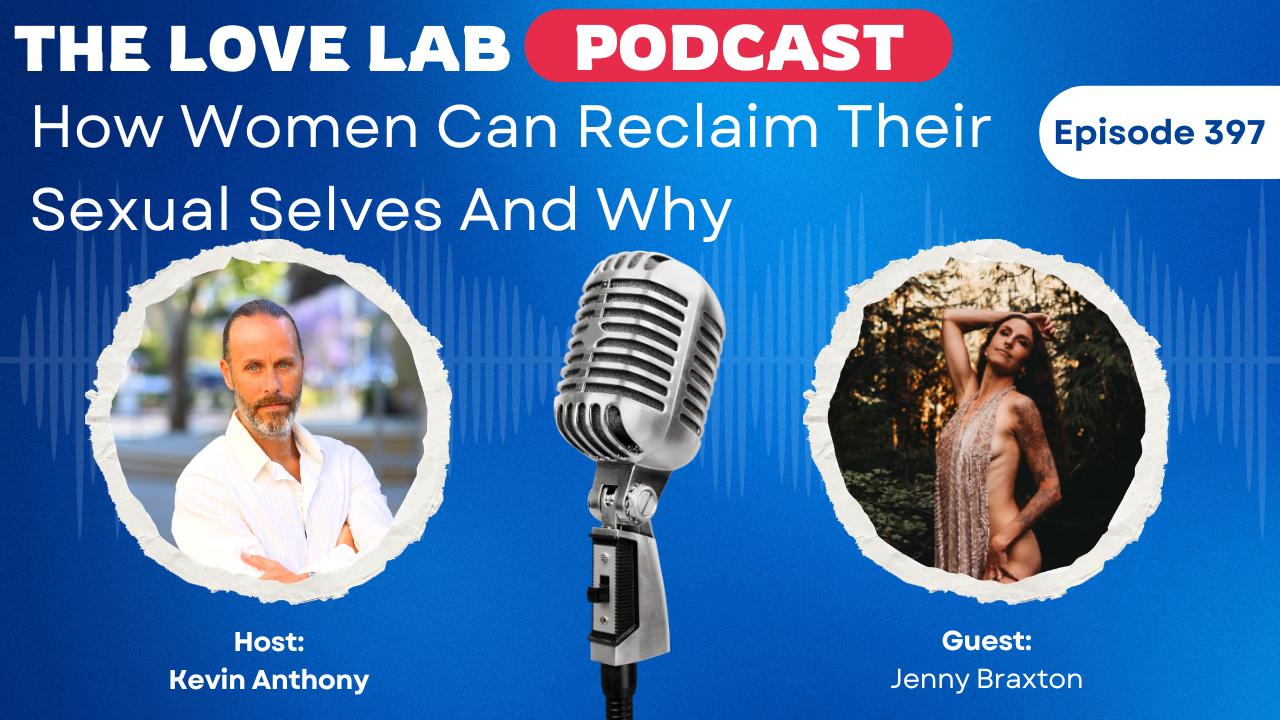
All right, welcome back to the Love Lab podcast. This is episode 397, and it is titled, how women can reclaim their sexual selves and why we’re going to have a great conversation today. I have a guest who you can see if you are watching on YouTube. I will introduce her in a moment, but we had a really amazing pre-interview call. We started to get deep, and I’m like, Okay, we need to have this conversation on the actual show, and it really is about women reclaiming their sexual selves. And what’s interesting about this is, and I know we’ll get into this in the conversation too. You know, I’ve seen quite a few women over the years, you know, really go down this path of like, you know, wanting to reclaim their sexual selves. And unfortunately, sometimes the way it’s presented creates conflict on the other side. And what I have learned from speaking with a number of women like my guest today is that it’s really just a miscommunication.
Kevin Anthony 1:27
So like when we start diving into what this means about how women can reclaim their sexual selves and why they would want to do that, I want the men who are listening to understand that this is actually for the benefit of both of you, the more she can reclaim her sexual self, the more she can become empowered in that way, the better your sex life is going to be. And trust me, you will hear her personal story. However, I found that when the two sides start talking about this issue, conflict comes up, and I think some of it has to do with the language that’s used. Maybe we’ll get into that. Maybe we won’t, but the main core of what I really want to talk about today is why this is important, why women have to reclaim their sexual selves, like what happened? Where did they lose it? Because that wasn’t always true throughout all of history, right? Why did that happen? What’s the conditioning behind it? How can they recognize that and move past that? What are the benefits that everybody would get, both the women themselves and the men, and the relationship as a whole? So we’ve got a ton of stuff to dive into today. I’m really looking forward to this conversation.
Kevin Anthony 2:34
As always, before we get there, we have to pay the bills. Got a couple of ads to read here, men, life is too short to fall short in the bedroom. In today’s day and age, it is no longer acceptable to be mediocre at best, or even worse, if you are struggling with erectile dysfunction, premature ejaculation, ejaculation control, or poor skills in the bedroom, then power and mastery is for you. This three-course program will have you rise to the occasion every time, last as long as you want, and wow her with your skills in and out of the bedroom. Join the exclusive club of men who have taken charge of their sex lives by going to https://www.powerandmastery.com/sexual-mastery. That’s https://www.powerandmastery.com/sexual-mastery.
Kevin Anthony 3:14
And ladies, I have something for you also. After so many women commented on my viral video titled What men consider a good blow job, saying they didn’t know that’s what men really wanted, I created the blow job Mastery program. I teamed up with Coach Ry Duong of Eterna Love to create a program designed to teach you exactly what will drive your man wild and make him look at you like the goddess you are. This program gives you step-by-step guidance, and includes multiple live demos to show you how to master the techniques he will never look at you the same way again. Go to https://www.sacredfemininearts.com/bjmastery. That’s https://www.sacredfemininearts.com/bjmastery.
Kevin Anthony 3:57
And every once in a while, I just have to show my T-shirts here on the show, right? Here it is. This is the women’s version: more orgasms, less wars. We got the male version over here, too, just different colors. Great message. We need more orgasms and less wars. You can find those on my website. https://www.kevinanthonycoaching.com/.
Kevin Anthony 4:21
Okay, my guest today is Jenny Braxton. She is a somatic sexuality and relationship coach and the founder of pussy centered living. Oh, of course, we want to know more about that, which is a revolutionary path back to pleasuring the body and true sovereign power through reclaiming the fullness of the feminine and healing with the masculine. She helps women have the passionate sex and soulmate partnership they deeply yearn for. Welcome to the show,
Jenny Braxton 4:51
Jenny, thank you so much for having me. I’m really excited to be here and to have this conversation with you.
Kevin Anthony 4:57
Me too, like I said in the intro. We started to go pretty deep in the pre-interview. So I hope we can recapture a little bit of that magic.
Jenny Braxton 5:06
Oh, we will. And so much more.
Kevin Anthony 5:09
So one of the things that came out in that pre-interview. Now, you and I knew each other a little bit prior to that, but I got to know you a lot more, and you started to tell part of your story that you know I had never heard before. And so you created, you know, what you consider, or what you call pussy centered living, but it was really your own struggles in your own relationship that led you down that path and led you to creating this. And so I thought it might be nice to start with sort of talking about your journey where you were, how you realized that there was a problem, how you sort of worked, you know, through that to get to where you are. And I wanted to start with that, because when people start hearing about, you know, you’ve got to be empowered in this and that, I want them to understand where this comes from, why there was such a need for this.
Jenny Braxton 5:59
Yeah, absolutely, yeah. I feel like we have to start at the origin story, especially because so many people are like, Why pussy? This is a good intro to that. But so I’ve always known myself as a sexual person, and so when I first met my husband, we had incredible chemistry right off the bat, so much so that we ended up getting pregnant with our first child a month into knowing each other, and so that was kind of the beginning of our story. We dove right in, and I was really terrified, because, you know, I loved him so much, and we had this incredible chemistry. I was really terrified that the same pattern would happen with him that I had experienced in all of my past relationships, which is that there would be this incredible chemistry right off the bat, and then, you know, few months in, six months in after that kind of honeymoon period was over, my desire would just completely dry up and go away, even though I still love my partner, Even though I was still attracted to them, and I hated that, right?
Jenny Braxton 7:03
Because that sexual intimacy and connection was something that was really important to me, and so I was, like, I said, terrified the same thing would happen with my husband, my now he’s my now husband. But of course, because we got pregnant so quickly, off the bat, like, you know, the title, like things. It was not the typical relationship that I had experienced in the past. And so we had our first child, and immediately sex was then, you know, excruciatingly painful for me, seven months up to seven months after my son was born. And I found that terrifying, because no one had ever told me that was a thing. And I was, yeah, I was terrified that, like, enjoyable, pleasureful sex was just over for me. But eventually, you know, the pain subsided. My pleasure did come back, thankfully.
Jenny Braxton 7:52
But of course, I had a baby, and, you know, experiencing all the ups and downs that that brings. And then our second child was born two years later. And so if in that time, I was starting to get more discomfort in sex, and I was, you know, my desire wasn’t the same as I had been, also, because I was really tired from small children and everything, and trying to find my rhythm with that. But, you know, I was, I kind of, we kind of figured it out, and I just started to kind of view myself as, like, well, maybe I’m just not that sexual of a person anymore. Like, you know, maybe this is just what happens, or maybe it’s that old pattern of mine coming back, like, this is just what happened, right? This is the cultural narrative that we are so taught and that we see, right? That’s like, yeah, things are great, but like, that sexual chemistry doesn’t last, and it’s gonna fade as we have more time together and as we have children, right?
Jenny Braxton 8:41
And then six years later, my third child was born, and once again, that excruciating pain came back after his birth, but this time it lasted for a full year. And once again, I was just like so terrified that this was my reality, and it was really painful, not only on a physical level, but also on an emotional level, because once again, like I love my husband, and I wanted to want him and have desire, and I wanted to be able to have sex with him that was pleasureful. And thank goodness at this time, I was able to actually see and become aware that, oh, this pain that I’m experiencing, like this is actually a signal to my body, and this is actually my body inviting me to come deeper and to explore what’s happening here. And so I started my own deep dive into, yeah, healing and reclaiming my sexuality. And you know, it was, it was a beautiful journey that I’m not going to say I’m like, complete, right?
Jenny Braxton 9:38
I think it’s a journey that we can always be walking on because our sexuality is infinite, and we can always be expanding it, right? But it really started me down the path of creating, yes, this, this body of work that I now call pussy centered living, because I will say, I call it pussy centered living, not just like pussy centered sex, or pussy centered relationships, because she. Truly, this absolutely affects us in our sex life, but it also affects us in every aspect of our lives. So that’s the Cliff Notes version of, yeah, how I came into this.
Jenny Braxton 10:13
Oh, and I will say, I guess I will add, that I was able, through the deep work, right through my willingness to turn inwards and to look at my conditioning and trauma that I was carrying in my nervous system and all of these things I was able to completely overcome, the pain, the resistance, like my lack of desire that I had been experiencing, and, you know, have been experiencing a flourishing and a thriving in my sexuality ever since. And of course, you know, sexual relationships, they are definitely things that go through seasons. But I kind of make a joke with my husband, like every time we make love, I’m like, I think that was the best time yet, because it does truly, after 18 years and three children together, our sex life does continually feel beautiful and new and like it is expanding and incredibly orgasmic and pleasureful together.
Kevin Anthony 11:08
That is wonderful and amazing. And we’ll get into exactly how you got there a little bit later, but I want to go back a little bit more to the beginning of your story, because there were a couple of things there that you shared, one of which is this idea that, well, that’s just what happens right after you’ve been in a relationship for a little while, the magic wears off, and that’s just how it is that is an absolute myth. And I’m glad that you’re here to help bust that from the female side.
Jenny Braxton 11:36
100%. I love busting that myth.
Kevin Anthony 11:38
The other thing is that, you know, this was years, years that you struggled with this. When I’m hearing you tell the story, you’re like, it was the first kid, then the second kid, then there was a year of this, and then six months of that, and then, you know, like you’re talking about years of dealing with this issue, and then finally realizing that something had to be done. Now, what I think is also interesting, and this is a follow-up question for you. You know, I’m not sure about anything. I’m not asking you to, like, rat out your husband, or anything like this, but, but over a long period of time like that, struggling in this area, obviously, you know, he’s feeling, to at least to some extent, his needs aren’t being met. You know, getting to that place of, I need to do something. Did that come solely from you? Did that come from discussions you had with him? Like, how exactly did you get to that place?
Jenny Braxton 12:29
Yeah, that’s such a good question. And honestly, it was completely led by me. I mean, my husband was nothing but completely supportive and understanding. And of course, it was hard for him too, like he also wanted to have that connection with me, but he also, he, you know, he was also experiencing the pain that I was in, especially when I was experiencing that real pain. And yeah, I mean, it was definitely hard, for sure, but he never communicated anything that wasn’t just very supportive, very understanding, and continued to support me as I, you know, went down my pathway of going into the healing, but it really was completely led by me. There was a time before I started doing my own healing around it.
Jenny Braxton 13:13
There was a time when I was like, I was, you know, kind of joking, but really, not really joking, where I was like, go get a mistress. Like, please go find somebody that you can have sex with. Because I was, you know, I knew he had needs that weren’t getting met, and I wanted them to be met, but I just did not want to be and did not feel like could be the one to meet them. And he was like, No, I don’t want a mistress. I want you so. So we could say, even though he wasn’t, like, vocal about, like, gosh, maybe you should get support, like it was just that. It was, it was really more just from my desire to have the type of incredible intimacy and connection and closeness that I knew that we could have well.
Kevin Anthony 13:51
And that brings up another interesting follow-up question, which is, I’ve seen this many, many times, you know, with women. I’ve seen it a little bit with men as well, as they get older, and they go through, you know, andropause, but I’ve seen it more on the female side, which is when they lose that drive and desire, right? They also don’t have the drive and desire to fix it. So in other words, like, there seems sometimes to be this idea that the women on the other end are going, I don’t have any drive and desire to have sex, but I have a desire to fix the problem. And unfortunately, what I see a lot of the time is, once they lose the drive and desire for sex, they’re just kind of like whatever, I don’t care, like I don’t have a desire to do it anyway. So why would I put a lot of time and energy and money into trying to fix this problem? So my follow-up question is, I’m curious, like, where were you at in that, you know, did you lose both the drive and desire for sex and also to really do anything about it, or did you have a desire to do anything about it? If you didn’t, how did you get to a place where you finally did?
Jenny Braxton 14:57
Yeah, that’s a great question, and I’m like me. The answer has something to do with my Scorpio placement in the house of my relationships. Because for me, I mean, I there was even though I didn’t have the desire for sex, like I had an incredible desire to, yeah, to fix it, to heal it, to overcome it, because I knew what was possible in the relationship with that incredible sexual chemistry. And you know, I really am a person who I know myself, that I am here in this life to experience it to its fullest, to experience all the beauty and the pleasure and the connection and and love and love with my my husband, right with my partner is incredibly important to me and love without that sexual peace, that connection and that pleasure, it is not the fullness of love that I desire. And so even though I didn’t have the desire for sex, and granted, as we said, this was a period over time.
Jenny Braxton 15:55
So it wasn’t, you know, it took me a while to really get into my own journey around it, but I was very incredibly, I mean, so motivated by the fact that it became my life’s work. This is what I do to help others, just because I wasn’t willing to settle for anything less than the incredible connection that I have with my husband. And I also really do see and experience that that sexual connection that we have with our partners, that’s like the glue that is really supporting the relationship through everything else, because it is inevitable, right? The relationships are going to go through ups and downs, and all things. And having that connection, that we both prioritize, to me, is just like, is everything, and it’s not a piece that I could go without.
Kevin Anthony 16:44
Well, I’m really glad that you were able to recognize how important that is to a relationship. And you know, they’ve done studies on this. I talk about it on the show all the time, where they they look at couples, you know, that have really successful, happy, fulfilling sex lives, and then they look at other areas of the relationship, and then what they found is that couples who have a fulfilling sex life tend to have longer, more successful relationships, so the relationship lasts longer, and they report a higher level of satisfaction in the relationship when that component is there. So we know how important that is. However, I think a lot of people don’t really realize that they kind of think of sex as just like an extra, like, Well, nice to have if it happens to be working for you, kind of thing. And I don’t believe that that’s really the case. So I’m curious, you know, what advice would you have for a woman who’s going through something like what you went through, she doesn’t have the desire, but she also doesn’t necessarily have as much drive as you had to solve the problem. Like, what guidance would you give her?
Jenny Braxton 17:52
Yeah, well, I would just say that I understand, because I don’t think we can talk about this topic without really looking at what the underlying cause is, like, why would a woman specifically not realize this is such an important part of a relationship, and why wouldn’t she be motivated to do something about it? And it comes down to conditioning, which is a topic I know we were very excited to talk about.
Kevin Anthony 18:16
Let’s just get into it.
Jenny Braxton 18:19
Let’s just get right into it. And so I do want to name, I’m about to reference, the patriarchy. And so I just want to name that. When we say the patriarchy, we’re talking about a system that has harmed all people in it, and it’s not like a thing against men. So I just want to say that this is not against men at all, right, but it’s incredibly important to understand the context that we’re coming from, which is that we’ve been living in a patriarchy for 5000 years, and one of the main core messages that women receive in the patriarchy is that our sexuality is a sin, it’s dirty, it’s shameful. We will be cast out of society. You know that sex is something that is not part of a loving relationship, right?
Jenny Braxton 19:05
And you may listen to me and think, like, oh, like, this is the year 2026 like, we don’t really believe that anymore, but unless you have done the somatic work, like from the body to move this conditioning out of your nervous system, it is 100% inside of you, and it may come forth as feeling like, Oh, I’ve lost my desire for sex, but that’s fine, like that’s not really needed in a loving relationship, right? Like that type of resistance, or any resistance that we experience in our sexuality, if we go deep enough, and sometimes we don’t even have to go that deep, right? But this is the core conditioning that is creating, that is that we have stories within us that are in our nervous systems, in our psyches, that have been passed down for generations, that tell us that sex is not safe, right, that it is not okay for us as women to like or to. Want sex, right?
Jenny Braxton 20:01
And so that creates this conditioning that that creates, then all of these symptoms or problems or issues that we then face, and in my opinion and experience, it’s like, thank goodness, we lose our desire and we get this opportunity to go in and do this work, because reclaiming the power of our sexuality and the power of our pleasure, what I call pussy, right? Like I have, there is no other work that I have found is as empowering as life changing transformative. There’s, there’s nothing more that I have found in this.
Kevin Anthony 20:35
Yeah, we’re going to talk a little bit more about that conditioning in just a second. I do, for anybody that might be getting triggered on the other side, I do just want to say that we understand that not every culture throughout all of the 5000 years repressed women’s sexuality in that exact way many have, and some still alive on this planet today are doing this like really, really hard, and there were others that were more open about it, and, you know, there was a mix, but in general, especially when we’re talking about our Western culture, that has been a thing for a long time. Now there’s been suppression of sexuality in general, not even just, you know, the female sexuality, but what it really comes down to, at the end of the day, is it’s always about power and control.
Kevin Anthony 21:26
So anytime somebody is trying to control your sexuality in either way, it’s about power and control. And, you know, when we talk about patriarchy and power and control, it’s, it’s literally, you know, controlling reproduction, controlling genes being spread, controlling who, who, whose genes get to pass on, you know, who gets to have a dynasty, and who doesn’t, and all that kind of stuff. So, so that stuff is there, and it’s real, and we have to recognize that it’s there. And as you pointed out, also, you said, Well, okay, it’s 2026, like, you know, this is part of the conversation that we had, where we started to go really deep. Because one of the questions I asked you was, ” How do you think that programming has changed, you know, over the generations?
Kevin Anthony 22:11
Because one of the things that I see in society, and this is true, not just of sexuality, but of a great many things, is you see people really holding on to stuff that they have never actually experienced in their lifetime, and in some cases, that their parents generation didn’t even experience, or even maybe their grandparents generation didn’t really experience all that much. But you hear people saying, well, because, you know, I’m part of this group that experienced this thing. And from, you know, a point of view of 2026, where we’re not really aware maybe of the science behind it, we just go, so what, like get over it, right? However, we do know from science that these past traumas can actually live in our DNA. There’s a classic experiment they did with monkeys. We talked about this, where they put these monkeys in a cage, right?
Kevin Anthony 23:04
And I can’t remember if it was water or food or something, and every time the monkey would go to get it, they’d zap it with an electric shock. And so it got to the point where, you know, when a monkey would start to go and go for the thing, other monkeys would like, grab them and beat the crap out of them, which really was their way of like, Hey, don’t get shocked, right? But that’s not the interesting part of the experiment. The interesting part of the experiment was that they started to rotate the monkeys out and bring new monkeys in who had never been shocked by the electricity, and they had the same reaction that the other monkeys had, because it had been passed down through their genetics in some way.
Kevin Anthony 23:48
And it’s, it’s a little bit of what we call epigenetics. It’s not the full explanation of epigenetics, but I just wanted to share all that to let people know that, you know, when we’re talking about this topic, and we’re talking about conditioning, don’t just roll your eyes and go, What a bunch of crap. I wish people would just get out of victim mode, because honestly, that’s the reaction a lot of us tend to want to have. Is just like, stop being a freaking victim and get over it. But there is actually something to the fact that these things do get passed down, and unless somebody in that line actually takes the time to break that pattern, we can get stuck in it. So let’s just talk about that. A little bit more about these patterns that are conditioned in there. Talk about what a few you mentioned. Of course, you know some of it already. Sex is bad, but there are some others as well, right?
Jenny Braxton 24:34
Absolutely, oh my gosh. And I mean, yeah, it’s so good that we’re having this conversation. And thank you for naming some of the ways that people could roll their eyes at conditioning. But like, if you want to be able to have, like, the most amazing sex of your life, for your entire life, and specifically, if you’re a woman, you just have to look at this stuff, because it literally is held. In our bodies, and it is the thing that’s stopping us from wanting sex, from enjoying sex, from, you know, from our desire that we are really designed to experience. So yeah, I was sharing in our in our pre conversation, I shared one of the conditions that really came up for me as, like a big one, and it was a really powerful thing.
Jenny Braxton 25:20
So I would love to bring that up here again, which is that I still actually remember the exact moment, the exact place where I was standing when I realized that I was putting the responsibility for my pleasure onto my husband. And so the conditioning that the other part of the conditioning that goes along with that is that we are conditioned as women that it is our responsibility to, we’re obligated, right, to take care of the sexual needs of our male partners, specifically, and and I love when you and I had this conversation previously, you were kind of like, well, I don’t know do like, like, I don’t know my past partners. They didn’t have that conditioning. And so once again, this is where it can be. It’s like so deep, and it can be so subtle that we’re not always aware that that’s what’s going on.
Jenny Braxton 26:07
But once again, I guarantee that women have this conditioning unless we have become aware of it and shifted it. And so for me, part of that, like feeling of part of the conditioning of feeling that I was obligated to provide for my husband’s sexual needs, because there was a part of me that also, like, resented that and didn’t want to have that obligation. So then it was kind of like, okay, you know what? Then the responsibility of my pleasure is on him. Like, if he wants to have sex with me, then he can turn me on. Right? Like, you want to do this. Like, all right, come on. Like, you do it. Do it to me. Like, get me going here.
Kevin Anthony 26:41
Oh, this is really big, what you just shared. So I don’t even know if I can, if I can restate it in a way that makes it any clearer than what you just said. But that attitude, right? That attitude of, well, if he wants it, then he needs to do the work. That attitude you do see a lot in women, and I don’t think men have any clue where that comes from. And when they do encounter it, it just pisses them off, right? And then creates more disconnection, right? And it makes it even more difficult, you know, for you to have that type of sexual connection. And I just the way that you describe that, of where it comes from, I think if more men understood that, it would make so much more sense, like say it one more time, because you said it so well, the way that you said it.
Jenny Braxton 27:36
Yeah, absolutely that, that the core conditioning is that we, we have been conditioned that we are obligated to care for our male partner’s sexual needs, or another way to say it is that our pleasure, our sexual pleasure specifically, isn’t first and foremost for us as the woman, right? It’s first and foremost something to be shared with our partners, specifically male partners. And so when we have this conditioning that we when we that we feel obligated, right, that we think our pleasure is actually for somebody else in service of somebody else, then what comes on top of that is, is like, yeah, these feelings of like, okay. I have that resentment here. I have resistance. I don’t want to do that. Or, yeah, okay, you want to have sex with me. Like, you turn me on. You do it.
Kevin Anthony 28:21
You know, I have no doubt that there are still men out there who kind of believe that, right, that you’re my wife. So you’re obligated to do that. Although you know, we were talking about how this has changed. You know, over generations, I’d be willing to bet it’s not nearly as many men as people think. And so the reason why I bring that up is that there’s going to be a lot of guys out there like the way you describe your husband, right? Like, I don’t know anything about your husband. I don’t know what his background is, I don’t know where you know he was raised, or anything like that, but it sounds like he’s absolutely not in that category, right? The way he showed up and supported you through those years. And, you know, you gave him off ramps, and he was like, No, I don’t want to do that, right?
Kevin Anthony 29:05
You know, like, so it seems to me that he’s absolutely not there. And I know I have never felt that way, even before. I knew all the things I know about relationships and sex, even when I was young, like, I tell my origin story of how I got into this work, it all revolved around wanting to be better in bed so that I could please my partner, right? You know, and I know, that there are a lot of other men out there who are just like that. They’re not thinking, well, she’s obligated. Damn straight. She’d better get in, like I know that they don’t think that; however, they’re in relationships with women who are still holding that resentment, even though they have never shown any behavior like that. And that’s why I think it’s so important to talk about this, because from our point of view as men, a lot, we just don’t get it. We don’t understand it, because we’ve never felt that way. We’ve never put that pressure on you. We’ve never said those words in any way, and it’s not even how we feel in our cool. Right? And yet we still come up against that resentment and that resistance.
Jenny Braxton 30:06
And that was honestly one of the reasons why I was so excited to have this conversation with you, is because, like I, I have and can work with, you know, men and couples, but by and large, I work with women. By and large I, you know, I’m talking with women on my own podcast. And so I think it’s really important and valuable to also have the male perspective. So thank you for that, and exactly what you just said, like so many men are not considering that their wife is obligated, right, or their partner is obligated to fulfill their sexual desires. And that’s where we get to go back to this piece, that conditioning is something that’s literally passed down to us, right? Subconsciously. It’s in our psyches. It’s literally in our nervous systems. And so even though, yeah, the man like my husband, exactly, he was not like I he was not doing any sort of action or behavior that would make me feel obligated.
Jenny Braxton 30:59
But yet, still, that was the conditioning I carried, because it is essential that we take our own responsibility for our experiences, right? And so even though he wasn’t putting that on me, and many men are not putting that on their partners, it is still inside of us, so we still have to do the work around it and that, and that’s just, that’s just how it is. But I really, you know, we’re not victims in this. It’s not like, Oh, poor us. Like patriarchy did all this, and like, man, we have to do all this work. Like, once again, as I said earlier, I have not done anything that is more empowering and liberating and like connecting me to, like, the authentic truth of who I am, than being willing to go into my sexuality and do the deep dive of the conditioning and the trauma and all the other things that are held within there. Like, we get to do this work, ladies, like, it’s amazing work.
Kevin Anthony 31:55
Yeah. I mean, whenever it comes to personal work, whether it’s around sexuality or any other personal development work. You know, I will often see people who have that kind of attitude of, ” Why do I have to do this work? And I always say you are looking at it from the completely wrong point of view. I like the way you put it. We get to do this work. And I think, too, at a deeper spiritual level, like, you know, everybody wants to know, well, maybe not everybody. There are a lot of people who are just going through life oblivious, but those who are at least somewhat awake, you know, the question of what’s the meaning of life? Comes up like, what? What is this all about? Right?
Kevin Anthony 32:31
I can’t necessarily answer that for you, but what I can tell you is that a lot of spiritual traditions will tell you that the whole point of it is to learn and to evolve your consciousness, right? So again, you get to do that work. You get to dive into all of those places so that you can elevate your own consciousness. And one of those places, of course, for both men and women, is sexuality. So I often ask people, I say, you’ve got to figure out a way to make that shift, to reframe the way you look at doing the work. And I’m really happy to have you here on the show to tell women that message from a female point of view. Because if I say it’s a man, look, ladies, you’ve got to dive into your sexuality. You’ve got to fix this stuff. Trust me, it’s for your own benefit. I’m going to get a whole lot of F you. But to hear it from somebody who’s been through the journey and the struggle themselves, and has come out the other side and is able to say, ladies, trust me, this is worth it. You should do it. I think that is powerful.
Jenny Braxton 33:42
Yeah, yeah, I agree. And what I like to say is that, you know, it’s, it’s not our fault, right? It’s not our fault that we have this, but it is our responsibility, because literally, nobody can do this work for us. And yeah, I mean, I just, I mean, we could go on and on and on about the benefits, as I said earlier as well, not just in our sexuality, but like in our whole lives. Doing this deep dive into my sexuality literally made me a better mother. I felt better within myself and all aspects of my life. Like, it really changed everything for me, because there’s, there’s a piece here that, of course, is part of our sexuality, but also is outside of sexuality as well, which is just pleasure in general, right?
Jenny Braxton 34:25
And pleasure is something that is essential for women, to women specifically, not to say like pleasure is important for all people, but specifically women, I do believe we are designed as creatures of pleasure, like we have a clitoris, which is the only organ on any human body that has no other purpose than to provide pleasure. And so to me, that is a sign that, like that is part of our nature, and that’s actually really important. And that was a pleasure, like during the time when I was going through, you know, lost my desire, thought I wasn’t a sexual person, having a. This pain. Like, at that point in my life, pleasure was not even a word in my vocabulary. I was like, pleasure. Like, are you kidding me? I have way too much to do. Like, no. And so that was, that was a simultaneous journey of mine. As I was doing the sexual deep dive, I was also just looking at pleasure in my whole life and reclaiming pleasure as an essential part of my nature. And so it truly was life-changing in the realms of sexuality, absolutely, but truly in my whole life. And I’m not exaggerating even a little bit when
Kevin Anthony 35:30
I say that, yeah, well, I mean, I think humans in general, we are, we are meant to experience pleasure, and that’s part of our birthright. And I think one of the reasons why that’s suppressed is because when you take pleasure away, you disempower people. Right now, obviously, you know you can go too far in the direction of pleasure seeking, right? And that’s what’s always used to try to crush your desire for pleasure. Oh no, no, no. If you do that, you know it’s going to be bad, and it leads to addiction, and, you know, all this kind of, you know, it can it Yes, but you can drink too much water and die too. But water, water is literally essential for life, right?
Jenny Braxton 36:11
So, oh my gosh, I love that. That’s so good, yes.
Kevin Anthony 36:12
All things in moderation. I tell you what you also said something about, you know, women having occluders, which is the only organ designed specifically for pleasure. I’ll give you another sign that women are absolutely meant to experience pleasure. Your ability to experience pleasure is literally unlimited. In other words, if we look at a man, for most men, even the ones that are really trained to know how to, you know, you know, hold their ejaculation and control it, and, you know, have multiple non ejaculatory orgasms. At a certain point, we get to the point where it’s like, Okay, that’s it. That’s all we got, right?
Kevin Anthony 36:55
But women, you can go forever, and every time you have an orgasm, it can get bigger and stronger if we have an orgasm, slash ejaculation, right? We’re depleted of energy, and we’re like, Okay, we gotta go rest. But you, your, your, your capacity to experience pleasure is basically unlimited, like it’s as much as you want to allow yourself to experience. And I think, one, that’s a sign, right, that you’re meant to experience it. Why would you have this capacity if you weren’t meant to use it? And two, I also think it’s one of the things that has scared the shit out of men for a very long time, and they’re like, Oh no, we can’t have her experience in that much pleasure. That’s dangerous.
Jenny Braxton 37:43
Yeah. I mean, we could, we could go really deep into this, but it’s kind of like a little bit maybe off topic, but, but I very strongly, deeply believe that, yes, pleasure is an immense part of our power. And I’m like, yeah, why do you think that they’ve been disconnecting us from our power for all these centuries of patriarchy, right? And just like you said, you take away pleasure, it disempowers you, so we could go down a whole rabbit hole into that pleasure, like is our power in a real, real, true and real way. But I, first of all, I love that you just gave this reflection of like, another bit of evidence that we are supposed to be pleasureful creatures. Is this expanding nature of our pleasure, which is so true, and something else that, just to kind of speak to this in a different way as well, which is that, as you just so clearly articulated, right, the man only has the ability to expand and bring in pleasure to, like, a certain level, right?
Jenny Braxton 38:44
And let’s say that we have, you know, a couple, a man and a woman, and the man is really wanting to, like, you know, for both of them to have more pleasure in their sex life, and to have these beautiful, intimate, expansive, cosmic experiences. And if the woman is not into it, it just ain’t gonna happen, right? Because it is actually the woman who is a who is really controlling the amount of pleasure that one is going to experience together, no matter how amazing your male partner is, no matter how devoted he is to your pleasure, how skilled he is, how long he can last, right? If the woman does not own her responsibility around her, part of it, there’s just, there’s going to be a limit, and then the converse is true, right?
Jenny Braxton 39:24
When the woman is, like, in full ownership and taking responsibility, responsibility for her pleasure, right? And absolutely, just like you were saying, you can learn to expand and expand and have greater capacity for that sensation and that energy and that pleasure. Like, okay, yeah, our man may have to, like, take some breaks and rest and recover, right? But, like, what I’ve seen and experienced is that he is going to rise to meet her, right? And is going to step into that expansion of the whole container of pleasure together. And that’s really something only a woman can lead.
Kevin Anthony 39:59
Yeah, I agree she’s definitely the leader in that space, or at least she should be anyway. No matter how much the man wants to feel like he’s the leader.
Jenny Braxton 40:09
The man can be the leader in many ways, right, but right in this particular way, right?
Kevin Anthony 40:13
And I wanted to follow up with that and say that, like, you know, we’re talking about, oh, she’s the leader, or he’s not the leader. Or I do want to, of course, make the point, as I do all the time on this show, that when we’re really talking about that, you know, just amazing, you know, out of this world, sort of cosmic experience that you can have through sex, it really is a co-creation. And that’s, that’s the, you know, the basis of everything I teach, when I’m trying to teach people how to have better sex, it’s like, how do we come together and co-create this because you’re right, if she’s not into it, it’s never gonna get there, right? And if he’s either not into it or can’t keep up, you’re not gonna get there, at least not together. She might get there on her own. But so yeah, it’s both of you.
Jenny Braxton 40:56
I wanna go a little deeper with you there once again, like I only have it from, you know, my perspective, the woman’s perspective, and, well, this is, this is my theory, and what I really teach, which is that when a woman is willing to take her responsibility and do the work, and let’s say that she is expanding in her pleasure, her capacity, all that stuff, and maybe at first, that her man, her male partner, isn’t quite on board with it. But what I have found and seen over and over and over again in my own life and in clients’ lives, that when we’re with the right person, that just by us doing our own work and them not needing to do the work with us, right? Like, I will say, like, my husband is amazing and has his own like, growth mindset, right? But he doesn’t do the work in the way that I do the work, or the way that I think he should do the work, or that I think he would benefit from the work, right?
Jenny Braxton 41:48
And so I’ve learned just to be like, Okay, I am just going to trust that he’s got his path. I’m going to focus on myself over and over again. And what I have found is that all the issues, all the problems that I thought we had, and all because of him and because he wouldn’t do his work around it, right? Those all went away completely. Went away. And we kept experiencing, I kept experiencing what I actually wanted to experience, just through my own focus on me doing my own work. And I do know that there are women who will do that, and they’re like, ” My partner isn’t meeting me. My partner isn’t meeting me. And so from my perspective, I’m like, Well, maybe that’s a sign that this actually isn’t the right person for you, potentially.
Kevin Anthony 42:26
Yeah. I mean, I think there’s two different things going on here. So one point, which is very valid, and I actually share this all the time with clients, when, you know, sometimes they’ll come to me and they want to work with me, and they’re like, I don’t know, you know, maybe, maybe I should wait until I can get her on board, or get him on board or whatever, and I say, okay, would it be better if your partner was on board and we could do all of this together? Of course it would be. But you can still make massive changes in your relationship just by shifting the way that you show up.
Kevin Anthony 42:59
So that’s the first point that you’re making is that once you took responsibility for and made those shifts yourself, you saw the whole dynamic shift with your husband, and a lot of the things that you thought were his issues turned out not necessarily to be his issues. So that’s one part, and then the other part is kind of what I was alluding to before, is like, you know, if your guy’s still stuck in the old way of thinking and not really caring about your pleasure, and, you know, doesn’t, can’t last long enough. And it’s just like, you know, I’m in for my quick ejaculation and out like, you know, you’re not really going to be able to have that kind of amazing sex with somebody who’s just simply not willing to do that.
Kevin Anthony 43:36
But what you were suggesting is, in your case, right? You made these shifts. You started showing up differently. And although he may not have been consciously doing the work, he was rising up to meet you there. And that’s that, that’s co-creation, right? He’s still, even though maybe he’s not reading as many books or doing as many practices or whatever, he’s still at least meeting you there in the bedroom, and that’s what enables you to really go there?
Jenny Braxton 44:02
Yes, this. This is true. This is true. And part of the way that I see how this mechanism works right is because it is the Empowered feminine that activates the masculine, at least from my understanding, the way that I see things and experience things, right? And so that’s where this other piece is like, because this is also a story that I hear from women a lot, like, oh, I can’t be experiencing what I want to be experiencing because my partner won’t do the work with me. And that’s where I’m like, like, you said, if he was willing to do the work, would that be, like, lovely and amazing? Like, yes. And also, that does not need to stop us. And when we’re willing, once again, to just take our own responsibility, like our doing the work, and as the feminine coming into our own power, it has this magical, energetic dynamic that then happens where once again, if that truly is the right partner for you, then things are going to shift, and he is going to come and. And meet you. Yeah, I’m curious how that resonates for you with that feminine activating the masculine.
Kevin Anthony 45:04
Oh, absolutely. This is actually a big part. You know, I coach a fair number of women as well, and I actually coach a group of women. It’s about twice a month now. I used to do it every week, and this is a big part of one of the things that I teach them is this idea of I talk about it in several different ways, but I talk about it sometimes in terms of inspiring the masculine. There’s a word that I like to use, inviting the masculine, is another term that I like to use where I teach women, like, yes, do your work, become the best version of yourself you can be, and inspire him to step up. And so I often talk about, you know, you create sort of the opportunity, and like, it’s like, you open the door, and then you just wait for him to step through it and meet you there, right? Like, I love that. It’s a big part.
Kevin Anthony 45:56
You know, a lot of times women don’t necessarily want to hear this, and I’m not saying that it’s solely her responsibility, but I often do feel that, you know, women are kind of sort of the keepers of the relationship, in a sense, because they tend to be more emotional beings, because they’re more tuned into that. I think that when they really take the lead at nurturing that relationship, that will inspire him, and he’ll step in a lot more. Unfortunately, what I see a lot of times is she’s expecting him to be the guy from the romance novel and be the one to initiate it all, and he’s over there, completely oblivious, and doesn’t even know he’s supposed to do these things. And then resentment builds.
Jenny Braxton 46:39
Totally, totally, yeah. I mean, where we could have like, a multi-hour conversation to go into, like, all the nuances and all the things here, right? And and what I really like to another aspect that I really bring into my work, especially around relationship, is that if you are a woman or a person with a pussy, right, like reclaiming the feminine coming into our feminine power, our sexuality, our pleasure, put us see like that is the essential first place for us, and then from that seed of our power, right, we can then start shifting the dynamic with the masculine. But we don’t only do that with the, you know, outer masculine of our male partner or husband or whatever, right? There is actually an inner masculine aspect within each and every one of us.
Jenny Braxton 47:24
And when we actually learn to create the dynamic that we want with that inner masculine, first and foremost, that is where we start to see really miraculous ways that our partners like shift and show up and meet us in these ways where we’re like, oh my gosh, who is this? Because we’re actually tending to this inner place first, and that is part of the feminine, right? Is that everything feminine really is starting on an inner level, and so cultivating that inner relationship first is going to save us a lot of hard work and external reality in the long run, absolutely.
Kevin Anthony 47:59
But you know, I am way past when I was supposed to take my mid-show break, but there we just were so into the conversation, there was not a good place to really pause. I didn’t want to break the flow of that. So let me just do that. And when we come back with the remaining time that we have left, I really want us to dive into how women can potentially make this shift, because I think we made a really compelling case for why they should be doing this, what the benefits are, right? You know, I mean, when they’re seeing how your relationship shifted from your personal experience, and then just sharing all those things that you just shared about how much better you know the relationship will get, I think is compelling. So when we come back. What we have to do is help them a little bit, get them at least started on that path of how they can get there.
Kevin Anthony 48:46
Okay, ladies, are you tired of always picking the wrong guy? Does it seem like there just aren’t any good men out there? Are you struggling with your sexuality? Or do successful relationships seem like a mystery you can’t quite crack the code on, then it’s time to get help. Check out my women’s relationship and sex coaching program at https://www.kevinanthonycoaching.com/women/. In this program, we work on removing sexual shame, becoming confident in your body, learning the sexual secrets that drive him wild, what to really look for in a man when dating, and how to break old patterns like always choosing the wrong guy, and so much more. This is your opportunity to learn everything you’ve ever wanted to know about men, while also creating a real lasting change in your life. Go to https://www.kevinanthonycoaching.com/women/. And I say this all the time when I read my own ads, but I often have guests on the show who I think do amazing work. And so, like, I’m reading this ad about, you know, come work with me as my coach, and I’m like, there are so many good people out there, you could work. But I know I’m not supposed to say that, right? I’m supposed to just drive everybody into my own programs.
Kevin Anthony 49:53
But, you know, I did that ad specifically for my women’s coaching program, because for a lot. Actually talking about, you know, women today. And so, you know, if you want to work with somebody, and you want to, like, I just can’t understand men, why do they do what they do and all that kind of stuff. And like, you know, come sign up and work with me if you’re still in the place you know, of, you know, of the resentful woman who’s got the conditioning and all of that, then go work with Jenny. I’ll give her an opportunity at the end of the show to talk about how you can get in touch with her, because if you’re in that place, I think you need somebody like Jenny to help you through that, somebody who’s actually experienced it and knows how to move through it.
Kevin Anthony 50:32
So okay, enough of the ads there. Let’s get back to the discussion that we were having. I want to talk about now that we’ve made this compelling case. We’ve talked about the conditioning that’s there. We’ve talked about how even though they may not be aware that it’s there, it’s still influencing how they show up. We’ve talked about the importance of reclaiming that sexual power, that sexual sovereignty. How, like, if a woman’s going, you know, I’m not sure if I got that conditioning. Maybe I do. They tell me I do. So maybe I must like, but I just know that my relationship and my sex life aren’t working the way I want it to, or I feel like it should. Maybe there’s something to this. How does, where do they start?
Jenny Braxton 51:18
Yeah, that’s such a great question, and one thing I want to share is that we don’t have to go digging for the conditioning or the trauma or like the things that are holding us back. Really, we just get to be very aware and notice what the experience that I’m having. And if that’s different from what I want to be experiencing, then what do I want to be experiencing instead? For example, a woman is like, I have zero desire for sex. I would like to experience a lot of desire for sex. And I would love to have, you know, beautiful connected sex with my partner. And so first we just come into that awareness, and I will share that I’m a somatic coach, so the way that I approach everything is in the present moment through what is actually coming up for us, alive and present within our bodies.
Jenny Braxton 52:07
And I think it’s essential, like we cannot do this healing work without coming into the body and into the somatics of the body, because this is really where all the conditioning, all the things live, and we have to go in there in order to shift it. But it doesn’t have to be this big. Like, ha, thing. Like, really, what we get to do is, first, we get to learn to just feel inside of ourselves and feel our sensations. And that can be a big step, because for a lot of women who are not experiencing the sexual experiences they want, like, not desire, not pleasure, oftentimes we are up in our heads, right? Because it’s uncomfortable in our bodies, because it’s not feeling good in our bodies, and so as a way of protecting ourselves, we’re like, I don’t want to feel that, so I’m just going to come up in my head, or maybe somebody hears me, and they’re like, Okay, I’m going to, I’m going to breathe into my body. I would invite you to breathe all the way down into your pussy, right?
Jenny Braxton 53:01
But then you’re like, Well, I don’t feel anything, right? It just feels like nothing, or numb, or disconnected. And once again, like numbness and disconnection is actually a way that our body has tried to protect us, right? Because it’s like, oh my gosh, there’s all this stuff I’m holding down here that I really don’t want to feel, so we’re just not going to feel anything. And so a really simple, I mean, it’s so simple, yet I cannot just, you know, say enough how powerful it is is truly just to take a breath all the way down, right down to your root, imagining you’re breathing all the way down to your root through your pussy, and just being present with what you’re experiencing, right? And this is a really important piece that we don’t, we don’t judge or reject anything that we’re experiencing, right? So for like, oh, I don’t feel anything, okay, can we be present with that, right? Can we embrace the experience of not feeling anything right?
Jenny Braxton 53:56
Or, oh, there’s discomfort. And I will say we can. We can do this, not in a sexual experience. And I would really encourage us to practice outside of sexual experiences, right? But once we’ve got a little practice with this, or maybe you’re somebody who you know already has familiarity with coming into your body and feeling your sensations, then practice this when you are when the idea of sex comes up, but you feel the resistance of like, oh, well, I’m too tired tonight, or oh, I’m not really in the mood right when that resistance comes up, stop. Notice what I am feeling in my body right now? And once again, there we can there’s many, many, many, many, many layers to this work, but oftentimes just simply being present with the experience we’re having can actually shift that resistance or whatever is in the way and then actually lead us forward. Sometimes it takes us practicing it a lot, right?
Jenny Braxton 54:49
But so that’s number one, being able to really come down into our bodies and be present with what is there. And then number two is learning tools to support you when. Resistance arises, right? Because of resistance, it can come up in the form of excuses, right? Once again, of like, oh, it’s been so long since, you know, I’ve made love with my partner. Like, we should make love, but like, oh, I don’t want to, because of this. It’s too busy. The kids, blah, blah, blah, blah, blah, right? Those excuses are just like the surface layer of the resistance. It’s actually coming from the deeper things, right? So being present with it, and then also, resistance comes up as a physical sensation in our body, right? So for feeling shut down, if we’re feeling contracted, if we’re feeling tight, if we’re just like, I don’t want to to really explore what that feels like in our body. And then it’s really about creating safety for ourselves, right?
Jenny Braxton 55:43
That’s like, okay, part of me that’s feeling resistant, like, I’m not going to force you to do anything that you don’t want to do, right? But I’m going to be present with you. I’m going to feel you, and then I am going to choose pleasure. And so, pleasure, the most foundational way that we can access our pleasure once again, is through the body, right? Pleasure comes through our senses. And so let’s say we’re in that experience, right, where we’re, like, noticing that there’s resistance, like, oh, I don’t really want to have sex. I come in, and I’m present with that. It feels like some kind of contraction or tightness in my belly, right?
Jenny Braxton 56:21
So I’m just kind of present, and I’m feeling that, and I’m like, it’s okay, little contraction, we’re not going to do anything we don’t want to do, right? But I am going to start attuning to pleasure. So even in this experience, I’m going to maybe take a deep breath and feel the pleasure of that breath, right? Or I’m going to gently stroke my skin and feel the pleasure of the touch on my own skin, or maybe I’m going to look over at my beloved partner and just feel the pleasure of this person who I love so much, right? Or maybe, you know, we go over, and I’m like, I will, can you hug me? You’re like, let’s have a conversation and experience the pleasure of that. So it’s this. It’s really being present with what’s inside of us, honoring any resistance and being curious and present with any resistance that comes up, and then also choosing pleasure anyway, in whatever way or form that’s accessible to us. That’s like a very, very basic beginning place, I would say.
Kevin Anthony 57:17
But that’s great, because you gave some really actionable things that, you know, women can start doing right away. They can start bringing that awareness. I mean, first thing, right? They can, they can make a decision to say, I’m going to take charge of my pleasure again, right?
Jenny Braxton 57:33
Let’s make that number one. Number one, making a commitment to be responsible for your pleasure, right?
Kevin Anthony 57:39
And then after that, yeah, yeah, it’s, it’s, it’s actually, you know, just taking those steps that you mentioned, and feeling what’s in your body and noticing what’s going on and, you know, making conscious effort to appreciate something like you said, you know, look at my, my partner here, and appreciate them for this or that, you know. So those are some, some really simple steps. And, you know, this is the perfect time to segue into, you know, what happens if, okay, they start that journey and they’re like, Man, this is hard. I need some help with this. How might they actually find you and work with you?
Jenny Braxton 58:16
Yeah, I’m really glad you brought that piece up, because, like, it’s, it is so much harder to do this work on our own, and I’m not even sure we can do this work completely on our own. And so yes, please come find me the best places. I’m on Facebook at Jenny Braxton, or on Instagram at pussy with 3s dot centered dot living. And I also have a podcast called the pussy centered living podcast, so you can get some, some a feel for me over there. But I really, I do. I mean, I love working one-on-one with people, because we can really, like, we can really get in there and do the deep dive into the conditioning and clearing. And I also love holding groups of women. I have a community called the pussy center living community, because when we do this, work together, like, the results are just exponential. And I really do think that we need this. We need each other in this. Like, we can’t, we can’t do it alone, because there are going to be, like, it’s going to be hard at some point or another. Like, it’s not going to be easy sailing. I can guarantee that. But once again, it’s very worth it.
Kevin Anthony 59:21
Yeah, well, you know, there are a lot of things in life that are difficult and challenging to go through, and I think it’s important for people to know that they don’t have to tackle them by themselves all the time. There are people out there who can help you, and there’s absolutely no shame in that. And you know, sometimes it can really shorten the amount of time it takes to move through something. So if you could do that, if you could hire somebody to help you through this process, why wouldn’t you, is the question. And I think also in this particular case, you know, women, I’ve noticed really do enjoy working in groups with others. Women, whether it’s just another woman or a group of women, that’s something that generally makes them feel safe, makes them feel more connected, helps them release oxytocin.
Kevin Anthony 1:00:10
So it’s just a really great environment for them to do that. Not necessarily the case for us as men, you know, we tend to prefer maybe a bit more one-on or, like, we’ll figure it out on our own kind of thing. But, but for women, I think that, like, if you have an opportunity to, you know, be in a group of other supportive women, I think that that will be extremely beneficial for you. So it really is all right. Jenny, I want to thank you for coming on the show talking about this subject, raising some awareness on it, helping women realize that it really is up to them to step up and reclaim their sexual power, and that it’s absolutely possible to do, and that there are a ton of benefits for doing it.
Jenny Braxton 1:00:54
Thank you so much for having me on this was just like wonderful, and I really love getting your perspective as well. So thank you so much. This has been a total pleasure.
Kevin Anthony 1:01:03
You are welcome. And, yeah, I’m really glad that we got to have this conversation, and I hope people get a lot of value out of it. All right, everybody, that’s all the time I have for this episode, and I will see you next week.
Kevin Anthony 1:01:23
I hope you liked this episode of the Love Lab podcast. If you enjoy this show, subscribe, leave me a review, and share it with your friends, and for more free exclusive content, join me in the passion vault at https://www.kevinanthonycoaching.com/vault/. That’s https://www.kevinanthonycoaching.com/vault/. Thanks for listening, and remember, as Celine used to say, you’re amazing!
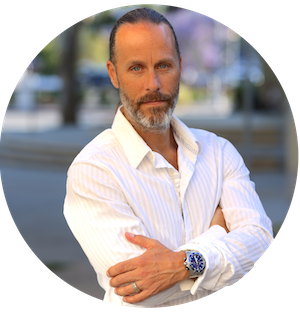
Kevin Anthony is a Certified Sexologist, Tantra Counselor, NLP Practitioner and a Sex, Love & Relationship coach. For over 10 years he has worked with men, women, and couples to have the relationships of their dreams, and the best sex of their lives! He is also the host of “The Love Lab Podcast”, creator of the popular YouTube channel Kevin Anthony Coaching, and creator of the popular online course series “Power and Mastery” as well as other online courses for both men and women.

Leave A Comment