Kevin Anthony
Welcome to the Love Lab podcast, a safe and fun place to get real and learn about sex. Whether you’re a man or woman, single or couple, this is the show for you. I am your host, Kevin Anthony, and I am here to guide you to go from good to amazing in the bedroom and your relationships.
All right. Welcome back to the Love Lab podcast. This is episode number 336, and it is titled “Updating the Attachment Theory Model.” If you’ve been a listener of my show or worked with me as a coach, you know that attachment theory comes up pretty regularly. I’ve had other guests on the show who were experts in attachment theory, and I think attachment theory is a good model. What’s interesting is the title of this episode—”Updating the Attachment Theory Model.”
One of the things that attracted me to today’s guest and this conversation is that I think models are fantastic in the sense that they help us understand something about our world or our experiences that are difficult to comprehend. However, they are not set in stone, in my opinion. In other words, if someone comes up with a model that does a good job of describing an experience we have as humans, it doesn’t mean we’re locked into that model forever.
A perfect example is much of what Freud talked about. Freud came up with some interesting stuff, but a lot of research has been done since Freud wrote his work. We have a better and deeper understanding now. To say that Freud’s understanding of the world is the only way we can look at psychology or human behavior just doesn’t make sense anymore. Having been somewhat involved in the world of attachment theory for a while, I’m not a psychologist or specifically trained in attachment theory, but I’ve read a number of books on it and interviewed people. It’s an interesting concept. I was really curious to know what else we’ve learned about attachment theory since the original ideas came out. That’s what we’re going to talk about today.
We’ve got some new information about attachment theory and potentially better ways to utilize it as a tool to help ourselves and our clients in the coaching space. That’s the goal of today’s show.
But before we do that, a short word from my first sponsor: Power and Mastery 3.0. Power and Mastery 3.0 is the latest version of the popular men’s sexual mastery course. If you are struggling with erectile dysfunction, premature ejaculation, or simply want to increase your skills in the bedroom, then Power and Mastery is for you. Join the exclusive club of men who have taken their sexual performance into their own hands and become sexual masters. Mastering your sexuality is a key component to becoming the man she has always dreamt of and craves. Don’t leave your sexual performance up to chance. Become a sexual master today by going to powerandmastery.com and joining the exclusive club of men who have taken their destiny into their own hands. That’s powerandmastery.com.
Okay, so my guest today, who, if you’re watching on YouTube, you’ve been seeing the entire time here, is Adam Lane Smith. With an unwavering belief in the transformative power of secure attachment to help address many social ills facing the modern world, Adam has amassed a dedicated following of over 550,000 on social media. Together, they are rewriting beliefs about how human connection is supposed to function. Adam teaches honesty, direct communication, clear boundaries, measurable levels of trust, and other means of building secure and healthy relationships. Welcome to the show, Adam.
Adam Lane Smith
Very glad to be here. Thank you, and thank you to everybody out there listening for having me here as well.
Kevin Anthony
In your bio, before we even jump into the questions, you teach honesty, direct communication, clear boundaries, measurable levels of trust, and other means of building secure relationships. I’m a “yes” to every single one of those things. I’m like, yeah! Does it get any better than that? You also mentioned in your bio about the social ills facing the modern world. Imagine how many of those could be fixed if more people were teaching honesty, direct communication, clear boundaries, and trust.
Adam Lane Smith
That’s right. That’s where we’re supposed to be: creatures who can trust each other, work together, and solve problems. When we have that, things go great. When we don’t have that, things go really badly.
Kevin Anthony
Indeed. Okay, well, enough of the bio stuff. Let’s jump into what we really want to talk about today, which is this idea of updating the model of attachment theory. Before we get into updating the model, however, I can’t assume that everybody has listened to my previous episodes on attachment theory. Therefore, I would love it if you could give a brief history of attachment theory and what it’s based on—sort of the original model. Then we’ll get into how new research is changing that.
Adam Lane Smith
The original model was generated back in the 1960s by John Bowlby. Essentially, he asked, “How do we, as human beings, learn to connect to other people, and how do we get screwed up?” This is what he was trying to figure out. I think he was sort of updating Freud’s theory of psychosexual stages and trying to find a better explanation for how human relationships are formed and where we get that blueprint. What he decided was that, when we are little kids, how our parents or caregivers relate to us determines how we learn to connect. Do they listen to us when we ask 50 million questions? Do they yell at us, or do they answer? Do they leave us to cry it out in the first six months of life? Do they hurt us? Do they punish us for moving and breathing, or do they work with us consistently, lovingly, and reliably so we learn a pattern of low stress? Do we learn that we’ll be connected, cared for, and listened to, and that, yes, there are healthy rules we need to follow, but everything is safe and we work together?
There’s brain chemistry and hormones involved, but essentially that’s the model. You either learn as a child to be securely attached to your caregivers and expect the same in relationships, or you learn to be insecurely attached and believe you won’t be cared for appropriately. Then you have to work hard to protect yourself and manage other people. Insecure attachment makes relationships performance-based, and you live in a constant state of nervousness and caution. Those are the two absolute bird’s-eye views of the different approaches to attachment.
Kevin Anthony
That was great, by the way. It was very clear and succinct, which I appreciated. So, I’m curious about your take on it. You’ve explained the basis of attachment theory, but what is your personal opinion on it as far as a tool and how it has worked thus far?
Adam Lane Smith
I think it’s a great model for explaining how we learn to relate to other human beings. I’ve got five kids myself. I grew up with attachment issues and had to fix them when I was 20. I’ve seen what relationships are like when they are not honest, direct, and straightforward—when people don’t believe they can work together in conflict and are scared all the time. I’ve also seen relationships where people can have direct, clear conversations and navigate issues by working together. They ask questions when they’re overthinking or worrying, and they resolve issues for mutual fulfillment. These are two very different ways of existing.
I think attachment theory is the best explanation we have so far, but it needed an update. When it was created, researchers thought maybe 35% of people had attachment issues. Now, research shows up to 65% or even 75% of Gen Z adults have attachment issues. It’s become much more prevalent, nuanced, and complex. It’s affecting just about everybody. We’re seeing the dating pool deteriorate, marriages falling apart, and families getting worse. People are turning to destructive behaviors and experiencing emotional epidemics.
We needed clearer ways to talk about what’s happening to people and to build a plan to fix it and help them achieve a healthier, secure place. We also needed a better definition of what it looks like to become secure later in life because most people think, “I lost that when I was a kid, so I’ll never have it.” That’s not true, and that’s another concept we had to update.
Kevin Anthony
Yeah, I asked that question because when someone says, “The old model doesn’t work,” people assume they didn’t like the original model. I wanted to make it clear that we’re not bashing the original model. We’re saying it’s a great model, but it needed more nuance for where we are now.
Adam Lane Smith Absolutely. I love the original model, but it needed to evolve to address today’s challenges.
Kevin Anthony
You also brought up something I was going to ask next: why you feel it needs updating. You answered that by mentioning that up to 65% of Gen Z have attachment issues. Why do you think there’s such a big difference between the original estimate of 35% and today’s higher numbers?
Adam Lane Smith
For the last 110 years, families, especially in America and the West, have gotten worse. Social networks have broken down. Generational resiliency has declined. Earlier generations had more social safety nets in place. The Baby Boomers, for example, still had social networks that provided support, even if they had attachment issues. Gen Z, however, does not have those safety nets.
At the same time, we’re also understanding how to ask questions differently, so people answer more honestly. It’s possible that attachment issues were always more widespread but weren’t reported accurately. Regardless, the situation is worse now. The rise of dopamine-focused activities, such as social media, sugar, and pornography, combined with less oxytocin-driven human connection, has led to a breakdown in emotional health. Families are less connected, and society is less equipped to handle these issues, which leads to increased anxiety, depression, and attachment problems.
Kevin Anthony
Yeah, I completely agree. In the coaching space, it’s rare to encounter a client who doesn’t have some form of attachment issue. What’s ironic is that we’re theoretically more connected than ever with technology, yet we’re considerably more disconnected.
Adam Lane Smith
Exactly. When the first iPhone dropped in 2007, we saw a massive rise in depression, loneliness, and social isolation, despite increased connectivity. The question is: connected to what? When teens hang out in person, they exchange oxytocin and serotonin, which bond them and regulate stress. Now, instead of human connection, they bond with their devices, which flood them with dopamine instead of oxytocin and serotonin.
This lack of oxytocin prevents the production of GABA, which regulates cortisol, leading to chronic stress. Devices replace real human interaction, leaving people more anxious, lonely, and disconnected. Over time, this constant dopamine rush burns out receptors, and the lack of meaningful connection exacerbates depression and anxiety. This is a major reason why attachment issues are worse now than ever.
Kevin Anthony
So well explained how that whole cycle happens. And you know my audience, I mean, I have a fairly good, solid audience, starting around 25 and going up to about 60-ish, so I’m getting a fair number of people who really need to hear this. But man, that cycle you just described is starting earlier. I mean, these kids are getting phones now at what, like 10, right?
Adam Lane Smith
Tablet toddlers are a big thing. They’re raised from six months old on a tablet because mom doesn’t have time, dad doesn’t have time. The tablet becomes their babysitter in many ways. Then they have YouTube celebrities that they’re connected to—Miss Rachel is a big one for a lot of people. These YouTube celebrities essentially become like daycare workers for them. They’re plugged into this endless dopamine machine, and then we wonder why they aren’t sleeping well at night because their brains are overstimulated with dopamine and blue light.
We wonder why ADHD rates have gone up so much that one in seven American boys is medicated for ADHD right now. We wonder why suicide rates among 11-year-olds are skyrocketing so fast that pediatricians are sounding the alarm, but no one is listening.
We’re not really connecting as human beings anymore. We’re connecting to devices and forming pseudo-relationships while being more isolated from families, caregivers, and friends than ever before. Back in 1995, about 60-65% of couples were connected through family and friend networks. Today, that’s flipped—65% of couples meet through dating apps and services, and only 12% meet through family and friends.
For most of human history, family and friend networks have been the primary drivers of human matchmaking and romantic connections. Now we’re meeting total strangers in a way that’s abnormal for our basic biology and how we’ve evolved as a species. Technology isn’t doing us any favors in this respect, but the real issue is the way we’re constructing and maintaining—or not maintaining—our social relationships and family connections. That’s the core driver of a lot of these problems.
Kevin Anthony
Tablet toddlers. That’s a new one. I hadn’t heard that term before, and honestly, I got the bad kind of chills when you said it. That’s not good at all. I completely agree about the dating stuff too. It’s fascinating because, as you said, the stats have flipped, and I’ve had a lot of online dating experts on my show because it’s such a huge topic. But one thing I hear consistently from clients about online dating is how frustrated they are with it and how it doesn’t work for them.
I can’t tell you how many times I’ve heard, “I’ve swiped so much there’s no one left to swipe right on.” Then they expand their search zones further and further. I have personal friends trying to date people two or three hours away because they say, “I can’t find anyone local.”
I always tell them, “You’ve got to go back to the way we used to do it.” I’m 50 years old. We didn’t have this technology when I was dating. You had to go out and do things with other people. But here’s the key: Don’t go out and do things you think the other person might like. Do what you enjoy. Don’t go to dance clubs if you hate them just because you think that’s where you’ll meet someone. Instead, go out and be social in ways you enjoy—whether it’s the gym, rock climbing, church groups, or whatever—and meet people who are doing the same.
So we’ve talked about some societal problems. The next question is: Where is the current model of attachment theory falling short? Based on how humanity has shifted, where does the original model lack nuance? How does it need updating?
Adam Lane Smith
Great question. When I started talking about attachment years ago, it was an old, stuffy theory most people ignored. Then I started discussing it on TikTok, of all places, and it blew up. Young people were starved for information about how relationships work. I explained concepts like vasopressin bonding and how these hormones connect us.
But here’s the thing: When you start teaching attachment, the most vocal group you’ll encounter are those with anxious attachment. They blame themselves, believe they’re the reason for abandonment, and think they’re inferior. As kids, they experienced oxytocin bonding inconsistently—given, taken away, given, taken away. This fosters “learned helplessness,” where they think, “Maybe if I please others enough, they won’t abandon me.” They become perfectionists, overthinkers, and people-pleasers.
On the other hand, avoidant people—what the old model called “dismissive avoidant”—don’t rush in. These individuals didn’t receive oxytocin bonding as children. They experienced chaos, turbulence, and aloofness, leading their brains to conclude, “People are untrustworthy. Stay away from them.”
Here’s where the old model falls short: It lumps avoidant individuals together, ignoring key differences. Some are manipulative, while others are ethical avoidants. Manipulative avoidants think, “People are evil, and I need to manage them.” Ethical avoidants think, “People are stressed and unreliable, but I won’t hurt them. I’ll just stay distant.”
Unfortunately, most attachment discussions online turn into venting about avoidant people, labeling them all as narcissists. This alienates ethical avoidants, who are often good partners but misunderstood. By adding nuance—distinguishing manipulative avoidants from ethical avoidants—we can better address these issues and help both groups.
Kevin Anthony
That makes perfect sense. It’s eye-opening because I hadn’t noticed the alienation you’re describing on social media. But I also avoid spending much time there, so I wouldn’t have seen it. Still, I completely agree—you can’t label everyone avoidant as a narcissist.
Adam Lane Smith
Exactly. Everyone’s ex seems to be labeled a narcissist these days. But true narcissistic personality disorder only affects 10-15% of the population. Many people might have narcissistic traits without being full-blown narcissists. For example, some avoidant individuals might act out due to stress but aren’t fundamentally manipulative or harmful. Ethical avoidants, in particular, deserve understanding because they’ve never experienced emotional bonding and often struggle to connect even when they want to.
Kevin Anthony
I agree. It’s so common now that I even did a whole podcast episode breaking down what a narcissist really is. It’s critical to make these distinctions so people don’t unfairly label others and lose out on potentially good relationships. Okay, let’s take a quick break, then come back to dive into your updated model, the biochemicals involved, and how we can fix these issues. I’ve got plenty more questions for you!
Adam Lane Smith
Absolutely, we’re gonna make it very simple. So in the original, there were four: secure, anxious, avoidant, and disorganized. Secure is, well, secure. Anxious is self-blaming, feeling inferior, and fearing abandonment. Avoidant blames others, pushes back, and avoids conflict because they don’t believe it can be resolved. Disorganized is a mix of anxious and avoidant with an extra layer of trauma. It’s like breaking twice in childhood—you flip between anxious and avoidant based on who you’re interacting with. You might avoid love and intimacy with one person but obsess over it with another.
Originally, these four weren’t nuanced enough. Many people asked, “How do I know when I’m secure, Adam? How do I know when I’ve achieved it?” Secure sounded so perfect and unattainable for those who didn’t grow up with it. So I split it into two: Secure (those who grew up secure) and Remade Secure (those who’ve remade their attachment into secure). Most people fall into Remade Secure. It feels more accessible because they can say, “I didn’t grow up secure, but I’ve worked to become it.”
As for anxious attachment, I’ve broken it into two: Toxic Anxious and Nurturing Anxious. Toxic Anxious is when resentment and bitterness boil over—people who’ve given and given and now feel the world owes them. They may flood comment sections with anger or struggle after painful divorces. Nurturing Anxious individuals, on the other hand, don’t want anyone to feel unloved or abandoned like they have. Their behaviors may stem from pain, but their intentions are nurturing, even if they still experience co-dependency and other challenges.
Avoidant has also been split. Instead of just “Dismissive Avoidant,” we now have Manipulative Avoidant and Ethically Avoidant. Manipulative Avoidant has a negative view of humanity. They gaslight, breadcrumb, and stonewall because they believe others will harm them, so they strike first. Ethically Avoidant, however, has a more neutral or positive view of humanity. They don’t hurt others intentionally. They just avoid emotional intimacy because they’ve never felt it themselves. These individuals might burn out of relationships after a few months and don’t know how to connect emotionally. They often succeed professionally but are deeply lonely.
Disorganized has been split as well. The old term “Fearful Avoidant” didn’t resonate. Now, there are Loud Disorganized and Quiet Disorganized. Loud Disorganized is chaotic, swinging between extremes in relationships. They sabotage connections out of fear of abandonment, creating hot-and-cold dynamics. Quiet Disorganized, on the other hand, appears avoidant on the outside but is deeply anxious inside. They freeze under stress and lack boundaries, often ending up in unhealthy relationships. These individuals are often highly intelligent and capable but profoundly lonely.
The eight attachment styles now provide more nuance for understanding behaviors, recognizing red flags, and moving toward Remade Secure.
Kevin Anthony
Yeah, I think it’s great. Basically, what you’ve done is taken each of the original styles and split them into two, creating a distinction between people who are truly pathological and those who are just doing their best despite difficult childhoods. That’s an oversimplification, of course.
Adam Lane Smith
Exactly. And at the extreme ends of these styles, you get personality disorders. For example, Disorganized Attachment taken to the extreme might result in Borderline Personality Disorder. Manipulative Avoidant could lead to Antisocial Personality Disorder or Narcissistic Personality Disorder. Toxic Anxious could become Histrionic or Dependent Personality Disorder.
My marker for personality disorders is whether someone can at least question their own behavior. Do they wish things could be different? Are they self-aware enough to say, “I’m stuck, and I wish there was another way”? That distinguishes personality disorders from attachment issues. For attachment issues, we also ask, “Do they justify harming others to meet their own needs?” It’s about morals and self-awareness.
Kevin Anthony
Right. So, if you could boil it down to one word, it would be self-awareness—the ability to reflect instead of just react.
Adam Lane Smith
Exactly. And I’ve tied this to Kohlberg’s stages of morality. As people work through attachment issues, they often progress up Kohlberg’s morality chart, becoming more principled. Remade Secure would be closer to levels five and six on that scale.
Kevin Anthony
That makes sense. I’m curious—what’s been the reception to this new model in the field? Do people find it useful, or do they push back against it?
Adam Lane Smith
Generally, people love it. Avoidant individuals, in particular, appreciate not being demonized as “dismissive.” They can now say, “I’m ethically avoidant; I don’t want to hurt anyone, but I struggle with emotional intimacy.” Anxious individuals appreciate the distinction between nurturing and toxic avoidant partners. It helps them understand who might be ready for a relationship.
The only pushback I get is from angry, resentful people who think I’m coddling avoidants. They feel avoidants are monsters who should be held accountable for all their bad behavior. These comments often come from people in pain, seeking an outlet for their frustration.
Kevin Anthony
It’s interesting that there’s this narrative of anxious people as victims and avoidant people as villains.
Adam Lane Smith
And it’s the story that’s been pitched. Avoidant people come to you when you say that at first, and they’re like, “It’s not, it’s not my fault. I didn’t deserve it,” because their internal story is, “I deserved this.” Then you tell them they’re not to blame, and they’re like, “Really? Tell me more,” and they want to listen. What’s fascinating is most anxious people don’t stick around for the negative avoidant bashing. So many of them love avoidant people and don’t want to watch them get demonized. Either it’s really the fringe, the very toxic fringe that craves that and engages in it, or it’s people fresh out of hot relationships. But most anxious people don’t even want that. So it’s a flash in the pan, and you have to constantly keep pulling in angry, newly broken-up people to try to keep your system alive.
Kevin Anthony
I have to say, I mean, I’ve worked in the coaching space with both anxious and avoidants, and my experience with avoidants has been that most of them—if I could explain it simply, I feel like we call them avoidant, but “scared” is honestly the word that comes to mind. Like, I’m recalling one in particular. He’s a great guy. He’s not malicious in any way, but the fear inside of him that causes him to withdraw and avoid is so strong, right? But I don’t look at that guy and say, “Oh, he’s malicious,” or “He’s borderline sociopath.” That’s why I find that stereotype a little hard to believe.
Adam Lane Smith
100%. And most avoidant men who are ethically avoidant would never say “fear.” Fear of commitment doesn’t match them, because they’ll start businesses and run that business for 10 or 20 years. They’ll work in the same company for 15 years. It’s not commitment that scares them. They are very lone-wolf mentality. They have hardly any oxytocin to speak of, so they don’t understand emotional intimacy. Therefore, long-term romantic connection looks like a completely stupid investment to them. “Hi, you’re going to get five months of pleasure and then never be happy ever again. In exchange, I get half of your finances, and you will keep taking care of me emotionally for the next 40 years. Every time I have a feeling, you are responsible for making me feel better.” How does that sound to you? Well, it sounds pretty terrible—no, thank you. That’s what most of them hear.
So helping them understand the richness of oxytocin bonding, helping them feel it and experience it with a trusted partner for the first time, helping them move out of their sympathetic nervous system (which they’ve never been out of) and enter their parasympathetic for the first time, and then saturate in the serotonin connection and oxytocin bonding to vasopressin bonding—bonding with a partner and friends as they solve problems—and to experience the richness of that hormonal bonding and all those neurotransmitters that we mammals need for functioning, and then to show them how that’s going to extend their lifespan, probably by 10 to 15 years, with higher quality of life for all those years. And then the testosterone boost, the human growth hormone boost, the immune system boost, the resilience against heart attack, cancer, disease, stroke—everything. As you map that out, they begin to see the investment in a new way.
They become very, very interested in romantic investment, what we would call commitment. And they are not afraid of it. They lean into the conversations. Yes, they’re cautious, but as you build that trust in them, they become some of the most loyal partners on the planet. They are there during a crisis better than anyone else because they’re built for it, and they track risks and take care of you in ways nobody else could. The research is fascinating on this. There’s research written about how groups that incorporate an avoidant person and successfully bond with them project a higher survival rate because of that avoidant person’s risk tracking and hyper-awareness of problems and resources. You boost your chances of growth and survival by incorporating them, but they have to bond with you and receive those hormones and that nervous system change. If they don’t have that, they don’t get it.
Kevin Anthony
If my wife were still alive and sitting here with me as she was for 223 episodes of this show, she would be smirking right next to me right now, saying that everything you just described was me. She did an entire video on how she got the man that would never get married to get married—meaning me, of course.
Adam Lane Smith
She must have been so worthy of trust, so connected, so ready to receive you, and so rock solid with her ethics that she was probably the only person you could have trusted.
Kevin Anthony
You hit the nail 100% on the head with that. So this is a great segue into talking about the hormonal aspect and how this factors in. I mentioned to you just before we jumped on the actual recording for this how somebody was asking me recently about the role of vasopressin in male bonding. You were just describing how you could create a scenario where someone who is considered avoidant—like doesn’t want to commit or get married—can find what they need in order to jump in and go with that commitment. How do the biochemicals factor into that? Can you speak a little bit about the role of vasopressin and how that works in the bonding process?
Adam Lane Smith
So a lot of what I’m about to share, I have to credit to Dr. Sue Carter. She is one of the world’s leading experts on vasopressin and oxytocin bonding pathways, and she has been for decades. It was my privilege to talk with her just recently. She’s absolutely astounding—a genius. So, I can’t claim credit for what I’m about to share with you, but I need to help you understand how it matches with relationships. The research is fascinating. Men have more receptors for a bonding hormone called vasopressin than women do. Women do have receptors, but men have more. When you don’t get oxytocin bonding as a child, your oxytocin receptors will shift to wait and try to receive vasopressin. So, not only do avoidant men have more natural receptors for vasopressin, but they also become hypersensitive to it in case it ever comes along.
So, what is vasopressin? Vasopressin is a hormone released when we solve stress with other people, accomplish a task, face a challenge and overcome it, have a difficult conversation and resolve it, build a company together, restore a car together, or even survive a gunfight together. It’s also released when we serve in the same military unit, fight and survive together, or accomplish a goal. Even if you’re in a street gang and you take territory together, or if you’re on a construction crew and you complete a project, at the end, when you fist bump and say, “Yeah, we did it,” that’s vasopressin. All those buddy cop movies where the characters hate each other at the beginning and, by the end, they are begrudging but committed friends—that’s vasopressin.
You can activate it by doing a jigsaw puzzle together or learning a skill together. There are a number of ways to do this, but men have more receptors for this than women do. Helping men go through challenges where they understand you genuinely helped them—not that they did it while you were just nearby or used you as a tool, but where you truly worked together—creates that bond. When you can fist bump or high-five and say, “We did this,” it creates what I call “backdoor bonding” to male connection.
This is especially important because, when we are sympathetically inactivated—stressed out in fight-or-flight mode—our oxytocin receptors close. However, our vasopressin receptors remain open because we’re trying to connect with someone and form that ally connection during stress. Stress bonding with men is huge, especially for avoidant men. Their vasopressin receptors are highly active, and their oxytocin receptors are shifted toward vasopressin. This creates a strong bond, like a match lighting a newspaper on fire. His brain says, “You helped me. We are allies. I want to stay around you. I want to prioritize this relationship. I am keeping you. I’m not letting this fall apart.”
This opens the door for him to come out of his sympathetic nervous system in her presence and begin oxytocin bonding with her. This connection deepens in several ways. It is absolutely crucial for this to happen, and it is the magic secret for many men for long-term bonding.
Kevin Anthony
Yeah, it’s the magic secret for many men, and it’s the magic secret for all the women listening. If you’re trying to figure out how to get him to commit and bond with you, that’s it, right there in a nutshell.
It’s interesting, you know, because obviously, I’m listening to you speak, and I’m interested in what you’re saying regardless. But it’s also, of course, bringing back memories of the early stages of my relationship with my wife. One of the things—I can’t even remember what they all were now, it was so many years ago—but I remember at the time, we used to joke about it. When we first got together, there were a number of life challenges in our world—stressful situations that normally split couples up—that we had to deal with very early on, like within the first six months to a year of our relationship.
I think that did indeed help a lot with bonding because she absolutely demonstrated that she was not just nearby but truly an ally. In fact, we coined a term because we also did business together. We called it “Team Us.” Obviously, “Us” referred to the two of us, but because we did business together, it also had a side meaning—unstoppable success. So, it had two meanings: the fact that we were a team and that we were going to be successful.
It’s interesting because I’m listening to all the things you’re sharing, and I’m thinking about how that has played out in my own life. I actually see how it has played out. For me, it’s very easy to understand what you’re saying because I’m like, “Yeah, I’ve actually lived that.” Maybe other people haven’t lived it, but hopefully, at least hearing my experience, they’ll know that it is possible.
Adam Lane Smith
It 100% is possible. Everything we’ve talked about today—moving toward secure attachment, fixing your attachment issues, learning hormonal bonding—all of this is possible if the other person connected with you is one of those people who wants to improve as well. You can’t fix a relationship with someone who doesn’t want to fix it. But if you’re both willing to, perfection isn’t necessary. Just a desire and a willingness to do things a little bit differently—that’s all that’s really needed.
Kevin Anthony
Yeah, that is amazing. The message I hope people take away from this is that, regardless of what category you put yourself into in this model—because people are going to listen and think, “Oh yeah, that sounds like me”—the end message I hope they get is that this is a framework to help us understand where we are so we can move to secure attachment, and that this is possible.
In group coaching with women, the overwhelming majority self-identify as having anxious attachment. Many say, “Well, it’s because I’m anxious attachment,” using it to justify their behavior. I often say, “That may be where you’re at now, but you can shift it. You can become securely attached if you’re willing to put in the work.” I think that’s what you’re saying here today as well.
Adam Lane Smith
100%. I fixed my attachment when I was 20 years old. I had to white-knuckle it. It was awful. There were very few people to help me, and I had to figure it out myself. I never want anyone to go through that again. If you need help, please reach out. Ask questions. There’s so much information out there—just make sure you’re getting it from a reliable source that will tell you, “Yes, you can get better.”
Kevin Anthony
And that’s a perfect segue into how people can find you and your work if they need help.
Adam Lane Smith
On my website, AdamLaneSmith.com, I have a free attachment assessment quiz to help you find your style, plus a pathway to becoming more secure. I also have videos, a free newsletter, coaching, and an attachment repair program designed to help you overhaul your attachment in 60-90 days for lifelong improvements. My certified coaches and I are available, so feel free to reach out, book a call, and we’ll show you how we can help.
Kevin Anthony
Of course, the links will be in the description. Thank you, Adam, for coming on and sharing your knowledge in such a relatable and easy-to-understand way.
Adam Lane Smith
Thank you, Kevin, and thank you for sharing about your marriage and transformation. There are so many people who needed to hear that today—that a man can grow into love and connection like that. Men and women, if you loved that, leave a comment and encourage Kevin. We need more men like him showing the world that transformation is possible.
Kevin Anthony
Thank you for that. All right, Adam, thank you one last time for coming on the show. That’s all the time we have for this episode. I’ll see you next week. If you enjoyed this episode of the Love Lab Podcast, subscribe, leave a review, and share it with your friends. For more exclusive content, join me in the Passion Vault at kevinanthonycoaching.com/vault. Thanks for listening, and as Celine used to say, “You’re amazing!”
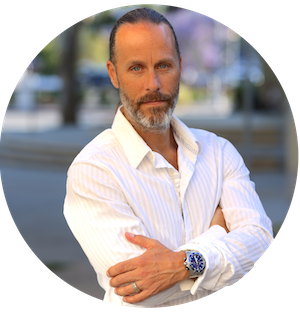
Kevin Anthony is a Certified Sexologist, Tantra Counselor, NLP Practitioner and a Sex, Love & Relationship coach. For over 10 years he has worked with men, women, and couples to have the relationships of their dreams, and the best sex of their lives! He is also the host of “The Love Lab Podcast”, creator of the popular YouTube channel Kevin Anthony Coaching, and creator of the popular online course series “Power and Mastery” as well as other online courses for both men and women.