What You’ll Learn In Episode 335:
Are you considering traditional therapy, coaching, or alternative therapy for help with your relationship? Are you curious about what some of the differences are? Have you tried traditional therapy and found the results somewhat slow? In this episode of The Love Lab Podcast, Kevin Anthony speaks with therapist Kendra Capalbow about her training in traditional therapy, the pros and cons she has learned from her own experience, how she now works with couples, and what spending 15 years as a therapist in a maximum security prison has taught her about therapy.
Links From Today’s Show:
To Find Out More About Kendra, Click The Links Below:
https://www.conciergecouplescounseling.com/
https://www.instagram.com/esclusivacouplesretreats/
🔥 POWER & MASTERY 3.0 IS HERE!
The most complete Men’s Sexual Mastery Course: Get Rock Hard, Last As Long As You Want, Become A Sexual Master! → https://www.powerandmastery.com
❤️ FREE EXCLUSIVE CONTENT
Get access to a library of FREE resources to help you have the relationship of your dreams and the best sex of your life! → https://www.kevinanthonycoaching.com/vault
💪 MEN’S SEXUAL MASTERY COACHING
Learn how to become a sexual master today and rock her world like no other man ever has! → https://www.kevinanthonycoaching.com/mens-sexual-mastery/
💪 MEN’S RELATIONSHIP & SEX COACHING
Become the man she has always dreamed about and craves, and the man you have always wanted to be. Learn how to master your relationship and your sexuality → https://www.kevinanthonycoaching.com/men/
🌹 WOMEN’S RELATIONSHIP & SEX COACHING
Learn how to become the radiant, feminine woman he desires and will commit to as well as how to have the relationship of your dreams and the best sex of your life. → https://www.kevinanthonycoaching.com/women/
👩❤️👨 COUPLES RELATIONSHIP & SEX COACHING
Learn how to finally have the loving, successful, and hot relationship you have always wanted. → https://www.kevinanthonycoaching.com/couples/
👉🏼 MY HAND-PICKED PRODUCTS FOR YOU
I have hand-selected some great products to help support your Health, Sex Life, and Relationship! Purchasing products from me and/or my affiliates helps support the work that I do and ensures I can continue to help as many people and couples as possible! → https://www.kevinanthonycoaching.com/products/
Kevin Anthony
Welcome to the Love Lab podcast, a safe and fun place to get real and learn about sex. Whether you’re a man or woman, single or a couple, this is the show for you. I am your host, Kevin Anthony, and I am here to guide you to go from good to amazing in the bedroom and your relationships.
All right. Welcome back to the Love Lab podcast. This is episode 335, and it is titled, “Challenging the Traditional Couples Therapy Model.” Now, I don’t necessarily have anything against traditional therapy. I mean, there are things that I think it does well and things that I think it could definitely do better. One of the reasons I’m really interested in having this conversation today—and if you’re watching on YouTube, you can see I have a guest who’s going to help me discuss this—is because I am not a therapist. I am a coach. A lot of what I do is similar yet different from what a traditional therapist would do.
One of the reasons I’m excited to have this conversation is that I know from the years I’ve been doing this work how powerful doing something a little different from what traditional therapy does can be when working with clients. I’m really excited to hear from someone who is an actual therapist doing something outside of the traditional therapy model and to hear about her experiences. What I hope the audience will get out of this is that there are alternatives, different ways to approach the problems you have. Don’t feel like you’re forced to do a specific type of therapy because that’s what your neighbors did or what people tell you you should do. I hope you’ll hear some alternative ideas that may resonate with you. If you are experiencing challenges in your relationship, you might think, “You know what? That sounds like it would really work for me.” So that’s what we’re going to talk about on the show today.
Before we do that, a short word from my sponsor, Power and Mastery 3.0. Power and Mastery 3.0 is the latest version of the popular men’s sexual mastery course. If you are struggling with erectile dysfunction, premature ejaculation, or simply want to increase your skills in the bedroom, then Power and Mastery is for you. Join the exclusive club of men who have taken their sexual performance into their own hands and become sexual masters. Mastering your sexuality is a key component to becoming the man she has always dreamt of and craves. Don’t leave your sexual performance up to chance or the roll of the dice. Become a sexual master today by going to powerandmastery.com and joining the exclusive club of men who have taken their destiny into their own hands. Visit powerandmastery.com.
Okay, my guest today, drawing from her stark contrasts of experience—from Peace Corps work in Kingston’s volatile neighborhoods to 15 years in a maximum-security prison—Kendra Capalbo serves as a trusted confidant to Boston’s elite, helping wealthy couples strip away their polished veneers to confront raw relationship truths. Her unfiltered, straight-shooting therapy style shatters the gentle conventions of traditional counseling, creating breakthrough moments for clients ready to embrace radical honesty and individual responsibility. Welcome, Kendra, to the show.
Kendra Capalbow
Thank you so much for having me here. I’m really excited to have this conversation.
Kevin Anthony
All right, all right. We will get to this later on, but I’m reminded as I read your bio about your 15 years working in a maximum-security prison. We’re going to be talking about challenging the traditional therapy model, of course, and later in the show, I want to hear about what you learned from that experience and how it impacts your work. So, if you’re listening and curious, like, what would it be like to work in a—not just a prison—a maximum-security prison for 15 years? Yeah, that’s going to be pretty interesting to get into. Before we do that, however, if we’re going to be talking about challenging the traditional therapy model, we need to start by describing what the traditional therapy model is. Could you take a moment to describe to the audience, when we say “traditional therapy model,” what are we talking about?
Kendra Capalbow
For me, when I use that phrase or think of that concept, I think of a very kind of coddling environment. You know, an emphasis on meeting your client where they are, which I do believe in, but also a slow pace and a very gentle approach. I’m a couples therapist; that’s all I do at this point. But I think the same is true for individual and couples work—a very evidence-based practice that tries to be one-size-fits-all. There’s this idea that the evidence has shown this should work, and so therapists try to get people to go down the path of what the evidence supports. I don’t think that always works for everyone.
Kevin Anthony
Yeah, that’s interesting. Obviously, some of the things you just mentioned, like how it tends to be very slow and coddling, are things we associate with the traditional model. But something else you brought up, which I hadn’t really thought about, is this idea that “this is what should work” and trying to force all clients into that. I hadn’t considered it because, in my work as a coach, everything is tailored to the individual or the couple. This is the number one conversation I have when I’m on a call with someone interested in working with me. I ask them to tell me about themselves, and they always want to know about the program. I explain that the program is a framework—a guideline—but we need to make it work for them. What I hear you saying is that in the traditional therapy model, they don’t do that often. Instead, they have their set way of doing things and try to force everyone into it. Is that correct?
Kendra Capalbow
Yeah, I think that’s been my experience. When I’ve been trained in a certain modality, the training feels very purist. It’s like, “You should work with all your clients through the lens of the Gottman Method” or “Emotionally Focused Therapy.” Insert any modality, really. It’s great, but I think pulling from all of them, mixing and matching, and having more movement works better.
I think plenty of therapists do that, so I don’t want to offend anyone or make it seem like I’m saying all therapists are rigid. But the training often emphasizes picking a method and sticking to it, expecting it to work for everyone. That hasn’t been my experience. I mix it up a lot more and tend to be more direct. I’m not coddling or overly compassionate, but I’ll call people out on their stuff. Some clients roll with that, and some don’t. It’s not always a popular approach.
Kevin Anthony
And we’ll get more into that in a moment. I want to come back to this idea. Excuse the crude analogy here, but I see the different methods as tools in a toolbox. Any job you show up to, you bring the whole toolbox, assess the problem, and figure out the right tool to use. That’s absolutely what I do as a coach, and it sounds like that’s what you do. There are plenty of therapists who approach it that way, but there are also many who just stick to their one form. I agree that doesn’t work. We need to assess each individual or couple for who they are and where they are, then figure out what will benefit them most instead of just defaulting to what we’re trained in.
You’ve already started touching on this, but my next question is, what are some of the problems or limitations of that model? You’ve mentioned it can be slow, coddling, and avoid tough questions or calling people out. Are there any other limitations?
Kendra Capalbow
I think sometimes it allows clients to hide. What I mean by that is, especially in individual work, if a therapist isn’t pushing enough, a client can feel like they’re doing the work just by showing up. They’ll talk about their week or superficial things, and if the therapist doesn’t push for deeper issues, they’ll just ride that wave of superficiality.
Therapists can feel discomfort pushing clients into more vulnerable places or questioning if they’re ready to be pushed. While meeting clients where they are is important, sometimes you need to push them a bit beyond that to reach where the work happens. You have to read the room and know when to back off, but the uncomfortable places are often where real progress is made.
Kevin Anthony
I completely agree. I think that’s where the actual work really happens. And, you know, I guess we sort of have to be somewhat careful when we say, like, pushing them, right? Because I don’t want people to get the impression that we’re being harsh in some way. But the reality is, I like to say you can use the word “calling out.” In fact, sometimes that’s what my clients will say to me. I’ll point something out to them, like some pattern they’re doing or something, and every once in a while, they’ll say, “You just called me out on that, right?”
So, you can use that term because sometimes my clients will say that too. But the reality is, I view it more as just speaking the truth as compassionately as I can. Sometimes, though, the truth, no matter how compassionately you deliver it, is hard, right? Because we don’t necessarily want to accept that we’re following a certain pattern, or that, yeah, we are actually responsible for that thing that happened, or whatever it is.
I think that ability to come out somewhat directly and say, “Hey, you’re telling me X, Y, and Z, but what I really hear, what I see, is something else,” is so important. Just being able to state that. I will say, I have not personally been in a traditional therapy model, but I know plenty of people who have. I had an ex-partner who spent many years in a traditional therapy model, and one of the things I saw through that was that the therapist never called her out on her stuff. The approach seemed to be more like, “We’re just going to keep talking about it until eventually you come to the realization yourself.” That can work. There is power in that because when someone finally comes to the realization themselves, it tends to stick. But at what cost? I mean, she went through a decade of therapy.
Kendra Capalbow
Yeah, I think it’s also worth mentioning that the approach fits a certain personality and doesn’t fit another personality, right? So, when I do a consultation with a client, I will often say my approach is not the best approach for everyone. I am going to be the type of therapist that’s going to rub a lot of people the wrong way, and that’s fine. I don’t take offense to that. It feels like a good fit for certain people and not for others.
Some people prefer just having someone they can talk to who supports every decision they make and maybe gently pushes back without being too assertive or holding the mirror up too close. That’s maybe what they need. I’m just not the therapist who’s great at that.
Kevin Anthony
Well, Kendra, I’m with you because I’m not that person either. If I see you doing a pattern, I’m going to call it out. I feel like that’s honestly my responsibility as your coach. If I’m not telling you—if I’m seeing a pattern that is harming you, your partner, or your relationship, and I’m not telling you that exists—I feel like that’s neglect on my part. That’s how I feel.
Not everybody necessarily feels that way, but I can be a very direct person. I think our ways of doing things are very similar, and that probably does appeal to a certain type of client. So, if you’re listening to this and you’re like, “I just want somebody to hold my hand for the next 15 years,” we’re probably not the right therapists and coaches for you, exactly.
This is actually kind of a good segue because we’re talking about how you do things versus how they do things. My next question was literally: What is different about the way that you approach couples therapy versus this more traditional model we’ve been discussing?
Kendra Capalbow
Yeah. I mean, my goal is to get you out of therapy, right? Sometimes, yes, I do long-term therapy, but that’s not my primary goal. My goal is to give you the skills you need to have the conversations you need to have—no matter what comes up in your future—without needing a therapist. My door is always open, but I’m hoping I don’t hear from people again after they “graduate” or whatever word you want to use.
I do that by really just being, you know, direct. I use the term “calling people out” because I think that is also a term I hear from clients in a similar way to what you’re saying. Usually, it’s with a tone or inflection that expresses appreciation, like, “Yeah, I needed to be called out on that,” where people are trying to fool themselves.
That happens a lot in relationships where people don’t want to own their part. They just want to point at their partner: “The partner is the problem. The partner is the problem. The partner is the problem.” A lot of times, they come to couples therapy thinking the therapist is going to side with them all the time. I don’t believe that’s effective. I think it’s important to really look at what’s happening with both partners and the responsibilities they each bring to the relationship.
Sometimes, their partner doesn’t have the ability to call them out—or doesn’t know how to say, “This is what you’re doing that’s hurting me.” I’m comfortable coming in and saying, “This is what I’m hearing with the words being spoken. This is how I think your partner is being impacted.”
Sometimes, those things are really hard to hear, but they’re critical if you’re going to make progress. Skirting around the issue for, like you said, 10 years doesn’t get you anywhere. It just gets you in a circle. I say all the time to clients that the hardest way is often through, but it’s also the fastest way. If you can bear with the difficulty of the through process, you’ll get where you’re trying to go. But if you avoid it, there’s no end to that circle—it just continues.
Kevin Anthony
Yeah, I completely agree. I have the same philosophy as you. My goal is to get as much change for my client as quickly as possible. I wish more of the world had this sort of viewpoint. I wish the medical industry had this viewpoint: “The goal is to get you well as quickly as possible and get you out of my practice.” That’s what the goal should be.
I’m glad to hear that’s your goal too. You want to help people, empower them, give them the tools, and then move on so they don’t need you anymore. As you said, the door is always open, but they shouldn’t need anything. If they do, that’s fine, but hopefully, you’ve done a good enough job that they’ve moved past that. This is one of the problems I’ve seen with traditional therapy: I don’t feel like they have the same motivation.
Kendra Capalbow
Well, if you think about it, traditional therapy is very reactive. You go to therapy when you’re broken. You go to therapy when your relationship is in crisis. I’m trying to move toward a more proactive approach, getting people to recognize the things they should be doing to ensure a healthy relationship before it becomes unhealthy.
The medical field is the same way. Insurance companies don’t want to pay for anything that might help you avoid getting sick. They just want to wait until you’re sick, make you jump through 8 million hoops, and then try to fix it. Therapy is often that way too. Once you identify the problems, you go to therapy instead of taking a proactive approach.
Coaching seems more proactive. It’s rare for couples to come to me saying, “We’re in a really good spot and just want to ensure we stay on this great path.” They wait until they’re already in a place of crisis, then reach out for help. Switching that mindset would be so much more beneficial for many people.
Kevin Anthony
Yeah, I completely agree. If I had to guess, I’d say the majority of people that come to me do so because they’re already in a problem. However, one of the things I do appreciate is when I get clients who come to me saying, “We’re doing okay. It’s not really a problem now, but I could see it becoming a problem, and I want to take care of it before it becomes one.” Or maybe it’s just at the beginning, and they want to fix it before it turns into something big. I really appreciate those clients because, like you, I love the idea of someone being proactive. It’s refreshing when someone comes to you and says, “Here’s what I see, and I want to address it now,” rather than waiting until the very last minute when they’re in complete crisis and chaos, asking you to fix it.
I work with both types, but I definitely appreciate when people are proactive. I was wondering, with your experience working in a maximum-security prison for 15 years, do you think that influenced your approach? Has it made you more direct? And if so, how?
Kendra Capalbow
Absolutely, 1,000%. I saw it being more effective. I’m not naive—I’m not saying I was never played or bamboozled into thinking I was helping someone. But I have countless stories where I’d see other therapists in the system taking a more coddling approach, saying, “Oh, they’re doing so well,” while being blind to the reality of the situation. One particular instance stands out. I pulled a kid aside and said, “When you’re ready for the real deal, put in a slip to see me.” That’s how they would request to be seen.
He eventually put in a slip, and I told him, “Nothing’s going to change until something changes.” I was super direct with him, and I think I was the first person he respected because I saw through the lies he was telling himself or others. I got to the heart of it, and he appreciated that. I started realizing that approach worked. I’m not a jerk; I’m just direct. I’m not mean or cruel, but I’m straightforward, and I think I do it in a compassionate way that clients appreciate. It was just far more effective in that environment because, otherwise, they would have walked all over me with a softer approach.
Kevin Anthony
Do you think you felt more comfortable trying that approach there because you sort of had a captive audience? Pun intended—slightly.
Kendra Capalbow
Only slightly, right? Yes and no. In some ways, it’s a less captive audience because, most of the time, they don’t want to be doing therapy. The example I referenced earlier happened in a murderer’s group, and they were required to attend that group to get parole. That specific client didn’t want to be there—he was only there because he had to be. So, while it’s captive in the sense that they’re forced to attend, in terms of engagement, it’s far less captive.
Kevin Anthony
I was just curious because I wonder sometimes if some therapists are afraid to be so direct and real with their clients out of fear the clients will stop coming back. Maybe they take a softer approach to avoid being disliked. But in the prison system, they can’t just leave, and you have an endless supply of people to work with. Job security isn’t really an issue. It was just a thought I had. What’s your take on that?
Kendra Capalbow
There is definitely a risk of that happening. I’ve had instances where I said something, and the client didn’t come back. Sometimes I might sense a client isn’t ready to handle directness in the moment, so I’ll hold back, but it’s not out of fear they won’t return. It’s more because I see there’s work to be done, and they’ll be ready soon. I make a conscious effort to understand why I might be holding back. It’s never because I’m afraid of losing the client, though—I’ll be direct when necessary, regardless. Sometimes they don’t come back, and sometimes they do.
Kevin Anthony
I hope any therapists listening to this aren’t holding back out of fear. I hope they’re being real, genuine, and honest, saying what needs to be said because that’s what’s in the best interest of the client. I’d like to pause for a short break, but when I come back, I want to discuss some other lessons you’ve learned from working in the prison system and how that’s influenced your work. I also have questions about couples therapy and common reasons clients come to you, like infidelity. You shared some great insights in the pre-interview, and I’d love to dive into that.
Kendra Capalbow
I think one of the most interesting things I learned is how similar we all are. People often view those who are incarcerated in a certain way, but at the end of the day, they’re just people who often made a mistake. I remember one client in a group saying he was grateful to be in prison, which shocked me. He explained that his incarceration allowed him to appreciate his relationship with his son, which he would have never valued in his previous lifestyle.
Ironically, I see a similar dynamic with the wealthy, successful couples I work with now. Their focus has been so far in another direction that they’ve missed the most important elements—like their relationships or families. It often takes a crisis to make them realize what truly matters.
There’s also a similarity in personality types. I always worked well with the inmates others didn’t want to deal with, likely because of my approach. I wasn’t afraid of them, and I was direct. It’s the same with my current clients—they’re often high-powered individuals who are used to everyone saying yes to them. I challenge them to think about what really matters. I don’t think I’d have the comfort level to do that if I hadn’t worked in the prison system and learned to address things head-on.
Kevin Anthony
Yeah, yeah, I would imagine that having worked in that environment definitely made you more confident to be able to tell people the things they really need to hear. We talked in the pre-interview about one of the things you learned from your time in prison—not you in prison, just to clarify for anyone tuning in the middle—she worked in a prison. But one of the things we discussed was this idea of taking responsibility for your actions. Could you talk a little about that and how it applies to relationships?
Kendra Capalbow
Yeah, so in that environment, what I saw was the individuals who were able to really reflect on the decisions they had made and take 100% responsibility. It wasn’t about saying, “The cops were after me,” or “This correctional officer has it in for me,” or “I had a bad childhood.” While those circumstances might have been true and accurate, the key was acknowledging them without letting them define the narrative. They’d say, “Okay, that’s what it was, but I still made choices, and those choices are why I’m here.” That mindset is empowering because it gives them the ability to make different choices moving forward.
You could almost see a light switch flip for the inmates who came to that realization. They’d think, “I put myself here,” and instead of it being a depressing thought, it became an inspirational one. It meant they could make different choices and have different outcomes when they got out.
I think the same is true in relationships. The couples I see make the most progress are the ones where both partners are willing to ask, “What am I doing? What’s my role in this relationship?” I often say that we influence change in our relationships through our own actions. As long as you’re pointing fingers at your partner, no change will happen. But if you can look at yourself and ask, “What’s my role in this?”—even if it’s just a small part—you can start to influence change.
Of course, this doesn’t apply to situations like domestic violence or abusive relationships, which are in a different category entirely. But for your typical relationship or marital problems, there’s always something to look at within yourself. If you’re honest, you’ll find ways you might not be bringing the right energy to the table for the outcomes you want.
Kevin Anthony
Yeah, I completely agree. In my experience, the majority of couples who come to me to work on their relationship or sex life are driven by one partner who feels there’s something wrong. Often, that individual believes the problem lies entirely with the other person—who isn’t stepping up, isn’t doing the work, or has bad behaviors. But in almost every case, once we dig deeper, we can see where both people play a role.
It’s common sense in a way. A relationship is created by two people, so each brings their own “stuff” into it. I recently worked with a couple in a similar situation. The wife was the one driving them to seek help, saying, “He’s not doing this, he’s not doing that.” And yes, she wasn’t wrong—he did have areas to work on. But as I worked with them, I could also see how her behaviors were contributing to the dynamic between them. Fortunately, she was open-minded, and I was able to show them how their patterns were influencing each other.
It wasn’t just about shifting his behavior and hoping hers would magically sort itself out. Instead, we worked on both: bringing awareness to her patterns and helping her shift while also addressing his patterns. That’s how you make faster progress—by addressing the dynamic as a whole, not just one partner.
Kendra Capalbow
Yes, absolutely! That dynamic you’re describing is something I pull a lot from Emotionally Focused Couples Therapy. The cycles in relationships are so interconnected. One person’s behavior triggers the other, which then triggers more of the first person’s behavior, and it just spirals. When both people are willing to ask, “What’s my side of this cycle?” that’s when real change happens.
When people get stuck blaming just one partner, it never works. I’ve never seen a situation where focusing only on one person solves the problem. It’s about understanding the dynamic.
Another challenge is the anticipation of certain patterns. For example, if someone expects their partner to come home in a bad mood, they might already be on the defensive before their partner even walks in the door. Then, when the partner comes home, they may respond to that defensive energy, and the expected conflict arises—even if it didn’t need to.
It’s one of the harder parts of this work: helping people relax enough to see change when it’s happening. Often, they’re so stuck in their old patterns that they don’t notice the progress, even when it’s right in front of them. I’m sure you see this too.
Kevin Anthony
Oh, absolutely. One thing I do in my sessions is to take time for what I call celebrations. When we have those “light bulb moments” or breakthroughs, I make sure to highlight and celebrate them. It has to be genuine, of course—if the progress isn’t there, I don’t force it. But when it’s happening, it’s important to point it out because the clients might not see it.
When they’re in the thick of it, it’s harder for them to recognize their progress. They’re still working hard, maybe even stumbling, so they might feel like nothing’s improving. That’s why I make a point to say, “Look at where you are now compared to where you started.” It motivates them to keep going and builds momentum.
Kendra Capalbo w
Yes, exactly! That’s such an important part of the process. Gratitude is another powerful tool in relationships. When you focus only on what’s not working, that’s all you’ll see. Even in a great relationship, if you’re looking for negatives, you’ll find them.
But if you make a conscious effort to focus on what’s good—what you appreciate about your partner and your relationship—you start to see more of that. I often assign this as homework early in the process. Your attention shapes your perception, and shifting it slightly can make a huge difference.
I practice this myself every morning. Even on days when I’m frustrated with my husband, I force myself to think of reasons I’m grateful for him. Sometimes it’s something small, like appreciating that he didn’t leave socks on the floor. But even small things can shift how I feel by the end of the practice. It’s about consciously putting your focus on the positives rather than dwelling on the negatives.
Kevin Anthony
Yeah, I agree. I think it’s hugely important to take moments to reflect and feel gratitude for the things you love and appreciate about the person you’re with. One of the things I teach couples—and I’m sure you teach something similar—is what I call the appreciation game. It’s about making it a regular practice to share those appreciations consistently. Of course, most people are open to the idea, but occasionally, you get pushback. Some say, “Well, she knows that; I’ve told her before,” or “He knows that.” I tell them, “No, it doesn’t work like that.” You may have told them once, but you probably think it was last week when, in reality, it was six months ago.
It’s not that they don’t remember, but we all like to hear appreciation regularly. It helps us feel connected. For men, we especially love to hear appreciation for the ways we show up—whether it’s taking care of things, fixing things, or handling tasks that might not be pleasant. If we’re doing those things constantly and never hear, “Thank you, I really appreciate that” or “I’m so glad I didn’t have to do that,” resentment can build.
The same applies to women. When they’re doing so much and don’t hear appreciation from their partner, it creates tension. Women, in general, might be slightly better at sharing appreciations. For men, it’s not that we don’t think those things; we just don’t always say them out loud. A lot of my work with men involves teaching them to verbalize those thoughts when they have them. For instance, when your partner walks in wearing something nice, you might think, “Wow, she looks great in that.” But then you get distracted, and those words never come out. To her, it might feel like you didn’t even notice.
Anyway, that’s a little aside, but it ties into the idea of focusing on gratitude and sharing it regularly.
Switching gears—before we wrap up, I wanted to touch on something else we discussed during the pre-interview. A common issue couples seek therapy for is infidelity. You and I talked about the false beliefs surrounding infidelity, and I’d love for you to share your thoughts on that.
Kendra Capalbow
Yes, and I want to preface this by saying these are just my observations from practice, not scientific conclusions. But I think one of the biggest misconceptions is that men cheat more than women or that men are somehow “programmed” to cheat. I don’t believe that’s true. Women cheat just as much as men, but the differences lie in how cheating is perceived and addressed.
For example, there’s often more societal acceptance for a woman to work on a relationship after a man cheats than vice versa. If a woman cheats, the relationship often ends, or the issue gets swept under the rug and never discussed. In therapy, we tend to see more men who’ve cheated, but I don’t think that reflects what’s actually happening in the world. It’s more about who is willing to seek help after the fact.
Women, in many cases, are conditioned to forgive more easily, while men might see infidelity as an ego issue, making them less likely to work on the relationship. There’s also societal stigma around women who cheat. It’s often harsher than what men face. For instance, we have this unspoken understanding—or stereotype—that “men will be men,” but a cheating woman faces labels that carry much more judgment.
This dynamic plays into reporting as well. Women might not always admit to cheating, especially if it was emotional rather than physical. They might rationalize it as “just a friendship” even though it crossed boundaries.
The more we normalize these conversations, the more people can be honest with themselves and their partners. Ideally, this honesty would help avoid infidelity altogether.
Kevin Anthony
That’s really interesting. I did an entire episode on cheating, and I remember researching the statistics. While I don’t recall the exact numbers, the gap between men and women wasn’t as wide as people think. I believe it was closer to 55% men and 45% women, so almost equal. People assume it’s predominantly men, but that’s not accurate.
You also brought up a great point about men’s egos. If their partner cheats, they might feel like they’ve failed in some way. That shame can prevent them from seeking help or even discussing the infidelity.
Kendra Capalbow
Exactly. And for couples to recover from infidelity, both partners need to acknowledge their roles in the relationship dynamic. The person who cheated is responsible for their actions, but the overall health of the relationship involves both people. Unless it’s a pattern of habitual cheating, there are usually fractures in the relationship that led to the infidelity.
When couples are willing to be honest about those fractures, they can not only recover but often build a stronger relationship than they had before. That’s the silver lining I’ve seen in my work.
Kevin Anthony
I agree. The couples that are willing to take responsibility on both sides are the ones that truly heal and thrive.
Kendra Capalbow
Absolutely. That’s where the real transformation happens. If anyone listening is interested in working with me, they can find me at www.conciergecouplescounseling.com. I also offer bespoke couples retreats, which are a proactive way to strengthen relationships. You can reach out via Instagram at Exclusive Couples Retreats to learn more.
Kevin Anthony
Thank you for sharing all of that, Kendra, and for joining us today.
Kendra Capalbow
Thank you for having me—it’s been a pleasure!
Kevin Anthony
That’s all for this episode of the Love Lab podcast. See you next week!
We hope you liked this episode of The Love Lab Podcast. If you enjoyed this show, leave a comment and share it with your friends.
RATE & REVIEW THE LOVE LAB PODCAST
—> LEAVE A 5-STAR REVIEW ON APPLE PODCAST
ASK A QUESTION FOR THE NEXT EPISODE
—> Click here to leave a message directly to Kevin and Céline to be answered on the air.
Thanks for listening and remember you are amazing.
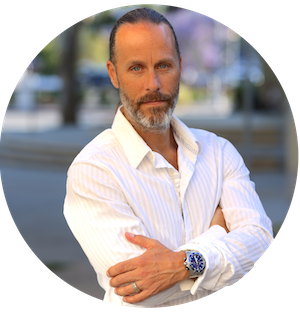
Kevin Anthony is a Certified Sexologist, Tantra Counselor, NLP Practitioner and a Sex, Love & Relationship coach. For over 10 years he has worked with men, women, and couples to have the relationships of their dreams, and the best sex of their lives! He is also the host of “The Love Lab Podcast”, creator of the popular YouTube channel Kevin Anthony Coaching, and creator of the popular online course series “Power and Mastery” as well as other online courses for both men and women.