What You’ll Learn In Episode 143:
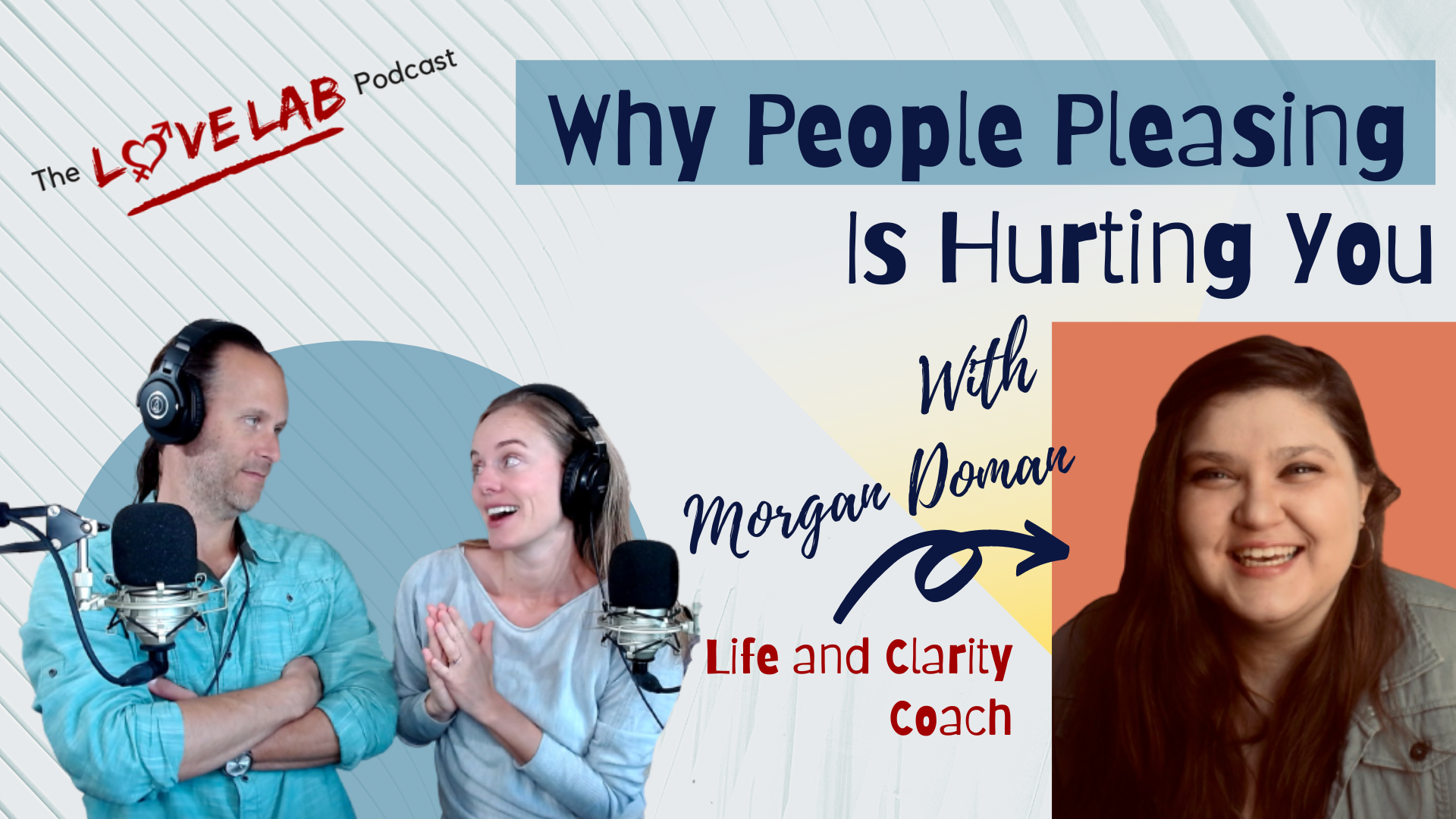
Are you a people pleaser? Do you even know how to tell if you are or not? In this episode, Kevin & Céline talk with Life & Clarity Coach Morgan Doman about this all too common role that we get stuck in. Find out what it really means to be a people pleaser, how to tell if you are a people pleaser, why it can be harmful to yourself and your relationships, and what you can do about it.
Links From Today’s Show:
 Morgan Doman is a Life and Clarity Coach. She helps struggling people-pleasers gain clarity and confidence to grow into inspired leaders and entrepreneurs. She has years of experience in the nonprofit sector which has given her a deep-rooted knowledge of how to combine business with values. And she is certified by the Human Potential Institute and specializes in embodiment and transformational coaching. Morgan loves to coach her clients to find clarity and then support them into actually taking action to create their best life.
Get Morgan’s FREE eBook From ‘People Pleaser to Confident Leader: 10 Ways to Grow from Low Self Worth and People Pleasing to Confident and Inspired Leader!’
Kevin Anthony 0:11
Welcome to the love lab podcast a safe place to get real about sex. Whether you’re a man or woman, single or couple, this is the show for you.
Céline Remy 0:20
We are your hosts, Kevin Anthony and Celine Remy. And we are here to guide you to go from good to amazing in the bedroom and beyond.
Kevin Anthony 0:27
Alright, welcome back to the love lab podcast. This is Episode 143. And it is titled Why people-pleasing is hurting you. People pleasing. Yeah, this is another every once in a while we come up with a subject and I go How have we not covered this before? And I say that because it’s so common. And it’s something that comes up when we do couples coaching a lot.
Kevin Anthony 0:52
There’s almost always one person out of the couple that’s in this sort of people-pleasing role. And, you know, some people go, well, what’s wrong with that? But well, we’ll get into that. As we go. There are some pretty big potential downsides to that. And I think as we go through, you know, what do we really mean when we say people-pleasing?
Kevin Anthony 1:15
Why is it not necessarily good? How can we avoid it we’ll also talk about, what are some healthier ways to be in the relationship rather than being stuck in that people-pleasing? Well, so we do have a special guest today who is an expert on this, who’s gonna…
Céline Remy 1:29
She is a professional ex-people pleaser.
Kevin Anthony 1:34
Now helps people get over people-pleasing. So we’re gonna dive into all of that, and I think it’s gonna be really interesting.
Morgan Doman 1:42
So before we get started, let’s give a big shout-out to our sponsor’s power and mastery. So if you want to join the secret club of men who are great in bed, then check out power and mastery at power and mastery.com. It is the most complete sexual mastery training for men. Whether you want to have harder erections last longer or increase your sexual skills. There is something for you at power and mastery.com.
Céline Remy 2:06
So go check it out,
Kevin Anthony 2:07
You want to be that man.
Céline Remy 2:10
So our guest today is Morgan Doman. She is a life and clarity coach, she helps struggling people-pleasers gained clarity and confidence to grow into inspired leaders and entrepreneurs. She has years of experience in the nonprofit sector, which has given her a deep-rooted knowledge of how to combine business with values.
Céline Remy 2:30
She is certified by the human potential Institute and specializes in embodiment and transformational coaching. She loves to go check clients to find clarity, and then support them into actually taking action to create their best life. Welcome, Morgan.
Morgan Doman 2:48
Thank you for having me.
Morgan Doman 2:49
Our pleasure. I am definitely looking forward to your insights is because I do believe that so many people are stuck in the people-pleasing. I do think that there is maybe a spectrum because I can actually relate to being a people pleaser to a certain degree, definitely not as much as some of the examples you were giving us before we started recording.
Céline Remy 3:13
But if I’m being honest, I can see times in my life where I was more stuck in that and had to work on that. So I’m also imagining that there’s definitely a spectrum. And maybe we come in and out of it. So we’ll talk about all of that. So hovered. We started at the beginning.
Kevin Anthony 3:30
Yeah, we got it, we got to go back to the beginning because we need to establish how and why you are an expert in this people-pleasing. So question number one is, you told us in the pre-interview that you used to be a people pleaser. So what we’re curious about was, what did that look like for you? How did that show up in your life?
Morgan Doman 3:50
Yeah, so I was people-pleasing, which pretty much meant I was saying yes to everything. I was a managing director. So I was a nonprofit. So I had like 100 people trying to ask me questions constantly. And I was always saying yes to everything. And also in my personal life, I was saying yes to every request that came in. If anyone needed me, I was the person to go to.
Morgan Doman 4:16
And of course, it served me in a way because it made me feel really important and loved. However, it totally burnt me out physically, mentally, emotionally, to a point where like, I didn’t even know who I was, what did I like to do I didn’t even know because I was just saying yes to everything else. And I had really no energy for what I wanted to do with my life.
Morgan Doman 4:42
I had no energy for working out in the way I wanted to even like little things like that, but it was just causing so much drain on everything. And so like essentially I just burnt out hardcore. I got super sick about two years ago, and it’s been a recovery ever since.
Morgan Doman 5:02
It’s funny when you were talking, I was thinking this sounds so exhausting, like saying yes to everyone. And then I know that when people spot that yes person, they tend to gravitate like it’s like you attract those people because you’re kind of in a codependent relationship,
Kevin Anthony 5:18
especially if you’re in corporate America, they will, they will try, they will never look at you. And they will never say, you know, you’re working a little too much. You’re saying yes, I think you should take a few things off your plate. Never have those words ever been uttered in corporate America? I know I spent a decade there. They will take take take take take until you burn out. That’s the way it goes.
Morgan Doman 5:41
Absolutely, absolutely. And people don’t even realize they’re doing it. But it’s kind of like they’re vampires sucking all your blood, and they don’t realize they’re doing. And so you have to end it is, you know, our responsibility to start setting boundaries to start saying no. And of course, that’s can be little things. It can be big things I doing it at work is very hard. Because like the fear of being fired.
Morgan Doman 6:11
So you know, that’s where we have to be very, like, you know, careful, cautious, right? Make sure that what we’re asking for is doable, or are you just in a very toxic environment. That’s another issue. A lot of people pleasers get themselves into a caretaker role, which can just be exhausting in every way.
Kevin Anthony 6:32
Yeah. So so you’re leading us into our next question, which is how boundaries come into play. And you already kind of alluded to that the in the work world, this can be quite challenging. I know from my personal experience, that when I have set boundaries incorporate, it generally didn’t go well with management, right, you become sort of the problem child, you become the person who’s not the team player, right?
Kevin Anthony 6:56
You become the one that’s it’s always a struggle to get them to do whatever, when, in reality, all you’re trying to do is manage your own energy level and not burn out so that you can keep doing what you need to do. But it’s not always viewed that way. So I’m just curious what your take on boundaries is, but not just in the workplace, but also, you know, boundaries in your relationships and all the other aspects of your life where you’re saying, Yes, but you really should be setting some boundaries.
Morgan Doman 7:24
Yeah, I mean, I always suggest start with easier things, right, then like your work boundaries, like start like gradient, you know, you know, maybe just start saying no to the date with your friend that you can stand or something like you know, just start with like little things.
Morgan Doman 7:40
But as we as you get more experienced with boundary setting, what actually has to happen is you have to understand the needs of the other person involved. It doesn’t mean you cater to them, but you do like, that’s why with relationship boundary is, it can’t just be Oh, sometimes it should be just like, you need to stop doing this. But sometimes it’s more of a negotiation. It’s more about this really bothers me. I don’t like this for this reason.
Morgan Doman 8:06
You know, what is your need on the other side? And you can apply that also to like your boss, right? What’s your need for me, and, and this is a big thing. Like, a lot of times when we get jobs, the job description does nothing to do with what we’re actually doing in our work. So it is important, I think, to check in with your boss and say, Okay, so what are the expectations of me? Right? Like, what do you need from me on a daily, weekly basis?
Morgan Doman 8:30
And then from that piece of information, I think you and this is a little bit of a privileged thing to say. So I just want to say that right upfront, but you do have to decide at some point, whether you want to continue that lifestyle, or you want to become an entrepreneur, and create a lifestyle, or just, you know, pivot into another field and create a lifestyle that really works for you.
Morgan Doman 8:53
That’s what happened with me and tends to be a lot of my clients are like, you know, we try to set boundaries that we’re either like To hell with it, I’m just gonna start my own business. Like, sounds good. That’s always my favorite, you know, call to get what I’m losing or like, that’s it. I’m done. Let’s go. And I was like, great, you know, so it does happen. So yeah.
Morgan Doman 9:13
So I want to dive into this people-pleasing and in ways that it shows up. And I think that I want to talk about something in particular that we talked about in our pre-interview where you were talking about people-pleasing shows up in women in different ways, and also around sexuality. And you know, because we’re the love lab, we love to talk about this subject.
Céline Remy 9:35
And I think it’s something that’s not often talked about, I think people can relate to like, Oh, yeah, their work or their friends, you know, but let’s talk about some very deep ways that they can show up when you allow sex to happen to you because you don’t say no, you want to please somebody else. And can you explain more what that means and if you have some experience with that or examples that you want to share, that would be super were helpful?
Morgan Doman 10:01
Absolutely. And this is really, really common for people-pleasers, it tends to be the kind of the last thing I hear about, you know, it’s wrapped in shame. And so I have to bring it up with clients, you know, very kind of, you know, with a lot of understanding, because I, myself have gone through this. But what can happen is, we don’t say, No, we don’t ask for what we want. And things happen to us like you were saying that really break a boundary.
Morgan Doman 10:34
And when we’re breaking that kind of physical boundary, it can have very traumatizing effects, even if we don’t see it that way. Right. You know, and, and it’s also really, really traumatizing for the other side as well, like, if you think someone is consenting, because they’ve said, Yes, or they haven’t really said no, and then you know, as a man, or just as a partner kind of penetrate, that’s, that’s energetically going to just, it causes so much subconscious harm.
Morgan Doman 11:08
It’s definitely something that takes a long time to, you know, unpack, and especially in our culture, you know, I grew up in a culture where like, you wanted to lose your virginity as quickly as possible. So you were like, you pretty much you didn’t even understand what you were doing. You were just like, let’s, let’s get this over with on both sides. So you, you’re saying yes, but you didn’t really want to, but you know, so it started really from the beginning. And yeah, I hope that answered the question.
Kevin Anthony 11:40
Yeah. So yeah, this is one of those tricky areas. Because there’s, there’s a, there’s a yes. And then there’s hell yeah, let’s do this. Right. But the thing is, they’re both still technically a yes. And where guys get into tricky situations is, but she said, Yes. She has been saying yes. All this time. Now granted, yes. He should learn to be able to tell the difference between Yes. And like I can’t wait for this. Right.
Kevin Anthony 12:13
Yes, he should learn that. And on the other end, women should learn that. Yes, actually means no. Or it means maybe I’m not sure. Which still means no. Yeah. Right. So that can be very challenging, I think, for men to navigate. Exactly, exactly. But it puts a lot of pressure on them to where I think if the women could get better at setting their boundaries, that would be very helpful for both sides.
Morgan Doman 12:42
Yeah. And I think as well, it’s interesting, where you’re waiting for the Yes, or the No, but like, why can’t we just have a discussion? You know, it’s like, so interesting, you’re like, you know, I, there’s no time that’s not communicated. Like, the time before you have sex with someone, especially the first time, there’s no communication about in our culture, it’s like, we’re like, shut down almost.
Morgan Doman 13:09
because you’re so like, aware of each other, like, physically, that we forget that, you know, we can open our mouths and say, you know, I really do want to have sex, but I’m concerned like, or I’m nervous, like, I’m so nervous right now. You know, let’s do some foreplay before we get into it or something like that, you know? Um, yeah, there’s just so much it’s like, let’s open our mouths, but it’s so hard. It’s so hard to do that. Yeah. It’s, it’s, it’s about communication. But it’s, it’s, it’s difficult.
Kevin Anthony 13:41
Yeah, it can be. And you know, one thing I’ll say to the men listening is that it’s, it’s in your best interest to err on the side of caution, right. And if you do that, actually, not only will you not end up in a bad situation where she accuses you of something, you’ll actually end up being seen as even better than before. Like, I’ll give you a perfect example of that.
Kevin Anthony 14:03
There was a woman, this goes back quite a few years, but there was a woman that we obviously had a sexual attraction. We had spent some time together here and there. So one night, she’s over, and we’re kind of just fooling around on the bed, and she’s naked, I’m on top of her, it’s about to go to sex. I just, I could feel something that could feel there was a hesitation there. And so I just looked at, I said,
Kevin Anthony 14:28
Are you sure that you’re ready to do this? And she kind of said, Yes. And I just said, No, I don’t, I don’t think now’s the right time. We never actually ended up having sex ever, you know, but we remained really good friends. She actually then later in life A few years later, started calling me and asking me for support in like her relationships and stuff because she trusted me because, at that moment, there was, yeah, just a trust that was built.
Kevin Anthony 15:00
There was like, oh, wow, okay, he’s safe. I can trust him kind of thing. And so the advice to the men is if you’re not sure, you know, err on the side of caution, you have nothing to lose and only things to gain because she’s going to then going to feel safe around you and be able to open up more and trust you, rather than just go wow, it’s close enough to a yes, let’s just go.
Morgan Doman 15:22
Yeah, and this is where like, the people-pleasing is so important. Like, you know, I’m sure for I’ve been in that situation, you know, where I’m like, Yeah, because you’re just, you’re so used to saying yes, and everything in your life, but the thing is, is when someone’s violating you like that? And you know, you yet said yes, and yet they violated you. It’s still so so upsetting.
Morgan Doman 15:44
And, and it will end the attraction, right. So it’s so so important. And, and you know, sex is probably one of the hardest things to set boundaries around, because of how vulnerable you are. So I definitely suggest starting to other easier places. But yeah, it’s definitely interesting. And also, I think, when you’re single two, part of you is like, yeah, I want to have sex. And the other part of you is like, it’s like your body and your binder at war. Yeah.
Morgan Doman 16:13
So I know that people-pleasing, like, we’ve been talking a lot about the women here, but it doesn’t just show up for the women, men can also end up in people-pleasing mode. And, you know, I’ve seen that with some of my clients. I’ve seen that in a past relationship where I think there’s a deep need to be loved. So they’re going to make her happy, but like pleasing her so much.
Céline Remy 16:36
And I know that you had mentioned to us that men who have recently become dads have become people-pleasers, which affects the polarity in the relationship. So tell us more about your experience on the other side from the man and changes in their life that can create that situation.
Morgan Doman 16:55
Yeah, I think there’s a there’s a lot of interesting points here. First off, like people-pleasing tends to come from a parent wound. And so for men, it tends to come from the mother wound. And for women, it tends to come from their father’s wound, right, like you’re always trying to please the men in your life if you didn’t feel like you were loved by your dad.
Morgan Doman 17:17
But for men, it’s interesting because when they become a father, there was like women, I think, intuitively because of the way our bodies work, we kind of fall into the parenthood, we tend to fall into it a little bit easier. But often what happens is there becomes this, like mom’s no longer have boundaries with their kids. And so there’s like, it’s interesting. There are so many dynamics that can happen, but the dad starts to relate to their wife as a mother.
Morgan Doman 17:52
And so it opens up that fog that mother wound and boom, right? He’s people-pleasing, because he’s trying to please his mother, and it’s really his wife on the other side. So it becomes this like very, you know, I’m sure you guys have worked a lot with this with how like parent wounds affect relationships. So it’s the same with people-pleasing, and, you know, it’s all about going back and understanding, okay, why am I doing this? Why do I feel that need and it’s almost always something in your relationship with your parents. So yeah,
Morgan Doman 18:25
I can’t wait to dive into some of the what to do and how to know if you stuck in there, which we are about to get into. But first, we’re going to do a short sponsor’s break. And today we are inviting you all the couples who are listening to work with us. So if you are a committed couple who is stuck in a rut and just going through the daily motions, instead of connecting the way you used to, and you tired of stale mechanical sex that lacks spontaneity and fun, and you don’t want to live a life of average.
Céline Remy 18:53
Then Kevin and I would like to invite you to join our highly sexed power couple Platinum program. So give us 90 days and we will help you bring the passion back between the sheets and be synched up sexually so that you can thrive with more purpose and passion in life. So if that’s you and you want some support from Kevin and I and want to work with us go to kevinanthonycoaching.com/passion
Kevin Anthony 19:23
Do it you know you want to do it
Céline Remy 19:25
Oh yeah, no,
Kevin Anthony 19:26
you know you need the support.
Morgan Doman 19:29
So Morgan, how do you know if you’re a people pleaser? So maybe there are still some listeners right now that are like well, maybe it’s me. Maybe not.
Kevin Anthony 19:38
As you know, I got a couple of those things, but that’s not really me. Probably in denial. So how are ya? How do they know?
Morgan Doman 19:45
Well, are you overbooked? That’s a really easy one, right? Like, is your calendar out of control you’re overbooked. You double-booked yourself. That tends to be like a huge one.
Céline Remy 19:58
Oh,
Morgan Doman 20:05
The feeling of like, if you say no, like, just try saying no to something, see how you feel? Is it incredibly difficult to say no? And sometimes it’s also about certain people in your life like you don’t people, please to everybody, just like your family or just like your partner’s, like in that case, like, it can also just be certain groups of people.
Morgan Doman 20:26
So you know, those are ways to look out and also like, are you getting burnt out by all the things you’re doing? Are you not doing self-care? Are you not doing a morning or evening routine? Because you don’t have enough time? It’s almost always because you’re people-pleasing? Yeah.
Morgan Doman 20:42
Fascinating. So have you noticed any common patterns that people who have people pleasers who are people pleasers tend to have?
Morgan Doman 20:51
Um, you mean, like in life or like in?
Morgan Doman 20:53
Yeah. Is there a trait or something? Are they like, overly nice? Or is it? I don’t know, do they have eating disorders? Or is it a combination? Like, I’m just curious, like, Are there like, and you know, sometimes I know, trying to put labels and put things in a box isn’t always the solution.
Céline Remy 21:15
But I’m just trying for people to start to see and maybe like, we started this episode, that there is a spectrum, maybe like, it’s only like, 10% of the time of this certain people, and it shows up into one area of your life. So yeah,
Morgan Doman 21:31
yeah. So I think self-sabotage would be like the number one pattern, they tend to have something they’re constantly they’re using other people as a way to self-sabotage, essentially.
Céline Remy 21:43
I know people pleasers we know people-pleasers, and Oh, yeah.
Kevin Anthony 21:48
Thinking of the same person, yes. This is a behavior we have absolutely observed multiple times. Yeah.
Morgan Doman 21:55
Yeah. So it’s definitely something we need to like, yeah, we need to just start making time for ourselves. And, you know, I work with a lot of mothers, because making time for yourself is a different game when you’re a mother. So you know, it’s, it’s about finding five minutes at first, you know, don’t try to do our morning routine, like it’s not gonna work, just start with five minutes in the morning or in the evening to really come to yourself.
Morgan Doman 22:20
And most people pleasers are really terrified of just being with themselves. They, they are terrified of being alone. And so and you probably see this in relationships, as well as like codependency and stuff. So if you like the thought of spending five minutes alone, or going on a walk by yourself, terrifies you, then I would start to say, like, really start to just get in touch with yourself. And that’s when you can start to say, Oh, you know, maybe I have other priorities.
Morgan Doman 22:20
And that’s a really cool thing. When you start to go into recovery as a people pleaser, your priorities shift a huge amount. And that’s when you know, you can start your own business or, you know, just start spending time with people you really connect with, you know, things like that.
Kevin Anthony 23:05
Yeah, I find that fascinating. There are several of those behaviors that definitely show up repeatedly in people the self-sabotage using, using other people as an excuse for why you can’t do things that you never have enough time to do anything. That actually is one that we see a lot. Because, you know, we do very similar things, when it comes to coaching people to improve their sex life, one of the complaints that we get a lot is there just isn’t enough time in the day, you know.
Kevin Anthony 23:33
And so we try to reframe that. And we do something similar to you, in a sense that we say like, you don’t have to have three hours for this, right? You know, start by setting aside just a small amount of time and then, yeah, but even 20 minutes, like, we don’t even have that and then then you go, Okay, how much time did you spend on your cell phone today? How many movies Did you watch this evening? Right?
Kevin Anthony 23:54
How much time did you waste doing this? that or the other thing, and you realize that anybody, anybody, I don’t care who they are. Anybody can find 30 minutes in their day to focus on their relationship with their partner. They could find those things too, but they don’t because they’re self-sabotaging. Yeah,
Morgan Doman 24:14
yeah, absolutely. Absolutely. And you know, then you get to a point where you start sabotaging the relationships in your life that really mean something. And a lot of the times too, but probably you guys see this but like, it’s also you don’t want to face yourself you also don’t want to face the real problems in the relationship in you that needs to be healed, you know?
Morgan Doman 24:35
And so it’s like if we actually connect for 30 minutes, I’m going to be sobbing right because I am so upset about that one thing you did or something so it’s also like avoidant behavior as well which is like codependency and stuff. So yeah, I mean, it’s definitely any only amplifies like people pleasers.
Morgan Doman 24:54
When you’re single, you’re like 22 you know, I have kids and like you’re really young. It’s fine, but as You have a relationship you don’t grow in your like your job becomes more pressure you know you have more pressure there you become a parent becoming a people pleaser is like it will, you know, burn you out hardcore. Yeah.
Morgan Doman 25:15
So what, how can they overcome it like basically, the biggest challenge that I’m hearing those people face is, number one, they will self-sabotage, and they will also have difficulty being by themselves. So it’s like, I’m too scared to be by myself. But that’s also what I need to learn to listen to myself.
Céline Remy 25:35
So that then I can speak up here knowing As for what I bought the need? And maybe I’m curious about what did you do? How did you overcome it? Like, what were some of the steps that you did and other people can take to?
Morgan Doman 25:51
Yeah, my, my first step is always to become very aware of how bad it is. become really, really aware whether that’s journaling or just noting in your life, like, Where are you people-pleasing everywhere, and really become aware. And then from that awareness, you need to, you know, that is it is hard, five minutes of self-care every day, whatever that is for you.
Morgan Doman 26:18
But that’ll really just help you start to get in touch with yourself. And then the healing process can begin whether it’s with a coach or a therapist, or a healer, whatever, you know, but you need that five minutes just to start seeing what’s really, really going on. And just to connect with yourself as women, especially we, we just don’t connect and our intuition is, is clouded.
Morgan Doman 26:42
And I can’t speak for men, but I think it’s similar. A lot of guys aren’t in touch with, you know, what their gut is saying. So, you know, just start to get in touch with yourself in any way, whether that’s like literally touching yourself.
Kevin Anthony 26:58
Great stress reliever.
Morgan Doman 27:01
Or just like meditating or journaling, or whatever it is for you, but just five minutes, where you connect with you. And then from there, it’s gonna start to get easier.
Kevin Anthony 27:10
This is kind of a tricky question. But do you have any advice for somebody who isn’t aware that they’re stuck in the people-pleasing mode?
Morgan Doman 27:20
Oh, well, if you’re saying if you’re overly saying things like I don’t have enough time. You know, you’re blaming other people for your problems. these are really low vibe energies. And if you’re doing that, you may not realize it, but you’re actually people-pleasing, right, you’re allowing other people to dictate how you feel. So I mean, that’s kind of and it takes, it’s really hard.
Morgan Doman 27:49
But I do think that most people who are people-pleasing know they’re doing it. It’s just like getting out of the cycle is so hard because you also have to let people down especially in the beginning. I still have trouble like I had to set a boundary last week and it was like, I was sweating. No, it’s hard. It’s It is really hard depending on what it is. So yeah, just one.
Morgan Doman 28:11
And if you’re not sure if you’re a people pleaser, I dare you today to set a boundary, right? Say no to something. And if it’s really easy, then great. You do not need me. If it’s really hard and you’re sweaty, you’re like I can’t do this, your mind is buggy, have every reason not to do it, then you probably are a people pleaser.
Morgan Doman 28:34
I find that I think some people are addicted to what they get like the people-pleasing gives you a form of love. That Yes, you are craving that you’re not giving to yourself and that you may not have received while growing up.
Céline Remy 28:50
And what I do see is that some people will rather stick to the story and the identification of I can’t do this because my mother abused me or I had this with my parents or this happened in my childhood, whatever story that basically becomes an excuse to why they can be who they want to be in life.
Kevin Anthony 29:14
Yeah, I would add to that to something that you said at the beginning, which is that the people-pleasing gives people a sense of feeling important. So it could be what you were just explaining and or the whole like, I feel important because I’m doing this
Morgan Doman 29:32
Yeah, it’s a very common trait because they’re in the caregiver archetype. And they’re stuck there right. It’s the only way they feel any validation from the world around them is by caring overlay for people. And you know, I even see this with like finances right people like a gift too much.
Morgan Doman 29:53
And they’re draining their own bank accounts. You know, it’s the classic one is when I hear about About a woman, you know, spending $500 on their friend’s wedding, but when they’re on a call with me for coaching, they’re like, I don’t have the money. Like, but you just spent so much money on someone else’s wedding like not even. You know, it’s definitely like that’s, you know, I say to my friends all the time.
Morgan Doman 30:23
You don’t have to say yes to things, you know, like actually take a beat and think about whether you can do it finance or not just by the way, it’s not just about your time and energy. It’s about all your resources, which includes money. And time, of course. So yeah, it’s, it’s really important.
Kevin Anthony 30:40
Yeah, if you’re, if you’re willing to spend those resources on somebody else, but not yourself, you really need to look into some self-love, because that’s really what it comes down to. It’s self-worth and self-love. You don’t value yourself enough. And you or and or you value other people more than you.
Morgan Doman 30:57
Yeah, absolutely. And I don’t know if you guys see this, you probably do. But like, a lot of I see a lot of women kind of giving their sexual energy to their partner, and then never self-pleasuring at all. And that gets thrown out the window. Do you find I see that a lot of my clients were people pleasers?
Morgan Doman 31:15
I don’t know if that’s Yeah, I mean, we can see some of that dynamic, whether it’s the woman or we’ve seen it reverse to where it’s the man where one partner just drags along, but it’s true doesn’t have that self-connection. And that becomes the source of why their sex life isn’t that great.
Céline Remy 31:32
Because unless you really know yourself, know what you want, and feel comfortable, then you want to get to those higher levels that sexuality and intimacy can go to if you feel more comfortable.
Kevin Anthony 31:45
Yeah. And I think I think in relation to that, what we see more than somebody just saying, Well, you know, I’m not going to pleasure myself anymore. Because I have to pleasure the other person, it tends to be like, I shouldn’t be pleasuring myself, because I should be giving all of that to them. That’s where we see that a little bit more, it’s not so much that I’m too tired.
Kevin Anthony 32:08
Like I want to, you know, that’s the thing is they’re often not in a place where they go by wanna pleasure myself, but I just can’t cuz I’m too tired, or I’m too, but usually, it’s more like, I shouldn’t be masturbating, because I should be giving all that energy to him or her or more, whatever. I think that’s how we see a little bit more often.
Morgan Doman 32:27
Yeah. And that’s actually a really good indicator. Whenever there’s a should, right, I should do something, a red flag on the field for that, because it’s like, and I, you know, I think a lot of people get into this trap of like, Oh, I should get a corporate job. You know, I should do that out of college. Right. But also, you’re not happy. So should you be happy? I don’t know. You know, so it’s like, that’s a really good word to kind of like if you hear that it’s inviting? Yep.
Morgan Doman 32:56
So tell us, Morgan, what steps can our listeners take right now, if they’ve been identified? If they’ve identified with being a self-pleaser? I mean, of course, there’s working with you. But do you have any, like maybe a first step that they could take right away?
Morgan Doman 33:13
Yeah, my first step is always like I was saying earlier, self-care. And I really suggest you there, make it a morning or an evening routine, just 510 minutes. And don’t let anyone judge what you’re doing.
Céline Remy 33:28
You know, I
Morgan Doman 33:28
mean, obviously, you can, like go look up great things to do for your morning and evening routines, but whatever, like really fills you up, but try and avoid screens, if you can, but, you know, what do you like to do is to just sit and meditate or journal or, you know, nit read, what is it that you love to do and just take five minutes a day and start getting into that habit?
Morgan Doman 33:50
And what you’re doing a few things. First of all, when you make that promise to yourself, and you really uphold it, you’re going to start breaking the self-sabotaging habits which are vital as a people pleaser. Also, you have to set a boundary around that five minutes. And that’s a really good practice as well. You know, whether you need to tell your spouse or your partner, nope, I need this time alone.
Morgan Doman 34:13
That could be it. Maybe just simply like turning your phone off for that five minutes, or no one can contact you. Parents, I always say do it when the kids are asleep. Or taking a nap. But yeah, just start there. Like just start with a promise to yourself. And it’ll bring up a lot. So have a journal nearby to like a journal as much as you can.
Morgan Doman 34:36
And you did talk about it, you know, it’s just like, it’s just doing it. Even if it’s uncomfortable when you say that you set a boundary last week and you’re sweating. You know, and I know for myself, it was the same thing. I was rehearsing a lot of the things in my head or in front of a mirror what I would want to say to the person, and I’m not gonna lie when I was in front of birth, I’d be like sweating and like heart racing.
Céline Remy 34:58
But the thing is what you see is the more you do those things, the easier it becomes. And it’s despite the fear, you just set a goal and it doesn’t matter if you’re not going to do it perfectly. The fact that you willing to take a stand for yourself and take a step forward is, I think like more than half of the battle that’s already like, won.
Morgan Doman 35:24
Absolutely, absolutely. And you know, when, when you put yourself first and you kind of stand-in that you start to increase your self-worth. And when you’re starting to increase your self-worth, then all of a sudden, things become so much more pop become, everything becomes possible. Things get clearer like you get more clarity in your life when you’re feeling really good about yourself.
Morgan Doman 35:48
Ooh, these are wonderful things to look forward to. So we have our last question. But before we get to our juicy last question, I tell our listeners where they can find more of you. And I know you have also a special gift, a free ebook that you have for our listeners, people pleaser to a confident leader ten ways to grow from low self-worth and people-pleasing to confident and inspired leader. And the link will be in the description below.
Morgan Doman 36:17
the best thing to do is just follow me on Instagram at Morgan Doman. And I will definitely answer you. I’d love to connect there. And also my website as well. If you want to see how you can work with me. That’s also a really good place to find me, Morgan domain.com.
Céline Remy 36:34
Awesome, wonderful.
Kevin Anthony 36:35
And of course, the link will be in the show notes. So you don’t have to figure out how to spell more domain. It’s really easy. Okay, so we have one last question that we always ask our guests. And it is what is your best sexual talent?
Morgan Doman 36:52
Oh, God. I think my favorite is touch, like just really getting central around touch. Yeah, that’s I don’t know if that’s a talent. But I just that’s what I love.
Céline Remy 37:07
I’m talented hands. That’s right.
Morgan Doman 37:15
Awesome. Morgan, thank you for sharing. Thank you for being here today. I really enjoyed this conversation. And we hope that our listeners got inspired to take action. Yes, yes. And thank you so much for having me. You’re welcome. And yeah, thanks for helping people. Because really, we can’t be stuck in people-pleasing. We need more selfish, open-hearted people.
Kevin Anthony 37:41
It’s all about the balance, right? balance of doing things and helping other people while also maintaining your own health and vitality and sanity.
Morgan Doman 37:53
And the coolest thing is that you show up for other people way better. Exactly.
Kevin Anthony 37:57
Yeah. Exactly. All right. Well, thank you, Morgan, so much for coming on the show, and for helping our listeners with this issue.
Morgan Doman 38:06
Yeah, thank you, guys.
Kevin Anthony 38:08
All right, everybody. That’s all the time we have for this episode. And we will see you next week. We hope you liked this episode of the love lab podcast. If you enjoy this show, subscribe. leave us a review and share it with your friends.
Céline Remy 38:25
And for more free exclusive content. Join us in the passion vault at kevinanthonycoaching.com/vault
Kevin Anthony 38:39
Thanks for listening.
Céline Remy 38:40
And remember you are amazing.
We hope you liked this episode of The Love Lab Podcast. If you enjoyed this show, leave a comment and share it with your friends.
RATE & REVIEW THE LOVE LAB PODCAST
—> LEAVE A 5-STAR REVIEW ON APPLE PODCAST
ASK A QUESTION FOR THE NEXT EPISODE
—> Click here to leave a message directly to Kevin and Céline to be answered on the air.
Thanks for listening and remember you are amazing.

Kevin Anthony and Céline Remy are an international husband and wife team who joined forces to create a worldwide movement of true sexual empowerment. Kevin, “The Truth Warrior,” is a Men’s Coach, Tantra Counselor, and Couples Relationship Coach. Céline, “The Intimacy Angel,” is a Holistic Sexologist, Certified Sexological Bodyworker, Relationship, and Intimacy Coach for men, women, and couples. Together, they are truly the ‘Power Couple.’ They host ‘The Love Lab Podcast,’ and are co-creators of ‘Power and Mastery,’ an online educational training system that teaches the exact process to any man who desires to bring his ‘A’ game consistently to the bedroom. They guide couples and men on how to go from ‘good’ to ‘AMAZING’ in the bedroom and beyond.