Last Updated on November 18, 2024
What You’ll Learn In Episode 291:
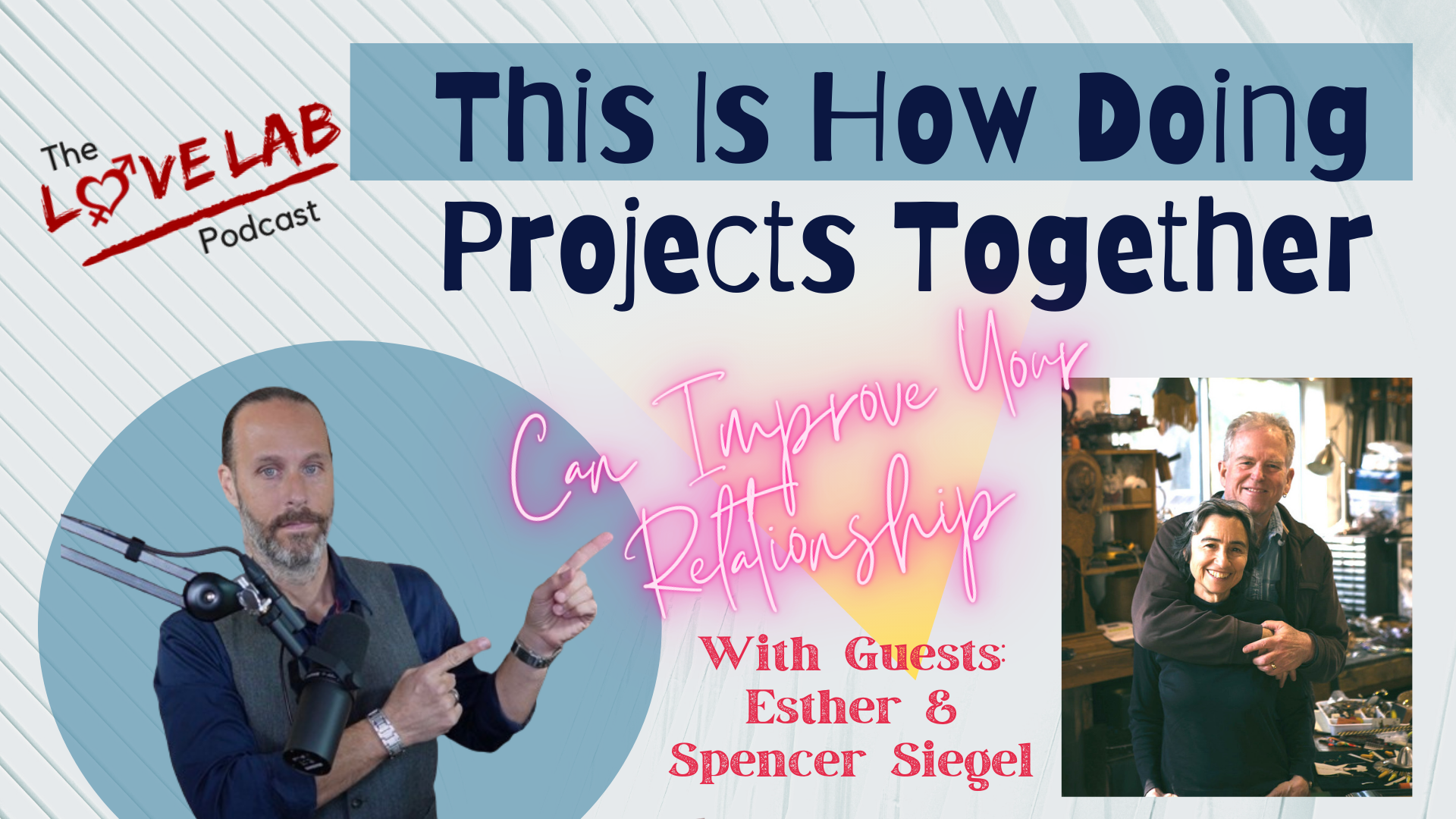
Do you and your partner have common interests? Do you do hobbies or projects together? Research shows that couples who do things together tend to have a stronger bond and better communication. In this episode, Kevin Anthony talks with assemblage artists Esther and Spencer Siegel about how they started doing art pieces together, what they learned about their relationship from working together, what challenges they faced, and how it actually improved their relationship. Their story is a common one and very relatable to most people.
Links From Today’s Show:
To Find Out More About Esther And Spencer, Click The Links Below:
🔥 POWER & MASTERY 3.0 IS HERE!
The most complete men’s Sexual Mastery Course is now even better. To find out more go to https://www.powerandmastery.com
❤️ FREE EXCLUSIVE CONTENT
The Passion Vault → https://www.kevinanthonycoaching.com/vault
💪 MEN’S SEXUALITY & MASCULINITY COACHING WITH KEVIN ANTHONY
If you are ready to make big changes and finally become the man you have always wanted to be, then Unleash Your Inner Warrior Program is for you → https://www.kevinanthonycoaching.com/go/warrior
👉🏼 COUPLES COACHING WITH KEVIN ANTHONY
https://www.kevinanthonycoaching.com/sex-coaching-couples/
👉🏼 OUR HAND-PICKED PRODUCTS FOR YOU
We have hand-selected some great products to help support your Health, Sex Life, and Relationship! Purchasing products from us and/or our affiliates helps support the work that we do and ensures we can continue to help as many people and couples as possible! → https://www.kevinanthonycoaching.com/products/
Kevin Anthony 0:05
Welcome to the Love Lab podcast, a safe and fun place to get real and learn about sex. Whether you’re a man or woman, single or couple, this is the show for you. I am your host, Kevin Anthony. And I am here to guide you to go from good to amazing in the bedroom, and your relationships.
All right, welcome back to the Love Lab podcast. This is episode 291. And in this title, this is how doing projects together can improve your relationship. So I have some guests on today. And what we’re really going to be talking about is how, when you’re a couple, doing things together can have a positive impact on the way you relate in your relationship. And I have always been a big fan of couples having common interests. So you know, those longtime listeners of the show would know that, you know, Céline, and I had a lot of common interests, there were lots of things that we used to like to do together, we were both musicians, we played music together, we sung together, we like to do things like hiking together, we would train in the gym every morning together. And those things really helped build a deeper bond between us.
And as I’m pretty sure we’re going to get into in this episode, you’ll also find that they can potentially bring up some challenges, which gives you then an opportunity to work on those things and create a deeper relationship. So that’s what we’re going to be talking about today. And the guests that I have who I’ll introduce, in a moment, have a really great story about how they started doing things together, what it showed in their relationship and how they navigated that and then the lessons they learned from that, how they are now using that to help other people. So kind of excited to have this conversation. I think what they do actually is rather unique. So yeah, that’s what we’re going to talk about today.
But before we do that, a short word from my sponsor, power and mastery. 3.0 is here, the men’s sexual Mastery program you have heard about on the show for a long time is now even better. I’ve personally reviewed every module lesson video, audio, and PDF to see if there’s anything new that needed to be added. As a result, I have added 10 New videos one new audio eight new PDFs, and dozens of links to handpick products to help support your journey to mastery. In addition, there’s also a brand new user interface that makes it easier to navigate the course and find your course materials. So if you are ready to become the sexual Master, you have always wanted to be then go now to powerandmastery.com. That is powerandmastery.com. Go check it out.
Okay. My guests today are Esther and Spencer. And they’ve been together since 1977. They’ve been making assemblage art together for the past 15 years, they wrote their first award-winning book Lost and Found Assemblage Artists of Northern California last year. So welcome to the show.
Spencer Siegel 3:06
Thank you appreciate it.
Esther Siegel 3:08
Nice to be with you.
Kevin Anthony 3:10
All right. So I want to lay a little foundation here for people. Now obviously, my listeners know that I usually have a pre-interview call where I get to talk to you a little bit and learn a little something about you. So I know a few things about you guys and your relationship and all of that. And I want to bring some of that out so that the listeners understand. Because I’m not saying there was anything wrong with your relationship. But when you start talking about what the assemblage art brought to you, it helps to know where you were before you started doing that together. So my first question is, could you describe a little bit about what your relationship was like before you started doing assemblage art together?
Esther Siegel 3:56
Well, I would say that we totally supported each other’s individual activities and interests, which manifested into businesses. And we weren’t doing any of it together. So we were promoting each other supporting each other from the sidelines. My backgrounds in my businesses are psychotherapy and horseback riding, which are fairly small groups of people like maybe a family or mostly individuals. And so I felt a little a lot less noticed by the world and even by our family and friends Spencer’s businesses they’ll tell you are a lot larger with involves more people and more fame. And so we were I guess I kind of felt a little smaller in the relationship that I want it to be. But I didn’t know how to shift that.
Spencer Siegel 5:08
From my viewpoint, or is that for so many of the decisions that were made over time, with each one of our bids is, we’re saying the businesses in my world, I was in the music business for over 40 years, in various capacities. And in each one of those from putting on concerts and festivals to making records and building a recording studio and a music store blog, you know, on and on, is that we would discuss it, and she would support it. And yet, the core of most of the decisions were I made on my own. And if it was something really large, we definitely discussed it. But day to day, it just didn’t happen. And what happened, of course, that’s what the paradigm was, before we wrote the book, it was more of an eye situation. But for each one of us, I’m gonna go do psychotherapy home and work with the horses. I’m gonna go play a concert, I’m gonna go put on a festival. And it was very few weeks in there.
Esther Siegel 6:13
Yeah, I mean, I was kind of known as Spencer’s wife. When people would see me he did say, Hi, what is Spencer up to?
Spencer Siegel 6:23
Clients and counselors would want to know what I’m up to, which is not okay.
Esther Siegel 6:29
So like, that’s a brief sort of thumbnail sketch of where we were at before. That’s before.
Kevin Anthony 6:34
Yeah. And that’s, that’s great. So that lays a little foundation. And that lets people know, sort of where you were at before this so that they’ll get a better sense for how things shifted afterward. I’m curious. So you’ve described that a little bit. Did you at the time? I know, Esther, you kind of alluded to this a little bit, but I’m wondering if, at the time, you really saw that as a problem or not? Or if that was just kind of how things were?
Spencer Siegel 7:00
Good question, you should answer that one more than me.
Esther Siegel 7:02
Well, I saw it as a problem. And occasionally, I would bring it up. You seemed like you didn’t know what to do about it. Like, you’re just, you know, I, it’s felt like Spencer was a little threatened by it. By me saying that I felt small, in the world with you, and even with you. And because you didn’t know what to do about that.
Spencer Siegel 7:31
I think also, that’s not how I saw you at all, and how I experienced you. So well that would be correct.
Esther Siegel 7:39
That’s true. So he was having two different points of view, hearing my words, which was like, I’m feeling invisible at times in the world with you, and that he’s, but he also sees me as very visible and big and strong. So it was, it was challenging, and it never really shifted until we got into the art together.
Spencer Siegel 8:02
So some of the family and friends a little side joke, or I would say from time to time is that, you know, Esther is about five feet tall. But in reality, she’s seven foot two. Well, and that’s how that’s how she comes across. She’s a very strong and powerful woman, and that’s how I’ve always experienced her.
Esther Siegel 8:21
Oh, the interesting thing is that you could be experienced that way by the outside world. But inside, you could feel very different, right?
Kevin Anthony 8:30
Oh, absolutely. So one, never judge a woman by her size. That’s very, very true. And I think one of the points that you just brought up there, which is really important, which is there’s the reality of a situation, and then there’s how we feel about it. And those two don’t always necessarily line up. However, that doesn’t necessarily mean that the feelings aren’t valid. So in other words, you Esther are feeling sort of in the shadows of Spencer, but he doesn’t see it that way at all. Right. But the but the reality is, is that you’re still feeling that way. And so those feelings themselves are valid. So that’s an interesting dynamic that you had prior to that.
Esther Siegel 9:15
Yeah, but they’re more than valid, they kind of run the relationship. I mean, you know, how, in other words, how your person feels inside about themselves and being in the relationship is going to trump everything in terms of it’s going to take over, even if you’re trying to be more congruent with how the outside world sees you.
Kevin Anthony 9:42
Well, of course, because so the way that you’re feeling is going to largely influence the way that you behave and show up in your relationship, whether you want it to or not, right? So yeah, absolutely those feelings, even though they may not necessarily reflect the actual reality or You’re going to have an impact on the relationship. And that’s exactly why I say they’re valid, right? And this is, this is actually since we’re talking about this, this is a place where a lot of men go wrong because a lot of men will look at that situation and they’ll say this, they’ll say, that’s just not the way it is. That’s not reality, like, just get over it, right? And they dismiss the fact that their partner is actually feeling a certain way. Whereas what they should do is go okay, I understand. That’s how you feel. Let me tell you where I’m coming from. And let’s figure out how we can you know, come into more congruence between how you feel and you know, what I believe is the actual reality of the situation.
Spencer Siegel 10:37
So we did almost exactly what you just described many times. And on the flip side of it, is what I realized, there’s two things going on. We coined the term for me over the over many decades that Mr. Fixit, okay, there was an issue, you know, I want to fix instead of just listening and just being with it, so that that took time to incorporate into my, just who I was because that is not what happened in my Father’s house growing up. The flip side of that was that for me, the way that I internalized this was that I felt I needed to become smaller, less than I need to become quieter, I need to become invisible. And, you know, instead of, you know, people would be at a party, your friend’s house over dinner, whatever. And people start asking me questions. Well, I would, I would literally take my eyes and look at Esther. So they would stop looking at me and start looking at her. There was one particular instance when he felt very uncomfortable that she didn’t like him, even though he wanted the attention, and I didn’t want it. I don’t know what else to do without saying something. There was one particular instance where I stood literally above the woman above Esther. She’s asking Esther a question looking at me. I’m standing behind Esther, she’s kept looking at me. So eventually, I got it
Esther Siegel 12:07
He finally got it. It took a while. But that was actually a turning point for him in terms of, oh my gosh, people are way over-focused on me. Even when I’m standing right behind her. They’re refusing to look at her and talk to her. They’re looking at me and talking about her.
Kevin Anthony 12:26
Well, I think that’s amazing Spencer, that you were able to have that awareness. I mean, the reality is, I don’t know you very well. But I can tell that you’re a big personality, right? Not only physically, from what you’ve said but just your big energy and a big personality. And so people are naturally going to be just drawn to that all the time. And generally, most people are not aware of that. So the fact that you could have that awareness around, hey, everybody’s giving me attention when they should be focusing on her actually was a great awareness.
Spencer Siegel 12:56
It helped. And there are there, yes, thank you. It helped. And there, there are times when I know that I am consciously in the room being quiet. I am deferring I’m deflecting, I’m being very quiet, the conversations going around the room. And because this has been a button for us for so many decades, especially early on, is that if all of a sudden I get the laser focus of the group, or the person for let’s say, five or eight minutes, whatever it is, I’m just starting to feel uncomfortable, even the least amount of talking and let’s say 50% of the time afterward, Esther said, Oh, they all talk about you, even though it may about maybe five or eight minutes. So her trigger is alive and well in the room. Even though I know I’m doing self-monitoring to an extreme degree. At that point, I’m going, I don’t know what the hell I’m going to do now. Why would I even show up anymore? You know, I’ll come with a muzzle next.
Esther Siegel 13:56
It’s all habits. responses. I have old responses. And I’m highly sensitive to that. So So
Kevin Anthony 14:03
Yeah, I mean, we all have our responses in the way we show. But what is what is interesting is that the responses that you both were having to that situation were to an external situation that you couldn’t actually control. In other words, you don’t have any control over how that woman decides to stare at Spencer rather than you when she’s talking to you, right? Like that’s an external circumstance you can’t control but what those external circumstances were doing, was triggering your own patterns and your own insecurity. So that’s actually a fascinating discussion. We could go a long way down that road. And I’m sure Esther, you understand that given the work that you do, which we’ll talk about a little bit later. But let’s shift now over into, you know, how you started to do the art together first, and then we’ll go into how that shifted those patterns in the relationship So what made you decide to actually start doing this assemblage art together?
Esther Siegel 14:58
It was a kind of slow-moving process, it wasn’t like we one day decided, Spencer you, he was making birdhouses and sometimes musical instruments out of junk and stuff we had around the property. And I always admired it. And I was into scrapbooking. So we were kind of into two different worlds again, and he appreciated the scrapbooking, but he didn’t participate. And I didn’t participate in his art. Eventually, I moved into book art, which is taking books folding them cutting them, and making our data of them. And I started adding objects. And he was already working with recycled art objects. And it was a slow-moving thing that we kind of ended up kind of in the same place.
Spencer Siegel 15:57
She was, I was working in the barn, we have a big barn on the property, lots of tools and just, you know, 1000s of objects inside of it. And so she would come in and look around and pull What was you know, what was already inside there to incorporate into summer book art, but I saw, she actually did this, an object and assemblage piece, and then incorporated book art into it. So the shift flipped from the book art to the object, to the object, and then she added book art with it. And at that point, she started spending more time in the barn. And then we start talking back and forth about oh, you should add this or what about that, you know, how do you incorporate this, and with that, I started teaching her how to use all kinds of tools, and feeling comfortable, you know, using belt sanders and drills and you know, bandsaws. So, it was it, she said it was a slow organic thing, it didn’t happen overnight. And now she actually teaches people how to do all this herself.
Kevin Anthony 17:01
So a couple of follow-up questions on that. So when you noticed Spencer that she started, you know, being more in the barn and doing more of this? You know, what was? What were your thoughts about that, right? Because some guys are like, Whoa, this is my mancave space here, right? Where are you? Like, oh, this is cool. She’s starting to come into my world? Or was there some resistance to that? isn’t
Spencer Siegel 17:23
None at all, like zero! Because that’s just not how we support each other through what our creative means have always been. So she was starting to come to the bar and go, Oh, yeah, well, have you tried this? What about that? And I, you can answer this to yourself. But now I was totally supportive and gave her a lot of room to do. Were going to share, we wanted to go with it.
Kevin Anthony 17:45
And what were you thinking Esther as far as like, Ooh, I like I want to be in here. But maybe I shouldn’t be or like, is he going to be okay with that? What were you thinking?
Esther Siegel 17:55
Well, the other component that we didn’t mention is that we enjoyed collecting stuff together. So garage sales, thrift shops, and even birthday parties, we would tell people to bring us leftover junk, and broken jewelry, and I liked the stuff. So I was attracted to the stuff.
Spencer Siegel 18:17
And so that was that was just another common thread between the two of us.
Esther Siegel 18:21
We both like stuff in shapes. So um, how did I feel I see, even today, I feel a little insecure about the tools. So, I relied on him. And I was almost a little resistant to learning how to do it myself. I wanted to just do it. So I grew up without doing tools at all, I was real comfortable in the kitchen and those tools but not, you know, construction tools. And so it’s taken me a while and it’s still taking me a while to not feel intimidated.
Spencer Siegel 18:59
And there was this there was she’s part of this group, a pair of seven women called Seven Sisters and each one does a different type of art. And they put on the show and they get together and they talk well. At one ticket the artist said okay, you got to do the whole thing yourself can’t have any help from your spouse. I remember this one. And all of a sudden you had to make this thing. But there were ways for you to attach it that you didn’t know how to do and in your own angry frustrated way. You were very upset with me while I was trying to teach you how to use a drill. He was getting angrier and angrier. You’re just so frustrated that you didn’t already know this. I was just trying to be as patient as I possibly could. That was the that was the trick when they said that.
Kevin Anthony 19:47
Well if it makes you feel any better after I know quite a few men that don’t know how to use a drill either.
Esther Siegel 19:54
The problem is we’ve opened this up to the community is us that actually I’m most women. And we have a lot of men that come that don’t know how to use any of the tools and spend even a screwdriver.
Spencer Siegel 20:10
We had two workshops ago, two women had never held a screwdriver. And they’re in their 70s 60s 70s.
Esther Siegel 20:18
But also also the men too. So we started from that place with them. So that was interesting.
Kevin Anthony 20:28
So you’re in the shop now more Esther Spencer’s teaching you how to use some of these tools. You’re starting to make this type of art yourself. At what point do you start actually doing the projects together, like coming up with the ideas together and saying we’re going to do this project and working on it together?
Esther Siegel 20:47
Well, we have been tending to work mostly side by side. And that means that like I just showed something to Spencer, last night, he was gone for the day. And I started to pieces. And I told him last night. And the first thing he said this morning was let’s go in the barn. And let’s go look at the pieces or when he got home. And so that gave me a thrill that he was interested right away in looking at stuff. And we spent about 20 minutes. I said, I’m thinking about this, and I’m thinking I took different objects and moved them around. And then he goes, Well, what about this, and this could tell a story in your art piece. And I never thought of a story before. So that was interesting. So the way we tend to work is very similar to what I’m describing is we’ll start something, we’ll bring the other person over, they’ll go wow, or wow, you know, that doesn’t work. Or, you know, maybe something else might work. Instead of this, this frame. Let’s try this frame. And so we you know, we go we know most of the pieces in the the objects in the barn, so we go grab something, and then it takes us into another place.
Spencer Siegel 22:03
One of the keys to this, which is really important for anybody working together with couples, especially, is that we’ve given each other permission to make any suggestion on their piece. But exactly what’s important about this is that they have full rights of saying add-on work. And we have to just say, Okay, no problem. And we’ll try something else. So there can be no discounting.
Speaker 1 22:31
You get the final say if it’s your piece.
Spencer Siegel 22:39
Yeah, I don’t have any skin in the game if she says no.
Kevin Anthony 22:44
Okay. So there’s, there’s an openness there, one to receive, but also to potentially be rejected, right? Like, oh, I don’t like that idea.
Spencer Siegel 22:54
There’s no angst whatsoever, but from the other person, we just move on about that we try something else.
Kevin Anthony 23:00
So that’s obviously going to require then a fairly high degree of communication so that you’re not triggering each other by Correct.
Esther Siegel 23:09
Right, and a caring about the bigger picture, instead of just, this is the I think this is the right piece that shouldn’t be there. Right? It’s more like acknowledging the artist.
Spencer Siegel 23:25
The artist in her and the artists in me that’s that has his vision, to begin with. It is your piece first.
Esther Siegel 23:31
And then if we do decide to do a piece together from the very, very beginning that has the same kind of flow to it. In other words, what about this? No, I don’t like this. Okay, well, let’s try this.
Spencer Siegel 23:46
And we found when we do the pieces together, which hasn’t been often but the times we have is sort of like we’re not intentionally racing, but it’s sort of like we’re just on fire. And we go really fast through these things.
Esther Siegel 24:00
We created a much faster than we do our own faster. I don’t know why it just is and it has a little bit more excitement, because we’re doing it together. And we’re releasing all that good love hormone.
Kevin Anthony 24:17
Well, that is a perfect segue into what are the lessons that you learned from doing this together. What are just a couple of key things that you learned from doing these pieces together? That would be helpful to say other couples.
Spencer Siegel 24:34
When people have art walks that come through once or twice a year and we have a lot of people come through that do the workshops and land or want to see the gallery here at the house or the barn and from our past. I invariably usually defer to Esther to start. Let her begin to try to do that you get to your she’s the initial Going there that way, I’m not taking over from the very beginning and done set up for the dynamic. That’s true.
Esther Siegel 25:05
Okay. I actually didn’t realize you were doing this, I am super conscious. So okay, so I think that’s, that’s good if you’re aware that one person is, is the attention getter in the relationship to, you know, give it up temporarily to know you’ll get some a little later, but let the other person start off. And that has had has worked well.
Spencer Siegel 25:37
Another thing is when we do the assemblage camps, is that I can see how something needs to be attached. And if Astor brings me over, and says, Okay, we don’t know how to attach this, how are you going to do this? I need, I immediately want to do it, because I’ll do it quickly. Because I’ve got another seven people waiting for me to go attend to theirs. I will try to show them and explain to them how it’s done. Instead of me, just immediately, just give me the hair, just give it to me, I’ll just go do it. And then that way, they get to experience it and for learn on their own, which is very important, because that’s what they’re there for. They’re there to learn how to do this and to have fun and have great ownership in the end, which we’ve gotten fantastic feedback of people walking out of there going, I am not an artist, and I’m not creative. And look what I did today. I did it not, you know, they’re saying that.
Esther Siegel 26:30
So I would say that what I’ve learned is that I have I have good ideas. There you go, that I’m that worthy. Yeah. I’m smart, you know, people, people will acknowledge that if I speak up, and if I have the room to do that. And sometimes I’m a little surprised, and everybody likes my ideas. For my side, the art world, I mean, I feel competent in like in the horseback riding world, but in the world that we share together. He’s been an artist since he was a little kid, I never took an art class, I don’t consider myself an artist, and I can’t draw. I can’t draw, I get I admire people who draw. So I draw with objects. But I think learning to that I have something to say and it’s valid, continues to validate me. So then I feel a little bit more confident in the next situation to speak up.
Kevin Anthony 27:42
That’s wonderful. So you’ve learned self-confidence, you’ve learned how to speak up, right, and share your voice more. And then of course, you’ve also learned Spencer how to help facilitate people in their learning rather than just doing it for them. Which by the way for for us guys, especially those of us that like to work with our hands. That’s not necessarily an easy thing to do. I have a good friend who never learned how to really do stuff with his hands too. So whenever he has a project, he needs something built or something fixed. He’s always calling me up saying can you help me with this? Right? So one day, I was helping him with a project. And it was bad. Or maybe the second or third time I’ve done a similar project with him. And at one point, he says to me this time, could you just let me do it. So I could actually learn it rather than just doing it for me. And I was like, You’re right, you’re absolutely right. Because I have, you know, that’s not necessarily an easy thing for us guys to do. So that’s the fact that there’s again, awareness around that and realizing that, oh, we need to empower people, right? Instead of, you know, giving them the fish. We’re teaching them how to fish, so to speak, right?
Spencer Siegel 28:50
Well, with each person, let’s say you got six or eight different stations, and everybody’s got their own piece they’re working on it’s all individual. And they’ll come to me goes well, this needs to be cut. And every time I asked him, Well, do you want to do it yourself? And I’ll show you do you want me to do it. And the people that are really uncomfortable with these things. I’ll do it while they watch. And the ones that really want to learn we’ll just jump right in. And I really encourage them one woman was just really scared of the bandsaw it’s a good thing to be scared of until you know how to hold your hands and what to focus on. And after I showed her once she did it a dozen more times on a bunch of different pieces and actually felt really empowered. At the end of the day with that.
Esther Siegel 29:32
I kind of see myself doing the the man thing in the kitchen, where I cooked from a little girl I made my own cookbooks when I was a kid. I’m super comfortable in the kitchen and Spencer is a new more of a newbie in the kitchen. So I will come in and sometimes take over and or he asked me a question and I just Want to do it myself. So I know that urge to if you’re competent in something, to just do it yourself, but it doesn’t help the relationship. And I know in the kitchen, it’s caused us some problems.
Spencer Siegel 30:12
Here’s a new one for you and your listeners, this is a good one. This is recent, it only took us 47 years to get here. When all of a sudden, who is ever the chef for that day, who’s making the dinner? And you know, we’re pretty equal 5050 Give or take 10% Here there is that who’s ever in charge, if the other person comes in, and starts to take over and put the other person down? You know, it’s almost like a fun flip of I say, Yes, Chef. And immediately she gets that she just overstepped the line. What happened was, is that we got a little bossy with the other one, and one would say, Yes, Chef. And we hope it’s like the magical word between the two of us. So if I come in, I said, Okay, you’re my sous chef, I do need help today. Then they get permission, but now we’ve done it outside the kitchen. If one of us is coming in into the other ones’ activity, and they take over, I just wait. I just pull back and say, Yes, chef, and she gets it instantly.
Kevin Anthony 31:13
Yeah, so that’s your safe word. Right? That’s your that’s your very nice way of saying, you’re being a little too controlling. And I’d appreciate that a little bit more space. That’s great. I love the fact too, that you brought in the stuff in the kitchen. Because what it shows is, is that dynamic conflict based on what your sort of Master of domain is right? So that’s, that’s a very interesting thing. And I like also, I mean, obviously, we’re going to talk about your book and what you’re doing with the assemblage art, but I like the fact that people can see that it’s not just the assemblage art, that it could be simply something cooking in the kitchen or could be any activity that you’re doing together.
Spencer Siegel 31:54
In a creative activity you have together, there’s, it’s always the same. It’s just different objects.
Kevin Anthony 32:00
Yep. Okay, I want to ask you one more question related specifically to that. And then we’ll get into, you know, a little bit more about the specifics of the book and the assemblage art itself, but I just need to take a brief pause for a second ad. And then we’ll get back into that.
So are you a couple are your relationship and sex life where you want them to be? Are there changes you would like to make but just don’t know how maybe you think there is nothing that can be done? If you’re not 100% happy with where your relationship or sex life is? Then get help today and change your life. Go to Kevin ensiling.com forward slash sex dash coaching dash couples, I know it’s a long link, so don’t worry, it’s in the description, and schedule a strategy call with me today. So we can map out a strategy to get you where you want to be. That is Kevinandceline/sex-coaching-couples/. This is where you get to learn all of these wonderful skills that we are talking about today. So that is Kevinandceline/sex-coaching-couples/.
Okay. I have one more question related to the topic that we’ve been talking about, which is specifically you know, how you guys related when you started doing this kind of art together? So we covered a little bit about, you know, what are the positive things that you learned from it? And we talked about, you know, communication and, and, you know, all that kind of stuff. I’m wondering if, when you started doing this together, there were any sort of negative patterns that showed up that you were like, Oh, I didn’t even realize I was doing that. And then if so, how did you shift it?
Esther Siegel 33:38
Well, um, okay, so this is something that still is happening. And I don’t know if I’ve articulated it before. But you mentioned how, you know, Spencer has a big personality. And so it also transfers into his artwork. He makes big pieces of artwork, very awe-inspiring people, you know, what’s the word we use? Shock and Awe, shock and awe. Okay. And so when people see his art and my art, they do the same thing. They Oh, wow. You know, it’s it’s more it’s it’s a higher wow factor. And it’s also bigger there, it’s bigger and so size has a wildness to it too, right? I mean, a tiny little piece, although I don’t make tiny pieces, but that’s gonna be a lot less on for people. So that dynamic of me being smaller still show is shows up in the art.
Spencer Siegel 34:51
I’m curious where you’re going with this.
Esther Siegel 34:59
I do want to Guess what he’s working on a big piece that I’m not is open to giving feedback or supporting me or supporting me, I still have this place where I, I feel tight, like the doors close. And if it’s a smaller piece, I noticed that there’s a little different way of approaching it. I’m more open. So it’s, it’s odd. It’s weird, we actually have never talked about it, I’ve felt it. Yes, I am not sure what to do about it, other than the first step is talking about it like I am right now. And he’s already felt it. And that doesn’t surprise me in the least. And I feel I don’t like it. But it comes up. And so I’m less inclined to give him feedback and be more supportive, supportive and excited about the piece. And he also gets a lot of he gets commissions for these large pieces. And I don’t get commissions. So that’s a place where I still have some work to do. And he’s not like he’s doing anything to me. But I experience that old stuff again. How is that for you to hear that?
Spencer Siegel 36:23
Well, Mr. Fix it. And then the other side is hearing it. And then the other side is going Hmm, what do I need to do to change that pattern than the other side goes? Why would I change something, it comes so naturally to me. And then the other side goes, Okay, just listen to keep your mouth shut.
Kevin Anthony 36:43
All right, I think the last one was the best idea. Listen. So I’m gonna go on a little bit of an aside here. But so that pattern is very interesting because my wife had a very similar pattern in the sense that, like, if we were going to buy anything together, she would always find the smallest cutest one, right? She’s like, Oh, but I like it. Because it’s so small. I just like little things, you know, and I’m like, okay, that could be sometimes people just like things smaller. But over the years that we were together, you know, we talked a lot about everything, especially given the work that we did together. And what was uncovered eventually, under the surface with that was that her liking small things was an outward manifestation of her wanting to stay smaller herself, because she felt safe. In her smaller world, especially as we started becoming more popular with doing this show and the work that she was doing in the world. And she was starting to be out in the public a lot more. Right, it was a growth edge for her to be that big to be that scene. Right? So it’s just interesting because I see when you’re talking a little bit of a similar dynamic doesn’t actually have anything to do with Spencer, or the size of the art project whatsoever.
Esther Siegel 37:59
Yeah, I think there’s a part of me, I can relate to that part of your wife. But there’s also part of me that wants to be bigger.
Spencer Siegel 38:10
But you know, the thing is that, we’ve talked about this, and it’s still you can’t you can’t do anything about it. Her work that she does behind closed doors, she can’t tell anybody about she can’t share it. And she’s changing lives, people, you know, coming back from the brink of maybe suicide or divorce, or they lost a child. And she’s the one they come to, over and over and over again, changing lives on a massive level at times. And yet, she has to be small and quiet and can’t tell anybody yet your work and what the effect you’re having is profound on so many people. I mean, we just notice we’ll go we’ll go out in public I’ll be quiet is that when it doesn’t manifest for you the way it does?
Esther Siegel 38:58
It’s in the newspaper, you know, front Page with you.
Spencer Siegel 39:07
Oh, just save somebody’s marriage. Well, I can’t do that. But I’ve said you can’t do that. But that’s what you just did. And so, you know, I think it somehow has to trigger into this same dynamic, I assume.
Esther Siegel 39:19
I don’t know. I like accolades like everybody else, you know?
Kevin Anthony 39:25
Well, yeah, I mean, so most of us do. We want to be appreciated. We want to be recognized. But for some of us, even when we get that it feels uncomfortable, right? It’s something we have to lean into something we need to get used to and so that sometimes is a stretch for some people and that’s an edge that you may potentially need to grow into. If you have something you want to add to that, please do.
Esther Siegel 39:48
Also Spencer is a person who gets a lot of accolades. Interestingly enough, doesn’t. What I noticed is it, and you can speak for yourself, he doesn’t actually take it in. He feels like a thank you. No, but I mean, he doesn’t. You’ve said things like, you know, with your music. So many people have listened to you, but you’re not kind of famous in your the way you want to be. So what you do get doesn’t match the recognition that you would like to get. I’ve seen a disconnect there.
Kevin Anthony 40:33
Well, you know that it is a very tricky world, once you once you start to be out there a little bit more, because one, you’re going to get a lot of praise, you’re probably also going to get a fair amount of negativity, trust me, I know. You know, I Well, I get overwhelmingly positive praise, you put yourself out in the public, you’re gonna get hate too that’s just the way it is. And it can be tricky, like balancing, not not just the good and the bad, but like, you know, how much good is it? Is it too much for me? Is it not enough for me, you know, all that kind of stuff? It’s, it’s trickier than than people realize when they start to get a little bit of recognition. That is definitely an aside to this conversation.
Spencer Siegel 41:15
By okay, I’m totally okay. I didn’t stop you. Yeah, you already squeezed me two or three times. I know. But
Kevin Anthony 41:27
Okay. So since you were talking a little bit, Esther about your work, that is something that I wanted to talk about a little bit in the show also, because what you’re doing with the assemblage art is similar to a more mainstream practice in psychology that we had talked about a little bit in the pre-interview, which is that sand tray therapy. So what I want to do is kind of make the connection between what you’re doing with your assemblage art, and kind of show people that this is an another variation on a well accepted practice in the psychological community. So maybe you could talk a little bit about what is sand tray therapy? And how does it relate to what you guys do with your assemblage art?
Esther Siegel 42:15
So, sandtray therapy is you have a say, in a sandbox in a small sandbox, in the counseling room. And then you have a variety of objects. And the person will, the therapist will guide the person into picking objects to represent themselves very as various aspects and important people in their life. And they’ll pick the objects, put them in the tray, and then talk about how that object is similar or different to themselves, or their parent or whatever they’re picking. And you can also go into the problems that the person’s having the presenting problem. So for instance, if they’re, they’re anxious, you can have them pick an object to represent anxiety, and how that object represents it. And then something pick an object to represent how you can stand up to anxiety, and you can create a whole scene. And so you’re using objects to talk about something personal to yourself. But you’re talking about the object, so people are more open, they’re more playful, less threatening, they, it’s a fun activity.
And yet, it’s very disclosing and informative to the person and to the therapist or the family that they’re with. So taking those objects, and giving them meaning is helps the person make a shift or see themselves in a different way. Now, if you go into a barn where or a studio where you have tons of objects, and you start picking them and putting them in places, in a box, or a frame, or in a sculpture, you’re actually doing a lot of the same thing, you’re going to what you gravitate to it, you’re giving it meaning something most of the time, you’re not thinking about, Oh, this part of this musical instrument means this to me, but on a subconscious level, you’re actually doing a similar process. And then when the viewer looks at the art piece, they’re taking each of those objects and the whole art piece and they’re giving meaning to themselves. So all those things are playing out for that individual person. And as somebody said assemblage art is like a little Rorschach test.
Spencer Siegel 45:05
Our own personal Rorschach test.
Esther Siegel 45:07
You’re picking things and you’re not having a therapist guide you. And you’re not maybe even thinking about why you like these things, but it is coming out of you, and you’re gravitating to it. So they’re on your subconscious level, you’re making a connection.
Spencer Siegel 45:24
What are the things that is actually would be is different from sand trade to symbolize that she’s brought a few, the, we call them the, out-of-the-box starter kits, like the one we sent you. And she brings it into the room. And now they’ve done what she just described, they put it all together. And now they can either glue it and take it home and have it represented on the wall, or they can take it home and remove it and, and use it pieces in other ways depending on where the relationship is, whereas in sand tray that only happens that one hour, you’re in the room, I guess, taken away. So there’s a little bit more of a permanence. Something that can represent where you’re at as a couple, or as a family, wherever the dynamic is, using the assemblage small boxes to do the work.
Esther Siegel 46:15
Art is such an individual experience. And so it doesn’t mean the same thing to each person has a different meaning to the same piece. Like if you look at Mona Lisa, for instance, every person who looks at it has a different experience of it. And it’s unique to them. And there’s just something that’s kind of really cool about it. I don’t know how to describe it other than that.
Kevin Anthony 46:45
This is why I go crazy, you know when I see like being a musician, myself, and I’m like in these groups online of you know, people who are musicians and love music, and now he’s doing these lists of this guitarist is better than this one. And this guy, you know, it’s just like, this whole, like better than a thing. It’s art. It’s subjective, it means something different to all of us. Absolutely, totally. Okay. So I think this is a good time to talk about how oh, by the way, for the listeners, if you haven’t gotten the hint yet, because it wasn’t in the bio, obviously, Esther is a therapist, right? So, Spencer, you’ve been an artist your entire life. And so what the two of you are really doing here, it’s bringing the therapy and the art together in a way to help people. So this is the perfect segue for you guys to describe what it is now you’re doing with people, and you’re assemblage art.
Spencer Siegel 47:42
We created the book because we couldn’t find. So we did a lot of searching all over the country, for siblings books. And there’s quite a few on how to, you know, the crafting books, we only found maybe a half a dozen. And we did an exhaustive search, where you show the artists picture, and they use that one may be two pieces in it. And just a little bio that was it. Well, we wanted a more in-depth community where there are no magazines. And so Esther looked at me one day and said, Why don’t we make her own book?
And so organically, we started interviewing people on Zoom, because it was all around COVID and found the artists in Northern California that we could do this with. And through that it took us three years to make the book that came out. And then all of a sudden a whole lot of interest regionally happened around what people were seeing in this book and how they are experiencing it. So we have one of the artists in it. Diane Hoffman already does assemblage camps, and she does a lot of workshops. And she was they were up here visiting one weekend and she was telling us all about it. And Esther and I kind of white Well, we could do that. We’ve had art tours through the bar, but we never did the camp. So we set it up to do an assemblage camp and share what we do how we do it, and in share our objects and share the objects. I mean, it’s hard to describe what is inside this barn. It’s quite something. And so they came in, we have the concept, okay, you want to do it a frame or a box. We were trying to get away from 3d Because it just gets really wild, you know when you quickly take a lot of time. So with that, they can now go all through the barn. We, we say right up front, look around, familiarize yourself and go shopping.
We’ll give you a box or basket and then go shopping. And here’s what’s super important about this. And how it brings people together is that most people show up and say I haven’t been creative in years or I’m not creative. I’m not an artist. I’ve never been this but you know, this is kind of intriguing to me. Your book was really fascinating or I’ve been seeing you guys in galleries. So we say right up front. Don’t Think about what you’re gonna make, don’t care where it’s gonna go, just go around and put in your box or your basket, stuff that appeals to you. What talks to you, you know what areas, people are gonna get the bead drawer, somebody’s going to focus on that, whereas the other person is going to be looking at the brass boxes. And eventually, I said, Alright, I put it on the put on the table. And now it’s aside, do you want a box or frame do you want it on a wall you want it freestanding, anybody can make that decision, there’s still no artistry involved, there’s no bar to entry here. And then at that point, once they pick whatever the framing is going to be, we say, Okay, now just start putting it however you want to, don’t worry about putting it together. Don’t worry about gluing it, we’ll do all that later. And just have fun. Well, that’s just like anybody can do. Anybody can do that. Anybody can do that.
And all of a sudden, this creative spark happens around the room. And people being in their own zones, you’ll start hearing more talking, and everybody’s gets louder, and they’re starting laughing. And they’re starting to share with each other. And this community happens to where they’re all doing this creative process together. And it also almost becomes explosive, in the room, how excited people are getting that, wow, I can do this, I am doing this. This is fun. Why was I so concerned and scared about this? Then eventually we get to how do you put it together and there becomes the next reiteration of what the process is, and it creates a community within the room itself. That’s what I miss there.
Esther Siegel 51:33
Yeah, no, I think not everybody is initially comfortable with getting started. So I think one of the things that we both do is we go over there and talk to them about what they see and their stuckness. And we might make a suggestion, you know, well, you might want to start with doing this, and how does this look, and or here’s another piece that might goes with your pieces that you’re working on. Because some people are quick starters in some are slow. So if you’re working in a group, you have to as a facilitator, you have to pay attention to the needs of the group.
Spencer Siegel 52:16
And invariably, almost, I will say 100%, but most everybody has some point spark kicks in. Yeah. And they just get charged. And now it’s just hold on, watch them go. It’s just fascinating to watch this happen. And then they all who are like a community together, we share a lunch. Everybody’s talking about their process, and what it means to them, and they come back and they just they don’t want to go home. Then can we come back tomorrow?
Esther Siegel 52:42
And we were thinking it should be more than a day because half the people say, you know, there should be more than a day this weekend. And they do come next week.
Kevin Anthony 52:52
Well, that is awesome. So we are getting very close to the end of the show here. I’m wondering if you could tell people if they’re interested in the book or finding you to do one of these camps, how can they find you.
Spencer Siegel 53:06
You can go to our website, which is harmonygaits.com. It is like the Gaits of a horse. So the word harmony when engaged harmonygaitss.com. And it’s called out of the box. Out of the box, there’s a sub header up there. And the book is lostandfound.art, pretty simple and lost and found that art, we also have a website. And there are also links to assemblage camps and or the book and how to order the book. You know, that’s Instagram. And we’re also on Instagram, which is lost and found art book, and Facebook page LostandFoundArt.
Kevin Anthony 53:46
All right, all those links will be in the description below if you are looking for them. Okay, I got one last question for you. It is a question I have asked every guest who has been on the show actually, my wife came up with this question. It might be a little bit outside of your normal realm of answering questions, but it’s always fun nonetheless. So here on the Love Lab podcast, we talk about all things related to sex, love and relationships. And the question is what is your best sexual talent?
Esther Siegel 54:30
I imagine you get all kinds of responses.
Kevin Anthony 54:33
A lot of different responses. Yes.
Esther Siegel 54:35
Oh god. Oh gosh. Talents. Why don’t you go first?
Spencer Siegel 54:52
I’m a student, a very ardent student of oral sex for her.
Kevin Anthony 54:59
Very good, very good.
Spencer Siegel 55:03
An ardent student of what operates and what works for her. And you give me great feedback over the years about that.
Esther Siegel 55:10
I would say that we’re both good at setting the environment. And, you know, from soft light candles, talking ahead a little bit about preparing ourselves. And one of my, I don’t know, talents. But I like taking, we have a very large bathtub indoors. And I like taking a bath together. First, I feel all warm and cozy in the tub. And it kind of warms me up to the process. What else do I don’t?
Kevin Anthony 55:58
There’s no pressure, you don’t have to share anything else. That was awesome.
Speaker 1 56:04
I thought you would ask what is your favorite book that you’ve been reading lately?
Kevin Anthony 56:10
Well, you know, I have a lot of people on this show who are like sex therapists and counselors and CO so they don’t bat an eye at that question. But I thought that one might be a little outside your wheelhouse. So thank you for being good sports and answering that question. All right, well, there you go. Everybody, that is kind of an overview of how you know doing things together can really help your relationship. And I hope that you got some value out of that, I hope maybe you discovered some new ways of doing things together that you hadn’t thought of before. And if you’re interested in the assemblage art stuff, check the description for the links for that. So Esther and Spencer, thank you very much for coming on the show and sharing about what you do.
Spencer Siegel 56:56
It was a lot of fun. I learned a couple of new things today.
Kevin Anthony 57:03
Wonderful. All right, everybody. That’s all the time I have for this episode. And I will see you next week.
I hope you like this episode of the Love Lab podcast. If you enjoy this show, subscribe. Leave us a review and share it with your friends. And for more free exclusive content. Join me in the passion vault at KevinandCéline.com/vault. That’s KevinandCéline.com/vault. Thanks for listening. And remember, as Céline used to say you’re amazing!
We hope you liked this episode of The Love Lab Podcast. If you enjoyed this show, leave a comment and share it with your friends.
RATE & REVIEW THE LOVE LAB PODCAST
—> LEAVE A 5-STAR REVIEW ON APPLE PODCAST
ASK A QUESTION FOR THE NEXT EPISODE
—> Click here to leave a message directly to Kevin and Céline to be answered on the air.
Thanks for listening and remember you are amazing.

Kevin Anthony is a Certified Sexologist, Tantra Counselor, NLP Practitioner and a Sex, Love & Relationship coach. For over 10 years he has worked with men, women, and couples to have the relationships of their dreams, and the best sex of their lives! He is also the host of “The Love Lab Podcast”, creator of the popular YouTube channel Kevin Anthony Coaching, and creator of the popular online course series “Power and Mastery” as well as other online courses for both men and women.