Last Updated on November 18, 2024
What You’ll Learn In Episode 287:
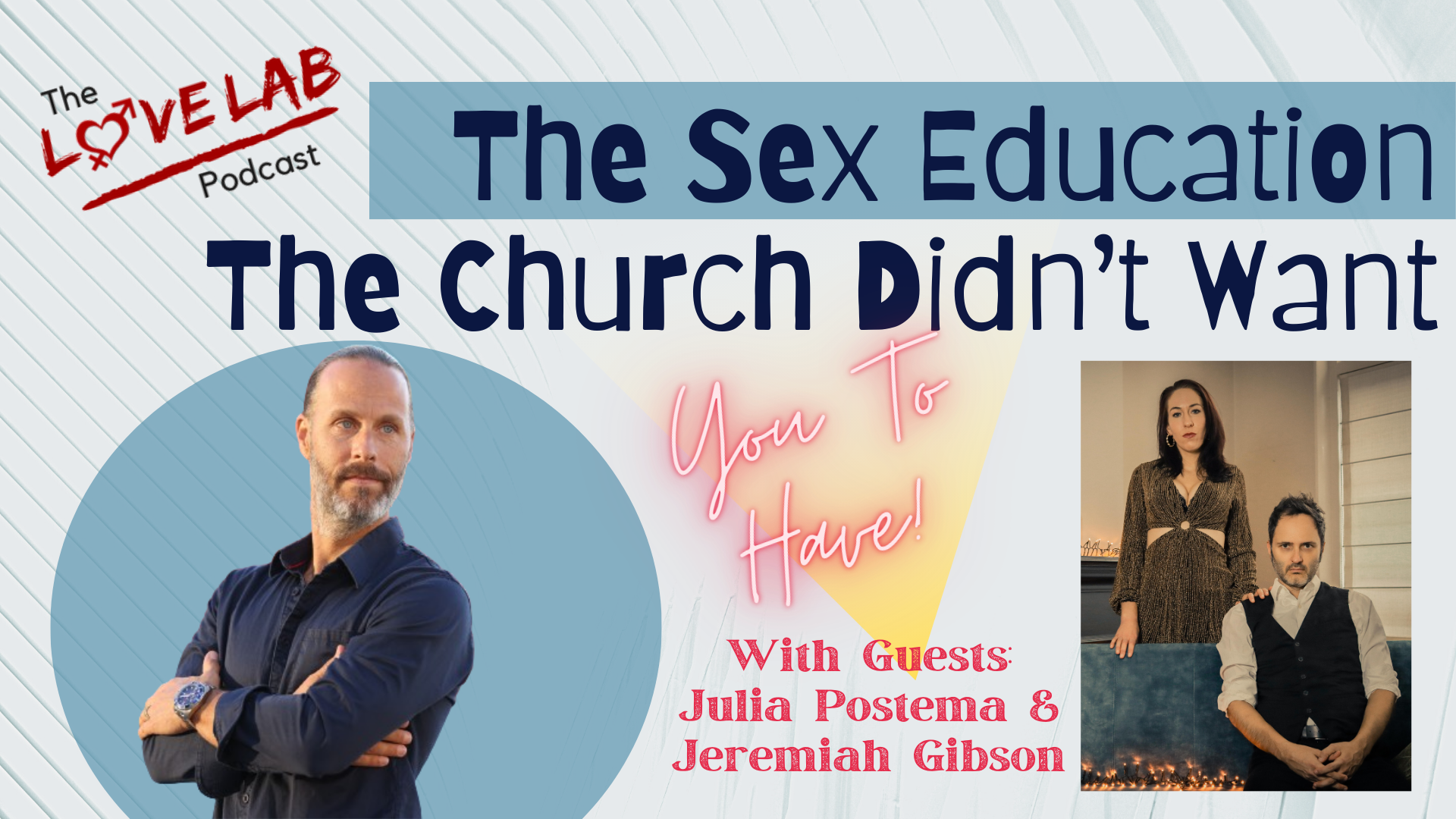
Did you grow up with a religious background? What teachings around sex were you given? Did these teachings have a negative impact on your rleationship with your sexuality and/or your relationships in general? In this episode, Kevin Anthony talks with the Sexvangelicals Julia Postema and Jeremiah Gibson about their personal experiences with the church and its teachings around sexuality, what those teachings were, how those teachings impacted their sexual development as well as their adult relationships, what the church could have done better, how people can heal their trauma and negative patterns around sexuality, and how as licensed therapists and sex coaches they now help others recover their sexual selves.
Links From Today’s Show:
To Find More About Julia and Jeremiah, click the link below:
https://www.sexvangelicals.com/
Other Episodes Mentioned In This Episode:
https://www.kevinanthonycoaching.com/sex-and-spirituality-are-they-mutually-exclusive/
🔥 POWER & MASTERY 3.0 IS HERE!
The most complete men’s Sexual Mastery Course is now even better. To find out more go to https://www.powerandmastery.com
❤️ FREE EXCLUSIVE CONTENT
The Passion Vault → https://www.kevinanthonycoaching.com/vault
💪 MEN’S SEXUALITY & MASCULINITY COACHING WITH KEVIN ANTHONY
If you are ready to make big changes and finally become the man you have always wanted to be, then Unleash Your Inner Warrior Program is for you → https://www.kevinanthonycoaching.com/go/warrior
👉🏼 COUPLES COACHING WITH KEVIN ANTHONY
https://www.kevinanthonycoaching.com/sex-coaching-couples/
👉🏼 OUR HAND-PICKED PRODUCTS FOR YOU
We have hand-selected some great products to help support your Health, Sex Life, and Relationship! Purchasing products from us and/or our affiliates helps support the work that we do and ensures we can continue to help as many people and couples as possible! → https://www.kevinanthonycoaching.com/products/
Kevin Anthony 0:05
Welcome to the Love Lab podcast, a safe and fun place to get real and learn about sex. Whether you’re a man or woman, single or couple, this is the show for you. I am your host, Kevin Anthony, and I am here to guide you to go from good to amazing in the bedroom, and your relationships.
All right, welcome back to the Love Lab podcast. This is episode 287. And in this titled The sex education the church didn’t want you to have. Now before we get started here, I’m sure that many of my listeners are people that belong to a certain faith. And I want to assure you, I’m not here to absolutely destroy your religion, and tell you how it’s all evil and wrong. That’s not the purpose of this show. However, having grown up with a religious upbringing myself, I am well aware of some of the shortcomings of these institutions. And that’s what we want to talk about today. Specifically, as it pertains to sex. We want to talk about, you know, what did the church teach us? How did that work out for us later in life? How did that serve us or not serve us and what potentially could they have done better, and a whole lot more. Between my own personal experience and the experience of my guests who are on the show today, I think we’re going to be able to dig into that pretty well.
But before we do that, a short word from my sponsor, power and mastery. 3.0 is here. The men’s sexual Mastery program you have heard about on the show for a long time is now even better. I have personally reviewed every module lesson video, audio, and PDF to see if there’s anything new that needed to be added. As a result, I have added 10 New videos one new audio, eight new PDFs, and dozens of links to handpick products to help support your journey to mastery. In addition, there is also a brand new user interface that makes it easier to navigate the course and find your course materials. So if you are ready to become the sexual Master, you have always wanted to be then go now to powerandmastery.com.
Okay, my guests today are Julia Postema and Jeremiah Gibson. And they are the CO hosts of the podcast sex evangelicals, the sex education that the church didn’t want you to have. They are both Boston-based, licensed psychotherapists and certified sex therapists who work with clients in Massachusetts. They currently live in oh boy, I’m gonna mess this one up. You can correct me later. Utrecht, the Netherlands. They specialize in helping couples navigate religious backgrounds and discover sexuality that works for their partnership. They enjoy traveling to places that tend to fly under the radar, long-distance hiking, cooking very spicy food, unexpected conversations, and introverted days filled with reading and drinking fancy tea. So welcome to the show.
Jeremiah Gibson 2:51
Thank you. Thanks so much. Excited and well done for saying Utrecht.
Julia Postema 2:56
That was that was better than me thinking, Oh, he even had the accent.
Kevin Anthony 3:05
Man, I saw that word in there. And I’m like, oh, man, that’s gonna be tough.
Julia Postema 3:09
No, you were amazing.
Kevin Anthony 3:12
All right. So you know, I’m not even going to do any more intro, I just want to jump right in. Because what I was gonna say something about your background. And instead, let’s just start there. Let’s start by telling the audience first about your professional backgrounds. And then I want to get into your religious backgrounds after that. But it’s one thing at a time, this just lets people know sort of who you are, what you do, and why you’re here to talk about this today from a professional background.
Jeremiah Gibson 3:40
Yeah, so Julia and I are both licensed psychotherapists, I’m a licensed marriage and family therapist. Julia is a licensed independent clinical social worker. We’re also certified sex therapists, through the American Association for Sexuality Educators, Counselors, and Therapists, long titles all that to say we’ve done a lot of training, we’ve done a lot of our own work. We’ve done a lot of supervision about how to help people navigate relationships, and build communication strategies that work best for them. As we have developed in our professional careers, we’ve both kind of independently, and then more so when we met each other five years ago, I moved into wanting to specialize in relational health, and then in sexual health. And Julia is you and I met five years ago we started sexvangelicals as a hobby podcast about three years ago and it’s slowly morphing into what we want to be our full-time business. We have learned just how intrinsically interconnected, negative messages about sexuality, body desire, and religious upbringings have been and not just for folks who grew up in the church but also for folks who didn’t grow up in the church who were impacted by it. We were impacted by abstinence-only sex education movements in public schools and in the 90s, and 2000s. So, since this is a pretty big population that we’re talking to here are tags, one of one of the things that we say on our podcast quite a bit is you don’t have to have grown up in the church to have been fucked over by.
Kevin Anthony 5:19
Well, that’s true. Julie, anything you want to add to that about your backgrounds before I move on to your religious backgrounds?
Julia Postema 5:26
That’s a great start. I might add more later. But I love how you said that. Awesome.
Kevin Anthony 5:31
Okay. So we’ve established then your backgrounds as far as your expertise in this particular area professionally. But what we’re going to talk about a lot in this episode, as well is your own personal experiences with these things. And so maybe you can tell the audience a little bit about your religious background, and we don’t necessarily need yet to dive into the specific things they taught you because we’re gonna get to that. But just a little bit about that. And if you don’t feel comfortable talking about the actual religion, you know, you don’t have to say which one it was. But that’s up to you. I mean, you certainly can share that if you want.
Julia Postema 6:08
Sure, I grew up in an independent fundamentalist Baptist community. That was my church of background, I also went to a tiny, tiny, private Christian school it is it was a part of the classical Christian education system, we can definitely chat more about the uniqueness of that later in the podcast. And then the third structure that really informed my experience was a Christian camp. So between those three structures, the camp, the school, and the church, I had very, very little exposure to anything outside of Christianity, and not just mainstream Christianity, but a more fringy version of that.
Jeremiah Gibson 6:55
Yeah, I grew up in a denomination called the Church of Christ. Churches of Christ are an interesting denomination in the evangelical church. On the one hand, they very much adhere to some of the values around gender around sexuality, that other more mainstream evangelical churches do, such as the Southern Baptist church, or the Presbyterian churches, things like that. They have their own really interesting, almost libertarian flair to it, which, having left the church of Christ like for I’ve been out now for about six years, is really interesting to kind of look at, we can talk about that a little bit later, if you want. But yeah, I worked in churches, my first career actually, was as a music minister, worked full-time at a church for about five years in West Texas, a pretty big church, moved to Boston in 2010, and ended up working at another church for about seven years. And then while that happened, I also became a sex therapist. And I was in a situation where I had to pick one or the other. Because the church ended up firing me for what I said about some of my views about sexuality. So I got I got kicked out of the church Julia left more willingly, I think, than I did.
Kevin Anthony 8:17
Well, that is actually fascinating. And I’m so glad I asked that question. See, you know, sometimes, you know, when I’m writing these questions, like I look at, I’m like, Okay, I want to know this, but I don’t want to spend a ton of time, you know, with the whole Who are you kind of thing like I really want to give the audience, you know, value and in the content. But I’m so glad I asked that question. Because it would not be strange to assume that you had more of the religious background that most of us had, which is, you know when we were little we grew up in the church, we had experiences that sent us on a certain path, many of us walked away from the church very young, right?
And then so what we’re talking about here is all based on our experience, maybe as children, but what I’m hearing from both of you is that you spent a significantly longer amount of time in these systems, especially Jeremiah, being actually me, yeah, being so integrated in and working for churches and really being part of that. And so what I think is great about that is when people hear this show when they listen to this, they’re not, they’re not going to say, Oh, that was just, you know, their childhood experience. And then you know, that’s, you have a, you know, I don’t want to make any assumptions about how old you are. There’s a lot of gray in this beard here, too. So I’m probably at least as long as you may be all there. But the point is, is that you’ve had a lifetime to experience this, in addition to the work that you do professionally. And so I really want people to understand that because when we start getting deep into the material here, this isn’t coming from a little bit of experience. It’s coming from a lot of experience.
Jeremiah Gibson 9:52
That’s right. Absolutely. Yeah, thanks for naming that.
Kevin Anthony 9:55
Okay, so let’s jump in now then, and talk about your book. Let’s get an opportunity to answer this. This can go in a lot of directions, and I don’t know where it’s gonna go. But I just want to start with what are some of the biggest things when it pertains to sex that the church taught you that you believe they got wrong?
Julia Postema 10:17
Yes, I agree with you, we could probably both answer this in a lot of different directions. Our first series on our podcast is called The Seven Deadly sexual sins, according to the church, and we break down seven of the primary sins that we and many folks were taught would be deeply, deeply damaging. The two that stand out to me as foremost, and the two that impacted my life, the most significantly, were one don’t have sex before you get married, and don’t be gay. Now, even the labeling of those two, quote-unquote sins is problematic when we as all sexual health professionals could break down What does sex mean, and use some queer theory here, all that to say, as a small child that created a massive culture of both shame and anxiety. So what I tell folks is that don’t have sex before you get married is certainly something that people learn and abstinence-only education. But if you grow up in more of a community of faith that teaches these messages, it goes far deeper than don’t have sex before you get married. For me as a small child, that meant being eight 910 years old, Greek pubescent and having conversations with my friends about whether or not spaghetti straps were sinful because God forbid that I as a child be a stumbling block for the uncontrollable urges of adult men. So those sins run really, really deep.
Kevin Anthony 11:56
Oh, man, the things you just said that, yeah, you’re right. They run really, really deep that last little bit. I’m not even sure I want to touch it just yet. That’s okay. Because that is a really deep piece that you just shared. And that’s actually going to be related to after we finish this question. My next question is going to be related to the last thing that you just talked about. But what I really wanted to get back to is one of the things that I and my wife did when she was alive, we really worked a lot with clients was the sexual shame piece. And, what you just mentioned is this is one of the main routes for where that sexual shame comes from.
Julia Postema 12:34
Absolutely, yes. And it is so pervasive. That’s right.
Kevin Anthony 12:38
Yeah. And I don’t want to get too far off the topic. But could you maybe just share why that shame is such a problem?
Julia Postema 12:47
Yeah, I remember being probably around the same age that I just described around nine. And I remember, and I don’t remember the reason for this. But I remember being in the bathroom, and touching my vulva touching my vagina, I actually wasn’t trying to masturbate. I just wanted to know what existed in my own body. And then I had what I now know to be a panic attack. And I confessed this sin to my mother that Oh, my goodness, I, I touched my body. And so that indicates the level of shame and anxiety that the messaging from Christian cultures creates because it teaches you that your body is bad, that you in and of yourself, are a temptation to yourself and to other people. And that any thought or desire around sexuality before you get married is inherently wrong. And of course, as all three of us know, when those messages are embedded for years, for decades, when you get married, or you choose to enter into sexual spaces, you can’t quite overcome that.
Kevin Anthony 13:58
Yeah, that’s a huge piece. And that’s, that’s something, obviously, we see in the work that we do, which is that these are things that got ingrained in us when we were very, very young. But yet they affect us all the way through our adult lives. And they actually damage the way that we are able to show up in our relationships, not only our relationship with ourselves, but our relationship to our partners, and damages both of those before we go too much further down that road. Jeremiah, I’m curious, from your perspective, some of the big things that religion taught you that you felt they got wrong.
Jeremiah Gibson 14:32
Same as what Julia mentioned, I think so two things stand out one wanting to name real quick, the other sexual sense. Don’t have lots and that’s particularly for women. Don’t watch porn that was directed to particularly towards men who don’t have sex outside of marriage and don’t commit infidelity. And just in general, don’t talk about sex. So those are the other sexual sins that we talked about on the podcast. Julia, I may be missing out on one of them. I wrote them down trying to, in my notes, try to remember the seven of them.
Kevin Anthony 15:04
But that’s great. You know, hey, if anybody’s been listening to this show for any length of time, I must be the biggest senator, because I, all of my work is around trying to reverse those things you.
Jeremiah Gibson 15:16
Sure? Right. Well, and so the second thing that I would mention is that a lot of this messaging is directed towards women, women are much more likely, though not exclusively, much more likely to be victims of some of the language and some of the dictates of a purity culture than men are. So my version of this was, that I was in a 15-year-long relationship before I met Julia. And that started my sophomore year of college. And we had initial sexual experiences, age 19, age 20. And they were followed by panic attacks. And in our case, your question about shame. Something else that happens around shame is, that shame prevents people from having honest conversations, honest conversations about what’s going on. And then honest conversations about the systems that negatively impacted you and your own like the sense of accountability in terms of like how you have been impacted by them and how you’ve chosen to act in harmful ways that kind of aligned with the larger dictates of the Christian messages as well. So that was something in my 15-year-long marriage we were never able to recover from. And it was rooted around silence. It was rooted around the inability to talk about hard things.
Kevin Anthony 16:50
Yeah, that is absolutely one of the big problems that show up in relationships down the line when you’ve had that kind of programming, for sure. You know, my next question, you’ve kind of already gone there. So let’s just go there. Now, my follow-up question was, were there differences in the messaging that you got? Because, you know, we you have, obviously a man and a woman here, and you both grew up in slightly different backgrounds, but religious backgrounds? Did you get different messaging based on your gender? From what I’ve heard already? I know that’s the case. But could you talk a little bit more about what the differences were?
Julia Postema 17:25
Yeah. Oh, that’s? That’s a great question. That’s a hard question because it runs so deep, and for me was a part of my entire landscape as a child, adolescent, and even young adult. What I learned is that women are primarily the object of the uncontrollable urges of men. That was the language that I learned growing up. So I hate the word urges for that reason. And the language that I also learned is that women when they don’t appropriately, dress modestly, that they are a stumbling block. So even that language is quite dehumanizing, because it has no sense of humanity, right, you are a block and you are something that a man would trick over, and that you as a girl have. And I say, girl, because that’s when we learned you, as a girl have to protect yourself from rape from sexual harm from your own desires, by being modest by being submissive. That was another big word in my church community.
And then, of course, when a woman gets married, they are expected to be this sexual goddess to fill the socially conditioned fantasies of men. And that does not tend to, to work well for women. What I also talk about on our podcast quite a bit is even though I’m not a man, I work quite a bit with men and with couples, and the mindfuck that men receive in these kinds of communities is that on one hand, you have these again, strong sexual desires that are nearly uncontrollable, and that is simultaneously how God made you. So you have to embrace that. And that is also terrible. That is also the devil in you. demonic possession was a big part of my community as well. So men simultaneously had to fight and embrace what they learned that God made them as, and you can’t do both of those things at the same time. So men and women are trapped in these double binds, and when they don’t have the skills to talk through it, then it gets even messier when you enter into romantic or sexual relationships.
Kevin Anthony 19:52
Oh boy, let’s unpack a little bit of what you just said right there. Let’s go back to sort of the beginning of it where She is you know, you had to do certain things as a woman because of the way men would react, that’s shifting the blame from the man’s behavior over to the women’s behavior. Whoa, that’s a big mindfuck. Right? That right saying that are somehow responsible for him not being able to control his urges. Another amazing thing that you said too, was, that they spend all this time telling you not to be sexual. And then all of a sudden, one day you get married, and you’re just supposed to flip the switch and instantly know how to be sexual and show up for your part, right, with no experience whatsoever in the head. Right? Huge, huge, huge. And then, of course, you brought in the part and you know, Jeremiah, if you want to speak to this, as well, you brought in the part about the men, and how it was seen more as like a demonic possession, or they have no control over their urges, all of this stuff. And unfortunately, this is a big part of what churches do. But all of this stuff disempowers, you as an individual, you are somehow not responsible or not able to control these things. That is quite the mindfuck, as you said.
Jeremiah Gibson 21:11
And just to add to that, not only our men kind of told that they are that they are, for lack of a better term sexual monsters. Churches also expect men to be in positions of leadership, regardless of whether they want it to or not. So for instance, and I’ve shared this on our podcast before, when I was seven, I was part of a Bible study. And in that Bible study, there were five or six families. And all of the families were opposite sex, obviously, because Rule number two, coordinate a church don’t be gay. And all of the kids were girls. So at any given point, I was I was the only boy that was there. So because many times the men, the fathers couldn’t make it, or quote, couldn’t make it to Bible study. But there would be these Bible studies where we would start with, we start with singing songs, we start with leading prayers. And the women turned to me and said, well, Jeremiah, you’re the boy, you’re they, they didn’t say this, because the word penis was off limits, but they’re insinuating. You’re the one with a penis, you’re the one that leads to songs.
And so a little seven-year-old, Jeremiah would be like, okay, and my like high pitchy twangy voice. And, and I would sing songs, and and would lead a prayer and read scripture if we decided to do that. Like, like I learned early at seven, whether or not I wanted it or not, that people looked to me to fill in leadership vacuums. And it’s a good thing that I am a decent human being. There are plenty of situations where young boys and young men have been put into positions of leadership, by family systems by religious systems, and it hasn’t turned out well. There’s been a ton a ton of ton of harm, as a result of that, as a result of the the unchecked power that men are given, and ultimately that men take in, in these in these types of systems.
Kevin Anthony 23:36
That’s just interesting That’s not something that I would have thought of, or would have come up in this conversation. But it’s an interesting point, that, you know, basically, because in that system, men were the leaders, you were thrust into that role, whether or not you were good at it. Fortunately, you know, like you said, you were a decent human being. That is another very interesting sort of aspect of this whole discussion. And I want to ask you this, it’s actually not even a question on here, but it’s just something that I thought of while I was listening to you, I did a show my wife and I did a show quite a while back. It was called Sex and spirituality, are they mutually exclusive? And the idea behind that show was, it was my impression before I started researching this, that the overwhelming majority of teachings that came from the church around sexuality, were not actually in the Bible or the Scripture. And so, my thought process on that was, well, if they did if they weren’t there in the original book, then they had to have been created by humans. Of course, the book was written by humans. That’s a whole other thing, but you see where I’m going with this, which is that these systems tend to create their own rules around sexuality that don’t necessarily come from the spirituality itself. And I’m just wondering if you can speak to that.
Jeremiah Gibson 24:56
So one of the major sources I religiously speak about that gets referred to is the work of Paul in the epistles. Paul is writing in a Roman context. Roman history of Roman culture, excuse me, is very, very aggressive and actually novel a different from American culture, the more that we learn about Roman culture, the more that American culture has evolved in the last 30 to 40 years, but one of the big ideas in Roman culture is this idea of dualism. dualism is the idea that the Spirit that lives inside of us is good, and the body is bad, and things within the body are to be rejected. That’s actually not teachings from Jesus. Jesus didn’t actually say that. But Paul is talking about that, I probably adhere to that to some extent, depending on who he’s talking to, throughout the New Testament. So that would be one of the first ideas that comes out to me is is no good biblical study also recognizes that these biblical writings are happening in a larger cultural context. And a context that is very different from the context that we’re living in, in 21st-century America. So let’s start there.
Julia Postema 26:16
That’s fantastic. A phrase that’s fairly popular currently is the idea of spiritual, not religious. Although that’s cliche, I think that points to the desire of many people to have some sort of connection outside of themselves to whatever language they would use God, universe, etc. And so when I work with clients who have a religious background and are trying to unlearn some of the harmful messages, something that I always make clear is my value my stake in this, and is your flourishing as a relational and sexual person. So if you are able to reconcile that with a spiritual or religious tradition, I will be your number one fan because that can be a protective factor. Or if you have to make the hard choice to leave, which is also something that many people do that is incredibly difficult. And I will also be there to support you and navigate the aftermath of that. Some people are able to find a middle ground, depending on your background, which can be really difficult. But like you said, at the beginning of the episode, our work is certainly not anti-religious, or work is pro-sexual health. And what people do with their religion can look different, depending on the relationship and the community.
Kevin Anthony 27:33
Yeah, absolutely. I’m 100%, in agreement with that message. If we tried to go out there and tell people that they need to basically throw out their entire worldview, not even worldview, universal view creation view, you know, in order to have good sex, they’re just not going to hear that message. And that was the goal of the episode that I did, I wanted to show people that those things were not mutually exclusive, that you could still if you chose, you know, believe in your faith, and yet still be a healthy functioning, sexual being and have great sex and great relationships. And so I’m happy to hear that you share that it’s one of the reasons why I wanted to have you on the show, from what I had seen him from when we had talked, I felt that we were pretty aligned on that. And I wanted people to hear that message from somebody with more expertise than myself.
Because I, you know, I left the church at very, very young, like, I spent, I went to Catholic school and through eighth grade, and for about half of that I begged my parents to please take me out of that school. Every year, please take me out of the school, please. Finally, around high school time, they acquiesced only because my older brother who was then in Catholic High School, finally convinced them to get him out of the Catholic High School. So when it came time for me to go to high school, fine, they really didn’t want to do it. But I think they were just tired of us complaining about it. But that was pretty much the last, you know, contact I had really with the church.
But I am a scholar, so to speak, I have read the Bible in my adult life, not because I necessarily was worshipping it, but because I wanted to understand it and know what it said and how so much of the world is based on that. But how it runs and the people who believe in it I wanted to understand I’ve read the Satanic Bible, too, because I wanted to understand that I’m like, I want to know what the other side’s thinking how do their minds work, right? So, I didn’t spend as much time in the church. I didn’t work for church. Like I couldn’t quote that scripture that you just quoted, Jeremiah. So that’s why it’s so helpful to have you here to share these ideas because it comes from a very knowledgeable place. So I appreciate that. Okay, we’re about halfway through the show. I want to just pause for a break and then I want to come back and talk about how All these teachings affected your own personal relationships throughout your life.
Okay, hey guys, you know what makes a man great, you know, the kind of masculine man that women are irresistibly attracted to and want isn’t money, job title, his physical body, because he’s great and better has a big penis. But what if you don’t have those or only some of them? But if you’ve had a string of failed relationships are embarrassed by your bedroom skills, doubt whether you can rise to the occasion, worry about lasting long enough are always stuck in the friend zone, I can help you if you’re ready to make big changes and finally become the man you have always wanted to be, then this is the program for you to find out more, please go to Kevin and selene.com forward slash go forward slash warrior. The link is in the description. That is Kevin and Céline dot com forward slash go forward slash warrior. Okay, so we talked about your professional backgrounds, we talked about your religious backgrounds, we talked about some of the teachings that you feel the church got wrong. We talked about differences in how women were taught sexuality in these religious institutions versus men. I’m curious now, how did that affect the way you were able to have a sexual relationship with yourself? Primarily when you were younger? And then as you got older, how that affected your relationships?
Julia Postema 31:22
Yeah, I like that you included relationship with yourself and partners. So I did not masturbate growing up because that was evil, or so I learned. And I also got married very young at 22. Now many people in my church community got married earlier than that 70 are not 1718 1920, that kind of thing. But 22 I still think is very young. And I remember being engaged. And I was pumped to get married primarily because I wanted to have shame-free sexual experiences. And what I learned is that sex would magically be great after you got married if you followed all the rules. Now, of course, sex was vaginally penetrative intercourse. And I didn’t think during my engagement, despite all the premarital counseling at our church about hmm, I have no idea what feels good to me sexually, because I have never explored that. But I am sure that I am going to get the honeymoon sex that my church promised to me. How’d
Kevin Anthony 32:39
How did that work out for you?
Julia Postema 32:41
It did not, I cried every single day on my honeymoon because it was sex. But it was more than sex, I learned that my worth as a woman was in becoming a wife. And most importantly, in being a wife being sexually desirable to my husband. And we struggled quite a bit. We eventually did find a good sex therapist years after getting married, but the relationship did not survive. And I don’t think that means that either one of us failed. But what makes me incredibly sad when I think about that relationship is Oh, I wonder what might have been different if we had sexual and relational tools to set us up for success. We didn’t. And the relationship ended. And not only did the relationship and the communities that didn’t teach me about sexuality. The communities that didn’t teach me about relationships actually shamed me. And that was a that was a triple blow, I suppose when I think about the sexual losses, the relational losses with my ex-husband, and then also the judgment from many church communities.
Kevin Anthony 34:11
You said a lot of things in that. But what was really sort of impacting me was like, sort of the triple blow, right? Like all of those things, just one on top of another, and how, I mean, I don’t really know because I didn’t ask you and you haven’t shared it yet. Really? How like how you dealt with that later on. But But, and we don’t necessarily even have to go there. But it seems to me like that much stuff piled on top probably took a long time to unwind.
Julia Postema 34:37
Absolutely. Yes. A long time. Yeah, I’m happy to share more about that later. But I want to make sure you’ve got the chance to talk about your own experiences with sexuality and relationships with yourself enough.
Jeremiah Gibson 34:50
Yeah. Kevin, in your question you asked. I’m thinking about a couple of different kinds of branches. Here one branch is Julia very much what you experience Did you receive very overt messages, that were discriminatory that were shame-based, that were negative about your sexuality and then there’s another branch where what happens when you don’t talk about sexuality at all. And that was more of my experience. So my parents on the one, in good news, they didn’t say anything negative about sexuality, which is great. And not-so-good news. It also didn’t say anything about sexuality. And that was also largely true with my church community, there were definitely messages around gender and performativity of gender, which we can talk about a little bit later.
But there were particularly at least that I remember any overt messages about sexuality, it was just kind of taken for granted that Oh, like we’re going to all participate in abstinence-only education, but nobody in my church participated in, like the Moreover, like true love weights, are the other kind of examples of purity culture. So how does it impact me? Regarding your question about relationship with self, I began masturbating when I was 13. My masterbatory experiences almost exclusively happened in bed with my pillow over my head, wrapped up blankets around me, and then I would masturbate and try to be as quiet as I could. And so, so even the act of that, masturbation in secret, and that’s something that continued, that’s really continued throughout college and in various senses. So that was my relationship with myself, I could have a relationship with myself, but I did whatever I could to keep it secret to keep it quiet. I didn’t want anyone to walk in on me, and to say anything negative.
And I think that it also impacted early dating experiences as well. I had plenty of opportunities, I think, to date, other people that were interested in me and I was scared shitless, quite frankly, just that I didn’t have either the relationship skills or the or the I suppose for lack of a better term, kind of the, the ethereal Lessing from from from God, to move into that because the church is very much kind of a part of my life, in as a teenager, spent a lot of time doing church related things. So. So definitely impacted my adolescence in those two ways. And then once I got to be married, like Julia, similar to what you were saying, I had hoped that having, I would hope I had hoped that getting married would be an inch to the panic attacks that happened during our dating relationship. And for a few years, they actually ended. But instead, the first year and a half were actually pretty good. And then about a year, 18 months in, there was a lot of criticism, and I actually ended up receiving a lot of criticism from my ex about being too sexual about, quote, always wanting sex with the assumption underneath that, that my sexuality was dangerous. And then there was that set up fairly long experience where we had a sexual dynamic in which we had sex, we both kind of, we kind of tacitly agreed to it, but we didn’t talk about it.
And so when I, when I started studying as a sex therapist, one of the first things that I learned about was consent and learned that consent is a relational process between two people and being able to talk about sex. And my initial thought, after that class was, oh, fuck, I have done this wrong. I have completely harmed my ex. I am a sexual monster. And so I tried to talk with my ex about that I like to go to therapy, can we talk she’s like, wanting to go therapy, it’s fine. Don’t worry about it. Which again, speaks to a different kind of of shame and unwillingness to have hard conversations. And then that kind of relationship kind of went off a cliff for the two years that that followed that. But yes, a lot of a lot of pain in my own in the 15-year, marriage relationship.
Kevin Anthony 39:42
Yeah. And that’s, that’s really, why I want to have this conversation today. Because at the end of the day, whether we’re talking about you know what the church did or didn’t do, at the end of the day, it causes real harm to people and their relationships. And both of you experienced a lot of pain. that you could have avoided had you had a better education in this area. And Jeremiah, my experience was very similar to yours in the sense that in the Catholic Church, it was, don’t talk about it, it was not brought up, it was never talked about in any way whatsoever. So as a young person, you are left to try to figure it out on your own. And yeah, that generally turns into a disaster. So many things that could have been avoided so much hurt on both sides, if we had just been given proper information, and we could have made better decisions.
Jeremiah Gibson 40:38
And not just proper information, but also proper skills to learn because sex is sex education is not just learning a bunch of facts about anatomy, although it’s definitely helpful. It’s not about learning different types of sexual activities, or different types of orientations or arrangement structures, although that’s helpful, like sex education is about is about communication. It’s about how you communicate what it is that you want, which means giving yourself permission to sit with yourself and ask yourself the question, what is it that you want, and the absence of those, among other things, the absence of those communication skills also makes it really, really hard for people to have effective sex, sexual experiences. And that’s truly what you and I are doing and why we’re so invested in the work of couples therapy is that couples therapy is ultimately about practicing those communication skills, communication skills that you didn’t learn in your your systems of origin, families, religious school, etc. Yeah.
Kevin Anthony 41:39
The next question on my list, which we can now just skip, because you already talked about it was, why is it so important to talk about it? You know, one of the things that so many people, whether they be people who listen to the podcast, or watch my YouTube channel, or work with us, one of the things that they always used to say to both my wife and I and now just me is that they would always say that because we would come out and talk so openly about every part of our sex lives and sex in general, that they finally had permission to start to talk about it themselves.
Jeremiah Gibson 42:11
Sure, absolutely. This is one of the reasons that we want to talk about sex on our podcast as well. We have an episode coming up. It’s in January when we were recording. So we have an episode coming up this week about how to call audibles. And our own experiences of that, how to make transitions, how to do that on the fly, and how to do that in a relational way. We want to talk about not just relational health from an academic standpoint, but also from our own personal relationship. Yeah. And that very easily ties relational health is sexual health. Oh, absolutely, I can very quickly tie into the sexual relationships. And
Kevin Anthony 42:54
So all right, we’re going to, we’re going to shift into since we’re getting close to the end of the show, we’re going to shift into some of the solutions portion of the show here. And the first question is going to be a tough one, I wouldn’t want to be on your end. But I don’t expect any of these institutions to change one bit. However, based on your experience, what could these institutions potentially do that could maybe at least limit some of the damage that these teachings create?
Julia Postema 43:31
A dream that I have would be to host conferences, the best word I can think of, although I don’t think it’s the best word conferences with churches in which folks are able to share their experiences of growing up with restrictive messages around gender, sexuality, and relationships, a bit like does a bit like the Truth and Reconciliation Commission that we know in, in South Africa in which people are able to say, this is what happened, here’s how it harmed me, and to have folks who perpetuated that to not respond intent defensively, and not even to say what their intentions were because I believe that the adults who taught me these messages, were probably trying to help me it harmed me, but I give them the benefit of the doubt. But if folks in those systems really want to help the healing process, then first and foremost, they need to hear what happened and how it was harmful. And then if they’re really willing to put their money where their mouth is to be able to pay for the therapy, the sexual health therapy of some of the folks who who need it. I have spent 1000s of dollars in my own sex therapy well worth it. I also have the privilege of being able to afford it. Not everybody does have the privilege to be able to afford it. So those are two very practical things that I would suggest host some sort of event in which people can share about their experiences without a retort and offer to sponsor the therapy of folks who are trying to heal.
Jeremiah Gibson 45:12
And Julia, and I hope this is okay to say would like to offer to facilitate that.
Kevin Anthony 45:17
Yeah, absolutely. Jeremiah, anything you want to add to that, that you think churches could do better?
Jeremiah Gibson 45:23
Yeah, I’m thinking about Julia and I talk a lot about the distinction between values and behaviors. And a lot of the values that I have, so values around compassion around hospitality, around curiosity, maybe a little less of curiosity, around unkindness, around sacrifice, like these are all values that I learned in the church. One of the things that I would invite the church to do is to talk about sexuality more from the perspective of values, more from the perspective of what does it mean to have a compassionate interaction between two people, because what the church does, the church doesn’t start with values, they start with behaviors.
And so the whole idea of the Seven Deadly sexual sins, according to the church is that they are sins are not values, their behaviors, that that that happen. And when you start with behaviors, it’s a lot harder to work backward, and to talk about the values and the traits that might be informing those behaviors, the intentions, the desires, the hopes, the goals, that might be informing those types of behaviors, then it is if you kind of zoom out, talk about the values that you want to have and look about the values that are important to your partner, what alignment might be there for two people, and then two people or more people can work together to figure out okay, what types of behaviors might work given the shared values that we have?
Kevin Anthony 46:48
Well, you know, when I, when I threw that question at you, I was feeling a little bad because I was like, man, if they didn’t already think about this, like what a huge question to ask, right? But you both knocked it right out of the park like both of those are fantastic ideas. So I would love if somebody in these organizations could hear this, I doubt that they will because they probably are not listening to my show, but maybe not on our show, either. Maybe somehow somebody will send it to them, and they’ll start to get that message. Aside from that, though, we don’t have any control over those institutions and what they may or may not do. The people listening to this. I’m wondering if you could each give them some advice. If they’ve had this kind of a background if they’ve experienced these types of problems in their relationships in their own life. What can they specifically do that could help with this?
Julia Postema 47:44
If a person is in some sort of partnership, I would say that the first step is being able to start conversations, which is basic, but basic doesn’t mean easy. You had mentioned that you and your wife would share about your own sexual experiences. If you can talk about sex, well, you could probably talk about anything well. So Jeremiah and I will talk with couples about setting up some sort of structured conversation in which they can dip their toe into the waters of sexuality. And the first conversation about sexuality would be a small conversation, not because they are not capable of having a bigger conversation, but because these messages that restrict and disempower us run really, really deep.
So find your partner or partners, set a timer, find a location, and a time that works for you, and name one very specific thing that you’ll discuss. And that might be one sexual experience that you’ve shared, that you liked together. And it doesn’t have to be intercourse, it could be a kiss, a massage, or something else, anything that you might have enjoyed with your partner, and then be sure to plan some sort of aftercare. Even those dip your toe into the water conversations can be really difficult. When I was married to my ex-husband, that would have been a really hard conversation for me to have at the beginning of sex therapy, even though right now, that would be the easiest thing in the world. That wasn’t that super, super difficult. So then plan something that you can do to reconnect afterwards if that’s a game, or a walk or reading in bed together or whatever else it is, after you have that vulnerability to come back together.
Jeremiah Gibson 49:39
The other thing that I would add just to build on that is making sure that the content is more about the concept of pleasure. And what feels good to a person it could be sex could absolutely be a part of that. What feels good to the body could absolutely be a part of that. Pleasure can also happen in a lot of different ways, but thinking about what feels good for a person and centering the conversations about that, and then how can a couple work together to create experiences, and then ultimately to create sustainable practices that help that help the couple that help the relationship engage with that pleasure. And then having those conversations also opens the door to desire to dreams, as we talked about one of the Seven Deadly sexual sins is don’t have wants. Part of our work that we often find therapy is helping people reengage with desire, which is really engaging with their imaginations re-engaging with their wants, giving themselves permission to have both of those things.
Kevin Anthony 50:46
Yeah, that’s, that’s wonderful advice. And, you know, I would also suggest, if you have this sort of an upbringing, if you know that you’ve got trauma around this, you don’t have to try to deal with this, on your own, get the help that you need, which of course leads me to, if could you please share with the audience where they can find more about your work and if they are needing support around this, how they can get it?
Jeremiah Gibson 51:16
Absolutely. So we are online at www dot sec, Finch elicos.com. We are taking on new clients as sex coaches. So for folks that are that live in Massachusetts, we’re happy to work with couples feel free to reach out to us at sex van jellicle@gmail.com. The coaching element means that we work with folks internationally and nationally as well. So feel free to reach out to us on the website. On email, we also have a substack, which we just called relationship 101. So we send out three emails each week, two of which are for our paid subscribers. If folks want access to all of that, they can sign up at six angelical start substack.com.
Julia Postema 52:10
So when I plug one other if that feels too scary, and you’re in the dip-the-toe situation, we are starting a monthly book club with a whole host of books around topics of sexuality, gender, relationships, fiction, nonfiction, memoir, journalism. And so if folks want to meet us or meet other people with similar experiences, and the idea of a coaching call, or a therapy call is out to outside of the comfort zone 1,000% Get that you could also ask us about the book club, that might be an easier toe in.
Jeremiah Gibson 52:52
And there’s more info on that online at sexvangelicals.com.
Kevin Anthony 52:55
And the link to your website will be in the show notes. Thank you one thing I do just want to clarify for people listening because for us, we understand and that totally makes sense. But other people may not because you’re licensed therapists, you’re licensed in the state of Massachusetts. So if somebody wants to work with you in the context of a therapy session, they have to actually live in Massachusetts, right? Whereas coaching you can coach anyone anywhere around the world, right? Just I just want people to understand why they reference them.
Jeremiah Gibson 53:26
Okay. And there’s a whole other conversation that that is we could go into in a different podcast about
Kevin Anthony 53:34
I’m well aware of that, you know, I started doing this too late in life to have the desire to go back to school and get licensed. But when I started doing it, I realized that that isn’t actually the path I wanted to go anyway, because that limits the ability to do this work.
Julia Postema 53:49
In all kinds of ways. Yeah.
Kevin Anthony 53:52
So one last thing before we finish up here, we are now going to practice a little bit of what we’ve been preaching throughout this show, because I have a question that I asked everybody that I interview at the end of this show, and you each get an opportunity to answer and it is what is your best sexual talent?
Jeremiah Gibson 54:12
I’m an amazing kisser on sort of all body parts.
Kevin Anthony 54:21
Very good. Do I do any Jeopardy music here?
Julia Postema 54:26
Well, I knew that because I’ve been listening to your podcast I knew that you were going to ask that I’ve been going back and forth around it.
Kevin Anthony 54:34
There’s no wrong answer.
Jeremiah Gibson 54:35
You do have four or five really good options here.
Julia Postema 54:38
I know thank you. I like to think that I’ve infinite ability. I am a great seducer.
Jeremiah Gibson 54:47
I would agree with that.
Kevin Anthony 54:48
Awesome. Well, those are both great skills to have, and see we just exercise for everybody the ability to talk about something of a sexual nature openly. And yeah, I love that. That’s great. All right. Well, this was a wonderful conversation. You guys were great. I really appreciated the information and the personal experience that you shared. So thank you for coming on the show.
Jeremiah Gibson 55:12
Thanks, Kevin. We really enjoyed our time with you. Thanks for all the work that you do also.
Kevin Anthony 55:17
You’re welcome. All right, everybody. That’s all I have for this episode. And I will see you next week.
I hope you liked this episode of the Love Lab podcast. If you enjoyed this show, subscribe. Leave us a review and share it with your friends. And for more free exclusive content. Join me in the passion vault at KevinandCéline.com/vault. That’s KevinandCéline.com/vault. Thanks for listening. And remember, as Céline used to say you’re amazing!
We hope you liked this episode of The Love Lab Podcast. If you enjoyed this show, leave a comment and share it with your friends.
RATE & REVIEW THE LOVE LAB PODCAST
—> LEAVE A 5-STAR REVIEW ON APPLE PODCAST
ASK A QUESTION FOR THE NEXT EPISODE
—> Click here to leave a message directly to Kevin and Céline to be answered on the air.
Thanks for listening and remember you are amazing.
Kevin Anthony is a Certified Sexologist, Tantra Counselor, NLP Practitioner and a Sex, Love & Relationship coach. For over 10 years he has worked with men, women, and couples to have the relationships of their dreams, and the best sex of their lives! He is also the host of “The Love Lab Podcast”, creator of the popular YouTube channel Kevin Anthony Coaching, and creator of the popular online course series “Power and Mastery” as well as other online courses for both men and women.