What You’ll Learn In Episode 106:
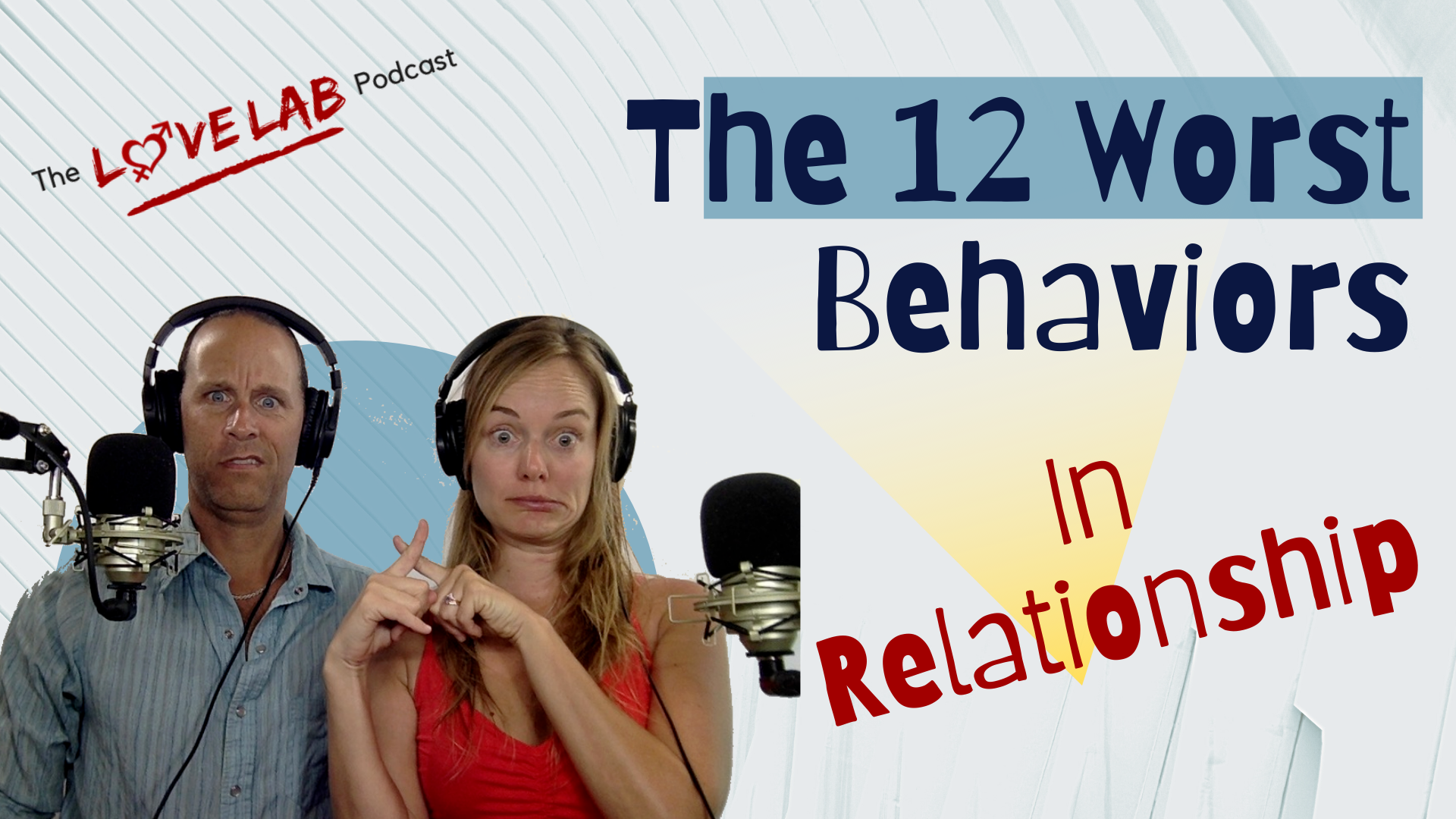
Do you know what some of the worst behaviors in a relationship are? Do you or have you ever done any of them? Want to know what to do instead? In this episode, Kevin & Céline cover 12 of the worst relationship behaviors and how to avoid them. Some may be obvious to you and some you probably have no idea you are doing and are negatively affecting your relationships.
Kevin Anthony 0:11
Welcome to the love lab podcast a safe place to get real about sex. Whether you’re a man or woman, single or couple, this is the show for you.
Céline Remy 0:20
We are your hosts Kevin Anthony, and Céline Remy and we are here to guide you to go from good to amazing in the bedroom and beyond.
Kevin Anthony 0:28
Alright, welcome back to the love lab podcast. This is Episode 106. And it’s titled The 12 worst behaviors in a relationship. How many do you do? So one of the things that make our show a little easier, is we spend time around friends and of course clients and we listen to their stories, all their dating stories, their relationship stories, all of this stuff and I As they have to say, eight times out of 10, it’s a train wreck. And from that, we get all these ideas for the show.
Kevin Anthony 1:12
So that makes the show a little easier. And in this case, the ideas that we were getting recently were people were telling us their relationship stories. And it was like, Wow, that was really bad behavior. That was like, absolutely the worst thing that you should do in a relationship. And so what we did was, we compiled a list of these bad behaviors that we see repeatedly that we think are really, really quite poor. And here’s the thing. Some of them you’re going to go Yeah, of course.
Kevin Anthony 1:44
And some of them you’re gonna go, Oh, I didn’t realize that was so bad, right. And so there are things that are happening in your relationship that you may not even realize are having a negative effect. Now we like to try to be Positive on this show also. So this is gonna sound like kind of a negative list. But just remember that the positive is, don’t do these things. If you want to know the positive, just do the opposite of each one of these things we’re talking about.
Céline Remy 2:13
Absolutely. And we’ll give you some examples as always, but before we dive into the worst relationship behaviors are, let’s give a shout out to our sponsor power and mastery. If you want to join the secret club of men who are great in bed, then check out power and mastery. It is the most competent sexual mastery training for men. Whether you want to have harder, stronger erections last longer or increase your sexual skills. There is going to be something for you at power and mastery.com. So go check it out.
Kevin Anthony 2:44
All right, we’ve actually got a pretty good list here. So we’re gonna dive right in. The first one is one that has come up multiple times with friends of ours who are in a relationship. It is the mother-son relationship. Do you want to explain to the audience what we mean by the mother-son relationship?
Céline Remy 3:04
Absolutely. So read diving right into this right? We’re going straight to the core of so many issues. It is actually a sneaky behavior that a lot of women do not realize that they are doing. Most women are mothers in life. And so, you know, you will show up towards your kid with, you know, you, you’ll see little nicer things or cute things, endearing things, you’ll be like soothing them loving on them, like different behaviors.
Céline Remy 3:34
And for a lot of women, they find it difficult to transition from that behavior to I’m a lover, I’m a wife, I’m a partner or whatever your label is in that relationship and they bring it these motherly qualities to their relationship. So what I mean by that and I have seen so many of my girlfriends act this way, they will call their men Otherwise such a cute boy. And I’m like, Well, no, it’s not. It’s not a boy. He’s a man. Right?
Céline Remy 4:08
Or they will…it’s it’s subtle in how they do it. But it’s simply in how they interact. Oh, aren’t you just so cute when you do this are like, they’re really starting that dynamic of that there’s a mother and a kid here and not really two adults that are interacting.
Kevin Anthony 4:31
Yeah, so this The worst part about this is absolutely destroying polarity. Right? So there’s no longer that strong masculine and strong feminine polarities there that a successful relationship really needs. And if you want to know more about polarity, just go watch our episode 100 I believe where we really go deep into that. This manifests in so many different ways, one of which is exactly what you said. If you’re referring if you’re a woman, and you’re referring to your grown adult, you know, male partner as a boy, that’s not a good sign.
Kevin Anthony 5:07
He’s not a boy. He’s a man and nor does he want to be called a boy. Right? So, no sort of like cutesy Oh, he’s such a cute little boy. Like you literally here 40-year-old women talking about their 40-year-old men partners and calling them cute little boy. And then there’s the whole sort of power dynamic of, she always has to take care of him like he’s a child and he’s not responsible for himself. That’s another way that it shows up, right?
Céline Remy 5:36
Or it shows up but he’s trying to win his mother’s affection by behaving like a good boy and by doing good things and like, expecting her to reward him with this motherly love in a sense, and I’ve seen that where the man will just like a kind of like behave in like, please grant me your unconditional love because I was lacking this one when I grew up. I’m transferring all my needs onto you. So it goes both ways.
Kevin Anthony 6:04
It does, I would say, I have seen it more often, the woman treating the man like a boy, then I do see the man acting like a boy and seeking the woman’s approval. That’s just my personal observation. I don’t know if there’s any statistical significance to that. But that’s what I observe more in the people we know, super destructive behavior, it kills the polarity in your relationship.
Céline Remy 6:30
And remember, though, it takes two to tango. So if that’s a behavior that she’s not aware of that she’s doing, it is your responsibility to call it out and say, Hey, when you refer to me, I’m your man. I’m your stud. And that’s going to lead to our number two coming up here, but you set your boundaries here. And so number two of those behaviors that are really not good for your relationship is how you call each other.
Céline Remy 6:54
And while it’s very sweet to call each other like boo boo Susu Mimi, whatever, cutesy little thing, baby, you know, again, and it is something that we’ve talked about in the past in previous shows, it is not something that is going to be making your relationship a juicy sexy relationship when you just like you, my big lovey cuddly bear. It’s usually not a turn on unless you’re really into cuddly hairy bears and then sure that your sexual King Go for it. But otherwise, pay attention. How do you call your partner and then do you in fantasizing them all the time?
Kevin Anthony 7:36
And that’s the key. Like it’s one thing if you call somebody a big teddy bear, you know, that’s one thing. But it’s another thing when you’re calling them all these cutesy little child names again, right? Because what is that doing? That’s, that’s infantilizing the person that’s projecting on them again, that they’re not a conscious grown adult, right. And the thing is, most people are not consciously doing this at all. Like I imagine there’s At least a portion of you listening to this right now going, Oh, come on, like you’re making way too big a deal. It’s just a cutesy little name. Right?
Kevin Anthony 8:07
Some of you, I’m sure are thinking of that. But over time, this actually does have an effect on your relationship. You know, it’s, I don’t know if they’re, you know, anyone listening is into the whole idea of like, sort of creating your reality or law of attraction kind of stuff. But you realize that what you constantly say what you’re constantly thinking about what you’re constantly doing is what you’re creating in your life. Right? So if you’re constantly calling somebody a cutesy little name, you know, especially if the woman’s constantly calling the man the “cutesy” little name, what is she gonna get?
Kevin Anthony 8:43
She’s gonna get a cutesy little partner, but what does she really want? She wants a fucking man.
Céline Remy 8:48
Absolutely. And by the way, that goes the same for your genitals. A lot of people are uncomfortable with their body parts, and so they put these silly little names for their genitals just to get more comfortable with them. And again, it’s not serving you like anytime you like have to regress in order to be able to be comfortable. It’s not going to serve a grown-up relationship.
Kevin Anthony 9:12
So by the way, nicknames are perfectly fine we have a ton of nicknames for each other, but we don’t have cutesy little like baby nicknames. Yeah, like nicknames are like super powerful sex goddess, you know, are you
Céline Remy 9:26
I called you like Mastercock, or superstud, or my sex God or like a continuance is sexy, super sexy, Kevin. I mean, there’s a lot of different ones. We were very, very specific from the start that we didn’t want to call each other baby. Like there was just this energy to it. They were like, yeah, you know, and every now and then there might be a baby You know, that comes in because that’s okay.
Céline Remy 9:51
But it’s more like the intention. It feels so different when I call Kevin like, my super stud versus like “cuddly bear”. Like there’s something different I want to do with each one of those. So remember, what do you want in your relationship? Probably passion and, and in
Kevin Anthony 10:12
Great sex.
Céline Remy 10:13
Exactly. So let’s move on to our third behavior here. And I think that’s a biggie.
Kevin Anthony 10:21
Oh yeah, we’ve seen this one quite a lot in couples too. So what we have on the list here and it might take a little explaining what we mean it says complaining you can’t do something because of your partner. So what we have seen in couples is one person generally in the couple says something like this. Well, you know, I was gonna change my career and go do this thing, but I can’t because my partner blah blah, blah, blah, blah, or
Céline Remy 10:47
I want to go out and do these particular things but I can’t because she’s not going to like it.
Kevin Anthony 10:54
Yeah, I mean, that so that she’s not gonna like it part is like, okay, there might be some reality to that. But the biggest problem I see with this one is where people kind of, they create false excuses to keep them trapped in their own behavior patterns by projecting it on the other person, that it’s the other person’s job, personality, you know, all kinds of reasons why they can’t do that, like, well, I wasn’t able to focus, you know, energy on building my own business because I needed to help her,
Céline Remy 11:29
which might have been true at some point. And for, for me, it was a relationship of mine that was like this, where there was a time I needed some more support and help. But then I came to a point where I said, Oh, this was great. Thanks for everything you’ve done for me. Like, I don’t need you for that particular purpose anymore.
Céline Remy 11:45
Let’s move on. And he was not able to let go of that. He constantly kept wanting to be like, I still want to show up as this person and do all of these things for you. And then it’s like, I can’t do that because I’m putting so much energy into your things. And I’m like, I’m not asking you to. I don’t want it actually. Stop it.
Kevin Anthony 12:03
Yeah, and you’ll see that too. Honestly, I mean, sometimes, it looks like it’s coming from a good place because they want to help. Actually, sometimes it is. And it’s also used as a self-sabotaging form. It’s an excuse for them to not do what they should do what they need to do in their own life or in the relationship itself. And it’s a convenient excuse.
Céline Remy 12:24
Yeah, very well said here, Kevin. All right, so let’s move to our number four. This one is such an interesting thing. And there’s something where the person is saying like, there’s always something wrong with you. So it’s also slightly tied into the previous one but also different so wherever it’s like it could be something as simple as I don’t know you never dress well. Okay, you hear a lot of women say that.
Céline Remy 12:50
Oh, my gosh, you always look like you’re a surfer bump like you don’t dress up well, or it could be like, well, you’re never Like, you never, like, defend me in conversations when we’re with people, you know, you always take the side of the other person, you know, and it’s like, anytime you like always or never, that there’s a sentence that starts with this, you know that it’s not gonna go well, and it’s most likely your projection. But when it’s always about you, when it’s like, this is you you’re doing something wrong. That doesn’t work.
Kevin Anthony 13:26
Yeah. And you know, this is often called criticizing, right? It’s like, it’s like every time you have something to say, it’s always criticism about how they could have done better how they didn’t do something or how something you know, you this you that is rather than turning the table on that, and always praising and recognizing the good things that they do.
Céline Remy 13:48
So it’s so interesting you say this, Kevin, I just remembered an example from our own life that happened a few days ago. So I am very blessed, who woman who’s always very juicy and ready to have sex and we have Very little manual foreplay, we have a lot of like foreplay in our talking and the behaviors like we always talk on the show, but the constant arousal so that goes throughout the day, but we don’t really like, do a lot of like massaging or licking buzzes or things like that very long.
Céline Remy 14:17
It’s kind of like a, somewhat of a joke where like, well, I don’t really get four plays, so we always just, like go straight to sex and have sex for a long time. I was making a lot of, like little jokes about Well, yeah, cuz we don’t do foreplay Anyway, you know. Then Kevin brought, you brought it up, and you were like, Well, you know, it’s starting to kind of sound more like a complaint than a joke at this point.
Céline Remy 14:42
Because see, it was a very subtle little way. And we do that where we kind of joke about and I, you know, I heard this and I was like, oh, wow, this is really not what I want to do like inside me, I wonder, oh, no, that’s not what I’m trying to do. And then we had this really great discussion because I was able to like switchgear. Like instantly, no, I don’t want to do this to my husband. That’s not what I want to create. Okay, I need to focus on the positive.
Céline Remy 15:08
So right away, I was like, oh, this is all the things that you do that I love. So I started to list all the different things that he does that I love. And then I broke it down into actually, when I’m saying like foreplay. Really what I want is just to have my pussy stroked a little bit and have a few acupressure points. And I want to be able to have that feeling when my pussy is like, I want to beg you to penetrate me
Kevin Anthony 15:32
before you penetrate me. So and here’s the thing about how subtle this can be. Because the reality is, we have tons of foreplay, we have spontaneous blow jobs all throughout the day. Anytime I say right like there’s, there are tons and it’s not even just oral sex. There are hands all over each other. There’s tons of foreplay, but because we’re able to have sex for an hour or two or three or our record of six or whatever it was five or six, I don’t even remember it’s actually because of that.
Kevin Anthony 16:05
And because we can go through these amazing wave after wave of just ecstatic sexual energy. We tend not to focus so much on all of the like, Okay, I’m going to finger you for 10-minute mechanics and you’re gonna, yeah, because our penetrative sex is so amazing and spectacular. And because of that, it has become a joke between us in the relationship like Haha, we don’t really do that much foreplay, even though if you really think about it, we do because there’s foreplay going on all throughout the day.
Kevin Anthony 16:40
But that’s why I say it’s so subtle, even though we’re both in agreement, even though we’re both feeling completely sexually satisfied. Just saying that little joke over and over again, started to be heard by me as a complaint, even though that’s not the way it was intended.
Céline Remy 16:58
Absolutely. And so that These are the little things. So I know you might be saying, Well, I’m not doing telling the person who’s doing something wrong or she’s doing something wrong. But look at them, those subtle ways sometimes that we make little insinuations, and we not always exactly speaking up for what we want. So let’s move on to a number five here. And that’s a big one in relationships.
Céline Remy 17:21
And it’s really, really bad behavior. If you are always hoping and waiting for them to change, get the heck out of that relationship. Really. I mean, that’s, that’s just what it is.
Kevin Anthony 17:32
You cannot change your partner, your partner changes when and if they decide they want to change. And that’s really what it comes down to. This, you know, this is pretty stereotypical, and I think a lot of people are familiar with it already. And it tends to happen. It happens on both sides of the fence and a little bit more on the woman’s side where she goes, Oh, he’ll change. Well, I change him.
Céline Remy 17:54
Yeah, but then the guy’s like, please make her not change. That’s her stare sexy in sexual life. She is
Kevin Anthony 18:00
well, that’s the opposite side, which is like, Hey, who I signed up for in the beginning is who I want till the end of time. Right? That’s, that’s more of the guy side. But the women’s side is more like, Well, yeah, he’s messy, but he’ll change or Yeah, he doesn’t really give me a lot of affection. But he’ll change or Yeah, he looks at other women, but he’ll change.
Kevin Anthony 18:18
And then I mean, I could give you 100 examples of those types of things. Very bad behavior, because no, no, they won’t change who they are as who they are. And unless they have a ton of motivation on their side, and they want to change themselves, it’s not going to happen.
Céline Remy 18:36
And that’s the important point of bringing, you can’t change somebody, it has to be an internal decision. And yes, we all evolve and change and there will be something that changes but it has to come from within. If not, it’s never going to be a long-lasting change, and then it builds resentment. So if you are constantly hoping and waiting for that partner to change to show up differently, it’s not good behavior. So you either have to come to terms with who they And be 100% okay with this, or you’d simply have to change a relationship.
Kevin Anthony 19:04
Yeah. And what’s the question we always ask clients in this situation?
Céline Remy 19:08
Well, if nothing would change in your relationship, and you look down like three years down the road, would you still say that you happy?
Kevin Anthony 19:15
Exactly, exactly. Yeah. Could you say three years from now, if nothing about that person changed? Would you be happy? And in almost every case, when we have this discussion, if they really think about it, they go, No.
Céline Remy 19:30
Correct. So then that’s when you have to do something to change, change, change yourself, because you can’t change the other or change the relationship if it still doesn’t work.
Kevin Anthony 19:40
Okay, number six on the list, keeping score, and there’s a lot of different ways you can keep score in a relationship. Okay, so let’s go over a couple of the different ways in which people tend to keep score in their relationship. One is, have you ever had an argument with your partner and they say Yeah, but you did such and such a thing. And you’re like, that was 15 years ago. Like, are you kidding me, that’s when we first started dating. We’ve been married, we’ve had two kids like, that was 15 fucking years ago. And you’re putting that you’re throwing that back in my face.
Kevin Anthony 20:17
That’s one version of keeping score, keeping track of all the little things that you didn’t do, right, or that you didn’t do the way they wanted you to, or all the little times, you said the wrong thing. And then you bring those back later on. Here’s my scorecard right here. I’ve been marking it all down. I know everything you’ve done. Right? Terrible, absolutely horrible behavior. Now, if it was just yesterday, maybe it could be relevant to what you’re talking about today.
Kevin Anthony 20:46
But with things that are in the past, they’re in the past. In other words, people change people to move on. It’s like, yeah, you know what, at the beginning of our relationship, maybe I didn’t say or do quite the right things. But I’ve learned from that and I’ve moved on. Have I done it since, right? No. So why is this coming back up again? 10 years later? Absolutely. Five years later, even a year later.
Céline Remy 21:09
And again, it’s like, okay, I went down on you. So now you have to go down on me.
Kevin Anthony 21:14
That’s the next version. Yes.
Céline Remy 21:16
Oh, I gave you this or I initiated sex. So now it’s your turn to initiate sex. And like, honestly, if you want to have a good sex life, he can be tracking this thing.
Kevin Anthony 21:27
Oh, this is another one that we see a lot. We’re like, but I initiated sex the last five times and I’m, I’m not gonna do anything until he finally does it. Right? No, seriously, I mean, this happens a lot, right? It’s like, No, no, no, no, no, no, no. This then becomes a self-fulfilling prophecy. It’s like, you feel that you’ve done it too many times. So you’re not going to do it. You’re going to sit there and you’re going to wait and you’re not going to say anything.
Kevin Anthony 21:52
You’re not going to tell them that this is what you’re doing or this is what you want because you want to see if they’ll do it, right. But it’s a self-fulfilling prophecy. Because they don’t do it and then you don’t get what you want. And then resentment builds up on your end, right? And then you’re like, Well, fine. If it’s gonna happen, then I’m gonna have to do it right now there’s more resentment on top of that, right?
Céline Remy 22:10
And then sex isn’t good. Horrible. So one of the rules of relationship is always to give more than you take the 60/40, give 60 take 40, but that both partner do that. And if you’re really paying attention, it balances out there are areas where maybe I do more things or initiate things more in certain ways. And there are areas where Kevin does more things or initiates more for those things.
Céline Remy 22:36
And there are times in life where maybe I’ve got a bad month for my hormones are out of whack and I can’t seem to have like the libido. I usually have Well, just tough luck and you start to take over the thing and then I come back into balance and then I’ll initiate sex again. I mean, this is just understanding that we’re human beings. We go through a stressful time hormonal changes, and sometimes we just have to adjust.
Kevin Anthony 22:59
Yeah, and we also talked in our polarity episode about, you know, it’s not like, well, you took the trash out last time, or I took the trash out last time. So it’s your turn to do it this time, there doesn’t have to be this 5050 keeping track of well, I did one thing you do one thing I do one thing you do one thing, that’s not the way it works in a relationship,
Céline Remy 23:18
absolutely not. So this is really bad behavior to eliminate right away. So the following behaviors are linked to how you communicate and how well yeah, it’s really around you communications and
Kevin Anthony 23:33
the next ones on the list Exactly.
Céline Remy 23:36
This is really, you know, what I want to bring is the following ones that are going to be all around the way that you communicate. So ultimately, it’s about having good communication skills that you need to develop. If you don’t have that some of the behaviors that we’re about to give to you will show up.
Kevin Anthony 23:53
Yeah, let’s go into our sponsor. This week, sort of slightly changed gears. into communication style type problems.
Céline Remy 24:02
Okay, awesome. So we, if you are a committed couple who is stuck in a rut and just going through the daily motions instead of connecting the way you’re used to, and you’re tired of stale mechanical sex that lack spontaneity and fun and you don’t want to live a life of average, then we’d like to invite you to join a highly sexed power couple Platinum program.
Céline Remy 24:23
So if you give Kevin and me, 90 days, we will help you bring the passion back between the sheets and be synched up sexually so that you can thrive with more purpose and passion in your life. So you can find more about our Platinum program at saline ramie.com forward slash passion.
Kevin Anthony 24:41
All right, so let’s jump back into the list here with number seven, which is passive-aggressiveness. Oh, this is one of the worst ones ever for me. Passive aggressiveness I think everybody pretty much understands what passive-aggressiveness is, but Just in case you don’t just to give you an example, it’s its behavior where you seem like you’re being nice. And yet, you’re really not. I don’t know if that’s the best way to explain it, but it’s like, you see people that Oh, she’s so sweet but there are all these little things of the dagger daggers that are constantly be and they’re subtle and you don’t see it.
Kevin Anthony 25:25
Sometimes it’s even behind your back, but it’s all these little passive-aggressive things. You know, look, if you’re angry, just come out and be angry, let somebody know you’re angry and let them know why to communicate, but this whole sort of pretending that everything’s okay, and then subtly sabotaging and sticking those daggers in underneath the surface behind the person’s back just destroys a relationship.
Céline Remy 25:49
Yes. We’ll talk more about arguing in a couple in a few minutes. Number eight is giving ultimatums And this is a huge one. I do see it mostly, again, from women where the like, if this doesn’t happen, then the relationship is over.
Kevin Anthony 26:10
Oh, yes, I’ve had this personally in my life, I was dating somebody, and we weren’t dating for all that long, at least at this time. You know, we’re still trying to figure out how we were going to be in a relationship together. She had a kid and so that complicated things a little bit as far as living situations and work and all that kind of stuff. One day, she’s like, Well, look, if we’re not living together by I forget what it was like two years, three years, whatever it was, she’s like, that I’m adding here.
Kevin Anthony 26:41
And I was like, I looked at her and I was like, this doesn’t have anything to do with time. This has to do with how are we relating. How can we make this dynamic between the three of us work? That’s what it’s about? It’s not about a time period. Yeah, it could be in three years. It could be in two years. It could be a one year it could be in five years. Like, we need to figure out how we can do this, right? No, but she laid down the ultimatum and I was like a no.
Céline Remy 27:10
So one thing that happens when people are like, Okay, then you put ultimatums, you can’t take it back. And when it’s been heard, sometimes the other person can surprise you and take action. And then they might just disappear. They might be like, Well, whatever, and they ever get into another relationship, they call off this one, when you’re also saying, if this doesn’t happen, then I’m out. You’re actually saying that you’re not yet fully in yourself into that relationship.
Céline Remy 27:38
And so if you don’t give 100% to the relationship you’ve never given at your best and so that is one of the worst behaviors that you can do. Not giving it your hundred percent off yourself and holding back. It’s like, why even try if you’re doing a tough ass, right?
Kevin Anthony 27:57
Well, again, it becomes a self-fulfilling prophecy, right? You’re not 100% in, so you’re not nurturing the relationship as well as you could be. Because that nurturing is not there. The other person’s feeling like, wow, I’m not gonna take that whatever step you want me to take because I’m not getting it back from you. And then it doesn’t get to where you want to go.
Céline Remy 28:19
And it’s miserable. Kill the relationship,
Kevin Anthony 28:21
right? And then you reach the ultimatum thing, right?
Céline Remy 28:25
Very interesting. It’s
Kevin Anthony 28:27
crazy. It is crazy what human behavior will do. Because if you really stopped and thought about these things, and thought about where this would eventually lead in the end, you’d have to be insane to do these things. But people do them all the time. So if you find that you’re doing some of these things, I didn’t mean to just call you insane.
Kevin Anthony 28:52
But maybe what it really means is, is you never really thought about how these things are affecting your relationship. If you have thought about it, you understand and you’re Doing it, then you’re insane.
Céline Remy 29:02
But if not, then you might be doing some changes and you won’t be insane. So number nine here is jealousy. And I think at some point, we should do a whole episode on jealousy, we should give it a whole thing, but also bring in an expert or something like somebody else because neither you nor I really experienced jealousy. And it’s very interesting because it’s not a feeling that I’ve really experienced. So have I ever felt insecure?
Céline Remy 29:35
Especially when I was in an open relationship, and my partner had another woman and then I was like, Oh my gosh, like, am I feeling insecure, but it was insecurity? Like, I think oftentimes jealousy is an umbrella term, but there’s something deeper underneath. It’s because there’s a need that’s not being met is something more that’s going on. And if you can go to that, then you don’t need to go through the jalousie parts.
Céline Remy 29:59
You could go straight to what’s really going on underneath, but the jealous behaviors, especially when they give ultimatums and boxes to the partner in, like, I’m so jealous that you can’t look at other women. Or you can have male friends now that you married to me or this type of thing because I can’t handle these are not good behaviors.
Kevin Anthony 30:20
Yeah. And you know, okay, so jealousy usually has to do with this feeling of not feeling safe in the relationship, right? So, there are things that your partner could do to make you feel safer without a doubt. And people need to realize that jealousy is most of the time the majority of it is coming from within yourself. Right? So it’s something that you yourself have to deal with. You have to figure out how can you deal with these feelings that you’re feeling?
Kevin Anthony 30:52
And are these feelings even rational? Because I can tell you, even though I don’t really experience much jealousy, I mean, I’ve experienced it. A little bit of jealousy here or there, but it all always had to do with not feeling particularly safe in a relationship. But I have had partners who experienced a lot of jealousy. No matter how hard I tried to make them feel safe, even being aware of that going, Okay, I understand what’s happening here. In one relationship, I can think of off the top of my head, it literally, it got to the level of irrationality.
Kevin Anthony 31:29
In other words, no matter what I did to make them feel safe, no matter what I did to try to reassure them, like nothing could override the jealousy. Right? And it gets to the level of, of literally, there’s no reason for it. And there’s no rationale behind it. Right, but it’s there nonetheless. Right. And so one of the things we always talk about when talking about jealousy is no one person will say you have no reason to be jealous. So therefore jealousy doesn’t exist? It’s like, No, no, no, there may not be a reason for it, but yet it’s still there. So it’s still something that you have to deal with. Yeah.
Kevin Anthony 32:09
And that’s the tricky thing is, is, is, why is it there? And what can you do about it? So in the case that I just described as if there’s no reason for if the person is doing everything they can to try to make you feel safe and loved and all that and you’re still experiencing this jealousy, you really have to look within yourself
Céline Remy 32:27
and do the inner work. Yes. So number 10 is really good the way that it’s laid out because we were just talking about jealousy and have a really bad behavior is to constantly check each other’s mobile devices. And not just because you’re like, Oh, that’s the one that’s right there and you want to grab because that’s sometimes what I do with Kevin’s I’m like, Oh, yeah, I’m just gonna check something like because I want to see something online, you know, but like literally going through their messages, checking their emails and staff.
Céline Remy 32:57
This is such bad behavior. It does not display trust. So one thing that we have is we actually have each other’s passwords. I mean, I have access to anything that you have, you have the same for me. But we don’t use it. But knowing that we have this, there’s a trust and safety around that.
Kevin Anthony 33:15
Yeah. And you know, there’s a lot of problems with this is that even if the person has nothing to hide, one, it shows a lack of trust, which is what you just said. And two, it can actually cause quite a few arguments or disagreements for no reason. In other words, somebody is jealous. And they suspect something even though they might not have any reason to suspect anything. Well, then they go on the person’s phone and they start looking for something to find right.
Kevin Anthony 33:41
And if you’re looking for something, you’re probably going to find something that’s going to piss you off. Whether it’s a comment somebody made on on another woman’s Facebook post, like a simple comment, like it could be, Wow, you look beautiful in that picture and like they were thinking of it totally innocently, but because the person is experiencing jealousy, they’re going through Your phone, they’re in your Facebook account, they see this now all of a sudden they go, what is this?
Céline Remy 34:04
Mm-hmm, absolutely.
Kevin Anthony 34:05
What did you mean by that? Right. And now you’re instantly starting confrontation, even though it had nothing to do with anything.
Céline Remy 34:12
Mm-hmm. The lesson here is like do not have this behavior when you’re feeling emotionally unstable. Like really dog because, like, you know, like Kevin was saying with studies and when they trying to do certain experiments with science, they literally have shown that if you have an intense it can manipulate the outcome. Oh, absolutely. So if you do have the intention of finding something bad about your partner, you will find something, I guarantee you Yes,
Kevin Anthony 34:38
it’s kind of like the government if they want to try to find that you did something wrong.
Céline Remy 34:43
They’ll find something.
Kevin Anthony 34:44
If they dig deep enough, they’ll find some obscure thing somewhere you didn’t even know existed and they’ll find it right. It’s very similar.
Céline Remy 34:51
A number 11 is about we named it the bad arguing techniques and really,
Kevin Anthony 34:58
for lack of a better term.
Céline Remy 35:00
Really like when it comes down to that is that it doesn’t matter what you argue about, it’s how you do it. There are times where you will disagree, but it’s how you do it. Most people have a really bad pattern when they argue they first they will, they will go silent. They’ll stop all communication. So they’ll scream at each other. They’ll stop all communication, then they disappear.
Céline Remy 35:22
They ghost each other. So nothing is resolved this all these emotions are boiling and unresolved. And then they start to put label, you did this, you’re rude. You’re this, you’re that. And then it’s black and white that I was right and you were wrong. There are so many first of all
Kevin Anthony 35:39
the yelling, right, rather than just having a conversation like two mature adults. There’s the yelling, there are the accusations. There’s the silent treatment. Right I mean, then the list goes on and on. And I think the point that we want to make here is not so much going through all the different bad arguing techniques, but to say That if you have a disagreement, you need to approach that disagreement like to mature, rational, emotionally stable adults. Now I know that’s harder to do.
Kevin Anthony 36:13
Then you know, it is to say like, it’s I’m sure it’s easy to say you can just do that. But what if when the emotions are flying? Yeah, but that’s where you have to take responsibility. And you have to get those emotions under control, right? And learn to communicate like an adult. Because here’s the thing. What happens very often in these situations is you have an initial argument, right?
Kevin Anthony 36:35
You have something you’re disagreeing about, but you’re poor arguing techniques, actually take that one thing and expand it into a bunch more things. Right? Because Oh, I didn’t like the way you said that to me right now. It’s no longer just about the one thing you were arguing about. Now. It’s about the way you argued about it.
Céline Remy 36:52
And then it’s like, well, you did that to me four years ago. And then oh, and my dad used to do that to me. So ultimately, it’s about all your own unresolved Things that you still haven’t dealt with. There’s a saying to that says don’t do something permanently damaging because you are temporarily upset. Remember that most of our emotions are very fleeting and short-lived.
Céline Remy 37:13
And so it’s much better to say I’m triggered. I’m going to take a little bit of time off. And we’ll talk again in a few minutes or in a few hours than to try to fix something or argue or prove a point to while you are overheated.
Kevin Anthony 37:27
Yeah, and the original thing that you were arguing about may be able to be resolved or forgotten about forever, but the damage you did in the way that you argued is going to probably last forever. So don’t do that.
Céline Remy 37:40
And then I lost behaviors, and I’m sure they are more but
Kevin Anthony 37:44
Yeah, this is not an exhaustive list. Honestly, we were writing this list and we started off with just like the first four or five things were just things we’ve observed in the last month. Ah, just stuff that’s come up in our, in our, you know, hanging out with friends club, working with clients. That kind of thing. Then we stopped and we thought about, Okay, what else can we add to the list?
Kevin Anthony 38:05
Then as we always do, we went and did some research, you know, to find what do other people think. And at some point we went, this list is gonna be so long, we just have to cap it here, because I could have kept adding and adding and adding there are so many examples of bad behaviors.
Céline Remy 38:21
So the last but not least, that we’ve got for today for you is about breaking boundaries. And that is so so crucial. I think it comes down again, like to the trust part that we were talking about the boundaries are what make your relationship safe. And if you have an agreement and if there are boundaries in place, don’t just go pretend they’re not there. honor those. The more you break boundaries, the less likely you use, your relationship will survive.
Kevin Anthony 38:52
Yeah, I mean, it’s as simple as this. If you break boundaries, you break trust. Yes, it is period.
Céline Remy 38:58
and trust is broken. You cannot mandate back. Yeah. And yes, if it works for some people, it happens. We just heard a story like this weekend. And so for some, you can rebuild it. And for others, it’s the end. Yeah, no,
Kevin Anthony 39:11
actually, we probably should put this one at the top of the list because you’re right. This one came literally from a conversation that we had about a married couple and one of them broke a very important boundary. And it ended up in divorce.
Céline Remy 39:23
Absolutely, because she never could feel safe again in the relationship. And he wasn’t willing to give her what she needed. If you’re the one who breaks a boundary because we’re human and it can happen. You must be willing to do what it takes to let the other person feel safe again in the relationship and that might mean do a little bit more than you would want to do.
Céline Remy 39:44
But listen to that and rebuild that. We talked about this when we had some guests on our show, Debbie, in the episode is coming out of my mind right now but we had we’ve talked in previous on what to do and repairing relationships?
Kevin Anthony 40:02
We did we do have an episode about how to fix relationships if you’re broken boundaries. Here’s the thing. If you have, well, first of all, you need to set boundaries. It’s very important because you don’t know if you’ve broken a boundary if you’re never actually communicated what your boundaries are. So step one, and in a relationship is communicate what your boundaries are. Step two is to keep the damn boundaries, right?
Céline Remy 40:29
Otherwise, why bother with setting the boundary? Right?
Kevin Anthony 40:31
Here’s the thing. If a boundary doesn’t work for you to the point where you feel like you need to break it, then you need to renegotiate the boundary before you break it.
Céline Remy 40:41
Absolutely. So just to tie this loose, and it was in episode 89 with Greg and Debbie Lambert and we talked about secrets to a great relationship and they talked about some of those things and how to rebuild some of the trust to
Kevin Anthony 40:55
Yeah, that’s true. Thanks for looking that up. 106 episode This I can’t remember which episode was what and who
Céline Remy 41:03
We can’t keep up with all this, but they all good. So you should listen to all of the episodes.
Kevin Anthony 41:09
At some point we’re gonna have to hire somebody that’s like off-camera who’s looking up all the things that we talked about and telling us in our ear, you know, like all the pros have
Céline Remy 41:18
a sample, we’ll get there. So now that you have a better understanding of what to look for, take a hard look at yourself. It’s never fun when you realize that you’re doing some of the behaviors but it’s better to catch yourself doing something quote-unquote wrong, be like then continuing to do something that’s not going to serve you in the long term.
Céline Remy 41:38
So dedicate yourself to having a thriving, passionate relationship and make the changes necessary to keep that going for a long time.
Kevin Anthony 41:45
Absolutely. Well said. And that is all the time we have for this episode. So we will see you next week. We hope you liked this episode of the love lab podcast. If you enjoy this show, subscribe. leave us a review and share it with your friends.
Céline Remy 42:04
And for more free exclusive content. Join us in the passion vault at kevinanthonycoaching.com/vault. Thanks for listening, and remember you are amazing.
We hope you liked this episode of The Love Lab Podcast. If you enjoyed this show, leave a comment and share it with your friends.
RATE & REVIEW THE LOVE LAB PODCAST
—> LEAVE A 5-STAR REVIEW ON APPLE PODCAST
ASK A QUESTION FOR THE NEXT EPISODE
—> Click here to leave a message directly to Kevin and Céline to be answered on the air.
Thanks for listening and remember you are amazing.

Kevin Anthony and Céline Remy are an international husband and wife team who joined forces to create a worldwide movement of true sexual empowerment. Kevin, “The Truth Warrior,” is a Men’s Coach, Tantra Counselor, and Couples Relationship Coach. Céline, “The Intimacy Angel,” is a Holistic Sexologist, Certified Sexological Bodyworker, Relationship, and Intimacy Coach for men, women, and couples. Together, they are truly the ‘Power Couple.’ They host ‘The Love Lab Podcast,’ and are co-creators of ‘Power and Mastery,’ an online educational training system that teaches the exact process to any man who desires to bring his ‘A’ game consistently to the bedroom. They guide couples and men on how to go from ‘good’ to ‘AMAZING’ in the bedroom and beyond.