Last Updated on November 5, 2021
What You’ll Learn In Episode 170:
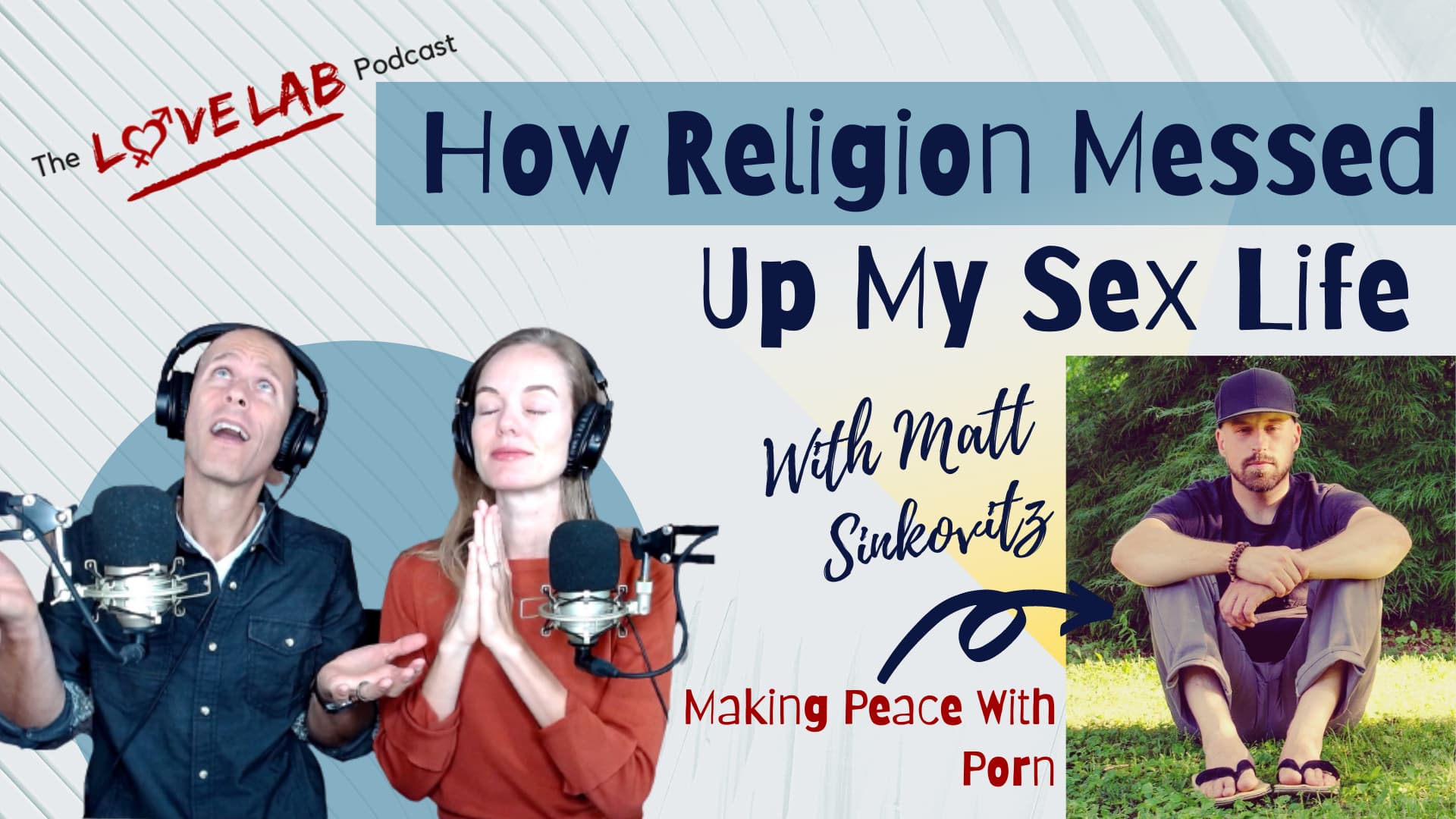
Do you struggle to reconcile your sexuality and your spirituality? Did your religious upbringing leave you with shame and guilt around your sexuality? In this episode, Kevin & Céline talk with an ordained minister and mindfulness counselor Matt Sinkovitz about how his religious upbringing instilled guilt and shame and eventually led to years of porn addiction. Find out how he overcame it and how he came around full circle back to spirituality.
Links From Today’s Show:

Matt Sinkovitz has been a teacher of personal & spiritual development for over a decade. An ordained Buddhist minister and Mindfulness Counselor, Matt is an avid practitioner of meditation and the mindfulness arts.
Matt began his studies in Buddhism and New Thought as a young adult, seeking a resolution to his own personal life dilemmas. Overcoming his 20+ year compulsive relationship with porn, Matt has been inspired to share his journey and support other men in their path to freedom.
Matt is passionate about his mission to guide men in ending their habit of watching porn, so they can reignite the passion in their marriages, and be better role models to their children.
You can find Matt’s Facebook group here: tinyurl.com/MakingPeaceGroup
Kevin Anthony 0:11
Welcome to the love lab podcast a safe place to get real about sex. Whether you’re a man or woman, single or couple, this is the show for you.
Céline Remy 0:20
We are your hosts, Kevin Anthony and Celine Remy and we are here to guide you to go from good to amazing in the bedroom and beyond.
Kevin Anthony 0:27
Alright, welcome back to the love lab podcast. This is Episode 170. And it is titled, how religion messed up my sex life with Matthew Sinkovitz. Now, before anybody has a heart attack because I’m sure there are plenty of religious people that listen to our show. I know some people are like, Yeah, but you’re talking about sex, like how many religious people are listening to your show?
Kevin Anthony 0:50
Actually, a lot of them because everybody has sex, they might have different rules around sex, but they have sex. So before anybody gets offended by anything that we’re going to say, just know that every system every religion has its positive aspects and its negative aspects. We’re not telling you you shouldn’t be of your particular religion.
Kevin Anthony 1:11
We’re not telling you you should be of any particular religion. We’re just going to talk about how some religions can have negative impacts on your sex life. And if you experience that, maybe some things that you could do about it to help fix that. All right, is everybody got that now? Before we get spam with a bunch of comments, great. Okay, let’s continue.
Céline Remy 1:37
So let’s give a big shout-out to our sponsor’s power and mastery. If you want to join the secret club of men who are great in bed, then check out power and mastery at power and mastery.com. It is the most complete sexual mastery training for men.
Céline Remy 1:52
Whether you want to have harder erections and last longer or increase your sexual skills. There is something for you at power and mastery.com.
Céline Remy 2:02
Our guest today is Matt Sinkovitz. He has been a teacher of personal and spiritual development for over a decade, an ordained Buddhist minister, and a mindfulness counselor. Matt is an avid practitioner of meditation and the mindfulness arts.
Céline Remy 2:18
Matt began his studies in Buddhism and new thoughts as a young adult seeking a resolution to his own personal life through dilemmas overcoming his 20 plus years compulsive relationship with porn, Matt has been inspired to share his journey and support other men in their path to freedom.
Céline Remy 2:36
Matt is passionate about his mission to guide men in ending the habit of watching porn so they can reignite the passion in their marriages, and be better role models to their children. Welcome, Matt to the love lab podcast.
Matt Sinkovitz 2:49
Celine, Kevin, thanks so much for having me today.
Céline Remy 2:52
You’re welcome.
Kevin Anthony 2:53
Alright, so we’re just gonna dive right in as we usually do, and just really get right at the heart of the issue. So obviously, the focus of this episode is really, it’s about how religion can sometimes negatively impact your sex life. And I know that you have some personal experiences about that.
Kevin Anthony 3:13
So we kind of want to dive into that a little bit deeper so we can get a feel for, you know, what your experience was, how it influenced, you know, who you were, and then how you become who you are today. So starting out with our first question is, tell us a little bit about your religious upbringing so that the audience can get an understanding of kind of where you started out?
Matt Sinkovitz 3:34
Sure, sure. Thanks for the question. Yeah. So I grew up, I grew up in church, you know, it’s like I grew up in the Pentecostal church. So very, kind of leaning in the direction of like, nondenominational, grew up very charismatic. the revival was going on in our church growing up in the Christian church.
Matt Sinkovitz 3:52
You know, speaking in tongues, being baptized in the Holy Spirit, people being slammed in the spirit, like really kind of intensive like stuff, you might see like a maybe like the Southern Baptist, kind of, you know, Christian tradition. So born in the church, I know, like up through the church, even into my teens at church, you know, three or four days a week.
Matt Sinkovitz 4:14
I grew up doing missions work and prison ministry work with my parents so heavily, heavily influenced by church up through my, my younger years up into my teens. And ultimately, I moved away from, you know, Christianity as my predominant faith, like around my mid-20s, and ultimately moved into the Buddhist tradition.
Matt Sinkovitz 4:36
Right where I currently kind of reside and squarely serve as an interfaith minister, kind of working between the Christian faith and the Buddhist tradition as well.
Céline Remy 4:45
So it’s very interesting because when you’re describing the church and in some of the things that they do, some people might be thinking like, Wow, this is amazing, you know, like miracles happen and there’s this community and deep wave and bond. the thing that happens and you should just be so happy and connected and connected to God or whatever the Creator, whatever you want to call that vigor, energy, right?
Céline Remy 5:10
But what I’m curious is, how did that really translate for you? And how did it affect maybe even just your sexuality, especially as a young adult, as a late teen and young adult, as you are probably battling between the urges you’re going through in your body and what you’re being told, and probably pressure from the church? So tell us more about how that affected zero sexuality at that time?
Matt Sinkovitz 5:37
Yeah, so you know, it’s interesting, and I want to preface this conversation by saying that I think my parents did the best they could or the best that they knew how at the time, you know, so I want to, I want to like paint that in the proper light. But just growing up in that really religious kind of context, I think there’s, there’s a couple of factors at play. One, the conversation around sex is a very taboo conversation.
Matt Sinkovitz 5:59
So there’s a lot of shame, a lot of guilt, a lot of I think, repression and suppression around our sexuality, we’re not really given a lot of space, a lot of room to explore our sexual relation, or sexuality, or, or have a lot of conversation around it. So, therefore, you know, we kind of got to find it on our own.
Matt Sinkovitz 6:16
And that for me, you know, came in the form of early childhood sexual experiences, and, you know, pornography and stuff like that, that a lot of kids get their hands on, and kind of figuring your sexuality out between, you know, just navigating it on your own and what your friends are telling you.
Matt Sinkovitz 6:31
You know, and I think, I think so I think that’s the one thing I think the second thing is I didn’t have a lot of space or a lot of opportunities to really have the conversation around sexuality comfortably. You know, it always kind of felt like an awkward conversation in our home, and with other adults. So I think it wasn’t, normalized for me at an early age. Yeah. And
Kevin Anthony 6:49
I think that’s, that’s the experience that a lot of us had. You know, I mean, I grew up in a somewhat religious family, too. I mean, we weren’t doing, rescue mission work or anything like that. But you know, we went to church every Sunday, and did that kind of stuff, and celebrated all the holidays and things like that.
Kevin Anthony 7:05
But yeah, the conversation of sex really was just not ever had ever, it just was something that wasn’t talked about, it was not modeled in any way at home. You know, I mean, my personal opinion is, obviously it has to be age-appropriate. But when we’re talking about children growing up, it is important for children to understand that sex is something that exists, and you have to start laying those healthy foundations little by little as it’s appropriate for a particular child’s age.
Kevin Anthony 7:33
But I know, in my own personal upbringing, it basically just didn’t exist inside the family. Like it just if you didn’t have outside sources, you know, like friends and things like that, you know, get ahold of your friends, older brothers magazine, like if it wasn’t for that kind of stuff, they wouldn’t even know it existed. And I think I think that’s not particularly healthy, either.
Kevin Anthony 7:57
So I’m curious now, you told us a little bit about, you know, how there was lack of conversation and that sort of thing. But I’m curious, like, could you maybe explain to us, like, an example or two of how this really affected you? Like, is there a particular you know, thing that happened or a particular relationship that went a certain way? Is there something there that would help illustrate for people kind of how your wires got crossed as a result of this upbringing?
Matt Sinkovitz 8:30
I think I’m not sure if I can speak to a specific situation. I think for me, I just never felt very comfortable in my own sexuality. I didn’t really feel like the conversation was a normal conversation. I think I felt sexually awkward in my own skin. And I think the biggest experience I could speak to would be, like coming into contact with pornography at a young age, you know, probably 1011, somewhere in there.
Céline Remy 8:54
Wow, that young really?
Matt Sinkovitz 8:55
Yeah. Yeah. And that, really, and that’s, I think that’s, you know, I connect with a lot of men who are, you know, who share their stories around that. And that’s actually a pretty normal age. 1011 1213 is some kids as early as 5678. I hear, you know, but I think I think the combination of kind of my own sexual awkwardness that I experienced and ever feeling really quite comfortable sexually, in my own skin, as as a child, combined with a kind of, I think a lot of my exploration.
Matt Sinkovitz 9:24
Again, being through maybe early childhood sexual experiences, or, you know, again, again, developing relationship with pornography early on, and that kind of steering me and I think that really took the form of my early sexual development and kind of like, my early understanding of intimacy, and really formed a lot of my sexuality and my perception of women and the whole conversation up through my teens and into my 20s.
Kevin Anthony 9:52
Yeah, so that, unfortunately, is one of the big problems right? Because you didn’t have any real talk about it or you know, like you said you couldn’t really have a conversation about it, you felt super awkward about it. So your only real exposure to it was through the porn, which started relatively early. Now, you know, we’ve done multiple shows on porn before. So we’re not going to go too deep down the porn rabbit hole.
Kevin Anthony 10:21
But the important thing to state yet again on this show is that porn is not real life, right? So when you’re talking about how you’re forming your opinions about women in relationships, and sexuality, you’re basing it all on something that isn’t real, and something that isn’t teaching you the right things. You know, porn can have some value for some people as entertainment.
Kevin Anthony 10:46
But don’t ever think that you’re going to learn how to be a good partner, a good lover, or really any of that stuff. If it has any value at all. It’s pure entertainment. So. So I think that’s really, really interesting. I’m curious, then too. So, you mentioned a little bit about how that affected you. I’m curious what effect that had on relationships, you had girlfriends?
Matt Sinkovitz 11:13
Yeah, that’s a good question. I think. I think it did two things. First of all, I think it kind of gives men this like, standard or expectation in terms of what we’re supposed to measure up to, or how we’re supposed to perform or really kind of giving us the impression of the idea that sex is about performance. Do you know what I mean?
Matt Sinkovitz 11:32
And we’re kind of we’re maybe we’re comparing ourselves to some imaginary or made-up a standard in our mind in terms of what sex is supposed to be what sexuality is supposed to be, what performance has is supposed to be, thank God, I moved away from that idea in my own life. And secondly, I think the bigger impact for me was that porn was a real refuge.
Matt Sinkovitz 11:54
For me, it was like, I would certainly say it was like a drug for me through my like my teens into my 20s. And I think I used it, like a lot of people maybe use drugs, or cigarettes, or food and stuff like that. So for me, I was going to pornography, and I had this relationship with pornography, which was also very secretive.
Matt Sinkovitz 12:12
And I was going to that just as much, or maybe sometimes even more than I was connecting with partners, you know, so because of that, I was I would think I was more awkward sexually in relationships, and certainly more withdrawn. I think sexually within relationships.
Matt Sinkovitz 12:28
And you know, so like, I’m, you know, there’s like, there are things that you’re hiding within your relationship. And it’s certainly I think, impacting the level at which you’re connecting and engaging sexually, or maybe have interest sexually within relationships.
Céline Remy 12:40
So there are a few things I want to come back to. I do want to talk a bit more about when you hit rock bottom, rock bottom, and kind of how bad it was, and then also how you pulled yourself out of there. But there was something you said earlier that I wanted to come back to before we dive into that when you were mentioning the guilt and shame associated with sexuality due to religious upbringing.
Céline Remy 13:03
And these are the exact words that pretty much every client who have gone through religious upbringing, tell us and I was curious to hear from your point of view, Matt, what did you do? How did you come to peace? With that guilt and shame? Like, is there a specific practice? Or what process Were you able to do to not be hindered by that any longer? Or are you still hindered by it? Maybe? No,
Matt Sinkovitz 13:31
no, I appreciate it that’s a good question. Well, first first, for me was ending my relationship with pornography. I’m totally absent from porn now. So I think for me, there’s a lot of unconscious crappy feelings that came up for me around our relationship with porn, guilt, shame, and stuff like that. So ending that I think removed a lot of the sexual awkwardness for me.
Matt Sinkovitz 13:54
But beyond that, as I think I was able to kind of just like to some correcting and I think some healing was kind of able to be done on its own. just continuing to explore my own sexuality and really a lot of practices around self-love, and self-acceptance. For me, you know, just kind of like recognizing that my, my humanity is very normal and natural, and the things that I experience are just part of the normal human experience.
Matt Sinkovitz 14:17
And, you know, there doesn’t have to be guilt and shame around. I remember I don’t know if, like what everyone’s experience is, is about this, but I just, I remember like, like, as a young kid, like my first experience with masturbation. I remember like, as soon as I like ejaculated for the first time I felt I immediately felt guilty for some reason I had these feelings of, guilt and some kind of shame or something that was something inherently bad that I associated with that at an early age.
Matt Sinkovitz 14:46
Which is I would distinctly remember that experience and that feeling so I don’t know why. What why that was there. If that was like, imprinted upon me or if that was just, I don’t know, something that people experienced.
Matt Sinkovitz 14:57
But I would say the two things are one ending my relationship with porn and exploring and getting more comfortable with my own sexuality, and what sexual healthy sexual connection looked like and to along with that are some very consistent practices that I engage in still today I’ve just self-love and self-acceptance
Kevin Anthony 15:16
well you know, I can’t speak for the brand of religion that you were raised because the brand that I was raised was a little bit different, but I can tell you in the brand that I was raised, I know why you would feel guilty about masturbation because they outright tell you that you shouldn’t do it that it goes against God but you’re gonna get hairy palms like a go blind or go blind or like get they guilt the fuck out of you for doing something that is absolutely 100% normal like even animals masturbate you know, so
Céline Remy 15:51
Babies in the womb and I will take this a step further where I’m like if you do believe in a god or something bigger then Why would this person have given you sex and ability to have sexual activity if it wasn’t gonna be okay, you know,
Kevin Anthony 16:07
Why would God make your arm long enough to raise your penis?
Kevin Anthony 16:16
Exactly.
Céline Remy 16:18
So we’re having a lot of fun here but I would love for you Matt maybe just to tell us more about when you hit rock bottom and what what what do you what did you do like How bad was your life then and then we’ll start turning the light on and talking about all the happier stuff after that
Matt Sinkovitz 16:39
yeah yeah so so rock bottom it’s interesting you know it wasn’t like I wouldn’t say like my rock bottom with pornography was like you know I lost my job and you know I was got divorced and all this stuff I’m not married nor was I married at the time but for me, it was just I think it was like a waking up and recognition you know.
Matt Sinkovitz 16:59
I was in my 30s and I continued to maintain this relationship with pornography is something that I’ve identified in the clients that I work with is there’s a couple of key indicators you know, that someone may use to kind of identify if porn is unhealthy for them and one is, you know, is it something I’ve tried to quit in the past or I’ve told myself I want to quit or and my relationship with and I continue to go back you know.
Matt Sinkovitz 17:23
That was the kind of awareness that I had really gotten clear on myself that form was having a negative impact on my life and it was adversely affecting mostly every key area of my life including the work that I felt called to be doing but I continued to go back to it I continued to go back and it felt like a way out of integrity for me.
Matt Sinkovitz 17:42
So for me, it was being a young adult in my 30s knowing very clearly that porn was really unhealthy for me attempting to end my relationship with porn you know, like for decades maybe and continuing to go back over and over again like letting myself down and continuing just to repeat this cycle over and over and really feeling as though I was in a prison you know and yeah and just the way it was creeping into every aspect of my life.
Matt Sinkovitz 18:10
And the way that I just could not kick the habit no matter how much I tried and then anybody who has a relationship with porn long-standing can maybe speak to the way in which genres continue to get more graphic and more extreme and you know you kind of like need like the harder drug in order to experience you know the the the fulfillment from it you know, so just kind of like noticing that my I wasn’t getting any younger.
Matt Sinkovitz 18:36
I wasn’t able to stop and like that my relationship with foreign continued to evolve and it was continuing to affect my sexuality and every impact you know, every area of my life so it was kind of like I would say a span of time which kind of I had this growing awareness and for me, you know, porn is one of those things that most people most unsuccessfully I would say kind of record especially if they have a compulsive relationship with it like I did.
Matt Sinkovitz 19:04
If they recognize they have a problem with it, they typically try and end on their own which is what I tried to do you know, try and figure it out yourself because it’s a very secretive kind of very private there’s a lot of guilt and shame around it. It’s not something we feel a lot of liberty around speaking about with others or admitting to others.
Matt Sinkovitz 19:20
So for me, I ended up investing in working with a coach and I put a couple of grand down on a group program and got into accountability got to community learn the skills did the deep work around my relationship with pornography and my sexuality and I really had to dig in and makeup make a big you know, commitment and investment and do the deep work around it you know, so that was me really drawing the line in the sand.
Céline Remy 19:43
I find it very interesting because the way you described porn and some of the feelings I was like, it’s kind of very similar to the religion you know, you kind of substitute one from her for the other but the feelings and some of the guilt some of the secrecy The same you know, when you go to talk to your priest, or there are things you only say like in private and those actually can do like, I’m like, wow, it’s actually very similar in terms of like what you generate for
Kevin Anthony 20:10
your feelings. And do you notice that a lot of times when people suffer from addiction, whether it’s you know, alcohol addiction, drug addiction, whatever they go through their 12 step program, one of the things that the program does is substitute religion for the addiction? So isn’t that interesting.
Kevin Anthony 20:27
So here in your case, it was the other way around that religion led to the addiction, and a lot of times for other people, it’s the addiction that leads to the religion. But what it shows you is that they both have some similar aspects, or they wouldn’t fit in interchangeably as well as they do in both directions.
Céline Remy 20:44
So before we continue, let’s give a little shout-out to our sponsors. Today, it’s us. We are inviting any couples who are feeling stuck in a rut and going through the daily motion instead of connecting the way you used to. So if you’re tired of stale, mechanical sex, that like spontaneity and fun, and you don’t want to live a life of average.
Céline Remy 21:05
then we would like to invite you to join our highly sexed power couple Platinum program. If you give us 90 days, we will help you bring the passion back between the sheets and be synched up sexually so that you can thrive with more purpose and passion in life. So go to Celine remy.com/passion to learn more about our wonderful coaching program.
Kevin Anthony 21:29
Okay, so we’ve kind of veered off down the porn rabbit hole, but it was totally relevant to the discussion. So that’s awesome. But I want to bring it back a little bit to the religious aspect, which is really more of the premise of this particular show. So you told us a little bit at the beginning about, you know, your religious upbringing, and your family history and all that. And then we kind of got into how that affected your relationship to sexuality. But I also know because we had a pre-interview with you.
Céline Remy 22:02
He mentioned it earlier.
Kevin Anthony 22:03
That’s true. And he did that, and it was in his bio. We also know that you are nonpracticing the religion you were raised and that you’ve actually moved to a different system and philosophy. And I’m just curious, what was it that prompted you to kind of change your spiritual belief system or philosophy? And then the second part of the question is, how has that affected your relationship to sex?
Matt Sinkovitz 22:33
Yeah, thank you. That’s a good question. So for me, I, you know, I don’t I think I think how I would frame it up for myself is I think my spiritual perspective and viewpoints and philosophy have more evolved, you know, so I was raised in the Christian church, as I mentioned, in at least in the setting that I was raised in, it was very dogmatic. You know, it’s very formal.
Matt Sinkovitz 22:55
And there were a lot of rules. And it’s like, here’s God, in a box, you know what I mean? And here’s what God is. And here are the rules. And here’s where you have to stay. And here’s, here’s that, and here’s Life. And here’s everything in between, and, I don’t know, just there’s just a really rigid framework, you know, and for me, I think, what felt more relevant to me was a more universal, I think experience or kind of relationship with God and what that meant.
Matt Sinkovitz 23:22
So for me, I think I’m more outgrew the framework that I was given, I still to this day, I would say I’m a student of the teachings of Christ, but I think I have a more evolved kind of understanding of, of what that meant, you know, seeing Christ as more of a, a way-shower than a savior. Now, some people may hear that, and really, it might really turn them off.
Matt Sinkovitz 23:40
For some people that might resonate. And for me, I was thinking, I think I was looking for a more, more universal perspective or approach to God into spirituality. And to myself, you know, so So for me, I found myself, excuse me, about age 25, in a really deep, dark depression, and really like suicidal thoughts and stuff like that. And I was at a really low point.
Matt Sinkovitz 24:08
And again, this is the philosophy, the answers that I have been given as a child and kind of growing up, we’re not, we’re not satisfying me anymore. And it was at that point when I was really feeling a victim of my mind trapped in my own mind, and really suffering a great deal that I found mindfulness and meditation and ultimately Buddhism.
Matt Sinkovitz 24:27
And that’s kind of what led me to my path today just like finding looking for some kind of relief around who I was, again, I felt really uncomfortable in my own skin and really uncomfortable with myself and didn’t like myself. So for me, it was really what prompted that. That and I would say from you know, my teens, I was really heavily involved in church, I would say like 18 or 19.
Matt Sinkovitz 24:48
I kind of moved away from the church and I was kind of dislike godless for, you know, seven, eight years until kind of this time of my life was kind of prompted around my mid to So, for me, it was just a really deep, dark time in my life that prompted me to find something else I had to find some sort of salvation, I found it within myself.
Matt Sinkovitz 25:09
And I found it within the Buddhist philosophy, which I understand not to be a religion, but more philosophy for a more peaceful life, you know, a more peaceful way of being. And I found self-love and compassion through
Kevin Anthony 25:23
that. So I was going to follow up with a question about whether or not you ever experienced a period of time where you considered yourself an atheist. But you’ve already answered that question because you said you had a period of about seven or eight years regardless. So I don’t think I’ve ever talked about this on the show.
Kevin Anthony 25:40
But I have had a theory for a number of years now that there are essentially three stages that people go through when it comes to religion. And you literally just described it perfectly, I’m going to sum it up really fast for the audience. If you didn’t catch it, here it is stage one you are born, you are given religion from your parents, or the people around you, right?
Kevin Anthony 26:02
So you have no choice in it. You were born into a Pentecostal family, you’re Pentecostal, right? That’s how it is. If you continue to do the work and develop, you will inevitably find holes in every single religious system that exists, I don’t care which one it is, you will find holes in it. And if you are curious, you will go, huh, wait a minute, that doesn’t make any sense. Generally, what happens is, then you move on to stage two.
Kevin Anthony 26:29
Stage Two is when you’ve done enough exploration and inquiry into your religion, that you suddenly decide, this is all bullshit like this is no, this is bullshit, I don’t want any part of it, God doesn’t exist. And that’s just how it is. So that’s the atheist stage. So any atheists listening, sorry, I don’t mean to insult you that you’re stuck in stage two. But there is usually a stage after that, which would be stage three. Stage Three is you continue on the path, you continue to grow and evolve and learn.
Kevin Anthony 27:05
And inevitably, life will throw circumstances at you, where you will experience things that you cannot explain in the physical world, right? things will happen to you, you’ll have experiences you’ll change things in your circumstance, that you’ll sit there going. But the laws of physics don’t apply to that, how in the world could that possibly be right?
Kevin Anthony 27:29
And then you realize, okay, well, I studied all that religious stuff that I was brought up with, and I could see all the places where that didn’t make any sense. But now I’ve spent however much time being in the atheist, now I’m realizing that there are holes in that too. And that doesn’t necessarily make sense. So then you come around, and you go, Okay, I don’t really know who or what God is.
Kevin Anthony 27:55
All I know is that there is very obviously something bigger than just this physical world. I don’t know what it is, I don’t you can call it whatever name you want to call it. But I call that third stage, spirit real like spirituality, where you realize that there is more than just this physical world and that there is very likely a force greater than just humans here on this planet. And we think we’re at the top of the food chain, not at all the case.
Kevin Anthony 28:25
And so then you start to have a very different relationship with your spirituality. And what I love is, are you literally described that with your experience perfectly, like that is literally the process that you went through. And honestly, I mean, I created that theory, because it’s the process I went through. I didn’t just make that up out of thin air. So yeah, thank you for cooperating with my theory that I’ve had for a number of years,
Matt Sinkovitz 28:54
yeah, it was a very natural progression, you know, a very natural progression.
Céline Remy 28:59
So I want to talk about purpose also in life. And I want to see like having found that new place where you like, have I don’t know if we’d call it faith again, but just a place where there’s a bigger purpose whereas there’s something bigger this new philosophy, this new connection with yourself through the meditation, the self-love practices, how did that make a difference in your life to find that new purpose again, and how did that affect you?
Matt Sinkovitz 29:34
I Excuse me, I felt like I had you could say a calling on my life, I had a sense that there was something greater and something that something greater than I was here to do. I think I began to set that around my 20s or so. And so for me,
Matt Sinkovitz 29:51
you know, I think the self actually could you ask the question, I want to make sure We’re on and I’m sorry.
Céline Remy 30:03
When you found that new purpose in life and in yourself the new connections, how did that affect you? like dealing with life? How differently? Did you start doing things to do? You know, and does it make a difference to have a purpose and go after it? Right?
Matt Sinkovitz 30:20
Yeah. Okay. I think I gotcha. Yeah. So So for me, I, as I mentioned, I felt like I had a calling on my life in some sense of purpose. And for me, once I, it’s okay, I’ll speak to my sexuality. And I’ll speak to my early relationship with pornography, since we kind of touched on that, I felt like the conflict that I was experiencing there.
Matt Sinkovitz 30:41
And the way that pornography was very toxic to me in my life was really inhibiting me from my sense of purpose. For my greater self, the work that I was called here to be doing, I felt very much out of, out of integrity, and out of alignment with that. So So for me, clearing that part of my life up really helps me, I think, connect to my greater sense of purpose.
Matt Sinkovitz 31:01
And by connecting to my greater sense of purpose, the work that I felt called to be doing in the way that I felt called to live my life and the way that I felt contribute. My life, really, I stepped more into my purpose. And by connecting with that purpose, I was held to a higher standard for the way that I wanted to live my life and the way that I was conducting myself and showing up.
Kevin Anthony 31:21
So if you had to summarize what your purpose is in life, what would it be?
Matt Sinkovitz 31:28
My purpose is to recognize and live more into my own divinity every single day and help others do the same.
Céline Remy 31:37
All right. So in your opinion, what kind of traits do men need to develop then to improve their sex life and relationship? Yeah, but what what what do you think they should
Kevin Anthony 31:51
start to focus on improving their relationship with their own sexuality? Exactly.
Céline Remy 31:57
And self too, because it’s all connected anyway? Yeah,
Matt Sinkovitz 32:00
yeah. Well, again, I’ll speak from my own experience, one, I think, really taking a close look at our, at our sexuality, like what’s healthy and what’s not. And I think that’s pretty obvious and apparent, you know, like, for me, again, I recognize that like, after a certain level of awareness and consciousness.
Matt Sinkovitz 32:16
I just began to really recognize my unhealthy relationship between pornography and healthy life, the adverse feelings, and emotions that I was experiencing around pornography, and the ways that it was adversely affecting every area of my life. So for me, I had to take a close look at the way I was maintaining a relationship with pornography, and the impact that was having on my sexuality, and I had to get that cleaned up.
Matt Sinkovitz 32:40
Because it was definitely again, I think, creating a lot of sexual confusion, a lot of sexual disorientation, a lot of sexual awkwardness. So I think taking a look at your current relationship with your sexuality and saying, like, what’s healthy and what’s not, and really just gauging that, based upon our experience with it.
Matt Sinkovitz 33:00
And I think, number two is really cultivating healthier and more consistent practices of self-love and self-acceptance and recognizing that the emotions, the feelings, the experiences, that I’m having, are just a part of being human. And my intention and my practice are to really fully love, accept, and embrace all aspects of me my darkness, and my life.
Matt Sinkovitz 33:23
So full, full self-acceptance, and really living from our higher self, or from our true north, recognizing all those pieces are there, but there’s like a, there’s a higher piece of us that really guides us in direct to this and I think leads us to a more noble life of integrity,
Céline Remy 33:39
upright, noble life of integrity, I like that. Yeah,
Kevin Anthony 33:44
you know, we can call it our higher selves, you know, you use the term something about something higher than we are, you can call it our higher selves. You could call it God, universal energy, spirit, whatever you want to call it. But just kind of bringing this back around to the idea of spirituality is like we can open the show with this premise that like, you know, your religion messed up your sex life, but spirituality can fix it. Spirituality can literally fix it,
Céline Remy 34:11
and that they’re not separate sexuality and spirituality go hand in hand, but you got to come to that place of that marriage where you are bringing in the spiritual aspect, the sacredness into your sexuality, and that’s nothing how they can both coexist and they no longer have to be pushed away. You can have both together. So, Matt, this has been a great discussion where can our listeners connect with you and find more about you?
Matt Sinkovitz 34:40
Sure. So so the work I’m primarily focused on is helping men and their habit of watching pornography, I run an online Facebook community, so you can find me easily on Facebook at making peace with porn is our private men’s only group where we’ve got a group of men from around the world doing this work and we are very much interfaith.
Matt Sinkovitz 34:59
So we got men from all traditions, we got a lot of Christian men and we’ve got a lot of men who may be lean more on the spiritual side of things, you know, again, I, I’m a lot of Buddhist principles involved in our work as well. So making peace with porn, or you can send me an email directly if you’re looking for more immediate support at making peace with porn@gmail.com.
Céline Remy 35:18
Wonderful. And now we come to our very last question, our favorite question, what is your best sexual talent met?
Matt Sinkovitz 35:26
My best sexual talent, you know what? I could name some, like some special trick or something like that. But I think for me, it’s really, I really like love and appreciate intimacy. So I think it’s presence and connection, which makes you know, intimacy really, really, really beautiful and special to me.
Kevin Anthony 35:43
Oh, yeah, the presence piece is a big piece that we teach in our programs like the programs that we advertised at the very beginning of the show, and we consider it one of the superpowers of a great lover. So that’s a good talent to have. Good job, Matt. All right.
Kevin Anthony 36:00
All right. Well, I think we recovered some good ground there. We probably offended some people and then didn’t offend others. Inspired. Yeah, exactly. That’s right. We offended some and inspire others. All in all, I think that it was a fantastic discussion. We want to thank you, Matt, for being on the show with us today.
Matt Sinkovitz 36:19
Thanks so much for having me.
Kevin Anthony 36:21
All right, everybody. That’s all the time we have for this episode. And we will see you next week. We hope you like this episode of the love lab podcast. If you enjoy this show, subscribe. leave us a review and share it with your friends.
Céline Remy 36:38
And for more free exclusive content. Join us in the passion vault at kevinanthonycoaching.com/vault.
Kevin Anthony 36:52
Thanks for listening. And remember
Céline Remy 36:54
you are amazing
We hope you liked this episode of The Love Lab Podcast. If you enjoyed this show, leave a comment and share it with your friends.
RATE & REVIEW THE LOVE LAB PODCAST
—> LEAVE A 5-STAR REVIEW ON APPLE PODCAST
ASK A QUESTION FOR THE NEXT EPISODE
—> Click here to leave a message directly to Kevin and Céline to be answered on the air.
Thanks for listening and remember you are amazing.
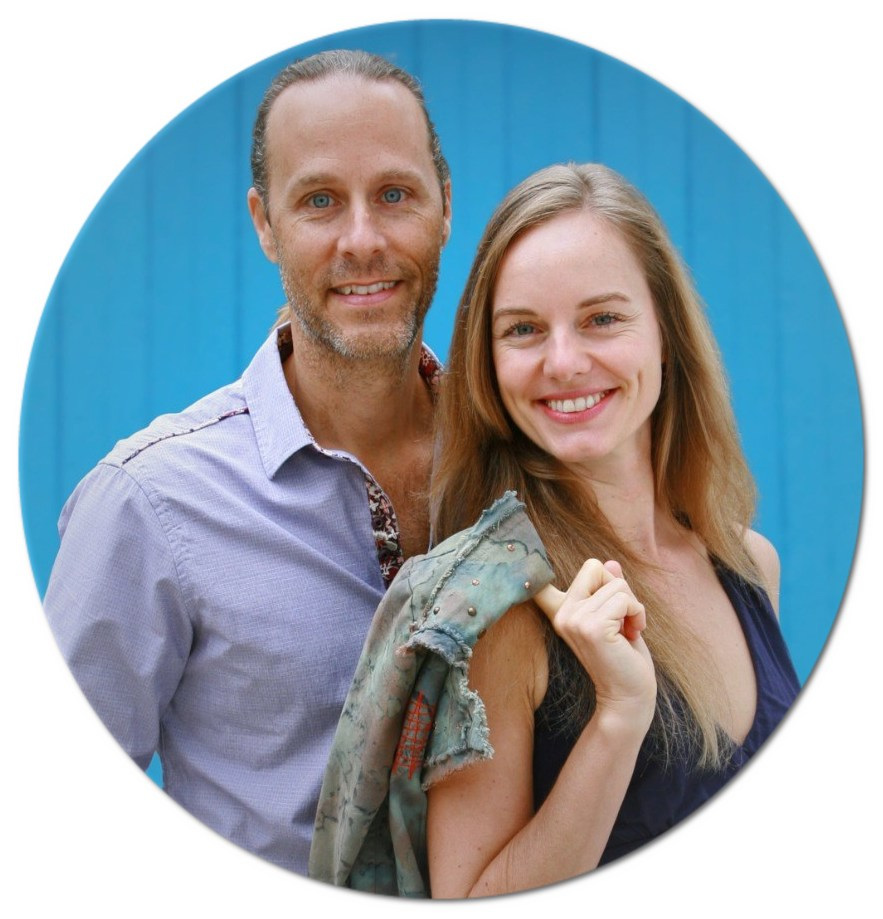
Kevin Anthony and Céline Remy are an international husband and wife team who joined forces to create a worldwide movement of true sexual empowerment. Kevin, “The Truth Warrior,” is a Men’s Coach, Tantra Counselor, and Couples Relationship Coach. Céline, “The Intimacy Angel,” is a Holistic Sexologist, Certified Sexological Bodyworker, Relationship, and Intimacy Coach for men, women, and couples. Together, they are truly the ‘Power Couple.’ They host ‘The Love Lab Podcast,’ and are co-creators of ‘Power and Mastery,’ an online educational training system that teaches the exact process to any man who desires to bring his ‘A’ game consistently to the bedroom. They guide couples and men on how to go from ‘good’ to ‘AMAZING’ in the bedroom and beyond.