What You’ll Learn In Episode 141:
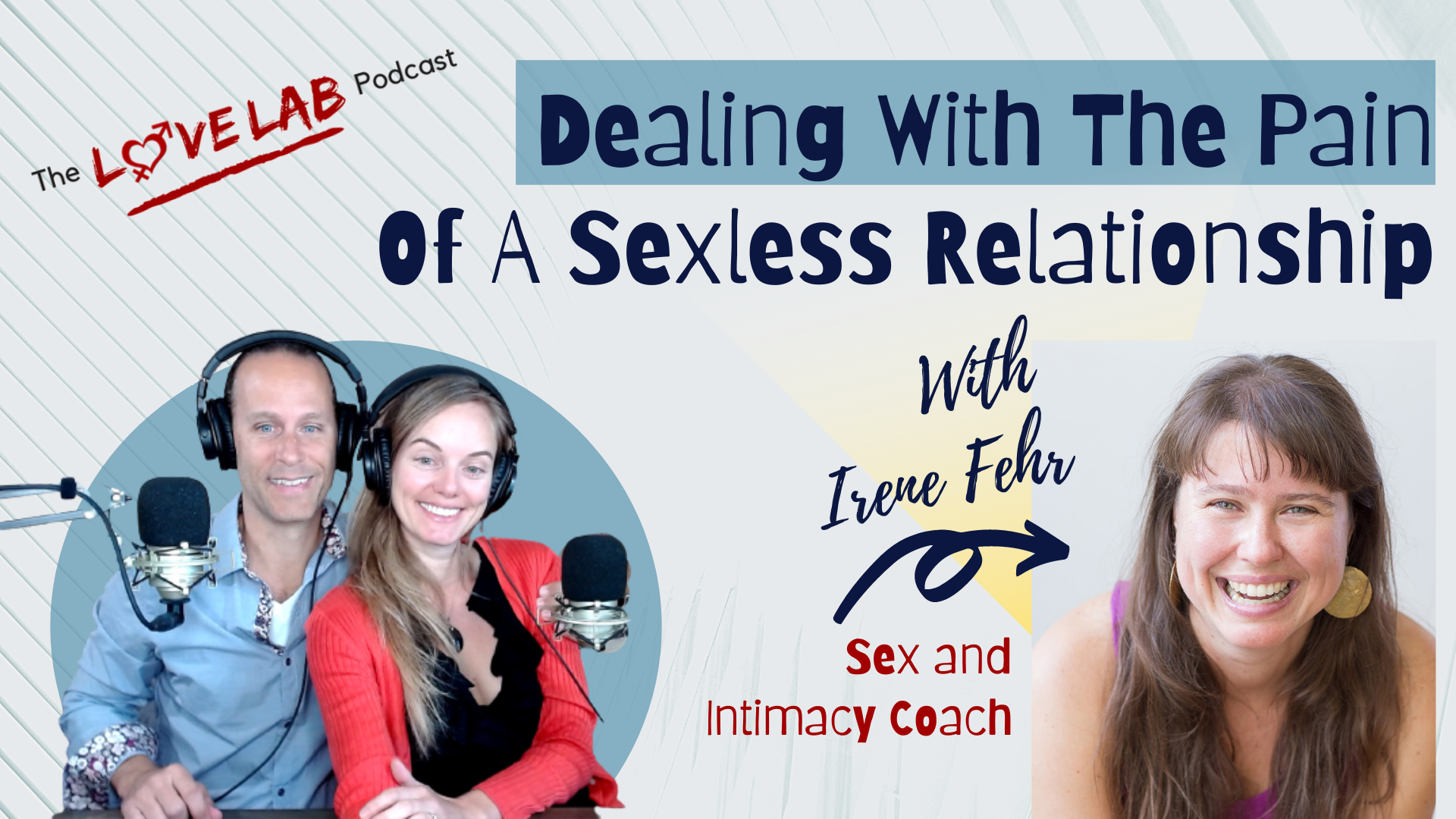
Did your relationship start off hot and passionate where you both couldn’t keep your clothes on, but since then sex has become rare or non-existent? This scenario is far too common. In this episode, Kevin & Céline talk with Sex and Intimacy Coach Irene Fehr about her own personal experience with this, what she learned from it and how she now helps others avoid what happened to her.
Links From Today’s Show:
 As a Sex and Intimacy Coach, Irene Fehr, MA, CPCC has helped hundreds of committed couples to add sex and passion into sexless relationships and fall in love with each other again. She is no stranger to her clients’ complaints, having had to face the all-too-common story of “happy marriage turned sexless” when she lost her libido. You can read Irene’s perspectives on sex, sexual desire in a long-term relationship, and women’s libido in HuffPost, Cosmopolitan, Refinery29, and ScaryMommy.
Website: www.irenefehr.com
Free 3-video “How to Want Sex Again” training for women:
https://www.irenefehr.com/wanting-sex-again
Free video: Why sex dies in a long-term relationship and how to keep it passionate and exciting overtime
Kevin Anthony 0:11
Welcome to the love lab podcast a safe place to get real about sex. Whether you’re a man or woman, single or couple, this is the show for you.
Céline Remy 0:20
We are your hosts, Kevin Anthony and Celine Remy and we are here to guide you to go from good to amazing in the bedroom and beyond.
Kevin Anthony 0:28
All right, welcome back to the love lab podcast. This is Episode 141. And it is titled dealing with the pain of a sexless relationship. So we’ve talked in the past about how to fix a sexless marriage, we did an episode on that, where we kind of gave people you know, the causes of it and things they could do to fix it. But today, we’re actually going to talk with somebody who personally experienced this and actually coaches people through this.
Kevin Anthony 0:54
So you’re going to get to hear really somebody real-life experience about what they went through in this particular journey. And I think that could be really valuable for the audience. And you have to keep in mind to our last episode, I believe, was how to fix a sexless marriage. But you don’t have to be married in order to have a relationship that lacks sex or even lacks the appropriate amount of sex. Right.
Kevin Anthony 1:23
So, you know, if you if you’re in a relationship right now, you’re going home, we’re not really married, this is will still apply to you. Or if you’re like, well, it’s not sexless, we still have sex once a month, or, you know, that’s probably not enough. Now, of course, that depends on your relationship. But the point I’m trying to make here is that I’m pretty sure and we don’t know yet because we haven’t gotten into the conversation.
Kevin Anthony 1:46
But I’m pretty sure that pretty much anybody that is not in a relationship where they feel totally fulfilled, is going to get some value out of this conversation.
Céline Remy 1:56
Absolutely. And hopefully, we’ll get into some of the emotions around the shame, the pain, and all of this to just kind of like give you a message of hope also, that you’re not alone, and that there’s a way out, so make sure you listen all the way to the end.
Céline Remy 2:12
Before we get started, let’s give a big shout-out to our sponsor’s power and mastery. So if you want to join the secret club of men who are great in bed, then check out power and mastery at power and mastery.com. It is the most complete sexual mastery training for men. Whether you want to have harder erections and last longer or increase your sexual skills. There is something for you at power and mastery.com.
Céline Remy 2:38
So I’m going to read today’s guest bio, and then we’re going to bring her to the show. So as a sex and intimacy coach Irene Fehr, Ma, and CPCC I don’t know really what it means, but she will tell us has helped hundreds of committed couples to add sex and passion into sexless relationships, and fall in love again with each other.
Céline Remy 2:59
She is no stranger to her client’s complaints having had to face the all too common story of happy marriage turns sex less once she lost her libido. You can read Iran’s perspectives on sex, sexual desires in long-term relationships, and women’s libido in HuffPost, cosmopolitan refinery 29, and Scary Mommy, she is everywhere. And she is now on the love lab podcast. So welcome, Irene.
Irene Fehr 3:26
Thanks so much for having me.
Céline Remy 3:27
It’s a pleasure.
Kevin Anthony 3:29
Alright, so obviously, the audience heard from your bio, that you help people with this specific issue. So we know that you’re going to have lots of great tips and things like that for the listeners. However, the bio also clearly stated that you’ve personally gone through this. And that’s really what we want to get out. So we’re going to use your personal story to help bring out those tips for our audience.
Céline Remy 3:54
So I know when we were talking prior to this show, you told us that you got married somewhat young, and you started having issues in the bedroom. By the way, that’s important to know that she was young, because sometimes we were like, Oh, it’s the normal thing when you get older, but it can happen at any time. So why don’t you tell our audience more about your story about that?
Irene Fehr 4:16
Yes, my story is, in a way very typical, which is something that I learned years after I lived through my own story. But I lived through what so many couples go through, which is a relationship starting off passionately, you are into each other you fall in love you. There’s passionate sex in the beginning, and we were young, but we’re not that young. We were 25-26.
Irene Fehr 4:46
But, but again, the beginning of the story was just like everyone else’s beginning of the relationship, things were so easy, and we were having sex a lot and it was wonderful. And again, we were having this connection with each other, we couldn’t keep our hands off, we couldn’t get our clothes off fast enough happens with pretty much all couples and I work with couples from all around the world.
Irene Fehr 5:12
And this is true everywhere, right? But, but I thought it was the moment unique. I thought, Wow, this is so special. And as our relationship grew over time, our sex started to deepen, in the beginning, it was what I call friction, sex. It’s just kind of that, that physical, raw passion for each other. But then we started to fall in love and love started to come into the picture.
Irene Fehr 5:41
So sex started to be a lot more connected, and a lot more about the expression of love and affection and fondness for each other, and desire. And what also started to happen as the relationship started to deepen is we took on more responsibilities, we moved in with each other, we, we started to pay rent together, we started to do things together, we started to acquire things together, we got a dog, we got chickens, were living up in the mountains, in California.
Irene Fehr 6:16
And with responsibilities, what also started to happen is a more regular disconnect, more arguments, more disappointments, more resentments. And I had no idea that was happening. Or let me say differently. I had no idea that that had a huge effect on me. But looking back that had a huge effect on me and my connection with my soon-to-be husband at the time.
Irene Fehr 6:45
And what I was actually seeing physically was I started to lose lubrication. So I couldn’t generate my own lubrication. And at that time, I went to the doctor and I was told, well, that’s normal.
Céline Remy 6:59
That’s okay, just go buy lube.
Irene Fehr 7:02
and continue going. And so no one really questioned, you know why this is happening, or that it may be actually affecting me more than just physically. But I listened to that advice. I was relatively young and continued having sex. But I had no idea that lubrication is just one of various things that happens to a woman’s body, in terms of arousal.
Irene Fehr 7:26
It’s one of the first to come and one of the first to go. But then there’s a slew of other things that have to happen. And while I was using lube, I also started to develop pain during penetration because I wasn’t really aroused. But again, I had no idea how to speak about it and what was going on, and I was getting mixed, mixed messages from doctors telling me like, Oh, well, that’s normal. It’s normal for women to have pain.
Kevin Anthony 7:56
Yeah. So I want to stop you there for just a minute. Because there’s a couple of things, the first thing that I really wanted to sort of reiterate was a point you brought up at the beginning, which is that the beginning of your relationship started off very passionate, you couldn’t get your clothes off fast enough.
Kevin Anthony 8:11
And so what I really want the audience to take away from that, is that just because things start out that way, you can’t get complacent, right? You can’t go Oh, well, it’s all good for us. I mean, look, we love each other like we can’t even wait to get each other’s clothes off. Like you, it’s not so much an indicator of what’s going to happen later on down the line. So that’s the first thing.
Kevin Anthony 8:34
And the second piece that I really wanted to go a little deeper in. And I think you’re about to go there also, was this piece about how you felt yourself that something was going on. So you noticed that you weren’t lubricating that you were starting to have some pain that something was different. And you went out and you sought help for it. And you went and you spoke to doctors, and they’re just like, not, everything’s good.
Céline Remy 9:00
Get the lube.
Kevin Anthony 9:03
So, you know, there are two valuable points in that, well, I guess, maybe even three. One is, it’s great that you went out and sought help. That’s amazing. Rather than just sitting there in your pain and misery and not doing anything about it, too, don’t necessarily take one opinion or two or even two opinions, or maybe even three opinions if you don’t feel like they resonate with you.
Kevin Anthony 9:25
And that brings me to the third point, which is you have to learn to trust your intuition about what’s happening, you know, better than any doctor or any professional, what you’re feeling and what’s going on in your body. So I’m wondering if you can just tell us a little bit more about like, what were all these people you were seeing telling you and how did that resonate with you?
Irene Fehr 9:48
You know, you point out really important he says about trusting your body and I wasn’t very experienced in my own body. I was relatively young but also just wasn’t experienced in my own body. I didn’t grow up talking about my body or about sex. And so from one perspective, when I went to the doctors, I believe that you know, I was looking for medical advice, and I thought that there was something medically wrong with me.
Irene Fehr 10:13
And I thought that the medical professionals would be the ones to let me know. But they were saying that there’s nothing medically wrong with me. But what was really damaging is hearing some of the rationalizations for pain. I heard many times from men and women, doctors, pain for women during sex is normal. It’s expected It’s okay. And I heard, you know, later when I lost my libido completely, that losing your libido and a long-term relationship in a marriage is completely normal, it’s to be expected.
Irene Fehr 10:51
And that was incredibly heartbreaking. Because there was a tiny little voice inside of me, that was saying, Hey, this is not how it’s supposed to be. I had never experienced anything better than that. But there was no way inside. It’s like, this is not how it’s supposed to be, there has to be more than this. I need to figure out a way to do that.
Irene Fehr 11:16
But again, a big part of me believed the myths that these people were telling me the doctors and I believe the physical, the physical messages, but they were incredibly confusing because all these voices were just all mixed in my head. And you know, to what you were saying, Kevin earlier, trusting yourself is really important.
Irene Fehr 11:36
You, you may not know exactly what is happening inside of you. But believing yourself in that voice is really important, it’s going to get you to take the next step and the next step in the next step to finding out what’s actually happening.
Céline Remy 11:50
You know, want to bring into something personal, where I too, was in my late 20s, maybe early 30s in a relationship where I was having issues with lubrication. And so using coconut oil or whatever lube, I fixed it, I didn’t have to experience pain. But I was definitely having a change in well, lubrication, number one, but also in the discharge.
Céline Remy 12:15
I went to the gynecologist and like there’s nothing wrong, there’s no yeast, nothing, you know. But I was like, this is not the way that my vagina usually is, you know, not like there’s something different. It’s only like, much later, once I was out of this relationship and experience something different, that I realized and understood the messages that my body was trying to tell me. This is why I’m sharing that.
Céline Remy 12:42
And I know I’ve already spoken about this on the show at some point, but I’m bringing this up again, because it’s difficult when you’re in it, to know that it’s happening. But if you notice that something is different, and it’s not working the way that it was before, like, don’t believe that it’s normal. It’s normal because people say it is. But it doesn’t make it normal per se like is it like our society is sick?
Céline Remy 13:11
So should we like really, like, look at this sick society and want to become that now. So ultimately, it’s about really knowing yourself and I love that piece that. Really it’s true that it is difficult when you’re in the moment to understand it. But these are messages I think our bodies are talking to us.
Céline Remy 13:31
And I also think that as women, it’s difficult because we are taught from a really early age to accept being touched even when we don’t want to. We have gynecologist appointments that just shove their speculums like it’s cold, it’s hard, you’re not ready. And by the way, there’s a tip before if I ever have to go to a gynecologist appointment, always like massage my breasts and slightly masturbate just before they walk into the room.
Céline Remy 14:01
So I’m already turned down and dilated, like open and they always like, Oh, you’re so open. I’m like, If only you knew what I’ve been doing, rather than like waiting and like, I’m like, let’s masturbate. Let’s get open up and that made my gynecologist appointment so much better. But there’s
Kevin Anthony 14:19
the gynecologist’s office.
Céline Remy 14:22
Anyway, they already gonna see everything. So I’m like, whatever, right? But even just massaging your breasts like touching your body, preparing and telling your body like, Hey, we’re about to like, touch you and you need to be open. So going through the heart is very important, not even just like masturbating your clitoral. I think it has more to do with that opening and using our breasts for that.
Céline Remy 14:43
But anyway, I know it’s a long little winded thing that I shared here but I wanted to add my personal experience because I want everyone listening to know that they need to trust themselves and the signs that their bodies are giving them and that they are messages and that lack of lubrication is a sign that you’re not in alignment in your relationship and a loop is not going to fix that up. It’s gonna make things slippery.
Céline Remy 15:07
But the resentment or the dynamic that are not working on are going to be fixed with a good loop. Even if it’s organic.
Kevin Anthony 15:16
You used to say that you weren’t very wet. And now we basically call you juicy Lucy. So
Céline Remy 15:23
we get together. No, I’m not super where’d you let’s expect this and he’s like, I don’t know what you’re talking about. And we’re like, five years plus, and we haven’t had an issue. So when you are with the right person, it changes things too,
Irene Fehr 15:39
like you said, Your body’s constantly giving you information. It’s giving you clues about what it needs, to be successful too, to enjoy life to give you satisfaction to perform for you like the full pleasure capacity rather than just kind of at a very basic level. And that’s why it’s important for us to do to reframe individually that we’re not broken, that it’s we need to understand their bodies and listen to them, but also as a society because there are so many societal messages out there.
Irene Fehr 16:20
Why is lube important? or excuse me, why is lube so popular out there? Well, because so many women struggle with this. But it’s seen as well, there’s something wrong with it. She’s missing Lulu, she’s missing lubrication we need she needs to buy it. Where is it really, it’s a sign that like you said, there’s something off in the relationship, or maybe something wrong in your own boundaries or your own relationship with yourself? And if we’re paying attention to it, we can change things holistically sustainably in a way that supports us not just put a bandaid on it.
Kevin Anthony 16:56
Yeah, and I want to get into that a little bit more too because the doctors were telling you, there’s nothing wrong with you, you’re perfectly fine. You’re feeling like something is wrong. But then you also mentioned at one point in our pre-interview that you were getting mixed messages.
Kevin Anthony 17:12
So what society was telling you was different than what the doctors were telling you. I was wondering if you could talk a little bit more about what kind of messages was society giving you and how was that affecting you? And how was that fitting in with what the doctors were telling you?
Irene Fehr 17:28
Well, one of the biggest societal messages that I grew up with is still, even though I grew up with a generation of open sexuality and feminism is that a woman’s job in a relationship is to please her man.
Irene Fehr 17:47
And so for me when I started losing lubrication, and then later on when sex was so painful, and I didn’t want it or any kind of physical attention at all, I felt so ashamed that I wasn’t able to be there for my husband that I wasn’t, wasn’t a good wife, I couldn’t, I couldn’t do my wifely duties, even though I wasn’t thinking of that in those words.
Irene Fehr 18:10
But along those lines, like I couldn’t, I wasn’t woman enough, I wasn’t feminine enough. And I wasn’t satisfying him. So that was certainly one of the most damaging and damaging things that stuck around for me for a long time where I lost a lot of confidence that I just couldn’t be woman enough for him.
Irene Fehr 18:38
And, of course, the version of sex or sexuality that’s out there is the version that we experienced at the beginning of the relationship. It’s passionate, it’s fun, we’re just so physical. We’re like like I was saying, you can’t keep your hands off each other. You can’t keep your clothes on. And that’s what sexuality in quotes should look like. And that’s what I was comparing myself always. I shouldn’t be like that. But why am I not anymore?
Irene Fehr 19:10
What happened to me? So again, it fed this idea that I’m broken somehow, that I should be like that. And again, I’m not and, and I just had no words to even describe that. The criticisms were certainly in my head. And, again, my confidence just took a nosedive. I felt so ashamed and wanted to shrink myself. And I saw that happening outside of my relationship like at work, I, I didn’t speak up. I didn’t take on new projects. I just wanted to hide literally like in my cubicle and not being seen by anyone.
Kevin Anthony 19:48
So so the doctor should tell you there’s nothing wrong. society’s telling you you’re completely broken into a bad wife. This could I could see how this could be really confusing for somebody right? So So then the next obvious question, and you started to tell us a little bit about it, but it’s how did all of this affect your relationship?
Irene Fehr 20:09
Well, you know, one of the things that were also happening with this confusion is that I had no words to talk about this. Also, we were not talking about this. So all of this I was handling on my own inside myself. And I felt incredibly ashamed, incredibly disconnected from my husband, like I said, wanting to hide. What that did to the relationship is that I wasn’t allowing him to see what was going on for me. I wasn’t allowing myself to ask for help.
Irene Fehr 20:46
And we were getting stuck in patterns of arguments and resentment and dissatisfaction over the mundane things in life. So we weren’t really talking about the meaningful things and what was really going on. And we were like I said, getting stuck in these stupid, absolutely stupid arguments.
Irene Fehr 21:06
And the couples that I work with, come and tell me the same thing. It’s like, we don’t even know why we’re arguing. But we’re just going at each other. And so we resorted to that we lost the true connection. That and the love that brought us together.
Céline Remy 21:22
Were you guys able to find it back? Are you guys divorced? Or what happened with that?
Irene Fehr 21:28
We ended up divorcing, we truly did not have the tools to understand what’s happening. We start we did start couples therapy. But at the time, the couples therapy, couldn’t also verbalize what was happening. So this is the work that I do with couples today is that I can frame this in ways that they can see themselves in these scenarios. And then they’re like, wow, that’s us.
Irene Fehr 21:58
That’s also like, hundreds of other couples that you work with, like, wow, we’re not broken. We were like, this is a predictable pattern, really. Because that was one of the things that actually did happen within just question our love for each other, we decided that our love wasn’t strong enough, to keep us going. And what I do with couples today is to help them see that it’s not the quality of their love, or that they’re the right partner, but that they’re missing the tools.
Irene Fehr 22:33
But unfortunately, I didn’t have that we didn’t have that. And so we got divorced and also leading up to divorce. So the progression was lots of lubrication, painful sex, to me just withdrawing sexually altogether. And then there were a couple of years of not having any touch, not having certainly no sex, but also no touch, no, no physical connection, and that constant distancing of each other. And for me, after the divorce, I had some silly idea that okay, well now.
Irene Fehr 23:08
Now, everything’s gonna be fine. But I very quickly, once I started dating, realize that I still didn’t have the tools to approach it differently. And so I ended up in several short relationships where I was so intimidated by sex, and so in a way damaged by the loss of confidence that it’s these relationships when sexless very quickly. And I decided to figure this out.
Céline Remy 23:40
Oh, I love it. So this is amazing. And I want to dive into the tools and what started to work and what didn’t work and giving some little nuggets to our listeners. I’m really excited. Thank you so much, Irene also just for sharing so openly about your story. And I hope that whoever is listening today is can see that you are not alone. And you are not so unique. This is happening to many people. And again, it’s all about having the right skills and tools and that there is a way out.
Céline Remy 24:12
But before we dive into more of the positive, let’s give a little shout-out to our sponsors. Today. Today we want to tell you about our program for couples. So if you are a committed couple who is stuck in a rut, and just going through the daily motions instead of connecting the way you used to, you’re tired of stale mechanical sex, I’d like spontaneity and fun, and you don’t want to live a life of average.
Céline Remy 24:35
Then Kevin and I would like to invite you to join our highly sexed power capital Platinum program. So if you give us 90 days we will help you bring the passion back between the sheets and be synched up sexually so that you can thrive with more purpose and passion in life. So you get a lot of tools in here. You can find more about our program at kevinanthonycoaching.com/passion
Kevin Anthony 25:03
It’s a great program, you should check it out. And you know what? You know, we’re interviewing Irene here. And I know she does similar work if you resonate with Irene. And we’ll get to this at the end too. But check her out and go look up her because I’m sure she’s got fantastic stuff, which we are going to dive into right now.
Céline Remy 25:19
So from everything that you’ve learned, and we’re going to look at two aspects from the woman’s perspective, and also from how men can support their women. Okay, so we’ll start first with the woman, what would be your advice for women going through a similar experience?
Irene Fehr 25:41
Well, my advice is, and this is a hard one because a lot of women don’t learn about themselves until they go through the hardships that I went through. But if, if you happen to stumble on this information before you get into a new relationship, what’s really important to understand is that what happens at the beginning of our relationship is false advertising. It’s the way early veto looks and acts at the beginning that is not going to be sustainable long term.
Irene Fehr 26:14
And so don’t judge yourself against that. That’s a bad bad benchmark to judge yourself against. If you’re in a relationship already, and you’re looking back and realizing that, again, forgive yourself for having gone through it, because we all go through this. There are so many biological and, and hormonal imperatives that are functioning in the beginning, that make us hook up and have a baby and continue our species. And again, libido will look very different at that stage.
Irene Fehr 26:50
But what’s really important, and this is what I learned later on after my divorce, and after I spent years, understanding myself sexually exploring, having different experiences, and also teaching and then helping clients and learning through them about what works for different women is that women sexuality in a long term relationship, beyond the first couple of months, takes intentionality.
Irene Fehr 27:20
it takes exquisite attention, it’s not something that works after you’ve taken care of everyone else done 1000 other things, you know, close deals, sold companies did all these things, and when you leave the last bits of energy for yourself, and your partner at the end, you realize your sexuality is not going to thrive and that we need to feed our engines, we need to give them fuel our bodies need rest and time to for pleasure and for filling ourselves up with the things that give us joy and make us come alive.
Irene Fehr 28:04
That’s something that we need to do for ourselves. And we need to carve out time with our partners quality time again, not at the end of the day, when you’re both falling asleep. But quality time where your partner can give you exquisite attention when you can cultivate connection, and where your body can get the proper, really the proper attention and the proper maintenance.
Irene Fehr 28:29
You know, I think of women’s bodies. We’re all Ferrari’s but we get treated like little Ford Fiesta. You know, we are high-performance and high maintenance machines that need exquisite attention and touch.
Kevin Anthony 28:50
you said it not me. Just kidding.
Irene Fehr 28:56
This is one of them in-a-way myths that are out there that we shouldn’t be like, we shouldn’t be easygoing. We don’t we don’t need much. But we do. If you want your body to perform like a Ferrari, we need a lot of maintenance. And like I said, it’s a lot about fueling your own tank with things that give you pleasure and stay in giving yourself space and rest. And doing that with a partner.
Irene Fehr 29:25
And this is one of the things that I teach my couples how to do is how to create that space, that infrastructure in the relationship that’s going to support a woman’s libido. It’s very easy for a man to get aroused. just literally a couple of seconds and he’s ready for I don’t know what you’re talking about. But no, all women just are so jealous that we’re so envious that you can do that.
Irene Fehr 29:55
But our bodies need spaciousness and time and a lack of pressure. Lack of pressure to have sex like a pressure to turn on a lack of pressure to be something that we’re not yet. We’re like, you know, another way to think about our bodies is we’re flower buds. And we need to open up on our own time, you can’t force a flower bud to open, you can pull its petals apart.
Irene Fehr 30:21
And that’s not going to leave you a flower that’ll leave you a pile of petals. But yeah, opening it up. And this is one of the things that most couples don’t intentionally work into their lives, but which are absolutely necessary for a woman’s libido.
Kevin Anthony 30:40
Yeah, absolutely. So the key takeaway here is you have to make it a priority. That’s what I see is, the big problem is when you are new at the beginning of that relationship, and those hormones are driving all your actions, you are making it a priority, because the hormones won’t let you do anything, but make it a priority. Then when those hormones were off, you just say, you know, you don’t make it a priority anymore. And that’s one of the biggest keys.
Kevin Anthony 31:07
And you know, that’s one of the things that we teach so often to couples is you it’s not a set it and forget it. It’s not an autopilot, you have to make it a priority in your life every day. And I loved what you said, you don’t do everything else. And then whatever fuels left in the tank you use for the relationship. No, the relationship has to be one of those main things on the list.
Kevin Anthony 31:29
The other part that you brought up that I really liked was making it also a priority for self-care. That I think is really really I mean, it’s big for all of us big for men too. But I think it’s even more important for women. You know, whether they’re Ferrari’s whether they need more maintenance or not, you know, that’s not really the point. The point is, I think, for women, just having even a little bit of time to invest in self-care goes a long, long way.
Céline Remy 31:56
And I think also understanding our bodies and knowing ourselves, like having expectations, I do think actually, that we can be turned down rather quickly as women if we know how we work. And so we talk a lot about the constant state of arousal that you can work together as a couple to keep that going. So you don’t have so many dips, and they have to like try to get it back higher again.
Céline Remy 32:19
But I’d have to have to say that I feel like even when they did studies, women get aroused as quickly as men in their head when they hook you up to electrodes. It’s just we don’t get a boner on the outside. It’s all happening inside. And somehow we don’t always connect the dots the same. But oftentimes our body even like you’ll be watching porn, that’s usually how to do it through imageries.
Céline Remy 32:45
And that’s how they can see you’re actually having a response that’s similar to the way men respond as women. But if you ask a woman, she’ll be like, I’m not turned down. It’s not happening. And I think if we start to understand, especially as we’ve been in a long term relationship that, then that’s a big thing we always teach is that you don’t have to be in the mood, you can create the mood, and you don’t have to just depend on like,
Céline Remy 33:10
I feel horny, I need to fuck, actually, this is kind of it’s not so healthy. Once you know, it’s like how many times we start lovemaking. I’m not like I could take it or leave it, but I do it because I love what it gives me and how I feel afterward. I know the deeper reasons and like 10 minutes in I’m like, Oh my gosh, this is amazing. I’m so glad I did it. But 10 minutes ago, I was Oh, okay, well, whatever. You know,
Kevin Anthony 33:35
there’s a lot of times when you’re like, I’m not even wet. I’m not even turned on and then I’ll be like, Yes, you are. Like didn’t even realize that digit.
Céline Remy 33:44
Okay, okay, well, then we are so are in How can a man support his partner in such a situation. And I know we are assuming that in this scenario is what we’ve been talking a lot is that the woman is the one who’s experiencing low libido and, and pain. But I also do want to point out that there are more and more men due to their stress level, and life in general, who are also in a place of themselves not feeling so interested in sex, and just are part of the problem as well.
Céline Remy 34:20
But I’m curious about your opinion on what a man can do to support his partner and if you have any message if any man finds himself being the one who’s not interested in sex.
Irene Fehr 34:32
So I will actually answer what partners can do for each other because this is very similar to women and women supporting men. And the key piece is if the only time you’re having a sexual connection is when you’re trying to have sex, you’re going to get caught in very, very, very insidious patterns that are going to basically kill desire. And make sex as this area that’s fraught with anxiety.
Irene Fehr 35:04
And so the way to support each other is to create a safe space, a safe space where sex is off the table, you’re just playing with each other sexually, you’re making out, you’re touching each other, you’re kissing, you’re fumbling, you’re stroking. There, there may be oral, but it’s, it’s done out of pleasure and really pleasuring you doing it for your own pleasure pleasuring your partner, but not trying to have sex.
Irene Fehr 35:33
And this is really important when one or both partners are having a hard time with their libido and wanting sex because so much of the shutdown and libido happens because there’s this pressure that I need to be sexual. It’s true performance anxiety, I’m on the clock, I need to be sexual, my partner is expecting me to be hard or to be ready for penetration or to orgasm. And our bodies are smart enough to call bullshit on that and be like, this is not how it’s supposed to be.
Irene Fehr 36:08
This is not fun at all. And so what’s really important, like I said, is to set aside time where sex is off the table, where you’re just lovers, we’re just playing, you’re reconnecting with each other, you’re exploring, I love Tantra practices and other practices such as orgasmic meditation where there’s a focus on being there for each other and focusing on connection through sexual touch. But without trying to go somewhere. And what removing sex off the table also does is that it removes the requirement for arousal.
Irene Fehr 36:50
So you’re not again trying to get aroused, you’re not trying to get anywhere else than where you are. But that’s what allows arousal to happen to have a natural to build. And specifically with a dynamic where there are a woman and a man when a man is aroused. with what’s happening, obviously, he’s getting wrecked, but his testosterone is pumping when he is really sexually aroused.
Irene Fehr 37:19
And when there’s a discrepancy with a woman, meaning what he’s aroused, and she’s not so much, naturally a woman will create will develop tension in her body, because he feels threatening an aroused man and an aroused man is threatening because this testosterone is pumping. And if she’s not aroused, she will feel just at a very primitive level, much weaker and smaller than he is. Because generally, women have 10 to 15 times less testosterone than men like that kind of basic level.
Irene Fehr 37:58
And so if he is aroused, and he wants sex, that threatens her again, more than she can probably even say, but it creates tension in her body, and it will shut down her libido. And so like I said, practices, such as tantric practices and orgasmic meditation, are designed such that they’re done when a man is not aroused.
Irene Fehr 38:21
When a man and a woman are at a generally equal level of arousal, and they together, build on their arousal, and that allows a safe space for the woman to, like I said, the flower-like the flower to open up at its own rate, without feeling threatened, and without feeling on the clock, like she has to do something. And that’s incredibly important. And then that’s the way partners can support each other.
Irene Fehr 38:49
This is also true, for example, for men who can’t get hard, and you have these physical sessions where you just explore touch and allow his erection to happen naturally has arousal to like the flower open up and blossom at its own rate, and have his female partner support him that way. But we need that safe space where we’re sexual, both there’s no pressure to have sex, to truly build arousal to feel safe with each other.
Irene Fehr 39:19
And to get the benefits of that high arousal state that you talked about. That allows us to have natural ups and downs in our libido, but then are not these huge drops where you’re like falling off a 12,000-foot mountain to sea level and then climbing back up again. And then going back down like No, these are like, you know, 500 foothills.
Kevin Anthony 39:47
Yeah, so I love that about basically taking some of those expectations off the table. So you know, one of the things we do is we talk about this in the show all the time, but we have a date night every week since our very first date. I really have two roles in the date night. One is that we do something together, which means we’re focused on each other, we don’t consider sitting there watching a movie staring at a screen to really be doing something together to do something together, where we’re focusing on each other.
Kevin Anthony 40:12
And at some point in the evening, we should be naked, but there’s no expectation of sex. And the thing that I want to point out is one of the things you talked about was making sure that you make it a priority. So we make it a priority by making sure that we keep this date night and
Céline Remy 40:26
the calendar
Kevin Anthony 40:27
every week. The second thing is, is there’s no expectation that there has to be sex on day night. It’s just we need to do something together and connect, and 97 out of 100 times it turns into six. But because there’s no pressure where it has to be if she’s not feeling well, for whatever reason, or if I’m really stressed out, or whatever it is, we don’t have to go there.
Céline Remy 40:53
But we touch each other, and we make it a priority to show up. And it’s life sometimes you on top of the mountains, and sometimes you’re not. But that’s part of it. You love each other just as you are and Come as you are, in all ways possible.
Kevin Anthony 41:08
be told, I’m like the militia always ready.
Céline Remy 41:13
So Iran, this has been a fascinating conversation we have. Well, we have a very special last question for you. But before that, let’s Why don’t you tell our listeners where they can find more about you. And I know you had something special too little freebie that they can get if they want to to get some more information to you. Thank
Irene Fehr 41:34
you so much. Well, all the resources that I’m going to mention right now are on my website, which is Irene fair, calm. And one of the things that I touched upon in our conversation today was the different types of sex that happened at the beginning of the relationship as it gets deeper. And I didn’t mention those. But there’s a third type that you get to create that you get to build consciously and intentionally using the tools that we’ve talked about today.
Irene Fehr 42:02
So I recommend that you check out this video that’s on my website, that’s off of the homepage. And there’s also a free three video online training specifically for women on how to want sex again. So this is very much built on my own experience, having lost my libido and then gotten it back and work with hundreds and hundreds of couples where that was the case for women.
Irene Fehr 42:27
So I take you through understanding the differences of how women’s bodies function and what we really need to fill our tanks and to function at the most optimal level. And so that’s also going to be in a link that I’ve provided for you.
Céline Remy 42:44
And we’ll put the link in the description below and Irene Fehr is her main website where you can also find all of the different things that she offers some coaching and freebies and programs that she has. Then it’s i r e n e f e h r.com for those of you listening, but all links will be in the description. So now we have our favorite juicy question to end today’s show. Irene, what is your best sexual talent?
Kevin Anthony 43:19
wow. Jeopardy music dude. Must be a long list of things to choose from.
Irene Fehr 43:31
Well, um, I think one of my talents is just to be so lost in the moment, that just go on a journey with a partner where we’re so lost in our own in our connection, and, and being able to find that in every moment, not just like the moments where everything is perfect everything, all the stars lined up, being able to find that. That moment of connection and in everything
Kevin Anthony 44:03
That’s a great skill to have.
Céline Remy 44:04
fantastic. Thank you so much, Irene for being our guest today. This is a fantastic conversation, make sure you go check out her things because she has so much more to offer and seek any support that you need. And it’s been a pleasure. Thank you for being here today.
Irene Fehr 44:22
Thank you so much. It’s been a lovely and juicy conversation.
Kevin Anthony 44:27
All right, everybody. That’s all the time we have for this episode and we will see you next week. We hope you like this episode of the love lab podcast. If you enjoy this show, subscribe. leave us a review and share it with your friends.
Céline Remy 44:43
And for more free exclusive content. Join us in the passion vault at kevinanthonycoaching.com/vault
Kevin Anthony 44:58
Thanks for listening
Céline Remy 45:00
Remember, you’re amazing
We hope you liked this episode of The Love Lab Podcast. If you enjoyed this show, leave a comment and share it with your friends.
RATE & REVIEW THE LOVE LAB PODCAST
—> LEAVE A 5-STAR REVIEW ON APPLE PODCAST
ASK A QUESTION FOR THE NEXT EPISODE
—> Click here to leave a message directly to Kevin and Céline to be answered on the air.
Thanks for listening and remember you are amazing.

Kevin Anthony and Céline Remy are an international husband and wife team who joined forces to create a worldwide movement of true sexual empowerment. Kevin, “The Truth Warrior,” is a Men’s Coach, Tantra Counselor, and Couples Relationship Coach. Céline, “The Intimacy Angel,” is a Holistic Sexologist, Certified Sexological Bodyworker, Relationship, and Intimacy Coach for men, women, and couples. Together, they are truly the ‘Power Couple.’ They host ‘The Love Lab Podcast,’ and are co-creators of ‘Power and Mastery,’ an online educational training system that teaches the exact process to any man who desires to bring his ‘A’ game consistently to the bedroom. They guide couples and men on how to go from ‘good’ to ‘AMAZING’ in the bedroom and beyond.