Kevin Anthony 0:00
Welcome to the Love Lab podcast, the place to be for honest and real talk about relationships and sex, whether you’re a man or woman, single or a couple, this is the show for you. I am your host, Kevin Anthony, and I am here to help you have the relationship of your dreams and the best sex of your life.
Kevin Anthony 0:26
All right, welcome back to the Love Lab podcast is episode 376, and it is titled, Breaking Relationship Cycles and Unraveling Unconscious Patterns. I am really excited to have this conversation today. It is kind of like a part two to last week’s conversation, when we were talking about trauma patterns. But trauma patterns are one thing, and then there’s a whole bunch of other sorts of relationship cycles and unconscious patterns that we deal with on a regular basis. And you know, if you do coaching work for any length of time, and if you’re any good at it, you’ve gotten really good at recognizing these patterns. So these are things that I see all the time, and you can, you can sort of group them to some extent, and that’s that is one of the things that my guest has done is put these into some archetypes, and we’re going to really talk about what those patterns are, where they come from, what we can possibly do to heal them. So I’m really excited to have this conversation today. And as always, beforehand, we got to pay for this episode, so I got a couple of ads to read.
Kevin Anthony 1:41
Number one, ladies, did you know that the overwhelming majority of men consider receiving oral sex a must in their relationships? Well, of course you did, because men have been asking you for it your whole life. But do you feel confident in your ability to give great oral sex if you tend to avoid it because you don’t feel like you’re good at it, or you feel like you are pretty good at it, but want to get even better? Then my new blow job mastery course is for you. I have teamed up with the amazing coach, read Duong of Eterna Love, to bring you a practical and easy-to-follow course that is guaranteed to increase your confidence and skill when giving oral sex to your men. In this course, you will get all the secrets to mastering the art of oral sex with step-by-step instructions and multiple live demos. Go to https://www.sacredfemininearts.com/bjmastery. That is https://www.sacredfemininearts.com/bjmastery.
Kevin Anthony 2:25
And of course, of course, this is not just about helping women with their skills. For many years now, you have listened to this podcast, and I always do an ad for power and mastery, which is my Men’s online sexual mastery course. So if you’re struggling with erectile dysfunction, premature, it’s dysfunction, premature ejaculation, or simply want to increase your skills in the bedroom and be the best that you can be, then power and mastery is for you. Join the exclusive club of men who have taken their sexual performance into their own hands and become sexual masters. Mastering your sexuality is a key component to becoming the man she has always dreamt of and craves. Don’t leave your sexual performance up to chance or the throw of the dice. Become a sexual master today by going to https://www.powerandmastery.com/sexual-mastery. That is https://www.powerandmastery.com/sexual-mastery.
Kevin Anthony 3:13
And I got just one last thing I want to show you today. I got t-shirts. I finally got t-shirts. Check these out. It says more orgasms, less wars. I got the men’s and I’ve got the ladies as well. So go check that out at my website. kevinanthonycoaching.com.
Kevin Anthony 3:34
Okay, now that that’s all out of the way, my guest today is Dr Shahzad Jalili. She is a licensed clinical psychologist, author, and speaker whose work centers on emotional healing, trauma, recovery, and the integration of mind, body, and soul, drawing from neuroscience, somatic therapy, and deep psychology. She helps individuals and communities transform pain into purpose and cultivate deeper connection. Welcome to the show.
Shahrzad Jalali 4:05
Thank you. Wonderful to be here.
Kevin Anthony 4:06
I love that your bio says integration of mind, body, and soul, like who doesn’t want that, at least in my opinion, anyway. I mean, is there? Is there a greater goal than that? I’m not sure that there is any way.
Shahrzad Jalali 4:25
I think we all aim for it, but most of us fall very short, unfortunately.
Kevin Anthony 4:31
Well, you’re right. It is not easy, and it takes a lot of work, but you know, all you know, things that are worth it do take a lot of work, and I think that right off the bat, getting into, like, deep spiritual ideas. I mean, that’s what we’re actually here for, right? We’re here to go through that evolution of our consciousness, right? This is all just a giant school.
Shahrzad Jalali 4:56
Agreed.
Kevin Anthony 4:58
Okay, so. Let’s start from the beginning, and let’s talk about when we say unconscious patterns, what are we really talking about? What do I mean? And what do we mean when we say unconscious patterns?
Shahrzad Jalali 5:13
Well, humans have access to Part of what’s happening in their psyche, and we refer to that as our conscious mind. So let’s say, for example, I may feel like I like to become successful, and that’s a conscious goal that my psyche has and I have access to, but there is the majority of my psyche that I don’t necessarily have access to, and those are the patterns that have developed in my life over the years as a result of both my upbringing, my essence that I’ve brought into the world with me, everything that I have experienced over the years in my life, they have given me a blueprint of who I am. And as I said, some of this is in my consciousness, and I can connect with it, but the majority of it is not, for example, in the whole success theme. Maybe there’s a part of me that feels like, no matter how much I try, I can never get what I want. And that is an unconscious thought that I carry, or it’s an unconscious pattern that lives inside of me that I may or may not have awareness of.
Kevin Anthony 6:37
Yeah, and it’s so interesting, right? Because I like how you separate it out, and you’re like, Okay, there’s a part of it that’s conscious that I have access to, and then there’s a part of it that is not conscious. Obviously, the unconscious patterns part is the part that we really want to focus on today, and things that that are there that we aren’t aware of, and but yet, are having a significant impact, you know, on our day to day life and our behaviors, you kind of sort of touched on it a little bit, but I’d like to dive a little bit deeper. Where do these unconscious patterns come from?
Shahrzad Jalali 7:14
It’s not one place. So it’s a majority of our life experience, everything that we have been taught everything that happens in our individual unconscious as well as the as well as the collective unconscious, so everything that the generations prior to us have dealt with as well kind of gives birth to what I come to see In myself, or how I come to define myself, essentially as a human, okay?
Shahrzad Jalali 7:45
Now that’s interesting, so I think a lot of people will get and understand that, okay, our experiences right as we grow up, and the reality is that a lot of that happens when at very, very young ages, right? So long before we’re conscious that these patterns are getting put in. So maybe that’s something that people don’t necessarily realize. But the other thing that you mentioned is you talked about generational patterns, and I think that’s something that a lot of people really are not aware of. I do know that they have done studies on animals where they have, for instance, there was, there was one in particular. I don’t remember the exact details of it, but it went something like this: where they had some monkeys, and when the monkeys would go to do something, they’d get an electric shock. And so they had those monkeys in there, and then eventually they were, like, rotating all the monkeys out until all the monkeys in there had never experienced an electric shock, ever responding to it, but they were still responding to it exactly, and so they were proving that that response was getting programmed into their DNA. And I think that’s really important for people to understand, because, you know, you can just say, well, there’s generational trauma, and people go, Oh, yeah, whatever. That had nothing to do with me, right? Not realizing that this could actually be programmed in their DNA.
Shahrzad Jalali 9:10
Yes. So we even have a name for it, epigenetics. So when something changes in the genes of a particular generation, that could be inherited by the next generation. And we can look at this both in a positive context and a negative context, but we’re definitely all products of the people who lived before us and how they tackled their lives.
Kevin Anthony 9:36
So here’s an interesting question. So we have some patterns that are coming in from generational stuff. We have some patterns that you know are coming in because of our own experiences in our lives. Correct? Would you say that one is maybe deeper or more difficult to get rid of than the other, or are they both kind? Of the same. What are your thoughts on that?
Shahrzad Jalali 10:03
Well, obviously, whatever we have gained consciousness towards is more in our familiar zone of navigating, so we have more power over it. Whatever remains in our shadow, whatever we have not yet shed light on or integrated into our being, is more difficult to tackle, because sometimes we’re in complete denial of it, or we don’t even necessarily know that we are struggling with this dynamic. That’s why the more self-awareness we practice, the more chance we have of living a more authentic, more integrated life, because we shed light on these parts of us that otherwise will remain in our unconscious and rule the game. By the way, just because they’re in our unconscious doesn’t mean that they don’t have any power over us. On the contrary, it means that they have a lot of power over us.
Kevin Anthony 11:00
Yes, and that’s actually the next question I have. I want to talk a little bit about that power, but before we get there, I want to come back to this topic. We were just talking about the generational versus the stuff that we’ve lived. And one of the things that I do see is that even sometimes, when people are aware that a pattern is a generational pattern, they’ll say, Oh, well, you know, my dad and my grandfather, my grandfather’s grandma, we all blah blah blah, right? That they tend to think that because they are quote, unquote generational patterns, that they’re just stuck with them, like, that’s just, that’s just who we are, that’s just, you know, blah blah blah, and what I’m hearing you say is that it doesn’t necessarily matter if it’s generational or if it’s something that you know you lived right in your own life, that bringing it into your awareness makes both of them possible to heal and move beyond.
Shahrzad Jalali 12:01
It goes back to your sense of agency, right to your point. There are two ways to tackle a situation. I can use this as a form of justifying my behavior. For example, I can say my grandfather was an alcoholic, my father was an alcoholic, therefore I am an alcoholic. I guess it’s just, you know, generational trauma that we display this way. Or I have an addiction, which is a family disease that I’m just continuing to carry on, right? Or I can bring more of my sense of agency into it and to tell your truth, as a clinical psychologist, I believe this only happens when we are truly fed up with something, when there is a part of me that believes there is no way I can tolerate myself doing this one more hour, and when We literally get to that point, we implement our agency to go and do something different from this than the previous generations have, and that’s when we break a cycle.
Kevin Anthony 13:13
And what I wanted people to hear from that is that even if it’s generational, you’re not stuck with it, right? So this idea that, well, like you said, well, my grandfather was an alcoholic and my father was an alcoholic, so therefore I’m just destined to be an alcoholic. And I really want people to hear that that’s not true and that you can indeed break that cycle. So I think that’s really important for people to hear.
Shahrzad Jalali 13:42
Absolutely, we have a lot of power in re-navigating our lives at any given moment. One of the main, I think, dilemmas people often bring to my therapy room, because I do a lot of depth work with people, so there are a lot of existential questions that they want to answer is, is there a predisposition to life, or do we have power over life? Because none of us can pick where we’re born or to what family, or you know what location, or you know what kind of level of sometimes, education or comfort, for example, and as such, we become kind of products of that dynamic, whether or not we want it, right? I even allocate a chapter in my book The Fire That Makes Us to this, because I think it’s such an important question. I normally see people fall into one category or the other.
Shahrzad Jalali 14:43
Either people believe, well, no, none of this means anything. I am the author of my life, and I can take it wherever I want, or people who really abide by it and say, Well, you know, it is what it is. I was born in this dynamic, and I just have to live out the rest of my life. With this in mind, I want to say we want to keep one foot in each we cannot deny our existence. What we can do, though, is take that into consideration, embrace it, truly understand it, and then get the power that we can out of it. Because nothing in this world is purely good or bad, with every situation, you are given certain pros and cons. And if you can learn to go into your own dynamic and take out the power that’s embedded in there, that’s how you learn to re-navigate your story.
Kevin Anthony 15:40
Yeah, it says, as Ken Wilber wrote about it, his idea is basically you, you transcend and include, right? So it’s like you were saying, you can’t completely forget about and deny your past, but you’re not beholden to it either, right? So you can include it in the sense that you’re okay. This is how I grew up. This is, you know, where I grew up, or this is what I experienced, or this is what comes in from my family, and I can also transcend that. And I think that’s a really powerful message, because honestly, society, in the last few years, well, decade at least, has really been pushing people towards this. You’re a victim of everything, right? Error, a victim. There’s nothing you can do. You’re a victim. And I find it to be incredibly disempowering. And I think that if more people could realize that they actually have agency, right, they could make some pretty big shifts. And, you know, look, there is a reality, right, that if you were raised in a dysfunctional family, or you, you know, experienced abuse, that it’s probably going to take you a lot more work to learn how to be in a healthy relationship. But it doesn’t mean you can’t do it, right?
Shahrzad Jalali 16:58
And even then, it’s not all a loss, because if you survive that, that means you have great survival skills that the person who grew up in a very functional family does not. So that’s how we get to the point that not everything is a loss. Yes, you lose some things, but you gain some things as a result, no matter how dysfunctional the dynamic, right? And to your point, what we’re going through, from a societal perspective, is a way of other people controlling us, because the moment I say, I am a victim, that that means that I have no power, and somebody else needs to make a decision for me. But if I go into my sense of agency and I realize, yes, I’ve been victimized in some ways, but what can I do about that? Where does my power lie in all of this? Now I gain my sense of agency, and I’m sure there are powers in the world that don’t want you to have that, just like everything else.
Kevin Anthony 17:52
Yes, such an important point that I really hope people hear. We could actually do an entire show just on that, just like how to get out of victimhood, and you know, how to really take agency in your life. But that’s not what today’s show is about. I want to get a little bit more into these patterns. So we talked just a little while ago about the effect that these patterns have, and I would love for you to talk a little bit more about that. Like, how do these things show up in our lives? You know? How do they show up in our relationships? What kind of impact do they have? Is it? Is it just a little bit here and there? Is it really big? Is it somewhere in between? Like, talk a little bit about how these patterns affect us.
Shahrzad Jalali 18:37
The patterns are the blueprint of how we show up in life and how we do everything, and we all have a couple of ones that are a lot more pronounced, and we have other ones that are subcategories that are not as pronounced in us, but that we go to from time to time. So let’s say I grew up in an environment where I was in a very disturbed family, and it fell on me. Let’s say I was the oldest child to hold everything together. I was the one who had to show up and make peace between everyone and play that role. Now I had to do that to survive my childhood. Therefore, because I kept on practicing that muscle, that became my go-to muscle even in adulthood. So even as an adult, I feel like I have to hold everything together in order for my life to work. Otherwise, everything would unravel. So what do I do? I play that role in my relationships, maybe even at work, maybe even in my marriage, and then on the other side.
Shahrzad Jalali 19:45
Because I’m so fed up playing this role, I continuously complain about it. Why do I have to be the one who holds everything together? Now think about it. Do I have to? No, am I used to playing that role? And it’s become second. Nature to me, absolutely, can I decide to go about it in a different way? Because I’m no longer a six-year-old kid living in a dysfunctional family, and I have authority right now as an adult? Absolutely, can I connect those dots together and get an understanding of where I come from and how I can do things differently going forward? That’s up to me, depending on to which I’m willing to identify these patterns and do something about them.
Kevin Anthony 20:28
Yes, absolutely, I completely agree. You know, it’s really interesting some of these patterns and some of the sort of common things that you see, like when you were talking, one of the things that popped into my head was something that happened in a coaching call I was doing last week. So there’s, there’s a group coaching call that I do once a week, and it’s all women, and I was working with this one particular woman. Now, mind you, this is a group where people just come and go, so I don’t get to work with them in session after session after session. If maybe I see them in a call, maybe they show up to another call? Who knows? I don’t know if I’ll ever speak with them again, so I have a very short amount of time to get to know their situation and potentially come up with something that’s helping them. So in this call, we were working on this idea that she realized she was really struggling with trusting men. So I said, Well, okay. I said, Let’s talk about that a little bit.
Kevin Anthony 21:25
And I said, you know, this lack of trust in men is probably a pattern that’s been there your whole life. It’s probably been there since, you know, you were very young. I said, Let’s talk about a couple of the potential places that may have come from. I said, The most common one I see is it probably has to do with your father, and he probably wasn’t present, or he probably treated, and she just cut me off right in the middle, and went, You just hit the nail on the head, right? So this idea that you know, these patterns, of course, come in really early, but they have these massive impacts that are happening. And what you were saying is, well, what we need to do is we need to recognize this pattern, and we need to see where it comes from, right? And so it was just so, so interesting to see, like, how quickly that is, and that’s a large part of what we do. I mean, you know, you’re a therapist, you work on a different level than I do. But even in the coaching work that I do, this is a large part of what we do. We help people recognize these patterns and then help them figure out where they came from, so that they can then work to release them.
Shahrzad Jalali 22:33
A couple of things I want to point out about that. Number one, I don’t want to give people the impression that these patterns are always negative. A lot of these patterns work for us, and they’re positive patterns, so we never want to mess with a good thing. Not everything we’ve developed from our childhood are negative patterns. That’s number one. And then the other point I want to make is just recognizing these patterns isn’t enough, or bringing awareness to them, and the reason for that is, if you think about it, you played that role so many times that within your psyche and your body, it’s embedded like you would have to shed a piece of you, abandon a part of you, to leave that pattern behind, and you would Have to give birth to a new part of you, or a new version of you to be able to adapt a different pattern, and that can it’s not easy.
Shahrzad Jalali 23:30
I just want to point that out, because people often say, Okay, now that I’ve recognized this, I should be able to sidestep it. I wish it were that easy. But if you’ve done something over and over and over again for many, many years, that’s become who you are. I mean, I like to give people this visual. Imagine, when you’re born, they tie your legs together in a particular way. You’re never going to be able to learn how to walk, or you’re going to learn to walk that way. If now, all of a sudden, 2030 years later, they untie you, you’re not going to be able to walk like a normal human being, because now your legs have come to be shaped in a different way. Your psychic patterns are exactly the same. So don’t expect to all of a sudden do something different when you come to the realization that you know what I’m doing isn’t really working for me, but it’s the first step.
Kevin Anthony 24:26
Yes, that is an important point to make. And when we get there, which we will eventually, I definitely want to talk about the types of things people can potentially do to work through these patterns. And so that’s a good time to kind of reiterate that point, that awareness step one, not necessarily the key to moving beyond it. Before we get there, though, you have identified 10 patterns or basically archetypes. So I would love to dive into those a little bit and sort of talk about. What each one is. We don’t have to spend a ton of time, you know, on them. Obviously, they can go read your book, or they can work with you if they really want to dive into it, but just kind of sort of introducing what they are.
Shahrzad Jalali 25:10
Yes. So in my opinion, when we go through trauma or when we experience life, we usually tend to identify in particular patterns. Now, these aren’t set in stone, but most of us obviously gravitate towards one versus the other. One is the Awakener, where you feel like you need to just go above and beyond and learn and expand in a way that the majority of your life’s purpose goes into that expansion. One is the holder that I mentioned a little bit earlier, where the person tends to hold on to everything; otherwise, they feel like their entire world is going to shatter. One is the rebuilder. This is the person who wants to turn pain into progress all the time so they never pause to feel something bad happens, they immediately have to do something else. One is the settler. This is the person who has just learned to accept things and come to terms with it, and doesn’t necessarily have a need to go to the next level.
Shahrzad Jalali 26:23
One is the chaser. The chaser is always longing for closeness, even when it hurts. So you know, as soon as something bad happens, they need to connect to someone to be able to tolerate that. One is the carrier. The carrier is the person who’s always carrying everyone’s pain and, you know, kind of holding on to all of that. There is the masker. The masker is the one who always wears the perfect masks and shows up in the most essentially acceptable way possible. And there is the drifter, the drifter is the one who avoids, and then the gripper, the gripper needs to have control over every situation to be able to resolve it, essentially. So those are some patterns that people fall into when they’re trying to live through their experienced trauma.
Kevin Anthony 27:22
Is it possible that people will go through multiple different ones, like they start out one and then they kind of transition to another?
Shahrzad Jalali 27:31
Absolutely, as I said, those are just human patterns. They’re all available in all of us. Just given our life story, we tend to gravitate towards one or two more on my website, Dr Shahzad, jalali.com, I actually have a free quiz that you can take that tells you which one is your more prominent one, but it also gives you to what extent you carry the other ones as well, so you get a better Understanding of your psychic blueprint.
Kevin Anthony 28:01
So they’re not mutually exclusive. You could potentially be running several of these patterns all at one time.
Shahrzad Jalali 28:07
Absolutely. And keep in mind, we’re very fluid beings, so kind of like even if you take the Myers-Briggs right now, and let’s say you find out you’re an extrovert if you take the Myers-Briggs 10 years from now, chances are you may be more introverted at that time when you take it. So when it comes to human personality, it’s usually very fluid.
Kevin Anthony 28:27
Yeah, that is totally true. I’m speaking of extrovert, I’ve always been an extrovert. I always test in Myers-Briggs as an extrovert, but I noticed in my own life that the extent to which I’m an extrovert has definitely changed. When I was younger, I was far, far more extroverted. I could be out and about and like in the middle of the action 24/7, and I loved it. Now that I’m older, I like it in doses. And then I need, I need downtime. I’m like, Okay, that was enough people. That was enough people.
Shahrzad Jalali 29:00
It is continuously changing in us.
Kevin Anthony 29:03
Yeah, for sure, are there any of these patterns that you see show up more often than others?
Shahrzad Jalali 29:12
I think control is a strong one. Most of us, especially people with Type A personalities, are very much gravitating towards needing to control the situation. In fact, I think because most of life is outside of our control, we all seem to think that if you just implement a little bit more control, we can navigate life better.
Shahrzad Jalali 29:39
Right this is, this is a total geek reference, but this is, I don’t know why this, but I have not thought about this in many, many years. But when you were talking about if we could just control a little more, you know that there are the classic original Star Wars movies, right? And they’re talking about how the Empire is, you know, trying to. Control. And they say, you know, the tighter the grip, the more will slip through it, right? Is what popped into my mind when you were saying that it’s like this idea, if we think that we could just control it a little bit more, you know, somehow we would, it would all be better. And I think that that is probably rarely the case.
Shahrzad Jalali 30:20
Yes, that’s a great reference. Unfortunately, there’s nothing in this world that is within our control as much as we like it to be. I mean, we live in a world where you and I are speaking right now, but none of us can guarantee five minutes from now we’re both sitting here well and alive, right? So how can we expect to implement any control in a world that is so much out of our control? I’ll never know, but I guess we have the desire.
Kevin Anthony 30:47
Well, yeah, we do, and we try. Are any of these potential patterns harder to change than the others?
Shahrzad Jalali 30:58
I think they’re all very hard to change, because they become so embedded in who we are, but when we realize what price we are paying as a result, I think that’s where it makes it a little bit easier for us to tackle. Sometimes we’re very unaware of what comes as a result of identifying with the perfect pattern. For example, the masker doesn’t tend to show a lot of vulnerability, right? But sometimes people don’t realize when you do this, you can never be intimate with someone, because intimacy only comes through vulnerability and then that loneliness that comes with it, or that lack of authenticity that comes with it, especially as you age, I feel like a lot of these patterns no longer work for you, because when we’re younger, we have more psychic energy, we have more physical energy, so we push our way through life. As we start to age, I think that starts to deplete for us. So if we’re trying to run a show instead of authentically living, our power for those lessons and lessons, and we have no choice but to tap into our authentic self at times, I believe so if you realize just the price that we’re paying sometimes, that’s a good way to redirect ourselves.
Kevin Anthony 32:33
Yeah, indeed. And with that example you just gave, like, you know, if you’re really putting on a mask, especially if it’s a pretty thick mask. It’s, it’s one exhausting and two, impossible to keep up long term, like, eventually that facade is going to crack. Absolutely Okay. I need to take a short break, and then when we come back, I want to talk about, you know, healing these like, what can we do? So, you know, because we’ve talked a lot about what the patterns are and where they come from. And we’ve kind of done a little overview of what the 10 patterns are, and I always love to leave people with some solutions. So when we come back on the other side of this break, let’s talk about that shit.
Kevin Anthony 33:17
All right, are you a couple? Are your relationship and sex life where you want them to be? Are there changes you would like to make? But just don’t know how, maybe you think there is nothing that can be done if you’re not 100% happy with where your relationship or sex life is, then get help today and change your life. Go to https://www.kevinanthonycoaching.com/couples/, and schedule a strategy call with me today so we can map out a strategy to get you where you want to be so you can have it all your way. That is https://www.kevinanthonycoaching.com/couples/. That is a link to scheduling a strategy call for my couples coaching program, and we get to work on all kinds of stuff. I love working with couples. When I get the opportunity to work with both halves of the couple, we can make such amazing progress and help you have the relationship of your dreams. So go check that out.
Kevin Anthony 34:07
Okay, so we’ve talked about what the patterns are, where they come from, the impact that they can have on us, and what some of the patterns actually are. Let’s talk about how somebody can go about healing these patterns. Where do they start?
Shahrzad Jalali 34:27
They have to reset their nervous system. We don’t respond to phenomena from just a thought. We respond to a phenomenon from our autonomic nervous system. So our autonomic nervous system has adapted to the best response it could have for our survival. I designed an eight-module course, Regulate to Rise, that helps people do this, to reset their nervous system, but to give you some ways to go about it on your own, to get started, you first have to start by noticing. A pattern, right? Once you notice it, you have to name it, like I mask everything, instead of actually, you know, kind of realizing it.
Shahrzad Jalali 35:12
So first you notice it, then you name it, then you have to create some space to sit in that, right? One of the best ways to do that is to your breathing and to ground, right? So meet what happens in your body with a breath. Kind of allow your system to calm down around something. There are a lot of grounding exercises, a lot of anchoring stuff that can be used at times like this to reset the nervous system. And then you want to learn to essentially, and you definitely want to do this with a guide, because I think it can be very scary sometimes to do it by yourself, and you can feel lost. But if they’re very pronounced patterns, you want to learn how to track this pattern.
Shahrzad Jalali 36:04
Now the key is this: you cannot track the pattern in this escalated state of mind, because in that case, you’re only re-traumatizing yourself. So that’s why I said this is best done with a guide, because the guide will bring your nervous system to a de-escalated level. Well, you can re-narrate your dynamic around that pattern, so next time it shows up for you, instead of your automatic nervous system having a particular response to it that doesn’t resonate with you anymore, now you can develop a different response, right?
Kevin Anthony 36:40
Can I pause you for just a moment? Because I really want to come back to the very first thing that you said, which was this: first, you have to calm down your nervous system. This is so, so important, and something a lot of people don’t realize. I was actually working with a couple recently, and you know, he was the one basically having the really strong nervous system response to the dynamic that was happening. And one of the things that she said in the session was, I don’t understand why everything blows up into such, you know, a traumatic event. And what I said to her, I said, the reason that is is because he is stuck in a trauma response. His nervous system is in fight, flight or freeze mode, like constantly. And so the slightest little thing that happens between the two of you escalates then into this giant, you know, thing that’s happening.
Kevin Anthony 37:38
And so obviously my suggestion was, for him, he’s got to work on, sort of de-escalating, where his nervous system is at. And that’s why I really loved what you just said, because I don’t hear a lot of people talking about that. What I often hear people say is, well, you know, the first step is, you know, there’s an awareness that there’s a problem, okay, and then we have that and but that whole piece about you can’t solve it when you’re stuck in basically a fear response, right?
Shahrzad Jalali 38:07
Yes, because you’re not necessarily reacting to that person. You’re reacting to this fear that your body has embodied prior to that person even walking into your life, but now that person is the trigger for all that unprocessed fear, essentially, so their reaction to that phenomena, to that person, feels like, well, I don’t understand why you went from zero to 100 but that wasn’t necessarily about you. You were just a trigger that tapped into that person’s pain.
Kevin Anthony 38:38
Essentially, yes, and that’s what I was trying to help them understand. And I love the fact that you started with that, because, like I said, I really don’t actually hear a lot of therapists or coaches or people talking about that part of it, so I just thought it was so, so important. I thought that I just wanted to come back to that. So I didn’t mean to derail you from your list of how we move through this, but please continue on. What other things can they do to help in this healing process?
Shahrzad Jalali 39:10
Obviously, this is a very individual process for every person. I would hate to give an overall prescription for it, because I feel like we all have such unique stories and unique ways of coming to be who we are, that in order to address that, we have to have a very unique blueprint of treatment to go about it. But the stuff I’m talking about is just general ways all of us can tap into identifying our patterns. I think one of the things that we all do is we tend to blame a lot instead of having compassion for ourselves and for others. And compassion comes from. Curiosity. Curiosity is a state of mind that we all have as children, but we lose as we go through life, and we kind of just become more judgmental with ourselves and with society.
Shahrzad Jalali 40:13
So that’s one of the things that I think as we go throughout this process, we have to identify and get back to our curious state of mind as we learn to regulate through a lot of micro tools, a lot of kind of resetting the way we go about life, I think most of us are on overdrive as we enter life on a daily basis. So learning to kind of reset all these patterns that we have come to identify with our boundaries. Most of us don’t have proper boundaries with ourselves or with other people. We tend to say yes a lot when we mean no. We tend to push ourselves. We tend to push relationships with other people, and that usually gets us into trouble.
Shahrzad Jalali 41:04
So learning your patterns helps you re-identify all these dynamics and reset them, and eventually, what it ends up in is rewriting your story. So, if in my story, I was someone who something bad happened to, and as such, I am a victim of this life, and I have to go through it, and I have no sense of agency. Maybe at the end of this, I become just someone that something happened to at one point, but just that is one point of my life, and maybe through that I grew, and maybe from that growth, I ended up somewhere else, and I did something bigger. But that doesn’t have to be the end of my story.
Kevin Anthony 41:51
Yeah, you mentioned this earlier, but I kind of want to come back to it now that we’re in the healing phase of this. But you mentioned agency again, and would, how would one go about reclaiming their agency?
Shahrzad Jalali 42:08
One of the things we lose very early on in trauma patterns is our sense of agency, because as children, we don’t have a lot of authority, right? So let’s say I am a child living in a household where I am continuously yelled at, at this moment as a four-year-old child. What kind of agency do I have? I just have to kind of abide by whatever the situation is over there and come to terms with it. So in order to do that, one of the first things that has to go for me to survive that situation is my sense of agency, because if I try to talk back or probably get hit or get yelled at even more, right?
Shahrzad Jalali 42:54
So I learned to forego that in order to survive. Now, one of the things that I think all of us need to relearn as adults, because I think society, regardless of our parental dynamics, does this to us to some extent, is that we have to let go of parts of us to fit in well into society. And I think in adulthood, one of the things that we all have to do is make some room to truly assess who we are, how we show up in life. Where do we not show up in life? Where do we let other people push us around or make decisions for us, or make us believe, whatever it is that society has dictated, right? I don’t want to make it very I guess, transactional. But for example, one of the roles that society, I guess, dictates for women is that you’re supposed to give birth and raise children, because your body allows you to do that, right? And I am not saying at all that this is wrong.
Shahrzad Jalali 44:04
I think a lot of women gravitate towards it just because this is in their essence, and it feels good to them, and it comes to them naturally. But is it necessarily the right move for everyone? Does everyone have to do it? And if you don’t do you need to be shamed about it, for example, right? So these are things that you need to at one point to really spend time delving into and opening up and re-narrating for yourself again. I want to point out that even these things at every stage of our lives are fluid. So what I believe in my 20s may be very different than what I believe in my 30s or 40s or 50s, but to just have that open conversation for yourself, I think, leaves a lot of room for growth.
Kevin Anthony 44:50
Why do you think it’s easier for some people to do that than others? Like when I’m listening to you describe that, I’m thinking to myself, like I have always been one of those people. That questioned everything, and I always wanted to look into it and never just trusted what people told me. And so I feel like, you know, even from a very young age, I took a lot of agency in trying to figure things out for myself, but that I didn’t do anything necessarily specific or consciously. It’s just sort of how I was. But I noticed that a lot of other people don’t do that. And I’m wondering, do you have any insight as to why this might seem easier for some people than others?
Shahrzad Jalali 45:29
Well, let me start this way. What do you think made you capable of doing that? If you had to guess.
Kevin Anthony 45:36
That is a really good question. You know, the only thing that I can really think of is, you know, when I was younger, I had a health challenge that, basically, the doctors just said, you know, well, that’s just how it is, and you’re just going to have to live with it, right? And, you know, in total random chance encounters, some people had mentioned to me that that might not be the case, and for whatever reason, the first one I ignored when I heard it, the second time I went, That’s twice now, somebody said this to me, I better go look into it, right? And when I did look into it, I realized the doctors were wrong. I was able to actually cure my thing. And from that point on, the rest of my life, I just was like, it doesn’t matter if you’re wearing a white lab coat, it doesn’t matter if you’re wearing a suit and tie. It doesn’t matter what your title is. If you tell me something, I’m gonna go look it up for myself.
Shahrzad Jalali 46:33
So you’re saying you went through a particular experience that shaped you into going about this in a different way than maybe your average person. Part of that is our temperament. Part of that is our life experience, as you, you know, kind of pointed to. Part of it is how much we’ve been given permission to express ourselves. Some of us grow up in households that really restrict that, or in certain cultures or in certain societal patterns. Some of us are given more permission to be expressive. So I think it’s a combination of all of that that shapes us into who we are as adults.
Kevin Anthony 47:21
And I would assume that, you know, regardless of our upbringing and what those things are, that we all have that capacity, right? We can always get there, even if we might not be there.
Shahrzad Jalali 47:32
Now, this is the beauty about human beings, whatever we see out there that we like on some level exists within us. Obviously, I don’t want to be in denial if I see an amazing basketball player, I can’t say I have the ability to play basketball as well as this person can, right, but I probably can learn to play basketball and enjoy it, right? And then whatever we see that bothers us in this world also exists in all of us in some level. Right now, we may not have brought consciousness to it or integrated it as we discuss, but everything we see around us is are good cue about what’s happening inside of us. So I would invite all your listeners to pay more attention to those things that you know either intrigue them and they gravitate towards or actually push them away, and they want to step away from and bring more consciousness to both aspects.
Kevin Anthony 48:40
That is excellent advice. Well, we are getting right down to the end of the show here, and first, I want to know when it comes to patterns and recognizing them and healing them. Are there any final thoughts that you’d like to share with the audience?
Shahrzad Jalali 49:00
I guess my last word is to just give yourself permission and courage to step on this path, because it is the path of the unknown, and for the most part, it’s dark and scary; therefore, most of us tend to stay in our comfort zone and avoid it. But there is light at the end of this tunnel. And for those of us who actually dare to step in it, there is a lot of gold on the path.
Kevin Anthony 49:28
Indeed, there is coming back full circle to your bio earlier, right? There’s gold on that path, integrating mind, body, and soul, at least as best we can in this lifetime. I want to thank you for coming on the show and sharing your knowledge and your wisdom. I really appreciated it. Please tell the listeners where they can find more about you and your work and your book, and anything else.
Shahrzad Jalali 49:58
Thank you for having me. It was great being here with you. You can follow us on Instagram, under @alignremedy. There’s also a YouTube channel. We’re on TikTok, and obviously, my website, https://drshahrzadjalali.com/ we have clinics in Orange County that are available and ready to provide psychotropic services. So if you have any questions, or if you’re looking for a domain to start this process, feel free to reach out to us.
Kevin Anthony 50:35
Awesome. Sounds like you’ve got, actually, quite a lot of resources available because you said you had multiple locations. Correct? That’s awesome. One more time, I would just like to thank you for coming on the show and sharing your knowledge and wisdom. Thank you. All right, everybody. That’s all the time I have for this episode, and I will see you next week.
Kevin Anthony 51:06
I hope you liked this episode of the Love Lab podcast. If you enjoy this show, subscribe, leave me a review and share it with your friends, and for more free exclusive content, join me in the passion vault at https://www.kevinanthonycoaching.com/vault/. That’s https://www.kevinanthonycoaching.com/vault/. Thanks for listening and remember, as Celine used to say, you’re amazing!
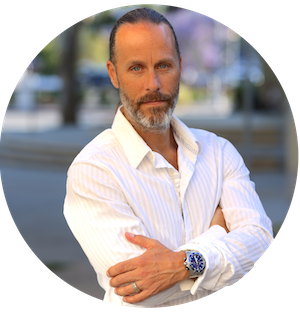
Kevin Anthony is a Certified Sexologist, Tantra Counselor, NLP Practitioner and a Sex, Love & Relationship coach. For over 10 years he has worked with men, women, and couples to have the relationships of their dreams, and the best sex of their lives! He is also the host of “The Love Lab Podcast”, creator of the popular YouTube channel Kevin Anthony Coaching, and creator of the popular online course series “Power and Mastery” as well as other online courses for both men and women.