Last Updated on November 18, 2024
What You’ll Learn In Episode 286:
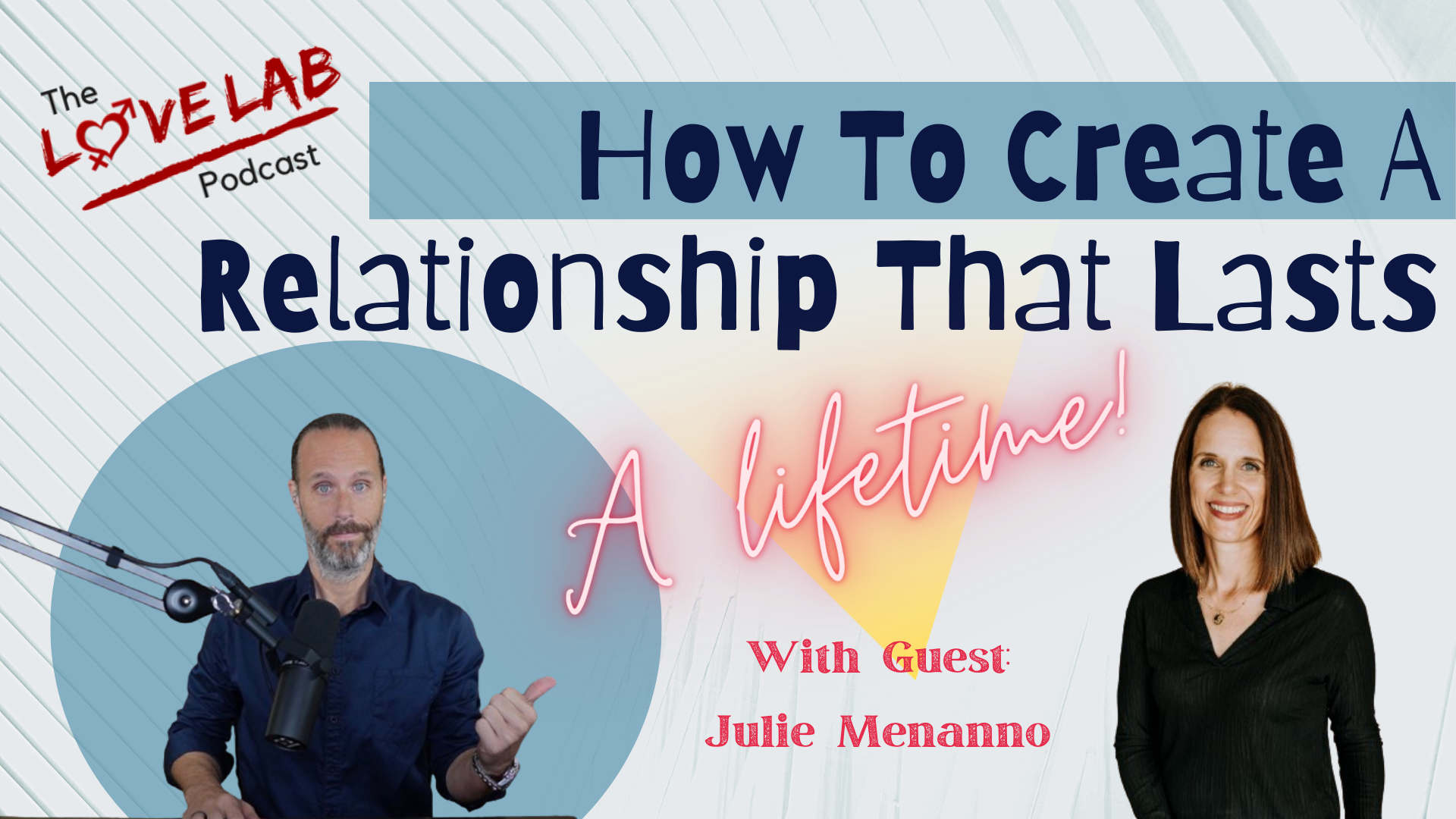
Do you feel anxious in your relationship? Do you sometimes avoid the difficult situations that inevitably arise in relationships? Would you rather feel secure and know how to avoid negative cycles and easily navigate difficult situations? In this episode, Kevin Anthony talks with licensed marriage and family therapist Julie Menanno about Emotionally Focused Therapy for Couples and attachment styles. They cover what attachment styles are, how they show up in your relationships, what is the negative cycle and how to avoid it, and how you can meet each other’s attachment needs. This is a deep dive into EFT and attachment styles!
Links From Today’s Show:
To Find Out More About Julie Menanno and her Book, click the links below:
Secure Love Book:
(US Version) https://www.simonandschuster.com/books/Secure-Love/Julie-Menanno/9781668012864
Instagram:
https://www.instagram.com/thesecurerelationship/
Website:
https://www.thesecurerelationship.com/
🔥 POWER & MASTERY 3.0 IS HERE!
The most complete men’s Sexual Mastery Course is now even better. To find out more go to https://www.powerandmastery.com
❤️ FREE EXCLUSIVE CONTENT
The Passion Vault → https://www.kevinanthonycoaching.com/vault
💪 MEN’S SEXUALITY & MASCULINITY COACHING WITH KEVIN ANTHONY
If you are ready to make big changes and finally become the man you have always wanted to be, then Unleash Your Inner Warrior Program is for you → https://www.kevinanthonycoaching.com/go/warrior
👉🏼 COUPLES COACHING WITH KEVIN ANTHONY
https://www.kevinanthonycoaching.com/sex-coaching-couples/
👉🏼 OUR HAND-PICKED PRODUCTS FOR YOU
We have hand-selected some great products to help support your Health, Sex Life, and Relationship! Purchasing products from us and/or our affiliates helps support the work that we do and ensures we can continue to help as many people and couples as possible! → https://www.kevinanthonycoaching.com/products/
Kevin Anthony 0:05
Welcome to the Love Lab podcast, a safe and fun place to get real and learn about sex. Whether you’re a man or woman, single or couple, this is the show for you. I am your host, Kevin Anthony. And I am here to guide you to go from good to amazing in the bedroom, and your relationships.
All right, welcome back to the Love Lab podcast. This is episode 286. And it is titled How to create a relationship that lasts a lifetime. So we’re really going to be talking about relationships today. And we’re going to be talking about attachment styles specifically. And it’s a really deep conversation. And I know I have done one show a long time ago on Attachment styles. While it was a good show, having read the book that my guest today has written, I think this is probably the best description of not only what attachment styles are, but how they get formed, what sorts of behaviors they lead us to, and how they show up in our relationship. And so I’m really excited to have this conversation today because I’ve got some questions.
But before we dive in, a short word from my sponsor, power and mastery 3.0 is here. The men’s sexual Mastery program you have heard about on the show for a long time is now even better. I have personally reviewed every module lesson video, audio, and PDF to see if there’s anything new that needed to be added. As a result, I have added 10 New videos one new audio, eight new PDFs, and dozens of links to handpick products to help support your journey to mastery. In addition, there’s also a brand new user interface that makes it easier to navigate the course and find your course materials. So if you’re ready to become the sexual Master, you have always wanted to be then go now to powerandmastery.com That is powerandmastery.com.
Okay, my guest today is Julie Menanno, MA, LMFT, LCPC. I don’t normally read all of those. But it was just impressive. So I wanted to. She is a licensed marriage and family therapist specializing in Emotionally Focused Therapy for couples. She also provides insight and advice for couples @thesecurerelationship on Instagram. With over 1 million followers. She founded and runs the Bozeman Therapy and Counseling Clinic and the secure relationship coaching. She lives in Bozeman, Montana with her husband and six children with six children. I don’t know how you have time to do any of this work, but you’re doing it and it’s great. First of all, let me welcome you to the show.
Julie Menanno 2:47
Thank you, thank you. And they are ages 22 down to 12. So they’re kind of at that age where, you know, you do a good job when they’re little, and things kind of get smoother as they get older. Right?
Kevin Anthony 3:01
So some don’t really need much help and some that still need a fair amount.
Julie Menanno 3:05
Lots of emotional help through the teens.
Kevin Anthony 3:14
So today we’re going to be talking about attachment theory. Now a lot of people have heard about attachment theory. I myself have heard about it, I’ve read a bit about it. I had somebody on the show to talk about it a long, long time ago. However, I have not personally been exposed to attachment theory at the level of depth that I really got out of reading your book. And so what I’m hoping that we can get across in this show for people is a deeper level of what attachment theory is, what the styles are, what like how they factor into our relationships, what the negative cycle is, like, it’s I really want to do like a deep dive. Now obviously, it’s only an hour show, there’s no way that we could cover everything that’s in this book. And we don’t want to anyway, because we want people to go out and actually read the book. However, I’m hoping that we can get a little deeper into all of that stuff. And so what I want to start with is could you explain to the audience, what attachment theory is like, what is the theory of attachment styles?
Julie Menanno 4:22
Sure, so the theory is that we all have this biological drive, just like we have the drive to eat just like we have the drive to reproduce, to stay safe with, you know, quote, unquote, our tribe, right? And that’s our, our close people. You know, we primitive humans needed bands of groups of each other to, you know, create shelter, get food, take care of their young and so, without that drive to form these groups and stay safe within the group, that probably wouldn’t happen. So our bodies have what we call this attachment, behavioral system. And just like you’re supposed to feel uncomfortable when you’re hungry, that will motivate you to go eat and stay alive. We’re also wired to feel uncomfortable when our primary attachment relationships are feeling threatened, whether that’s a real threat or partner might leave us or my partner’s lying to me or not emotionally supporting me, or a perceived threat, meaning you grew up feeling kind of been emotionally supported.
And so now, you just kind of assume no one can really be there for you. The point is, is that we’re wired to feel uncomfortable when these attachments are disrupted. And we’re wired to feel safe and comfortable when our relationships are going well, when we feel like we have each other’s backs when we feel emotionally supported, when we believe that our partner cares about our needs, and isn’t going to up and abandon us. And so when things are going well, we you know, the big picture of the relationship, that means that we have a secure attachment, we really, truly believe that our partner is going to be there for us to respond to our emotional needs to show up for us when we really need them. And if that somehow gets disrupted, then what happens is you’re walking around the relationship not really knowing is my partner really going to be there for me, not really feeling seen, validated, or understood consistently. And that’s going to lead to a state of insecure attachment. So once we have this insecure attachment, now we have these subcategories, which are how do you act on that insecure attachment.
Kevin Anthony 6:46
We’re gonna get to what the actual attachment styles are. But I got another question before we get there. I’m curious. So that’s what attachment theory is. And now my next question is I because I’ve read the book, I love it when I get an opportunity to actually read the book before I interview somebody because I have a much better understanding of what you’re saying, and when So my next question is, the attachment styles themselves, they get kind of programmed into us at an early age due to different experiences we have, right? So I’m wondering, you don’t have to go through each one and how you put like, maybe just give one or two examples of how an attachment style can be ingrained in us. Like what type of experience might create a certain type of attachment style.
Julie Menanno 7:36
Sure, so someone who has an environment which I would call kind of emotionally impoverished, right? There’s not a lot of emotional aliveness, if a child, maybe early on shows up with with fear or sadness or anger, the messages that they get from their environment, typically, their parents are going to be there’s no room for your anger, we don’t get angry in this house. Boys Don’t Cry, ignored or not really responded to parents go into, let’s just try to fix the situation. So you don’t have to feel bad. Any message that kind of helps them not really get in touch with their own emotions, learn how to put words to those emotions, and learn how to manage and talk about those emotions and help themselves in those emotions. The person who has that environment, and you know, some people in that kind of an environment are what are called avoidant attachment.
And what they’re going to do is they’re going to just really learn early on, not consciously, but just shove those emotions away, just bury them, put them away, don’t bother having them, there’s no point you’re gonna get rejected or shamed or ignored if you have them. And so they just learned to kind of disavow. And they spend a lot of time going into their head, their coping mechanism for pain, full emotions that they really can’t even see, or they can’t even consciously access or know that they’re there is to fix problems, think about things things through they live in their heads. And what happens is, is their bodies are holding those emotions. And if you do physiological tests on them, you’re gonna see a lot of physical signs of high emotion, heart rate, blood pressure. And what happens is, is then they later go into a relationship. Well, I’ll get to that in a minute.
Let me just tell you, what happens in this other type of environment where maybe you have parents who are really emotional, but they’re overwhelmed with their emotions and when you show up with your emotions, they either get escalated and give you messages. You know, you shouldn’t have these emotions. We’re not really here to help you with your bad for having them. You’re you’re being irrational for having your emotions. And maybe there are times when they get responded to Who in a good way for certain emotions or at certain times, so they kind of have this idea of what availability might look like, but they don’t have it consistently enough to trust that it’s real. And so what happens is, is this child is going to develop a sense of anxiety around relationships, where they’re still kind of trying, right, they still have some hope. They’re still fighting to be seen fighting to be understood, fighting for connection. But they have learned that in order to get responded to they have to get big, they have to get loud, they have to protest, or even if they don’t get responded to with those things, they’re still going to try, they’re still going to have this fight. And then and so that’s the anxious attachment. And then we have, to go ahead.
Kevin Anthony 10:45
Yeah. So that is going to be my next question, which is, you know, let’s talk about what each one of the attachment styles are. But I kind of wanted to just reiterate that point of, you know, when we’re talking about attachment styles, I just wanted people to understand and hear from you that these are things that develop very early on in our lives, that we are not conscious of, they’re often coping mechanisms, the way we received love, right, from our parents had us go okay, well, in order to deal with that, whether it was not enough, or whatever it was, I’m going to act this way. And so it becomes this ingrained pattern. And that’s something that I really wanted people to understand.
So like, if you’re listening in this next section, when we discuss what the different attachment styles are, and you hear one and you’re like, that sounds like me, but I don’t want to be that right. It’s a pattern that’s ingrained that you didn’t consciously take on. But there are, which we will talk about later, ways that you can learn to shift that right there. Yeah. So I just wanted people to understand you didn’t consciously necessarily, you know, not at all this. And it’s also it’s not one of those things like it’s genetic. It’s just you it’s the way your DNA is wired. I wanted people to understand that difference. Definitely. So all right, so now let’s talk about what the actual attachment styles are. And if you’re listening to this show, listen carefully and see does this sound like something that I do, right?
Julie Menanno 12:18
Okay, so let’s start with anxious the anxious attachment style is going to be the person who has an anxious attachment style, they are going to go about getting their emotional and attachment needs met in the relationship through kind of getting bigger behaviors, close-the-distance behaviors, fight for what you need behaviors, you’re going to you know, they’re they’re sensitive to not feeling emotionally validated, which is a form of emotional abandonment. They’re sensitive to fearing physical abandonment, my partner is going to just up and break up with me and leave. Honestly, I think it’s probably more common to fear emotional abandonment, which can be kind of tricky because a lot of people hear oh, you have a fear of abandonment. And a lot of times people think that’s just physical abandonment. But this emotional abandonment component is huge, with anxious attachment. It’s when I show up with feelings, I’m gonna get these messages that those feelings aren’t okay, those feelings aren’t welcome here. Those feelings are going to be too much for me, and I won’t know how to handle you, You’re too much.
And so what happens is, is they’re walking around with this pain, this core fear of abandonment. And they’re reacting to that, again, with these behaviors that are meant to kind of control their external environment, control their partner into being and doing a certain being a certain way doing certain things. So I don’t have to be scared all the time. So if I’m not scared all the time, then my nervous system can settle. And I don’t you know, I’m going to feel better. Right? And so they do that and in a number of ways, it protesting using words like always, never, you know, very other focused, here’s what you’re getting wrong. If I can just convince you of what you’re getting wrong. You’ll see how much I’m hurting, you’ll see that you’re, you’re the bad guy here and you’ll, you’ll change and you’ll do it right. filtering for the negative I call that when you kind of are only really seeing what your partner is getting wrong. Because your brain has been wired to look for what’s wrong because you’re looking for threats. Again, it’s not conscious, you’re just looking for ways to stay safe.
And one of the ways you can stay safe is by being hyper-vigilant to threats. And so what happens is, is the messages to the partner are consistently you’re failing me, you’re failing, you’re failing me. And now we kind of flip over to that avoidant attachment. These are the folks that have relationship fears and anxiety, but they’re not aware of them. They’re very good at blocking them out. Right If they’re very good at being reasonable and rational, but paradoxically, they’re responding to the same relationship anxiety, their core fear is a failure of being a failure, or sometimes also being kind of emotionally intruded upon, which will leave them feeling weak and viewing themselves as weak, which kind of ties into that whole failure fear thing. So their fear of letting their partner down is their fear of letting themselves down. So when their anxiety starts to well up, they’re able to keep this tight lid on it. So what do they do? Well, they’re their go-to, and, you know, as opposed to the anxious partner who’s going to his fix, let’s not rock the boat, let’s not try it, let’s try to just not make it worse here. So they might disengage from conflict, they might just shut out the partner, and they might be good at going and distracting with other things. They might get defensive in a fight or argument, they might try to, well, if I can just use these words to convince you not to feel the way you do, then you won’t feel upset. And we’ll both be okay over here. So they’re they’re sort of like on playing defense, while the anxious partners are playing offense. But they’re both playing against each other.
Kevin Anthony 16:18
Yeah, and we’ll get into this a little bit later on. But one of the things that’s going through my mind, as I’m listening, you listening to you describe these things is like, how if those two get together in a relationship, but I don’t want to jump ahead, but that’s where my mind is going is like, Oh, my God, could you imagine those two in a relationship?
Julie Menanno 16:34
Which is the most common, you know, type of insecure partnership?
Kevin Anthony 16:40
Yeah, I want to save that though, for a little bit further down, because there are other attachment styles, correct?
Julie Menanno 16:47
Well, there are two other the the secure attachment style is the physical standard. And that’s where we want to be, we want to be able, you know, if I said it in a really short, concise way, it would be to walk around relationships, not feeling no threat or fear. Again, we’re designed to feel some level of threat or fear when our relationships feel threatened. I mean, these are the most important, most valuable things to most humans. And it only stands to reason that there will be some threat if there’s been a rupture or some kind of fear. But people with a secure attachment, they’re able to kind of approach those problems with this balance of their heart and their head, they’re able to access their feelings and talk about their deeper experiences around these conflicts. Without getting emotionally overwhelmed, they’re able to, you know, know how to speak in a way that’s emotionally safe for both partners, they are able to approach distress and conflict in a way that still kind of maintains the integrity of their attachment bond, right?
And there is absolutely a way to do this. It’s just a matter of, you know, having the skill set. And many people grow up in environments where that’s how they learn to be. I mean, I think it’s probably in this day and age more common than not that people have, you know, insecure attachments, but the people who grew up and have a secure attachment they learned from, you know, subconsciously, from early on, hey, we can talk about conflict in a way that doesn’t have to tear each other apart, we can work through problems, we’re not going to bring a lot of shame into the relationship and I want to connect with you, you’re valuable to me sending a lot of messages that you know, you’re precious to me, and all of those lead to security. And then we have you know, the kind of the opposite extreme of that which is a disorganized attachment. And typically with a disorganized attachment, there’s not a lot of predictability to the way the person is going to respond to relationship stress.
So when you have someone with a secure or an anxious or avoidant attachment, they’re going to respond to relationship stress. Pretty predictably, the avoidant is going to shut down you know, stereotypical avoidance going to shut down the stereo. A typical anxious partner is going to get anxious try to close the distance, look at the phone, obsessively protest protests try to resolve the problem right then and there. And then the stereotypical secured partner is going to approach it, like I said, in this kind of healthy way. But someone with a disorganized attachment, they’re all over the place. There’s usually a lot of trauma, a lot of chaotic, you know, kind of environment that they grew up in, where they didn’t really ever kind of subconsciously learn to take on a strategy that consistently worked for them. They’re sort of always kind of trying to this strategy, this strategy. They tend to be more fearful. They are, I wouldn’t say tend to they are more fearful in relationships. They have lower levels of trust and other people and themselves, and that leads to more, you know, dysregulation in their bodies and that’s going to lead to more Stream behaviors? And again, often really unpredictable behaviors.
Kevin Anthony 20:05
Yeah, and I’m curious, this is a total aside, but I’m curious, like, in your practice, how many people do you really see in the disorganized style?
Julie Menanno 20:16
I would say it’s probably consistent with the research, which is maybe like, 10%. It’s not, I wouldn’t call it uncommon, but I wouldn’t call it you know, common either. And I think maybe there are more people who are disorganized. It’s increasing, for sure.
Kevin Anthony 20:34
Oh, that’s interesting because I would have assumed it’s a small percentage.
Julie Menanno 20:42
Well, that’s 8 to 10% of those with an insecure attachment, not the general population.
Kevin Anthony 20:50
Okay, that actually does make a difference. But I’m somewhat surprised, well, I guess I shouldn’t be surprised to hear you say that it’s increasing.
Julie Menanno 21:02
I mean, I think that you know, just social media usage and how that has really contributed to more emotional problems and mental illness. And then if you put that in a home environment, that’s not really equipped to deal with that, that can really create another layer of problems, you know, in the family and in relationships and, and attachment styles are relationship related. So if you all of a sudden have a child that’s, you know, not doing what you want them to do, or is struggling with something, and you don’t know how to handle it, that can really put a strain on that relationship and lead to, you know, lead it down a really, you know, unhealthy Road, even more so than maybe, you know, when people I think were a little bit more stable a couple decades ago, and then we have just trauma, increasing substance abuse. I mean, there are a lot of really good reasons that families are struggling more now than they were in the past. And that struggle is only going to create more problems and higher levels of problems. And it’s not just social media. I mean, it’s a lot of different layers.
Kevin Anthony 22:06
Yeah, you know, that could be a whole show in and of itself, because it’s a fascinating topic to me. And I actually would love to dive more into the reasons for that. But I don’t want to lose focus, because I have a whole bunch of other questions I want to ask you about. So my next question was really about, you know, how these affect relationships. And I think maybe the best way to handle that is by talking about where you started to go earlier. So I made a sort of a funny comment about can you imagine the anxious and the avoidant getting together in a relationship? And you said, Well, that’s the most common configuration. So maybe a great way to talk about how these things affect our relationships is to talk about that very common scenario.
Julie Menanno 22:48
Sure, so you know, the two most common types of relationship pairings are partners who are secure, secure, right? And then partners who have an anxious and avoidant dynamic. And there’s some kind of complicated way of explaining that that I’ll just touch on briefly, but it’s really about emotional balance, right? So if you have two people who have secure attachments they have balanced within. And that balance within creates relationship, emotional balance, both partners have access to their feelings and have access to being regulated and being able to think through problems without being emotionally overwhelmed. When you have someone who is kind of far on the extreme of shutting their emotions down, and you have someone who’s kind of far on the extreme of getting really big and expressive with their emotions, it only makes sense that those two actually do create this kind of second best balance, it’s not ideal by any stretch of the imagination.
But if you have two partners who are very anxious, that’s just going to it’s too much energy to sustain. And if you have too much, two partners who are just flat and emotionally disengaged, then they’re just going to drift apart. So really, if you look at it that way, it makes sense. There are a few other reasons that people that anxious and avoidant partners come together. And I’ve touched on that in the book, but regardless as to why they do come together, and even in situations where you have kind of one partner who might sort of lead and anxious and the other one might be kind of extremely anxious, when they come together, they also could create their own balancing act, meaning that partner who is anxious, their energy is so big, that it pushes that other kind of mildly anxious partner into avoidance or vice versa. So not only can it start off that way, but it also can morph into that because attachment cells are always a response to a relationship.
So most people are going to respond to their relationships in childhood and develop an attachment style and pretty much carry that throughout their relationships throughout life. But there are going to be people who get into adult relationships and something going on and then that adult relationship makes it may have made more sense for their nervous system to start adapting in a different way. And so what happens is, let’s just go back to start here with the avoidant and the anxious partner, the anxious partner is now behaving in all these anxious ways, getting big protesting, you know, trying to close the distance, doing their best to maintain the closeness in the relationship and resolve problems. They’re usually the ones that are bringing up the problems. So that big energy now pushes this other person into, I gotta lower the temperature here. I gotta disengage, I gotta stop the fight. I gotta just say what they want to hear. I gotta defend myself and get them to see it a different way. Now, is the avoidant partner reacting to the anxious partner? Yes, but it goes the other way to the anxious partner is over here reacting to the avoidant partner going, if I don’t fight for closeness, who’s going to, if I don’t fight to get these problems resolved, nobody is, if I don’t get big and loud and let you see how much I’m hurting, I’m never going to get my emotional needs met. So they’re just really playing off of each other.
And it might not show up in the relationship until the first fight sometimes, you know, we don’t see these attachment styles show up until there’s a conflict and all of a sudden, like, bam, we don’t know how to manage this conflict. And so the anxious partner goes into their rigid, anxious role. And the avoidant partner goes into their rigid avoidant Ra. And then all of a sudden, they keep having these conflicts and interactions, usually in a very repetitive pattern. And a lot of times over issues that just aren’t getting resolved. So they keep popping up. And throughout these repeated interactions, they’re just reinforcing each of their positions. And it gets more and more rigid over time, unless there’s some sort of intervention where someone can come in and help them you know, start communicating in a secure way that leads to secure attachment.
Kevin Anthony 26:59
Yeah, so that was an excellent explanation. So thank you for that. And you didn’t mention the word. But we were we were bordering on talking about the negative cycle. And that’s something that I really want to talk about. However, I we’re about halfway through the show. So I want to take a short break for the second sponsor. And then I really want to come back and talk about the negative cycle. What is it? How can we avoid it? How can we get out of it once we get into it? Because this is something that a lot of people experience?
Julie Menanno 27:33
Every couple, yes.
Kevin Anthony 27:36
Alright, a short break from my sponsor, are you a couple are your relationship and sex life where you want them to be? Are there changes you would like to make but just don’t know how maybe you think there’s nothing that can be done. If you’re not 100% happy with where your relationship or sex life is? Then get help today and change your life. Go to KevinandCéline.com/sex-coaching-couples, don’t worry about the long link, it’s in the description, schedule a strategy call with me today. So we can map out a strategy to get you where you want to be. So go to KevinandCéline.com/sex-coaching-couples and book your strategy call today, we can work on a lot of things through that program. So go check that out. Okay, I want to dive into the negative cycle. First, let’s start by explaining what the negative cycle is. And then we’ll go into so you know, what is it? How does it manifest? How does it show up? Let’s just start there.
Julie Menanno 28:34
Okay, so the negative cycle is it’s going to, to start when the partners come together, and they’re either trying to resolve some sort of problem. While they are trying to resolve a problem in the relationship. They have a conflict, they see things differently. They want things from each other that they might not agree about. It could be sex, it could be finances, it could be parenting, it could be where are we going to live? It could be in-laws, or it could just be how much time are we spending together and how much emotional connection we’re having. And what happens is, is that they don’t they haven’t learned neither partner has yet learned how to talk about conflict and to navigate conflict in a way. That is what I call in the book attachment friendly, and emotionally safe. Right?
So what happens is, is instead of being able to kind of, you know, come come at each other and say, hey, you know, here’s what’s going on. Here’s how I’m impacted. Here’s the way I see things, and here’s what I’m needing, and I respect where you’re coming from. And I want to hear about your perspective, too. They come at each other like we’re against each other, right? And they might not even start that way. But all of a sudden, let’s say they’re talking about a topic and things are going smoothly. And then someone says well, you shouldn’t see it that way. Right. Bam, there it is. What is the other partner on the receiving end of that here? My needs don’t matter. I’m not being understood. I’m not being validated. Uh, you know, and that causes a nervous system reaction because that says I’m under threat, right? It’s not just about my need for this situation to go in the way that I would like. But it’s all all of a sudden about attachment security because to feel safe and close with our partners, we really do need to know will be understood, and our perspectives will be validated, even if we don’t agree, right? That my needs matter to you. And when that goes offline, for whatever reason, that partner is now going to have a nervous system reaction.
Kevin Anthony 30:33
Sorry, I didn’t mean to interrupt you, but what’s happening here is something happens in the communication cycle when they’re trying to solve a problem that triggers that underlying attachment style. Right, that negative cycle starts?
Julie Menanno 30:47
Yeah, I’ll just find two that it triggers a relationship threatened fear, and other vulnerable feelings. And then that shows up as a style. It’s what you do with it an anxious partner that feels invalidated or gets that kind of nervous system reaction. They might react by getting loud and protesting, don’t you tell me that I’m not seeing it the wrong way. Or here you go, again, your way is the right way. They’re gonna that’s their way, you know, they’re not trying to push their partner away. They’re not trying to be mean, they’re, they’re trying to say, I’m hurting, I don’t feel seen by you. It hurts really bad. I don’t know how to get through to you. I never learned how to get through, or I’m not really able to talk vulnerably either. So if I can just protest, get big enough, and get you to hear me, you will say that, you’ll say, Oh, I hear you, I get what you’re saying. And your needs do matter to me. Now, someone with an avoidant attachment, when they get a relationship trigger, they get a message maybe like, the partner isn’t seeing the good they’re bringing to the table. That’s a really tender message for someone with an avoidant attachment.
They might react with just not saying anything, they might, you know, say something like, Well, fine, we’ll do it however you want, you know, just to kind of turn the temperature down, they might get defensive and say, Here we go. Again, I’m always the bad guy. So what happens is, the bigger picture is there just bouncing these unmet attachment needs and emotional lack of safety and triggers back and forth. We’re not talking about the topic anymore. Now we’re talking about our relationship, our attachment security, our emotional safety with each other, our closeness with each other, our emotional trust with each other. And what you’re going to see then, right is now that conversation is driving the car, and they might start bouncing around from hundreds of different topics at that point. Well, this is just like when we were with your mom the other day. Well, your mom, what about my mom? What about the fact that you don’t even talk to my mom? Well, you know, what, if you would have been on time the other day at the birthday party, then I wouldn’t, I would have been able to talk to your mom, you know, and so it just goes on and on. So what’s happening is what they’re really talking about is the emotional attachment material of their relationship. They’re not talking about whatever the topic was anymore. And until that’s resolved, that underneath stuff, nothing else is gonna ever really get resolved.
Kevin Anthony 33:20
And that’s a huge point that you bring up because I think too many people when they’re in that situation, think it’s about the actual thing that the person is bringing up. Right? I’m saying it’s about because you were late, and they think it’s about because you know, you didn’t do this or you didn’t do that when in reality, it’s not about those things. And if you can, if you can dig deeper and get underneath that and get to that core issue, then you can actually make some progress in solving the problem. Absolutely,
Julie Menanno 33:48
yeah, we don’t ever want to ignore the problem. It’s, you know, these things are real problems. The goal is, is we really do need to resolve these problems. But we do need to do that and maintain our relationship, bond, and closeness. So we really can’t get to those, like you said, we can’t get to those problems unless we can communicate them about them in a way that isn’t going to take us offline.
Kevin Anthony 34:12
Yeah, well, we need to communicate them in a way that’s not going to take us offline. And we need to know what the actual problem is. Because if we’re just trying to solve that you all talk to my mom or you showed up late. That’s not the actual problem. Exactly. Yeah. So this leads me of course, to the next question, which is, how can people avoid getting into these negative cycles?
Julie Menanno 34:33
Well, in the book, I talk about this. And so what I start off with is learning to interrupt them. Because if you’re working toward building an environment in your relationship that is going to prevent negative cycles. You really while you’re working toward that you need to have this backup plan, which is damage control, which is when we notice that we’re getting into it, how can we stop and not go down that rabbit hole? Because every time you go forward, you’re hurting each Other and so we want to just at least get that stopped, right? And so what I try to teach couples is, look, let’s look at this negative cycle as the real enemy here instead of YouTube being enemies of each other. And so sometimes, sometimes it can be really co-regulating to hear your partner say, Look, this is our negative cycle. This is what’s trying to hurt us right now, let’s not let this win.
What can we do differently here, it could look like, listen, we’re getting escalated, we’re going down that road, we know it won’t work out, we need let’s take a break for five minutes, it could look like, Hey, I’m right here. I’m right here, one partner having the ability to kind of sue the other one, put their hand on their shoulder or whatever, hug them and say, Let’s not do this right now, I’m right here, we’re a team. It could be you know, there’s so many there, there are so many different ways to interrupt it once it’s happening. But that is a very valuable skill to have, then, if we can’t interrupt it, we have to know how to repair it. And that’s fine, too, because a lot of times the repair conversation really does help you get to the deeper stuff that was happening in that negative cycle to begin with. And I again, I go into this in the book about how to create these repairs. And then we need to create an attachment-friendly environment, which is going to decrease them to begin with, right, we’re learning how to be in their relationship and be with our own selves, and show up in the relationship and with our best selves and in an emotionally supportive way, in a teamwork kind of way. And that’s, you know, just this preventative environment.
Kevin Anthony 36:43
So I think it’s always best, of course, not to get into one of these negative cycles. So if you can prevent it from happening to begin with, that’s obviously the best-case scenario. But what happens if you are deep into one of these negative cycles? How do you get out of it?
Julie Menanno 37:00
Well, that’s where the interrupting skill comes in. So, you know, we again, there are a few different strategies, one partner can kind of initiate some co-regulation just get their nervous system down into kind of this green light place, where they’re able to get out of that reactive dysregulated zone, and they’re able to just help the other partners dysregulated energy by being a calm presence, validating their feelings, holding them using really soft, simple words. These are words that the nervous system, your nervous system doesn’t want to hear a lot of information and logic when they’re in the red-light brain. So that’s co-regulating, you know, each partner really needs it to be able to self-regulate so that they can step back and go, Wait a minute, this is it, right? I’m noticing I’m going into those behaviors, what’s happening in my body right now?
How can I kind of try to create some empathy for my partner’s experience, I call this putting one foot in their experience and keeping one foot in mind kind of being able to see the bigger picture more clearly. That’s a way and then just really putting words to it. Like I said, Let’s not do this right now. This is that neck, I mean, just naming it can be incredibly powerful. Because it makes sense of what’s going on instead of this kind of vague idea that people have when they’re fighting that they really don’t know what’s happening. It’s just to kind of organize it in that moment and say, Hey, this is the negative cycle. This is what threat is threatening to tear us apart. We might not know or be able to do anything differently, right at this moment. But let’s just take a break from it. Yeah, and the book goes into other, you know, there are a number of different strategies to interrupt it.
Kevin Anthony 38:49
Yeah, you there’s so so much more in the book than what we’re covering now. I mean, obviously, there’s, I forget what it is 300 and whatever, odd pages of material in there with a lot more examples of you know, how to handle these things, but I just wanted people to get a general idea of what they could do if they find that they’re in a negative cycle like that. Because, you know, that’s, that’s one of the things that you see so often with, you know, couples, when they’re having challenges in their relationship, they end up in these negative cycles. And if they don’t figure out ways to interrupt them and solve the underlying problem, they just spiral out of control.
Julie Menanno 39:27
Yeah, let me add one thing to that, you know, this is more of an advanced skill. You know, when I’m working with a couple, I’m spending, you know, 234 weeks, just really helping them see the negative cycle, like, here’s how, you know you’re in it, here’s what you’re going to be doing, here’s what you’re going to be doing. And so once they have that awareness, then we work toward just saying, Okay, let’s not do this right now. But then we start working into these more advanced skills, which is really talking more vulnerably like, you know, what happens is is that when you’re late And I read this text that, you know, you’re, you’re going to be late again it, you know, I feel my body just sort of deflates. And I start wondering if you care, and I start to feel kind of alone and, and left in the dark. And that really impacts me. And here’s what I’m needing from you, that’s a good way to interrupt, it is just a start, instead of speaking, we were so used to just speaking from this angry, these angry places, that that’s all we see of the experience. But there’s always just so much more if you’re in a negative cycle, there’s so much more happening below the surface that you’re not talking about. And so like I said, that more advanced skill is to really be able to get down into that vulnerability.
Kevin Anthony 40:41
Yeah, and I’m curious, too, because we haven’t talked about it yet today. But the idea of scripts and how you could potentially use a script, to intervene in this situation, or to maybe de-escalate?
Julie Menanno 41:00
Yeah, so you know, I get kind of a contradictory, contradicting feedback on scripts, because some people say, I don’t want to hear scripts, I don’t want to use these words, you know, it doesn’t sound natural to me. But on the other side, I get people who are like, give me more scripts, I love the scripts, I love the script. So when I was a young parent, and I just had no idea what I was doing, I would, I was reading all these parenting books, and I was learning all these concepts, but I just didn’t know how to put any of it into words. And I just really wanted someone to come along and give me the words for these different moments. And so that’s really where I got this idea is like, you know, what I do with the people I work with in my practice is I do give them the words at the beginning of this work, I do help them put it into words, put their heartfelt experiences.
And so I was, you know, kind of trying to just give people another tool to put concepts to use practically, with the idea being used, the elements of this way that I’ve worded this with validation was speaking for himself, with getting vulnerable with setting a gentle boundary, use these elements and make them your own, you don’t have to say it in the exact word. And I honestly think that, that it’s just been enormously helpful for people to have that, you know, really specific tool to kind of just give them more guidance, whether you use them in my exact words or not, doesn’t really matter. I mean, we all have different ways of speaking. But if you’re at least able to take an element, so when I have put these scripts into chapter 13 of the book, and I give just a number of different examples, as you know, and say, Here’s, you know, a couple of ways to say this. I always explain why, here’s why this phrase, I’ve chosen to phrase this in this way, here’s why it’s a safe way to say this. So people don’t want to say the exact words, at least they can understand you know why I’ve structured it the way that I have.
Kevin Anthony 42:59
Yeah, I personally think the scripts are a great idea. Because you know, one of the things that you hear at least from men a lot is, I don’t know what to say, I don’t know what she wants me to say, right you all the time. So this is a way that you can de-escalate, hopefully, get out of a negative cycle, without sitting there going. I don’t know what I’m supposed to say here, right?
Julie Menanno 43:23
Which is so hard. Yeah, it’s just so hard to understand these concepts, and then not know how to put it into play. And
Kevin Anthony 43:30
then I think, you know, as you said, the scripts, I see them more as a training tool, right? So if you’re not sure how to react in these situations, use the scripts. And over time, you’ll start to understand the concepts behind the scripts. And then you won’t need the scripts anymore, at least hopefully, I would say that would be the goal.
Julie Menanno 43:51
And you also will start to recognize that these scripts are probably helping you be more successful than whatever else you were doing, you know, that you needed the script for to begin with. So as people start to become more successful they started buying anymore.
Kevin Anthony 44:06
Okay, I got a bunch more questions. But I’ve got one more big one that’s probably going to take up the rest of the time that we have here. Okay, let me and that is I don’t know, this is a big question. So you know, you don’t have to give me every detail of it. But basically, it is. Once we’ve identified that we have a certain attachment style, and our partner has a certain attachment style. How can we go about meeting each other’s attachment needs so that we don’t end up in these cycles?
Julie Menanno 44:36
Well, these are the kinds of skills of emotional support. I have many of them out all of them outlined in the chapter of the book about creating this attachment-friendly environment. And so virtually, you know, some people with an avoidant attachment are more sensitive to certain triggers over the other and over others, and same with anxious attachment, people can be more sensitive. But at the bottom of it all, we all have the same basic attachment needs. We all need to feel emotionally validated, we all need to feel understood, we all need to feel appreciated and respected. And that’s not to say that we don’t need to give those things to ourselves.
But to feel close to another person, we really do need to have those needs met by them. I mean, think about it in reverse, if you were, you know, had a friend and you never felt heard, you never felt understood, you didn’t feel respected, you didn’t feel like they could really kind of get your feelings and, you know, understand where how you’re feeling. You couldn’t, you just you couldn’t feel close to that person, right? And so we have these needs that are requirements to feel safe and close with another person. And when it comes to our partnership, there are many, many different ways to communicate with each other in a way that can say things that they might not want to hear, but can at least express the message, I get you, I understand you, I’m hearing you, I understand that you’re feeling this way, it matters to me, I care about your feelings. You know, showing basic respect, just showing basic manners.
And so really what we’re doing I mean, it’s really, I’m not saying it’s as simple, simple to implement, because sometimes there can be, you know, blocks that different couples have. But it really is, at the end of the day, a pretty simple theory. And the theory is, is that I need these things from you to feel safe. And if we’re not able to create this environment, where both of us are feeling this overall kind of felt sense of safety and closeness, and we’re not able to repair these ruptures as we go. It’s just going to make things a lot harder. And so you know, it’s not again, it’s probably more of a problem than actually learning how to do it is getting regulated enough to do it in moments when you’re really triggered.
Kevin Anthony 47:03
That is the trick, isn’t it? You know, and I would say also, you know, for people listening, it’s gonna take practice, you’ve probably spent, you know, if you’re, if you’re 40 years old, you spent 40 years of your life in a certain attachment style, you’re not going to break that pattern overnight, right? So, be gentle with yourself, you know, when you get off track, just course correct, and get back on track and just keep practicing over and over again, eventually, you can get there.
Julie Menanno 47:36
I wouldn’t be able to do this work if I didn’t believe that wholeheartedly. I mean, it just, you know, people who have the access to the right information, the willingness and ability to be vulnerable. Really, they can, you know, you can you can get there, it’s not, I don’t think it’s as hard and as complicated as people think, if you have access to the right help.
Kevin Anthony 48:04
Yeah, and, you know, I always like to leave people on a positive note. And I think the positive note here is no matter which attachment style has been your sort of modus operandi for your whole life, through work, you can fix it.
Julie Menanno 48:17
So absolutely. And I, you know, these styles exist on a spectrum, right? So some people are more extremely anxious attachment than others. And the journey is, is to go from, you know, take meet yourself where you are, you know, you’re there for good reason, it didn’t materialize out of thin air, try not to shame yourself, because shame is what got you into the problem to begin with, and just work towards secure and recognize that it really it truly is a journey. And more, you know, mildly anxious, detached, it’s going to feel so much better than extremely anxious attached, even, you know, we’re not, we’re not trying to jump from insecure to secure overnight, we’re just kind of having to look at it as like, Hey, this is a journey we’re gonna grow together. And through the growth process, there’s so much bonding. I mean, I look at my relationship. And I, I feel so grateful for the challenges that we had, because it really they really have brought us closer and allowed us the opportunity to get down into the deeper things that were fueling conflict that that sometimes you don’t get to if there’s no conflict to kind of trigger them.
Kevin Anthony 49:25
Yeah, sometimes that is true for sure. So obviously, we’ve been talking a lot about the book as we’ve been going through the attachment styles. You want to tell people a little bit about the book and where they can find it.
Julie Menanno 49:39
Sure, so it’s secure love. I started three and a half years ago, I started writing secure love, I poured my heart and soul into it. I thought it might take a month or two to write it when I started. That didn’t happen. So it just what it does is it starts with you know, explaining attachment theory. Again, you know, my way of describing attachment theory is this is the closest science has come to really explaining with Nuance how relationships work, I go into the attachment styles. From there, we go into these negative cycles, which is how these insecure attachments are practically showing up in relationships. It’s not vague, there are really specific ways that they’re showing up. There are really specific ways that you can do different things, right, so we’re going to next chapter is going to be build chapter about interrupting it.
Next, we’re going to do a full chapter about preventing them, and how to create that preventative environment. And then the next chapter is how to repair them. And then we have some deeper stuff that couples deeper injuries that couples may have experienced that just really shook up the trust really shook up the safety, you know, more than just snapping at each other. But we’re talking about affairs, you know, major situations where one partner really just did not show up for the other, you know, substance abuse, anything that is really contaminating the trust, and getting in the way of those partners, doing new things. And how you can go through healing conversations, you know, there’s, there are ways to heal those wounds. But a lot of times partners are talking about that healing process in ways that really make the wounds worse. And so once you kind of understand the concept of negative cycles, you can go into those wounds, and talk about them outside of negative cycles. That’s where the healing is. And then the end of the book is just other considerations, sex, substance abuse, and mental illness. And then we go into scripts, and then an appendix I have a lot of charts of, you know, hear these really common anxious behaviors and how they impact the relationship and avoidant. And for people who want more specificity.
Kevin Anthony 52:01
I have read the entire book, and I thought it was fantastic. I have a very logical thinking mind, it was very easy for me to step through it and just understand it, like I thought it was really well laid out. So if you’re interested in attachment styles, how they’re showing up in your life, negative cycles, how you can avoid them and get out of them, and how you can move from your insecure attachment styles to your secure attachment styles, I highly recommend getting the book, and I assume it’s available in all major places where books are sold.
Julie Menanno 52:29
It is available everywhere books are sold. It’s you know, there’s different countries, you can find it in almost every country, we’ve got multiple languages. It’s highly accessible pretty much globally,
Kevin Anthony 52:41
I noticed the copy you have behind you has a different cover.
Julie Menanno 52:46
This is the UK cover. UK, Australia, New Zealand, India.
Kevin Anthony 52:51
Got it. So in the US, they should see this cover then. Right. So it should be easy for them to recognize if they go look for it. Absolutely. Yep. And I assume you also worked with people as well, right? Is that something that, you know, people who are interested could reach out to you?
Julie Menanno 53:07
Absolutely. So you can go to my website, which is the secure relationship.com. I have a whole team of you know, they’re they’re all trained therapists, but we work as relationship communication coaches, globally, not necessarily doing therapy, but doing the coaching to get to the secure attachment. And, yeah, have a whole team there. They’re amazing. I mean, they’re we’re all trained with this type of work to do this attachment. based work with couples, it’s very structured, you know, I didn’t make this up. This is called Emotionally Focused Therapy. For couples. It’s a very structured way of working, if you have that logical mind, it’s not just sort of a free-for-all. It’s got a beginning and it’s got an end. And there’s a you know, there’s a lot of structure to it, which I think is great. And yeah, so if you want you know, personalized help. I think that’s the way to go.
Kevin Anthony 54:03
Yeah, the link for that will be in the description.
Julie Menanno 54:08
Let me say one more thing. My Instagram account at the secure relationship has all of this information. It’s free. It’s disjointed. It’s not organized. It’s not as logically laid out, but it’s all there. The book is, you know, obviously more thorough and more organized. But if you really just don’t want to buy the book, please go to the Instagram account. If you need help.
Kevin Anthony 54:31
Well,, if you’re not going to buy a book, or reach out and get help, at least get on Instagram chat. You’ll learn a lot you’ll learn a lot. This is what I say to people all the time about my social media as well. Like Like if you’re not going to listen to an hour-long show every week, at least just go on social media and get a little sound bites.
Okay, so I got one last question for you that I asked all the guests that come on the show and it’s completely unrelated to your book.
Julie Menanno 55:03
The other questions don’t make me nervous at all. But these do.
Kevin Anthony 55:07
You might get a little red for this one. So this is the Love Lab podcast where we talk about sex, love, and relationships. And so the question I ask everybody that comes on the show is, what is your best sexual talent?
Julie Menanno 55:19
Oh my god, okay. Can I call my husband and ask him?
Kevin Anthony 55:29
Well, I don’t know that we have time.
Julie Menanno 55:34
I’m extremely passionate. Extremely. Just very passionate. Very, very passionate. You’ll never be bored when you have sex with me.
Kevin Anthony 55:47
Apparently not. You have six children.
Julie Menanno 55:50
Right? How many times have I heard? Do you have a TV? TV or something? Oh, you don’t? My answer for that is wouldn’t people say that? I don’t know. People still say that. But I came up with a funny answer, which is, yeah, we just watched a lot of porn on it.
Kevin Anthony 56:09
That’s a good answer. Well, I have zero kids. And I haven’t had a TV in 20 years. So I don’t I don’t think it’s TV-related. All right. Well, you know, I think this was a fascinating discussion. I really appreciate you coming on the show. And even fielding that last question. By the way, that is a great skill to have. I just released a video on some friends. They have a dating, social media, and business. And so I just did a whole video for them on like 10 things that men think are really great in bed. And what you said was on that list, so
Julie Menanno 56:51
Yeah, I think I can vouch for that my husband tends to he consents if it’s not there, and he doesn’t like that.
Kevin Anthony 56:58
Exactly, yeah. All right. Well, thank you again for coming on the show and sharing your knowledge and wisdom.
Julie Menanno 57:03
You’re welcome. This has been great, great questions.
Kevin Anthony 57:06
Thank you. All right, everybody. That’s all the time that I have for this episode. And I will see you next week.
I hope you like this episode of the Love Lab podcast. If you enjoyed this show, subscribe. Leave us a review and share it with your friends. And for more free exclusive content. Join me in the passion vault at KevinandCéline.com/vault. That’s KevinandCéline.com/vault. Thanks for listening. And remember, as Céline used to say, you’re amazing!
We hope you liked this episode of The Love Lab Podcast. If you enjoyed this show, leave a comment and share it with your friends.
RATE & REVIEW THE LOVE LAB PODCAST
—> LEAVE A 5-STAR REVIEW ON APPLE PODCAST
ASK A QUESTION FOR THE NEXT EPISODE
—> Click here to leave a message directly to Kevin and Céline to be answered on the air.
Thanks for listening and remember you are amazing.
Kevin Anthony is a Certified Sexologist, Tantra Counselor, NLP Practitioner and a Sex, Love & Relationship coach. For over 10 years he has worked with men, women, and couples to have the relationships of their dreams, and the best sex of their lives! He is also the host of “The Love Lab Podcast”, creator of the popular YouTube channel Kevin Anthony Coaching, and creator of the popular online course series “Power and Mastery” as well as other online courses for both men and women.