What You’ll Learn In Episode 176:
Have you unconsciously sabotaged past relationships? Do you find yourself repeating negative patterns others have done to you? Have you identified past traumas? If so, you are not alone.
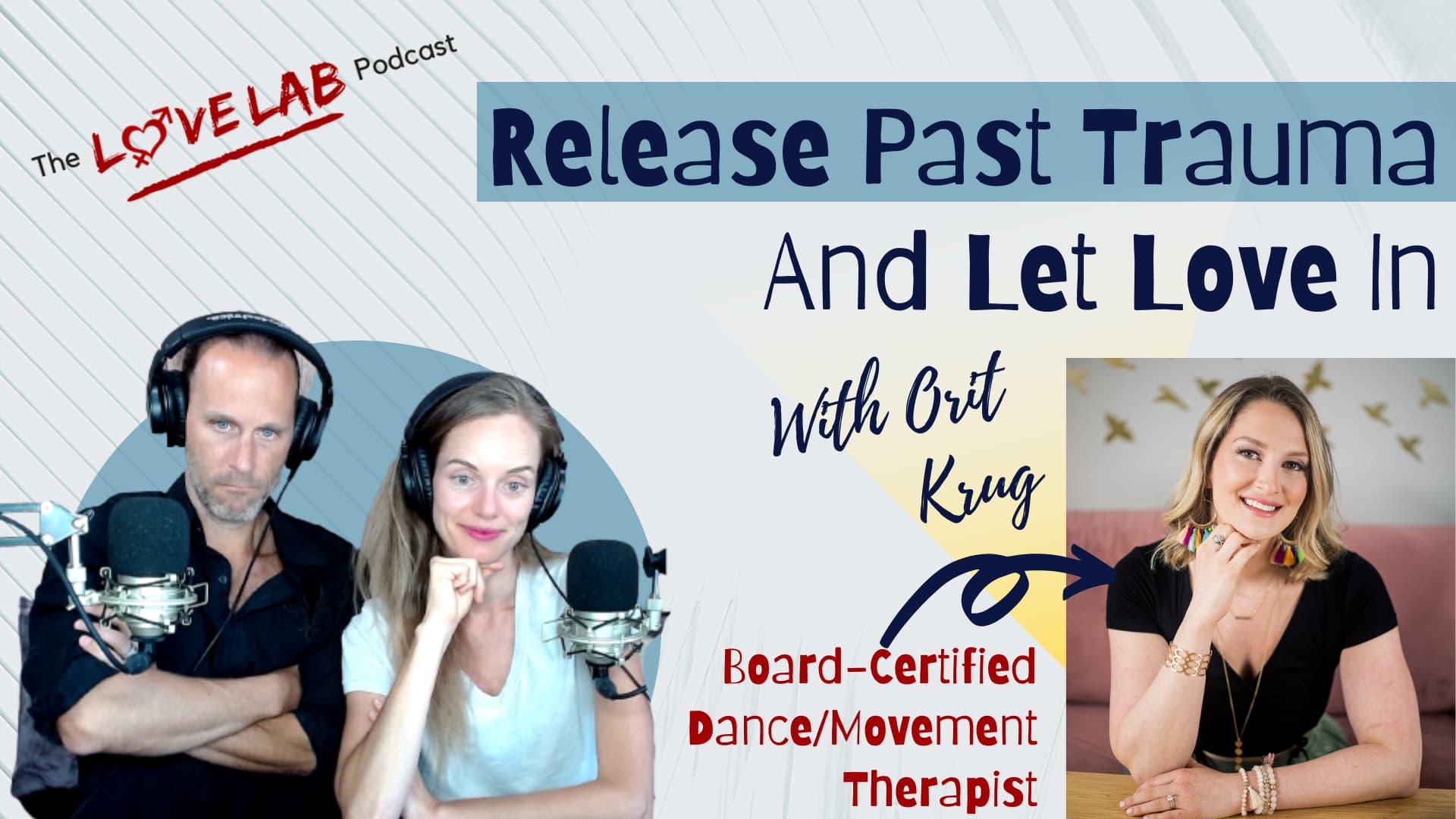
In this episode Kevin & Céline talk with award-winning Board-Certified Dance/Movement Therapist Orit Krug on what is trauma, how is it stored in the body, how does it affect your behavior, relationships, and sex life as well as what you can do about it. You’ll also find out why most traditional therapy does not work and what you can do instead.
Links From Today’s Show:

Orit Krug is an award-winning Board-Certified Dance/Movement Therapist. She has over a decade of experience helping people heal from past trauma and enjoy healthy lifelong relationships with their partners. Orit is the founder of the “Mind Your Body” podcast and has been featured in Elephant Journal, ThriveGlobal, Authority Magazine, as well as quoted in SELF & INSIDER. She currently lives in ‘burbs of NYC with her loving husband and their son.
To find out more about Orit: https://oritkrug.com/
Kevin Anthony 0:11
Welcome to the Love Lab podcast a safe place to get real about sex. Whether you’re a man, woman, single, or a couple, this is the show for you.
Céline Remy 0:20
We are your hosts, Kevin Anthony, and Céline Remy. And we are here to guide you to go from good to amazing in the bedroom and beyond.
Kevin Anthony 0:27
Alright, welcome back to the Love Lab podcast. This is episode 176. And it’s titled, release past trauma and let love in with aureate. Okay, so I don’t know that we’ve ever like we cover trauma a little bit here and there. But typically, trauma isn’t actually something you and I deal with, when in fact, a lot of times we will even tell, you know, our clients like, hey, if you’ve got deep trauma, go see like a professional, right?
Kevin Anthony 0:54
Once you’ve healed your underlying trauma, and then you want to learn the skills to get your life back, you know, in gear when it comes to your relationship and your love, then come see us. So we tend not to deal so deeply with trauma. However, so many people have so much deep underlying trauma that we understand that a lot of people are going to need to do this work first.
Kevin Anthony 1:20
And so it’s really valuable, I think, for our audience to hear what we’re going to talk about today because you’re probably if you’re listening, you’re going to hear some of these things and go Yeah, that’s me. Yeah, that sounds like fuck yeah, that’s me too. So, as is always the case, one of the first things that you have to do is bring awareness to the fact that you even have trauma.
Kevin Anthony 1:45
So we’re going to kind of dive into all of that stuff. We have a special guest on the show today that’s going to help us kind of dive into trauma, to talk about the trauma itself, but then also maybe some unconventional ways that you might be able to deal with trauma.
Céline Remy 2:01
Alright, I’m excited about that. But first, let’s give a big shout-out to our sponsor’s power and mastery. So if you want to join the secret club of men who are great in bed, then check out power and mastery at power and mastery.com. It is the most complete sexual mastery training for men.
Céline Remy 2:18
Whether you want to have harder erections last longer or increase your sexual skills, there is something for you at power and mastery.com.
Céline Remy 2:27
Our guest today is Orit Krug and she is an award-winning, board-certified dance movement therapist. She has over a decade of experience helping people heal from past trauma and enjoy healthy lifelong relationships with their partners.
Céline Remy 2:44
Orit is the founder of the mind your body podcast and has been featured in elephant journal Thrive global authority magazine, as well as quoted in stuff and insider. She currently lives in the burbs of NYC with her loving husband and their son. Alright, welcome.
Orit Krug 3:00
Thank you so much for having me.
Céline Remy 3:03
Our pleasure. So I’m excited about diving in. Because as Kevin mentioned earlier, pretty much everybody has some level of trauma. And I think the reason I said levels is because I do see that there are different levels of it.
Céline Remy 3:19
And for some, it’s easier to deal with this, and for others, it takes more work. So what happens to you when a traumatic event happens in your life? Let’s start with that. And maybe we should even define trauma. What do we mean by trauma?
Orit Krug 3:33
Yeah, that’s a good question. So like you said, a lot, probably most people experience trauma at some time in their lives. But when it becomes actual trauma, it’s created dysfunction in someone’s nervous system, and their way of living and ability to regulate their emotions.
Orit Krug 3:57
So if you tend to be overreacting, even though in your mind, you know, like, I shouldn’t really react this way about this thing. Or if you have an intention to speak up in your relationship, but you, you freeze, those are just some of the things where you know that something is off in your body and in your survival system.
Céline Remy 4:23
So it doesn’t have to be something you know, because when we think about trauma, we often will think about something rather big like you could have had sexual abuse, emotional abuse, traumatic, like it could be a disease or things like that. But I do see that it doesn’t have to always be that big for the nervous system to get into that fight-flight and survival mode.
Céline Remy 4:51
And maybe this is a great redefining moment for a lot of people because some people like Well, I wasn’t abused or assaulted, but I still don’t really feel safe when I’m being intimate with a partner. And it’s like, I don’t know how to justify that.
Céline Remy 5:07
And so, um, the question behind that is really like, how would you basically explain that that thing that trauma like, Hey, if you haven’t had something really big happened, but you still think there’s an issue? Like, where do you fit basically?
Orit Krug 5:28
Yeah, that’s a good question. Because I was one of those people who, I kind of thought that I was experiencing trauma, but the people who are supposed to protect me and keep me safe and teach me all things about the world, and also, people in my social circle, a lot of them are like, No, it’s not really trauma. And I didn’t know any better, I was a lot younger.
Orit Krug 5:53
And I was like, Okay, well, I don’t know, really, what’s wrong with me. Of course, today, I know that what I experienced was a trauma for very long. And like you said, it doesn’t have to be this big, shocking, horrific event, it can be little, little things that happen each day that add up, someone could grow up in a perfectly loving home. And then they go to school.
Orit Krug 6:17
And there’s, you know, there’s rejection, or there’s bullying, and it’s not huge, but it’s just like little by little, it creates this dysregulation. And another thing is, you and I were recently working with one of my clients who’s like I didn’t, I don’t remember, I don’t think I experienced anything, really. But I am pretty sure that my trauma happened before.
Orit Krug 6:42
Well, not before, maybe before she was born, but mostly in the first year of her life, which can make it really, really confusing, because, before the first two years of our lives, you don’t really have any words. So we store whatever memories, whatever experiences that we have, and that time of our life, in our bodies and our nonverbal brains and bodies.
Orit Krug 7:05
And it actually happens, you asked earlier, how do you know how what happens when we experience trauma? It gets stored primarily nonverbally in our bodies, whether that’s before we have words or even after throughout our entire lives.
Kevin Anthony 7:20
Yeah, we’re gonna dive way more into that in a little bit. That’s another question a few questions down. You know, the other thing that I wanted to add to what you were saying is, so yeah, there’s a lot of small things that we don’t think of as traumatic experiences, but that could actually be traumatic for an individual.
Kevin Anthony 7:38
And I think the point that I wanted to sort of reiterate from the discussion that the two of you were having is that you know, like, for instance, parents, parents have no clue most of the time how some of the things they do actually create traumas for their children.
Kevin Anthony 7:54
They’re not intending to they’re not even being mean in any way or, you know, abusive, but the things that they say and do that they’re not conscious of, they don’t realize how the children internalize those. And so I think the point that I really wanted to reiterate is just that you don’t realize how something can become a trauma until you understand how somebody takes those things in and internalizes them, right. So there might be an experience that for one person creates no trauma whatsoever.
Kevin Anthony 8:22
But that exact same experience creates massive trauma for somebody else. So the question is, is the experience really traumatic? Or is it how we take it on and internalize it that makes it become traumatic? And that’s an important distinction to make. Because, you know, what tends to happen, say, in a relationship, so I’m going to bring this back to the realm of relationships, right?
Kevin Anthony 8:43
Where, you know, maybe you’re having some problem that’s affecting our relationship, and it comes up that there’s this trauma here and I go up, that’s it. Like, that’s the that’s what you’re talking about. That’s the big traumatic experience. I’ll come on, just get over it. Right. Because to me, it’s not a traumatic experience that maybe I went through the same thing, and it didn’t bother me, right. But it’s all how we take those things on in our lives and how we store them, process them, whatever.
Orit Krug 9:09
Absolutely, yes, that’s a good point. It’s a good experience something the exact same event as you did, and I’m fine or I don’t, it didn’t change me. It didn’t shift the way I function in this world and relationships. But for you, it could be absolutely, you know, terrible and ruin everything for you to be a little bit dramatic.
Kevin Anthony 9:33
Yeah, no, I also want to caution the audience because there’s a fine line here. And what we don’t want is people to start nitpicking their life and looking at every little thing and taking it on as trauma and then falling into victim mode. Because that’s another thing that we see pretty heavily in society today.
Kevin Anthony 9:51
Society has been told that they’re all victims of something and so we want to be careful not to tread too deeply into that wires but This is also the perfect time to get into our next question. Because we’re talking about how different people experience things, whether or not they experience it as trauma, or they don’t.
Kevin Anthony 10:10
And we know a little bit from our pre-interview that you had a traumatic experience yourself. And we were wondering if you would be able to kind of tell the audience a little bit about that, how that affected you, and how that kind of led you on the path that you’re on?
Orit Krug 10:26
Yeah, for sure. I don’t like to get into too many details. Because as a therapist, I think it doesn’t, you know, my community, my clients don’t need to know everything, and that helps me hold more space for them. But I did experience trauma for over 15 years of my life. I experienced abuse from multiple people.
Orit Krug 10:50
And that was the part where the people who were other people who were close to me said, this was normal behavior, this was a normal way of relating, it’s not abuse, it’s not trauma. And, you know, it deeply impacted the way that I would, you know, go on to have relationships, you know, when you when you’re experiencing abuse, and you’re told that it’s normal behavior, you internalize that love is supposed to be a certain way.
Orit Krug 11:21
And so I continued to, as I grew a little bit older, I continue to get into really unhealthy relationships, which caused more trauma, right, more rejection or abandonment. I pretty much always attracted men who would not commit to me. And realizing later in life, this was my own fear of commitment, my own fear of love and intimacy.
Orit Krug 11:48
And then, my story kind of hit rock bottom, actually, not because I experienced more trauma, but because I finally met a wonderful man who is now my husband, who was the healthiest, most gentle kind person that I had ever met. And I was like, Really, this like, Is this really happening, and my nervous system was so dysregulated and adapted to an unhealthy kind of love, that I couldn’t take in his Healthy Love.
Orit Krug 12:17
And I sabotaged our relationship. I either got really aggressive and angry or passive-aggressive and shut him out and actually, you know, had some abusive behaviors towards him, which was the very same thing I was afraid of him doing to me. You know, we’re married today, I already spoil the ending, but he did break up with me, about a year into our relationship.
Orit Krug 12:43
And that was rock bottom. And I, even after being in therapy for several years, at that point, I was like, I have to, I have to really heal, I have to really heal from this trauma, because I got the kind of awareness and understanding of my behaviors from the therapy, but I just wasn’t able to change them. And I just watched myself sabotage this over and over again.
Kevin Anthony 13:07
I, I love. So first of all, I completely respect not wanting to share too many details. And you know, it doesn’t matter because the part that you did share is actually the important part. And that part is, if you were really listening to how she described what she was doing in her relationship, that is the part you need to understand.
Kevin Anthony 13:28
Because if you’re really honest, and you look at how you act in your relationships, if you’re not having a beautiful, harmonious happy relationship, then you’re most likely doing the same things that you just described you were doing. And that’s the important part I want people to get is look for those signs and symptoms, how are you showing up in your relationship?
Kevin Anthony 13:49
Where are the places where you’re sabotaging where you’re repeating those same behaviors that other people did to you that you didn’t fucking like when they did it to you? And now you’re doing it to other people? Right?
Orit Krug 14:01
Yeah, it’s a hard truth. Like I would do these, I would send angry text messages, or I would control him in so much jealousy and I, he’s a sensitive guy, and it would really hurt him. I think it would hurt anybody, but like, I could feel his hurt. And I would just be like, in puddles of regret and feel so bad about myself and realizing, oh, my gosh, I’m doing to him what I’m afraid of him doing to me or what people have done to me in the past that has hurt me so much.
Céline Remy 14:34
So I’m going to come back to the place you talked about about how trauma is stored in the body. Can you explain a little bit more about that concept? And
Kevin Anthony 14:43
I’m glad you asked that question. Because you always have a saying that relates to this and even I repeated sometimes when working with couples about your issues are stored in your tissues. So I’m glad you asked that because she’s been saying that for years, you know, she’s the one that really brought my awareness around to that idea. So thank you for asking that question. I’m really curious to hear your answer.
Orit Krug 15:05
Yeah, absolutely. And I always find that in heterosexual relationships, it’s the woman who’s like, no, it’s more in the body. And you know that and the men are like, no, it’s like, you know, mindset, think, think a different way, look at it more positively. And then yeah, and this is what, what this is all about, and why also, I’ve spent all this time in therapy, and I still couldn’t actually physically change my behaviors.
Orit Krug 15:33
So when we experience trauma, or highly stressful events, the higher functioning part of our brain, this is the part of the brain that thinks, talks, analyzes, makes decisions, uses words, processes, language, all of that, that part of the brain shuts down, it goes offline. And so the memories and feelings associated with our trauma are primarily stored in our nonverbal subconscious, which is the part of the brain, the amygdala.
Orit Krug 16:10
And I can explain more about that if you want the amygdala, hippocampus, and nervous systems. It’s stored in fragments of sensations. So you know, touch smell, all of their senses. It’s why if you have experienced trauma, and if you get triggered today, and it kind of seems like it comes out of nowhere, and it’s like, all of a sudden you’re reacting or triggered.
Orit Krug 16:39
It’s because it can be this lightest, most subtle taste or smell or sense that is associated with your trauma that sends your nervous system into, you know, a survival response. Yeah, I’ll stop there for now.
Kevin Anthony 16:57
Well, no, not. Next question. I want to keep sort of exploring and diving into this. If I’m talking too much today, apparently, somehow, I don’t know, maybe I smelled too much coffee in the accent, don’t drink coffee. I’m like, I got all this stuff to say. But I wanted to just add to what you were saying too, is that why this is so important?
Kevin Anthony 17:19
As far as you know, trauma is stored in the body is because we tend to think of trauma as just being in our brain. So if we just do therapy and work on our brain will solve it. But we know from Candice Perth’s work, I’m sure you’ve probably studied Candace PR, and she wrote the book Molecules of Emotion.
Kevin Anthony 17:35
But she’s the one that discovered that there were receptor sites in cells all throughout the body. And all of a sudden science is their mind exploded. And they were like, What do you mean, emotions could be stored
Orit Krug 17:47
anywhere? The rest of our body has a purpose in this.
Kevin Anthony 17:52
I mean, it’s not all just junk DNA. So I just wanted to kind of throw that into the conversation so that people understand that there’s literally serious science behind this. This is not just theoretical psychology.
Orit Krug 18:07
Yeah, yeah. I mean, and to name drop more like if anyone wants to look further into this, you can look into Bessel Vander Kolk, you can look into Steven Porges. Nearly me like it is and it’s been a developing science for many, many years, too. I think people are just kind of getting more on to it because they’re frustrated. And they’ve tried these things that aren’t working to shift the trauma.
Orit Krug 18:31
And remember, we talked about that high-functioning part of the brain that thinks and talks and processes language. That’s the part of the brain that most people use in therapy, or, you know, if you’re doing mindset stuff or other kinds of things that only use that part of the brain you’re not accessing, you’re not really accessing much of what has happened in the past, because it’s not in that part of the brain.
Orit Krug 18:56
So a lot of people feel broken. A lot of people feel like, this is the way my life is going to be I’m going to be this way forever. I can’t change. I’ve been in therapy for over 20 years. And it’s really sad because that’s not true. We all have equal neurophysiology. neurophysiological. I can’t say that word right now. We all have the ability to rewire our nervous systems. I’ll say it that way. Yeah.
Céline Remy 19:27
So tell us a little bit more about some of the things people do to hide or mask trauma because I think we get smart with things. Sometimes we’re like, Well, we know something happened to I react to this, but like, Okay, now let’s help people. I think we got a good understanding of what, you know, traumatic events can be, let’s see, like, how do we even hide it from our own self and from other people? How do we mask it so that we can help change that?
Orit Krug 19:54
Yeah, well, before this is kind of answering your question, but I didn’t say this part before. that it is getting wider and more common knowledge that trauma is stored in our nervous systems. But what a lot of people still aren’t seeing or learning or teaching is that trauma is also stored in our physical bodies through the way that we move through the way that we hold our bodies.
Orit Krug 20:18
And so our bodies are the vehicle for which we act and behave and express and interact and relationships. So back to the thinking part, a lot of people are like, well just change your thoughts to change your behaviors. But if you’ve been freezing up for your whole life, that’s how you primarily react to things that scare you, your body’s all tense.
Orit Krug 20:43
And so if you’re like, alright, well, I want to speak up to my partner the next time, I feel like I’m not getting my needs met. If your body is just closed off, and tense and guarded, you can say that intention, all you want, you can practice all the scripts, but your body’s still frozen. And so we also need to be able to change our physical way of being and behaving in this world.
Orit Krug 21:10
And so one of the common ways that people don’t even really realize they’re hiding, I don’t remember how you worded that, but hiding masking the trauma from themselves is that they, I kind of coined this term, it’s called toxic self-awareness. And this is kind of the biggest, I feel like the biggest way it’s, it’s been masked from people because they’re doing the work, they’re researching.
Orit Krug 21:36
They’re on social media looking up, you know, quotes and things and really analyzing themselves in their relationships, which can be a good thing, it can be really helpful to get that awareness. But past a certain point, it’s actually just keeping you stuck in that higher functioning part of the brain, and not allowing you to connect deeper into your body.
Orit Krug 21:59
If we have all this energy spent here, all these revolving thoughts, analyzing, right, it’s actually a very sneaky way to cut off the feelings from your body and the connection to your body, which is necessary as the first step to healing trauma.
Céline Remy 22:18
I love this. I love this concept. Because I see this happening so many times with people, a few things that I see, number one, people identify with it, and they call it my trauma. So it becomes part of their identity. And there’s no distinction to and then they merge with it. I’m not a fan of calling it my trauma, I think it’s way easier to start a separation by not self-identifying with it, but it’s a personal opinion.
Céline Remy 22:44
But I also see this cycle because I deal with a lot of people in the work that I do in person when I will work hands-on with the body as a sex illogical bodyworker. And people have done therapies for many years. And they come to a session where we do hands-on then they go like, wow, I’ve gained more in like a two-hour session than in my four years of therapy because he goes straight to what stuck in the body to release things.
Céline Remy 23:12
And then you know, it’s one thing or people say something up here and they had but then you see them behaving or how they hold themselves of their bodies like or how they breathe. That’s a whole other point. And it’s like, okay, this is what I see happening, what’s truly happening. And there’s often a difference between where they think they are in their head versus what’s truly happening in their physical body. And then that reality.
Orit Krug 23:36
Yes, yes, yes, yes.
Céline Remy 23:40
Okay, we’re going to continue diving in more, but right now we’re gonna take a short little break for our ad here. And this is for all of the committed couples who are listening to today’s episode if you feel like you are stuck in a rut, going through the motions instead of connecting the way you used to. And you’re tired of having stale mechanical sex that likes spontaneity and fun, and you don’t want to live a life of average.
Céline Remy 24:03
And Kevin, and I would like to invite you to join our highly sexed power couple platinum program. I can go through this, give us 90 days and we will have to bring the passion back between the sheets and be synced up sexually so that you can thrive with more purpose and passion in life. So go to Celine remy.com forward slash passion to learn more about this life-changing program.
Kevin Anthony 24:28
Alright, so let’s just keep going. We’ve sort of already answered this question, but we haven’t answered it necessarily directly. So I want to just ask it really directly and so that you know, in case people missed it, as we kind of sprinkled little bits of it throughout. The question is why do you think many traditional approaches to trauma don’t seem to work?
Orit Krug 24:51
Okay, yeah. There’s,
Kevin Anthony 24:56
there’s I can be
Orit Krug 24:57
to two things. I think there are two layers. because there are even some more nontraditional approaches that aren’t working for people too. So I’ll answer your first question. Because the part of the brain that people are using to try to heal through these traditional approaches has not stored the memories or feelings associated with the trauma.
Orit Krug 25:21
And that’s when people are talking, that’s when people are thinking about, that’s when they’re even analyzing, which is great for awareness, but it doesn’t access the amygdala or the hippocampus, that are storing them or the parts of the brain that are storing the trauma memories. It also doesn’t access the nervous system of the body.
Orit Krug 25:43
And so what needs to happen is that people need to learn how to regulate their nervous systems so that when they feel an intense emotion, or they experience a trigger, they don’t automatically go into a fight-flight or freeze response.
Orit Krug 26:01
And essentially, you know, overreact or completely dissociate from their bowl from themselves in their relationships. And traditional therapies do not work to regulate the nervous system, but they’re not designed to regulate the nervous system.
Kevin Anthony 26:20
Okay, and what was the second half? There was a second answer that the second
Orit Krug 26:25
half is that there are, thankfully, more kinds of variations or alternative therapies that are coming out that are working and designed to rewire the nervous system, maybe you’ve heard of EMDR, somatic experiencing, there’s a whole bunch of stuff. However, even you know, we have a lot of clients who have done those things, who are even practitioners in those things, and they still are stuck with their old trauma.
Orit Krug 26:58
Because we can’t just rewire the nervous system to heal trauma, it’s a really good step. But we also have to physically, intentionally move the body in certain ways to be able to become and behave in a new way. So as I was saying, Before, you know, if you’re feeling if you automatically react in an overly aggressive yelling kind of way, your body needs to learn how to soften and how to mean it’s very, it’s different for everyone.
Orit Krug 27:35
And I can give some examples to this but has to learn how to feel comfortable, and also soften and physically behave in a different way. And it would be the same kind of on the opposite side of the spectrum. If you’re always making yourself small, impulsively, and hiding, and not able to speak up or to show up or to let yourself go sexually, you know, there’s a whole happens on a whole spectrum of relationships.
Orit Krug 28:06
Your body has to learn how to, to open up in a way that’s safe and not threatening because there are a lot of different, there are even movement and body-based approaches that are aiming to help people to sort of write to open up or to free themselves, or whatever it is. And a lot of them aren’t trauma-informed.
Orit Krug 28:30
Or maybe they’re not like I really respected in the beginning when you were like, alright if you have deep trauma, go take care of that first, right, because you know, you know where the boundary is of your work. And there are, there are even like movement and body-based approaches that are like, just do a primal scream and you know, sprint until you collapse. And these things are not healthy for the nervous system or for the body.
Orit Krug 28:57
They just reinforce that roller coaster of like, I really need an intense release in order to come back to calm which it isn’t really calm when he does that its collapse. So to me be more simple like the second part is we need to physically engage our bodies to also fully heal trauma and shift all behaviors.
Céline Remy 29:22
Well, there were so many things in what you just shared. I was curious. I’m totally going off script here and I’m wanting Kevin because then he doesn’t like it when I do that. I was curious about your opinion about the use of psychotropics, or like, you know, like different drugs that are becoming a little bit more mainstream where people are using a specific mind-altering substance.
Kevin Anthony 29:51
mostly hallucinogenics whether it be MDMA or you know, combos, the big popular one now ayahuasca. All these different things that people are using in order to supposedly heal their trauma, that’s there’s a fine line there. So I just want to go on a nice trip. So I
Céline Remy 30:09
was just curious about your opinion, as a specialist, we have our own, obviously, and we want to hear like, what’s your opinion? Do you really get to the root of it? Or are you in an illusion of doing so much work? And then still stuck in the same place?
Orit Krug 30:30
Yeah, yeah, I think I don’t have any experience providing that kind of treatment to anyone. So I couldn’t speak for my own work. I am open with my audience that I’ve personally experimented with some things. And that was after I healed my trauma. So like, it was a safe way for me to do that. There’s definitely research that shows that those things can help.
Orit Krug 30:58
But I think it’s going to an unhealthy extreme, where people think, Alright, if I do this, I Ayahuasca ceremony, I will be healed and changed forever. And I think we need to be honest, that there is no, there’s no therapy, there’s no drug, there’s no something else outside of me, that’s going to make me quote-unquote, healed.
Orit Krug 31:21
You have to, I think you can gain so much awareness, and understanding and see things in a completely different way. And, you know, kind of strip away some defenses when you dabble in those things. But it’s not a cure-all. And you have to integrate that into your life to be able to make it work.
Orit Krug 31:42
And then also for people with, you know, really intense symptoms or effects of trauma. I don’t think it’s safe to just go straight to that. I think it’s a little too intense. And it can make things worse.
Kevin Anthony 31:55
Yeah, that was a great question. Thanks for adding. Yeah, I’ve always said when it comes to those things, like my opinion of them has always been that basically what they do is they open the door and let you see what’s behind it. But when it’s over, the door closes, and you’ve got two tasks, you have to figure out how to get that door open again, without the use of a substance.
Kevin Anthony 32:17
And then you got to figure out how to deal with what you find behind that door. And that’s where I think a lot of people go wrong with those things is they think that all I got to do is just take this stuff, and then it’s just going to magically make it all go away. And it’s like, no, it’s going to give you insight into what it is you need to spend a lot more time working on.
Orit Krug 32:38
Yeah, absolutely. I mean, I know people who’ve done professional treatment and haven’t really changed anything for them. And I also think the intention is really important with anything. If your intention is like, Alright, I’m doing this so I can heal once and for all like that’s not really practical. It’s like you have to set more practical goals, achievable goals.
Céline Remy 33:07
Well, it’s funny because the reason I asked this is that I had a client who was using a substance in a professional setting, with a psychologist and using something that that does short transport, what he was explaining to me that it was utter terror every time he would go there. And then he would like shake and all of this and come back.
Céline Remy 33:30
And to me again, like I’m not a trauma specialist, but I’m dealing and working with this person. I’m seeing where he’s at what’s happening in his body. And I have good intuition. And my feedback to him as I didn’t think that these were very valuable because to me, it seemed like he was constantly recreating the trauma over and over.
Céline Remy 33:52
And you’re not moving past that you keep triggering it so many times that you’re getting into overload. And so that’s what brought this question to my mind. Because you were explaining how, if you go into the things like in the body, and it’s like, oh, that’s what you used to do, like, you know, or like the screaming, that’s what you think you need, but really, you do the screaming in the collapse.
Céline Remy 34:13
There’s no healing really, there’s a short release. That’s temporary, but that’s not shifting things.
Orit Krug 34:20
Yeah, I wouldn’t even call it relief instead of release. Yeah, yeah.
Kevin Anthony 34:27
Yeah. So in his particular case, like, you know, it’s one thing if you use a substance like that, and you know, you have you come to some awareness and you’re like, oh, okay, all right. Let’s work on this. Now. In his case, it was literally re-triggering the trauma every time like if you’re going into the same fear and panic response, the same fight-flight response that you went into when the initial trauma happened.
Kevin Anthony 34:52
I don’t see that as helping. You’re just reliving it over and over again. It’s like, hey, let’s rewind on the VCR. Watch that part again. You know, let’s watch it again and watch it again and watch it again like this is really healthy.
Orit Krug 35:05
I think that answers the question of how are people masking their own trauma or their own ways of dealing with traumas, a lot of people think they have to suffer in order to heal, or like, I can’t be in a relationship until I heal my trauma, I can’t have fun and play until I heal my trauma. And that’s so I think it’s a, it’s a repetition of a path of a trauma pattern of like, I need to suffer, I need to like suffer for this thing, I don’t deserve it until I really work for it.
Orit Krug 35:38
And actually, the, you know, the type of therapy that my team and I do the dance movement therapy, it’s, it is deep, life-changing work. And it can be intense at times. But it’s also it’s actually also enjoyable and fun. And there’s play, and we actually need to play in order to heal, because that’s a certain state in the nervous system. People, so I’ll explain it kind of shortly.
Orit Krug 36:05
We know the fight and flight response. That is what Steven Porges calls mobilization with fear because I’m moving, I’m yelling, or I’m, you know, punching the air or whatever, in a fear state. But he also talks about mobilization without fear. And that is still a sympathetic drive or the fight-flight state where we’re moving, we’re connecting, but there is no fear. So that’s like having sex, or playing or dancing, right? Where in movement, and we’re connecting.
Orit Krug 36:44
And we’re not letting that fear hijack our nervous systems. And so this is why we need play and movement and all those kinds of called positive relationship experiences to truly heal. And also why it’s, it’s become dangerous, though a lot of people think because other people are teaching this, we need to be still an in a still meditation in order to heal trauma.
Orit Krug 37:14
And that can actually be dangerous. That could put someone if someone’s always freezing or in immobilization, with fear, and then they’re all they’re doing is trying to meditate to try to heal, it’s actually not changing anything with their nervous system. It’s bringing them in some more, more fearful state,
Kevin Anthony 37:34
it’s reinforcing the freeze pattern that they’ve always done. Yeah. I always know when we’re having a great conversation, and when we’ve done a good job of writing questions because you just naturally start to flow into the next thing that we were going to ask.
Kevin Anthony 37:50
So you, I think you’ve already answered the question, but I just want to give you an opportunity to talk a little bit more about if there’s anything else you want to add. The question was if you could tell us more about your unique approach. And you in that last question, you did start to go in there.
Kevin Anthony 38:05
But is there’s anything else you want to share about how the work you do, helps people and how it maybe it’s different from other approaches?
Orit Krug 38:13
Yeah. I think maybe I’ll bring in an example of a client, just a short story, just to draw more of a picture and weave in my unique approach. So who do I want to bring in? Okay, so I have, we had a client last year, who was primarily responding to her partner and to her family in the flight response.
Orit Krug 38:42
She was literally getting in her car and driving away when there were conflicts, and she experienced trauma. I know back in her childhood, she had done lots and lots of therapy, different mindset programs, try different approaches. Of course, she was really frustrated, she came to start working with us. And first of all, we helped her start connecting to her body again, in a safe and gentle way.
Orit Krug 39:09
Because remember all that talking all that mindset stuff, it really just serves to disconnect when you have an issue and you’re like, How can I figure this out? Or what’s going on what’s going on what’s going on? It’s like it’s not doing anything. And so by us, when we do our work, we do it exclusively online through zoom right now. And not just right now, but for the last three and a half years.
Orit Krug 39:32
And so when we’re doing our work, we’re moving with our clients. So helping her move, get comfortable in her body again, and when we start to connect to the body again, after just connecting for so long, we will inevitably stir up trauma memories when we start to move in a safe way. And so, you know, we’re working with her through my loving program, and kind of more Towards the end, she had this transformational experience through the program.
Orit Krug 40:05
She was doing the program alongside two other clients and my therapist, Sarah. And there, they were getting very kind of close and intimate through moving together. And she was like, kind of just dissociating, and really feeling that urge to run away, just like she would and you know, in her relationship, and with the help of my therapist and the group members, she helps her stay regulated, helps her continue to stay connected, not just in her body, but in the relationships.
Orit Krug 40:45
So that even though she was feeling this fear come up in her body and this reaction, she wouldn’t react to it, it wouldn’t hijack her nervous system. And so the whole group started mirroring her through movement and moving with her, while Sarah was guiding her to stay connected. And it was the first time she experienced really staying in a relationship and not reacting through a very fearful moment.
Orit Krug 41:11
And this, you know, this was just one example in session. But when you do this work through the body, and you have those real tangible experiences in session, it immediately and automatically integrates into your life, there’s obviously work to be done to maintain it, which we talked about, but it’s also like, okay, I can, I can feel this fear come up, and I can still stay present with you.
Orit Krug 41:39
I don’t have to get in my car and leave, I can have a difficult conversation and stay there and be there and we can get closer. And yeah, she ended up feeling so much closer and more connected with her husband and with her family. And she had said that this made her feel whole in a way she had never felt before. Just because yeah, she was using the whole body, right.
Kevin Anthony 42:07
Powerful stuff.
Céline Remy 42:08
So Okay, where can people find more about you? Where can they connect with you if they are interested in learning more about what you do?
Orit Krug 42:17
Yeah. So the best way, if you want to learn more, is to sign up for my free training. I have the three-part video training online. It’s called rewired for love. And it will teach you the neurophysiology of how trauma gets stored in the body, how to rewire your nervous system. And finally, break old unhealthy relationship patterns.
Orit Krug 42:41
So that you can stop sabotaging your relationship and stop letting trauma really ruin or block your ability to let in love and intimacy. It’s it sounds like a lot because I said it’s three videos, but it’s under an hour long. And people have said they’ve learned more in that hour than in 10 hours or more in therapy.
Orit Krug 43:03
So definitely recommend signing up. It also comes with a workbook so that you can identify your dominant nervous system responses, and how you can change them so you can let in love.
Céline Remy 43:16
Awesome, we’ll have the link in the description. And we have our very last question to hear. Which is of what is your best sexual talent?
Orit Krug 43:26
Oh let’s see. Can I say
Kevin Anthony 43:36
you can say whatever you’re willing to admit on air?
Orit Krug 43:41
Like, what should I say? My best sexual talents? I think not all the time. But when I can, being able to just like let go and tune into my animalistic self and, and just really be in the moment and yeah. Be like, I don’t know. I’m just gonna do this movement.
Kevin Anthony 44:05
I felt the energy of it. You know? Yeah, as men we love that. Uh-huh. Yeah, like go. Yes. All right. Well, that was a fascinating conversation, we even had to skip some of our questions, because we just didn’t have enough time to get to them.
Kevin Anthony 44:22
But I think we did a pretty good job of helping the audience understand what trauma is, how it gets stored in the body, how it can affect their relationships, and giving them a look into a whole different modality that they probably didn’t even know existed. That can be extremely powerful. So thank you so much for coming on the show and sharing your knowledge.
Orit Krug 44:46
Thank you so much for having me and for this amazing discussion.
Kevin Anthony 44:51
All right, everybody. That’s all the time we have for this episode, and we will see you next week. We hope you like this episode of the Love Lab podcast. If you enjoy this show, subscribe, leave us a review and share it with your friends.
Céline Remy 45:08
And for more free exclusive content. Join us in the passion vault at kevinanthonycoaching.com/vault. Thanks for listening. And remember, you’re amazing
We hope you liked this episode of The Love Lab Podcast. If you enjoyed this show, leave a comment and share it with your friends.
RATE & REVIEW THE LOVE LAB PODCAST
—> LEAVE A 5-STAR REVIEW ON APPLE PODCAST
ASK A QUESTION FOR THE NEXT EPISODE
—> Click here to leave a message directly to Kevin and Céline to be answered on the air.
Thanks for listening and remember you are amazing.
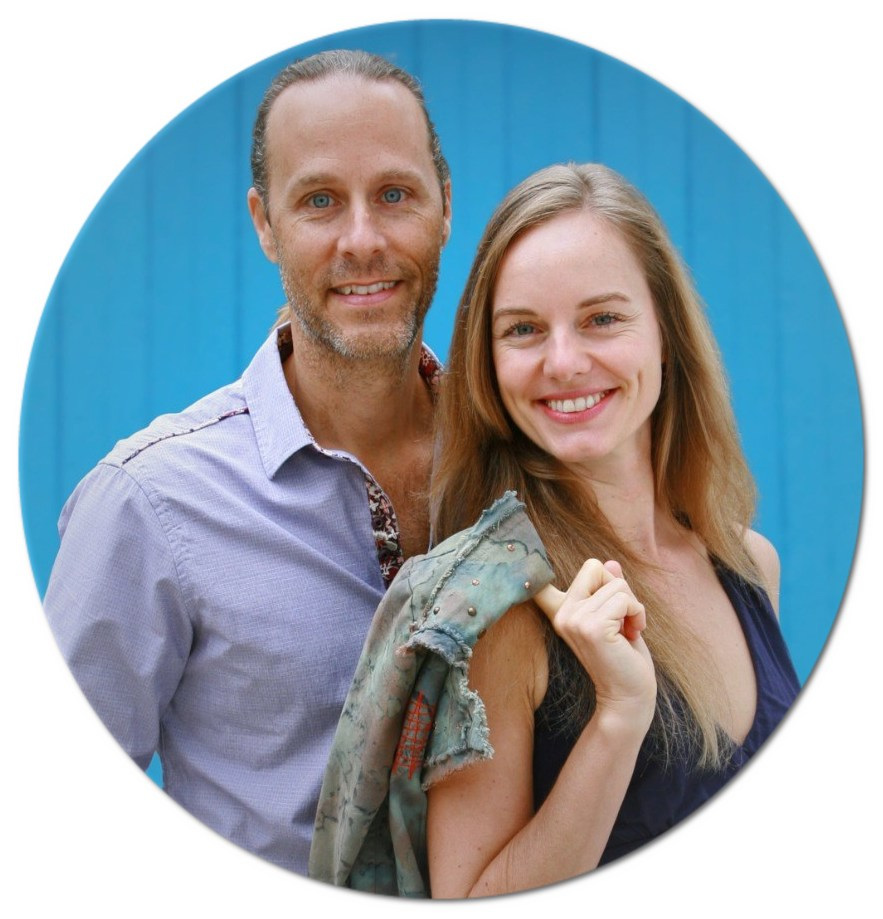
Kevin Anthony and Céline Remy are an international husband and wife team who joined forces to create a worldwide movement of true sexual empowerment. Kevin, “The Truth Warrior,” is a Men’s Coach, Tantra Counselor, and Couples Relationship Coach. Céline, “The Intimacy Angel,” is a Holistic Sexologist, Certified Sexological Bodyworker, Relationship, and Intimacy Coach for men, women, and couples. Together, they are truly the ‘Power Couple.’ They host ‘The Love Lab Podcast,’ and are co-creators of ‘Power and Mastery,’ an online educational training system that teaches the exact process to any man who desires to bring his ‘A’ game consistently to the bedroom. They guide couples and men on how to go from ‘good’ to ‘AMAZING’ in the bedroom and beyond.