Last Updated on October 12, 2022
What You’ll Learn In Episode 194:
We live in the most technologically connected time in history and yet so many people feel more disconnected and alone than ever. Technology gives us more options than ever to connect, but are all these options created equal or even good for us?
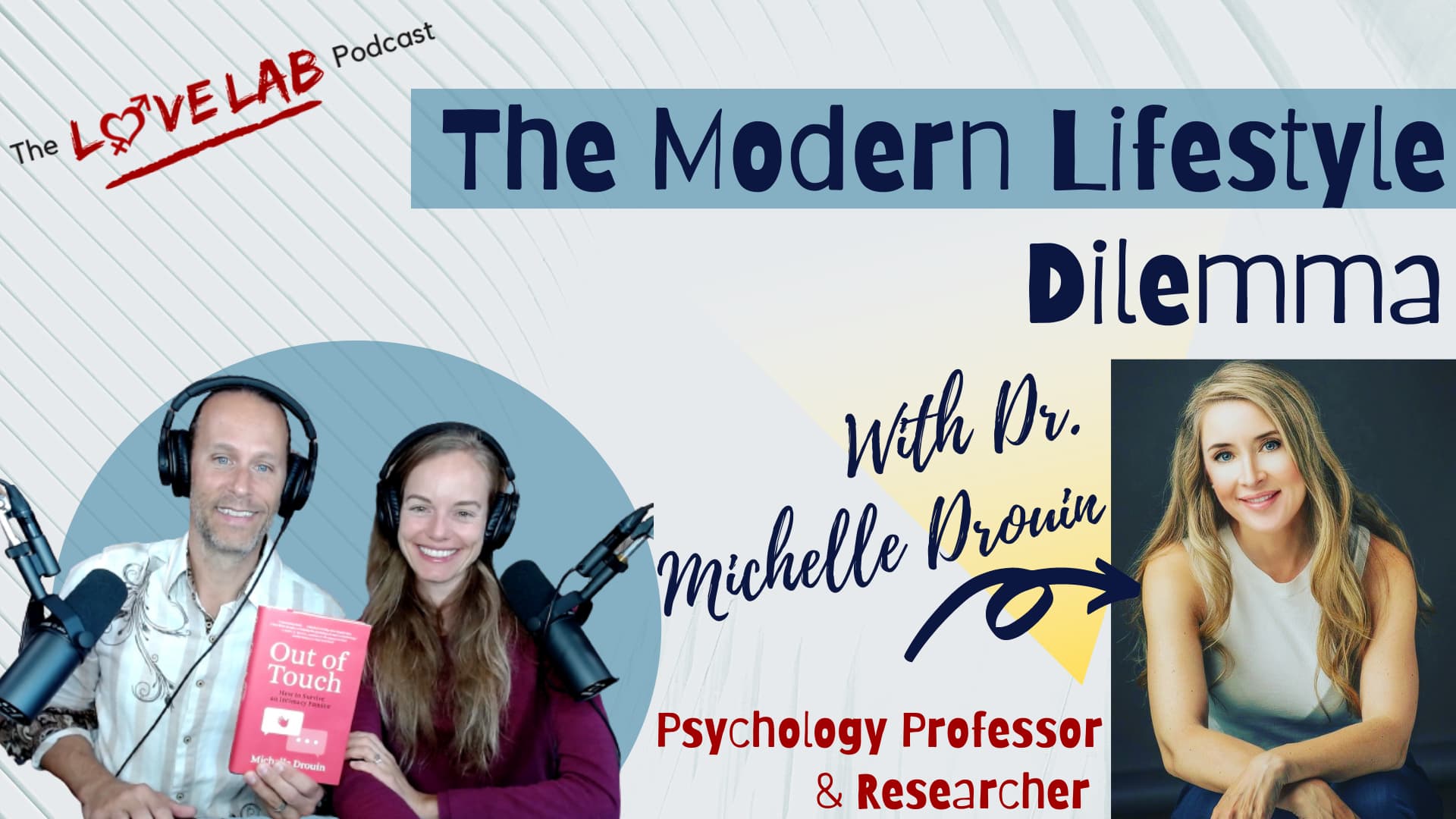
In this episode, Kevin & Céline talk with Ph.D. Research Scientist and Psychology Professor Michelle Drouin about the effects of technology on our relationships. They cover the good, the bad, and the ugly. Not to worry though, this conversation isn’t all doom and gloom. In fact, it shines a light of hope on relationships and the future.
Links From Today’s Show:

Michelle Drouin, Ph.D., is a professor of psychology and senior research scientist who conducts research on sexuality, interpersonal relationships, and technology. Her book “Out of Touch: How to Survive an Intimacy Famine” was released in February.
To find Michelle’s book, click the link below:
Kevin Anthony 0:11
Welcome to the Love Lab podcast a safe place to get real about sex. Whether you’re a man, woman, single, or couple, this is the show for you.
Céline Remy 0:20
We are your hosts, Kevin Anthony and Céline Remy and we are here to guide you to go from good to amazing in the bedroom and beyond.
Kevin Anthony 0:28
Alright, welcome back to the Love Lab podcast. This is Episode 194 and is titled The modern lifestyle dilemma and how it’s affecting your relationship with Michelle drew in. So this is going to be a fascinating conversation because it’s going to cover a lot of ground. And it’s going to talk about some things that, you know, we talked about on the show a little bit a long, long time ago.
Kevin Anthony 0:52
But we didn’t really have necessarily all the data behind that conversation. So today, I think is going to be really fascinating because we do have the data behind that. And we have a research scientist who has done some of this research. And basically what we’re going to do is we’re going to talk about how how people are basically sort of starving for intimacy and how our modern lifestyle is what’s contributing to it.
Kevin Anthony 1:20
Now, you may be listening to this at the moment and going, oh, yeah, whatever, you’re just gonna harp on technology again, or whatever, and blah, blah, blah, blah, blah. But here’s the thing. If you’re not happy and satisfied in your life, there are areas that you may not be aware of that are negatively affecting it. And this conversation is not only going to bring that awareness to you, but it’s also going to give you solutions for how you can fix it,
Céline Remy 1:44
which we always love are the solutions, right? So before we bring in our guests, let’s give a big shout-out to our sponsor’s power mastery. So if you want to join the secret club of men who are great in bed, then check out power in mastery at power and mastery.com. It is the most complete sexual mastery training for men. Whether you want to have harder erections last longer or increase your sexual skills, there is something for you at power and mastery.com.
Céline Remy 2:13
So our guest today and I’m going to say her name in French because I can haha, is Michelle Drouin, and she’s a Ph.D. is professor of psychology and senior research scientist who conducts research on sexuality, interpersonal relationships, and technology, her book out of touch how to survive an intimacy famine was released in February. So we are very excited to be having you on the Love Lab podcast, Michelle. So welcome.
Michelle Drouin 2:41
I am so excited to be here. Thank you. I’m really excited about this conversation.
Céline Remy 2:46
Yeah, and I know that we were chit-chatting a little bit before and you have something that’s really unusual. You’re raised by hippies. But you also have a degree from Oxford. So like, tell us how that happened? Because we like it doesn’t really go together.
Michelle Drouin 3:04
It really, really does not. I mean, they were raised by hippies, what, really mostly my mom, my mom, and dad divorced when I was really young. And then we had kind of a very tumultuous lifestyle. We moved around a lot. At one point, my mom and dad were living in a tent by a river in Colorado, and my mom had two young children and she suddenly realized, Wait, someone could maybe be eaten by a bear. So decided that we had to move.
Michelle Drouin 3:33
And then through all of the movement, and you know, I had another stepfather, I ended up living in a shelter for a while we didn’t have a lot of stability. But they’re all the chaos. I think my mom just really reinforced love as a foundation for us all. So even when it was me, my sister, my brother, and she was pregnant, and we were living in a one-room, I always felt really loved and protected.
Michelle Drouin 3:57
And I always felt empowerment, I think to address my own needs to stand up for what I believe in, you know, if we think of the hippie movement, we think of love, but we also think of power. You know, they had a lot of feelings about a lot of the issues that were going on in the country at the time. And they felt very empowered to stand up for those issues.
Michelle Drouin 4:19
So I think my mom instilled in me both love and a desire to just assert my own beliefs. And I think that’s what led me to, you know, pursue higher schooling. I went to a public school there wasn’t, you know, a lot to do in my town in terms of career prospects. And I always just thought, I’m going to strive as high as I can and see where it takes me my mom is still surprised. I found out the other day that I ranked in the world’s top 2% of scientists, which I don’t know how I didn’t get an official letter or something.
Michelle Drouin 4:54
I stumbled upon this as I was reading an application of someone else for a big award. I thought, wait for a second, maybe I’m on this list. And I looked at I was, I’m on this list. So out of like more than 8 million scientists, I’m in the top 2% of scientists in the world. And I called my mom. And I just think she can’t believe it.
Michelle Drouin 5:14
You know, she can’t believe that all she really wanted us is to stand up for our own beliefs and to be you know, loved and to love around. And here we care. I am a scientist. She’s still surprised. Yeah, so it was a kind of an interesting trajectory to get where I am today. Well, congratulations
Kevin Anthony 5:33
on being in the top 2%. That is, really, really is. And what’s cool about it is you didn’t even know it.
Michelle Drouin 5:42
Didn’t know, where’s my letter? That’s what I want to know.
Kevin Anthony 5:45
Like a lot of scientists who think they’re God, you didn’t even know you were on the list. So that’s really cool. But aside from that, you know, the reason we ask that first question is because I hold up the book here because you wrote this book out of touch. And the subtitle is how to survive an intimacy famine.
Kevin Anthony 6:04
So I think that your background, your upbringing, kind of help show that not only have you done research as a scientist on this, but you had sort of what most people would consider a challenging childhood. And so you had to learn how to survive that, how to make sure that you were, you know, getting the things that you need.
Kevin Anthony 6:24
And so I think all of that factors into how you got to where you are, and how you chose what you’re currently studying. And so I just think it’s directly relevant to, you know, the information that we’re going to talk about. So that’s why we asked, otherwise, it’s also just a fun story.
Michelle Drouin 6:40
But hey, I’m so happy you made that connection. You know, I did that how to survive childhood was really a lot about my, you know, my mom and dad growing up as a, you know, really impoverished child in the United States and relying upon, you know, Sesame Street, and an avocado and to get me through the day, you know, so. But thank you for making that connection. No, one who I’ve interviewed has yet made that connection that’s meaningful to me. You really got it.
Kevin Anthony 7:07
You’re welcome. Yeah, you know, I really enjoyed the book. And we’ll talk more about the book this, you know, when we have these conversations, and guests come on, and they’ve written a book or whatever, what we do generally is not let’s just pitch the book all day long. We want to talk about the ideas. And then oh, by the way, they’re also in the book. So, you know, we’ll talk more about that.
Kevin Anthony 7:24
But like, what you mentioned, and people who are listening probably didn’t quite catch it unless they’ve read the book. But in the book, you’ve kind of broken it down, like how to survive childhood How to Survive dating, how to survive marriage, right? So there’s all these like, sort of major points in life, and how to get through them, you know, especially from like an intimacy point of view. And so if you’re listening, and that’s how we make that connection, right. That’s how that connection was made. Okay.
Céline Remy 7:52
One thing that I find hilarious, too, is like, when you read the book, it’s like, sometimes at times, I was imagining Michelle as this mad scientist with her lab coat on and like, crazy. And then if you’re watching the video as you see, she’s super cute, like, totally down to earth. Like, it’s like, if you have like multiple facets of you that are being expressed. And I love that.
Michelle Drouin 8:14
Oh, that’s so funny. I’m really the silly girl with the avocado. Really, the lab coat feels like an imposter. Truly. I mean, I didn’t even know I was the scientist, you know. So I feel like I’ve always been a little bit non-traditional. I remember just kind of when I was at Oxford, I would just rush in and I would, you know, everyone would be there on their computers.
Michelle Drouin 8:36
And I’m like, where are we going tonight? I’m always maybe been a little bit of a visitor in all my worlds. But you know, I’ve loved that. And yeah, thank you for recognizing that as
Kevin Anthony 8:48
well. I think the scientific community could use a few more.
Kevin Anthony 8:57
Okay, let’s stay on track now. Alright, so the next question when, when we talk about like, we titled this the modern lifestyle dilemma. So when we’re, when we’re using that phrase, modern lifestyle dilemma, what does that mean? Like? So the audience can understand what are we really talking about here?
Michelle Drouin 9:18
You know, it’s nothing that I think has been really defined in the literature. But lately, I’ve been thinking about it in a pretty simple analogy of text, talk, touch, you know, basically, as we go through life, we can choose to have really short bursts of intimacy, communication connection, or we can get a little bit more involved or we can have the ultimate immersive experiences, which I think are the face to face experiences that we have with others.
Michelle Drouin 9:46
But even this what we’re doing right now is better than if we would have had, you know, 100,000 emails, what we’re doing now seeing each other’s faces, being able to laugh with each other. This is a relationship-building contact that we don’t have when we’re talking about asynchronous communication.
Michelle Drouin 10:02
So I think the monitor dilemma really encapsulates just the constant struggles, we have to try to meet our immediate needs for our to-do list plus, you know, trying to meet our needs as humans, and then our long term needs in terms of our to-do list and meeting our needs as humans. And technology is a major player in that dilemma.
Kevin Anthony 10:26
It sure is, I have a very, I’m a former technology guy, like I worked for big tech for years, like some of the biggest technology companies in the world. And so I know Tech really well. And I have very strong feelings about not only the positive of tech but absolutely the negative of tech.
Kevin Anthony 10:46
And so when you say something like, Well, you know, Tech is a big part of that. Tell me what you think, like, from your point of view, how is tech working its way in, in affecting this, and how is it contributing maybe to the dilemma.
Michelle Drouin 11:02
I mean, it’s affecting us from the time even before we’re born, you know, people are having an online presence from the time of their sonograms, and certainly from birth, that people are almost instantly propelled into an online world that they didn’t even give permission to be a part of.
Michelle Drouin 11:20
And although we have protections in the United States, like the cap act, that’s, you know, perfectly formulated so that children under the age of 13, are used for marketing and that their information is protected. So many people just ignore those protections and thrust their lives online from a very young age. So I think technology instantly from the time we enter the Earth has an impact on who we are as we develop.
Michelle Drouin 11:45
So I’m an experimental psychologist, I am the scientist, not in a white lab coat. And I’m the sciences. And I also have a developmental psychology course. So my whole focus really is on how this technology is affecting who we are as humans, and how we interact with each other, which I think has been severely affected. And I don’t want to say severely in a negative way, but it affects everything. I have two teenage children, too.
Michelle Drouin 12:15
I have a 12-year-old and a 14-year-old boy and seeing how their relationships have developed in the types of things they do for entertainment. I just know the world has shifted in a really major way. And that’s not even talking about, you know, dating and marriage and all the things that I’m sure we’re going to get into a little bit in this conversation. I mean, do you feel the same?
Kevin Anthony 12:38
Yeah, yeah. So from my point of view, you know, I don’t know how old you are. But you know, I grew up in the, you know, as a young child in the 70s and 80s. And so, you know, we didn’t have any of this tech. Yeah, we didn’t have cell phones. We did. I mean, we had like four channels on the TV. I remember when we got our first video game. It was like the first video game ever created. And it was pretty fucking lame. Let me tell you, I mean, we love the very first one I had was Pong literally
Michelle Drouin 13:17
the same age? I’m 48. Are you missing me? Oh, yeah,
Kevin Anthony 13:20
I’m turning 48 next month.
Michelle Drouin 13:23
Okay, so yeah, we have the same childhood. Yeah.
Kevin Anthony 13:28
And here’s the thing because of that. We didn’t have all those influences in our lives. Like I’ve said so many times. I am so glad that cell phones didn’t exist during all those years where we did stupid shit, right? Because it only lives here in our memories, and maybe one or two old photos somewhere, right?
Kevin Anthony 13:48
But it’s not plastered all over for eternity. Like, you know, once something is on the web, it never goes away. It doesn’t matter if you delete it from its original source, it lives forever somewhere, right? I’m so glad that that doesn’t exist.
Céline Remy 14:02
I also see also the pitfalls when it comes to young women. And you know, because we tend to compare ourselves a lot and I don’t know if it’s more women than men or young boys you know, young women, but for sure when people put things online so is the glossy part. And let’s face it being a teenager is hard.
Céline Remy 14:23
And if you see all these people were their filters and all these glossy things and your life feels like shit and you’re suffering because you have hormones and stuff and then you probably not feeling good enough not feeling adequate you comparing yourself and probably can get into a very lonely depressing state just even though you’re kind of technically so connected, because you have all of your online friends, right. But yet you’re feeling really lonely probably.
Michelle Drouin 14:54
Yeah, absolutely. Go ahead.
Kevin Anthony 14:57
And that’s something that I would love to To talk about more, which is this idea that all of this technology is designed to connect us. And yet, if I really observe, and because I grew up without technology, I have something real to compare to. I think we are more disconnected now than we have ever been, despite the fact that we have all of this technology that’s supposed to connect us because of the perfect examples.
Kevin Anthony 15:25
If we’re coaching clients, right, when this happens all the time, you see people that get into arguments, because they’re texting each other, like, we need to talk over a text, right? No, you do not have complicated relationship conversations over text, right? You know, if you absolutely cannot reach them any other way, like face to face number one, something like this video number two, if it’s super important, and you have to get it out there, and there’s no other way to reach them. Maybe an email,
Céline Remy 15:55
get a call?
Kevin Anthony 15:57
Yeah. I forgot the phone call. Yes.
Michelle Drouin 16:03
He went straight to Email.
Kevin Anthony 16:06
Text or like, I’ll be home in 10 minutes, right? They’re not a place to have that type of conversation, not their
Céline Remy 16:11
Don’t you dare email me, Kevin?
Michelle Drouin 16:14
I was thinking the same thing.
Kevin Anthony 16:17
So many of them, I forgot one. But the point is, right, is that we have all these ways to connect. And yet the ways that most people choose to connect are the ways that are the least effective at connecting. Now, the point that I was trying trying to make there. And so that’s a huge conversation that I see is that the technology gives us options, but half of those options are actually not good options.
Michelle Drouin 16:45
Yeah, you know, I was just saying this the other day. So I texted my mom a lot, she lives in my neighborhood, and she actually lives less than a mile from me. And when the weather’s nice, we go for walks, when the weather isn’t nice, we text each other probably five to 10 times a day. Now, here’s the thing the way that I justify it 20 years ago, I wouldn’t have been in contact with my mom at all during the day, I wouldn’t have called her we wouldn’t have met face to face because I’m working.
Michelle Drouin 17:12
But I can send her little text messages during the day while I am working, she will probably text me while we’re on this podcast. And she could not save me about her day. So what I think we’re getting are these little drips of socialization that wouldn’t have existed. So on the positive side, I’m able to keep constant contact almost with people that may not have been part of my daily life because of geographic barriers, or because, you know, we just don’t have the emotional closeness maybe, you know, I heard from another friend who lives in Toronto today.
Michelle Drouin 17:45
She just lost her sister-in-law. And I had messaged her last week. And she, she said to me, yeah, you know, things are rough. And but she’s in a time where she’s breathing. I don’t think she really wants to have a phone conversation right now. So in lieu of us talking or being able to be together geographically, I think these text messages are a nice supplement, I guess that said, I’m going to share with you guys, you know, we had luck.
Michelle Drouin 18:09
Lucky for me, a phone conversation prior to this, you know, my tryout this podcast, and thankfully I’m here. But one of the things I thought of these two people seem so cool, I’d love to come out and see that. That’s where my mind goes in terms of being able to bond with an individual, it does go to those face-to-face experiences.
Michelle Drouin 18:30
So, you know, talking to you like this, makes me want more, but I’m not sure that’s true for my children, for example, for them, this is enough, this would actually be a little too immersive for them a phone call? Definitely not there. You’re getting the email. Yeah, but
Kevin Anthony 18:47
don’t you think it’s that becomes a case of you don’t know what you don’t know? In other words, like, in other words, they think that it’s too much they think that you know, the technological communication is enough. But it isn’t real and they don’t know that because they’ve never actually experienced what it’s really like.
Michelle Drouin 19:07
Absolutely. Yeah, well, what it’s really like 30 years ago, right? I mean, because it’s just a different time now, what we had, I don’t think we’ll be recaptured. Again, in history, really, I don’t technology, I don’t think is going to ever just fall away unless there’s some giant technological infiltration, that debilitates all technology till the end of time. It’s just too easy. It’s just too convenient. I don’t even want to give it up.
Michelle Drouin 19:33
I mean, we’re having this conversation right now. We found each other because of this technology that we’re also not super happy about. My children will never have the opportunity to live the life I lived 30 years ago, and it makes me a little bit sad. But then they also do things that I never would have. I remember one fortnight there was a Travis Scott concert and they were so excited about it.
Michelle Drouin 19:54
This was years ago. It was one of the first really immersive experiences that were with John through Last night, and so they had a friend over from across the street, they went down, they were texting their friends Snapchatting their friends. So it was like this experience that was completely blended it was online with a friend, their two brothers. So they had people and they also then had their friends online.
Michelle Drouin 20:18
And I just think my life will never be like that either, right? So we’re both missing out on something. And with the way work from home is going, I think a lot of today’s youth are going to be working in environments where they don’t have as much contact with people. So I’m just not sure maybe we’re preparing them exactly for the lives that they’re going to have in the future.
Kevin Anthony 20:39
And that’s going to bring us to I don’t like to keep harping on the downside, I’d like to be more of a positive person. But there are a few, I think, sort of critical issues here. So I agree with what you said. And like anything else, like just say alcohol, right? Alcohol can be used in a perfectly fine way you can go out and have a drink with your friends. And it’s not a problem.
Kevin Anthony 21:02
And it can be massively abused, and literally, destroy lives and families. Right. And that’s, that’s, I see technology as being just like that it can create that wonderful, immersive experience that you were just talking about. And it can also create massive loneliness, disconnection, and all of that, I mean, think about if your entire life is your work from home, your friend connections are all remote or text or whatever.
Kevin Anthony 21:28
And you have basically no, and let’s say, because a lot of these younger kids I’ve seen, they end up dating much, much later in life. Because they don’t have all the opportunities and they literally become socially awkward. As a result of this, they don’t date and then they end up sitting in an apartment by themselves with nothing but technology. And I just see that is sad and detrimental to people’s lives.
Céline Remy 21:52
I think it was in your book where you were talking that we are replacing the oxytocin that we get from the kind of the touch and that that being bonding with people with the dopamine rush that we get from, oh, you gotta like, Oh, here’s a notification from the online thing. And I think that I don’t think they are interchangeable. I mean, they’re not the same. I think you’re really missing out if you don’t have that, that bonding, and that oxytocin in your life? Yeah, what do you think?
Michelle Drouin 22:24
I think so, too. It’s, yeah, I mean, it’s hard for me because I feel the same, but I wonder how much my view of what is valuable to human connection is shaped by my own experiences. I can also admit that our own histories, our childhoods, for example, what you describe have shaped our view of what we need and want as part of our existence.
Michelle Drouin 22:49
And my children who are having a completely different upbringing are having their lives shaped by it, what you say come and I totally agree with so my son went on spring break last week with another family. He actually skipped school for six days, which I’m happy about because I’m like the hippie mom, too. I’m like, go have fun. School can wait. So he, he went, and he had a great spring break.
Michelle Drouin 23:12
So when he came back, we were sitting at the dinner table, and I said, Did you meet any girls? He’s 14. He’s never had anything close to a girlfriend. Now mind you, two years of that has been pretty much wrapped up in COVID. He is one year entirely. He and his brother were homeschooled throughout the school. But you know, they did online school entirely.
Michelle Drouin 23:31
So he didn’t have a lot of communication with anyone. But I think in middle school, there were certainly people dating like people were dating. So I’m wondering, When are they going to hit these milestones? So he came back and I said, Did you meet any girls? And he said, Yeah, I met someone and I said, Did you kiss her? And he said, Yeah, and my husband’s like, Ah, I didn’t even ask that on the way home.
Michelle Drouin 23:52
But I was so happy. I was so happy that he kissed a girl. He said he will. I said, How did it happen? He’s like, Well, we were in the hot tub together with a bunch of people. And then I walked her back to her room, and she kissed me. And I was like, awesome, I was so happy because these baby steps that my son is taking now are setting the stage for his later relationships.
Michelle Drouin 24:15
And I want him to make mistakes. And I want him to fall in love. And I want him to feel nervous and curious and excited. And, you know, I want him to have a healthy sexual relationship when he gets older. And I think the building blocks of that start, as you say, Kim, and quite young. So but I think that our view has been shaped by our own experiences. So I just hope that it’s not as dire as what you’re saying and that there are relationship alternatives, even for people who are slow to the game.
Kevin Anthony 24:48
Yeah, well, we’ll certainly hope it’s not that dire. Unfortunately, though. I think we’re not going to know the answer to that until it’s potentially too late. Right because you have a very valid point. which is that you know what you and I would need, you know, being born and growing up in the 70s. It may be different simply because of the time that we grew up.
Kevin Anthony 25:09
However, it’s also entirely possible that those are core human needs that aren’t being met in today’s technological society that we won’t see the effects of until several decades down the line. And, you know, I read yesterday that they just released the census data from 1950. There’s apparently a 72 year lag in when they publish census data out to the public. Can you?
Michelle Drouin 25:49
See, a rerelease can just be the first time really
Kevin Anthony 25:54
the article I read literally said there’s a 72-year-old, they don’t publish it out. It doesn’t mean that they don’t have that compiled themselves. But apparently, they don’t release it. The gist of the article had to do with how many children people are having today. That’s a whole nother subject. Apparently, we are having half as many children even though our population is double the size.
Kevin Anthony 26:13
That’s a whole nother conversation. But what I thought was interesting about that, is how can we see patterns? And how can we course correct with this technology, if we don’t have access to current data, right? So if we find out that what we’re talking about, is really our core human needs, we need to find a way to shift the technology to better blend both of them together. And we can’t figure that out until 72 years later, which is three generations later. We’re fucked.
Céline Remy 26:45
Yeah, yeah.
Michelle Drouin 26:47
I mean, this has been one of the things that I’ve been saying all along, you know, innovation has to come before we study the effect of the innovation, you have to have the innovation first, we’re not going to just pilot it with a bunch of, you know, rats, we cannot we release the innovation, and then we see its effects. So there will be a time lag. Luckily, it’s not 72 years.
Michelle Drouin 27:07
Typically, in science, it’s usually a few years. I mean, this data that we just got last year regarding Facebook, and Instagram, and their effect on teenage mental health, like there have been whispers of this since its inception. However, we just had the data released now. And so it takes years for scientists to conduct a study to get it published. It’s it’ll take a little bit of time, I agree with you. I mean, I, I would love to have a world with no cell phones, for a lot of reasons.
Michelle Drouin 27:40
It’s hard, though, because, on the other side of it, I see how many connections I’m able to maintain that I would have never done before. I have friends all over the world, I can do work on a plane, while I’m, you know, I can I have Wi-Fi, when I’m flying to Japan, like those types of things enabled me to be more productive, I can seek information in ways that I’ve never thought before. And I can maintain connections with a lot of individuals who just sort of lost track with before, you know, so there plus their pros and cons.
Kevin Anthony 28:12
Well, you know, if you ask Celine, she will tell you, I am on my phone a lot. So I am not advocating that we get rid of cell phones. Here I’m getting way too often.
Céline Remy 28:26
That’s true. But
Kevin Anthony 28:27
what I am advocating for is that we have to make sure that we are incorporating in teaching, especially the kid’s appropriate use of the tools before it gets out of hand. Now I love that you brought up the data on social media because that is actually one of our questions.
Kevin Anthony 28:45
We’ve been kind of wandering around with some different things. But one of the questions we had here was, what are the effects of social media? So we’ve got the data. Now, what does the data tell us?
Michelle Drouin 28:56
Well, I think Céline was really alluding to this when she was talking about young women. So first of all, the people who are on social media the most are actually the most socially isolated. When we look at the top 25% of us and the bottom, the people with the top 25% of us are significantly more socially isolated than those who use it the least.
Michelle Drouin 29:15
But you can’t necessarily say that that’s causal, meaning it’s not necessarily that social media causes people to be more socially isolated. It might be the people who are most socially isolated, who choose to go on social media more, or there could be some third factor that’s affecting both of those things. Maybe, for example, someone who is ill health, they’re both socially isolated, potentially because of health concerns and they’re using social media more. So there are a bunch of factors that probably contribute to this correlation.
Michelle Drouin 29:46
But we do find that additionally, experimental studies show that when you have people reduce their social media consumption to 30 minutes a day, over a few weeks, they come back and they’re healthier and They say that they have done more things more likely that have helped increase their mental health. So researchers are saying it’s not necessarily that you’re taking out social media, it’s that you’re replacing it with something that’s of value to maybe exercise, maybe actually physically getting together with friends, maybe sleep.
Michelle Drouin 30:21
But perhaps what you’re using now that time for social media, maybe you’re displacing time that you could be spending doing a health-enriching activity. And so lower rates of depression and lower rates of anxiety are associated with ditching social media or at least curbing its use. One, one thing another thing I want to say is that something that Céline touched upon, but there was some Stanford research that coined the term duck syndrome.
Michelle Drouin 30:48
And I don’t know if you heard about it, but I think it captures that really well. This carefully curated online presence that we have really does not depict, well, the struggle of humanity. So you can think about a duck who’s gliding across the water, and all you see is this gentle, graceful gliding, what you do not see is that duck is paddling furiously underneath. Yeah. And so we’re all paddling. We’re all just trying to survive, but what you see of my life is just the most beautiful parts.
Kevin Anthony 31:21
Yeah, that’s huge. So you know, my personal feeling is it’s both that is the healthy things you’re adding in when you have more time and some of the negative stuff that you’re letting go of, and I know Céline, you could talk more about this, because I know that you’re more sensitive to social media stuff than I am. I have just been like, Yeah, whatever, blow it off, but you’re a bit more sensitive to it. So maybe you could tell us about your experience. For me,
Céline Remy 31:45
I noticed that it doesn’t make me happy. I’ll spend 10 minutes and I’ll feel worse than I did before. And so and then again, like I’ll get into a mindless scrolling, that I will feel empty. And then I have a personality that tends to compare to others or think I’m not good enough. And that totally pushes that button. So once I realized that’s what was happening, I literally, don’t go on social media.
Céline Remy 32:11
I just have somebody who takes care of the brandy. I don’t care. I don’t go it’s been over a year. And I feel better than I’ve ever felt. And I’ve, you know, hasn’t really changed a lot of my friendships. What has changed, though, is that there might be some people I meet and I’m like, I don’t remember your name. Because I’m not constantly. It’s been years since I’m seeing you I know your face.
Céline Remy 32:35
But I don’t remember. But for me, that was the healthiest thing. But again, I think it depends on your personality. Some people are not affected like Kevin, he won’t think about that mean come and that he’s so over. I think I’ll process it for so long. It’s a waste. I don’t want to be doing that.
Céline Remy 32:54
What I’m curious about, I want to talk about an area that I think is not often addressed by people in relationships. And let’s say that we have so many you know, we have so many ways that we can connect, where do you draw the line between like, infidelity, cheating on your partner, like, like, what’s your opinion on that thing
Kevin Anthony 33:18
constitute cheating having a conversation with somebody? Yeah. Yeah, I
Michelle Drouin 33:24
mean, everyone’s boundary is different, which is why couples really need to establish those boundaries early on in their relationship, what do they tolerate what is unacceptable, especially as we’re entering an age where polyamory is much more acceptable people, I think, are not as married to the idea that you need to have a single committed partner.
Michelle Drouin 33:47
You know, people, especially the college students that I study, I have more and more of them who are saying that they were polyamorous, they love who they love, that they’re those types of arrangements are acceptable within their partnerships. And one of my students described it to me like this, she said, she realized that when she ended relationships, it was often because she found someone new, who was more exciting, who she thought, Okay, well, I’m really into this person.
Michelle Drouin 34:13
So I’m going to break up with this person, but she hadn’t actually fallen out of love with Person A, she just was excited by Person B. So polyamory allows her to keep Person A in her life if that person would like to stay there. So as we’re thinking about the way relationship configurations are evolving, maybe this is a product of tax of attack, right that we can now entertain more relationships simultaneously because of that ability to connect. It’s easy to cheat online.
Michelle Drouin 34:45
You know, I’ve seen statistics from attorneys saying that WhatsApp and Facebook, are responsible for like 1/3 of divorces. So people are using social media as a way to have covert conversations with people Who they find attractive. And my own research has shown that we keep back burgers in our lives. So back burners are people who we consider as relationship alternatives.
Michelle Drouin 35:08
Either we might want to have a committed relationship with them, or maybe we just want, you know, a one-night stand or some kind of sexual relationship with them. We keep them in our communication spheres with the idea that one day maybe there’ll be some kind of relationship with this person.
Kevin Anthony 35:25
Yeah. And so But this to me, I see as a big problem. Okay, so speaking of polyamory, right, so we have a lot of experience in polyamory. We were in a triad. When we first met and got together, we had a whole pie community here that we were incorporated into for a while. And one of the things that we noticed over all those years, is that I love the idea of well, this allows me to keep this person in my circle.
Kevin Anthony 35:51
That’s the that’s one of the positives of polyamory. But one of the negatives that are very rarely ever talked about, is what we’ve personally witnessed is that people will always go squirrel grass is greener over here, let me run over here. And because they have that option, they don’t stay and invest in their relationship, the current one that they have, like, maybe, maybe there’s something going on, that’s a little difficult or challenging.
Kevin Anthony 36:17
And then there’s this bright, shiny new person over here, I’m, hey, I’m Polly. So I can go over here. So all of a sudden, all the focus and energy goes over here, and they’re not taking the time to focus on building and maintaining their relationships. So I think a lot of that has to do with like, how many of these people are gonna end up with a similar situation to you where you’ve been married for 30 years? Right? Like that’s, that’s not happening, because they’re just like, oh, the grass is greener over here?
Céline Remy 36:44
Or this? Yeah, the kitchen is new relationship energy where this because they’d like that which kind of is similar to what you get when you online that dopamine that thing and it’s like that new relationship energy, you really high on all these different hormones. And then it’s like a will come down. And when it comes down, you’d like an addict, like, I need my next rush my next fix.
Michelle Drouin 37:06
But that doesn’t occur solely within polyamory, right? And occurs, I think, with people who are in monogamous relationships as well, they also probably feel that same squamous we have high rates of infidelity, even within relationships that are supposed to be, you know, committed, monogamous relationships. So I don’t think that a new relationship thing is a thing.
Michelle Drouin 37:27
One of the things I’ve recently started saying more is that we need to start reconceptualizing love and seeing the fire as the floor and not the ceiling, those new relationship feelings you have, they’re the same ones you’d have if you’re crossing a high shaky bridge. It could be just like nervousness, you know, it’s uncertainty, it’s excitement, it’s daring, it’s a rush.
Michelle Drouin 37:52
And that can’t last forever. Because what happens in love is that we then share more intimate moments, we share things about ourselves, we become vulnerable with the other person, and they see us that our darkest and are our most vulnerable. And then it moves to a commitment phase where we say we want to be with you forever. But that’s not compatible necessarily with that fire that, you know, energy. And I don’t know, a single couple.
Michelle Drouin 38:22
I mean, my husband and I are pretty good about keeping our intimacy high, we made a commitment to do it. So it sounds probably a little formulaic for most people. But you know, we made a commitment and we stick to it. And we make sure that we show each other the intimacy that we need as a couple. There are so many good health benefits anyway.
Michelle Drouin 38:42
But I don’t think even with what we have, does his touch feel to be the same way it did 30 years ago? No, of course, it doesn’t. Right. So you can’t recapture that. And I guess it’s just a decision, like what technology you decide, I’m going to stay with this person and now this comfortable feeling this feeling that you’ll never leave me. That’s what I’m searching for. That’s what I want.
Céline Remy 39:08
So I’m curious, what are you guys doing? We talk a lot about what we do too. We haven’t we’ve only been together for a little over six years so we’re not at for the yet. But already you know, if you don’t have those things in place, you can see how easy it is to feel out and like it’s so much harder to go back on the intimacy train and that connection and if you keep keeping it alive, so we’ve talked a lot on different shows but what we do with our date night were things that we do but I’m curious what about you Michelle? Like what do you guys do? What has worked for you?
Michelle Drouin 39:42
So we did not keep a sustained intimacy connection when I had children when we had children but it was definitely more me having them. Really, so when I when we had children, and then just you know the breasts Eating. So I had a child and then I breastfed for a year. And then I got immediately pregnant again. And then I breastfed again for another year. So there were pretty much, almost four years where I felt like I had always something in my body or on my body.
Michelle Drouin 40:13
And so I remember that time as being really tough on us in terms of intimacy, we had had a really good intimate connection until that point, we didn’t we waited 10 years to have children. So I didn’t have my first child until I was 34. And then 36. So we had had a lot of time together, you know, we traveled a lot. We just really enjoyed each other.
Michelle Drouin 40:35
And then during that four-year period, I think it was really hard on us as a couple, we were fighting more, and we felt more disconnected. And so my husband came to me one day in probably the best way he ever could and said, I would spend the rest of my life with you. If we never have sex again, I would still spend the rest of my life with you, because I love you. He said, but I would like to have more sex.
Michelle Drouin 41:00
And so what can we do to kind of so that we’re meeting each other’s needs? And because he didn’t give me an ultimatum, because he came to me and said to me, Look, this is not a threat, it felt like such a great way to begin a conversation about, you know, his intimacy needs. So at the time, I did pretty much what I propose in the book. So in the book, I talk about, you know, these studies that have shown that increasing sex doesn’t necessarily increase happiness.
Michelle Drouin 41:26
But if they found people who actually had a disconnect, they would do so we made a compromise. I said to him, so I was like, 37 at the time, and we’d been together for 18 years. Like to have sex, and he said every day. I said, Well, for me, it would be probably one. But every other day, he’s like, perfect. And so we’ve kept it like that. It’s every other day. Now, there are some days that we miss, but whether we’re fighting before we go to bed or not, we’re like, we’re having sex because it’s every other day.
Michelle Drouin 42:02
So again, that’s the formula part of it. But once we start with, uh, you know, once I start kissing him, or, you know, we get close to each other in the shower, the feelings that we have, like being angry with each other, that kind of melts away. So it does actually bring us a lot closer. And now that we’ve made that commitment, I would absolutely never ship without that type of commitment embedded in it. I think it’s really, really important for us. Yeah,
Kevin Anthony 42:29
well, I think it’s really, really important for everybody. It’s just that most people don’t really realize that. So, you know, some people are probably thinking every other day Oh, my God, that sounds like a lot. I personally I’m, I’m on board with your husband, I would be every day. But I could do what every other day.
Kevin Anthony 42:47
And that’s not a joke, but at the same time really just what you did say in the book. You know, I think it was I think two times a week if I recall in the book was like the sort of magic number like that was enough for couples to be happy long term,
Céline Remy 43:01
because there’s this whole, like, 48 hours of high that you get. Yeah, good connection. I can really relate to that. I was talking to Kevin about this. And I was like, Yeah, I feel like we have really good sex. I mean, yeah, I could go for it again the next day. But I don’t really feel like I need to like for two or three days. And I’m like, oh, let’s do it again. So I can really see that.
Céline Remy 43:24
That it can happen that this afterglow and one of the things that I do enjoy is milking the afterglow. And by that what I mean is we talk about the great sex we just had we do stories about what we just did, we recap to each other in the moments we liked, or what was good, and it kind of like keeps things going for us too.
Michelle Drouin 43:47
Yeah, I, my husband, and I do that. But in anticipation, you know, so when in the morning, he’ll say to me, like when we’re on a phone call, and he’ll tell me what he’s anticipating. Instead of it being a replay. It’s foreplay. So I think I think that that is a good way, you know, to turn because so much of our enjoyment of sacks is psychological.
Michelle Drouin 44:10
It turned on someone’s mind can really turn on their body. And so I think what you’re doing is perfect. It’s like, an extended session of intimacy, of excitement, of your sexual interest. And I think that’s one of the things if feeling wanted, Maslow didn’t put this on his hierarchy of needs. You know, he said to feel loved, he said, to feel belonging, but to feel wanted, I think is such a great fire. It’s such a good thing for humans to feel wanted. And, yeah, I really, I really want my husband
Kevin Anthony 44:48
to sort of appreciate you for being a good example, to everybody out there because, you know, you’ve been in a committed relationship for 30 years. That’s a long time these days. Like that used to be the norm, it’s not really the norm anymore. So one, there’s that, too, you’ve managed to actually stay connected and keep the intimacy through that time.
Kevin Anthony 45:12
And you also had two kids, which is a big thing that a lot of our clients complain about that that is often the thing that derails their relationship. And you also have a great career. So you’ve kind of got like, everything all wrapped up into one. And I just kind of wanted to point that out to people who are listening because a lot of people think it’s not possible. Right?
Kevin Anthony 45:36
They literally think that there’s no way I can do all of that. And it’s hard. And it takes a lot of work. But it is possible. So I just want to kind of want people out there to know, is possible.
Michelle Drouin 45:46
Right? It is possible. And that’s an encouraging message. I have a friend who said to me, Well, you know, I have children, and how am I supposed to have sex when my children are in the house, and I said, you know, I travel for work. And when I get home, we live in a very sex-positive house, you know, my children know that having a healthy, happy sex life is a part of a good relationship.
Michelle Drouin 46:06
And it’s something that I hope they have, I want them to be open with us about their experiences as much as they can. I don’t know how much they will. But you know, that would certainly be one of mine. But they know, although I don’t think they hear us, they know that we have and healthy active sex life, we kiss each other, you know, my husband will while we’re cooking, put me on the counter and kiss me, and I’ll wrap my legs around him.
Michelle Drouin 46:28
And I think that’s good for kids to see. Whereas most parents think I need to hide that. I remember going, we went to one of my son’s golf tournaments. And I hadn’t seen my husband in a while. And so we were just walking along on the beautiful golf course. And I was holding his hand.
Michelle Drouin 46:43
And when we’re stopping, I just, you know, looked up and I kissed him. And, you know, he like stroked my hair or something. And my son, who was golfing was probably 11 at the time. And he said, Mom, you need to stop kissing dad. And I said, Why? Why? And he said I think the other parents will get jealous.
Kevin Anthony 47:03
Kissing more good Inspire.
Michelle Drouin 47:06
That’s what I said. I said, can it be a model? And he’s like, no, just don’t do it. But I thought I thought part of you know, I think part of the reason why people feel like I can even have a career, I can, you know, focus on this, or those boundaries that they create themselves.
Michelle Drouin 47:23
Or for themselves, you have a real tough, hard time switching roles when you become a parent. And it’s hard to be both a parent and a lover because those are not necessarily compatible. So if people can just find ways so that they are still attending to the lover parts of themselves, I think it would be really enriching for a lot of people.
Kevin Anthony 47:44
Absolutely. You know, people need to think of it as like, you’re not in one role all the time or another role all the time. It’s like I put this hat on for this moment, take that one-off, and put the other hat on for the next month, you need to be able to move back and forth, relatively easily through all the roles that life demands, because life demands a lot of roles, not just one.
Michelle Drouin 48:04
Yeah, yeah. And I think it’s great if my kids can see me as a person who loves their dad, you know, they, they asked me one day, they’re like, I don’t understand this couple that we see at the arena, because my kids play hockey, they’re like, they have five children, and I’ve never seen them touch. They said you and dad only have two children.
Michelle Drouin 48:24
I’m like, Well, how much of that was for pleasure and not procreate. But you know that they then they start looking around at other people and understanding that like something and a couple, what a great model that I’ve shown them, you know, and I hold that openness so that those ideas, stick with them when they eventually have relationships.
Céline Remy 48:50
You know, what I find fascinating is, if you don’t show your children how to love, you’re not going to teach them and then they’ll go online and find that education through porn or dysfunctional relationships, you’re doing them a disservice because they are seeking that they are wanting a role model. If not you, they’ll find somebody else, it’s probably going to be sucky.
Céline Remy 49:13
And I think that’s important to realize that and I thought another part of what you said about being wanted and what I think could be interesting with the online aspect of being wanting to be wanted is that you can get some of that need met through other people like wanting you or that that online persona, right that you put out there. But then you don’t have to act on it with those people. You can act on this with the person you’ve committed to being with if you’re in a monogamous relationship.
Céline Remy 49:44
So that would be could be like one way of using technology to be like, because we do that to where we’re like, hey, this person was hot or like, oh, it was nice to flirt with somebody. We are in a monogamous relationship, but it’s not like we’re closing down our heart or Oh, Are our genitals to anything that’s beautiful, where we’re like, oh, this is highly arousing over there.
Céline Remy 50:04
Let’s, let’s enjoy that. And then let’s bring this energy to each other. So at that moment I really so how actually that could be a way that we could use that technology, and the connection and the ability to be wanted online, to get that needs met, and then come back with our partners too.
Michelle Drouin 50:22
Absolutely, I think what that takes is a high degree of honesty, though, and openness. You know, you guys are talking about a subject that is so taboo to most people, they don’t have open conversations with others, not even their closest friends about their intimate moments and how they feel. And so for you guys to be able to have the conversation that, Oh, I saw someone and they were high, but let me bring all this energy to you.
Michelle Drouin 50:45
Like that’s evolved, that’s something that most couples will never get to, it’s hard because we also then feel protective of the mates that we have, we want to hold on to them. And so anytime that is made is attracted to another person, it might feel like a threat to the stability of our partnership.
Michelle Drouin 51:03
So I think people if they can get to your place, that’s probably really beneficial. Because people do feel those attractions, they just don’t usually feel comfortable enough to express them. As you said, you can’t close off your message, good expression goes off your heart and your genitals to attacks. And
Kevin Anthony 51:22
the key really least for us, and it seems like for you is your husband came to you and said that I would be married to you for the rest of my life no matter what. So what is he doing there? He is basically cementing in the trust, right? Because he’s coming to you and saying I am in this 100% for the long haul till death do us part so to speak, right? I’m in this with you.
Kevin Anthony 51:47
When you have that level of trust, then it’s way easier to say oh, by the way, I saw so and so she was hot. Because versus like, Yeah, whatever I know, he’s already committed. Like, I trust that what he tells me is real. And he’s in right. So that’s the level that we have. For sure.
Michelle Drouin 52:04
Yeah, that’s lucky. I don’t think a lot of people have that. You know, I don’t feel that a lot of people trust that. And I think a lot of people also might lose attraction to their partners. You know, a lot of this we’ve been talking about is getting yourself in the right mind frame. But what if, over time, you’re not attracted to your partner anymore? What do you do, then?
Michelle Drouin 52:24
How does that shape your relationship? I know, I was looking at some research recently about the most common sexual complaints or issues in couples who are having sexual problems. So they seek counseling for their sexual problems. And they all have to do with desire, all the top ones have to do with desire. Either they feel they’re not desired, or they no longer desire their partners.
Michelle Drouin 52:48
And that comes from both men and women. So I think being, you know, desiring a person could change. And we have to think about how that evolves through the life course. And I think it’s not, you know, I’m, you know, Kevin, I, you’re about my age, at this point in my life, as I’m heading into my 50s.
Michelle Drouin 53:08
I’m trying to do everything I can to maintain my health and maintain all of the vitality that I feel that I’ve had throughout my lifetime. And I, I’m doing that in part so I can continue to have healthy physical relationships with everyone in my life, whether that be rollerskating with my kids, or having a really positive, intimate life with my husband. Right. I want to I’m trying to make that happen. But it’s hard. I think it’s hard.
Kevin Anthony 53:35
It does take more work. I mean that that is a huge piece that we work with couples on is how to get that desire and that drive to want to be intimate. Back again, then when you’ve lost it. That is honestly a whole other show. How do you actually do that? Let’s write that down. It’s a good topic for another show. It is.
Michelle Drouin 53:56
That’s a great topic.
Kevin Anthony 53:57
Okay. You know, this conversation is fasting. I have. I have so many more questions, but we literally are actually out of time. Which is too bad because I have so many other things. Don’t ask me. But anyway. First of all, tell people about your book where they can find it, or anything else that you want to plug in.
Michelle Drouin 54:17
Great. Yeah, my book is out of touch on how to survive an intimacy famine, with MIT Press. You can get it anywhere where you buy books. That’s all I want to plug anyone. People can find me online if they have any questions to follow up with. I’ve never actually revealed this much of myself on a podcast. So I’m feeling kind of
Céline Remy 54:34
vulnerable.
Kevin Anthony 54:36
A question for you. I want to just say the book one more time, because Michelle is very humble, and she just kind of like glanced over that but I read the book. I enjoyed the book. I’m also like numbers and like science research kind of guy. So it spoke to me from that point of view. And I just think there’s a lot of good value in here. So I think that people could learn stuff, I highly suggest that you pick it up.
Céline Remy 55:04
And the data is also like currents. Because sometimes you know, you pick up books and it’s like, well, that was 1015 years ago. This is more like two, three years ago. Like it’s still very relevant to what’s going on. So it feels, yeah, it just feels current.
Michelle Drouin 55:21
Good. Good. I’m so happy you guys joined it. Thank you. It means a lot to me.
Céline Remy 55:25
So we get to our last question.
Michelle Drouin 55:29
Is this set? Do you do the same last question for all guests? Especially picked one?
Céline Remy 55:35
Do we want to know what is your best sexual talent?
Michelle Drouin 55:39
Oh, my gosh. I’m gonna say it’s very, very broad. It’s enthusiasm. I’m enthused, I’m enthusiastic. As a lover. I always, like when my husband comes home, I will sometimes like to roll my arms around him and say, never leave me. And I was just like, start kissing him.
Michelle Drouin 55:58
And I think like I said before sexuality a lot about being turned on is turning on the mind. So I, I’m enthusiastic, I always enjoy myself. And I always want to make sure that my partner knows how much I’m enjoying myself. I know that’s probably a generic answer. I’m sorry, then give me
Kevin Anthony 56:17
like you can answer the question any way you want. I can honestly say, from a man’s point of view, having a partner who is enthusiastic about sex is actually really important to me. And we talk about this a lot. But one of the things I always say, especially as I get older, is that you know, when you’re younger, you’re just like sex anytime, anywhere.
Kevin Anthony 56:36
I don’t really care so much. I’m just happy that I’m actually having sex. But when you’re older, not only do you require a deeper connection, but for me, like, I could be super horny, and want to have sex. And if she’s not into it, it’s not even fun for me. Right? Yeah, I’m just like, well, if you’re not into it, then I don’t know. What’s the point? Why am I even here? You know, like, let’s just reconvene another time. Right? So someone who’s enthusiastic? Yes, I get a big thumbs up for that. Yay, good.
Michelle Drouin 57:04
Okay, so my talent is
Kevin Anthony 57:09
you’re the researcher. So you can ask people how many people that have been married for 30 years are still enthusiastic about their sex life. Now.
Michelle Drouin 57:19
That’s the part that’s probably unique. And I think people should know, too, because I think maybe a lot of your listeners, it sounds like they might not be at the point where you guys are or, you know, they may be feeling like their sex life needs a little bit of what I will say is, you know, fake it till you make it in terms of enthusiasm.
Michelle Drouin 57:39
Maybe you’re a little bit tired. I am at the end of the day, a little bit tired. But if I feel like I’m going to be enthusiastic, it makes it so much better for both of us. So it’s a commitment sometimes to just feel those feelings and just it’ll happen. So anyway, come into it. Great advice.
Céline Remy 57:58
Absolutely. Yes. As we always say, you don’t have to be in the mood, you can create the mood.
Michelle Drouin 58:03
Absolutely. That’s exactly right. Oh, yeah. Well, thank you, guys. So it was I didn’t feel that vulnerable. So thank you.
Kevin Anthony 58:10
You’re welcome. Well, thank
Céline Remy 58:11
you for sharing your openness. Thank you for all the fascinating data, too, that you threw in there. Like it’s just amazing. And for people who want more, make sure you get the book out of touch. Michelle, it’s been a pleasure having you today.
Michelle Drouin 58:25
Those pleasure being here. Thank you so much.
Kevin Anthony 58:28
All right, everybody. That’s all the time we have for this episode. And we will see you next week.
Kevin Anthony 58:38
We hope you liked this episode of the Love Lab podcast. If you enjoy this show, subscribe. Leave us a review and share it with your friends.
Céline Remy 58:46
And for more free exclusive content. Join us in the passion vault at kevinanthonycoaching.com/vault.
Kevin Anthony 58:59
Thanks for listening.
Céline Remy 59:01
And remember, you’re amazing
We hope you liked this episode of The Love Lab Podcast. If you enjoyed this show, leave a comment and share it with your friends.
RATE & REVIEW THE LOVE LAB PODCAST
—> LEAVE A 5-STAR REVIEW ON APPLE PODCAST
ASK A QUESTION FOR THE NEXT EPISODE
—> Click here to leave a message directly to Kevin and Céline to be answered on the air.
Thanks for listening and remember you are amazing.
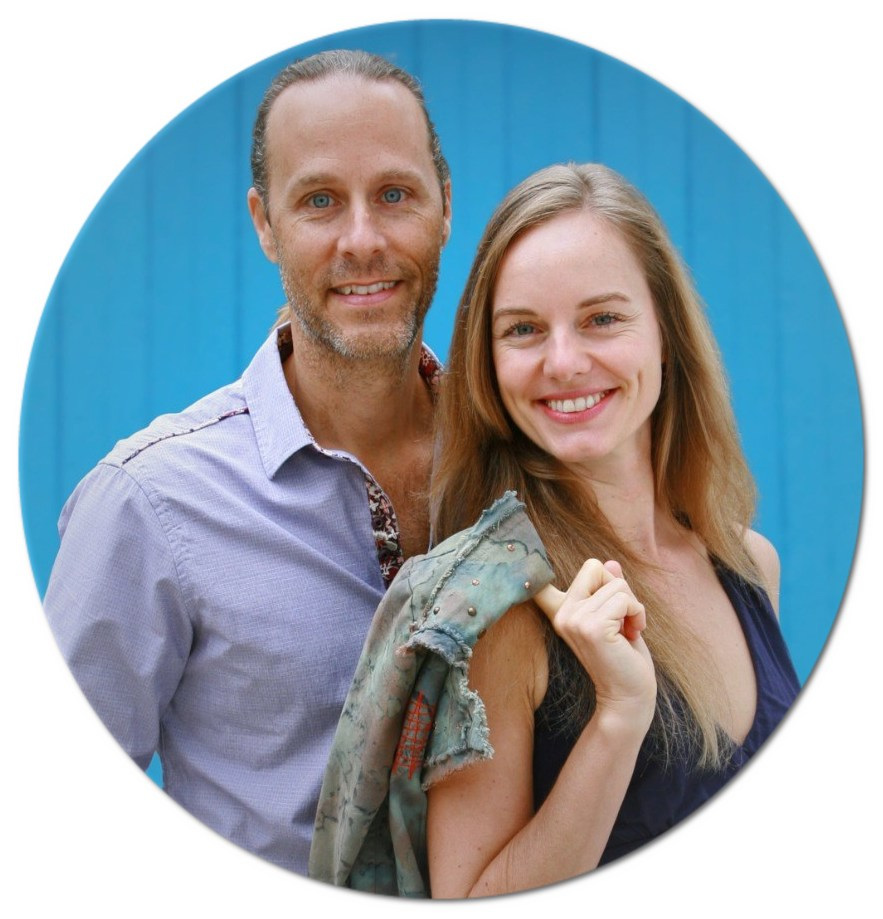
Kevin Anthony and Céline Remy are an international husband and wife team who joined forces to create a worldwide movement of true sexual empowerment. Kevin, “The Truth Warrior,” is a Men’s Coach, Tantra Counselor, and Couples Relationship Coach. Céline, “The Intimacy Angel,” is a Holistic Sexologist, Certified Sexological Bodyworker, Relationship, and Intimacy Coach for men, women, and couples. Together, they are truly the ‘Power Couple.’ They host ‘The Love Lab Podcast,’ and are co-creators of ‘Power and Mastery,’ an online educational training system that teaches the exact process to any man who desires to bring his ‘A’ game consistently to the bedroom. They guide couples and men on how to go from ‘good’ to ‘AMAZING’ in the bedroom and beyond.