Last Updated on November 18, 2024
What You’ll Learn In Episode 248:
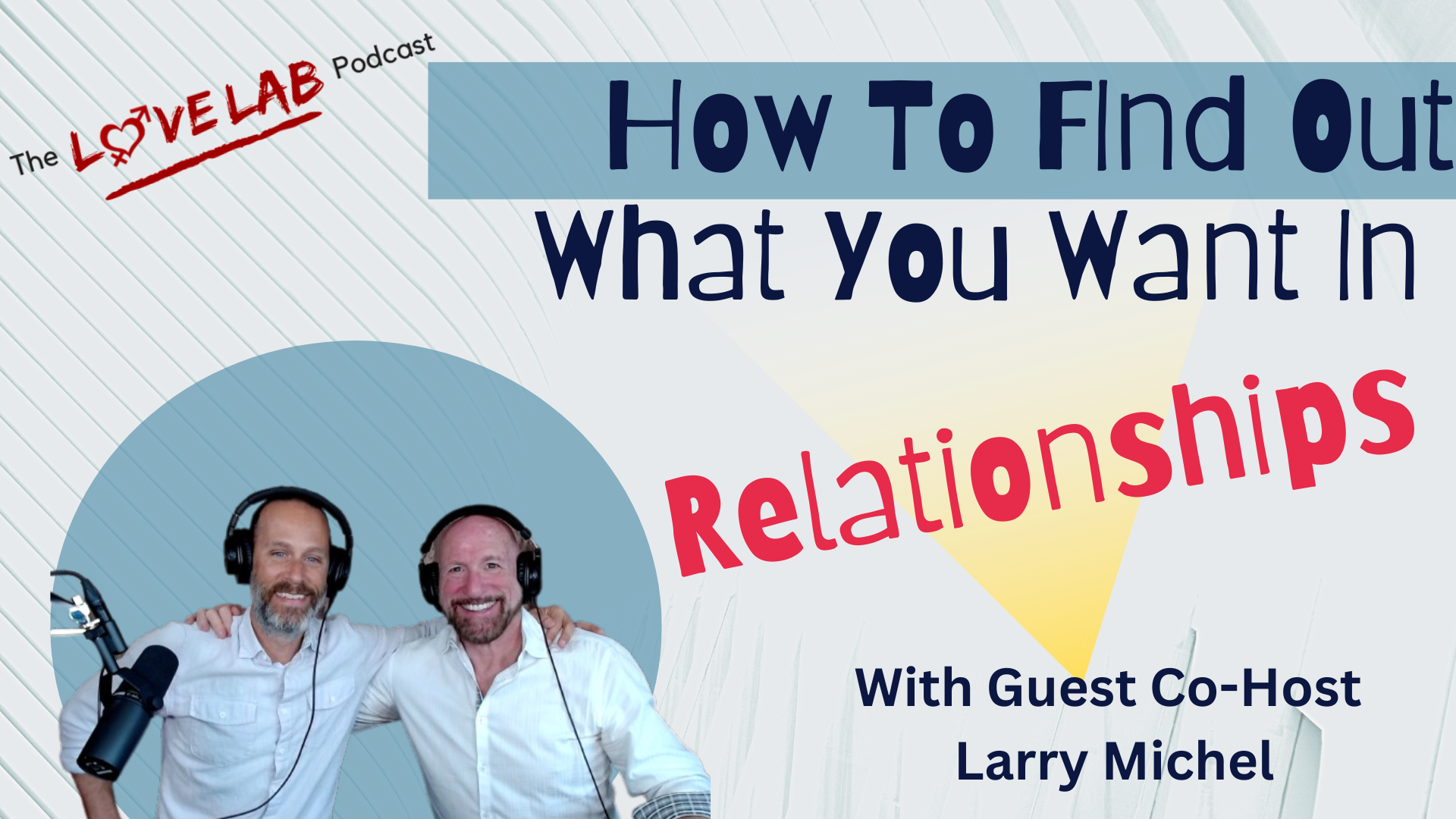
Have you ever been in a relationship only to find out it isn’t what you wanted? Do you struggle to understand what it is you are really looking for? If you are in a relationship, are your values really aligned? In this episode, Kevin Anthony has guest host Larry Michel on to discuss how to really find out what it is you want and how to attract it into your life. You likely have not looked at this topic quite like this before!!
Links From Today’s Show:
❤️ FREE EXCLUSIVE CONTENT ❤️ The Passion Vault → https://www.kevinanthonycoaching.com/vault
👉🏼 COUPLES COACHING WITH KEVIN ANTHONY
https://www.kevinanthonycoaching.com/sex-coaching-couples/
👉🏼 OUR HAND-PICKED PRODUCTS FOR YOU
We have hand-selected some great products to help support your Health, Sex Life, and Relationship! Purchasing products from us and/or our affiliates helps support the work that we do and ensures we can continue to help as many people and couples as possible! → https://www.kevinanthonycoaching.com/products/
Kevin Anthony 0:11
Welcome to the Love Lab podcast a safe place to get real about sex. Whether you’re a man or woman single or a couple, this is the show for you.
Céline Remy 0:20
We are your hosts, Kevin Anthony and Céline Remy and we are here to guide you to go from good to amazing in the bedroom and beyond.
Kevin Anthony 0:28
All right, welcome back to the Love Lab podcast. This is episode 248. And it is titled How to find out what you want in a relationship. So today, as you can see, if you’re watching the video, I have a guest host with me today, we are having a meeting of the beards today. And what I find interesting about that is, you know, you’re a little bit older than I am. Why is my beard so much greater than yours? We’ll find out the answer to that later. Okay. So, you know, one of the things that you see often if you do enough coaching, and in a moment, I’m going to have our guest introduce himself, and you’ll understand why he’s sitting here next to me. But one of the things that you see if you do enough coaching with people is a lot of times people don’t actually know what it is they want. And I see this all the time, you have two people, they’ve been together for 10 years, and they’re sitting there in front of you, and you’re doing coaching work with them. And then you just go, what is it that you really want out of this relationship, and you’ll get like deer in headlights? Wow, you’ve been in a relationship for 10 years, you don’t even know what it is you really want out of this thing, right?
And so today, we’re going to talk about how to find out what it is you really want or anything now, of course, and we’ll talk about this as we get into the show. I recommend that you think about these things before you get into a relationship. But if you’re already in one and you’re not sure it’s okay. It’s never too late to start the inquiry. Okay, before we do that, though, a quick ad from our sponsor, do you want to join the secret club of men who are great in bed and check out Power and Mastery, it’s the most complete sexual mastery training for men. Whether you want to have harder, erections last longer or increase your sexual skills, there is something for you at power and mastery.com. You know, that is the online course the men’s sexual mastery course, that’s something that I created. And there are actually three of them. It’s amazing, still every day I’m getting great feedback from it. So I highly suggest that you check that out at power and mastery.com. Okay, so before we go any further, we must introduce the guest host today, his name is Mr. Larry Michael, and tell the audience a little bit about yourself and why you are sitting here talking about relationship stuff with me today.
Larry Michel 2:51
So that’s like the whole two or three hours. So you want the short version?
Kevin Anthony 2:57
Yes, please.
Larry Michel 2:58
Well, probably the main reason I’m sitting here with you today. Because is because I adore you as a friend. This is like you’re a very special individual in this world in my life. And so this is an honor to be here on the show. I love this. Thank you. In regard to relationships? Well, I have to say, I’ve been trying to figure that one out for as long as I’ve been living. And as soon as I figure something out, I know there’s always more to know. And so it like, there was probably periods of my life where it was very frustrating wanting to know and needing to know. And now I’m at a point where actually, the learning is the exciting part. And so there’s a point where it went from, oh, God, this is painful not knowing to this is exciting, sometimes not knowing, because it gives me an opportunity to courageously step into growth, and constantly being growth. I think, you know, since I was a little kid, I wanted to do that.
But I was doing it with a vengeance, right? And so there were a lot of behaviors that I picked up that turned out to be not very successful if you will. Yeah, shocking, were successful, and they taught me not, you know what not to do the next time. But a lot of conditioning that we get from a young age, that is not the healthiest when it comes to really identifying what we want in a relationship, how to do relationships, how to even, you know, be with ourselves comfortable in our own body and feel like we’re capable of a relationship. That’s been a lifelong journey. And then my work my specific work revolves around a field called genetic energetics, which is the energetic frequencies that people vibrate out. So it’s how we connect with each other energetically because differences create issues, they create challenges and some of those challenges are wonderful, and some of them are really bumpy. And then when there are things that are really aligned, that’s beautiful as well and also can be very intimate and scary for people. So understanding all of that has turned relationships that are filled full of shame and blame and guilt and resentment and all that garbage into something where you get to honor, appreciate and acknowledge people, you know, for their differences, for their similarities, and that’s a whole different way living.
Kevin Anthony 5:32
Indeed it is. So if you didn’t figure it out from his description, he actually does this genetic energetics work and then uses that to help couples and individuals. But the idea is you’re doing coaching work around the framework of genetic energetics. So the reason he’s sitting here next to me is that for many, many years, you have been helping people with their sex, love, and relationships, using, of course, your own unique framework that you have. So you have a wealth of knowledge and experience in this area, which is why you’re going to help me with this. How do we find out what we want in relationships topic that we are talking about today? So we’re going to start with what we’re calling the discipline of inquiry. Because you really have to start there. When I have guest hosts on the show, what’s one of the things is different is I work with the guest host to come up with the content and material that we’re going to talk about here. Whereas when it’s just me, or when I’m interviewing somebody, I created it all myself. So I like to do things very logically. Okay, let’s start at the beginning. So I kind of mapped out like a rough estimate, and then you came in and filled in a whole bunch of stuff. And so I think we were both in agreement that the first place you got to start is with the inquiry.
Larry Michel 6:57
It’s the make-it-or-break-it, really, for not just romantic relationships, but any relationship. So remember, I talked about, you know, my early years, I had a vengeance for wanting to discover the truth or know the truth or, or challenge the truth. And the way I was conditioned was to judge and conclude, right? So if you think about our world, that we’re really set up almost all the time to judge and conclude, you say something is like, that’s that right or wrong? Or that person is wacky for making that kind of statement that you know, and there are all kinds of judgments that happen? Well, the reality is, is that when we judge and conclude, we never ever get to the truth, ever, we might think we concluded and found the truth, but we’ve actually constructed it, right? And when we judge, then we’re making a decision that actually bars us from truly seeing what’s happening. So the replacement for that, and it’s an easy one and an exciting one, once you kind of develop the discipline around it, is inquiry. I mean, it’s so simple. Because inquiry starts with one great question, why? Why? Why is the person upset? Why is the person mad? Why is the person believed this? Why is the person go left or right? And, then accompanied with the why and this is critical, is really being able to listen for the answer. Because a lot of people will ask why. And then they’re sitting there waiting to hear the answer. They want to hear it. Now that doesn’t go does not work. That’s still judgment.
Kevin Anthony 8:38
Well, this is why I laughed when you started out by saying that inquiry was simple. Because on the level, you’re right, it is simple. Just ask some questions. The problem, though, is that people get they let a whole bunch of stuff get in the way of the answers, right? So first of all, one of the things we wrote on the list here is ask yourself as honestly as possible without putting limiting beliefs in that right. So first of all, you have to really be honest, when you’re asking the question, whether you’re asking yourself or you’re asking another person. That means getting your biases out of the way, getting your judgments out of the way and just being open to the inquiry itself. That alone is extremely hard for most people to do. And they don’t even realize that they’re doing it.
Larry Michel 9:22
Well, it’s not a discipline for them, right? By the way, the discipline of inquiry actually comes from a good friend of mine, Stuart Burry, it’s his nomenclature, and I asked him years ago, and I got to be able to use this and, and the key here is like, you know, discipline, which is like a disciple of right, so it is, like, we get up in the morning, we brush our teeth, it’s a discipline, once you start doing it, you do it you appreciate, you know, your teeth being clean and hygiene. It’s like, you don’t not do it. Right. So inquiry needs to be the same way. And if you’re taking the time to ask why not just why someone else but why we feel something, or you’ve got an emotion going on, that is like taking you over, you’re triggered, you’re upset about something, someone pissed you off, or, you know, you’re laughing your ass off, it doesn’t matter. If you even want to know, then you might just enjoy the laugh. But to take the time to go, why am I like, why am I upset? Why am I in this situation right now? Because you can’t just ask why of another person. Right? That’s the other thing that’s really important is like, if you want to know why someone else is doing something, that’s great. And that inquiry space is important. But you also have to ask, Why am I interested? Why am I desirous of this information? So that you understand the relationship? And we’re talking relationships here? Yeah. So and, you know, what, we have relationships with self too. So you could be all by yourself? And all, you know, constrained, right? Well, yeah, no, you got to ask that question. And, there’s going to be beliefs behind it, when you’re asking them yourself. And then the question is, like, is that belief, even mine?
Kevin Anthony 11:12
Oh, that’s a big one. But we’ll get to that within a moment. Don’t Don’t let me forget about that. Because I want to come back to that. But a point that you made that I think is really important is when we think about inquiry and asking questions, we immediately think of asking the other person questions, which is important and valid in its own right. But equally as important, maybe sometimes even more important, is asking ourselves the questions. And that’s the thing is, pretty much everything is an inside job, right? And when we’re looking at how we’re relating, in a relationship, one of the most important things that we can do is CRO and part in that and that’s where a lot of people fail, there’s always, Oh, he did this, or she did that, or it’s always the other person. And it’s really important for us to take a step back and do that process, that discipline of inquiry, and ask ourselves a question, why does that trigger me? Why do I have this need? Is this need real? Why do I have this belief? And now we get to the question, you just said, is this belief, even mine? Or did it come from somewhere else? Was it given to me by my parents from my schooling from society from some other place?
Larry Michel 12:21
Something you just saw on the news. So I want to go there, but before jumping in there, too, I can still get back to that pot. Alright. So so this Y, right, that we’re asking ourselves, this is the piece that I think people, they feel really challenged by, like, they get all bent out of shape because they’re being forced into a situation. They feel like they’re being forced into a situation or they’ve been upset by a situation. Why is it really like, if it really matters to you, acknowledge it. Like if you didn’t care if you said something to me, and I didn’t know you, and I didn’t care about you. I mean, like, just brush it off, what is whatever, right? But when we find ourselves really, upset or concerned about a situation, even like, why did he say that? Or why did she say that? Is that asking back of ourselves? It’s like, why am I even concerned about it, right? And that piece is massively valuable. And it’s super beautiful to just acknowledge that if the person wasn’t important to you, if the situation wasn’t important to you, in some way, shape, or form, you wouldn’t give a shit.
Kevin Anthony 13:40
That is true.
Larry Michel 13:41
You just wouldn’t, right? So if you’re like, all bent up on it, you know, that’s not necessarily maybe a time to give yourself a timeout for a moment. But it’s not really something that you want to avoid and run away from, because it’s showing up and it matters to you. And this is the growth edge. This is where we evolved. This is emergent. So that’s,
Kevin Anthony 14:03
I like that point about if you’re really affected by it, it’s probably because it’s important to you. The only caveat to that is if you have a big ego that’s stuck in the way and then the ego it’s only important because the ego doesn’t want to be wrong.
Larry Michel 14:19
I think that’s a really great point that not wanting to be wrong. That’s a conversation with ego. That’s something you got to work with. Because you know what, if the ego steps in and takes control of you then you’re back to conclusion and judgment. Right? So the discipline of inquiry is, is really a divine state. You know, this is your soul communicating, this isn’t your ego going I want to be right or wrong.
Kevin Anthony 14:44
You’re right. If you were gonna if you were going to plot, the egoic mode of operating in relationships with the discipline of inquiry, you’d see they’re basically on opposite ends of the spectrum. Right? Because the ego just wants to be right. It doesn’t really care about what the actual facts or truth of the situation is. Whereas the discipline of inquiry is all about getting to the facts and the truth. So let’s talk a little bit about, you know, we have a few notes here that sort of guide us through this conversation. One of the things I wrote down was to look back at your past relationships to see what it is that you liked and didn’t like. So like we’re in this process of inquiry, right? One of the ways one of the tools that can help us do that inquiry is to look back at our past and go, Okay, what did I like about that? What didn’t I like about what worked for me? What didn’t work for me? What, how? In what ways? Did I show up that my partner is really liked? And in what ways? Did I show up there? My partners really didn’t like it, what do you think about that idea?
Larry Michel 15:42
Well, I think it’s, I mean, it’s important, right? There’s an end, there’s a potential trap there. See, this is good. So to definitely look back to be able to evaluate a situation and go, did I do good? Did I not do good? What did I really value? What did I didn’t? What did I, not value? Because ultimately, when we get into, you know, how you decide who you want to be with, and what you’re looking for values are going to play a critical role. Right? So to look back and go, Well, that was really important to me. Why? You know, how did I show up, or I was really an asshole, in that relationship, you know, or I just, you know, I was all into my own stuff. And it’s no wonder that she or he left me or wanted to go elsewhere because I wasn’t truly in the relationship.
So you can look back and go, what was going on for me at that point in time? And you make it clear that you know, I was just focused on occupation, I was focused, I was driven to follow through with whatever career direction I believed I was supposed to be going on. And that took the first precedent, even though I said I wanted to be in partnership. Right? So and all of this helps because when you step into a new partnership, you get to ask yourself, Where am I now, in relation to where was I before when things seemed to be working great and fell apart? Or where things were never working great, and had such potential? You know, so that looking at the past is great for being able to evaluate how you behaved, but living in the past? Yes, so like, you know, you know, I’ve worked with hundreds of 1000s of women over the years, because, you know, in the space that I’m working in, women flocked to this much more than men have.
And thank you, men, they’re showing up today, like they never have before. But even still, you know, in, in the dating world, women would constantly say, I don’t want another cheater, right? I don’t want a cheater. And they’re asking the wrong question. And they’re focusing on the wrong thing. What they really want is someone that has integrity, someone that knows how to communicate well, someone that will speak to their needs and desires, and really will be authentic and radically honest, right, that’s what they want. But when they say I don’t want another cheater now where they are, is in that past relationship, experiencing the cheater and asking the universe for another one.
Kevin Anthony 18:29
Right? Yeah, the better question for them to ask is why do I keep attracting cheaters? What do I keep doing that keeps bringing these people into my, into my world?
Larry Michel 18:37
Actually, a better question to ask is, How do I attract what I want? So if you ask, if you’re focused on the cheater, what I’m saying is you’re inviting an O Tonin. So it’s definitely great to ask the question but ask for what you want, not what you experienced in the past. And that’s, you know, that the whole point there is like, if you’re gonna go back and evaluate, do it understand, but not to project into the future, one of your challenges.
Kevin Anthony 19:06
And that’s a great distinction. So ask my question first, so you can figure out what you’re doing wrong, and then move up, move beyond that. And then ask your question, which is, how do I move ahead forward? This whole idea of asking questions about the past is really interesting in a lot of ways. So, you know, Céline and I, when we were doing coaching together, we made a very conscious decision to not dwell a lot on the client’s past, which is something that traditional therapy does a lot. Let’s spend the next three years diving into your childhood and your past and, and all of that. And what we found in doing coaching work was that that did exactly what you were saying is that was getting people to just basically live in the past. Because if you focus too much time on all that stuff in the back, they’re just reliving the past and re-traumatizing themselves over and over again. And at the same time, there is some value and understanding where you’ve been so that you can attempt to not repeat those patterns again,
Larry Michel 20:07
You just don’t need to really spend a lot of time. And that’s the key.
Kevin Anthony 20:12
You do a little inquiry to figure out the main points, and then you move on to the future from there. So, you know, what I find is interesting is, a lot of times when I start coaching clients, they don’t talk really about the past at all. And I always ask them questions about the present. But what I often get are answers from the past. So the perfect example is just I was on a coaching call last week, and this particular individual is having difficulty having sex with his wife. So that’s what we’re working on is how we can make sex between the two of you better, more frequent, nobody’s in pain, you know, there are always different things that come in there. And so I asked him a very specific question. And he came back with an answer. And really, the question was focused on the present moment, like the last time you guys had sex, that’s what the question was about. But the answer I got back, he started by saying, well, well, and they’re married, and they’ve been married for a long time. Well, back when we were dating, and right away, like far back was, that’s exactly my point. And so I listened to him telling me the story. And I said, Okay, I said, So I heard you say that this was back when you were dating, I said, ask yourself a question. Is that still valid? And he just went silent.
Larry Michel 21:34
Yeah. Yeah. The reality is to look at that. It’s like concurring in judgment. What you have to do with that is you have to pull things out of the past, you have to project onto the future. Right? Neither of those exists today. Right now, there is no past. The past is a construction. If we’re not good at remembering exactly what even when it happened hours ago, right? years ago, it’s definitely a made-up story. That No, and I want to acknowledge there are people that have had severe traumas, those exist, I’m not trying to negate them. And sometimes they require work you need to go back and deal with, but for the most part, experiences that we’ve had in the past, are not even revealed accurately anymore. And then if we’re looking into the future, and now we’re projecting something else, and both those circumstances, past future, we’re not present. And what we need to deal with, is what exactly what you’re talking about, we need to be in the present to address what’s true now. Right?
And it and look at, if we’re looking for the heart and where it’s at, it’s only in the present. It’s only in the present. Any other places all made up of great love stories, wonderful. They can make you cry, do all those kinds of things. But right now is what’s truly happening. There’s, there’s just no way around that. And so I appreciate the way you coach the way I coach as well. And oftentimes people will start talking about the past. And my question is, what’s happening now? What’s true for you now? And you do you get that kind of blank at once someone finally gets into that, and they allow themselves to be present with what’s true, present with the emotion that exists in this moment, present with the need and the desire that exists in this moment, that communication is potent, and it’s revealing, and it’s moving. It’s inspiring, it’s creative, it’s courageous. It’s all the things that a quality relationship requires.
Kevin Anthony 23:48
Yeah, in that particular case, when he was done being quiet, he said that that was a major light bulb that went off in his head, because he realized in that moment, he was holding on to a story from the past that was no longer valid. Perfect. So and there, you know, there’s, there’s value in seeing the past, as we just said, but mostly just so we can see how they’re repeating the patterns in the present. How are we How is that dictating what you’re doing right now?
Larry Michel 24:14
And there’s the question like, if it’s a repeated pattern, why is this repeating? There’s because the answer to that is going to be some belief system, or some drama or trauma or some conditioning, that then you can address. Right? That’s the time to address something from the past when you see repeated behavior. But it’s not the behavior. It’s why that behavior happened. Right? You can look at that and people go, Oh, wow, I never even thought about that. And then it’s done. And it’s done. They have this awareness. And with that awareness, they embody it. There’s a transition.
Kevin Anthony 24:56
Boy, we got a lot to talk about. almost halfway. threw the show. Let’s do this. Let’s take a short break for the second sponsor. And then since we’re talking about the past, I want to talk a little bit about mistakes, because we have a whole section in here about mistakes in the past that should not be mistakes in the future. Certainly not me. All right? Are you a couple are your relationship and sex life where you want them to be? Are there changes you would like to make but don’t know how? Maybe you think there’s nothing that can be done, I challenge you to make this year, the year that that changes. If you’re not 100% happy with where your relationship or sex life is, then get help today and change your life. Go to KevinandCéline.com/sex-coaching-couples, I know it’s a mouthful, that link Don’t worry, it’s in the description. Schedule a strategy call with me today. So we can map out how to get you where you want to be. Again, that is KevinandCéline.com/sex-coaching-couples/ link is in the description.
Okay, so let’s get back to we were just talking about the value of the past and also the trap of the past. One of the things we wrote down here was that mistakes in the past should not be mistakes or the future or, in parentheses. Guilt won’t get you anywhere. It doesn’t. So, so let’s kind of let’s dig into that a little bit. So okay, what we delve into the past a little bit and we figured out we’ve made some mistakes. What do we do then? Like, where do we go from there?
Larry Michel 26:34
Well, it’s a big open world that question, do you want to give me a specific?
Kevin Anthony 26:40
Well, so where I’m going with that is this. So we’ve told somebody that there’s value in looking at the past and seeing potential patterns that they’re repeating in the future? So now I do that, and I go, Oh, I realize I have a pattern of being distant in my relationships. What do I do with that, then?
Larry Michel 27:03
So there’s the why, right? If you’re going to go into the past, and you’re looking at it, why have I been distant? What was going on for me at that time? And, and, and really allow yourself to just, you’re not looking for just one answer, there could be many answers. But you know, why was I distant? Well, you know, I was very feeling very insecure, or I felt insignificant, which is a huge piece that almost every human being feels at one time or another and it’s devastating, right? So that’s that sense, that doesn’t matter what I’m going to do, it’s not going to make a difference. So now you know where the tendency is, is kind of to settle into routine behaviors that are comfortable, but ultimately, not engaging or successful for relationships.
So that, you know, that reveal, where was I? What was I doing? And then when you get that piece, is that true? Now? Am I there now? Is there pieces of that now in me that I was in my fallback mode? Right? Like if things get too difficult, too tough, too challenging? Am I going to like quiet, and get complacent? Or get very private? Right, which is all of those are very difficult for a quality relationship. And, and then ask what, you know, where do I need to do? Maybe there’s work for me to do there? Personal work is like, how do I develop a sense of, importance, self-esteem, right, that allows me to, to speak about what I want to say, or feel like even what I have to offer is important. You know, there are many, many situations where I’ll have a client who says, I didn’t feel like I really had permission to say that, you know, that, that I really wanted this, but I was afraid to ask for it. Right.
And what they were afraid of is that someone would have just not been, would have not acknowledged it or not seen it. And you know, none of us want to be able to say want to say anything that gets us zero response. Because it feels it feels like you’re just not seen. And if there’s anything that’s important for all of us in our lives is to feel seen and heard. And this is where inquiry is so important, by the way, because when someone asks you a question, just turns around and says I’m curious. Why did that bother you? Why did you say that? Why did you take that action? I’m really curious and is truly willing to listen, that, you know, it’s almost like it’s impossible for us not to respond to that. Because that invitation to be seen and heard is so powerful, and it’s so meaningful. So we’ve kind of dwindled a little bit got a little bit away from that question. But you know, the key is, is you’re really looking for an answer. that’s gonna help you better understand where you are right now. And by the way, that answer might say, you know, I need to go, I need to find someone to help me here. Oh, absolutely, yeah. So don’t try and do this on your own. You can do it on your own great. But also give yourself permission to talk to a professional, talk to a good friend, you know, and not necessarily for advice, but just to, for reflection, talk to a professional for insights, who can help you guide you through that inquiry path?
Kevin Anthony 30:31
Yeah. And so, so really, the answer to the question is identifying the pattern is kind of like step one. And then you’ve got all these questions, all this inquiry that has to happen to figure out why that pattern exists, and then what you can do about it. So something else that may come up when somebody is doing this particular process is recognizing the patterns and then feeling guilty, feeling shameful feeling all kinds of negative emotions. And so, okay, let’s say that happens. What do you do with that? Like, for instance, we said, Here, guilt won’t get you anywhere. It’s kind of one of the subtitles of this section that we started, so, okay, if it’s not going to get us anywhere, what do we do with it?
Larry Michel 31:19
Well, guilt, shame, blame. All of those are, again, concluding and judging, right? So if you’re, if you’re pointing a finger, if you’re in judgment, if you’re feeling guilty, you’re not going to get to the real reveal, if you will. So, how to take responsibility for your actions, even if you want to do this privately by yourself, take responsibility and step into them. Don’t make yourself wrong, know that. Look, we all do the best we can with the resources we have at any given moment in time. I’ll repeat that we do the best we can with our resources at the moment.
Kevin Anthony 32:10
I’m giving you a truth bomb for that one because you’re absolutely right.
Larry Michel 32:14
So if you did something really shitty in the past, your resources probably sucked. And, they sucked in such a way that you were either controlling, or you just made a blunder, or you made a statement that you weren’t paying enough attention to the other person’s needs, or desires or presence or even your own understanding. You just wanted to get someplace fast. Right? That this is like, what were your resources? I had an altercation a couple of weeks ago with someone pretty important in my life. And it was one of the most severe experiences I’ve had in decades. Right. And, you know, my first reaction, I have a martial arts background, like I was doing everything I could do to control myself in this situation. And a lot of anger came up, which, you know, he was able to get that down quickly. But ultimately, the question was, where was that person? That behavior came out?
Where was I, that I was the recipient of it? And my response and their response to the situation? What resources did we have to be able to handle them effectively? Right to drop into inquiry? And without that question, without that, kind of those, there’s one of those ways where was I you know, this other person had been working on moving, they’d been working for like 36 hours packing trucks, lots of emotional stuff, resourcefulness, probably at about a two, right? And I was going through some other emotional things, resourcefulness, maybe a three and a half, right? So you, you know, on a scale from one to 10, you got five and a half points there when it could be 20 Look for things not to go quite right. Or to be a bit bumpy. And you had to really step back and go and appreciate that the resources were depleted. Otherwise, there was just too easy to go into a place of anger or upsetness or shame or blame, and none of those accomplished anything. So, you know, there’s a whole nother conversation, which is love. We’ve gone down that path and another show for it. But you know, people talk about the importance of being in our heart to truly be loving. We can’t do that when there’s shame, blame, guilt, resentment, judgment. It just doesn’t exist. It does not exist in that space. So you have to get rid of those and you’ve got to get to a place of honor, or appreciation or acknowledgment. And it might be just acknowledging that our resources sucked, right?
Kevin Anthony 35:10
Indeed, and you’re right, we could do an entire episode on that. Like, if we were really, if we really wanted to go into, you know, how do we deal with situations when they arise in a relationship where you know, whether it’s an argument or disagreement or whatever it is negotiation, like, that’s a really important piece to keep in mind is, where is somebody at? How resourced are they at that moment, but I don’t want to go down that path. Because, you know, we got, we got a few more things that I think are really important to talk about, because so far, we’ve basically told everybody, okay, here’s how you figure out what you want in a relationship. Right? So you do this process of inquiry, and part of that process is to see patterns and things that happen in the past. But then the next part is looking more toward the future. And so one of the topics on here is, you know, values are key, right? And so I want to talk about, like, how do we figure out what our values are?
Larry Michel 36:11
Gosh, this is such a great question. And it’s, it’s, it’s one of my favorite things to do with couples. In fact, I didn’t use to do it from the get-go. And now I’ve shifted, that when I’m looking at relationships, we’ll do a values elicitation, right from the beginning, or as close to the beginning as we can. And the purpose for that is, is that knowing what we value and know how our values relate to our partner’s values, is essential for the success of a relationship. Creating a vision and a desire for what that relationship will look like. And how we want to contribute to the world or each other is going to stem from the understanding of the values that we have. So there are really kind of two different kinds of values, there are ends and means values, right? And a means value is like, you know, I love to go skiing.
So skiing is not really the value, it’s a means to an end, the end’s value may be that I love to be in nature. Right? And, like, if I don’t get a chance to be out in nature, my body everything feels like it’s, it’s not right, right. It’s atrophying or something right? Something doesn’t feel right, because I know this, because if I go out on a hike, all of a sudden in my matron, I’m going, Oh, God, I can’t believe I have not done this for so long. You just your body tells you, if you listen, this is attunement. To me, it’s really important. To me, it’s a critical ingredient of emotional intelligence. And noticing how you are in tune with nature is really, really important. How does your body feel? How does your mind feel? So again, you got to separate between means and ends values. Now, let’s say that you and I are in a partnership, and we both have nature or exploration is our ends values. Right?
But we get there totally differently. Right? Like you love cross-country biking, right? Or just, yeah, I mean, it’s this is like a passion of yours. And I may be scared to death of being on bikes, but you’re looking for someone that you can go out and bike with. And you know, whether it’s traveled 15 hours to a great place and a great hill and a great experience. And, we’re thinking well, you know, I want time with Kevin. And I want time with Kevin when he’s really passionate about something that’s most important to him, which is this adventure thing. But my way of getting that is I like to be out in nature, but it has to do with being around warm water and sandy beaches and walking in the sand. And so there’s like a completely different environment. You like snow. I like the hot. And we sit there going well. What does that mean, for this partnership? We have a similar ends value. But the way we get to it is very different.
Kevin Anthony 39:22
Yeah, I like that distinction that you’re making between the ends and the means values, because I think a lot of times most people if they’re even thinking about values, which a lot of times they’re not a lot of times people aren’t really thinking about it. And I say this because when you work with couples, you see their totally value misaligned, right, and you’re just like how in the world you’re even together, it’s obviously because they never really took the time to think about the values and how important they were to them. But even when they do, I don’t think a lot of people make that distinction. Because you’re right, the time in nature is a value that we might both share. But we have very different ideas of how we meet that value. And that can also be a problem. So you’re not just looking for alignment in the overall ends value. But you’re also looking for alignment in the means value
Larry Michel 40:13
and how you get there, for sure. And it works actually, what’s interesting, when I asked people to list out their values, usually what they’ll do is come up with a list. And once they get going right to get brainstorming, they get a list of all kinds of things. I like Thai food I like, you know, from I like movies, I like going to concerts, I like swimming in the ocean, it’s just all these different things. And it could be a list of 50 or 60 items, right? And then the question is, alright, these means, tell me when you do this, what does it really do for you, and we get to the ends values. And then we look at how those ends values align. And then we go back and ask now let’s look at how you know that you’ve really experienced that NS value.
And the interesting thing that happens there in a really quality partnership, is freedom is experienced on a new level. And so for example, I’ll come back to the example I used with me and you, right, so let’s say we’re best friends. And you know, we love spending time with each other. And this nature thing comes up, right? Well, I don’t feel bad because you went off on a bike trip, and you don’t feel left off, because I went out to, you know, to the warm blue ocean. In fact, as friends, we really can appreciate that that’s important to us. And it’s like, dang, have a great trip, I can’t wait to hear about it when you come back. couples need to be able to do that, too. There are couples out there that do everything together. Those are kind of miracle relationships in many ways. But the couples that I think are the strongest that I’ve seen are the ones that really can appreciate what their partners love to do. And they give them that space and freedom to do it. And it’s not that they give it they actually embrace it. Right? Your partner’s taking the space, they’re giving it to themselves, the other partner is actually embracing and honoring it. And it just feels so good.
Kevin Anthony 42:19
So Celine and I were both of those, in a sense that we did everything together, we shared all those same values, except there’s one thing that she had always said to me, she’s like, you know, that’s just not my thing. And that’s mountain biking. Now she liked to ride bikes, we would go you know, on the street, or by the beach, or do that kind of thing. But when it comes to bombing down mountains at 40 miles an hour, or even just, you know, half that, you know, like the average person’s mountain bike idea. She was just like, No, that one’s just not for me, right? But she always gave me the space to do it. And in fact, when I bought my most recent mountain bike, they are ridiculously expensive these days, and, you know, given the situation that we were in as people know, I wasn’t comfortable spending that money on a mountain bike, and she was the one that really pushed me to do it, I absolutely would not have purchased it if it wasn’t for her, she was the one that kept saying you need to do this, you need to do this.
Larry Michel 42:53
So there, I mean, that’s such a perfect example. So there’s an alignment with values, different ways of getting there, and a complete appreciation for how important it is, and an understanding of what it really does for you, right? If we’re operating in this world, without an awareness of what is most important to us, then you’re for sure going to hit some big bumps. And usually, they’re going to come by surprise where all of a sudden someone is upset at you angry at you, or you’ve done something disastrously stupid. Right? And, and you’re not even aware of it, because our self-awareness of what’s important to us and how we are fulfilled is not there. I mean, relationships. When I grew up a relationship when you got married, it meant that you’re going to have a house with a white picket fence, you’re going to have 1.2 dog, 1.5 dogs or cats, and you’re going to have two or three children, and you’re going to have an occupation that was going to last until retirement.
I mean, what you know, even decades ago when a lot of people strived for that, it wasn’t very successful. So the most successful people if you look at him in history, they started one thing started another thing emerged into something nails completely went through evolutions of their occupational desires and directions, reinvested, learn more. But they weren’t trapped in this pre-conceived pre-designed relationship, bubble. And so relationships today are not like that. And what that means is that we need to know our values, we need to be able to acknowledge the values of our partners. And then as a partnership, we need to create a third entity, yes, which is the relationship itself. And that’s the piece where we want the most stability. But where we want to give ourselves the most liberty is for individually us to change and grow, because we’re going to do it right. And not doing it becomes very damaging. Yeah, that’s like, basically, if we’re not growing, we’re dying. And in a relationship, if you’re not growing, you’re dying.
Kevin Anthony 46:03
Listeners of this show, have heard Celine and I say that many times your relationship is either growing or dying. Thank you for reinforcing that. Because we have said that a lot. And that’s really the truth. You’re either working on and evolving it, or it’s going in the other direction. It is because nothing ever, anywhere in nature, or this world that we live in, ever stays static,
Larry Michel 46:25
Right. And that’s not just relationships, that’s you individually to if you’re on your own, you decided, look, I don’t want a relationship. I’m happy with my friends. And I don’t want a close romantic relationship. If you’re not growing, you’re dying. Yeah, absolutely. I got another thing you know, about working with a lot of women is they would, they would say to me, you know, I don’t want another cheater. And we bust that one. We get them out of that routine. But there was always the question of how come older men always want younger women. And my answer to that is that they actually don’t, they want women who are young at heart. They’re not looking for just another beautiful young body. I mean, that’s probably more trouble than it’s worth in some situations, with one is someone who’s young at heart. And by the way, women, if you’re looking for a guy who has it all together, they got plenty of money, they know exactly what they’re doing, that’s probably not going to work either. Because that person’s not growing or changing. You need someone that is constantly growing. And it doesn’t have to be massive growth all happening at once. But there’s progression, right? There’s like I want to learn, I want to continue to learn I am until the day I leave this earth, I will be learning things.
Kevin Anthony 47:46
I’m giving you another truth bomb because that’s what we should all be doing.
Larry Michel 47:55
Either that or I’m dying sooner than I plan.
Kevin Anthony 47:59
Indeed, okay. So we told everybody they need to do the process of inquiry, we talked about the importance and the traps of looking at the past and how we can use that as a tool to figure out what we want in the future. We’ve talked about how important values are and figuring out what your values are, what their values are, and where there’s alignment in those values. There’s one more thing that I want to talk about, we’ve only got a few more minutes to do it. But it’s how your self Image aligns with lifestyle, and how that is used to draw in what you really want. So this is again, a bit more I think, self-reflection. But basically, I just want you to talk a little bit about how does our self-image impact this whole process that we’re we’re talking about?
Larry Michel 48:50
Well, that’s a really good question. And I don’t get asked that very often. So I really want to think about the answer.
Kevin Anthony 48:59
Well, you threw the topic out there about self-image.
Larry Michel 49:06
Well, we could go there and talk about so, you know, when I think of self-image, I think where my mind was going is like what is the ego telling me I must have, okay, and I think the ego gets in the way that definitely gets in the way of the discipline of inquiry. Right? So self-image at this stage I’m really believing my belief that is that self-image comes in and reveals itself to us rather than us deciding what it should be. And I think the way that happens is as we allow ourselves to notice how we navigate life, what we move towards what we move away from it begins to give us a definition of how we’re most comfortable showing up. Right? How we’re most comfortable engaging. And with that is, is a sense of, you know what? I love to laugh.
And so laughter and playfulness is something that, that I know is very important to me. And when you like, embrace that, that becomes you, right? I mean, you really give yourself the sense of what you want, what you desire, how you like to be. Conversation, and inquiry, is like really important to me. To me, intimacy is critical to me. And I’m not talking about, sexual intimacy or romantic intimacy, I’m just intimacy, period. And there are different levels of it. And I realized now that I don’t even like to engage much unless I can have an intimate conversation, right? One that is open, honest, vulnerable, courageous, radically, radically honest, you know, open to even change in expression that could like oh, well, I never thought about that. Because that’s exciting to me. So if I don’t have an opportunity for those kinds of conversations, I’d rather read a book or watch a movie, or do something else. So what’s that say about my self-image? Am I an introvert now? You know, am I standoffish? Do I not want to engage with people? No, I just know what that engagement looks like. And I know what really turns me on.
Kevin Anthony 51:42
If so, so that’s kind of where I was going with this self-image thing. And you got where I was hoping you would go, which is this. Which is that a lot of us construct this self-image. The problem is, is that self-image isn’t necessarily who we really are. Because a lot of times we’re projecting that out, this is how we want people to see us. This is what we want people to see, oh, this is who I am.
Larry Michel 52:07
Or what we believe people want to see.
Kevin Anthony 52:10
Yeah, it could also be what we think other people want us to be in, okay, well, we’ll step up and be that right. And so what’s important is we look at that self-image, and we ask those questions, again, is this who I really am, because if we’re making decisions about who to be in a relationship with and how to be in a relationship based on our self-image, and that self-image isn’t real, it doesn’t align with our values, as we were just talking about, then we’re obviously going to make poor decisions and attract wrong people in our lives, right? So the idea is, okay, let’s take a look at this self-image. And it’s like, you know, one of the notes written here, is that self-image real or an act? Is it based on who you truly are? Who you want to be? Right? And this is why we said at the beginning of the show, you got to be really honest when you’re doing this, this discipline of inquiry practice, and you got to answer those questions, honestly. Because you’re, you’re not only are you hurting the other person by making bad decisions, you’re just hurting yourself, because you’re just gonna put yourself through torment and torture and have a bunch of failed relationships that were nothing but drama.
Larry Michel 53:18
Yeah, yeah. And you’re really looking? We’re looking for the truth in the moment. Right? What’s our truth right now? And I’m gonna put a distinction there that I think is really important. Looking for Truth is not the same as looking for proof.
Kevin Anthony 53:39
That’s not even a distinction. That’s just a fact.
Larry Michel 53:42
Most people are looking for proof
Kevin Anthony 53:46
Proof of their preconceived ideas rather than looking for the actual truth. Right.
Larry Michel 53:50
And so my axiom there is that we must stop looking for proof and allow ourselves to be surprised by the truth. Right? That, that when that awareness comes up when you get clarity going, that’s it. It’s really a surprise, right? And surprises are delightful most of the time, right? Sometimes they’re a little edgy and bumpy, but the fact that it comes to you not because you constructed it, or you tried to fit a round peg into a square hole or vice versa, whatever. It is again this inquiry direction that is allowing for real visibility of yourself and others to actually identify what is true right now. And by the way, we’re not going to know what’s true. 10 weeks from now, we probably don’t very well know what was actually true in the past because it’s when we allow ourselves to see the truth in the present.
That gives us the ability to drop in, see how it aligns with our values, see how we’re in tune to it in our body and our mind, and our soul. And be in the delightful surprise of that, then, you know, it’s a flow state really, Kevin, it’s like, you know where you are, it’s timeless. It’s not constrained and restricted. And you just like, there’s a sense of comfort in your body. That is almost it’s disease-free, dis-ease, free, right? And that sense of comfort, we all know it, because we have it, there are times when like, you’re so relaxed and comfortable. And a lot of us don’t acknowledge it when we’re in that space. But that’s like the time to just go. Yeah, this feels really good to me. And that’s an insight into who and what you are and how you wish to be. So now, when you’re looking for a partner, come from that place, find the person who aligns with you, and where you’re most deliciously expressed. Comfortable, and open to growth. And, and feel energized and inspired by what it is you’re doing. And don’t try and create something different than that. Because that’s going to produce someone coming to you that’s so different that it really they don’t align with you, be you, right? Oh, yeah, be you.
Kevin Anthony 56:42
Here’s another truth bomb. You had to get a third one. I don’t know if I’ve done three in his show in a long time. But yeah, be you. Right? It doesn’t get any more basic than that. And yet difficult for a lot of people.
Larry Michel 56:53
Well, you have to just be courageous.
Kevin Anthony 56:58
We’ve just got a couple of minutes (an actual couple of minutes). Last words of advice for the audience, when it comes to how to figure out what they really want in a relationship. What do you got for him?
Larry Michel 57:13
Well, we were just there. I mean, we were really just there. You can look at all your past experiences and go, what worked, what didn’t work, what did I love? What do I want more of or one more of with a slight variation? Drop into how you truly wish to be. Consider what you enjoy the most. Look at your own values and how you get there. And ask for a partner on that ride. And, and allow that person to show up. If you go looking for them, don’t go looking for proof. This is what people do on dating sites, it’s, you know, the percentage of success is so tiny, right? Or they go on a date and they size someone up quickly looking for proof. Don’t do that. Go in that discipline of inquiry. Be curious, and be willing to discover. Notice what turns you on? What excites you, what inspires you? If you meet someone that does that? Whether they’re your perfect match forever? I can’t tell you. But I can tell you if you meet someone that does that for you spend some time there. Spend some time there and find out because you may be really surprised if you’re looking for chemistry 50% of the people are looking for chemistry that steers them the wrong way. This is science. This is genetic, energetic science, right? So chemistry is not your indicator. But they’re not even close.
Kevin Anthony 58:47
I can’t even tell you how many times I’ve had that conversation. I’m like, no, what you’re experiencing are chemicals. And that’s not what you’re looking for. We won’t go there. It’s a whole nother show. My last and there’s a way more that we could say in this topic, but I think we’ve given that answered your question. Yes, I think we’ve given the listeners a pretty good place to start. The only last piece of advice I will throw in there is that once you’ve figured this stuff out, write it down. Write this down. Once you figured out what the values are and all that, write it down in the list, it helps.
Larry Michel 59:20
Yeah, go back to it, by the way, improve upon it, cross things off, and move things around. Put your values in order, by the way, oh, that’s good so you know, once you’ve got your list of values, your ends values, then decide which ones are most important. For me exploration is number one, right? And I know that and knowing that puts everything in its perspective immediately.
Kevin Anthony 59:45
So write it down. And of course, as you mentioned earlier in the show, get somebody to help you with all of this, whether it’s working with me whether it’s working with Larry, whether it’s working with somebody else, find somebody that can help you really hone in on what those things are Okay, before we sign off, tell everybody how they can find more about you and the work that you do. Cool.
Larry Michel 1:00:09
Thank you. Well, the work I do is called genetic energetics. And I’m the founder of the Institute of Genetic Energetics, we have a website that’s called the four answers spelled f o u r spelled out the four answers. And we’re going to put in the notes write a link, so that you can go and get what we call a personal energetic profile. And this is a profile that’s going to define for you how you communicate how you operate, how you process information, the speed that you run your life, your relationship to money, and how you do sex. So this is critically important. It’s going to define chemistry for you, and then give you some other characteristics that are super valuable. It’s a baseline, because this is really your energetic blood type. So it’s not the end all be all of information. There’s lots of great information out there. But in my decades of work, this has been the most profound information that I’ve ever dealt with. So you’re gonna get a link to go get a free profile.
Kevin Anthony 1:01:14
Yep. Link is in the description. So go check that out. Larry. Michael, thank you so much for being on the show. It was a great conversation.
Larry Michel 1:01:20
Thank you. Appreciate it.
Kevin Anthony 1:01:22
This is great. All right, everybody. That’s all the time we have for this episode. And I will see you next week.
We hope you liked this episode of the Love Lab podcast. If you enjoy this show, subscribe. Leave us a review and share it with your friends.
Céline Remy 1:01:39
And for more free exclusive content. Join us in the passion vault at kevinanthonycoaching.com/vault. That’s kevinanthonycoaching.com/vault. Thanks for listening. And remember, you’re amazing!
We hope you liked this episode of The Love Lab Podcast. If you enjoyed this show, leave a comment and share it with your friends.
RATE & REVIEW THE LOVE LAB PODCAST
—> LEAVE A 5-STAR REVIEW ON APPLE PODCAST
ASK A QUESTION FOR THE NEXT EPISODE
—> Click here to leave a message directly to Kevin and Céline to be answered on the air.
Thanks for listening and remember you are amazing.
Kevin Anthony is a Certified Sexologist, Tantra Counselor, NLP Practitioner and a Sex, Love & Relationship coach. For over 10 years he has worked with men, women, and couples to have the relationships of their dreams, and the best sex of their lives! He is also the host of “The Love Lab Podcast”, creator of the popular YouTube channel Kevin Anthony Coaching, and creator of the popular online course series “Power and Mastery” as well as other online courses for both men and women.