Last Updated on November 18, 2024
What You’ll Learn In Episode 298:
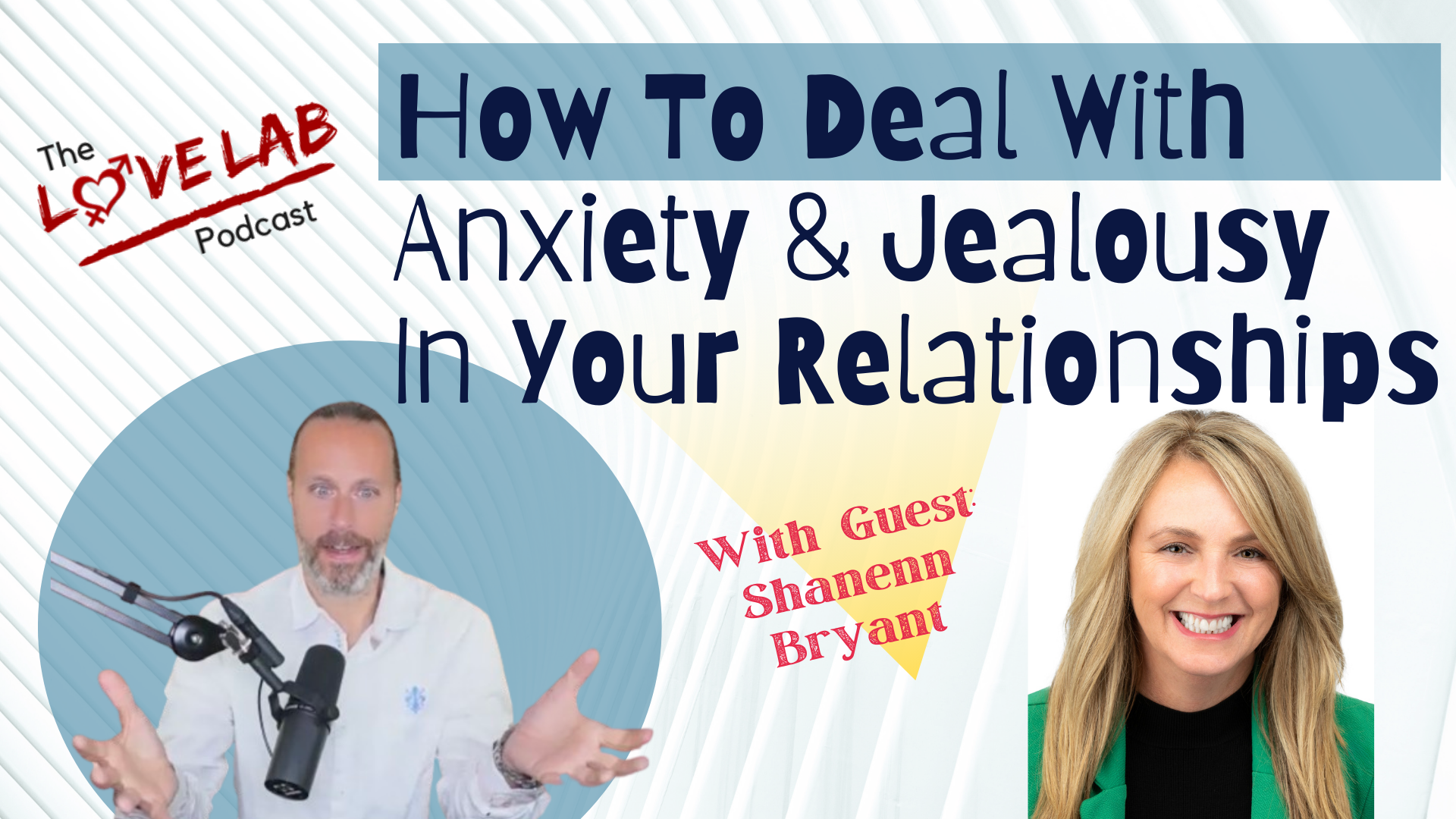
Do you or your spouse suffer from jealousy? Do you know the difference between envy and jealousy or jealousy and toxic jealousy? In this episode, Kevin Anthony speaks with relationship confidence expert and the founder and CEO of Top Self Shanenn Bryant about what jealousy really is, the difference between jealousy and toxic jealousy, what causes it, how it shows up in relationships, how to deal with it in the moment when it arises, and what you can do long term to heal it. This is the deepest dive we’ve taken yet on this topic and it is likely to help you see jealousy at least a little differently.
Links From Today’s Show:
To Find More Out More About Shanenn Bryant, please click the link below:
🔥 POWER & MASTERY 3.0 IS HERE!
The most complete men’s Sexual Mastery Course is now even better. To find out more go to https://www.powerandmastery.com
❤️ FREE EXCLUSIVE CONTENT
The Passion Vault → https://www.kevinanthonycoaching.com/vault
💪 MEN’S SEXUALITY & MASCULINITY COACHING WITH KEVIN ANTHONY
If you are ready to make big changes and finally become the man you have always wanted to be, then Unleash Your Inner Warrior Program is for you → https://www.kevinanthonycoaching.com/go/warrior
💪 BECOME THE MAN OF HER (& YOUR DREAMS) COACHING WITH KEVIN ANTHONY
Become the man she has always dreamed about and craves. Become the man you have always wanted be; the man who has it together and is a Master → https://www.kevinanthonycoaching.com/go/manofherdreams/
👉🏼 COUPLES COACHING WITH KEVIN ANTHONY
https://www.kevinanthonycoaching.com/sex-coaching-couples/
👉🏼 OUR HAND-PICKED PRODUCTS FOR YOU
We have hand-selected some great products to help support your Health, Sex Life, and Relationship! Purchasing products from us and/or our affiliates helps support the work that we do and ensures we can continue to help as many people and couples as possible! → https://www.kevinanthonycoaching.com/products/
Kevin Anthony 0:05
Welcome to the Love Lab podcast, a safe and fun place to get real and learn about sex. Whether you’re a man or woman, single or couple, this is the show for you. I am your host, Kevin Anthony, and I am here to guide you to go from good to amazing in the bedroom, and your relationships.
All right, welcome back to the Love Lab podcast. This is episode 298 and in this title, how to deal with anxiety and jealousy in your relationship. Obviously, jealousy is a big deal in many, many relationships. You know, it’s kind of interesting, because it is such a prevalent thing that occurs in relationships. I’m really surprised we haven’t covered this topic more on this show. I know that Selena and I have talked about it in the past, and we’ve had elements of it scattered throughout different shows. But I don’t think that she or I have ever done an entire episode specifically just on jealousy, what it is how it shows up how to deal with it. We got lots and lots of questions about this. I want to know some statistics on how prevalent it is. Yeah, like how does it actually show up? Are there differences potentially between men and women and how they experience and or handle jealousy? So there are lots of things to talk about today. And I’m really excited to have this conversation. As always, if you are watching on YouTube, you will see that I have a guest with me who’s going to help me unpack this and really dive deep into jealousy. And of course, you can’t really talk about jealousy without bringing anxiety into the conversation. So we’ll be talking a little bit about that as well in this episode.
But before we get started a short word from the show sponsor, power and mastery, 3.0 power and mastery. 3.0 is the latest version of the popular men’s sexual mastery course. If you are struggling with erectile dysfunction, premature ejaculation, or simply want to increase your skills in the bedroom, then power and mastery is for you. Join the exclusive club of men who have taken their sexual performance into their own hands and become sexual masters. Mastering your sexuality is a key component to becoming the man she has always dreamt of and craves. Don’t leave your sexual performance up to chance or the throw of the dice become a sexual master today, by going to powerandmastery.com and joining the exclusive club of men who have taken their destiny into their own hands. That’s powerandmastery.com. As always, the link is in the description.
Okay, Today, my guest is Shannon Bryant and she is a relationship confidence expert and the founder and CEO of top self a self-development company offering coaching courses and community to those with feelings of low self-worth, insecurities, insecurity, and jealousy in their relationships. So welcome to the love that podcast one.
Shanenn Bryant 3:15
Kevin, thank you for having me.
Kevin Anthony 3:18
So we’re just gonna jump right in, as we always do in this show, I don’t like to mess around, I like to just jump straight into the topic. So we’re talking about jealousy in relationships. This may sound like a really silly question. But I have loved to lay a solid foundation. So my question is, what is jealousy? When we’re talking about jealousy? Can we just define it for the audience? So we were all clear on what we’re talking about here?
Shanenn Bryant 3:46
Yeah, and I appreciate you bringing that up. Because it is something that people get confused with envy. So a lot of times envy and jealousy get mixed up and we say the same term, we may say, Oh, you’re so jealous, meaning Oh, I am envious of my neighbor’s new car, or the co-worker who got the position over me. That’s envy. So when you are wanting something someone else has, what we’re talking about today is jealousy. That is when you are fearful of someone taking something that you have and I say something but really someone and that’s what I deal with mostly is romantic jealousy. So jealousy and romantic relationships, this fear that your partner is going to leave or cheat or be taken from you. So that is jealousy, the fear of something being taken from you.
Kevin Anthony 4:45
A beautiful explanation and you know, I just love like, I usually let my intuition sort of lead what questions I asked that in my curiosity. And you know, as soon as you said the difference between envy and jealousy, I’m gonna get to of course Right? But I wasn’t thinking that when I wrote that question. So I’m really glad that that came out. Because you’re right. That is a very important distinction. Yeah, yeah. Okay, so now we understand what we’re talking about. We’re not talking about envy and what a lot of people call jealousy, we are really talking about the fear of losing someone. So I’m glad that we have that nice and clear. Let’s talk. We’re still in the foundation-laying stage here. I’m curious, I did you know, just a little bit of research on this before the show also, but I’m curious what you know about this. I want to know, like, what are the numbers as far as how many people actually experienced jealousy in their relationships, any statistics about how prevalent this is?
Shanenn Bryant 5:47
It is well, so I can give you the statistics of what I have found. And then I’ll give you maybe a little bit more of the truth. So. So you know, if you look up how many, you know, who how many people are jealous, you’re gonna get quite a few different things. And there’s a big range. So they’ll say anywhere from 40 to 90% of people are jealous. And what they mean is, yeah, has who has experienced jealousy in their relationship or felt that tinge of jealousy the majority of us have, and really, that’s, that’s how we evolved. That’s how we got here, right, of being protective in protecting our relationships protecting, in a sense, our family staying together. And so we, most of us experience jealousy at some point.
But then you get to more of the morbid jealousy, where it’s really affecting people on a daily basis. So it’s really hard to say, oh, statistically, this is how many people have experienced jealousy versus how many people experienced jealousy, that is a problem or toxic jealousy. And what we find there, one, it’s really hard to say, this is how many people experience this, because people don’t talk about it. And you and I had this conversation. And I appreciate you giving me the platform to bring this subject up and to bring this topic up because it is one that really is it has a lot of shame around it, it has a lot of embarrassment. And so people don’t want to talk about it. And I just saw even there was a post on Facebook, where someone was in a group and they were struggling with jealousy in this way of you know, seeing people, naked women on TV and watching it with their spouse. And the backlash that this person got for saying that makes me feel uncomfortable. It was astounding.
And so that is why a lot of people who feel this way who experienced this morbid type of jealousy, or this toxic jealousy aren’t really talking about it. Like we’re not putting in on our dating profiles, those are things that we’re you know, really out and out saying. But when you, for example, when I started talking about this, I was talking to an ACA women’s group, and just talking about my experience of growing up with a father who was an alcoholic, and I talked about the challenges that brought in my adulthood in my relationships, one of them being extremely jealous and relationships. And in the end, all of these hands went up. And were these women who were saying, Oh, my gosh, I can’t believe you actually said that. I can’t believe you actually told that story of what you did and how you were thinking, so many more suffer from it, then what you would think, but it’s hard to say exactly in this toxic, such as the toxic form of it.
Kevin Anthony 8:52
Yeah, oh, but you said a bunch of great things. That one, I love that you made a distinction between how many people say they’ve experienced jealousy, and then the toxic version, where it’s really having a negative effect, that is really important to know. And then there’s a couple of things that we’re going to have to really unpack deeper out of what you just said, as we go along. And we’ll get there. But before that, you know, one of the things I found so I was doing just a little research to because, you know, it’s not necessarily true when interviewing but like, let’s say, you know, your lawyer like the, one of the tenants of being a lawyer, you know, and being you know, in the courtroom is never ask a question you don’t know the answer to right.
Yeah. So when I ask a question, say about statistics, and the person I’m interviewing is not prepared for that question. They may or may not have them. So I like to have some just in case. But here’s the thing that I find interesting about that is when I was looking for statistics on this, like I’ll read to you one of the I found a few and they’re all kind of similar. And it was one study of married couples who sought relationship counseling found that 79% of men and six to 6% of women to find themselves jealous. But what’s interesting about this is the way that you just described that makes a lot of sense, because this is couples who sought counseling. These are people who are already having a problem with this who are defining that right? But it doesn’t take into account all of the other people, right? Who aren’t talking about it, as you just said. So likely those numbers are actually higher than that, as far as people who actually experienced jealousy. But it also doesn’t take into account, how many of them were there in counseling for jealousy versus just happened to be in counseling for something else. Right. So we don’t actually necessarily know from what I found, how many people are experiencing what you define as morbid jealousy.
Shanenn Bryant 10:53
Yeah, there’s a big difference of yes, I’ve experienced jealousy. And yes, I’m jealous of the relationship one. And I want to bring this back into is, when we ask or when that question is asked to someone. Are they talking about envy? Are they talking about jealousy? And so that gets wrapped up in it as well because I can even be envious of my partner. So maybe my partner has this great new job and they’re traveling and we’re not spending enough time I can be jealous, maybe feeling jealous of their new success. So again, to your point, like it’s, we don’t have all of the particulars behind it.
Kevin Anthony 11:34
Yeah. And that’s, it’s again, it’s another example of I’m so glad I asked that question. Because a lot more information came out than what you would just find, like, let’s say you were a person, and you were experiencing jealousy in your relationship, and you were like, do what a lot of people do you go to the internet, and you’re like, am I the only one? Right? Yeah, they’ll get that statistic, but they won’t get the additional stuff that you just shared. So that can lead to potentially people misdiagnosing themselves, and then not taking appropriate action to deal with whatever situation they’re dealing with. So thank you for sharing that. Yeah. It also so my next question had to do with how jealousy shows up, and we’re going to get there. But something else that you just said in that previous answer was you shared how you were telling the story about how growing up with an alcoholic father led to you being jealous in relationships, which brought into my mind, and I’m like, I can’t believe I didn’t write this down as a question to ask you. But what types of things are the things that do create jealousy? Like, how do we, before we even figure out how it shows up how it manifests in a relationship? What are the causes of it?
Shanenn Bryant 12:51
Sure, just to put it in sort of simple terms, but where I found is people usually fall into two buckets, one, and the bigger the biggest bucket is most likely they’ve had some dysfunction growing up, so maybe that parent too, wasn’t really parenting, they had a parent to abandon them left them or, for example, you know, I hear often where that parent has left the child with other people to take care of right so or that child was left kind of on their own to, you know, at a young age to take care of themselves. And so they’re usually coming from some type of dysfunction. The second bucket is that person, maybe everything was fine. They somehow got involved with someone. And then there was an instance of infidelity. Or maybe they were in a series of relationships where there was infidelity. So anytime you have an experience like that, in a strong emotion tied to it, that’s going to literally program your brain to go, I don’t ever want that to happen. Again, that really hurt. And so I’m going to go into protection mode, or sometimes projection mode to avoid that happening again. So those are the two buckets that I see people land in when they have this toxic jealousy going on.
Kevin Anthony 14:18
So that’s interesting. I think, bucket number two, as you described it, I think most people understand that right? They’ve been hurt before. And there’s fear around that. I’m wondering and then it’s not necessarily a question to you, unless maybe you know this from counseling so many people, but it seems to me that I would, I would imagine a lot of people are not as aware of bucket number one.
Shanenn Bryant 14:46
Yeah, you’re absolutely right. Sometimes people will have no idea that there’s a connection there. And what may happen to is when you grow up with some dysfunction, a lot of times that’s where you’re not feeling that you’re worthy, you know, you don’t understand your self-worth. And so then you may date people who then are going to have affairs, you know, not treat you the way that you should be treated. So sometimes it will lead into this as why because it’s bad choices and in your partner. But other times, it’s yeah, we’ve had that happen. And we’re really not making the connection, because what they will see is this jealousy, if they, if they go back, they most likely can remember, Oh, this really started happening. From the moment I started dating people. And so that could go all the way back to, you know, even junior high high school college days where they first start dating, and they see it a bit. And usually, this is something that progresses, so it’ll get worse over time. Or when you do then finally find maybe that secure partner that you really think is worth it. So I see a lot of times when people get engaged, or if they’ve been married, or they’ve been with that partner for a long time, and then there’s some change in the dynamic of the relationship. That’s when this jealousy will really surface. So it’s kind of like, Oh, now it’s now I really feel like this person is worth it and the stakes are higher. So then the jealousy the toxic tax, toxic part of the jealousy goes up.
Kevin Anthony 16:20
Yeah. You know, I think it’s really important. If people aren’t aware of where the issue originates from, then they’re never really going to be able to solve it. Right. So in other words, if most people are aware of bucket number one, bucket number two, and they’re like, Yeah, okay, so I had someone, so cheat on me. And they think that that’s really the root of their issue. They can work on that all they want, and they might solve parts of it, but they’re never really going to solve the underlying issue. If they don’t realize that comes from, you know, say, you know, their parents, right, which is seems to be a large part of bucket number one. So I think it’s really important to understand that there there are more than one bucket, right? Yeah. And to try to figure out, you know, which bucket really are you in?
Shanenn Bryant 17:07
Hmm, yeah. And I think even for people who have had that dysfunction in their background, sometimes it’s hard for them to go back and say, Oh, this specific thing, but usually they can go, they can usually recall, this is how I felt when I was young, or this is what I experienced. Which then okay, I can see how that would lead to feelings of abandonment. So for example, you know, I mentioned my father was an alcoholic, and my parents divorced when I was 12. And at the time, I told my dad, you know, as long as you’re drinking, I don’t want to have anything to do with you. I didn’t know he would take that to heart. I didn’t know he would choose alcohol over me. But he did. And so then I carry this story with me throughout the rest of my childhood into adulthood that both my own father doesn’t love me. Who would I must not be worthy of love. And so just knowing kind of the parts where that comes from, then you can go, Okay, this belief that I have is that I’m not worthy, or I’m not worthy of love. And then you can work on it from there. Yeah.
Kevin Anthony 18:19
Wow. That’s a powerful example. And I imagine actually not that uncommon.
Shanenn Bryant 18:27
No, it’s not.
Kevin Anthony 18:29
So you started to touch at the end of your last answer on how it shows up in relationships. So let’s go there because that is something that’s also really important to understand. There may be some obvious ways in which it shows up. But there may be some ways that are significantly less obvious that people may not necessarily realize our, you know, toxic jealousy, rearing its ugly head. So I’m wondering if you can just speak to what are some common ways that you have seen that jealousy tends to show up in relationships?
Shanenn Bryant 19:04
Yeah, and, again, I’ll use myself as an example. Because I, you know, I kind of tease and say, Should my husband have stayed? I don’t know, you know, maybe he shouldn’t have. But thank goodness he did. He knew I was working on it. But, it became so toxic in the relationship that it ended, where we couldn’t, we couldn’t go to dinner. We couldn’t go to movies, we couldn’t go to events because my jealousy would creep up. And so one example if we were going to dinner, you know, it’s Friday or Saturday night, we’re going to dinner for date night, and I would have just scanned the room looking for potential threats. So anyone that I felt like, you know, in my case, any females who I thought my husband might think are attractive or he may look at I have scanned the room Boom and identify those threats before we even put our name and with the hostess, like, I know those threats of the room.
So then at any point, if he happened to look in that direction, that was it. And it’s this very intense feeling, feeling out of control, we say things, we do things that feel very beyond our control at the moment, it’s that trigger, and then the reaction comes from that. So in this case, he could have just been looking for where the restroom was, or, you know, artwork on the wall, but in my head, I’m seeing, because I’m seeing him look at who I thought because that’s already how my brain was primed when I went in. So it did get to the point where even, not only was it affecting me, but it then started to affect him. And he would say, I feel like I can’t even look up. Like, I feel like I have to walk with my head down. And so that’s when, you know, if I’ve got anxiety every day if I’m checking their phone, and email and text messages and social media, and doing those things that are keeping me feeling anxious on a daily basis, and it is affecting my partner, that’s when we know it’s at a toxic level.
Kevin Anthony 21:17
For sure. So obviously, scanning beforehand for potential threats. That’s, that’s a sign. You also mentioned, you know, checking his phone and text messages on a regular basis, that’s a sign of having a certain level of anxiety about it all the time would be another sign. Anything else that people might say?
Shanenn Bryant 21:42
Constant reassurance. And so we all want, you know, our partners to say nice things about us or to give us a compliment, but it kind of goes along with the anxiety piece of I need this assurance or reassurance from my partner and I, I actually kind of like in it, which is, you know, it’s, it’s similar to a drug addiction, because you get this, like, oh, I have this need. And it’s very strong. And I have this strong urge. And I’m going to do anything that I can to make that go away to make me feel better. And so that might look like, you know, causing a scene with your partner when you’re in public, or just as some may be checking their phone to go, Okay, I’ve checked their phone, and I didn’t see anything. Okay, I feel better for a little bit, or ask them questions like, do you still love me? Or we may ask, Are you attracted to the new person at your work? Hoping to get that? No, I’m not and you know, whatever our partner says to us, but to feel a little bit better, but it’s so short-lived, and then we need it again. And so it just goes in this vicious cycle where we need constant reassurance from our partner, just to feel good for a little bit. And so that’s another sign.
Kevin Anthony 23:03
Want to come back to this? But I totally want to ask you later on. Hopefully, I won’t forget. I totally want to ask you later on. How does a man answer that question? But let’s not go there just yet. What table it? Yeah, we’ll table that until we get to like, how do you really handle these things? Because what I’m also curious about is, and I love how these things just kind of flow you like I write these questions ahead of time. Yes, we had an opportunity to talk, but I don’t know a lot about what you’re going to share. But I love how it all just starts to flow. And makes sense. Because the next question I had was, is there a difference between how men and women experience jealousy? So you gave an example just now about how you would walk in and before the hostess even finished writing your name down, you’d already scan the room for threats? Is that a thing that a guy would do? Like? Do you guys experience jealousy in a different way? Are there different behaviors that men will do when they’re experiencing jealousy versus women?
Shanenn Bryant 24:01
That’s a great question. And so I mostly focus on women, it’s easier for me to understand I am one, but I will tell you, I do have male clients as well. And it is very similar. There aren’t a lot of differences in terms of how they think about it in terms of the things that they do. Now, just from my experience, and I don’t, you know, certainly not across the board, but in my experience, it may be a man will try to hide it a little bit more than a woman will. But there are a lot of women who also will try to hide it from their partner as well. So they might be just dealing with it on the inside. But no, I mean, they’re they’re really it’s it’s very similar.
Kevin Anthony 24:48
That’s interesting. I was just really curious. I mean, because obviously, you know, you’re a woman so you experience life through what it’s like to be a woman and man and experience life through what it’s like to be a man so I was just really curious if there really were any major differences that show up. And it’s interesting that jealousy seems to be one of those things that we all experience relatively similarly, maybe the big differences, we as men might try to hide it a little bit more.
Shanenn Bryant 25:17
Maybe. And I think maybe the original reason, right? So even if we go back to, you know, when humans were first trying to survive, and the man, it’s more about, this is kind of mine, and I don’t want to share and the woman is protecting more, because this is my safety for me and my children, and I’m going to protect that. So if you look at it from back then like, maybe the reason behind it is different. But in terms of what I’ve seen, how people are responding and reacting to it, and the feelings and the emotions behind it are very similar.
Kevin Anthony 25:56
Well, the beautiful thing about that is that it makes it easier for each side to understand. Yeah, yeah. Right. Because if as if, as a man, I experienced jealousy very differently than a woman does, it’s going to be more difficult for me to put myself in her shoes and understand why she’s feeling and acting the way that she is. So I think it’s actually a good thing that we tend to experience it very similarly. It’s easier for us to come to a place of understanding.
Shanenn Bryant 26:26
Yeah, yeah. There’s even a jealousy called retroactive jealousy at it’s not my area of focus. But that means so retroactive jealousy or what they call RJ is where the person is just focused on the past. So your past partners, so my partner’s past experiences. And in that case, there’s a lot of talk about body count. So the number of people that there’s been sexual interaction with, and I will say, I’ve seen where maybe that’s a bit stronger for men on that side where they’re more concerned with body count. But I think, RJ across the board, it’s the same for females I mean, that she’s worried about past experiences as well. Maybe more from an I don’t measure up than just kind of the number of people.
Kevin Anthony 27:18
So yeah, I know, definitely, with younger people body count is an issue. It’s interesting. It’s never really been an issue for me, but like, you know, when, when my wife and I got together, I mean, I was in my 40s already, you know, and so like, my point of view, at that point in life was like, you don’t get to be this age without having a body count. Like it just right, right? Like we both got one we both know it like, so. So at that point, that was completely out the window, because it’s it’s like, at this age, yeah. You don’t get to be this age without having a body count.
Shanenn Bryant 27:53
Right? Yeah. Yeah, it is a big. I mean, it’s a big topic.
Kevin Anthony 28:00
And it is interesting. You know, I once had a woman say to me, literally, in those terms, she said, Well, I’m pretty sure my body counts higher than yours. And I just looked at her and I said, I don’t care. Yeah. Makes no difference to me. What matters is how do we show up with each other now. Right?
Shanenn Bryant 28:22
Yeah, and as I said, you know, that’s a different kind of jealousy, but I feel like it’s just as strong, certainly. Those who are suffering from that are talking about it just as it’s just as toxic for their relationship as well.
Kevin Anthony 28:37
Okay, I’m looking at my questions, because I’m getting close to the time when I need to take a break. And I’m like, Okay, do I dive into this next one, or I think the best thing to do is to take a break, and then come back and dive into the next one? But I will say this earlier on, I said, I can’t believe I didn’t ask, like what are the causes of our jealousy? And I see I actually did write that down just further down in the list for some reason. I didn’t put it in the logical order it should have been but now I feel a little bit better. I’m like, how could I have missed such like, if you hadn’t brought it up? People wouldn’t know. Me anyway, let me do a short break here and then then we’re gonna get into what’s actually going on in the brain when we experience jealousy.
All right, men, are you tired of falling short both in the bedroom and in your relationship? Do you want your woman to respect you and crave you do wants to be the man she secretly brags about to all her friends? What if you could become this man? What if you could not only master your masculine sexuality but also be the dream man who shows up for his woman in all the ways that she desires what if you could become so irresistible that she becomes addicted to you? If you are ready to become that man then check out the become the man of your and her dreams coaching program at KevinandCéline.com/go/manofherdreams. That is KevinandCéline.com/go/manofherdreams. That link is in the description. That is obviously a link to my coaching program. But in this particular program, we don’t just focus on how do we fix any sexual dysfunction. Or how do we get better at sex, we really focus on the whole package of who you are as a man who you want to be and how you can become him. So that is KevinandCéline.com/go/manofherdreams.
Okay. So I know we talked a little bit in the pre-interview about, you know, it came up, and this is why I wrote this in here that there are specific things that are happening in the brain when somebody experiences jealousy. And I wonder if you could just talk a little bit about like, what is going on in our brains when we feel this?
Shanenn Bryant 30:53
Hmm. So I want to first start with attachment style which goes back to when we talked about that first bucket in terms of how people attached to their parents and the way that they grew up. So there’s a whole part on attachment style, and you know, are you anxious? Are you secure? There are four major types of attachment styles. That’s a whole separate, but I do have a quiz on my website, anybody can go and figure out what their attachment style is. However, I want to talk about more of what is in the moment. So when I’m feeling extremely jealous. So I talked about being at a restaurant, seeing that my husband, what I thought looked at someone who I had identified as a threat, there’s this huge emotion that comes over. And I talked about a lot of times what I hear and what I experienced myself was you really felt very out of control. And what comes into play is two parts of your brain. One is the amygdala, and the other is the cortex.
So the amygdala in your brain is really I kind of say, like you’re seeing eye dog. So that is the part of your brain that has taken in your experiences, the things that have really made a mark on you. So let’s say, and in your experiences, you had someone who was unfaithful to you. And that certainly left a mark on you, your amygdala now is going to be on high alert for anything that resembles maybe whatever took place. And so maybe this person was chatting via Facebook with this person. So of course, if you see the person on Facebook, that may trigger that response, right? It’s your amygdala going, Hey, this looks familiar, I just want you to know, like, I’m gonna send a high alert, but it’s the same as in the old days, where we thought, oh, is this a snake or a stick, I’m gonna, my amygdala is gonna make me think it’s a snake. And then until my cortex catches up and processes that a little bit more and says, Okay, wait for a second, no, it’s actually a stick, you can relax your breathing, you can slow down, no need to, you know, for fight or flight response because that’s what’s happening is that amygdala goes, we’re gonna put you in fight or fight, fight or flight response. And you’re doing things already, that, you know, you’re based on, oh, this is a trigger, it looks very similar.
So we really need to work on how do we extend that space between being triggered and our response. So that’s sort of the first part of that. And then the second part is shortening the gap of or the shortening the time where for recovery with your partner. So we talk about lengthening that space between the trigger and your response, it really goes into getting really aware of okay, what are the things that trigger me? What are my pieces of this, and there are tools and techniques in order to, lengthen that and we can certainly talk about them, but that’s kind of what’s going on in your brain. So there is a part I want to say like give yourself a little bit of grace that that’s happening because of course, if I’m someone who’s experienced two relationships in a row where that there was infidelity, yes, of course, I’m going to respond. In that way, I’m going to be triggered if something looks very familiar, that that person is doing.
Kevin Anthony 34:34
I really love that analogy of the snake and the stick. It works for me because as an avid outdoor person, you know, based out of Southern California where rattlesnakes really are a thing all the time, everywhere. Step off the sidewalk and rattlesnakes are a possibility, right? That really is a thing so you know when I’m out hiking or when I’m out on my mountain bike. It’s not a conscious reaction when your eyes subconsciously see anything that resembles that shape. You’ve paused for a moment, like, right, yeah. And I think describing it in the terms that you just did, maybe we’ll make people understand what’s happening with jealousy a little bit easier is like, if you think of it in those terms of like, oh, shit, snake, right. You know, like, sometimes when jealousy comes up, people don’t don’t don’t realize that the person who is the person is seeing a snake that’s what I’m trying to say. They don’t realize the person seeing a snake.
Shanenn Bryant 35:43
You know, I say all the time. It’s, it’s a bikini, not a bear. Because it’s the same thing, right? Like, it’s not a bear. It’s not life-threatening. But it feels like that in that moment, because it’s the exact same thing, your brain cannot tell reality versus this is your thought, this is what you think is happening. And so all of the same things happen, right? The adrenaline, the cortisol, all of that is happening. So you have that increased heart rate, your breathing is more shallow, and all of those same exact things are going on.
Kevin Anthony 36:17
Yeah. And I imagine we’re gonna get there very soon since we’re already more than halfway through the show. But yeah, I imagine that part of dealing with that is getting the person experiencing jealousy to realize it’s a bikini and not a bear. But we’ll talk more about that. I do want to say, I also liked what you brought up about. You know, there’s a very famous quote, between stimulus and response. There’s a space. Right, we’ve I think most of us have heard that before. But I liked the way you sort of reframed that, which is between trigger and response, there is a space. Yeah, so that’s a really important thing for people to know is that you you can, there is a space, and you can potentially make it longer.
Shanenn Bryant 37:01
Yeah. And what I like to tell people is when you feel that trigger when it comes to jealousy, so when you feel that trigger, look at that trigger as an actual prompt. So a prompt to do something, a prompt to do something different than what you typically do. And so a lot of times when, you know, before, we’re learning how to manage this jealousy at the moment, that’s when we are probably saying things to our partner that will later regret we might be, you know, we might do actually do some things, our actions and our behaviors may be something that we’re embarrassed about later. We have to apologize for later because we’re just going with that. So then, you know, that’s the other part.
Kevin Anthony 37:48
Well, this is a perfect segue into what we do about and I want to, I want to split this into two different areas. There’s what do we do in the moment, right? And then I want to talk about what do we do long term to deal with this or to solve it or to heal it? So let’s start with in the moment, we’re experiencing jealousy, we see the snake or the bear. Right? Well, how do we deal with that in that moment, without creating further damage to the relationship?
Shanenn Bryant 38:20
Yeah, and so I want to be really clear about this. Because especially when we talk about anxiety, you know, the best thing for anxiety is to lean into it and experience it. It’s very similar. And of course, this is what jealousy is because that’s what’s going on, you feel anxious or revved up, but I do so we don’t want to run from it. But what I do want to say is, if you are in a position where you are revved up, you’ve been triggered, and you know, either it’s going to start coming out here or it’s going to start coming out and your actions and that’s going to make things worse, my absolute recommendation is to remove yourself temporarily from the situation. So in my case, let’s say we’re at the restaurant, I’m going to remove myself and just go to the restroom, splash some water on my face, like give myself a moment to calm down. This is also a great time I say and everybody goes, please don’t tell me to breathe. No, I’m gonna tell you to breathe, do breathing exercises because I think people underestimate this so much don’t tell me to do breathing exercises again.
But it is so important, especially in this situation where that amygdala is firing and you’re not going to think clearly and respond in any positive way. When you’re coming from that revved up anxious when you you know, I feel like I can’t even breathe, my mind is not clear. So if you do breathing exercises, that’s going to help you’re not going to get all the way back to zero. But it can give you some of that relief. Let’s get our breathing calm back down. And let’s get some clear thinking. And in that moment I say and I Call it the power of one Oh 20. So I’m going to be open to new, and then you fill in and think through. Okay, what is the ease? So is there another explanation? So I thought that he looked in her direction because he was attracted to her. Okay, well, it could be that he was looking for the restroom, or it could be that there was a loud sound, it could be that he was looking at the artwork. So you want to go through? Is there a different explanation? Is there new evidence? Is there a different example?
Any of those things to get you to understand that my initial thought may not be true? Right, my initial my amygdala firing in that way, is a protective mechanism, which most likely is false. So my amygdala is going to lie to me a lot because it’s in that protection mode. So just in case, if you think about you being outdoors, and maybe it’s a little bit different in your situation, but how many times was it just a stick versus an actual snake, probably most of the time, it’s going to just be a stick. And that’s sort of this is the same thing. So the chances of it being for other reasons is very high. And so let’s just think through, so using the power of one, to think through those. So that’s just one way but we’ve got to start with that breadth, and getting ourselves to where, okay, I can get into a clear mindset and start thinking of what else could it be?
Kevin Anthony 41:26
Yeah, that that is great. So you’re absolutely right, the overwhelming majority of the time, it’s just a stick, it really is just a stick, every once in a while, it turns out to be a snake. But for the most part, I mean, if you had to put it in percentages, you know, 98% of the time, it’s just a stick. Right?
Shanenn Bryant 41:43
What is that Mark Twain quote, like I’ve been through some terrible things in my life, some of which have actually happened. It’s the same. It’s the same concept.
Kevin Anthony 41:56
There was something else I wanted to reiterate about what you were just saying. But it has left me. So we will we will move on. If it comes back. Oh, it’s already come back. It was that you kind of made a joke about the breathing and like, don’t tell me to breathe again. But there is a load of science to show how breathing affects the nervous system. And so the jealousy is going to hijack your nervous system and put it into overdrive, right? The breathing is actually going to calm your nervous system down. And there’s tons of research out there. So for anybody who was in the, don’t tell me to breathe again, camp, there is plenty of science behind that recommendation.
Shanenn Bryant 42:39
Yeah, and you know, I want to say box breathing is my favorite. I feel like that one works very well because you can you can vision the box and you can do it. The other reason why breathing is so good as you always have it, right? It’s always with you, you can do it anywhere. You can do it without people realizing. So if you do stay there at the table, okay, let me do my breathing right here. Nobody even has to know that I’m doing that. So it’s, you know, I can’t go meditate. I can’t do some other things. But I always have my breath with me.
Kevin Anthony 43:10
Yep. I love the box breathing. You know, my wife and I’ve called it foresighted breathing, but it’s box breathing. It’s the same thing. And I was very recently working with a coaching client, and helping him with sexual performance in the bedroom. And one of the things that I taught him was this box breathing method in order to calm his nervous system down, right? Because yeah, too much anxiety and tension that builds up around this, basically, performance anxiety. So I was teaching him that and I was had, I have a whole handout on it. That’s part of the program and everything. And it says four-sided breathing on it. And he looks at it and he goes, Oh, that’s box breathing. And he’s like, I use that in business all the time. Because he’s a businessman. He runs his own business. He’s successful. He’s like, I use that in meetings all the time. And I’m like, Yes, exactly. You just never thought to use it also in the bedroom.
Shanenn Bryant 44:07
Yeah, so good.
Kevin Anthony 44:12
And how many people who maybe know this and use it say in the board room or whatever never thought to use it in their relationship when jealousy comes up?
Shanenn Bryant 44:21
Right? Yeah. Yeah. Absolutely.
Kevin Anthony 44:26
So, there we covered what you do in the moment. Okay. So you’ve baby hopefully you were able to defuse the situation in the moment. But now you’ve identified that you do have an issue with jealousy and what specifically we’re talking toxic jealousy here. Everybody, like you said, feels a little jealousy here or there from time. Yeah, but what do they do about it? Wow, how do they approach it? Where do they start?
Shanenn Bryant 44:52
So one of the things that I say is there are a lot of steps to the process, but where I love for people to start is some self-awareness, getting really aware of those insecure things that you think do, and say. So because a lot of times, we want to blame our partner, if you didn’t look at that person, I wouldn’t be jealous. If you did XYZ, I wouldn’t feel this way. If you reassured me more then I wouldn’t feel jealous. So let’s get to those insecure things that you think do and say, and let’s take inventory, let’s write them down. So on the thinking part, you know, are there what are those insecure? Negative things that you’re thinking on a daily basis? Because usually, those are repetitive and we’re thinking the same thing every day over and over and over? Are you thinking that you’re not worthy? Are you thinking your partner doesn’t love you? Are you thinking that you’re not attractive enough? Are you thinking, you know, you’re unhappy with your body, all of those things, let’s write them down and get really aware.
They say, we, I think underestimate the negative things we might be saying or insecure things we might be saying to our partner. So an example, one of my go to’s, when I was at the height of my jealousy. Maybe my husband was trying to talk about something that happened a couple of years ago. And you know, he may say, oh, remember when we went to this place, and if I didn’t remember right away, I would say something like, oh, that must have been your girlfriend, or that must have been your other girlfriend. So just those little jabs that we do, but in that one, I didn’t realize how often I was saying things like that. And number two, it’s definitely signaling to your partner. Hey, I don’t trust you. I don’t trust you. I don’t believe you. And we’re not, we’re not on on solid foundation here. So that’s the say part. And then the last one, and it’s really where I start is the do. So I mentioned, are you looking on Facebook? Are you looking through their phone, their text messages? What are the actual insecure things that you’re doing? And people will know these very well because these are also the things that are causing them anxiety.
So believe it or not, as much as I feel like I need to check their phone to see if there’s anything checking the phone is what is giving me that anxiety. And so I asked people, let’s jot them down, what are all the insecure things that you’re doing? What’s causing that anxiety? And then let’s pick just one. That’s the easiest for you to stop doing. So in my case, when I started working on this years ago, it was I kept looking him up on location making sure like, is he where he says he is? Is he you know, where he said he was? Is he somewhere he shouldn’t be? And so I picked that one, I’m not going to look them up on location, I can do all the other 27 things that I’m doing, but I’m gonna stop doing that one. And that works really well because it gives you some momentum some wins that, you know, I’m going to pick the easiest one that the one that I think will be easiest for me to do. And then we kind of graduate from there. So I ask people to start with that self-awareness.
The other part is really going back to well, what is it that we’re lacking? What are you making that mean about you? So let’s say your partner does look, because that does happen? You know, it isn’t that I just missed, missed a ticket for him looking for the restroom? He did. He didn’t notice her or he did look. So what am I making that mean about me? And how then can I? So for example, if I said, if he looks at someone else, I interpret that as I must not be enough for him, I am not enough. And so then we start digging through Well, where are all the areas in your life where you are enough? Because we don’t inventory that we just keep going on these negatives. And we’re not looking at all the ways that we’re showing up enough in our lives. And that’s just one example if that were what you were telling yourself, but it’s really getting very aware of those things to say, and that’s where we start.
Kevin Anthony 49:16
Wow, that’s fantastic. That’s great information. I’m curious if you know, do you recommend that people really attempt this process on their own? And or would it be more beneficial for them to seek some outside help if they’re really stuck in the in the negative toxicity, jealousy loop?
Shanenn Bryant 49:37
Yeah, so that’s a great question. Of course, I think it’s always helpful when you have someone who can guide you and have someone who is sort of walking you through this because what we don’t want to get into and what we know doesn’t necessarily work very well is just telling ourselves something because our subconscious mind is going to win over our conscious mind every single day. Time. And so we do have to go, Hey, let’s think deeper here, what is really going on, because you can’t just talk yourself, like, I’m just not going to be jealous, I’m not going to get upset, I’m not going to do this, we know that that doesn’t typically work very well, it may work temporarily, but then you’re right back to feeling the same feelings. I remember in the past being like, I’m going to dress up and look my best tonight, and I’m not going to be jealous. And then the minute I would walk in somewhere, if there was, you know, a female anywhere like up, well, that’s over, I’m feeling it already. So it’s just not something that we can talk ourselves into.
So I do recommend that someone get a coach or a therapist or whatever that is to have that guidance, but also someone who is experienced in this, because it is tough. When if, and this is what people who experience this toxic jealousy, they’ve talked to their friends, maybe their family members, and maybe they’ve gone to a therapist before. And they and they say this is where what I’m feeling when there’s no evidence of their partner doing anything. That’s what they’re going to hear back. Why are you worried about it? Nothing’s even happened. Why are you worried about something that hasn’t even happened? And so those are the kinds of conversations that just make someone who has this feel even worse about themselves? And that’s what we want to avoid?
Kevin Anthony 51:27
Yeah, well, you know, I think my wife and I, we did an entire show called why you shouldn’t seek relationship advice from your friends. Yeah, and gave lots of examples of bad relationship advice that your friends give you. Yeah. But also, you’re, you’re correct in the fact that not all professionals will really know how to deal with this in a way that will be truly effective. And so that’s true of anything, right? Always seek somebody who has the expertise in the specific area that you’re really needing one of the things that I really appreciate about you, and you’ve been very open about this throughout the entire conversation is your own struggles with it. And I think that’s really valuable and important for people. Because, you know, there’s always the, you know, I went to school, and I’ve got the degrees hanging on the wall, and therefore, I know, but if you’ve never really experienced it, yeah, how well do you really know, right? So I think that’s a really unique place that you’re coming from, of, you know, having the background in education, but also having the real-life experience of what it’s like to experience this and how you have worked through it.
Shanenn Bryant 52:44
Yeah, I mean, when I started the podcast, it was one of the things that I said, Man, if I’m gonna do this, I’m gonna have to be the one to tell my stories and to tell the embarrassing stories and detail, the things that the shameful things that I’ve done, because that’s going to give way for the others who are experiencing this to say, oh, maybe it is okay, that I can talk about this. Maybe there, there is a place where I can share my experiences as well. So I always use myself as an example. Because like I said, it’s one of those hard things where people just don’t want to talk about it. And they don’t want to admit it.
Kevin Anthony 53:22
Yeah. Well, cheers to you for doing so. I think one It’s brave. And I think to it is very relatable for people to hear it in that way. Yeah, yeah. Well, okay. So you know, I have one more question to ask you. But before we get there, this is the perfect place to tell people where they can find more from you if they’re interested in working with you.
Shanenn Bryant 53:44
Oh, yeah. So anyone can go to topself.com. That’s my website, you can find the podcast there. There are also free resources. If you want to go take the attachment-style quiz that’s on there as well. I highly recommend that. It’s gonna give you a good starting place. And then on Instagram, I’m at topselfcoach. Awesome.
Kevin Anthony 54:04
Links for that will be in the description. So we make it easy for you to just go right there. Okay, I have one last question for you. And it’s a question that we ask everybody that comes on the show. And that is what is your best sexual talent?
Shanenn Bryant 54:20
Oh, my goodness. I’m my best sexual talent. Oh, can I phone a friend?
Kevin Anthony 54:32
You should probably phone your husband.
Shanenn Bryant 54:35
Oh, that’s what I meant. No. That’s what I meant. Um, oh, gosh. You know, I would say I am. I mean, I love to kiss. So I guess in that way like maybe that’s I feel like you’re usually good at what you like, or vice versa. So, I don’t know maybe that’s mine. But I love that I feel like it’s into then I feel like it brings you close together.
Kevin Anthony 55:06
Awesome. That is a perfectly acceptable sexual talent. And I completely agree with you. It really does create a level of intimacy and connection, that if you’ve ever tried to have sex with somebody without kissing them, it’s just not the same. Yeah, not the same. Alright, so I want to thank you for coming on the show, and sharing your wisdom. I think that we really covered the topic well, in a way that I think was very educational, and hopefully helpful and gave people some real tools and strategies for how to deal with their jealousy. So thank you.
Shanenn Bryant 55:47
Yeah, you’re welcome. Thank you so much for having me. And again, we’re giving a platform to have this conversation and talk about this topic.
Kevin Anthony 55:55
You’re welcome. You know, on this show, my goal really is to educate people and hopefully help them in some way. So you know, I’m absolutely all for giving a platform for things that are important and empowering. All right, everybody. That’s all the time that I have for this episode. And I will see you next week.
I hope you like this episode of the Love Lab podcast. If you enjoy this show, subscribe. Leave us a review and share it with your friends. And for more free exclusive content. Join me in the passion bowl at Kevin and Céline dot com. Forward slash full. That’s Kevin and Céline dot com. Forward slash full. Thanks for listening. And remember, as Céline used to say, you’re amazing!
We hope you liked this episode of The Love Lab Podcast. If you enjoyed this show, leave a comment and share it with your friends.
RATE & REVIEW THE LOVE LAB PODCAST
—> LEAVE A 5-STAR REVIEW ON APPLE PODCAST
ASK A QUESTION FOR THE NEXT EPISODE
—> Click here to leave a message directly to Kevin and Céline to be answered on the air.
Thanks for listening and remember you are amazing.
Kevin Anthony is a Certified Sexologist, Tantra Counselor, NLP Practitioner and a Sex, Love & Relationship coach. For over 10 years he has worked with men, women, and couples to have the relationships of their dreams, and the best sex of their lives! He is also the host of “The Love Lab Podcast”, creator of the popular YouTube channel Kevin Anthony Coaching, and creator of the popular online course series “Power and Mastery” as well as other online courses for both men and women.