Last Updated on November 18, 2024
What You’ll Learn In Episode 302:
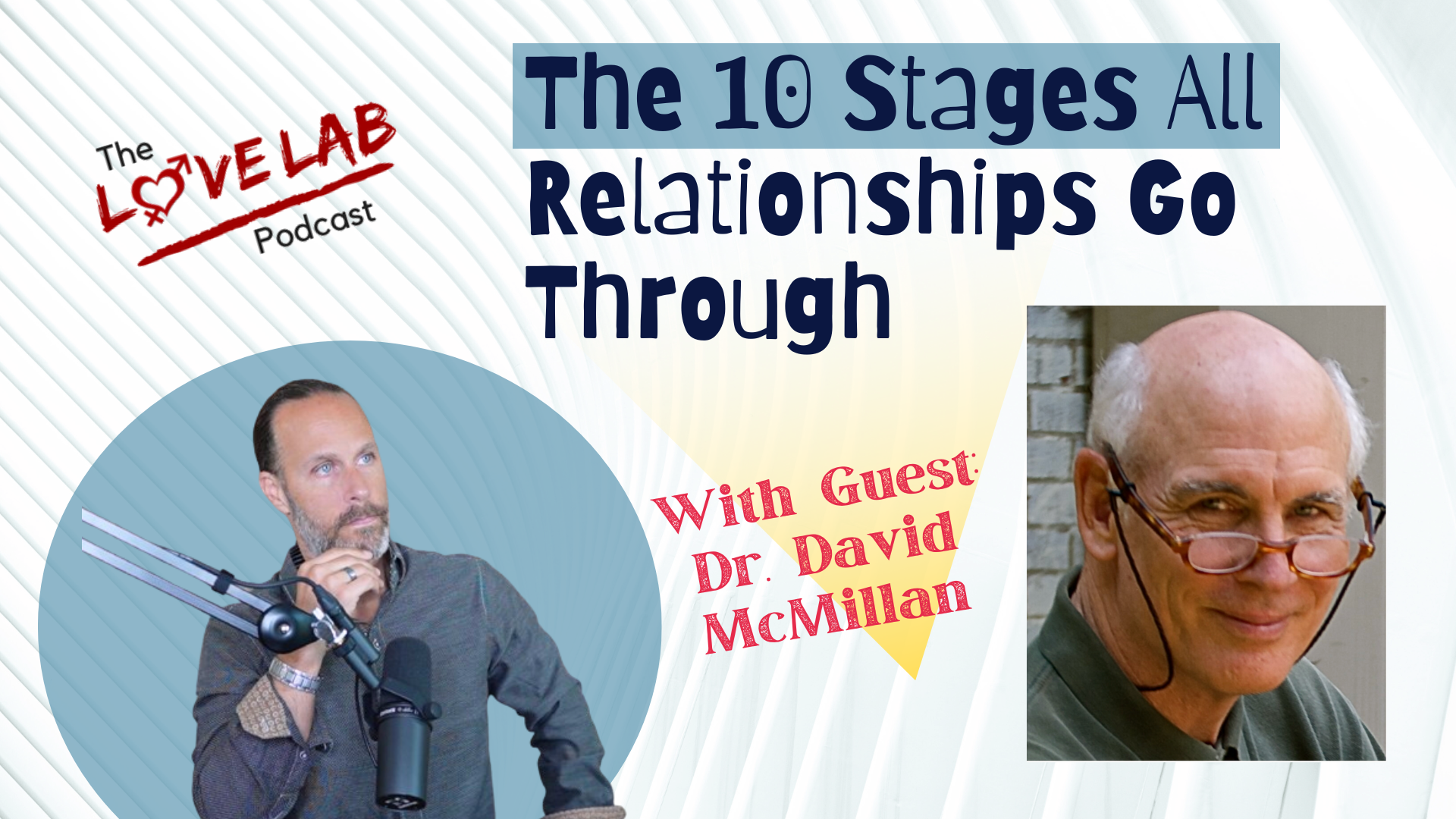
Did you know that all relationships go through a series of stages? What are these stages and how can knowing them help you have better relationships? In this episode, Kevin Anthony talks with psychologist Dr. David McMillan about the 10 stages all relationships go through, which stages couples tend to get stuck in, how understanding these stages can benefit the health of your relationship, and what to do if you get stuck at a particular stage.
Links From Today’s Show:
To Find Out More About Dr. David McMillan, Click The Link Below:
🔥 POWER & MASTERY 3.0 IS HERE!
The most complete men’s Sexual Mastery Course is now even better. To find out more go to https://www.powerandmastery.com
❤️ FREE EXCLUSIVE CONTENT
The Passion Vault → https://www.kevinanthonycoaching.com/vault
💪 MEN’S SEXUALITY & MASCULINITY COACHING WITH KEVIN ANTHONY
If you are ready to make big changes and finally become the man you have always wanted to be, then Unleash Your Inner Warrior Program is for you → https://www.kevinanthonycoaching.com/go/warrior
💪 BECOME THE MAN OF HER (& YOUR DREAMS) COACHING WITH KEVIN ANTHONY
Become the man she has always dreamed about and craves. Become the man you have always wanted be; the man who has it together and is a Master → https://www.kevinanthonycoaching.com/go/manofherdreams/
👉🏼 COUPLES COACHING WITH KEVIN ANTHONY
https://www.kevinanthonycoaching.com/sex-coaching-couples/
👉🏼 OUR HAND-PICKED PRODUCTS FOR YOU
We have hand-selected some great products to help support your Health, Sex Life, and Relationship! Purchasing products from us and/or our affiliates helps support the work that we do and ensures we can continue to help as many people and couples as possible! → https://www.kevinanthonycoaching.com/products/
Kevin Anthony 0:05
Welcome to the Love Lab podcast, a safe and fun place to get real and learn about sex. Whether you’re a man or woman, single or couple, this is the show for you. I am your host, Kevin Anthony, and I am here to guide you to go from good to amazing in the bedroom, and your relationships.
All right, welcome back to the Love Lab podcast. This is episode 302 and it is titled The 10 Stages All Relationships Go Through. So we’re going to be talking today about the stages of relationships. We’re going to talk about what they are, we’re going to talk about, I have a whole bunch of questions like, you know, where do people go wrong? How does understanding these stages help you? You know, are there particular stages where people tend to get stuck in or not? All kinds of questions about these stages, obviously, we’re going to potentially be talking about tools that couples can use when they’re in certain stages. So there’s lots and lots to talk about here. If you’re watching this on YouTube, you can see that I have a guest to help explore this topic today, who I will be introducing in a moment. So there’s lots to talk about. today. I’m going to keep the intro short and go straight to the sponsored ad.
Power and Mastery. 3.0. Power and Mastery 3.0 is the latest version of the popular men’s sexual mastery course. If you’re struggling with erectile dysfunction, premature ejaculation or simply want to increase your skills in the bedroom, then power and mastery is for you. Join the exclusive club of men who have taken their sexual performance into their own hands and become sexual masters. Mastering your sexuality is a key component to becoming the man she has always dreamt of and craves. Don’t leave your sexual performance up to chance or the throw of the dice become a sexual master today by going to powerandmastery.com and joining the exclusive club of men who have taken their destiny into their own hands. That’s powerandmastery.com.
Okay, my guest today is Dr. David McMillan. He has a PhD in Clinical Psychology from Vanderbilt and 40-plus years in private practice. As a psychologist, he is the author of create your own love story and emotional rituals as well as a sense of community theory. He has been married for 38 years to the honorable Circuit Judge Mariana Shipley, who is now retired. This is somebody who knows a little something about relationships. And he is here to help us explore the different stages that relationships go through. So thank you for being on the show, Dr. McMillan.
Dr. David McMillan 2:50
Good to be here. Thank you for having me.
Kevin Anthony 2:53
All right, let’s just dive right in. So there are 10 stages, according to you. Now, some work has eight stages, you’ve expanded on that and added two stages to that. But before we go into what the stages actually are, can you maybe just let the audience know a little bit about what the stages are based on? Like, where does this body of work come from?
Dr. David McMillan 3:19
They come from Erik Erikson, and his wife, Joan. And they got seven stages from Freud. And then they expanded on those stages and added, and then they added an eighth stage, Joan added an eighth stage. And I created a stage at the beginning and a stage at the end. So there are in my version, there are 10 stages. And, but they’re basically modeled after their exit stages.
Kevin Anthony 3:55
Great. So I just kind of wanted people to understand that this is work that has been around for a long time. And this is based in a lot of psychological research over very many years. So there’s, there’s some tried and true stuff in here. And you know, as well as you know, being brought up to date for the modern times.
Dr. David McMillan 4:23
If it makes sense to the listener, it makes sense if it doesn’t make sense, if that makes sense. Because these are very common-sense ideas. And it’s not like in the theory that there’s been a lot of research because there hadn’t. It’s just makes sense that so many people for so long. And that’s that’s the basis of this is psychoanalysis doesn’t have as deep a body of research as behaviorism does. It just makes sense. And this this thing makes sense to me. And I hope it’ll make sense to the listener.
Kevin Anthony 5:00
Yeah, well, you know, there, there is a lot to be said for people’s actual experience in the world. In other words, even when you have a lot of research, right, you can do a lot of research and you can have all the facts and data, but they don’t necessarily always correlate to people’s actual experience in the world.
Dr. David McMillan 5:17
So this is just common sense. And for each stage I took Carole King songs that I took the Beatles songs karaoke, and Carole King songs specifically. And I found some of her songs represented exactly what happens at this stage and exactly what happens at that stage. And I did the same thing with the Beatles. I have songs of the Beatles that are stage one, Song songs or stage two. And stage just they’re in there in the world. Everybody understands. When we describe the stage, hey, I know that.
Kevin Anthony 5:55
Well, awesome, then that’s a great time to just dive right into the stages themselves. Let’s let’s just take it from stage one through stage 10. And just to kind of do a brief description of what each one is, I might ask a few follow-up questions here or there. But tell us about stage one. What is it?
Dr. David McMillan 6:13
Well, if we’re going to use an Elvis Presley song, it would be all shook up. If you’re going to look, use a Carole King song, it would be The Earth moves under my feet, the Skies Falling Down. This is if we were thinking about a nation, this would be stage one of revolution, the conception of a country. And so stage one is conception. It’s it’s the beginning, the moment that something is born. It’s exciting. It’s profound. It’s, it’s has so much potential potential potential. And we just are enthralled. And we’re all caught up. It’s because of this excitement that stage one. Stage two is Carole King’s song But will he love me tomorrow. So that’s when you look at the fine print. And you go, what what have I done here, I’ve just dived into this pool. Oh my God. And so you began to look around and see what it is you’ve gotten yourself hooked up with. This is when you might begin to go meet the parents and go, Oh, my goodness. You don’t say anything about it, and you don’t tell people what you’re thinking, because it’s still not set in concrete, you still have a chance to get out. But you’re a little bit apprehensive. And you don’t know if it’s gonna stick.
Stage three is the conflict stage where the song is snapped by Jackie’s got a shotgun. And this is when you have a lot of angry things that happen because you’re trying to put the relationship together, and you’re trying to see where you fit. So who is responsible for the yard? And who is going to do the laundry? And how is this going to work? And where? Where is my place? And how do I? What kind of furniture it is? Does my stuff have a place here? And do I fit here? Do I belong? Wait a minute. I think I don’t want like no. And there’s a lot of a lot happening and say three is the adolescent stage.
Kevin Anthony 8:48
Before we go to stage four. Let me pause you for a moment because so what you’re describing with stages, one, two, and three are basically what most people see, as you know, they call stage one the honeymoon phase where the person can do no wrong, right? And everything’s great. And there’s tons of attraction, right? Then you start infatuation. Yeah. Right? And then and then there’s like, you start to come out of that and you sort of hit the like, realization phase. And then then there’s like, oh, okay.
Dr. David McMillan 9:18
That’s, that’s six to nine months, you’re gonna you’re you start coming out of it at about six to nine months.
Kevin Anthony 9:24
And then you hit that last stage of like, okay, now we’re sort of trying to figure out, right, you know, how we work together. Now, the reason why I wanted to pause you there on those first three, is because I think when people think about the stages of a relationship, they tend to think that those are the stages of a relationship. It’s like, okay, we’ve all heard there’s the honeymoon phase, and then you know, we figured out how to make it work and then we just go on from there for the rest of life.
Dr. David McMillan 10:00
I had that thought once in my life. Two divorces and 37 years of marriage have proven me wrong.
Kevin Anthony 10:10
But see your experience is exactly why I wanted to pause there and point that out. Because I’ve really wanted to make the point to people that this is nowhere near the end of the stages, there is a lot more progression over time. Seven. All right, right. So, don’t think once you’ve hit stage three, that’s it. It’s on cruise mode after that, because there’s a lot more. So let’s go on with stage number four.
Dr. David McMillan 10:35
Stage four is the resignation stage. And that’s when you go, well, this isn’t anything like what I thought it was going to be nothing. But do I want to throw this away and start all over again? Well, okay, okay, I’m gonna do my best to make this work, I’ll resign to this reality, okay. And I’ll do what I can to make this work. And then once you’ve resigned and said, I’m not going to throw it all away, I’m going to take this and work with this. And I’m going to accept some things that I’m not sure I like, but But this, but on the whole, I’m gonna, this is gonna work, I’m gonna make this work. Then you go to stage five, which is the accountability stage. And that’s when the problem is me. Oh. What’s wrong with the relationship is me.
Oh, and I hope the listeners will look up. Randy Newman, song, Marie. Marie is the most beautiful song. And he confesses so much in this song. And of course, he’s absolutely right. No question about it. You can see here, Randy Newman, seeing how crazy he is, and how much she has to put up with. And you know, he’s telling the truth, you know, exactly. He’s telling a creative guy like him is not going to be easy to live with. And he’s, he’s confessing that. And he’s saying, you know, what’s wrong with this relationship? I’m not doing what I need to do.
Kevin Anthony 12:13
How many people do you think actually make it to that stage? So for instance? For instance, in the work that I do, you know, when I’m coaching couples, I see a lot of people still always blaming the other person, right? Well, the relationship would be better if she would do this, or if he would do that, or if he would just right, which means they haven’t gotten to the accountability stage yet.
Dr. David McMillan 12:40
Yeah, well, so many people there, each stage has these, these rocks on the island that are next to the stage, that will take the boat and just sink it. And, at each stage, there are things that they can do to make a mistake, so you can’t go to the next stage. And stage five, many people don’t ever get there. Because their ego is one of them. There’s no way that that is not their fault. There’s no way that if they wouldn’t do this, we’d be fine. But they keep doing this. So it’s there. It’s out there the problem, so we have to wait until they grow up to get the relationship fix. Well, that might be forever. But there’s always something you can do. There’s always a mistake you’re making. Everybody’s making them wrong is gold in relationships, when you discover that you did something wrong, you can fix it, and it’s all in you. Now you can change the world when you figure out you’ve made a mistake. But if you’re right and you’re good, and you’re perfect, you can’t do anything. You know, there’s nothing’s gonna happen. And in stage five, you’re mature enough to discover oh, gosh, I got to do better than that.
Kevin Anthony 13:56
Yeah, that’s a very valid point. I love the way you express that which is that you know, I think too many people would look at Oh, I’ve made a mistake, and then see that as you know, something very negative and while it can be something negative, there’s a positive side to it. And the positive side to that is if I realize I’ve made a mistake, I then have the opportunity and the ability to fix it because we can’t fix somebody else we can’t get somebody else to fix their mistakes they have to do their own work right. So if somebody else made a mistake, we think haha, we got you you made a mistake. Okay, great. There’s nothing you can actually do about it. They have to fix it on their end right? But when we recognize our own mistakes, we have an opportunity to actually fix them and that’s that’s the golden that for sure. All right, well, let’s Yeah, that’s an extra extra one.
Dr. David McMillan 14:49
At the communion stage, when if both people begin to realize, hey, is you know, I got work to do and they start doing the work. Then it you almost rediscover Stage One again, and you fall in love with them in a second level and at a deeper level. And because you’re not blaming anymore, this child has swam anyway, stuff is gone. And your two mature adults are ready for the next stage, which is the mission stage. Now the communion stage doesn’t last very long, because the mission stays, once it hits, boom, you’ve got to do this, they’ve got to do that you’ve got so much you’re doing together, but both of your parallel plane because you don’t have as much time to be together, because you’ve got the mission, the mission, usually that’s the children. And boy, when the children hit Whoa, who has time for a relationship, who has time to nurture each other, I mean, it’s really hard, you have to really work to find that time and the mission stage lasts for maybe 30 years. This is stage seven. And it takes a long time to accomplish what you are trying to accomplish the thing you were born to do, that you’ve been trying to do, and will do your whole life, it feels like until you’re like 50 or 60 years old.
Kevin Anthony 16:05
You know, interesting, the order of those two stages, the sixth and the seventh that communion and then the mission, because something that I have seen is I’ve seen a lot of people not really hit communion, until after mission is over. If the mission, if the mission is the children, now the mission could be something else the mission could be, you know, their work that they do out in the world. And that’s different. I’ve seen, you know, for sure they kind of hit that communion stage. And then they determined that, you know, they’ve got some broader mission, they want to start a school or you know, charity, or something like that, and then boom, but, but when it comes to children, I’ve seen a lot of couples get into mission. And then after the kids are gone, finally, like rediscover each other and get into that harmony after years of fighting while raising the children. What do you think about that idea?
Dr. David McMillan 17:00
Well, you’re describing what was a perfect stage eight. But let’s go back to stage six. Usually, stage six is so short, that you might not even notice it. Because it’s only maybe a few months before you go, Oh, we feel really good about each other and you come together and then. And sometimes the children are born in stage one, two, and three, you know, that never necessarily happen at the right time. But hopefully, you have a little bit. In a perfect world, you have a little bit of time where you go, boy, I’m really glad you’re my partner. I’m really glad you’re my partner, and you celebrate that until the mission stage happens. And then boom, what you’re describing is a perfect stage eight. And a perfect stage eight is symbolized by the song Is That All There Is is a Peggy Lee song. It’s also in the musical. What’s the Liza Minnelli musical? Anyway? It’s it says is that all there is?
And after the children are gone, you’re asking, Well, what is there left? What we’ve accomplished our mission. We don’t want any more money don’t need that. We don’t need fame, we don’t mean more recognition. We’re really tired of all this competing and struggling and clawing. So we got to find a new purpose, a new reason to be a couple a new reason to have a relationship because that’s gone now that nest is empty. And when you find that new reason, perhaps his grandchildren, but usually it’s something that transcends it’s a spiritual thing, that you both go, you know, we really believe in this and we stand for this. And we’re going to help make schools better. And we’re going to volunteer at schools to gather and well, we’re going to devote our lives rest of our lives to the theater. And we’re going to give money to the theater and go attend plays and maybe maybe audition for some parts or something. But but you find this other spiritual thing, because when my mother was at this stage, she told me, she says, David, I’m not going to leave a will. And I said, What? She said no, because if I left a will, I wouldn’t give you anything. And you would hate me for the rest of your lives.
Because if I were going to give a will I’d give it away because I’ve educated you you’ve got enough money, you don’t need anything. And, you know, I just give it away. And that’s where you are at the generativity stage you’re giving things away you’re giving away China’s silver data. You want to contribute to something beyond you. You don’t want to bring it into yourself anymore. And That’s a sweet time when your ego is getting out of the way. And so that’s why it’s easier for a couple to come back and love each other. Because their egos aren’t so, so. So much energy inside is just don’t care about that stuff anymore.
Kevin Anthony 20:21
Yeah, that’s really interesting. So basically, I was kind of jumping ahead a little bit. And I think the key to that is what you said about stage six, which is that it’s very short. And I think that’s, that’s the key is that a lot of people miss it, because there’s not a lot of time there before they jump straight into mission. And then now knowing what stage eight is that makes more sense to me.
Dr. David McMillan 20:49
So stage nine, stage nine is the authenticity stage. Some of you some of your listeners may know the poem. Now I can wear purple. It’s about an older woman who doesn’t give a damn anymore. There’s this tennis announcer who was on NPR one time and budged. I don’t remember his first name. Anyway, he was. He was talking about tennis, and he said, You know, I don’t care anymore, I’m just going to tell you like it is because I’m 80 years old. And this, then I don’t, I’m not going to try to pretend anymore, I’m just going to tell you what I think. Because I don’t have too much more time to be to be myself. And I’m going to be myself. This is what I think. And he just blurted it out there. And I remember, we were on vacation, and this couple was, was by a pond. And they had these old rickety Walmart, like chairs with the nylon bottoms and sides and aluminum, you know, and they had duct tape, an umbrella that was coming apart so that they protect them from the sun. And they did not give a damn what anybody thought that was who they were, they want to sit in that sun. They wanted to enjoy that. No more pretense, no more form, they just wanted to be. That’s all I just wanted to be. This is the bucket list time.
I want to so this is where there’s Warfield is this law lawyers name. He and his wife, Martha. And anyway,, they were at this stage, and he loved to go to the Snake River. So he would in the summer, go to the Snake River and camp out in a tent on the Snake River. Well, Martha didn’t want to go to the Snake River. But she went to New York and went to see some places. And then she would come to Jackson Hole. And they go to this lodge, and they’d have a nice time for a week or two. And then he go back to the Snake River and she’d go on. What do you think if she if he were 30 years old, and she were 30 years old? She leaves him for two months on the Snake River by himself and Jackson Hole right there? You know, I don’t think so. I don’t think so. I think she would want to protect her territory. And at this stage, she wanted him to have what he wanted. And he wanted her to have what she wanted. And they were different things. And that was okay. Because they don’t have much time to be anymore. And they need to be themselves and stop this pretense and stop all these protecting things because it doesn’t matter.
Kevin Anthony 23:40
And isn’t it a shame that it takes us to get to that, that advanced age to finally realize that right? Yeah, to finally be ourselves to finally speak our truth to finally want what the other person wants. It’s a little sad, honestly, that it takes so long for people to get there.
Dr. David McMillan 24:00
Yes, it is. It is but you know that you got the job. In, most straight relationships, you’ve got the job of procreating that’s the species has demand and they put it inside your body and your hormones have it wrapped up in those hormones, and that demand and that wanting sex and all that stuff. That’s part of the earlier stages. And that’s gone. And so without that ego and that wanting and all that competition and all that territory and jealousy and stuff, as part of the earlier stages, it’s just so much easier. There’s so much easier.
Kevin Anthony 24:38
Yeah, I totally agree. You know, in my life, I don’t have any children. When my wife and I got together we were pretty clear that that wasn’t something we were going to do but we got together much later in life. So that obviously had a had an effect on it. But I have with all the partners that I’ve ever had Like the ones that were long-term relationships, including my wife, I have always wanted for them, whatever, you know, whatever made them happy, whatever brought them the most success. You know, I’ve always strived in my relationships to help them become the best version of themselves that they could possibly be. But I don’t see a lot of couples actually doing that I actually see them competing with each other a lot.
Dr. David McMillan 25:29
Yeah, the tit-for-tat stuff happens. That’s, that’s Newton’s law. And I talked to you earlier about Newton’s law, the two laws of homeostasis, and the law of momentum in motion. And so this tit-for-tat world is the Law of Balance. And if I hit you, you hit me back. And, that’s what happens in diplomacy, you can see that in wars, it’s just so stupid. So immature, so five-year-old ish. And, and it’s an all of us, everybody plays it, everybody continues to play in every stage, hopefully, it gets less and less. And, but knowing about Newton’s laws, you know that that’s what’s going to happen and that emotions are contagious, and that your relationships have a momentum and go downhill or go uphill. So you can change the momentum just by saying, hey, you know, your blue eyes and that gray beard, they really come across really nicely on this podcast. Now, I just changed the momentum. Now the momentum wasn’t going bad. But now it’s going good. I just gave you a present a compliment, an affirmation. Now, maybe if tit for tat is part of Newton’s laws, and it’s all of us, then that creates the momentum, and you’re gonna say something about me. And it can’t be about my bald head.
Kevin Anthony 27:12
I love that idea of shifting the momentum that is really, really great.
Dr. David McMillan 27:16
And you can always do that. It just takes ego strength and courage. But you can always do it. Everybody has an opportunity to turn it around.
Kevin Anthony 27:25
Yes, yes. And that strength and courage thing and getting the ego out of the way is a challenge for a lot of people. So we got one more stage, right? We have stage 10. We haven’t covered it yet.
Dr. David McMillan 27:39
Well, stage 10 is what you think it is. It’s a termination. It could be divorce, it could be death, but it’s the end. And it’s sad. And you have to grieve. Grieving is very important. Jews have set, I don’t know what it’s called, say it’s not saved or some word for every evening, or every, for a year, after someone dies, you have a period of time in the day where people gather and grieve. I think that’s so healthy and so beautiful. And, we need that with sadness is an underrated emotion, it’s maybe our best thing. Because when we’re sad our brain works. It sees reality as it is. And life is a tragedy. It’s not a comedy, it’s not a happily-ever-after thing. So in this stage, we grieve, we let go, we let go of having what we want. We surrender to fate and look at it. And reality again, takes away that we can’t have what we want. And as we do that, the cybernetic feedback loop kicks in. And that means that we all then start taking advantage and wondering how to make lemonade out of lemons. And how to take advantage of the world we have and make that into. So this happens to be a birth, a death, a birth transition.
So termination, and then what happens is there’s a birth and then the stages start all over again. So my my father-in-law, his wife died, and he had to move into a place where there were mainly for older people. And there, he was a commodity. I mean, he was he was a really handsome guy, amongst a lot of women. And there were several who were interested in him. And he then found a woman that really, really liked and who really liked him, and he wanted, he was a Lutheran minister, so he couldn’t really be with her in the way he wanted to be with her without being married, it just wouldn’t be right. So we couldn’t let him lose his social security because that wasn’t a good idea. So we arranged a ceremony, a blessing ceremony, where the families came and, as they were coming down the elevator he and his to be blessed woman partner. As they were coming down the elevator, they were looking at each other’s eyes, just like a young couple who just had met each other. And we’re just adoring it was so beautiful. They were in stage one. So death and rebirth are right next to each other. And it’s a circle. And you start Yeah.
Kevin Anthony 30:40
Here’s an interesting question for you. When that, so let’s say there is a transition because that transition can happen, not just, you know, when you’re 80, or 70, you know, towards the end of your life, but like, for me, that happened much earlier, you know, my wife died when she was just about to turn 40. Right. So. So the question is, is like, you’ve been through these 10 stages. Now, you’re starting over again, and the stages start over again? Do you go through them any faster than the previous times? Like, if you’ve been through it a couple of times, to the stages move any faster?
Dr. David McMillan 31:21
Well, you would know, you would know. So these relationships grow you up, just like children grow up, relationships do too. And so you have your first wife who died, she beat you beat you a lot into a place where you were a better husband. And so you knew some things to bring to this new relationship. So you probably did have infatuation, you probably did have that stage. And it may have lasted the six to nine months that infatuation lasts for almost anybody. And then in the second stage, you probably did have some time to figure out where you belong, but people who are your age 40, or when you begin the next stage, they already have some history to work with. So they know a story about their partner, and they know something about the history, you’re not just meeting them as kids. So that’s second stage gets through much faster because the story is already there. And then the third stage, you you’ve been through that before, you still have to go through it.
But it’s, it’s, it’s an easier adjustment because you know how to dance, you’ve danced with somebody like this before you know how to share a toothbrush, you know, where clothes go, you’ve done, you’ve done all that. And, you have a sense of where you fit, and how you can be a good mate and what you’ve got to give and what you don’t have to give, and what you need from the other. So that third stage is not longer. The fourth stage, that’s probably about the same. But maybe there are some things you know before you got together that made you make a better choice. So there are not as many regrets as you might have, if you so you might have more have made more sense.
But the fifth stage is essential because you’re not a perfect fit. And, you do have to figure out how to accommodate and, and how to ask them to accommodate and there has to be some give and take. And it’s good in that fifth age, to understand that there are three things in a relationship. One is you two as her and three is a spirit, that something that’s above the two of you. So you never want to do anything for her because she wants you to Don’t ever do that. Don’t ever kiss up to her. She should never kiss up to you. But what she should do is do what’s right for the spirit of the relationship, and serve the spirit of the relationship. She should serve the spirit of relationship and look at what happens is a triangle. And when you serve the spirit, the two things start coming together cause the pull from the What’s up here pulls you together, the spirit pulls you together. And you’ve learned you probably did that in your first relationship. You felt that spiritual pull and then you were able to go into sex and then and now you need a mission. I’m with you I married and I were together too late. We tried to have children and it just didn’t work.
So we did have a mission Marietta ran for judge and in two See, there was no mediation at the time. This was in 2000. And Marietta started the court systems mediation. And she created mediation in Tennessee. She’s the mother of mediation, she, and this was my idea. You know, I’m a psychologist. So I said, Hey, Mary, why don’t you and she did. And she created a parenting plan. She created parent education classes. This is all because of Maria. And I’m so proud of her. But I was right there beside her supporting her every step of the way. And, she was a judge for 18 years. And I’ve written books, because if my wife’s going to be a judge, then who am I chopped liver, if you have ever been married to a judge, all these lawyers around your table when you’re going out to dinner, oh, Judgeship, you’re so wonderful. And they look right at her, and they put their butt and you’re in my face. So your, your status is pushed down. So I had to write a book. Now I’m not okay. I’m somebody. So we had our we had our children, hers was the court. And mine is my, my ideas. And, and they’re my ideas are very important to me. And they are like children to me. And my books are to my theory of since the community has done so well. It’s, my favorite my child has done it’s been the golden child, it has had over 10,000 references, and it’s been read, reads 50,000 times a year, the feeling of community psychology thinks is wonderful. And I’m glad for that. And I’m really proud of my child. And so that’s part of my mission. And now I’m thinking about making a bot and putting it in that. And, you know, I’m still churning away serving the world in ways that I think are important.
Kevin Anthony 36:55
And that is very commendable. Because at this point in your life, you could just retire and not do anything if you really wanted to. And I think it’s admirable that you are still out there serving the community.
Dr. David McMillan 37:06
Boring.
Kevin Anthony 37:10
Well, I tend to agree, you know, I, I’ve always said my whole life that I didn’t ever plan to completely retire. Obviously, you don’t want to work super hard when you get older. But like my thought process always was that when I get older, that’s the time when I’ll write books or to speaking, you know, tours or whatever. Like that’s the time to start really putting all those years of knowledge out there. But never stop is the point. Every time I see somebody who just stops and they’re like, their butt is planted on the couch for the next 20 years. They don’t actually have 20 years, they ended up dying away sooner. All right, I need to take a short break. And then I want to come back and ask you a few questions about the stages. Some of the things I mentioned early in the introduction.
Okay, are you a couple are your relationship and sex life where you want them to be? Are there changes you would like to make but just don’t know how maybe you think there is nothing that can be done. If you’re not 100% happy with where your relationship or sex life is? Then get help today and change your life. Go to Kevin and Céline dot com forward slash sex dash coaching dash couples, and schedule a strategy call with me today. So we can map out a strategy to get you where you want to be. So you can have it all your way. Go to Kevin ensiling.com forward slash six dash coaching desk couples and book your strategy call today the link is in the description for that. All right.
Dr. David McMillan 38:36
So that’s you?
Kevin Anthony 38:37
That is me Yes.
Dr. David McMillan 38:43
So I would make our suggestion about your ad.
Kevin Anthony 38:47
Oh, sure. Go right ahead.
Dr. David McMillan 38:48
When you’re in first as you say, I want you to master this and put your in your put your sex life in your hand. I think you should rethink that.
Kevin Anthony 39:02
Well, there is a little bit of a pun there. All right. So let’s get back to our stages of a relationship. In our pre-interview call. One of the things that came up was the idea of exit ramps that people might incur when they hit certain stages. And I wonder if you could talk a little bit about what are exit ramps and are there some common ones that you have seen couples tend to take?
Dr. David McMillan 39:33
Well, exit ramps are is a nice way of saying disaster. Wait, so how the relationship can end to get and so if you’re in the first stage I mentioned to you earlier about splitting, you can be so idealistic about and so hopeful that the world becomes really, really easy. Everybody is either your friend or your enemy everything is good or bad, everything is black or white, these binaries come up. And so that’s what you start thinking in. And when you think that way, you, you’re going to find ways that you have a lot of conflict. Because reality is not binary rally is not just two choices and two options. Usually when you have binary thinking is my way or the highway, and I’m right, and you’re wrong. And that’s going to end up being an exit ramp for the relationship.
Kevin Anthony 40:33
Are there any common exit ramps? Like, is there? Is there a stage? Let’s start with this. Is there a stage out of these 10 that is more common to hit an exit ramp than other stages?
Dr. David McMillan 40:45
Well, let’s be stage three of the conflict stage. So stage three is to see what the ex-defense is saying. So instead of having a fight, because you need to have these fights, and save three, you need to figure out where you belong. And if you just deny and just swallow and say okay, dear, and then that’s just going to set you up to have an explosion. So denial is bad for stage three, hit go ahead and have the fight. undoing this is a way of making us feel better. We did not want to face things that were acknowledged them. It’s, it’s the husband who has an affair, feels guilty, and buys his wife a fur coat thinking that that’s going to make it work out. So you think you can buy your way out of problems, instead of facing problems and talking about them.
Then also a stage three, there’s blame, it’s not my fault. It’s not my fault. It’s not my fault. It’s not my fault. This is what adolescents do. Adolescents egos are so fragile. They’re just building them. And they’re not there. They haven’t established, you know, a solid basis for their ego yet. And so they can’t ever be wrong. And if you’re that fragile and immature, and you blame everything on the other person, that’s gonna blow up a relationship. And then if you tell, create a story of your relationship, and the story is, usually our stories are on the hero. And I’m persecuted by you. And I’m the victim hero, and you’re the persecutor villain. And that’s the story. And when we make up the story, and that’s what it is. I’m the suffering hero. That’s never true. It is true. You are you are you suffering hero. You are suffering. Yeah, of course you are. But you’re a suffering hero. Not the suffering here.
Kevin Anthony 42:51
Big distinction.
Dr. David McMillan 42:54
I’d rather be the suffering hero, but I argue that is, but it just never works out for me.
Kevin Anthony 43:05
Well, if I had it all my way I would be a hero without suffering.
Dr. David McMillan 43:11
No, no, the definition of a hero is you suffer for the good of others. So suffering is part of the definition. And you can’t be looked up and be given that title of Hero. Unless you’ve been the champion and fought the dragon. You have to fight the dragon in order to be the hero. That is like the dragon. We all think we’re fighting the dragon.
Kevin Anthony 43:35
So yeah, I mean, we probably all are to some extent, but that doesn’t mean that others aren’t also fighting the dragon.
Dr. David McMillan 43:44
Yeah, you’re exactly right.
Kevin Anthony 43:47
Okay, so I thought that was just an interesting question, in a sense that it’s because it’s leading up to my next question, which is, you know, okay, we’re having this whole discussion about all the stages of a relationship. So if somebody’s listening to this episode, you know, a question that may come up is okay, well, this is great. I know what these are. But how does this help me navigate my relationship? Right. And that’s that was how it was kind of tied in with the exit ramp. So I’m wondering if you can maybe share a few insights on you know, how would understanding what these stages are potentially benefit you in your relationship?
Dr. David McMillan 44:31
Well, first of all, you don’t fall in love with the conception stage. Most people fall in love with the conception stage. And that’s what they want. They want that happily ever after moment, they may want to keep that same feeling the whole time, the rest of their lives. And I’m sorry, that just didn’t happen. No relationship will perpetuate that. So understanding that your relationship goes through stages helps you sort of hang in there, understanding this as journey through the very the 10 stages. It’s not just a, we’re going to always because what’s going to do then is just divorce and divorce and divorce and divorce and divorce, coming back to stage one, and you’re never going to grow up, you’re never going to go through those stages, the stages help you become a bigger, better person, the marriage beat you into shape. It’s like a metallurgist, hitting, hitting an art thing to try to make it in the right shape you pound it until it’s beautiful. And that’s what relationships do they pound us in the shape. And we have to grow in order to make room for other people. Yeah. And the stages do that. The stages are what pound you into shape.
Kevin Anthony 45:45
Yeah, absolutely. It’s interesting, what you mentioned about, you know, if you’re not going through the stages, and you’ll just be constantly divorcing, and divorcing and divorcing, so, yes, potentially moving from one relationship to the next. So you’ll see this a lot with people who are basically, you know, we call them, you know, serial monogamists or serial daters, right, where they just date and after a certain amount of time, they’ll break up, they’ll get a new relationship, they’ll date for sure. And they’ll just repeat this pattern over and over and over again. And you’re right there staying in those early stages never getting any further than that. I also see this too, a bit in, you know, then I don’t know if you’re familiar much with the term polyamory, but that community of people.
But polyamory, obviously, is people who are in open relationships, right, where they have multiple partners. But one of the things that I see often in that world is that they’re constantly, they might have one stable partner, but they’re constantly rotating through new partners. And they’re always in search of what they call nRT, which is new relationship energy, right? And so they’ll get into it, they’ll get a new partner in for a while, they’ll be this infatuation stage. And, you know, there’s all this new relationship energy, and then that fades out and they disappear and somebody new comes in, right? And they ended up in this sort of perpetual cycle where they never have an opportunity to go through all of those stages. And I just think it’s kind of interesting because I agree with you that I liked the analogy of making the art, where, you know, you’re, you’re doing maybe some sort of metal sculpture, and you’re pounding this piece of metal into its shape. But you if you’re always hitting the exact same spot, you’re not really transforming the shape of it, you’re just making a dent in it. So you never have that opportunity to go through all of those stages.
Dr. David McMillan 47:43
Which is very wise. Yeah, very wise.
Kevin Anthony 47:47
Thank you. So we are approaching the end of the show, we’ve talked about what the stages are, we’ve talked about some of the exit ramps, we’ve talked about why it’s important to understand what these stages are. I’m wondering what advice you have for somebody who recognizes potentially, that they’re stuck in a certain stage or they’re having difficulty with a certain stage, they’re recognizing that that something isn’t progressing through the way that it should? What advice would you have for either a couple or an individual in a couple who realizes that that’s happening?
Dr. David McMillan 48:26
Well, first of all, you got to remember their stages, and it’s just a stage. And, that life is going to push you through these, whether you like it or not, your hormones that are so important in the first stage, they’re going to dissipate, you’re going to lose your level of testosterone or your level of estrogen you’re going to go through your bodies are going to change libido is going to change. Your perspectives are going to change individually whether the relationship does that or not. And those individual changes sort of create a different set of wants. So among the things that happen is children when children come often, the wife becomes a mother and feels abandoned by the father or the husband because she becomes the primary parent because her breasts are the thing that keeps the Baby Alive. And she feels very lonely in that spot, and he feels abandoned.
And that is just natural. Every couple that has a child has those feelings of the woman feeling like it’s all up to me because in a way it is. If that baby didn’t get to that nipple, that baby will die. And if that mother didn’t have energy for that child, that baby will die. And so helping the father Become a co-parent, giving him a role to play so that he becomes a part of that process express a mill give him the job of getting up in the middle of the night and having him become actively involved so that his cognitive dissonance His sacrifice for this child becomes something that makes him value the child even more than he becomes a co-parent. But if she becomes the only parent, she’s gonna feel like she’s got to just another child and a husband. He just all why want to have sex? That’s all we think of if you want to have sex. And and yes, he does. He wants his wife back. He should that basically reestablish themselves as an adult relationship but put the child in the in the child’s place. That’s a really difficult transition. And it’s going to happen to you, whether you like it or not, the stage is going to come to you. And then you’re going to have to navigate it. And if you can get through it to the next stage, then the next stage will start flowing on. But it’s it’s hard getting through these things. It’s very difficult.
Kevin Anthony 51:01
Yeah, so the first piece of advice is to understand that their stages and the stages are going to happen, no matter what, whether you want them to or not. But then the second point that you brought up is that it can be very difficult. And I’m assuming that through your work over the many years as a psychologist that this is something that you help people with is navigating these stages, right? So and this is this is, you know, something, although the work that I do, I haven’t thus far specifically addressed it from the point of view of stages here, I’m helping you navigate this stage or this stage. But essentially, if you boil down the work that I do with couples, that’s what I am doing is helping them navigate the different stages of their relationship and life. Right. So I’m assuming that you would recommend that people who are having difficulty going through these if they are really struggling with it, that they would seek help. Is that a valid assumption?
Dr. David McMillan 51:58
Yeah, get you a therapist who can laugh at you. We’re all in this together. There’s nobody misses this. It’s not just you. And you’re not a unique person who’s got who’s feeling this unique feeling. mean, it’s a human experience that all of us are dancing. We’re all doing the same dance. And we’re all struggling. And we’re all screwing up. And we’re all silly. And our egos are really, really silly. And having a therapist who can help us challenge our egos. And who can laugh with you your silly mistakes, and then raise yourself back up and say, Yeah, I get my ego out of the way. And look at what I see. I see how beautiful you are. When I’m when I’m here with my ego and my way, I can’t see anything except me. And good therapists will help you help you see.
Kevin Anthony 52:51
Absolutely. So that is a perfect segue into you telling the audience where they can find more about your work. I don’t know if, at this point, you even still see clients, but I know you’re writing books that could potentially be very valuable to people. So tell people where they can find out more about your work.
Dr. David McMillan 53:08
My website is drdavidmcmillan.com. If Romeo and Juliet had lived is, I think it’s on my website. And that’s the book about stages of development. And you can get that. And I have several other books and a bunch of stuff. And yes, if you want to see me, you can access me through my email, which is David, Dr. David mcmillan.com. And I’ll be glad to consult with you. So yeah, wonderful.
Kevin Anthony 53:45
And of course, the link to your website will be in the notes for the show. So anybody who’s looking for it can find it there and go straight to your website. Dr. McMillan, I would like to thank you for coming on the show and sharing your many years of knowledge and experience and doing so in a way that I thought was fun and entertaining, as well as informative.
Dr. David McMillan 54:07
Yeah. By the way, if you’re not having fun with your therapist, go to a different one.
Kevin Anthony 54:15
That’s interesting. You know, I’ve not heard too many people talk about having fun when they see their therapist.
Dr. David McMillan 54:23
It needs to be fun. You need to laugh, you need to laugh. You need to laugh at yourself. Irony is the best emotion.
Kevin Anthony 54:29
Yeah. And hey, you know, from my perspective, I am also a musician. So when you start relating things to songs like it resonates with me right away. I love it.
Dr. David McMillan 54:40
So it’s all in the songs, isn’t it? Yeah.
Kevin Anthony 54:45
All right. Well, thank you again for being on the show. And that is all the time I have for this episode and I will see you next week.
I hope you liked this episode of the Love Lab podcast. If you enjoyed this show, subscribe, leave us a review, and share it with your friends. And for more free exclusive content. Join me in the passion bowl at KevinandCéline.com/vault. That’s KevinandCéline.com/vault. Thanks for listening and remember, as Céline used to say you’re amazing!
We hope you liked this episode of The Love Lab Podcast. If you enjoyed this show, leave a comment and share it with your friends.
RATE & REVIEW THE LOVE LAB PODCAST
—> LEAVE A 5-STAR REVIEW ON APPLE PODCAST
ASK A QUESTION FOR THE NEXT EPISODE
—> Click here to leave a message directly to Kevin and Céline to be answered on the air.
Thanks for listening and remember you are amazing.

Kevin Anthony is a Certified Sexologist, Tantra Counselor, NLP Practitioner and a Sex, Love & Relationship coach. For over 10 years he has worked with men, women, and couples to have the relationships of their dreams, and the best sex of their lives! He is also the host of “The Love Lab Podcast”, creator of the popular YouTube channel Kevin Anthony Coaching, and creator of the popular online course series “Power and Mastery” as well as other online courses for both men and women.